Rob Riggle's #1 Book Of All-Time
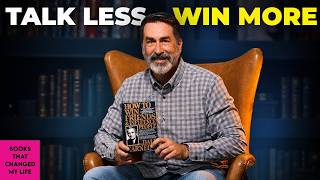
In this two‑part interview for the "Books That Changed My Life" series, host Chris Collins talks with actor‑comedian‑former Marine Rob Riggle about the lasting impact of Dale Carnegie’s How to Win Friends and Influence People. Riggle explains how he first encountered the book during a quarter‑life crisis while in Marine flight school, and how its core tenets—smiling, genuine listening, asking questions, and showing interest—reshaped his interactions in the military, on the rescue effort after 9/11, in Hollywood, and in everyday life. He shares personal anecdotes about his father’s lifelong habit of kindness, his own struggle with reading anxiety in school, and a summer job at a bag factory that taught him about workplace dynamics and camaraderie. Riggle discusses the book’s influence on his goal‑setting process, the promise‑keeping concept tied to self‑esteem, and the perseverance required to finally write his own memoir after a decade of postponement. He reflects on the book’s relevance to veteran mental‑health, emphasizing empathy and connection as tools to combat isolation and suicide. The conversation also covers practical communication tools such as a de‑escalation phrase, critiques of airline customer‑service communication, and the timeless value of good manners for younger generations. Riggle mentions feedback from readers who discovered new facets of his life—his Marine service, 9/11 rescue work, and near‑return to active duty—through the book, and he shares recent moments with his 85‑year‑old father, including fishing trips and charity events. Throughout, Riggle underscores that the book’s lessons are simple, repeatable habits that, when consistently applied, improve relationships, personal fulfillment, and professional success.
Chapters
How many people remember the week or two following 9/11? Everything was shut down. You had F-16s flying up the Hudson River and down the East River. Democrats and Republicans holding hands, singing God Bless America on the steps of the Capitol. But then to hear people that had personal connections, family members, "Hey, what's going on? My son was down there. I had a family member down there." You're standing on the graves of 3,000 people. Nobody knew what to do. You just knew that we needed to rally somehow. We needed to come together. I was in a rare time and place to be able to help.
I'm your host, Chris Collins, and this is Books That Changed My Life. Today we have a very special guest. He's an actor, comedian, former Marine, and an overall just incredible guy, Rob Riggle. And he's here to talk about the book that changed his life, How to Win Friends and Influence People by Dale Carnegie. Hey, real quick, I got something for you. Now, you're about to enjoy an amazing conversation with fellow book lover Rob Riggle, but I got 50 copies of his new book, Grit, Spit, and Never Quit, and I want to give them to you so you can join the conversation. All you have to do is hit the link in the description Subscribe, like, and comment. We're going to cover shipping and everything else so we can get this out to you right away. Sit back, relax, and enjoy the show. What's funny about this book is that if I was ever on this show, this would be my book.
Good.
And I have really— I have a bunch of, like, Well, I have one first edition because they're really hard to come by, but I have a bunch of different versions of it. And I wanted to start off just by reading the note that Dale Carnegie wrote to somebody in this one from 1945.
Oh, that's amazing.
And it so perfectly kind of is Dale in a sense. It's— you can see it's signed 1945 by him.
Oh my gosh.
And this comes from somebody else's library. I love it when people put their little sticker from their library.
I didn't even know that was possible.
We do that to all the books in here. We put a syndicate X.
I want to pursue something like that. I want to find something like that for myself. Also, my girlfriend had— there's an app now where you can catalog all your books. You can make your own catalog. And she's starting to do that because we've accumulated so many books. So, okay, I'm sorry, keep going though. I want to see.
Okay, so here's what he wrote in 1945 to my dear Catherine. I'm going to guess it's Knop, but it's K-N-O-O-P.
Okay.
My wife says you don't need to read this book. However, I have discovered that the people who need it least are the most enthusiastic about it.
I like that.
Isn't that great?
I feel good about it. That's good.
Best wishes for a happy Christmas and a glad New Year. Dale Carnegie, 1945.
That's amazing.
Isn't that cool?
Oh, yes. Look at that. See? Oh, yeah. Those pages are beautiful.
So this book has been, I think, originally published in 1936. Reprinted 17 times in its first year. So it sold out so quick its first year that they, they had to reprint it 17 times, which is like, no, you— if you're an author, you'd be lucky that they had to reprint once or twice. Yeah, but 7, they couldn't keep it on the shelves 17 times. And who knows how many it's sold, like Millions and millions of copies. And still to this day, we'll sell hundreds of thousands of copies a year. It's in 30 languages, originally in 1936, and then it's been updated a few times. His wife updated it.
I have an old book on my desk. It sits right on my desk, so I see it every day. It's called Poems That Touch the Heart. It's an old— but it was from my grandmother's house. My grandmother's kind of an amateur historian. And so this book reminds me of that a lot. Just the way the pages look, the coloring, the— I don't even know what you call that, but the leaf of it.
Kind of hand-cut pages, really.
Yeah, hand-cut pages.
They're not perfect.
No, but it's something like that. It's got character. Yes, thank you. That's it. It's got character. That's gorgeous.
Isn't that incredible?
Yeah, and the fact that it's signed by him, I mean, That's another part of it. When I hold something like that and you see something that's signed by him, you know, you're like, oh, I'm touching history. You know, I'll never get to know Dale. I'll never get to meet him. I'll never— all I have is his words, is his book. And if you have something like that, now you got a little piece of living history. It's kind of—
yeah, I feel that with some of the— because I have signed books from just about every president from, you know, the 1900s at least.
Do you really? And that is just like I'm blessed in a way because of my job, my career. I've had the opportunity to meet many presidents. And I always thought that was— when I was a kid in Kansas growing up, that was the furthest thing from my mind that any of that would ever, ever happen. And then you get the opportunity to meet some of those folks and shake their hand and maybe exchange a few words with them or whatever. It's always— historic, in my opinion.
So do you have a favorite?
No, they were all charming.
I got to say, they're charismatic, right?
They're— they really— you understand why. Oh, this is probably why he rose to some sort of leadership.
Yeah.
And I say some sort of— the president of the United States. But yeah.
Who do you think is more charismatic, Clinton or Obama?
Clinton. Clinton?
Yeah, I've heard that.
Yeah, I think he understood a lot of the tenets of this book. I think he did.
Yeah. Okay, let's kind of just talk about where you were in life when this book presented itself.
I had just graduated college. I was a young lieutenant. In the Marine Corps. I was living in Pensacola, Florida. I was down in flight school and literally sweating your balls off. Literally. It was bad. It's a hot place to be, especially in a flight suit and with all that survival gear and helmet and all that other stuff. But yeah, that's where I first discovered it. I was on a journey for some sort of self-improvement. I remember specifically because I was struggling with flight school. I was fine. I had my pilot's license when I was in college. Flying wasn't the struggle. It was, do I really want to do this with the rest of my life? It was a little quarter-life crisis, if you will, because I was 24 at the time. And I'm like, do I want to fly for the rest of my life or do I want to pursue other things? Because I got to make a choice. I'm at a fork in the road where I got to commit to a path here because it's going to take me. So it's going to take serious commitment. And I, so I started reading self-help books. I remember I grabbed Unlimited Power by Tony Robbins, and then I read his Awaken the Giant Within. And then I read this book. And this book, I found to be, you know, when you read, when you read things that either resonate with you or you just think that's true. I don't know why, just that resonates as very true to me. And maybe it's just because of lived experience or what you observed. But that book, some things in there hit me like a ton of bricks. And I was like, yes. And it seemed very simple, simple guidelines. But what I hadn't done was consciously if you actively, with disciplined effort, applied them. And so I made a decision to apply these things. And as soon as I did, it didn't take long. I mean, we're talking a week or two of consistent effort of applying that, being really conscious about the lessons in here. I noticed awesome things happening.
Can you think of a specific example?
Not a specific, but I can think of a general. My dad is a great man. I think he's a great leader. I think he's a wonderful human being. He had done this his whole life, and I guess I'd kind of done it, but not like he did it. One of the lessons here, it's real simple. It's one word. Smile. And he does that. His nickname, Smiling Bob. And he had done it his whole life. It all kind of came to, you know, I was connecting dots finally when I read that. But I started, I started every conversation and every interaction with a smile. And I found about 95% of them all those interactions went better. I might not got what I wanted, you know, it didn't always work out, but I mean, 9 out of 10 times, I'll take that average. And all I had to do was just start every interaction with a smile. And I found that that allowed for good things to happen. We live in a world, I think, sometimes where people forget you can start an interaction with someone a lot of ways. And I think nowadays we start most of our interactions with sternness, maybe a furrowed brow, you know, furrowed brow hair and, you know, maybe even body language. There's a lot of ways that things start around here and everybody starts to go like this and then maybe they'll relax. But if you start from more of a place like that, I think you're off to a better potential.
Do you pay attention to that a lot?
Now I do. I didn't before I read that.
I think also, like, when you're, when you're masculine and you're tall and you have a beard, like, you— I don't know, I feel like I'm more aware of that because I can be very intimidating. And what I feel inside and what other people are experiencing is a world apart.
I agree with that. That took me—
I'm a big teddy bear inside. Yeah, but people get intimidated very quick.
And I hear you on that. And it took me a while to learn that because it took me a while. And I think this is common to most people's journey. It's not an enlightened thing by me, but I went through the world trying to get what I needed and what I needed to get done. I had a task to do today. I'm going to do that task. And at the end of the day, if that task is done, it was a good day. Now, as I matured, as the maturation process, as I matured, I realized the way I get that done may affect other people. And all of a sudden I'm like, why doesn't that guy call anymore? Oh, maybe it was because I steamrolled the situation. Maybe my energy was more than they could handle. Maybe I needed to use a softer touch with certain people. Maybe I need— that stuff never entered my mind. It was all about accomplish, accomplish, accomplish, accomplish, get the task done. Achieve, move on, keep going. And that has its place in the military and maybe in entrepreneurship and some things like that. But I found that if you want to have relationships, you really do have to be more conscious of that.
Yeah, that's great. So the title is a little misleading to the book, right? Because it isn't really what it's about. But how would you just describe the book for somebody who's never read it?
The, uh, it's really, um, if you've never read this, the, the title does make it sound like a, a sales book and a, a little bit of a charlatan. It almost sounds like trickery, right? It's not. It's really lessons that your father or your mother or both should have taught you. It's growing up. It's just good manners, uh, it's politeness. The— I'm sure the, the etiquette of being a gentleman. I'm sure there's an English code of gentlemanly chivalric behavior. But it really is. It's just good manners and starting out with a smile, listening to people, asking questions, being more interested in them than about your own story. You know, those things, a lot of people don't realize that. I find myself in conversations, especially in Hollywood, where people start to sit down with people And they will just talk about themselves, talk about what they're doing, never once ask you a question about yourself, never once show any interest in you or the things you might have going. And that's fine. But then you kind of know, okay, that's fine. I'll listen to them and they'll never know a thing about me. And that's fine if they don't want to. But what I learned was I get richer by maybe just taking a beat and listening to other people. Tell me your story. Why are you here? How did you get here? What are you hoping to do? If I can find out some of that stuff, not for any trickery, not to use as leverage, not to expose a vulnerability on their part, just so that I have knowledge of who you are. Because maybe we could support each other. Maybe we could help each other. Maybe we could even work together. I'm a very collaborative person. I always liked that. That's why I probably went into improv. I enjoy improv more than I did standup. But that's what I would take away from it. I just think it's really good manners, but it's simplified to a point where if you have any discipline at all, you can apply this stuff. And if you do, over a very short amount of time, you will see amazing results in your life. So that's why I encourage— I bought copies of this for my kids because they're becoming young adults. I have a 17-year-old and a 21-year-old. So I bought them copies of this because I didn't want to give it to them too young. But I figured they're hitting that—
what age?
They're adulting. They're 17 years old and 21. Yeah. And I got it, I think, when I was 23, 24. And it makes—
I know people that have had their kids read it at like 15 or 16.
I was worried that I just knew based on my own, you know, they're different than I am, I understand. But I was like 15, 16. I wasn't processing much. And I definitely wasn't carving out time to read How to Win Friends and Influence People. But I definitely want it on their shelf now as they enter college and exit college. And I think it'll be— I hope they find in it what I found in it.
One thing that he points out in here just going back to what you said a minute ago about how in Hollywood you'll talk to people and they never take any interest in you. They're telling you about themselves. But he says people will then compliment what a great conversationalist you are, even though you never said anything.
That's the best part about it. If you go to a party in Hollywood, right, and all you do is listen, people will walk away and go, I love that Riggle guy.
Yeah, he's great. He's great.
And I didn't say a word. I just let them talk. Now, a good conversation, I don't just sit there and stare at 'em and say, dazzle me. I try to interject little things if I can, or if we have a shared experience, maybe I'll share my story too to keep the conversation going and energetic and fun. But, you know, in the Marines, we'd have people that they were all transmit, and no receive. And you need to have a good balance, you know?
Yeah. In a lot of the intelligence community training that I've been in, the person asking the questions is the one in control.
Isn't that interesting?
And so it's very similar when you're showing genuine interest and you're asking questions because they go hand in hand. You're actually the one in control where it feels like it's the other way around, right?
Then the only reason I would interject my own stories is so that it didn't feel like an interrogation. You know, but most of the time all I do is ask questions, you know, then the person feels like, good God, what, are you going to write a book? You know, so you do have to kind of share a little bit of yourself too.
But most of the time it's in reference to what they're talking about.
Hopefully. Yeah.
Yeah. I've been to Hawaii. And then tell me about your trip.
I was in Hawaii last time. I was at the Big Island. You were at Maui. Did you have a good time there? And then I get— Yeah.
Then they go for 20 minutes.
Exactly.
Yeah, it's fun. Hey, did your dad demonstrate these principles?
Yes. And that's why I think he's a very beloved man. He's got, you know, he's 85 and he's got just a tremendous amount of friends everywhere he goes. People, they love having him around. And I think it's just because he lives these. And I don't even know if he's read this book. I'll be honest with you. Maybe he has, but I doubt it. I mean, I never saw it in our house growing up, but he lives, he just lives it. So somewhere along the line, these things just were inherent to him, I believe, unless he did read it and never told me about it.
But from reading your book, you kind of got that sense.
Oh, good.
That the reason why this resonated with you so much was either because he introduced it to you or because he kind of lived those values?
I think he just lives those values without even knowing it. That's how he does business, which is amazing to me.
Okay. Who would you recommend this book to? Who needs this book?
Gen Z. Does that sound like an old crusty man? No, I'm sorry. I think that the younger generation could benefit from this greatly. Greatly.
And it's hard to explain how well written this book is, but the style is just stories. It's just stories. The lesson is— it's like the peas are hidden in the mac and cheese.
There you go. Yeah, you got the great bullet points of the core of what he's talking about. There's probably 8 of them. I think I couldn't list them all off, but he's got all his— these are the things you need to do. Right? If you want to win friends and influence people, these are the things you need to do. And then he has great anecdotes to tell you, to show you how it works.
And it starts off with a story about Two Gun Crowley, this guy who's making out with this girl in a— I'm guessing a truck somewhere in the woods. And a cop comes up and shines a light. He gets out and kills this cop in cold blood. Ends up, you know, at the end of a big chase, they have him cornered in a building somewhere and they're shooting back and forth. And Two Gun Crowley's bleeding and he writes a little note. And you think like this guy is, you know, the epitome of an evil person, right? And the note he writes, it's something to the effect of, you know, under this, I'm a kind loving person or whatever.
He still sees himself as, I'm really a sweet guy, guys.
I'm just misunderstood.
Yeah. Why can't you guys get it?
And then it follows up right behind that with the analogy of a warden in a prison in New York that's like the worst prison. And the prisoners never see themselves as evil or bad. They're just at the end of a bad stick or bad run. And so if people in prison don't see themselves as evil and bad, and Two Gun Crowley doesn't, what about just the guy at the grocery store?
Completely. Completely. We're living in a world right now of very diverse opinions, very diverse motivations, and everybody sees themselves as justified and right. It's a lot of transmit, not a lot of receive.
Yeah.
In the world today.
Where do you fall in that when people want to talk politics?
I generally don't talk about it.
You won't?
It's not that I won't. I just don't— my business, if I decide to bang that drum or that cymbal. I work in a business that I probably could lose half of my audience. Doesn't make sense for me to do that.
I used to say, I'll talk politics and religion because you can change my mind. But anymore, that doesn't even work.
Well, yeah.
And that's the thing, people don't want to talk about it. They want to impose their will on you.
That's the thing. I like to think I'm not too gun-crowdy, but I like to think that if you can, in the marketplace of ideas, say you're in a library, I'm looking at all these books, in the marketplace of ideas, if you can show me a better idea and really make me understand and make me believe it and explain to me why, I'm open to it. I'll hear you. Maybe I'll even change my opinion. Maybe I'll even start to come this way or come that way. But you got to present it to me. You have to talk to me. You have to explain it. And I don't think people have the time or the inclination to do that anymore. It's either get on board or get run over. And I find that to be not good enough.
I would even add to that, and maybe this resonates with you. I'm looking for a better idea. I'm curious. I'm searching for it. So if it makes sense, I'm on board. You don't even have to convince me. Just connect some dots.
Well, JFK, he had a quote, and I'm probably doing it wrong, but the gist of the quote was, I don't care if the idea comes from the left or the right. I want the best idea. What's the best idea? I don't care who gives it to me. What's the best idea? And I kind of like that philosophy. Give me the best idea. You all can line up afterwards and get the credit, but what's the best idea? And I think that's how we got to the moon. What's the best idea? I don't care who gives it to me. What's the best math? What's the best solution? What's the best answer? And it's amazing what you can accomplish when you just focus on that.
Yeah. Then at the end of chapter 1 in this, he has the letter from the dad to the boy, which I can't read without crying.
Yes, it's been a while, but yes.
So it's such a perfect setup in the beginning because you have the two young Crowley.
You think father and son? Son or father-daughter, he's going to get me crying. Yeah. My heartstrings are so tender these days. It doesn't take much.
But by the end of chapter 1, you're a big open wound and ready. You're ready. Okay, tell me what to do.
Yeah. Show me the path. Show me the path.
Because that one, I thought about reading it, but it's too much.
Yeah.
It's so good. But it's just about a father who is very critical of his son. And in hindsight, He's just like, you were just being a little boy.
Oh, yeah. When he came to him and he's like, I was harsh to you today. Yeah. Because the boy was in bed. I said, I'm going to get it.
Yeah. No, it's good.
It's really good. It's very powerful.
Is there anything in this book that you don't agree with?
No, not that I can think of.
No.
No. I mean, no.
Were there times in the military where listening to other people and agreeing with them even when you didn't could have been a bad thing?
Well, I mean, I don't know if I ever agreed with someone that I didn't agree with. I could disagree with a plan. And in fact, it would be almost my duty to point out anything that I saw as a flaw or a vulnerability to a plan. But once the plan was decided upon and the order given, it was then my duty to execute it to the fullest of my abilities. So that's kind of a different thing. But no, I think Those lessons apply to entrepreneurship, corporate America, schools, any organization, including the military. Now, everything's situationally driven. Sometimes you don't have time to smile. Yeah. Sometimes you don't have time to go through the pleasantries of life. You just got to get things done.
But it would always be better if we did.
Always.
Yeah. But it's circumstantial.
Yeah.
Whenever I'm going to give this book to somebody, I like these kind of older hard copy ones. But are you comfortable with kind of reading some quotes out of here?
Oh, sure.
Go to page 46.
Instead of condemning people, let's try to understand them. Let's try to figure out why they do what they do. That's a lot more profitable and intriguing than criticism, and it breeds sympathy, tolerance, and kindness. To know all is to forgive all. That's a great quote.
To know all is to forgive all.
Yeah.
Isn't it funny that a lot of the times when you're in a situation where people are very opinionated, it's very one-dimensional? It's like they're part of that cult. And most of life is a duality.
Yeah. Yeah. I've noticed in a lot of the conversations when people run out of answers or they can't explain themselves, or maybe they can't articulate what they're thinking or feeling, they get angry about it. And then that turns to something else other than what you started out talking about. And, you know, it's interesting when you think about that. It's impossible to know everything. But, you know, as you go through life, you make enough mistakes, you screw up enough times that then all of a sudden you realize, oh, that's why grace is important. That's why. Oh, yeah. Because I needed it. I screwed up. Yeah.
When I was 17, I knew everything. And it ends up I knew nothing.
That's why, not to be disparaging, but a lot of college kids, 18 to 22, they think they know it all. Dad's an idiot, mom's an idiot. All these politicians are idiots. They know nothing, right? They're not even in touch with the real world or the new world or whatever it is. Okay. But I was too. I was full of piss and vinegar at that age. You're gonna screw up. You're gonna make mistakes.
Like humility and a little care for others goes a long way.
Well, you know, empathy. There's a lot of people out there that haven't screwed up yet. There's a lot of people out there that have made the big mistakes, that haven't fumbled, that haven't failed, that haven't had it, had been tested yet. And when that happens, you will understand why grace is so important. And then you all of a sudden will be like, oh, maybe I could show a little more grace to other people. And it's an incredibly valuable lesson.
Okay, page 48.
This is fun. I like this. 48. Some of the things most people want to include. But that's not highlighted. You just want me to read the highlight?
Oh, well, no, I would read the list because I think the list is pretty good.
Okay. And also very accurate. Very accurate. All right. So, excuse me. Some of the things most people want to include: 1, health and the preservation of life. 2, food. 3, sleep. 4, money and the things money will buy. 5, life in the hereafter. 6, sexual gratification. 7, the well-being of our children. 8, a feeling of importance, significance. Almost all these wants are usually gratified, all except one. But there is one longing almost as deep, almost as imperious, imperious impervious? No.
Imperious?
As the desire for food or sleep. I'm just going to say important. Almost as important as food or sleep, which is seldom gratified. It is what Freud calls the desire to be great. Significance. Again, going back to significance. I think Tony Robbins did a really good job of capturing all of these things. If you ever listen to him or read his books, he harnessed all of these. And that's why I think he's to millions and millions of people as a guru or as a teacher of how to do these things. Because basically he identified all these things that are listed here by Dale and then managed to put little systems in place for achieving each one of those things. But yeah, significance is a big thing. People want to feel significant.
I have a funny story about this book. I used to run a big BMW dealership in Orange County. and I made all the employees read this book. And what I would do is I would give it to new employees and then I'd put on the calendar 30 days later, and I had like 400 employees.
Yeah.
They would come in my office and I would quiz them.
Yeah.
Because I wanted to make sure they read it. And, uh, to make a point, one day our, our HR department was out of the books and I said, I'll go to Borders. There was a, there was Borders back then.
Yeah.
And I go in and I get, they had 3 and I bought all 3. And this kid at the checkout had a mohawk. He had those— what are those things in your ears that, like, stretch?
Like, oh, yeah, they're like almost tribal.
Yeah.
And they make your earlobes big.
Nose ring.
Yeah.
Tattoos on the neck, the whole thing. And, you know, he's just checking me out and he goes, oh, I've read this book.
And I was like, really?
And he goes, yeah. I go, what was your takeaway? He goes, oh, everybody's just walking around with a big me on their forehead.
I was like, there you go.
This is a good summary.
Yeah.
Everybody wants to be significant. Everybody wants to be important.
Yeah, I think that's—
I think when you disagree with people or they feel judged or they feel unimportant, you're taking away that need for belonging.
Yeah. I think there's— if the first 1 through 7 on his list of 8, probably fall under, if you were to do a generalization, safety.
Yeah.
And then the last one is significance. And safety and significance, they don't always go hand in hand. So there's always this push-pull where you want all these things— health, wealth, family, relation, connection to God, sexual gratification, all those things. Is a feeling of safety. But then we all want that desire to be significant. We want our lives to matter. We want to make a difference. And that requires— safety requires this, protecting, but significant requires going out there and doing something. And so they're an opposite, which is always interesting. But yeah, the desire to be great.
Okay, page 60.
I shall pass this way but once. Any good, therefore, that I can do, or any kindness that I can show to any human being, let me do it now. Let me not defer nor neglect it, for I shall not pass this way again. That's great. I think that's a great lesson in being present, being in the now. It's very hard for me to do.
Really?
Very hard. I've struggled with that. I live in the future a lot. Planning, planning, planning, making plans. Maybe it's the military person in me or whatever, but I don't feel like I'm necessarily wrong. You shape future events by making plans. It's not unheard of. You need to make a plan. I had to make a plan for today. That's why I'm here and we're accomplishing a conversation that I'm enjoying very much. But I live in the future too much, and it's been a real struggle to just be present.
What sort of things do you do to work on that?
I think about it. I try to be conscious of it. I probably ought to write down this quote and have it somewhere where I can see it, because it's a great reminder. But it's also a great reminder to do things now. I've learned that just through lumps on my head of mistakes made from not doing things when I should do them. And I think I even mentioned in my book, When I was deploying to Afghanistan, I had a chance to say I love you to my dad, and I didn't do it. And I should have done it right then and there. And I regretted it. I got many second chances. I've obviously made up for that. But I, for a long time, regretted not doing it when I had the opportunity to do it. So that was a great lesson.
What sign are you?
Astrological sign? I'm a Taurus. Taurus? No.
Okay, page 83.
All right. Oh, God, you're giving me hard words here that I'm going to screw up. I don't want to screw up any more words. Just jump over them.
But it's a quote by Alfred Adler.
It's a quote by Adler. Adler's statement is so rich and meaningful. Let's see here. It is the individual who is not interested in his fellow men who has the greatest difficulties in life and provides the greatest injury to others. It is from among such individuals that all human failures spring. It's interesting. It's what we've been talking about.
Yeah. So the people that I mean, some of the most unhappy people I've ever dealt with are the ones that are addicted to themselves in the sense that I'm just working on myself. I'm in therapy. I'm me. It's all about me. I can't— you've— you're over my boundaries.
You like—
and it's like true happiness is serving others.
That's it. You just nailed it.
There's that—
just nailed it.
That analogy of the monk that says if you're— if you feel unhappy, Go close up your house and go serve somebody else.
That's the fastest way, I think, to make yourself feel better. That and gratitude. Service to others. And start thinking of all the things you can be grateful for. When you start getting into a place of gratitude, you can change how you feel about life, people, everything. Gratitude. But service to others. That's a real good way of connecting. And that's what he's saying here to me also is the people that struggle, that cause the greatest difficulties and provide the greatest injuries to others, and it's going back to because they're serving themselves nonstop. I think as humans, we have to connect to others. That's part of the whole journey is connecting, relationships. I work with a lot of veterans organizations, and we have a suicide problem in our veteran community. And one of the number one things that leads to these suicides is these veterans don't— they stop communicating, they isolate, and that starts their path to destruction. Because they feel like they can't share. They don't want to. They've got this macho thing where they can't be vulnerable. They learned in war, they learned somewhere in their journey that vulnerability doesn't work for them, or they can't be vulnerable. And so they can't show any kind of weakness because it's been used against them, or it will be used against them, or somehow it leaves them open to death or destruction. In some form, so they stop being vulnerable. Therefore, when they're in pain or when they're suffering, they don't feel like they can talk about it. So they isolate, and then they fall deeper and deeper and deeper into despair, and then they end up hurting themselves or killing themselves. That's what I'm finding. And a lot of this— so it goes back to connection right here, like this. And one of the things that I've found helps a lot of these veterans is finding that connection to service, serving others, being part of something bigger than themselves allows them to get back into some sort of connection. Because as long as there's a connection, as long as there's a conversation, people will find people that they can trust. People will find a way to be open. But it's when you stop engaging, I think, you start going down a very scary path.
So what do you encourage them to do specifically?
Connect. Just talk. Just keep talking. When the phone rings and it's your buddy, don't let it go to voicemail.
Pick it up because they just isolate so much. Nobody can penetrate because they're ashamed.
Or maybe they've been drinking too much. Maybe they got a divorce. Maybe they lost their job. Maybe they're just becoming a bum. Maybe they're just losing their way and their buddies are reaching out to them saying, hey, man, What's going on? You want to go to the game? You want to hang out? Let's go get a coffee. They're just ashamed of themselves and they're ashamed of their situation. They're ashamed that they've allowed themselves to fall so far off the path that they just, I'm not even going to answer the call. I'm going to stop talking to my friends. I'm going to stop talking to people and I'm just going to deal with this myself. And then they can't deal with it themselves. So my thing is you got to pick up the phone. Someone calls, your buddy calls, you take the call. I don't care what you're doing. I don't care if you're in a meeting, take the call and you step outside, talk to your buddy because maybe they need you too. Do you ever think about that? It gets them thinking, oh, maybe, because then they'll be like, I want to be there for him, but they won't be there for themselves.
Yeah. And then by default, they end up getting what they need.
Exactly. Yeah. Yeah, there's some great truths in here. That's what I was saying earlier when we first started talking about, you know, when you hear the truth, sometimes it just resonates with you and you're like, well, maybe I don't know much, but that rings so true to me that I accept it as the truth. I think there's a lot of truth in this book.
So 146 is the next one I wanted you to read. And I'll tell you, this is the part of the book that affected me the most because when I was 24, when this book came into my life, and I was in a situation where I had moved for a job. None of what I was promised was happening, and I had every right to be upset. I was right, but I was losing. And in life, being right doesn't get you anywhere. And that was a tough lesson for me to learn at a young age, is you can win, and lose. Like, you know, um, so the thing that, that I, you know, have really understood over time is that, um, it's way better to be wrong and win than to be right and lose.
I, I— well, I want to read this passage here, but I have found in my life, uh, I have suffered some injustices. I've been betrayed. I've been hurt. Things have happened. And you want justice, but sometimes you just have to let it go because the justice that you seek is not— you're never going to get it, and you're just going to end up burning yourself and others around you harder. So sometimes— and that's a hard lesson to even understand or even process sometimes is how to get past the injustice. Sometimes it's really, really hard.
Yeah. Like, just an abstract example is the first time you're in a lawsuit and you're right, but the system and how expensive it is and the gamemanship between the lawyers and everything that's going on, you end up learning over time that you would rather avoid all that and let it go and use it as a lesson than be right and win.
I'm staring down that barrel a lot. I've done it in the past. I think everybody does come to those crossroads and you do have to make choices. And, you know, it's hard. It's really, really hard.
Well, you're just more discerning on who you collaborate with.
And that tightens your circle up for sure.
But the work is better because you can trust. Right? Because in an environment where you're trying to create, whether it's art or business, if the trust isn't there and you're always kind of in the back of your head going, oh, is this going to end in a bad way?
Yeah.
Then you give less to it because you're guarded.
Yeah. That's another thing too. In the maturation process of life, you do start to realize, oh, truth and being truthful has— I mean, it's not that I was ever a liar, but you're like, whatever. I don't know. You don't think about it. It just becomes like a whatever thing. But until you get burned, until you get betrayed, until you get lied to, then all of a sudden the truth matters on a level that never— maybe it wasn't high on the priority list. Maybe now it's number one. You know, maybe it was one of those things where like, oh, you know, is she beautiful? Is she hot? That was one and two, you know, whatever. Now none of that matters. It's just not even on the list. Character. Now it's character. Now it's honesty.
Energy.
All of it. And that honesty does matter. So truth become truth telling because to go to your point, you know, working with people, in a business environment, in an artistic environment, that trust has got to be there. And you hold that with esteem. Now you hold it sacred, whereas before maybe you didn't hold it sacred. Maybe it was a, yeah, true. Yeah, I want people to be honest with me. Put that on the list somewhere. Now it's sacred. Now I don't even start the list until I know whether or not the person is trustworthy.
And I will pass on things all the time. Like, not that long ago, I passed on a deal with a guy that would have been a great collaboration. It would have sold, it would have been, you know, would have been profitable. But the thing that I knew is this person doesn't show up on time. They're like, there's just some things about them that would drive me crazy. And I don't want to, I don't want to be crazy. I don't want to have to tell them, oh, you're hurting my feelings because you're not doing the thing you said you were going to do. And they were very surprised that I passed on it. But I've just learned it's way better to pass than just have these big dreams of something. And even if it works, you're miserable, right? It's just not worth it.
And going back to what we were saying earlier about being shown grace to people, I always feel like if I get into a relationship or a business with someone, I wouldn't get into it unless I felt good about it to a certain degree. Now, if it comes down to work patterns or piccadillos, little things that agitate or whatever, or habits, if we can work it out, because I'm sure I do things that, hey, man, quit tapping your pencil every time I talk, or quit looking away when I'm talking to you, or, oh, I'm sorry. And then I could adjust that. That's fine. We can work those little things out. But the bigger things, That's stuff that you need to figure out early. Yeah. Really early.
And it protects us both.
Yeah. Yeah. Yeah. Okay. Sorry. So figure it out for yourself. I'm reading here. Which would you rather have, an academic, theatrical victory, or a person's goodwill? You can seldom have both. The Boston Transcript once printed this bit of significant business. Here lies the body of William J., who died maintaining his right of way. He was right, dead right, as he sped along, but he's just as dead as if he were wrong. Yeah, goes back to what you were saying. That's the hardest part, though. And I think that's what happens. It's really hard. It's just hard. And I don't know how to help myself sometimes, but definitely help others is how to allow injustice, not significant injustice, obviously, you know, you shouldn't be a doormat in life. But if you're cut off in traffic, is it worth smashing into their car? Is it worth chasing them 2 or 3 blocks just to scream, "Fuck you"? No. At the end of the day, you're going to be fine. But the injustice you experience in that moment, it burns so hot through your soul that you feel this need to right that situation. That person has to be aware in great detail and with vigorous effort how wrong they are. And until I get that justice, all hell's going to break loose. I see it every day. You see it on airplanes. You see it out in the streets. You see it driving to work. These are simple injustices. They're not real injustices. They're simple mistakes. Oftentimes, guy didn't see in his blind spot, he cut you off. You know, you're going to ride him and blast him and risk other people's lives and cause all this hate and discontent. Or you can find a way to let it go and get back to the song you were singing and be back at peace within 5 seconds. But I don't see that happening anymore. I see more rage, and I don't know what it is. I don't know. Maybe enough people aren't reading this. Maybe people aren't.
Yeah. I mean, what How to Win Friends and Influence People would tell you about that is, and I'm summarizing, but it's to see people as a story, to understand that you're treating the symptom if you're reacting to them cutting you off in traffic. And that guy that seems super intimidating and is loud and boisterous is the one that needs a hug more than anybody.
Absolutely. Absolutely. But nobody drills down that deep.
No, because we just treat the symptom.
Yeah, we're puddle deep on a lot of this stuff.
Yeah.
But I mean, that poor guy, by the way, I am not sitting on judgment on high. Driving here today, someone cut me off and I told them to go fuck themselves. I said it as loud as I could. I didn't chase him down or anything, and they didn't see me say it, but I yelled it from my car. So I'm as emotional a human being as anybody else. These things happen. But I also let it go. I didn't pursue the guy. I didn't try to establish victory. But I think it was probably out of fear more than anything, because he caught me off guard. It's everybody. This is a human thing.
Yeah. And it's something you'll work on forever.
Yeah, absolutely.
Let's go to 203.
Wouldn't you like to have a magic phrase that would stop arguments, eliminate ill feelings, create goodwill, and make the other person listen attentively? Yes. All right. Here it is. I don't blame you one iota for feeling as you do. If I were you, I would undoubtedly feel just as you do. Man, talk about a way to defuse tough things. That's a great way to do it.
It works great in customer service and in business.
It works great in relationships. Too, because what it means is like, I understand you, and I hear why you're angry. Yeah, I hear why you're angry.
You're validating it.
God, just give this to the airlines. Now, don't get me wrong, I'm starting a new podcast on American Airlines.
You want to be my co-host?
The worst. Yes, they're killing me. Okay.
And they're the only direct flight to a lot of places.
They got you.
It's the worst.
They got you.
And their people don't care because they have learned helplessness. They're just beat up so much. I just don't think at some point you wouldn't hear it either.
You just reminded me of something, and it's uncanny because talk about kismet. We're talking about this. I was on a flight, American. From LA to New York, and the flight attendant started yelling, got really short with the man sitting in front of me, and kind of was— he was— she was being very disrespectful and noticeably aggressive. And I should have just sat there, I guess. But I said something. I said, take it easy, or something to that effect. Like, it's okay. Like, I know it wasn't aggressive, but I said something to the effect of, hey, take it easy. Which, I don't know, people don't like to hear when they're angry, calm down. So she turned, and right when she turned and looked at me, I knew I was in trouble. She burned a hole through me with her eyes. And I thought, oh, for God's sake, now I was the center of her world. And it was, do we have a problem? I'm on a flight from LA to New York. This is post-9/11. No, I was like, no, I just think you calm down. It's not that big a deal. Because I think he had his headphones in and she wanted them out and he couldn't hear her because he had his headphones in or whatever. So she was barking at him. And I just said, it's his headphones. But then the rest of the trip, it was the threat of basically, I'll go get the captain. You will be banned from flying. You'll be on a no-fly list. You— and I'm gonna make sure, like, she wouldn't serve me the food. She wouldn't talk to me for the rest of the trip. She had to send back another flight attendant to, to talk to me. I had this book in and I thought to myself, when I get off the plane, I'm gonna give this book to her. But I, I, I really wrestled with this and I thought, that would be a gracious thing. And I'm thinking all the positive of me. But then I thought, how is she going to receive it? She's going to take it as an F you.
That's what's great about his note is he's like, the people that don't need it are the ones that get it.
Yeah, but she wouldn't have received— she would have thought I was being a snarky little a-hole. And I was like, you need this more than I do. You know, one of those things. Or here, read this. This will help you, whatever your problem is. And so I didn't give it to her. And I always wondered if I— maybe it was an opportunity to help her. Maybe if I would have given it to her, she would have, you know, maybe she would have read it and something good would have— but she might have also said, you know, F you, you son of a B, da da da da da. So I don't know. But it's so funny because I did have this book and something like that happened.
We got to get to the CEO of American Airlines because I don't think he's going to make it. Well, he's very optimistic and he's talking a good talk, but it's not— he doesn't understand what the real— the problem is culture.
Yeah.
He thinks the problem is something else. It's a bad culture. And the culture starts with him.
It does trickle down. It really does.
He's not doing much to fix it.
Yeah.
He thinks it's a bunch of other— he's treating symptoms, not the cause. The cause is the culture.
Yeah. That's interesting.
You know, by the way, Delta has a direct flight to New York.
Oh, I'm all about Delta now.
I love Delta.
I'm on Delta. But yeah, I feel bad for the airline people because they are dealing— when you travel, it causes a certain level of anxiety. Even for experienced travelers, there's a certain level of anxiety when you travel. When you travel and there's problems, the anxiety goes up. The teeth, the muscle, everything's— everybody's like this Anyway, then you throw problems on top of it. Then you don't communicate to people. I've seen people come out and just say, ladies and gentlemen, we have a delay. We're going to be about 30 more minutes. They just need to do X, Y, and Z. But I'm told they're working on it right now, so please bear with us and we appreciate your patience. Everybody's— it's amazing. Everybody just goes, okay. They go back to reading, they go back to looking at their phone, they go back to whatever they're doing. Calm rules the day. 15 minutes goes by and no announcement. Nobody says anything. Nobody does anything. People are standing in line. People are forming the line. Hey, hey, hey, hey, what group are you in? You don't even get up. Now you got people interacting with each other that shouldn't be interacting with each other because they're already hyped up. They're already full of anxiety. No one's telling him. It takes 2 seconds to make a quick announcement and everybody stays calm. You don't make that announcement and people start doing their own math. And that's not good because they're coming up with stories that don't even exist. There's no pilot. There's no pilot here. They don't even have a crew. You know what? They don't have a crew. By the time it gets to the back of the line, they're like, the wing is— they don't even have a wing. There's no wing on this plane. They expect me to get on it? Fuck you. You know, it just escalates. It's hilarious. There's so many things they could do. One of them is just saying, I hear you. I hear you.
Yeah. And the other one is the smile.
How about that?
It's so funny in American Airlines how they come, like, if you're in first class and they come to get your drink order while people are still getting on, they're like, you want something to drink?
What do you want?
Yeah, it's like, hello.
Hi.
How are you?
Sorry you hate me.
I'm an inconvenience.
I get it.
Yeah, but I'm here, and I know you don't want to be here. Clearly, we're spending the next 5 hours together. Okay, 252.
252. I can look back at my own life and see where a few words of praise have sharply changed my entire future. Oh, we remember them, don't we?
What comes to mind to you?
Oh, I mean, I could go back to grade school. I could go back to when the teacher used to make me read in front of the class. I would get very nervous and my hands would shake and I would not read smoothly. My eyes did not flow over the words and pick up the next word in advance so that I could flow. So when they said, all right, Rob, read the next paragraph. Everything in my body, all red flags, alarm bells, everything. So then, because I didn't want to make any mistakes, I would go, I can look back at my own life and see where a— that's how I would have to do it. So I got put in a slower reading group because they had reading groups back then. So they'd go, okay, Tiger reading group to the back of the room. It's time for reading. I was in Giraffe or whatever it was reading group. I wasn't in Tiger. Tiger was all the smart kids. That was all the good readers. I was like in Giraffe or whatever it was, Zebra, whatever gets devoured on the Serengeti. That was me, basically. And then they'd call giraffe group, and I'd go back there with the rest of the dingbats. And I'd sit there and be like, oh, God, you know, I thought I could read better than these guys. But here, but as soon as they said, okay, your turn to read. And it wasn't until 7th grade, 7th grade, Mrs. Piper, my reading teacher, said, asked me to do the same thing, read in class. I don't know, Red Badge of Courage. I don't know what it was, something. And I did my usual lock up and freeze and full of discontent and the muscles in my face contorted. And she obviously saw it. So she said, I want you to come to class or after class. I want to see you. I thought, what did I do now? Am I in trouble? But she was the first one to show me what I was doing. So she said, just read this passage. It was just her and I. So I started reading it. And I wasn't as bad as I normally was in class. But she stopped me. She goes, stop. And I was like, she goes, where are your shoulders? I didn't even realize it, but I was reading like this. And my shoulders were up in my ears. She goes, your shoulders. She literally walked behind me and pushed my shoulders down. And she was like, you can read. You're good at reading. You can do this. You just get nervous. You get filled with anxiety and your whole body contorts. And she goes, if I had a mirror, I'd show you your face. It's hilarious. She made me laugh. So she was good.
Well, isn't it interesting that somebody from the outside would see you as somebody who was naturally good in front of a class or in front of a crowd, and that it takes something like that to, you know, to change your trajectory in a way?
Well, for a long time, little moment from K through 6 I thought I was not smart. I thought I was a bad student. I wasn't a bad student. I was a fine student. But I convinced myself, because I was with the giraffe group, that I was a dunce. That's my lot in life. Until she said, you're a really good student and you can read very well. You just got to relax. And so I started relaxing, and then I started performing better in class. And then I got some confidence and then I felt better. And then I wanted to write essays and I wanted to read more and I wanted to read out loud. I got to the point where the pendulum swung the other way. And I remember in 8th grade, my American history teacher, I was writing an essay and I went up to her because the bell rung and it was a test. And I said, Mrs. Barr, I remember I go, Ms. Barr, I still have more I want to write. You know, I still want to— I've got so much more to say about this. And she was so excited, you know, she was like, no problem, you know, you get extra time. And so I got to fill it out, you know, and keep writing. And that, you know, that's how good it felt, you know. So just that someone recognizing it, but sometimes it does take somebody from the outside to see it. That's the thing about relationships and don't isolate. And don't— you know, the story we tell ourselves doesn't necessarily mean it's true. It's just a story that you told yourself. I got a better story for you. Start telling yourself this story. And then amazingly, if you do start telling yourself that story, it becomes true too.
So, yeah, it's just—
it's—
I think it's something that's lost a lot today is how much one little moment of you seeing somebody that's struggling or having a hard time and just spending a little time with them and trying to help them see a different story can change the trajectory of their life. Not just their day, but their life. And how many people go through life and nobody has encouraged them?
Oh, that breaks my heart. That's an inner potential that hasn't been tapped just because they haven't heard the right word. Yeah.
I remember I had a teacher tell me I was good at math, and I don't know that I'm good at math, but because he told me I was good at math, I did better at math. Just that little encouragement when I thought I was dumb. It makes such a big difference. And I mean, that's really the heart of that book is to pay attention and don't treat people on the symptom. See them as a story. And the more people you invest in them feeling like they belong and that they have meaning, the better the world is going to be and the more friends you're going to have.
Totally. Totally. There's a story. It's a very common story. I'm sure everybody's heard it, but it kind of falls into that. What you hear can change your destiny, change your future. When Thomas Edison got kicked out of school and the teacher sent a note home, said, give this to your mother. He gave it to his mom and his mom read it and said, he said, well, what does it say? And she said, oh, it says that the school, you are too smart for this school. There's nothing they can do for you. And I need to find you a school that can deal with your intellect because they don't have anything to offer you. You're too much for the school. You're too smart. And so She found another school or homeschooled him and then found him another school. After she passed, he found the letter in her desk and it had said, your son is mentally deficient and he is kicked out of school because he does— we can't help him. He needs to go to a special school. But because he heard the other from his mom, he thought, oh, I guess I am special. I guess I should be doing something amazing. and then he became Thomas Edison. So that's my paraphrasing of the story, but that's the gist of it.
It is the story we tell ourselves. So the big question, how did How to Win Friends and Influence People by Dale Carnegie change your life?
It changed the way I interacted with people. And the world. It made my interactions with the world better and therefore made my life better. It's great.
Well, thank you for picking this book. Yeah, I've been hoping somebody would pick it eventually. Good, because it is—
I can't believe I'm the first. Am I the first?
You're the first. We've had The Alchemist 5 times. But you're the first.
I love The Alchemist too. Oh yeah, it's great. It's a great book.
Yeah, but this is, this is a little more fundamental to human existence, I think.
Yeah, that's the nuts and bolts book right there.
Okay, so let's, let's talk about your book.
Okay.
What, what was the catalyst behind this? What did you want to write it or did somebody ask you to write it? How did it come about?
Both. I think what happened was I think I just told enough stories and I heard from enough people, damn, Riggle, you should write a book. You hear that enough times, you're like, should I? I don't know. Maybe. I think it was because I would tell stories about 9/11, being at Ground Zero. I would tell stories about being in Afghanistan. I would tell stories about flying planes, or I would tell stories about being on Saturday Night Live or being on The Daily Show or making a movie. And people are like, you've had a very diverse, interesting journey. You should write a book. And I heard that enough times, and I thought, well, maybe I should. So like I was telling you earlier, I write out my goals. I wrote Finally, one year I was like, write a book. I'm going to write a book. So write your book. That stayed on my to-do list for about 10 years.
Oh, really?
Never got it. Never. It was the one goal that carried over the one year every year, carried over. I just never got to it. Couldn't do it.
Now, when it comes to your goals, just really quick, do you look at them every day or not?
Every day, but I check in.
You check in?
Yeah.
How often?
Probably, I don't know, once every couple of weeks is the average. And I really read through them to remind myself because I write down the goal, but then I write down why it's important and why I need to achieve it to remind myself. And sometimes it can be very base. I need to make money. I want my career to advance. If I write down, get the lead in a movie instead of just being second or third banana, I want to be the lead of a movie. I write very specifically. I want to be the lead of a feature film. Why? Because it's going to advance my career. Because it's time that I do it. Because I'm ready. Because I want that responsibility. I'll write out, I'll be very specific, and sometimes it's very self-serving. I'm honest about it. So I would write that goal on my list for many, many, many years, and I never got to it. And it haunted me that I was not achieving that or that I wasn't accomplishing that or that I couldn't get it done. And I had every excuse in the book. I'd make up all kinds of excuses. I'm good at that. Until finally I just got sick of myself a little bit with not getting it done. I learned something recently about self-esteem. A lot of people think self-esteem comes from other people because a lot of people say, you hurt my self-esteem, you affected the self-esteem. I read somewhere that it's the promise you keep to yourself. Do you honor the promises you keep to yourself? Very simple. Do you keep the promises? If you don't, it's going to affect your self-esteem. If you do, it's going to raise your self-esteem. And so I was pretty good about keeping the promises I made to myself, except for this one. And so that was— it was my little slap in the face that said, all right, do it. Enough of the excuses. Do it. So I sat down and I wrote up a proposal. I went to my manager, went to my agent. I said, can you guys help me? I'm going to do this thing. And they were great. And that's how it started.
Then how long did it take you from there?
2 years.
2 years?
Yeah. And look, if I had taken all my notes and my journals from Afghanistan or from Liberia and gone to a log cabin, I probably could have done it in 6 months to a year. But that's not my reality. My reality is I eat what I kill. So I got to find work every day, every year. I'm out there hustling. When the year starts, I don't know where the money's coming from. I never do. In the Marines, I got paid on the 1st and the 15th. That doesn't exist anymore. So on top of writing the book, I had to go out there and audition. I had to develop TV shows. I'm writing scripts. I'm out there trying. And then when I do get work, hey, you got a movie. You're going to be here in Winnipeg for 6 weeks. You're going to be here in Virginia Beach for 4 weeks. You're going to be wherever for X amount of time. When you're on the movie, you have some time, but you don't have a lot of time. You're working hard on the film. They're 12-hour days, so you just don't have a lot of time. So I was writing whenever I had free time. Oh, by the way, I'm a dad. I've got interpersonal relationships. I've got charity things that I do. I've got, you know, a lot of commitments. So it's hard to find the time. Hard to find the time.
Yeah. So tell me a couple. So one of the stories in here is about 9/11 and that moment you had in the crosswalk.
Hmm. Yeah. Well, there was a lot of moments from that time frame. It was really a blur. Because we were working long hours and then you would rest and then you'd be back on the job and you'd rest and be back on the job. And everybody was in shock. The whole city was in shock. And I remember I was in my utilities, my camouflage uniform. That's what we call our cammies, is our utilities. And I had been working down on the rubble piles for about 12 hours. We were 12 hours on, 12 hours off, and you're covered in dust and you're exhausted. And everybody wanted to talk or hear what's going on because they did have a perimeter around it eventually because you didn't want people coming down, sightseers or whatever, because the buildings were still in danger. But I remember a lot of people asking me questions. What's going on? What's going on? I had a friend down there. I had a friend down there, and I was in shock, too. But then to hear people that had personal connections, family members that were lost or missing, and at that point it was missing because we didn't know if there was any survivors still. You would hear stories from these folks. And they'd want to talk to you. And then they would say their piece and then they would move on. They'd be lost in the crowd. It was a minute interaction sometimes. Hey, what's going on? My son was down there. I had a family member down there. My best friend used to work for Cantor Fitzgerald. You know, I'm sorry. Sorry. You know, it was just a state of shock. Everybody was in a state of shock, but everybody wanted to help. Everybody wanted to help. People would bring boxes of clothes and they would just set them at the perimeter. Hope this helps. They bring sandwiches, set them down. These are for the workers. Hope it helps. I was lucky I was able to be in a position to help actually physically do something, use my energy in a certain way. So yeah, those always choked me up. Those always got me emotional. And I was tired anyway. I was tired and I was in shock and emotions were running high. It was surreal. Being down there in the canyons of those buildings. There's a building right across, there's a Brooks Brothers in it. And the building above us is a beautiful building. But when one of the towers fell, it had carved out like Godzilla carved out, would carve out the front of the building. So many floors were missing. It's just been gutted. It really looked like a claw had just scratched the front of the building. And I don't know what they did. I don't know if they had to collapse the building eventually or if they were able to repair it, but the anxiety was high. It was surreal. The smells, the burned-out trucks. You know, I had a— these were the first days, first days after 9/11. You know, we had thin surgical masks. And we didn't even think that was a good idea. But they were like, yeah, you should probably wear it. You know, I was like, I don't know, it makes it hard to work, makes it hard to breathe. Yeah, like I said, it was just a dreadful time, a horrific crime. And, you know, also you're standing on the graves of 3,000 people, you know. And you're trying to work. You don't know if anybody's down there still. It was 6 stories of rubble. I don't think people, people underestimate. They think it just all flattened. And it did. It was pulverized. That concrete was pulverized into this moon dust. And then when it rained or whatever, it turned into a paste that smelled. And the burning metal and all of that, it all had smells and sights and sounds. And they would sound an alarm or blow a whistle, and they were lowering listening devices in, and everybody'd be very quiet. You could hear a pin drop. Not a sound. No one moved. And maybe you'd say a little prayer. Maybe you wouldn't. Maybe you'd just catch your breath. Then they'd blow the whistle again because they didn't hear anything. They'd pull the microphone back up and everybody'd go back to work. And then eventually, you know, it became search and recovery so they could bring in more heavy equipment. When it was search and rescue, it was all done by hand because they didn't want any cave-ins or anything on that rubble. So then I came off the piles and went and worked in One Police Plaza at that point. But yeah, you know, those are the things that I was in a rare time and place to be able to help or to be able to do something about it, because not many people remember the week or two following 9/11. Nobody was flying. Planes were shut down. Airway was— everything was shut down. Manhattan was shut down. The bridges and the tunnels were shut down. Nobody's coming in and out. You had F-16s flying up the Hudson River and down the East River. In a circle to provide cover. That doesn't happen in America every day.
Especially not in your biggest city.
Exactly. You had a devastated city that just had a sucker punch and everybody felt it. Everybody felt it. Nobody knew what to do. You had, you know, you just knew that we needed to rally somehow. We needed to come together. You had Democrats and Republicans holding hands, singing God Bless America on the steps of the Capitol. I don't know when you'll see that again. But, you know, that's the level of shock, you know, that everybody was in. It was horrific. And I'm sure it resembled Pearl Harbor in some way of the utter surprise and the feeling of pain at the surprise of it all. So it was a— I felt lucky, believe it or not, because I was in a position to help everybody that I knew in Manhattan. Wanted to help, but I was one of the few that got to actually go there and be part of the help.
So, yeah, you talk about in a crosswalk at the light and the guy says thank you. And just that moment.
Yeah, it was a powerful moment.
Do you want to see our highlights of your book?
Sure, sure. Let's see here. You want to start with the first one?
You don't have to read them. You can just comment on them if you want.
He was good at his job and his clients loved him. His colleagues loved him. His assistants loved him. Everybody loves him. Maybe that was because Dad knows how to treat people. He's a gentleman and a great listener. His manners are outstanding. He's compassionate and patient. Yeah, he's still all those things. Says right here, Smiling Bob. Yeah, yeah, it's— yeah, he's with me right now spending time with me this winter. It's been awesome.
How old is he?
85.
Wow.
Yeah, yeah, he's still a great listener, still got a great sense of humor.
He wouldn't think Smiling Bob would change. It's worked for him so far.
Yeah, yeah, he's He's a blast. People enjoy him. Yeah. So Mom just passed recently, and obviously I have strong feelings and emotions about that. But now Dad's here. So I have Dad out with me for the winter, and it's been wonderful. To talk to him, spend time with him.
Uh, what does he like to do?
He's— he likes to fish, fly fish. He likes to go trout fishing. Um, can you do that here? Not really here so much, but, uh, you know, back home he loves to do it. Here, um, he likes to get his Wall— he likes to get the Wall Street Journal, sit down in the morning, the actual paper Yeah.
So he's not reading it on an iPad.
No, I get the digital, but I added the paper copy so that he can have his tactile paper. He likes to read his paper, likes to have his coffee. He likes the weather out here. It's nice. It's nicer. Maybe not today or this week. It's been raining, but in general, it's a lot nicer. And I have to travel to do things. So I've just said, I would love for you to join me on some of my travels because I'm hosting charity events or I'm doing a television appearance or hosting something. And, you know, I'm like, would you want to come? He's like, yeah, yeah, let's go. So it's been taking him with me and like, we'll go to some gala dinner or we'll go to some event and he could watch me work, you know. I just took him to Hawaii. I was hosting this charity event. It's a golf tournament, but it's televised on the Golf Channel. And it's— Ace Hardware does it. It's called the Ace Hardware Shootout. And they get these celebrity golfers to do this competition, but it's for Children's Miracle Network of Hospitals. And so I said, come with me. So he came with me. And You know, at 85, I said, "You want to go swim in the ocean? Because, you know, it's warm and we can do it." He's like, "Yeah, yeah." So we went out and, you know, I helped him get through the breakers, but he got out in the ocean, swam and was swimming beautifully. He's a strong man. And I was like, "Dad, when was the last time you were in the ocean?" He's like, "Ah, about 35 years ago." You know, I just take it for granted, these things, you know, that, "Oh yeah, well, yeah, we go to the—" And so I was like, "Oh, I'm so glad he's getting to do this." do this. And then we came out of the ocean, we'd sit down and say, you want a beer? Yeah, let's get a beer. So we got a beer and we just talk about things. It's been great. It's been nice.
I mean, one of the interesting things that you experience when you write a book is that people buy your book, but they don't read it, right? Have you experienced that yet? Like, you're so excited for the world to read it. So I don't know, it might be interesting for you to see the parts that we highlighted of the book.
I love that. I love that you read the book. Thank you. This one says, today I read military books. We talked about that. World history books, leadership books, biographies, autobiographies, battlefield histories, everything I can get my hands on. The one book I have read twice in my life is David McLaughlin's 1776. Some people are nerds about Dungeons Dragons or chess. I'm a history nerd. And I am— the book I'm reading right now, Demons of Unrest, is a wonderful book. Eric Larson wrote it, and it's about the firing on Fort Sumter, the start of the Civil War. Basically, it takes place from Lincoln's election in November of '60 till we fire on Fort Sumter, April 12th of '61, and everything that unfolded from that time to that time. What are you talking? You're talking 6 months. In that 6-month window, how we went from one nation to civil war. And it's Fascinating, because I always knew the story of Lincoln gets elected, the Southern states secede from the Union, Battle of Bull Run, they fire on Fort Sumter, it's on, Battle of Bull Run. I can hit the highlights. But when you read the detail of people's thoughts, the energy, the anger, the animosity, Major Anderson holding out in Fort Sumter, General Beauregard all the politicians that were coming into office, Jefferson Davis, the president of the Confederacy, Lincoln not recognizing any of the delegates that they sent, you know, to Washington. Like, I didn't even know some of the— like, it's wonderful to expand the depth of knowledge on this stuff. So yeah, that's what I'm reading right now. And this is very true. It holds true today. Uh, this one says Dwayne. Divided the spoils by— this is working at the bag factory. Oh, the bag factory. Good Lord. I've had some great jobs and I've had some dingers. And yeah, that would probably fall on the latter. Dwayne divided the spoils by ripping a pair of 12-packs in half. Each guy, again, except for me, ended up with a 6-pack of Old Milwaukee. And a half pint of Seagram's Extra Dry gin, which they began consuming immediately and with gusto. Jimmy sat in the parking lot, to my utter amazement, where we still, uh, were— we were still alive, um, and still had 20 minutes of lunch break left. Those remaining 20 minutes weren't wasted. Each of the guys drained every can of their beer and their gin. Yeah, so I worked at this bag factory in North Kansas City, right down by the river. And my grandfather had arranged the job because he knew the owner of the factory. And basically it was the summer between my high school and college. And his thought was, I want you to see what's out there. Basically, it was a shot of motivation. Well, before I started college, which was great because it made me work hard in college. It made me focus because working in that bag factory was depressing. It was sad. And the guys I worked with, you know, I don't want to call them fine individuals, but they were hardworking men. And the foreman, see, back then, okay, so the foreman, I felt bad for him. He was kind of this doofus. I don't— that's probably the best way to describe him. And I'm not trying to be mean, but he was a little overweight. He had these orthopedic shoes. He walked on the inside of them. He just didn't— his body, his demeanor, he didn't demand much respect. But he was the boss. He was the foreman. He didn't get any respect. People would yell at him and mouth off to him. They would challenge him to fights. You know, they'd tell him F off, all this stuff. And he would just kind of, okay, whatever. And he'd walk away. And so the place was kind of like this ship without a captain. The first time he asked me to do something, I said, yes, sir. And I went and did it. So immediately I became his go-to guy. Anything he had to do, he'd be like, Riggel, come here. Because he knew I'd go do it and I wouldn't give him any guff or anything. Back then, if you worked a 40-hour week, You got $4.10 an hour. If you worked 39 hours, if you missed 1 hour of work, you got paid $3.65 an hour. You dropped down. That was the minimum wage back then, $3.65 an hour. So you had to show up all 40 hours a week. These guys could probably get— I think they got more money on unemployment than they did if they showed up for 40 hours of working hard work in this sweaty factory. So they were trying to get fired because if they went to collect unemployment and they had quit, they didn't get it. But if they got fired, they could go get unemployment. So they were telling the foreman to go fuck himself every day. And every day at lunch, they would go out and get drunk. And they would come back. Now, I was a nerd. So I said that I would come to work with a Playmate cooler, one of those little Playmate coolers. And I would, I would sit on a pallet of bags. And I would, you know, push both sides and open it. Then I'd have a Diet Coke, some Pringles, I'd have a sandwich and cookies. And I've— that was my lunch. And we had 30 minutes for lunch. So I didn't dick around. You know, I didn't want to miss my lunch. That was the best part of my day was that fricking 30 minutes for lunch. So I would sit there and eat by myself 'cause the guys were out doing whatever they were doing, the guys that I worked with. So at the end of the summer, I had ingratiated myself enough to the guys that they trusted me and, you know, they allowed me to, hang out, shoot the shit with them, talk, do whatever. So when they finally said, hey, you want to come to lunch with us? I felt like it was a great honor. I was like, yeah, that would be awesome. Thank you. So I took my Filet-O-Mate cooler with me, not knowing what their lunch routine was. So I thought we were all going to sit on the pallets there in the warehouse and eat. And they're like, well, come on, man, let's go. I was like, oh, we're going outside? Oh, let's go outside. I thought it was hotter outside, but okay, we'll go outside. They all got in the car and I was like, oh, okay, I guess we're getting in the car. So I got in the car. Where are we going exactly? Do we have time to go anywhere? I didn't think we had time. There's nothing around. It's industrial. It's all just factories up and down the river. 100 miles an hour, flying. We go to this liquor store I didn't even know existed on this frontage road. They jump out, they run. You want anything? I was like, no, I'm good. I'm good. They got their booze, we hauled ass back about 100 miles an hour. We sat in the parking lot and they just downed the Gus. They were drinking the beer and I was eating my sandwich and eating my Pringles and they didn't mind and I didn't mind. They weren't forcing it on me and they weren't calling me names. They weren't teasing me or anything. And that was that. And so I realized, oh, that's what these guys do. And it all came. I connected a lot of dots that day because I used to remember After lunch, everybody's in the best mood after lunch. They were all awesome. I was like, you guys should show up to work like this. You guys are so happy. And like, 'cause Dwayne, one of the guys, he would drive the forklift. He would come, you know, I noticed in the afternoons he was a lot more reckless 'cause he would come on with this pallet and he would drop the pallet and I would have to unload onto the semis, right? The pallet. Then he'd come in, collect the pallet, take it out, bring in the next one, and I'd unload. So I was in this oven sweating and doing the hard stuff, the job nobody wanted. And in the mornings, he barely talked to you, but in the afternoon, he'd be like, woohoo, cowboy yell as he brought in the pallets and dropped them off. I mean, he was whipping that thing around. And now I got it now, and I understood why. So, yeah, I had a lot of experiences. A lot of experiences.
What has been some feedback that surprised you?
From the book? It's been nice. I'm grateful for that. I'm sure there are some people who maybe don't like it, but the people that have read it, there's a lot that they didn't know about me. I guess maybe they didn't know some of the journey. They didn't know that I had worked on the rubble piles. They didn't know I had deployed many times. They didn't know the length of my career in the Marine Corps. You know, they didn't know how close I was to going back onto active duty if I didn't get The Daily Show. You know, if I had not gotten the day, I was out of money. I had a wife and a brand new baby at home, and I was broke. And if I didn't get The Daily Show, which I'd flown to New York for all the audition, and, you know, I was down to me and a couple guys and I was like, well, if this doesn't work, I'm out of money. But I promised my wife at the time, I was like, hey, we're not going to starve and we're not going to be out on the street, I promise. Because I always viewed myself as my job is to provide. That's whatever traditional masculine roles, whatever. But that's what I considered myself to be. I needed to do that. So I said, if I don't get this job, It's not a problem. I will go back on active duty and we will get a paycheck on the 1st and the 15th. We'll have medical insurance and everything. The baby's going to be fine. We're going to be fine. We're going to be fine. And this was in 2006 at the height of the Iraq and Afghanistan action. So they needed people. So I knew going back on active duty wasn't going to be a problem. I just had to put my hand in the air. And volunteer again. And, but I got the gig, so I didn't have to do that. So it's great.
Yeah, great. Spit and never quit.
Yeah, yeah, yeah, yeah.
Well, thanks, Rob, for doing this.
No, I appreciate you having me and I appreciate getting to talk about that book again. I gave it to my kids. I want to— now I want to go ask them, did you ever read it? If not, you need to read it right now. Right now, because I might go back and reread it.
Tell me about Crowley. Two Gun Crowley. See what they say.
Yeah. What do you know about him? Yeah, it's a good reminder. It's a good reminder. That's one of those books I can go back to over and over and over.
Yeah. I think when I first read it, I read it every year for like 6 or 7 years after.
Yeah. Yeah. It's impactful. And if you let— reminder— if you let it get into your bones and make it part of you, who you are, your makeup, your fabric, It will. It'll change you. It changes you and it changes your destiny. Yeah, for sure. Well, thanks for having me. Can you sign this one for me? Yeah, of course.
Absolutely. We are so excited to announce the Books That Changed My Life website. We made a way for you to show your book pride and that you love books. Hats, tees, hoodies. Check it out. Link in the description. Everybody needs a self-help hat.







