Sarah Shahi on "A Curious Mind" || Books That Changed My Life
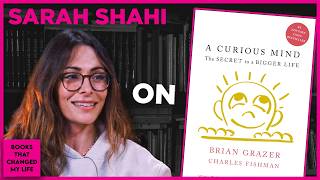
Sarah Shahi talks about how Brian Grazer's A Curious Mind shaped her approach to acting, parenting, and reinventing her life after divorce. She keeps her home library as chaotic furniture, reads everything from romance to self-help, and uses curiosity as a tool to ask her kids for solutions instead of giving answers.
Chapters
you have to be an outlaw for yourself. You have to be an outlaw for your beliefs.
I love that.
You know, it's like if you, if you don't believe in you, how do you expect other people to?
So now the big question: how did A Curious Mind by Brian Grazer change your life?
Isn't this whole interview how it changed my life?
I'm your host, Chris Collins, and this is Books That Changed My Life. Today we have a very special guest. She is an actress and an author. Sarah Shahi, here to talk about the book that changed her life, A Curious Mind by Brian Grazer.
What a room!
You would never expect it from the street, right?
Never! Are you kidding?
We're hiding it pretty well.
Wow. I mean, how much money do you think all these books are worth?
Probably like a million and a half.
Yeah, yeah. I mean, you— they're— I mean, they're rare, they're collectibles. Like, it's valuable. It's so valuable.
Yeah, like I was telling you, I'm always on the hunt.
Yeah, yeah, yeah.
I have a list of stuff I want.
Oh, this is so cool. I just want to play.
Yeah, well, that's the idea.
I just want to get into these books and play.
It's an inspiring space. It's our little Narnia.
It really is.
What's your book situation at home?
Like, what's my display case like? Is that what you mean? I don't know.
Do you have stacks of books? Are they organized?
I kind of— I have everything. Like, I have You know, like for me as a kid, I couldn't read a book quickly enough. I was the kid that my mom would take to the library. I would rent— rent? I don't know.
Check out.
It's been a while. A stack of books. About 4 days later, I was ready to go get a new stack of books. And so books for me have always been such a form of fulfillment, escapism, fantasy, imagination. And so I just found myself in books. And now as an adult, that's what I spend the most money on are my books. So I have a situation where I have 3, 4 cabinets that are, or shelving spaces that are about this big, what you have here. I've got about 4 of those. And then alongside that, I just, you know, like I don't have enough room. So then what I've started doing is I'll stack them in the corner in kind of like an artistic way. And then I'll put a lamp on top. I've got that over by my bed. That's also kind of like that. So yeah, so that's what I have. There's no, like, there's no design, but the lack of design is the design. So it's like in every corner there's stacks of books and then there's the shelves. That was a long-winded way of answering that question.
No, but it's great. I always wanna know how people do it. So you're almost using 'em as furniture. Out of necessity.
Yes. Yes.
You're a coconut latte.
Oh, my. Oh, my. Oh, what is this? Is this all one piece? Who are you guys? I am so tripped out right now. This space is amazing. Gina, I'm so glad you booked this for me.
We take our coffee very serious, though.
You guys are my people. Books, coffee, music. Like, wow. Who needs acting when you've got this? This is incredible. Thank you so much for having me.
No, thanks for coming. Yeah, but you gotta score this latte for us.
I mean, it's a 20 out of 10. Like, it's incredible. Incredible. And I really like the colors you guys use here because your doors were pink, this mug is pink. Like, I like this. I like this. We are simpatico.
These, these mugs are done by a local artist in Silver Lake, Peter Scher.
Oh, really?
And they just like— it's like it has a coaster almost.
It's very comfortable.
And then it just feels great in your hand.
Yeah, yeah, yeah. It's like, perfect. Really, really smart. I like it. Thank you.
So then your process for books, like, if you go buy 3 or 4 books, do you have a queue of books you're waiting to read?
Always.
And do you read one at a time or a couple at a time?
Multiple.
Multiple.
Yeah, I do. I, you know, I've got a lot of different sides of my personality that like to come out randomly. And so most of my books, um, I'm always reading something that feels romantic and a bit smutty. And then, um, I like something that, uh, self-help and development is always a space I'm really interested in. And then, um, I guess that's really— those are the two main ones. And then maybe like a biography of somebody that I'm interested in learning about. So there's, yeah, at any point in time, there's always three that I'm kind of juggling. I read every night, even if it's just for 7 minutes a night, 5, 6, 7 minutes a night. I have 3 kids, so they keep me pretty busy. But it's, yeah, it's almost like a ritual. Like I really need to do that to sort of decompress and wind down before I close my eyes for the day.
Are your kids readers?
Not as much as I would want.
No, no.
It's, you know, it's harder to get kids to read these days because there are so many other distractions that they have.
They're just on their phone.
There's that. And that— well, no, not phones. They don't have phones, but just the video game world. And, you know, COVID was really hard for kids. It's been a challenge for me to get my children Because, you know, COVID, they socialized on screens, right? They weren't allowed to go to school. We didn't have play dates as much. My children are still young. And so now it's, it's something that I'm still trying to actively undo. And if they want to play video games, they've gotta give me 30 minutes of reading. You know, that's sort of the, the compromise, the, the one thing they get to do for me and then they get to do something for themselves.
So in that 30 minutes, what would they read?
My daughter loves to read fantasy, so stories about witches and the cosmos, and she likes The Land of Stories. And then my son, he is into sports, so there's always some sort of sport thing that I've gotten him into, and comics. You know, for me, I'm like, I don't care. And then I have an older son who is 16, almost 17, and he kind of— he, he likes the classics. Like, he likes Old Yeller. Um, I know, right? He just cried his eyes out. Um, so I can't really get him to read anything more modern, which is fine. So he'll, he'll stick to whatever they're doing at school and, um, and sort of the classics.
Yeah, yeah, that's fun. Do you feel obligated to finish a book?
I kind of do.
I don't.
Good for you.
The book works for me.
I love that mentality. Yeah, it does, Chris.
By chapter 2, if you haven't taught me something or I'm not getting anything, I'm out.
I have to say, I do get irritated if a book doesn't catch me from the beginning because it's like, how much time am I willing to invest until it gets good?
It's got to be good. There's so many choices. It's got to be good.
Yeah, that's a great way of looking at it. And I actually, I might take a page from that book. And start doing that myself. That's really cool.
Like, I even think that in here, like the books that I'm not interested in, I want to make room for other books.
So when you go out and you buy your books, how do you— like, what are you looking for when you purchase a book? What are you looking for? Especially if you're, you know, like you said, if it's not all of these books in here catch your interest, correct? Or most of them do.
Most of them do.
Most of them do. Okay. Okay. Got it. Got it. So before you purchase a book, Do you have to, like, read it?
Or— yeah, I want to know what it's about.
Buying it online or something, like, you know, if you hear of something that's really good, you're not just going to go buy it. You want to know for sure.
Oh no, I might buy it.
Okay, okay, okay.
But it wouldn't make it in here.
Are you responsible for all the books that are in here?
Well, the team helps me, so it's all inventoried.
Got it.
So we have it in a database, and then a lot of times, like, I gotta ask Josh, Josh, do you know where this one is? Yeah, yeah, like, because I I can't find it, but I'll try first.
Yeah, yeah.
But yeah, art books are different, or photography books, than like a biography, right?
Of course. Of course. So if it's an art book, yeah, there's an emotional sort of discovery that happens as you're going through it.
But if it gets me right away, then I'm like, okay. Or if there's a couple of pieces in there that I, that I like, then I'll get it.
Yes.
The— I think 50% of what's in here is art.
Interphotography. Oh wow.
Which I had to rearrange this because I thought everybody was into what I'm into, but a lot of the business stuff that we do in here, they're more interested in presidents and biography and leadership and stuff like that. So I had to move that up.
I see. When you have your events here, um, and you say a lot of the businesses that come in here, are they opening the shelves and going through the books? Like, sometimes they are. So that's allowed?
We want people to—
you want people to interact. They're not—
you know, one of the mistakes we might have made is we modeled this after the Morgan Library, where the books are behind something.
Yes.
And it, it gives them an importance, but it also makes them feel untouchable.
Yeah, yeah, yeah, for sure.
We try to leave stuff out and encourage interaction.
Yes, I get that.
But we're constantly giving permission. We're constantly like, yeah, tell us what you want, or yeah, yeah, just help yourself. But most of the time, people are still a little intimidated, which is an outcome of the design. If we designed a different library, I'd do it different because, like, the front photography room feels more inviting.
Yeah, because there's no barrier between the person and the book, you know?
Yeah. So we learned from here how we wanted to do that.
Yeah, yeah, yeah. Maybe I could just put a little sign up or just tell people what you just told me. Very cool. Yeah, some of the books are so gigantic, like ginormous, like, yeah, you know what I mean?
They're like, we'll take it down for you and put it on a stand, you know.
But how cool, how cool. Very cool.
Yeah, we're having a lot of fun. I think that's what's important.
How long have you guys been doing this? Sorry to ask, I know you're supposed to like—
well, I've been collecting books for a long time. In our old office, what they used to do in the office is every once in a while they just box them up and put them in storage. Oh wow, because I would have so many.
Right.
And they were everywhere. And then I just decided, like, I want them— it changed my relationship when I had them all in a room.
Yeah. So you— wow. So you don't have anything in storage anymore? You brought them all out?
Well, no, we have a bunch in storage, but they're the ones that we've moved out. So we have another building down the street that's full of books that we probably should have an online store and sell or something. We're figuring that out.
Yeah, I really like those libraries that have popped up around the city where it's the free library library, and you can, you know, because I don't— because I have books too that I just am not interested in for whatever reason, but I think it's like sacrilegious to throw away a book, so I'd rather give it to somebody. And those on— those free libraries are such a great way to keep the book rolling in the community somehow. You can give one, take one. I think it's a really great idea.
Yeah, there's a couple of those on my street. It's great.
Yeah, really, it's great. Yeah, yeah, for sure.
Sometimes I've taken books and then I feel so guilty that I haven't yet put one back. I have to run and do it. The guilt gets me.
Right.
So let's talk about where you were when this book came into your life. What was going on?
Life is always happening to me, Chris. Oh, yeah.
One question I want to ask you is about reinvention, because it seems like you've reinvented yourself quite a few times.
You know, the discovery of who I am is an ever-consistent process. And I feel like as people, we're constantly changing. We're constantly redefining who we are. And I'm someone who has led a very colorful life from the time that I was young until now. And I've all— I've— I'm redefining who I am. I'm learning who I am, you know, especially within this last year of my life. Being single, that's a new thing for me. And yeah, just reinvention has been a theme for sure. Becoming a mother, becoming a wife, getting a divorce. Like with each job that I get, I learn something different about myself. And in terms of where I was when that book came into my world, I can't remember when it was, but it was before 2020. Like right before 2020. And I kept running into Brian Grazer. I would see him in the waiting room at Sony. I saw him out to eat. I would see him in a parking lot. And I've always been such a massive admirer of his movies, but I didn't even know that he wrote a book. And so, I live down the street from Bookstar on Ventura Boulevard, and I'm always in there, and I'm always perusing the shelves. And sure enough, his book was on the shelf. So the fact that I kept running into him, I took it as a sign as this was something that I needed to explore. And it really did change my life in a way that, you know, the whole book A Curious Mind is— it's about how questions are used like as currency. And it's not a weakness to not to know something, it's actually a superpower. And he presented it in a way that was like your key to success is asking questions and being okay and feeling safe in not knowing something, but instead putting yourself in a position where you can ask the people who either you look up to, or if it's someone who knows something and you don't know how to do it and you wanna learn something, like, you know, it, it's a superpower to ask the right questions and to be curious. And I just thought that was so smart, you know, 'cause I think as, as people, people, and especially as someone in my business, you walk into a room and you pretend like you know everything. Do you know how to horseback ride? Absolutely. Been doing it since I was 2. You know, so you're constantly pretending. And he was just like, your key is not necessarily to be the smartest person in the room, but just be the most curious, be the most interested person in the room, not the most interesting. And I just loved that approach. So I've used it a lot. You know, I think I don't know is now my favorite thing to say. And the other thing that he did, which I thought was so smart, is he tells you, like if you're having a problem with somebody, he tells you how to make them a part of the solution. And when you do that, it makes people that much more inclined to give you what you want. So even though it's not manipulation, it's definitely a strategy.
Give us an example of how you use that on your kids.
Okay. So I'll say, guys, I'm really tired. And I know that, like, for example, okay, I'll give you the situation. I'll give you the— I'll set it up for you and then I'll tell you how I use that. So like, if I want them to go to bed early, and I'm exhausted and I'm just fucking done and I need them to fucking go to sleep, okay? And I'll be like, "Hey guys, I'm so tired tonight. I'm really tired. And I know we said that tomorrow after school you wanted to go to Starbucks and you wanted to get like a little snack or something. I don't know if I'm gonna be able to do it because I'm just exhausted." I might have to have the nanny come and pick you up so I can just sleep. How do you think we can all like get more sleep? Or how do you think I can fix this or become less tired so I can take you to Starbucks? And they're like, well, God, mom, why don't we just go to bed early? Or why don't you go to bed early? Well, I can't go to bed until you go to bed. I'm gonna go to bed right now. Oh, okay, you're gonna go to bed now? Yeah. Can we still go to Starbucks? Well, if you go to bed now, then I can go to bed. Yeah, let's go. Yeah, fine. So they're like, okay, goodnight, goodnight. So it's that. So you let the other person in on the solution and they're that much more inclined to give you what you want. I've used it in relationships. He gives the example of Russell Crowe. Russell Crowe, he talks about, I think it was the Gladiator. They were doing the Gladiator and Russell Crowe is not coming out of his trailer. The days are running behind, they're losing money. And a few producers have gone up to him and said, like, "You need to come out of your trailer, or we're running behind on our day." And he just doesn't give a fuck. And Brian goes in, and he's like, "Hey." And he doesn't go in with any sort of ego. He doesn't go in with any sort of force or wanting to blame. But he's like— Russell's like, "Hey, how's it going?" He's like, "Yeah, it's good. Everything's looking really good. We've got a few problems." And he's like, oh, what are the problems? Well, we're just not making our days and I don't know what to do. Like, we've gotta, what do you think? What do you think we should do? So he just poses it to Russell and he's like, well, why don't we shoot this and that and that? And if we spend X amount of time here, then we can make it up here. He's like, oh, is that what you think? Yeah, let's do it that way. He's like, okay, great. He's like, yeah, well, I'm coming right now. He's like, great. So he just fully just makes him part of the solution or asks him for the solution. And then he was like, able to make his days and get what he wants. So it's just such a— it's such a brilliant way of doing things, you know. I'd never heard about it like that before. I heard it like that before. That you were like, you're going to bed early, why aren't you listening to me, go to bed, like, I'm tired of repeating myself, you know. It becomes a, like, a forceful way of doing something, and you're demanding, and people don't want to cooperate if you're doing it that way. But if you, if you allow for someone else's intelligence to be able to answer someone's question or, or from an ego standpoint, for you to prove that you do know something and you can help somebody. Like, how rewarding is that? You know? And I've, you know, it's like through the process of writing this book and just the different ups and downs that I've experienced in my life and, and, you know, navigating all of that stuff with children and a career and whatever, at the end of the day, I'm like, we're all here just to walk each other home. Tomorrow is not guaranteed, you know what I mean? And so if we can use our time here in a more connective way, you know, to help our— I'm sorry, it sounds so like kumbaya, but like to help our brothers and sisters. Like, we're all in this thing called life together, so why not?
Yeah.
Yeah.
He— so he talks about curiosity as a leadership tool. In here also. I kind of have understood in the leadership stuff that I've done that the leader is the one asking the questions. That's the quickest way to take control of a situation, is to ask questions.
Yes.
And when you add the curiosity into that, if you're genuinely curious about people and you really get to know them, you can be more effective in guiding them in a sense, because everybody's not the same.
Correct. And I, you know, I just feel in general, like, in order to be a great leader, no matter what it is, whether it's number one on a call sheet and you're, you know, on a set or in your position or wherever you have—
Well, being a parent is the hardest leadership thing there is.
Do you have kids?
No, but I was a kid.
You were. You were a pain in the ass kid. As we all were. But like, You know, yes, that is its own, yeah, unique set of leadership, but it takes a confident person to lead no matter what it is. I think, you know, even great parents, confident parents make mistakes. Like it's so human, but I think it takes an amount of inner confidence to be a good leader. And with that comes, what he talks about, which is this security within oneself that like being curious, asking questions, using someone else's expertise, allowing someone else to do their job that they're good at while you go do something else. Like, it takes security within oneself to do that, you know, to be able to say, you know what, that's a better idea than what I have. How did you come up with that? Or, Yeah, let's do that instead. You know, I don't know how to do this, but you do, so that's great. It just takes so much confidence in oneself to be able to say that. And I've worked with people who, they were so insecure that they, it was their way or the highway. They did not ask questions, they did not care for other people's inputs. It was just the, you know, how they wanted to do things. And when you strip all that down and you look behind the curtain, What I found was there was a debilitating amount of insecurity that the person was carrying and they were too afraid to have it be done any other way, you know? But yeah, to be a great leader, I think you do have to be curious and inquisitive and you have to allow for other people to take the spotlight as well.
Yeah, for sure. Do, do you also think that when people kind of let go of that and they become curious, mm-hmm, they become more authentic because you're not pretending to be something you're not anymore. And you can be more in tune with, oh, this is who I am, good or bad.
100%. And that's one of the biggest things that I've learned about, you know, in my journey thus far. And something I talk about in the book a lot is that perfection is never the goal. It's authenticity and to be real and to be who you are and to not care so much about what other people think. Like, I would rather be liked by one person for me truly being who I am than to be liked by a million people for me not being who I am, if that makes any, you know, if that makes sense.
Ooh, so great.
And it's just, I've just found much more, I found myself to be happier, more fulfilled, more successful. You know, I enjoy my life more when I'm coming from an authentic place and I don't really care how it comes across to others.
Yeah, yeah. I think a lot of people struggle with that. They, they— well, we think this fake it till you make it thing is—
yeah. And, and, and I also think we've been, you know, like I talk about this in my book, I, you know, cave— the caveman days, Caveman Carl, you know, you don't want to be ousted from the group, right? You want to be accepted, you know. Um, there's something in us from the time that from the beginning of time that we were wired to want society and to be chosen and to be liked. And, you know, we'll focus on one negative thing someone says as opposed to the 10 positive things that people could tell us instead. You know, our brains are kind of wired in a way for that, for safety. But yeah, I— wait, what were we talking about?
Just being authentic.
Just being authentic. Yeah. But it is a And what I think is just a conditioning that we've all gotten used to is that we have to be picked. You know, we have to be chosen, we have to be liked in order to feel like we're part of something. When, as we've learned—
Pick yourself.
You can pick yourself.
You can knight yourself.
There's also that great Dr. Seuss quote. You know what's funny about Dr. Seuss? I didn't know this, but he didn't like kids. Isn't that interesting?
Makes perfect sense.
Isn't that— I know, right? Of course he would feed them green eggs and ham, that little fucker. Fuck her. Yeah, poison them. No, it's just joking, joking, joking, joking. But, um, you know, he's— one of his famous quotes, I love this quote: those who matter don't mind, and those who mind don't matter.
Yeah, you know, it's good.
Yeah.
Okay, can we go through some, some highlights in here?
Let's go.
So let's just start on page 9. Curiosity isn't enough.
Yeah, do you want me to read? Yeah. Okay, okay. Yeah, so for it to be effective Curiosity has to be harnessed to at least two other key traits. So first, the ability to pay attention to the answers to your questions. So you have to actually absorb whatever it is that you're being curious about. And the second trait is the willingness to act. Courage. You know, I think that's a big thing. Wait, am I supposed to talk about this now? Wait, what am I supposed to do after I read it?
Whatever you want.
Oh, okay, okay.
I'll ask you questions.
It's like, wait, because I can fake it till you make it all day long here. Um, but no, um, you know, this is such an important thing that he, he talks about because it's like, I'm somebody who, if somebody starts giving me directions somewhere, I'm like swimming. I'm like, my eyes go all bonkers. Like, I'm horrible with directions. I don't absorb anything. I'm just like, uh-huh, uh-huh, uh-huh, and then I'm like, wait, 'Which way was I supposed to go again?' You know, so, so, but what he talks about is so important is you have to be able to absorb the answer, like when you ask the question, like really understand. And, you know, and to that point, sometimes I, I'll just personally speaking, I don't always understand when somebody gives me the answer to something, you know, like a great, a good example of this is in my work as an actress. People have a million different interpretations of what what sad is or what happy is. Or if I get a note from a director, it could— yellow could mean something to them, but my version of yellow means something completely different. And I used to spend time, like, I would take the note and go, oh yeah, got it, got it. And then I would do whatever I thought they were trying to get me to do, and it wasn't that. And so now I'm in this place where I actually won't go and do the scene until I fully understand what they're talking about. And I'll be like, "I'm so sorry, I don't get it. Can you break it down for me, like, even more?" Or, "What are you missing?" Like, that's another good way to ask that. You know, if I feel like I'm not— if we're just— we've got cross definitions on something, it'll be like, "Okay, so what are you getting based on what you saw me do? What are you getting? And then what are you missing?" And then from there, I can usually absorb or understand what their note is, and then I can go and make the adjustment, and then it's great, and everyone gets to go home. The other part, he talks about the willingness to act. You know, that's one of— I mean, Maya Angelou talks about courage being the most important of all the virtues. Of all the virtues that are out there, courage is the most important, and one in which I have found that I've been able to make those changes, those grand changes in my life when I have the willingness to act. And courage is not something that, you know, we're born knowing how to practice, right? It takes an intentional effort to do the thing that feels scary or to do the thing that's unknown. So to have the willingness is massive.
Do you find too, sometimes when people are asking questions, they're not asking questions or making statements?
Oh, all the time.
You have to be genuinely curious and want to understand.
Yeah.
Not impose your idea.
Exactly. Like, like, you know, the other thing that I loved about his book is he talked about his key to success was not being the smartest person in the room. Like, he was, he was so upfront and, like, open about the fact that he actually doesn't know shit. But the reason why he got to where he is is because he asked so many questions. And I think that most people, they are concerned with being, um, interesting or coming across interesting and the coolest person than being interested, you know? And, um, I mean, not to take it back to this, but whatever, I will, because I just said that. Um, in this, I'm, I'm like back dating now. The amount of conversations I have with people, like men who don't know how to have conversations because it all becomes about them and, and they try to come across interesting as opposed to interested, you know? And like, I'm somebody who like, I ask questions and, and I want to know like, you know, what makes them tick and what gets them off and like, what are they into. Zero reciprocation. And then they'll be like, that was so amazing, I love talking to you, you're a great conversationalist. You suck because you don't know how to have a conversation. This is all one-sided. No. But yeah, most people, it's almost like they're too scared to be interested.
Is that what a date is like nowadays?
Is— I don't know. I guess— I mean, I guess that's what it is. It does— to me, those are zeros. Those are like not real dates. They suck.
Yeah, can't wait to get out of there.
Yeah, exactly. It's like by the time the entree comes, it's like, oh, so sorry, the nanny called. You know, you're out of there.
When I was single, my trick was I would just meet for coffee. Because I didn't want to get caught.
Yeah, yeah, yeah.
If the girl asked me 3 times if I want kids before the entree came, you're like, kidding me?
That's so annoying.
Yeah, dating sucks.
It really does. It really does.
Okay, let's go to 13. And he's talking about Adam and Eve here in Genesis, kind of the beginning of time.
Okay, there you have it. The first story in the foundation work of Western civilization. The very first story. Is about curiosity, and its message is don't ask questions. Don't seek out knowledge on your own. Leave it to the people in charge. Knowledge just leads to wretchedness.
And it's all Eve's fault.
That's right. Because she took a bite and they told her not to. She was curious. Yeah.
She's like, what does this thing do?
Curiosity still gets no respect. Look at that. We live in an era in which if you're willing to squint, All of human knowledge is accessible on a smartphone. What did I just say? What did I just say before that? It's, that's, it's, it's horrible. But the bias against curiosity still infuses our culture. This reminds me of like with my kids, I have 3 kids. If I don't want them to do something, and this is a big parenting choice for me, and I know a lot of parents who don't do this, but for me it's very important. When you tell a child not to do something, right? Or they get a consequence for something that they did and they ask why, I entertain that why. I tell them why. And I know so many people that their answer to why is just because I said so. And I think that is the worst thing that you could tell. First of all, a child whose brain is still forming and you want them to be adults who think outside the box and to have big brains and knowledge and you want them to ask why. And I just often think about the way I would wanna be spoken to is if some, you know, something didn't go down the way I wanted it to, or someone told me I couldn't do something or say something or whatever, it would be like, why? And I would want that curiosity fulfilled. So it just, he's so right. This is why this book changed my life. You know, it's like everything he says, he challenges the ways in which we were brought up into thinking that curiosity and not knowing is a weakness, but it's actually, one of your biggest strengths is to ask why.
Yeah, that's good. That's great parenting. Also, like, I remember being a kid and like not wanting to go over to Uncle Tom's because Uncle Tom's kids would beat me up. Oh, and my mom would be like, you not only are you gonna go, you're gonna be nice and like it. And it's like horrible. I hate it. I hate it.
I'm not trying to say you're— but, but, but, but no, like, that's, that And it's so common, right? It's like, you know, these people-pleasing tendencies that are ingrained on us from youth is to be nice, to smile, to just accept whatever is put in front of you.
And it's like, no, the kids that make it the furthest are the ones that didn't fit in.
They rebelled.
Yeah, they questioned authority.
I totally agree.
I never trusted authority from a young age because it always betrayed me.
There you go. Look at that. Yeah, no, I was similar but different. It's like we were the opposite sides of the same coin. Like, I was like, "Oh, okay, you're authority." Well, you got there for, I'm a Capricorn, so I've always thought about ambition and success and drive. Like, I've always been into drive, right? So I would look at somebody who's in an elevated position and be like, "How did you get there? Like, you must be somebody important. How can I be that person?" You know what I mean? And then if I was told, "No, you can't do something," it just made me wanna do it that much more. Much more. And I always did it and then was able to figure out for myself either that was a good thing or a bad thing, but at least I now know.
Yeah, you know, Capricorn also.
Get out! When's your birthday?
January 13th.
I'm January 10th.
Oh wow.
Yeah, yeah. Do you know your other placements? Do you have astrology books in here?
Oh yeah.
Uh, do you know your other placements? No. Okay, cool. I can do your whole birth chart by the end of the session.
I like it. Let's do it. Okay, let's go to 51 and 52. And this is just a conversation he had with Lou Wasserman that I think is pretty incredible. And I think it's about the yellow notepad.
Oh, interesting. Okay.
Do you remember the story? No. He was telling him, I remember, but not really. You have nothing to offer, so take this yellow notepad and this pencil. And write something like your, your ideas are the only commodity that you have.
I love it. If there are a dozen ways to become a producer, you don't have any of them. I love it.
So inspiring.
I love it. You can't buy anything. You can't buy a script treatment. You can't buy a book. You don't know anybody. You certainly don't represent anybody. You have no leverage. You really have nothing. But the only way you can be anything in this business is if you own the material. You have to own it. Look at that. Wow. Here's a yellow legal pad. Here's a number 2 pencil. Put the pencil to the pad. Go write something incredible. Otherwise, you're off the hook.
That he sat there and took that advice to heart. Like, he didn't get offended. He was like, okay, I got to get to work. Where most people would give up at that point or want to fight and argue. And how could you treat me that way? And he was like, okay.
They would lead from a place of ego and feel super offended and be like, fuck you, Wasserman. But he really— no, he listened. He was open. Look at this. My curiosity was worth more than money because I didn't have any money. Look at that. I got busy using my curiosity to create ideas. So smart. So smart.
And basically the opposite of how most people would react.
For sure. For sure.
I mean, which is why he is who he is.
Exactly. You know, with my book, like, I'm glad that you brought this up because I forgot about this part. And I had a similar thing happen with my book at the time when I wanted to write the book. You know, I had this, it was 2020. Yeah, 2020. I had gotten a divorce at the same time I got cast in this show called Sex/Life, which was about this woman who on paper seemed to have it all. She was a mother, she had a wonderfully successful handsome husband. But she just couldn't stop thinking about the what if. What if I had taken this path instead of that? She was kind of haunted by those dreams of the path not taken. And again, I was at— my life was kind of paralleling this character. And by the time the show came out, news of my divorce broke and women from all over the world were writing to me, how did you do it? How did you have the guts to do it? Start over at 40 with 3 kids. How'd you do it? My, my press became advice columns to women everywhere. And then I was like, what if I wrote a book? Like, I was just being approached everywhere from every angle about women who just wanted advice. And so I was like, what if I put this all somewhere that it can live, that it can help people? At the time I had these reps, none of which I'm repped by now, agents and managers, that when I told them like, I'd like to write a book, they laughed and they were like, you don't know how to write. You don't know how to write. You don't have anything to say. Why don't you stick to acting? It'll pay you more. And then it took me about 3 months to even connect with someone in the lit department of my agency. I mean, literally their office is down the hall from my agent. Like, why did it take 3 months to connect with that person? But it did. And I sent in a couple samples of my writing. And by the way, at that point I had already written an article for Glamour magazine that went viral. And they were like, this is our highest, you know, article, got the most hits. Like people spend an average of 4 minutes reading this online. Like nobody spends 4 minutes reading anything anymore. Like this was good. So I had already kind of like dabbled into it and I had a voice. And the people at the Lit, in the Lit department were like, you know what you should do, Sarah? Keep writing these notes that you're writing. They called it notes. And when you're 80 or 60, maybe you can, like, write a memoir. Like, that's what they told me. My reps, like, I'm paying you guys and you're supposed to believe in me no matter what. And, and that's what they, that's what they said to me. But I, my, my passion and my desire to put this out there was bigger than what they said, you know? So I ended up firing them. And then I just—
For that reason?
There were a couple of other reasons that I found out.
Those sort of approaches to things travel in packs usually.
Exactly, exactly. Yeah, there were a couple of other incidences that I became aware of. And once I connected the dots, I was like, oh wow, you guys are not in it for me at all. Like you just care about a paycheck I bring in. You don't care about my soul. You don't care about my artistic integrity. You don't care about what I have to say. Like, I am a paycheck for you. So yeah, once those became clear, I fired them and whatever. But it's so true. Like, I talk about it. I'm like, you have to be an outlaw for yourself. You have to be an outlaw for your beliefs.
I love that.
You know, it's like if you, if you are, if you don't believe in you, how do you expect other people to? And like, I remember going back to what we were talking about earlier, which is, you know, from the, from childhood, we're kind of brought up with this idea of put other people first. Smile, like, you know, um, be nice, you know, don't ruffle any feathers. I thought it was bad to be selfish. And one day— that's what we're raised with— I was listening to Oprah and like Super Soul Sunday, and she talked about the word selfish and it being a positive thing. And she was like, to be selfish is to be full of one's self. How beautiful is that? And I was like, mic drop. Where has this been my whole life? And I started leading my life from a different viewpoint from that point on. It was just to be selfish, to believe in yourself, to be an outlaw for yourself. How beautiful is that?
Yeah. Most people have a hard time with that. Most people are waiting for permission.
I know. It makes me sad, actually, because when you, when you do start living life from the other side of that coin, it's hard to recruit people. It is. But then you also see how beautiful life is. You see, like, how rewarding life can be, how there's magic in just everyday things. You know, there's miracles all around. But you really do have to have the courage, like, pick yourself up by your bootstraps and just make those decisions that get you on the other side of your fear. George Adair, he— another quote that he said that I love. I love quotes, by the way. I'm like an encyclopedia of quotes. Like, I think I— like, didn't I quote like 5 people as we were walking around? Like, it was just, oh, you're also doing the camera? Look at you, you're doing everything here. Yeah, like there were so many quotes that I was like, oh, this person said this and that person said that. And you know, who was that? That wasn't— who was that that's over there?
The—
not Orson Welles. Churchill. Churchill. I was like, Churchill said that anyway. But George Adair, he was like, everything you've ever wanted is just on the other side of fear. And it's so true.
So true.
So true.
What's your favorite quote?
I have a few. Robin Sharma said, don't do the same thing 75 times and call it a life. I really like that one. Churchill said, "If it feels like hell, keep walking." Bukowski, "Find what you love and let it kill you." What else? There's the Gandhi one. I love— I'm like, "Man, Gandhi." He said, "Be the change you wish to see in the world." But I feel like everybody kind of knows that one. And that was a very resonant quote at one point in my life, but it's not as much anymore. Dolly Parton. Uh, what is it? If you, if you, um, if you want the rainbows, you got to put up with the rain.
Those are great.
Yeah.
Okay, 74. So this is Brian's conversation with Veronica Denegri. I hope I don't—
you said 74?
Yeah, page 74.
Oh, can I try another quote? Sorry.
Yeah.
Goldie Hawn: Follow your happy. Okay.
So she was a political prisoner, tortured.
Yes.
And it's kind of one of the most impactful moments in the book where she's talking about resilience and control.
What Veronica told me is that to survive being tortured hour after hour every day for 8 months, she had to get into a state of flow as well, but a flow state of an alternate reality that has its own narrative. Oh my God, this is like making me shake. That's how she survived. She couldn't control the physical world, but she could control her psychological reaction to it. Fine, you have to find a different story to tell yourself to take you out of the torture. Now this makes me want to read her book. Wait, did she have a book? Like, maybe she does. Um, wow. Yeah, that reminds me of— so I love being a student, just student of life. I love learning things, like, whatever. And I am a student of Joe Dispenza. I don't know if you've read any of his books, and where he talks about your reality and changing your reality. So you look at a story, and in her case, she was being tortured. And what strength like she had and what control over her mind. Most people don't have that kind of control over their minds to be able to sell themselves a story so drastically different, you know, especially—
Even calling it flow.
In that moment, right? Incredible, incredible. Oh, that reminds me of another, quote that I love. Bruce Lee, be water. Um, my God. But it goes to show you how a lot of times we are victims, or we choose to be victims of our circumstances, as opposed to looking at something from a different point of view and the magic that can come from changing your perception to reality. You know, there are so many studies that are done about like Sports players, they won't actually practice, but they will visualize themselves making the goal or the home run or whatever it is, and it can be just as effective as the practice. So your mind really doesn't know that much difference between reality and what you tell it. You just have to get really good at convincing it to believe in a thing. Different story. Um, an example— this is a frivolous example compared to what she's talking about here, but, um, I went through a breakup last year, and anytime I got suckered in— this is, I guess, for the women that are watching, I don't know— but like, uh, anytime I got suckered into the story of, oh, I miss him, because I didn't miss him, right? It's like, we broke up for a reason. But something happens when you break up with somebody where you be— you almost get like amnesia and the person has a halo on their head and you start romanticizing the relationship and you start forgetting all the things that got you to the breakup place to begin with. Um, so anytime I would catch myself in those narratives, I instantly started pivoting and instead I'd go, wow, look at my capacity for love. Like, my love gives me wings. My love makes me feel like I can fly. My heart is so deep. Like, how lucky am I that I get experience the depths of my heart, that I can experience how great love makes me feel. And also, like, how beautiful is this pain? And I'm alive to feel it, you know. So, so again, this is nowhere near what she was talking about, but like, at the same time, it just— it reminds the story as of, you know, you can tell your mind a different story, tell your brain a different story, and you tell it convincingly enough and it can save you. You know, so I'm just not, I'm not surprised about this. And I'm glad you pointed this out because it is such a big moment.
Is the key to that that you have to be intentional?
You have to be so intentional. You can't leave room for doubt, you know? And the way that works, again, I've learned all this through Joe Dispenza, is neuroplasticity, you know? So it's like we have all these neurons in our brain that are all used to firing in a certain direction because that's Those are patterns, those are behaviors, right? So when you want to introduce a new thought pattern, you have to do it repetitively and over and over and over again until there is— that old road is destroyed. You're building new pathways, new roads. It is hard to do, but it's actually very simple. But it's hard because we get into our own way a lot.
Yeah, to a degree though. Let me give you an example.
Go for it.
If you walk up to a fire on the stove Correct. And you stick your finger in the fire.
Yeah.
How many times do you have to relive that before you don't stick your finger in the fire anymore?
Well, yes.
So how intentional you are and how driven to change or driven to accomplish something shortens that learning time.
Yes.
Like if this building's on fire.
Yeah. We're not going to stay here.
Yeah. So we're going to leave. The intensity that you bring in, the intentionality shortens that pathway. If that makes sense. How much you want it.
Yes, for sure.
You don't negotiate with yourself too much if you're very driven.
That's right. Nothing can get in your way. Yeah, yeah, yeah.
But if you're indifferent, then it's like if, you know, you can tell when somebody says, I'll try, it's like, okay, well, basically you're telling me you're—
you're not going to do it.
You're going to tell me that it takes 64 days to create a habit.
Right, right, right, right.
Here we go.
No, you know, and well, I talk about that. I don't, I, in, in the book is I talk about like doubt and I don't know, it's such a, I felt like I spent a large portion of my life in that space. And the, I don't know, I don't know what to do. I don't know what I want. I don't know if I wanna be married. I don't know if I this, I don't know that. But the thing is though, what I've found in those moments is you've got your, like, if you think of like a boxing ring and you've got the old you in one corner and you've got the new you that's trying to break through in the other corner and they're both battling out to see which one will win is that I think if you spend enough time, you know, people saying, "I don't know," as an excuse is slightly different. But like, if you spend enough time in stillness and in quieting all the noise and you start to hear what you want and like the direction that your soul is telling you to go, you really do know. Like everybody knows, everybody knows the answer.
You're just scared to say it.
100%.
Or scared to face it.
Both.
Back to courage.
Back to courage. And back to courage and back to ego. You know, there's this little part in our brains called the amygdala. I always mispronounce it, so it's either amygdala or amygdala, and I'm gonna say it both ways. Amygdala? Amygdala? Amygdala? Okay, thumbs up. Um, I don't know. See, get curious. I don't know. Um, amygdala, is that right? Yeah, um, its job is to set off a 4-alarm fire anytime something goes down that feels uncomfortable in our body. It's the flight or fight response system in our brains that were formulated back when we were, you know, hunting for our food and there was a potential saber-toothed tiger around in the corner. But like, now we don't have saber-toothed tigers, we have, uh, we have negative people. We have people telling us we're not good enough, or we have those inner doubt systems running, um, the show. And so it's like you really do have to actively make a choice. You have to have courage, silence that, put it off to the side, and do the thing that you truly want to do.
Yeah. Okay, page 170, he introduces the idea of anti-curiosity.
Oh. Anti-curiosity isn't just the determination to grab hold of an interesting idea and push forward in the face of skepticism and rejection. Anti-curiosity is something much more specific and important. It's the moment when you shut down your curiosity, when you resist learning more, when you may have to tell people, "No, that's okay. Don't tell me all your reasons for saying no." Yeah, it's when somebody's wasting your time.
I also had a mentor once tell me that people are one of two things: they're open or they're closed.
I get it. I think, you know, and as Capricorns, I find myself sometimes in that position where I, I have the ability to go both. Where I can be really open. But then as soon as I'm convinced that something should go down a certain way or whatever, everything else just sounds like a bad idea or an excuse, or I don't want to know the reasons, like, just do X, Y, and Z. Or, you know, I think you have to have a lot of, um, confidence in order to shut things down and say, nope, I don't want to do it that way, or I don't want to hear this, this is how it's going to be. Um, which I think is a boundary in some way, right? Like, nobody wants to have their time wasted. Like, I'll give you an example. There's an editor I'm working with right now for, um, my— when I was on my book tour we had a videographer in each city, and we were putting together these little compilation videos on how the tour went and me talking and the audience and so forth. And we did a bunch of them. And so this new person that I've been talking to put together like a travel video, like it was barely even about the book tour. It was more about the city and the location. And, and all it was was like an intro of me saying, welcome everybody. I said one thing and then he was like, goodbye, thanks for coming. And I'm like, no, no, no, no, no, hold on a second. So I've been talking to him nonstop. It got to a point today where he was giving me reasons why he was doing what he was doing, and I just didn't give a shit because I have— I know exactly what I want. I've done it 4 other times. Like, I know the outcome I'm looking for. I don't really care about why you did what you did or what you think is going to be accomplished because we went over that the first 3 times. So I'm done. This is how it's going to be, you know? So I was no longer curious.
A lot like being on the date with the guy that you're super curious about himself. Yeah, because you know your audience, you know what you're trying to— yeah, convey.
Yes.
So he should be asking questions and trying to figure out what your goals are, as opposed to telling me why he did what he did.
It just doesn't matter. Yeah, you know, stop Stop wasting your breath and my ears.
Yeah, totally understand. Yeah, Capricorns can be that way.
They really can. Like, we can be, I think, very open. But the thing is too, it's like, I think— I don't know if I would call us natural skeptics. Would you?
Oh, I don't know. That's a great question. I think sometimes I am and sometimes I'm not, right? But I do think I try not to be.
Sure, sure, sure, sure. I'm very spiritual too, so I've had to put skepticism aside. But I do know that in order for me to attach to a belief or an ideology, I do need proof.
I was going to say, what's the difference between skepticism and disappointment? Because I think I feel disappointment more than skepticism.
Really? Well, I feel like skepticism is— I feel like disappointment is an emotion, and skepticism, you're leaving— there's a slight door that could potentially be open to change your mind about something, whereas disappointment, there is no opening.
Okay.
I don't know if that definition resonates for you.
Yeah, well, I was gonna— I was thinking that skepticism is an emotion too, so.
Okay.
But I get it, I understand.
Well, yes, it is an emotion, you're right. But I feel like— sure, yes, yes, it is definitely—
and I'm not pretending like I'm like everybody else because I know I'm probably pretty unique, but—
yes, yes, yes. But, but I do think disappointment is a more concrete feeling, whereas skepticism, maybe there's room, there's a slight opening for something different.
Yeah, I find myself a lot of times like being disappointed in the fact that people are stupid, try to make things so simple and one-dimensional.
Yes.
And there's just way more to the story than what is being conveyed.
Oh, 100%. Yeah, yeah, yeah, yeah. I think that's very true with with life, with politics, with business, with everything.
It's way more complicated than just that judgment. Like, people are very judgmental.
Yes. Yes.
And so I work very hard at changing my default setting to not be judgmental, because, you know, when you judge, you get a little dopamine hit.
Totally.
It's built to conserve energy. Did you know that?
I did not know that.
So before energy drinks and sugar and all that, like, we were conserving energy because energy was a hard thing to come by. And so when you judge, it's final. It's dead, right? If you say like, oh, that person's an idiot, you get a dopamine hit and then it's final. Like, you never come back to renegotiate whether they're an idiot or not. You're right. And so I have to work really hard at changing my default setting to not judge.
I get what you're saying.
Don't judge.
I get what you're saying.
But then disappointment is the next. It's like, okay, but terrible parenting, or, oh my God, like when you—
when you—
oh, I get why it's a dopamine hit, because it feels like an accomplishment to label something, and you save energy because you're done, you're on to the next.
Yeah. Another one of my favorite quotes is a Winston ad: Judge me all you want, just keep the verdict to yourself.
That's good. Okay, page 197. This is the last one.
197.
A Renaissance of curiosity.
I like how that sounds. There are two things you can't find on the internet, just like there were two things Robert Hooke couldn't find in the Bible or in the decrees of King Charles I. You can't search for the answer to questions that haven't been asked yet, and you can't Google a new idea. The internet can only tell us what we already know. Wow, that's very profound. What's your question?
I don't know that there needs to be one.
There is no answer for questions that haven't been asked. I mean, hold on, give me a second. Now, you told me that last one was going to be— you were right. I think the point of something like that is almost like it's a reminder to be open, that there are so many ideas that are still unexplored, like discovery, you know, like that, that's kind of what I'm getting from this is the importance of keeping that sense of discovery alive within oneself, you know, When he says, "You can't Google a new idea," you can't Google it because it's not out there, right? It's still to be discovered. You know, the internet can only tell us what we already know. So it's like the information, that which we know is already out there. So look for something you don't know, or just be open to that spark of madness. That's what I get from it. It's like the spark of madness or magic that is out there waiting to be found, you know? So, I mean, I could take that in a direction now that's more about, like, less time on screens and more time in nature, you know? So it's like that has so many different interpretations as to what it could mean.
It's very optimistic.
It is very optimistic, and it's very open. It's just so open and so, like, inspiring, you know, that there's still so much out there that we don't know. But to constant— but to live with the curious with an insatiable curiosity about life and discovery, and to allow yourself, I think, to be wowed by the magic of simplicity. You know, it took me a long time to understand the beauty of just like the birds chirping in the morning and how special something like that is, you know, to allow myself to be in awe of the things that we so easily take for granted. And that within itself opened up like a whole new way of looking at things for me that I hadn't before. One of my favorite things to say when someone says, you know, how are you doing this morning? How are you doing today? I'm like, you know what? Everybody I love woke up. I'm great. I'm winning. You know, it's such a, it's such a great reminder, an ability to stay inspired by the simple things.
It's beautiful. Could have the book, I guess. So now, so now the big question: how did A Curious Mind by Brian Grazer change your life?
Isn't this whole interview how it changed my life?
But you got to summarize it.
I've got to summarize it. All right. You know, that book changed my life because it made me feel like, it made me feel safe in not knowing something. And if anything, it made me feel like one of my biggest strengths is to ask questions. Like, you know, I'm not, I'm the first person to say I'm not the smartest person in the room. And I don't know the answers, but it made me feel secure in saying that. And what I have found is that not only do I become smarter by saying, hey, I don't know, what do you mean by that? Or can you explain that to me? Or, you know, like not only does that make me feel smarter, but there are also a bevy of other people in that same room that thought the same thing but didn't have the guts to say it. So it, it has changed my life by, making it feel like curiosity and not knowing is a superpower. And then it also helped me in terms of like, you know, this is gonna sound like a tactic, but I guess it kind of is. When I want something from somebody or if I have a problem that I need to fix, I allow them to be part of the solution. And so I come to them with the question of, hey, I'm feeling this way, how do I get to this? And 9.5 times out of 10, they are able to present me with the exact same solution I was thinking of, but now they want to do it because it was their idea. Does that make sense?
Yeah, they own it and they feel good.
Yes, you've, you've allowed them to be a part of their own solution, and therefore they want to do it.
It's great. Yeah, it's a great answer.
Yeah.
Okay, now tell me about this.
Life is Lifey.
What has been the biggest surprise?
I know the person who wrote this book.
Since you put this out.
Wow. Um, the amount of people— the biggest surprise for me has been the amount of people that have reached out to me, whether I was on book tour or online, that said how seen they feel after reading this book. You know, I, I wrote this, this book was birthed out of a very specific time in my life where I felt like I had nothing figured out. I didn't know what I was gonna do one moment to the next, but I just knew I wanted a life that was bigger than the one that I was living. And I didn't know how to get there. I was too scared to get there. So many people have felt seen and heard, and they've laughed, you know, through these chapters. I had no idea it would make the impact it was making.
Do you think that's because of the vulnerability that you put into it?
I think so.
Were you scared writing it?
I was scared of a couple chapters.
Did you delete anything?
No. Yes.
What do I do with that?
You put a faux pas in there. Yes. I deleted one line. I deleted one line. Do you know the author, Sahil Bloom? No. Okay. He wrote— I can't remember the name, so I shouldn't say it anyway. Um, it was at his— well, first my publisher mentioned it, and then, and I was like, no. And then I asked him, and he wrote a bestseller, and he's very open-minded. I was like, what do you think about this? He was like, maybe. I don't know if I should say it or not because I don't know if I should say it. Well, I just don't want to—
you don't have to say it.
Okay.
What was, what was the part that, uh, scared you the most?
Honestly, it was the blowjob chapter.
Yeah, tell me, tell me about the blowjob chapter.
Sure. Um, okay, so when I was on Sex/Life, um, I was, uh, sex was a major component of the show, and the— from the lens, from a female point of view. So a lot of times throughout film, TV shows, art, you know, it's always the man that's being serviced in some way, and the woman is in a subservient position to the man, and And this show kind of put that on its head, where it was about female sexual empowerment and female pleasure. And it was all done in a very artistic way. But I was approached by hundreds of thousands of women that had never had orgasms before or were afraid to pleasure their partners. And so I wrote it from the perspective of making it fun and trying to help women embody their own sexuality. But I was definitely nervous when I put that chapter out there because I was afraid that people would talk about me in a certain way or I would get a label put on me. But I'm the kind of person, and maybe you're like this as a Capricorn, I don't know, like if something feels scary, this could be my Aries rising, but if something feels scary to me, I wanna do it. You know, there's a reason and I feel like I have to break through that fear.
The vulnerability that it takes to do a book like this that touches people is, is very self— like, it's a scary thing to do. I'm more fascinated with that.
Yeah.
Than the gossip part.
Yeah, fine. Fair enough. Fair enough. Yeah. No, I, you know, because every word here comes from my heart, you know, even the part about gas station fashion and how I choose to dress and why, whatever, like even something as as light and surface as that came from the deepest, most sacred parts of myself to be able to put that out there. So, it's very different than, you know, when I play a character on screen and I'm acting out somebody else's words. You know, this is mine. So, if someone loves it or they hate it, it— it's me. But at the same time, the process of— writing this book, and the release, um, the cathartic release, um, was so valuable that it didn't matter to me, like, what the response was. I knew what it meant to me, and that was all I needed.
Well, I mean, kind of like you explained when we were talking about Brian's book, about when you asked the question, there's 6 other people in the room that wanted to but don't. The things that you're sharing in this book, a lot of people want to talk about, but they're scared.
Right.
And so you're giving them permission or you're showing them what courage is in a way that then would inspire them to maybe be a little more authentic or a little more open about their feelings or whatever it is.
Yes. That's the thing, too, is I feel like people— you said it exactly. And it's how I've described this book, which is it's It's a permission slip. It's a permission slip. You know, again, I was writing it through a female lens, but like for women to be whoever the fuck they want to be, because for the longest time societal roles have kind of dictated, you know, what women should be. And if you want anything more than this, then you're bad. You're a bad mom, you're a bad wife, you know, you shouldn't, whatever. So, so that's what it is. It's just the permission slip to be your most authentic self and that, If you want the life of your dreams, like, it's not gonna be handed to you. You know, you have to go out there and create it. You have to get it. You have to have the guts.
Yeah.
Yeah.
How long did it take you to write?
I started, well, I started in 2023 and, you know, it came out '23. So I mean, a good part of 2 years. A good part of 2 years. Yeah.
That's, that's good.
You know, it's one of those things where now that I've, I've entered the world of authors and, um, have expanded my circle a bit, writing a book is a labor of love because there is no such thing as instant gratification. You know what I mean? Like, you're not gonna know how it performs for a few years. Like the pro— and then once you finish your manuscript, like I went through, I don't know, 7 rewrites. And then once I, once I, we decided on a final manuscript, it was then another year before it still came out. So it was just this—
What she means is she gave a piece of her soul.
Yeah, that's what happens. That's exactly what that is.
And then you don't really make that much money.
You don't make that much money. No. But, you know, but like I said, the people—
And you meet people and they're like, oh, I have your book. And you're like, what'd you think? Well, I haven't read it.
Yeah.
There's only like—
There are so many of those.
It's like 80% of people don't read the book they buy.
There are. I have so many friends and family and influencer friends that I sent the book out to with these really fancy mailer boxes that I put so much of my own money. And I'm like, did you get it? Yes. And I haven't had time to open it yet. I'm like, you asshole. Yeah. Asshole. You promised me.
Yeah.
But anyway, but it's all good. It's out there. And I trust that the right people will read it.
It's great. What would you say is the biggest takeaway you, you hope people get from it?
It's a phrase I'm gonna use and then I'm gonna explain the phrase, um, to follow your happy. Um, I feel like a lot of times in life we choose to do the things that we feel like we have to do and not what we want to do. And I have done that myself. Oftentimes. And I also equally feel there are a lot of moments in life where we don't know what to do and we spend a lot of energy trying to figure it out. Whereas I have found through my own life and research and experimentation, when I stop putting energy into the things I don't know and instead I focus on the things that bring me joy, whether it's having an extra cookie, whether it's canceling on a friend in favor of a night in or spontaneously calling a friend and going out, whether it's choosing a different grocery store, you know, like when I do the things that bring me joy, little by little, the things that I needed the answers to, I just kind of found them. They fell into my lap. So I have since started using the phrase, just follow your happy. And that's my hope for anybody who's following, who reads this book, is that if you just follow your happy, whether it's a broken relationship, a friendship, a job, just start doing things that bring you joy. And little by little, those other questions that you've been having, the answers will become clear.
Do you think that's an energy thing?
I think everything is energy.
Yeah, that's great. What are you reading right now?
Um, I believe it's called— because I just bought it— um, Thinking Fast and Slow. Yeah, so, you know, the topics of, uh, the brain and the stories we tell ourselves are— it's always just been a fascinating topic for me. And, um, so I just began that, you know. I'm excited about that. That and, um, uh, I think it's called The Guild. It's a nice smutty little fantasy slutty thing that I like, you know, trashy. Yeah, super trashy.
So this was the book you picked, but what would 2, 3, 4, 5 be on the list of books for you?
Um, Time Traveler's Wife. Um, so I have this very like romantic and almost tortured view of love and relationships. And like, I'm the kind of person that, you know, when I fall for somebody, I'm like, oh my God, when we die, I just wanna be buried on top of you and we can come back in the next lifetime and like haunt everybody as ghosts. And like, my love will find you in every lifetime after, you know, I have this very sort of deep sense of love. And that book was really cool for me. And I cried my eyes out and I read it like 5 times. Because it furthered the narrative of star-crossed lovers. And even if two people are not meant to be, that they will keep finding each other over and over again through different timelines. So I really loved it for that. Another favorite of mine, The Assistant to the Villain. Do you know that one?
No.
So that's another— it's much lighter, but it's It's very light. It's about this woman who she can't— like, she has no job, and she's in Transylvania, and the only opening position is the assistant to the town vampire. And he's just really hot, and she has to schedule his killings. And there's like— it's just so easy. I devoured it in a day. The other one— that I really loved. Oh my God, I actually missed a connecting flight because I was so into this book. Did you ever read Brain on Fire? Oh, have you guys read Brain on Fire? Oh, I'm warning you, if you pick this book up, like, you will not put it down. Um, and there's such a beautiful— it's a true story about this woman. You want to write it down? It's a true story about this woman who— I kind of don't want to give too much away for going to read it. But I will say this, I can't tell you what's happening, but there's an illness. I can tell you that much. It's a true story about this woman. They turned it into a movie, and they absolutely butchered it. Didn't do it justice at all. But the book was just like— like I said, I was at the airport, and I completely missed my connecting flight because I could not put it down. And like, oh my God, it's so fun. Yeah. So those are my top for. And then I think the other one, um, I've read this one a few times, Michael Singer, The Untethered Soul. Have you read that one? Yeah, you've read that one. That was also really beautiful. Yeah, brain on fire. Gina, have you read that one? I have not.
Oh, is Gina a big reader?
Gina, are you a big reader? I am, but not recently. Not recently. Yeah, yeah. That was the other reason too, like, I wanted my chapters to be bite-sized, is I'm just like People don't read as much anymore.
You gotta make it easy.
You really have to make it easy.
My last book's like a picture book almost.
Seriously. Like I have, a focal point of mine was writing in a way that I felt was presenting information humorously. Like I have a line in here where I'm like, if you tell me where you've gotta do the dishes after dinner, I will shit in a bag and punch it. You know what I mean? It's just like, like just like trying to, Like, how am I going to make one sentence as entertaining as that makes the reader want to continue? Because that's just the age in which we live, you know?
Oh, that's hilarious. Tell me about your TV show Paradise.
Yeah, Paradise. Not based on any kind of reading material, but the second season of our show called Paradise. The first season came out last year. It's on Hulu. It was like a— it is a political mystery thriller, murder mystery. Sterling K. Brown, James Marsden, Julianne Nicholson, myself. Season 2 comes out next week. And yeah, we're very excited. Do you want me to tell you what it's about? Or do you know anything about it? Is LAUSD calling me? Yeah, the second— so for those that have watched the show the first season, it's like a post-apocalyptic world. There's a massive volcano that blew up, and the outside world is inhabitable. A bunker. Um, the first episode opens up with the president is dead. This is all underneath the bunker. And, uh, the rest of the season becomes a, you know, it's a political thriller exploring what happens with people in power, um, the different class systems within the bunker. And, uh, I play the town therapist, so I am responsible. Yeah, I'm responsible.
I can see that.
Yeah, yeah, yeah. It's interesting that I finally got a role that That is so close.
Did you ever think about going to school for that?
Never.
No.
But you know what, it was always something that I was— it was like a gift I came into the world with. I don't know, but it was like—
because all your friends call you for advice, right?
Everybody.
Yeah.
And people that I don't know, like I'll just meet someone at a party, they just tell you everything. Everything. Yeah, they tell me everything. I've always been like that. So anyway, so yeah, so I'm the town therapist, and, um, you know, I personally vetted the 25,000 people that are down there plagued by guilt of all the people that I killed that were left behind.
How do you sleep at night?
Exactly. And then, yeah, we find out at the end of that season, like, who did it, you know, that— but then more questions also are opened up. We learned that the outside world is habitable, that the air is breathable. Sterling K. Brown's character finds out his wife is still alive and out there. So he goes out. Season 2 is the exploration of the outside world. Meanwhile, there's chaos where I am in the bunker. And by the end of the season, the two worlds collide in a very sort of big, explosive way that the audience is going to be gobsmacked when they watch what happens. It's a very good show. You should check it out.
That's fun. I will.
Yeah.
Okay. One last question.
Okay.
What's the next book you're going to write?
Oh my God, Chris, you can't tell me you haven't thought about it. I have thought about it.
Think out loud.
But what's funny is that like when you put out a book, that is the next thing. It's almost like when you have a baby, then someone's like, oh, when's the next one? It's like, fuck you, I just had the baby. Like, let me enjoy the baby.
But it's like, yeah, you're a Capricorn. Come on.
I know. Spirituality for Dummies.
Oh, I like that.
I even have the title. Yeah, Spirituality for Dummies. That's the, that's the next one I've thought about.
That needs to exist.
I think so. You think so?
Yeah, yeah. No, and I think like even, uh, you kind of did a little bit and you're like, I don't want to be too woo-woo, and it's like, make it, make it so people don't have to apologize.
Yeah, yeah, yeah, yeah, yeah.
Let's go right through the front door.
Yeah, yeah, yeah, I like that. Okay, okay.
But yeah, that's great.
That's what I've been thinking about.
This was really fun. Thank you so much.
Thank you. Thank you so much. You guys are awesome. You guys are awesome.
We are so excited to announce the Books That Changed My Life website. We made a way for you to show your book pride and that you love books. Hats, tees, hoodies. Check it out. Link in the description. Everybody needs a self-help hat.







