SDR # 316 Auto Industry High Performers vs. Low Performers
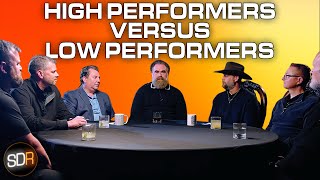
Chris Collins and five coaches break down what separates top service advisors from struggling ones. High performers take ownership and stay curious; low performers blame circumstances and resist change. When leadership aligns around one vision, improvement spreads through the whole team.
Chapters
Welcome, everybody to Service Driver Revolution. We have an exciting show for you today. We have our coaches here for a meeting and I propose the idea that we talk to them and interview them and get some of their feedback because they're on the front line. So at the table we have probably 100 years of experience and incredible talent. So James, his nickname is Captain, but James Bomber, we have Matt Hoagie, everybody knows Sam Kinison, I mean, Christian.
Cliff and Gator. And what we're going to talk about today, and it's an incredible conversation, is what are the mindsets and behaviors that differentiate the top performers from the low performers? And if you are interested in getting better and really understanding performance is going to be a show you're going to get a lot out of. So get out a notepad and take some notes. But this is what's coming up on Service Drive Revolution.
So the situation is James is drinking water and then three of you are drinking the Eroc's famous margaritas. And then are you. Are you doing like a sober thing? Hoagie, coffee. That's a sober thing?
Yeah, sober thing.
Did you quit drinking? Yeah, all together.
All together.
Oh, wow. Is it mandatory, like court ordered or. Yeah, voluntary.
Got in trouble.
Things that happen in Oklahoma stay in Oklahoma, Libya, future. How much have you guys been offered for the Erox famous recipe?
I've had a lot of people ask me for it. Told them it's top secret. Like, you might as well break into the CIA computers before you get in.
That it's priceless for sure.
Yeah.
It's funny, after the. There was a boot camp. Like, boot camp is the master class for new clients that we had and they were calling Alex, asking her for it, pretending like I said they could have it.
And she knew better, but she doesn't know the recipe. Anyways, smart move. Funny. It's good. Okay, so the. The subject at hand that I was really curious to get your guys's thoughts on because I'm always thinking this way, right? Like, I'm always thinking, what's the gap between the person that's doing better than me and me? Or the, you know, what is it that I'm doing that's working versus the person who's doing something that isn't working? Like, what are the. What are the gaps? And most of the time, the first part is mindset. So it's just your general.
Sense of yourself, your sense of your surroundings and your view of full potential, your view of what's possible. Right. And then it's the actions that come from that. So it's driven by your general sense of things, but then the actions that come out of that, the behaviors in a sense. Right. So you guys are in a lot of stores and you see the difference in managers and advisors and techs and shop foremen and first of all, let's just start with that question. Do you think there really is a difference between the position and the outcome? Like if somebody's a low performing tech and they're a low performing manager, is it the same mindset that gets them.
There, that gets them to move forward.
Or gets them to be an underperformer?
I mean, is it the same across?
Definitely. I think the mindset is different between a top performer and a not and a, a non top performer.
And the position doesn't matter. Doesn't matter.
It's still the same, it's still a service department, it's still a technician. Like it's the job. Still the same brand to brand. Like that plays no factor in it. If I'm a tech and I, and I have poor time management and I make excuses of why I can't be 100% productive and I become a manager, I'm going to have poor time management and I'm going to make excuses of why I can't be profitable. I think it's, it's all mindset.
And that same mindset would make excuses for why you can't flag hours if you're a tech or why you can't, you know, perform as an advisor, get CSI or whatever it is. Right.
Definitely think it's a choice.
They're making the choice either way, one way or the other, whether they want to be low or whether they want to be high or whether, you know, whatever, it's definitely a choice. I would agree with that 100%.
Yeah.
Externalizing that control.
Yes.
Yeah, that's what I was going to say. It's locus of control. Any way you want to slice it, they're going to externalize it in one spot, they're going to externalize it. You know, the position doesn't matter.
Explain to them what locus of control is just because there'll be people listening that don't know.
Yeah. So locus of control. There's two, two options. One is external, which is where I give control to everything going on to some external force. So if I'm not successful, it's because of the advisor can't sell any. If I'm a tech, let's say the advisor can't sell anything or they're taking too long for approvals, or my manager this, or the parts department this.
The other option would be internal locus of control, where my first thing is, all right, what am I doing? What can I do differently? I take control. I take ownership. How can I better use my time? What can I do to be more efficient on this thing? How can I communicate better with my advisor to ensure that I get a quick response on whatever? How does my paperwork look? Am I getting the right estimate, the right information to the advisor for him to get an approval quickly? That's always way more effective than externalizing control.
I bet if you took a survey of them, I bet you'd find all of them blaming kind of the same thing. Car counts down, the weather is really bad.
Well, how many times do we do coaching calls with our clients and they want to talk about RO count, but the RO value is off, right? Like, if I'm at a $150 ELR and everybody in my comp is at 190, $200, like, let's fix that first.
Or, yeah, like a Land Rover store at 1.5 hours per ro, and they're like, we need more customers.
And you're like, and every time I.
Drive a Land Rover, I know that they.
But it is funny.
They even out to that point. Like, they don't talk about the R account being lower. They're like, like, well, what happened last month? And, like, oh, we had some bad storms, or, you know, it's been cold, or people have been on vacation, like, all the things. And they're trying to say that our account's down, but it's not that thing anyway. Like, it's just a funny thing that's.
Or, you know, whatever month you're doing the. April's a weird month. Like, what?
Oh, yeah.
What does that mean? I don't even know what that means.
Isn't it funny where sometimes the excuses actually create traffic? Like, oh, there was a freeze. And you're like, yeah, they're coming in on tow trucks.
So funny. So what is. And I'll just go around the table and kind of think about this. But what is something that somebody does that shows you that they're going to be a low performer or they're going to be a high performer? Like, what are things when you first start engaging somebody? What are those sort of things that kind of are telltale signs.
What you're dealing with? You can go first, Jimmy.
Let's see. I think high performers always are thinking very positively. And like you said before, they have a mindset and this is where they're going to get to. Nothing's going to stand in their way and they kind of ignore the negative stuff.
Doesn't even enter the equation.
And it's really remarkable how quickly these high performers excel. Like you can take somebody and put them in a store within three months. They turn the thing around just because they have that different attitude. And then they attract top performers too. I think people are attracted to them. Low performers are the same way. They kind of hold court in the back of the shop somewhere and they're attracting low performers too. That's a very negative thing. So that's. Man, it's really clear right away. Oh, and high performers too, I think.
They'Re okay with trying new ideas or retrying ideas that they've done before. Low performers have made a decision that that doesn't work because I tried it 18 years ago and I had a bump in it and they don't want to do it anymore. They just are closed minded to them.
Yeah, that's great, Matt.
I think we're probably going to say similar things in different ways, but if I think about launching a new store, for instance, there's times that they might be at $130 effective labor aid. And I'm talking to them that we're going to get to $200. And so one clear difference right away is a high performer or somebody that's going to tackle the things that we're going to talk about says, boy, I don't know how that's possible, but I'm in. Let's go. And there's that kind of a mindset. The low performers, like our market, wants to support that. There's no way that's impossible. So they start using very limiting words, you know, very finite words that we can't. It's impossible. No way. My customers that, you know, and the other side of that coin is show me the way and we'll do it.
Yeah, it's funny. Like the, the top performers, like James is saying, are have a positive outlook, but they also ask questions with the intention to really understand where the more negative or low performers ask questions that are disguised as a question, but they're more of a statement.
And I think the other piece of that too is when I'm in those situations with the top performers, all of the leadership is pulling on the same end of the rope, meaning I've got the owner and the GM just as involved and excited and holding the service director and service manager and advisors accountable. It's all every all the leadership team is.
They're all rooting for each other.
Same thing. Yeah.
Yeah, that's good, Hoagie.
Yeah, that, I think is. Is one of the most important things I was going to say is it's not just the. When. When the thing's successful. When the most successful is there's just a lot of synergy from the top to the bottom. Right. Like, it's clear they've had the discussion, and, you know, there's just a unified goal and everybody's kind of talking the same language because it's a. It's a funny thing we talk about a Masterclass a lot is we like to bring up the fact that, you know, if you ask an owner, a dealer, an executive, how the service department's doing, they'll talk about net profit. If you ask a service manager how the service department's doing, they'll talk about gross or productivity or whatever. And it's this weird thing where we're all watching the same game and there's two separate scoreboards, and the more there's one scoreboard and the vision is the same. Like, you know, you're so far ahead, and it's not very common, but every once in a while we come across some where they're coming out of masterclass and they're talking about, like, as a group, collectively, they're talking about moving forward. And, you know, that has to resonate with the rest of the department. There's no way there's that level of synergy and positivity and outlook amongst all of them. And the advisors don't recognize that there's real change happening.
It's contagious.
Contagious.
That enthusiasm.
Yeah. And it's almost to the point where.
Like, even we get excited.
Yeah, yeah.
They're doing all the hard work, Right?
Yeah. But it's a real thing where, like, you know, whether it's watching them or. Or, you know, even for ourselves and looking at ourselves, I think when we're the most successful, there's somebody having to slow us down instead of speed us up. And it. You know, so that. All. That piece always resonates with me a lot. And then the low performer, like.
I don't know.
It'S just. You don't have to have a lot. I. I don't know that we have to list a whole lot of things or telltale signs or anything. Like, you just give them a couple of things. They're just not even doing the basic things. And so if you're chasing them or anything like that, to, you know, I don't know, just the basic stuff. Right. There's not a. There's no curiosity. Like, that's the thing, I think, with the low performer is there's no curiosity. There's no, like, okay, hey, what's this? What's this thing? Or how do I get better? Or anything like that. They're just indifferent to almost anything.
You see.
You see it from a couple of points because you see it in the store, but you also are the gatekeeper of what clients we let in, in a sense. And so you're trying to determine that up front whether that client is a good match for us or not. So you kind of. You see both sides in a way.
Yep.
So the thing that I've noticed, whether it's pre client or post client, is that your top performers, they're obsessing about outcomes, and they're trying to figure out a way to manipulate the outcome, you know, or manipulate the system so that it comes out. And then the low performers are trying to excuse or explain away the outcomes. So whether you're. I'm on a strategy session talking to a potential client or someone that's already a client, the results, whether or not it's like an opportunity, and like, I wonder how that happened or what could I do to make that outcome different. That's an indicator of someone would be a top performer on our program. And then if they're just trying to make an excuse or prove, you know, say, why their numbers are they, what the.







