Shawn Johnson on "The Ruthless Elimination of Hurry" || Books That Changed My Life
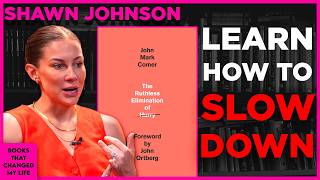
Olympic gymnast Shawn Johnson discusses how John Mark Comer's The Ruthless Elimination of Hurry helped her unlearn perfectionism after leaving elite sport. She and her husband Andrew explore the book's four antidotes to busyness—solitude, Sabbath, simplicity, and slowing down—and share rituals like their family "Day of Delight" to build presence and purpose.
Chapters
everything obtainable, we learn that ultimately in this world there is no finished symphony.
I started gymnastics when I was 3. I was in the Olympics at 16, so I spent 13 years working to get to what I thought was like the symphony, right? The finality of it. And across the finish line, got the gold medal. And the very first question I was asked was, are you going to compete in 2012? Which was 4 years later. And it was this very harsh realization that in such a split second, nobody cared. Like, that was my finish line, but it was now a starting line already for someone else.
Okay, the big question.
Yeah.
Yeah. How did The Ruthless Elimination of Hurry by John Mark Comer change your life?
Um, it—
I'm Chris Collins and you're watching Books That Changed My Life. This week we're joined by Olympic gold medalist and author Shawn Johnson. She's here to talk about the book that changed her life, The Ruthless Elimination of Hurry by John Mark Comer. Stick around to the end where we sit down with Shawn and her husband Andrew to talk about their new book, "The Courage to Commit." What's your library at home like?
We have a phenomenal library. We love our library. We just moved into a home that is 70 years old, and we preserved this beautiful wood library that was in the home. It's the reason why we bought it pretty much. And it's floor-to-ceiling books. It's two levels. We have a ladder that you walk up, and our kids have all their books on the top. But we have every president biography. We have all the Easton Press books. We have every children's book known to mankind for our children right now. We have quite a few and we are very proud of it. We want it to grow.
That is pretty awesome.
We love it.
Is there space to grow?
There is space to make room. We can make room for it. But yes, we have space to grow.
You can see I am out of space.
I can see, yes.
We are always purging.
We try to fill every nook and cranny in our house with books.
So what is your approach to parenting and books?
We love curiosity. We try to like foster curiosity in our kids. So if they have a question, we obviously don't know the answer to everything in the world, nor will we ever. So we're like, let's find out, let's go read about it. And we either find a book on it, we find a YouTube video on it, we find an audiobook on it or a story. But our kids love finding answers to things in books.
That's fun. Yeah. Do you guys read as a family? Like, do you read to them?
We do read as a family. We wish we read more as a family. Can you ever read enough as a family? Um, but our daughter is in kindergarten. She just learned to read, which is mind-blowing to us. So she's reading books on her own and with us. But yes, we're constantly reading. Our kids just started getting into Harry Potter and like the fantasy world of like magic. And so we're openly reading that as a family and We read children's books all day, every day about excavators and whatever kids live, the world they live in.
What was your relationship to books growing up?
I read a lot with my mom growing up. My mom is an avid reader and will plow through a book a week. And I remember as a kid, that was a lot of our bonding time. I remember reading Holes with her. Over and over and over again. Holes? Holes. Have you seen this? No. Oh, I mean, it's a great kids' book, but it's a great kids' movie. It's with Shia LaBeouf where he's literally like in a— I think he's in like a detention center of some kind and they have to go out into the desert and dig holes. And that's like the whole book.
What's the lesson in that?
The whole lesson— oh, it's been so long. I think the whole lesson is just like, they're serving their time for the consequences and they become better people in the detention world, I think.
I can't remember. So was that strategic on your mom's part? Probably. She was trying to slip in a little message?
I don't know. I was a pretty disciplined kid, so I think it was just a fun book to read. But I remember reading Holes with her. I remember reading Harry Potter with her many times, start to finish, all the books.
Did you like fantasy?
Love fantasy. I loved fantasy as a child. I switched into nonfiction when I gotten to my professional career. Because it was always like self-help, reading other athletes' journeys and sports psychology books. But fantasy is where I still am waiting for my Hogwarts owl to show up at my door and say, you've been admitted.
You're on the list somewhere.
Yes, somewhere.
Somebody's making that decision. Yeah. What would be the best sports psychology book if you were to recommend one?
Mind Gym. What is it?
Mind Gym. Mind Gym.
I read it 200 times easily. Really? I remember reciting lines from that book my entire career.
I love it. Who wrote it?
Oh, I have no clue.
No clue? What's the biggest takeaway? What does it teach you?
To think strategically and not to just go balls to the wall with everything. Like people think. It shows all these like scientific data experiments they do on athletes where, you know, the smartest technically wins, not the best. I remember it going through this study of testing human potential and performance and that your body actually responds better and performs better at 75% rather than at 100%. Because at 100%, your muscles on both sides are actually working against each other. And I remember just like thinking through a lot of this when I was competing. I like the science.
The science. So where did you grow up?
In Des Moines, Iowa.
Des Moines, Iowa?
Yes.
And what did, what did mom and dad do?
Mom and dad? My mom was an accountant. She did accounts payable for an orthopedic surgery center, and then she did accounts payable for the school district. And my dad was a builder, a trim carpenter. Oh, yeah.
What was the household like? When you were a kid?
Loving.
Amazing. How many siblings?
I'm an only child.
How does an only child get so competitive? Usually it's, it's not an only child that's like the super competitive one.
Yeah, I am about as competitive as—
What did your parents do to you when you were a kid that made you super competitive?
I came out that way, which is really scary. Truly. My—
Do you remember being born?
No. Oh my gosh. Could you imagine?
No, I do. I remember the lights coming on.
Really? Yeah. That's incredible. That's incredible. My father's very competitive and he was a very—
So it's genetic.
Definitely.
Okay. That makes more sense.
Yeah. My dad was—
Because most of the time, like, kids that are super competitive come from some sort of situation that doesn't sound as healthy as yours.
Mine was as healthy as it comes. If anything, my parents—
Go, go, mom and dad.
Yeah. They desperately tried to hold me back. Like every way possible. They kept me at lower levels. They would bribe me to stay home and go shopping or just go to Dairy Queen.
And did they feel like you were missing out on being a kid?
They just wanted me to be normal. They both came from very hard upbringings, and so their dream was just to have a very normal, very average lifestyle with their child.
And how, uh, how proud of you are they? Immensely.
Yeah. Yeah.
That's going to be great.
It is great. They're the best.
So why gymnastics?
I loved the feeling that I could fly. Goes back to the magic world. My dream in life as a child was to fly. And so I found myself in the ER many times because I thought I could fly and I would jump off of stair banisters and entertainment centers and try to defy gravity. And I went into a gymnastics gym once. My parents describe it as I was a kid that had way too much energy and they didn't know what to do. They tried ballet and I got kicked out. So they kicked out because I wouldn't listen and I wouldn't stand in line. I would just do— yeah, move. Um, so then they took me— student.
Yeah, you got good grades?
Oh yeah.
So you could stay— you can sit still in class?
I'm very obsessive. So like if I lock in on something, I am hyper-focused.
Form equals function. It controls everything.
Oh yeah. Yeah.
So get kicked out of ballet.
Yeah, get kicked out of ballet. Tried gymnastics, and this is like at the age of 3. Fell in love with the trampoline 'cause it reinforced this idea that I could fly. And from there, the rest was history. I just never wanted to leave.
Wow, that's so fun.
Yeah.
It's fun to have one thing that you like obsess on, I think.
Yeah, I think it gave me all the success I've had in life. My brain, I've tried to explain to my husband, operates at 5 million miles per hour and I have 5,000 tabs open at one time. And gymnastics, you're doing, you're executing so many technical things at the speed of light. That my brain felt like it was, it was meant to do that.
That's incredible. Yeah. Most people aren't like that. Most of us mortals aren't like that. We can do one thing at a time.
I was very lucky to find something that worked in my favor. So it's funny too, 'cause outside of gymnastics, I was a very shy, very insecure kid that had no confidence. In any area of life. But if I walked into a gymnastics gym, I felt like a superhero. And I love that.
Why were you shy?
I don't know.
You just felt like you didn't fit in or—
Oh yeah. I always felt like a black sheep.
Why?
I have no idea.
Was it your competitiveness?
I think so. I don't know. I was just very introverted. I didn't love attention. I loved attention in the gymnastics gym, but not outside of the gymnastics gym.
Isn't that such a funny contradiction? It is.
Yeah. I always compared myself to Hannah Montana. I felt like back in my day, I always felt like I lived two very different lives because I had a hard time making friends in school. I was labeled like the teacher's pet. I loved school, I loved academics. My friends were my teachers, and I was like crippled by shyness outside of the gym. But if you put me in a gymnastics gym, I was sassy and loud, and I would negotiate with my coach, and I would, you know, I would be a disturbance because of my, my energy. So it was, it was so different.
Yeah, yeah, that's fascinating. Are you a, are you a control freak?
Oh yeah, yeah, yeah, very Type A, right?
Yes, that's, uh, that's really fun. Okay, so the book you're here to talk about today, the book that changed your life, yes, is The Ruthless Elimination of Hurry by John Mark Komer. Yes. Kind of put me in the space of where you were when this book came into your life. What was going on?
I was a parent.
Which— so you have 3 kids?
I have 3 kids.
I have a 6-year-old. Where in the hierarchy was this?
Probably after the second kid.
Second kid?
Yeah. So I have a 6, 4, and 2-year-old. I probably read this after our second, right after our second. And mental space of where I was, As well, coming out of gymnastics, being able to hone all of my obsessive thoughts and perfectionism and hyperactivity in my brain to gymnastics worked for me. But when I no longer had gymnastics, I didn't know how to control that. And as a parent, I felt like I was flailing in life trying to control those perfectionism thoughts in a field that you can never be perfect in, parenting. And this, gave my brain an organized system to operate.
How did having the first kid change you?
It took me from being selfish to selfless. Not by choice. You know, I mean, by choice to have a child, but not by choice as far as, as soon as you have a kid, your entire life changes. And being a professional athlete, you're taught to be 100% selfish. Because that's what you need in order to succeed in becoming a parent. You have to be completely selfless for another human. And so I think our life got turned upside down, but in such a beautiful way. She changed our life for the better.
How did that change you?
I feel like before my daughter, before our kids, I was so wrapped up in myself. I cared what people thought about me. I cared what people, you know, my performance, my everything in life. I was always giving myself kind of a score. And then after I had our daughter Drew, it just, it like wiped that whole slate clean. None of that mattered anymore. I feel like I got to live life so free all of a sudden because I got to relive and relearn almost everything in life from like a perspective of life matters for this child. And how can I now teach her? And I don't know, I just became— it's hard to put words to that. I feel like I became more joyful.
Wow.
Yeah.
Do you think that when we aren't— well, I don't know. I have experiences with people that say stuff like, well, I'm just working on myself, or I'm just trying to love myself.
Yeah.
Those people always end up being the most miserable.
Yes.
And that the real key to joy and happiness is serving something else.
100%.
Or someone else.
100%. I think a lot of that you learn in religion and faith as well, or they try to teach it to you. But I think the most tangible life experience I have ever felt where I feel it firsthand is having a kid. 'cause my life no longer was about myself. It was about her. And that made life so much richer. Actually being able to serve her and like give her joyful moments and see her grow and learn and look back on all the hardships of life that I had gone through and joys and be able to experience that again with her and teach her in a way that is meaningful. It just, it gives you purpose, gives you fulfillment. Gave me that.
So you have her and then you have a second child. Yes. And then what are you feeling at that point that you need something else?
After our second kid, I am just feeling like, am I doing any of this right? It's really hard to raise a child. I mean, it's this little perfect, pure human where I mean, you can argue the nature versus nurture. They're probably gonna turn out just fine. And, but to a certain extent, it's my job to raise a good human. And I don't know how to do that. And I've never done that before. And how do you pack into one day, you know, I need to teach you how to be a good human. I need to teach you how to tie your shoes. I need to teach you how to eat food. I need to teach you, you know, There's so many hundreds of thousands and millions of books in the world. How can I teach a kid all of that? Like, that's my job. And I think I, after a second kid, I started spiraling at this idea of, do I have any idea what I'm doing?
Well, I mean, I gotta imagine like what had worked for you in life up until then.
Yeah.
Of controlling the situation, being a little sassy, perfectionist, like all of that, all of a sudden doesn't work anymore. No, none of that. So your, your model of what you have learned through life and doubled down on a bunch of times doesn't, uh, serve you, right?
Correct. And I think in my athletic career, I invested all of my time and effort into finding coaches to teach me, and I knew if I could turn my brain off and do exactly as I was told, I could be successful. Now you have a kid and there's no such thing as a coach for a kid. You are the coach. And that terrified me. How do I know I'm being intentional? How do I know I'm actually doing the things that matter? How am I overthinking everything so much that I'm gonna send my child to therapy for the rest of their life? You know, it's like you just start.
What if they go to jail?
Literally, what if they're in prison? Am I going to bail them out or something? Oh my gosh. These are the things that kept me up. And I remember a friend saying, you should just, like, take a break, like, take a breather, read this.
I think it'll help. So a friend recommended it? Yeah. Who's the friend?
John Mark Comer. Yeah.
Oh, he did? Yeah. Oh, read my book.
Yes, we, we are very, very fortunate to have John Mark Comer on our podcast. And I remember him, my husband had read this book and told me about it. And then John was talking about his inspiration behind it and another book that he had written. And he just sold me. I was like, I'm drinking your Kool-Aid right now and I love it. I'm a natural skeptic by a lot of means. I'm just always like, are you just, do you have substantiated evidence to prove that your thoughts are, you know, worth listening to. And I remember just falling in love with this guy and thinking he is onto something.
So you already had the book?
Yes.
So you just went to the library in the house and—
I did.
—pulled it? Okay, so for somebody who has not read the book, kind of explain it.
The title is a great explanation. It takes all the overthinking in life and tries to remove it for you. And it gives you very tangible, small things you can do on a daily or weekly basis to slow down the busyness of your mind and your life.
I kind of have a question and think about this for a second. Okay. Because I'm very curious. Okay. And I feel like the initial answer is more out of being nice, but I'm super curious. When you were an athlete, Would this book have had any effect on you? No. Yeah, it is a different thing, right?
Very.
I mean, there is an intensity that you have to have that is different than what this is talking about.
I feel like you are getting into probably every argument my husband and I are having at the moment, which is how to tame my intensity. I feel like I'm spending a lot of effort in my life right now. I don't wanna say unlearning because the skills that I had to succeed in gymnastics were beautiful and beneficial. And I have a lot of qualities and skills in my mind and body that work in the intense world. But being that intense in parenting doesn't really work. Yeah. And being more loose-gripped on life, I think, and flexible is very important in parenting, and having the ability to change and have these little humans kind of teach me. And so this I didn't need back in the day.
It wouldn't have—
it wouldn't have made any sense. No, the hurry is part of my success, but the control— learning how to let go of control and perfectionism and intensity and tone that down in my life, I had no idea how to do that. It's kind of like rewriting who I am.
Yeah. You do, in a sense, have to unlearn. Oh, yeah. Have you ever heard of the book The Peter Principle? No. So it's— maybe if I can find a copy, I'll give it to you. Okay. But it was written in the '70s, and it's basically— The Peter Principle is a ceiling where we perform to our own incompetence. And so I'll just give you a loose example. Okay. Somebody's really good at math when they're a kid. Yep. Teacher encourages them. They're like, okay, I'm good at math. Mm-hmm. They end up going to college to be an accountant. They get out, they go to work for IBM, they work their way up and they become the C, uh, CFO of IBM by like, I don't know, 45 or something. One day the board has a meeting, they fire the CEO and they make that person the CEO, and then they completely fail. And everything that had worked for them up until then no longer works because it's not math. You have to understand, Mark, there's all of these things when you're the CEO that are completely different than a balance sheet where math is a little more straightforward. You have to deal with humans and marketing and sales and, you know, and if you just control the math, you end up running the company into the ground because you have to invest in R&D and take these chances. And when you're an accountant, you don't really take that many chances. Yes. Right. Yes. And so you, you perform— you have to unlearn everything that worked for you before that. Now to go to the next level, you have to reinvent yourself. It's about reinvention in a way.
I love that.
I need to read this. So it is kind of about reinvention, right? Absolutely.
Yeah. I'm not a professional athlete parent. I'm no longer a professional athlete. I need to learn how to be a good parent. And I think a lot of the things that I'm very, very good at don't work in parenting.
What are the chances one of your kids will want to be a professional athlete?
Uh, it's looking to be pretty strong, unfortunately.
Really? Yeah. It's in the genes.
Yeah, there's one of them where I'm like, uh, okay, I think, yeah.
And will you encourage that, or will you I think it's my job to.
Yeah? I think it is my job as my children's parent. The way that I would word it to them, and we've talked about it, is I think God has hidden treasures in all of us. And I think it's our adventure of life to try to go find them. But if you find them, you gotta protect them for everything that it is. I think one of my treasures was gymnastics. And not because I was naturally gifted at it, because I had such an obsession with it. That is something that not many people get to find in something in life. And so with all 3 of our children, I'm trying to just open the world up to them and show them every hobby and interest and sport and, you know, subject in school and extracurricular. And if something lights their fire, I think it's my job to help foster that. And one of my children has found something that has opened up a fire in him that I've never seen before. And it's not what I would've chosen, but he chose it. What is that? Motocross. Oof. It's unfortunate.
That's dangerous. It is. Okay, what if one of your kids wanted to be a professional video game player?
That would be a fresh one. That would be a new one for me. I'd need to read some books on that. Need to know where that's going to end up in life.
But whatever it is, it's about them.
I really, it is about them. I think I have had the privilege of seeing firsthand just thousands of parents and thousands of young athletes. And I've gotten to see people do it right and people do it wrong. Yeah. And I think the ones who have done it right that I've seen firsthand, majority is people who love their children and love their children's interests and don't push something on them.
In the book, John talks a lot about how alienated and anxious people feel. Why do you think that is?
Because we live in a superficial world now. I feel like we live in a world that is an inch deep and a mile wide. Nobody wants to go below the surface anymore.
It's all small talk. It is.
People don't want to be known and they're not allowing people to know them. I think it causes massive anxiety. It's too many voices. It's too much noise.
Yeah. And too much validation from people you don't really care about in the end. And it's not real validation. Likes. Yeah. Doesn't really matter, right?
And it's validation that you can manufacture. Yeah. An algorithm is learning to know what people like, not what's actually good.
Okay, so in here, Jon has kind of 4 fixes to busyness. Yeah, he has solitude, Sabbath, simplicity, and slowing down. Yeah. Which one of these is the hardest?
Sabbath.
Sabbath, I think. What is Sabbath?
Taking a day of rest and turning your minds off from work. And screens and noise. And I think in a world that is pushing so heavily to never turn off noise, I think it's really difficult. I think it's really hard for us to walk away from our phones or our TVs or actually build community. And I think Sabbath would be defined as doing that, turning off and actually going deep. I think that scares people.
He was a pastor, right? Yes. What do you think about his writing style? Because it's kind of written like a blog more than a book.
Yeah, in a way. It worked really well for my brain, so I really liked it. I, like I said earlier, my brain moves very quickly and has a lot of thoughts trying to distract me. My brain is very noisy, so I thought the way he wrote it was very approachable for digesting it in a quick amount of time. I liked it. I liked the blog.
Yeah, the style is cool. Yeah. Like it's easy.
I liked the interjected thoughts and like the little notes that were written in between, you know, paragraphs and stories. My brain really liked that.
Yeah, me too. Okay, let's, um, Let's start with the beginning. Okay. So on page 9. Yes. He starts out by laying out the problem. Mm-hmm.
Are you going to want me to say this man's name?
Korean-born German philosopher Byung-Chul Han ends his book The Burnout Society with the haunting observation of most people in the Western world, they are too alive to die and are too dead to live.
Yeah, that, I feel like that's a different way for, to say what I was saying of, I think our culture is living an inch deep and a mile wide. Like we're, we're so invested in so many people's lives that we aren't taking even a moment to live our own life and be present and find actual fulfillment and peace.
That's good. The next one here on page 26. And the question I have is, how hard is it for you to wean yourself of distraction? Incredibly difficult. Will you read this one? Yeah.
Uh, here from Ronald Rolheiser, my undisputed favorite Catholic writer of all time, with hurricane force. Today, a number of historical circumstances are blindly flowing together and accidentally conspiring to produce a climate within which it difficult not just to think about God or to pray, but simply to have an interior depth whatsoever. We, for every kind of reason, good and bad, are distracting ourselves into spiritual oblivion. It is not that we have anything against God, depth, and spirit. We would like these. It is just that we are too habit— we are habitually too preoccupied to have any of these show up on our radar screens. We are more busy than bad, more distracted than non-spiritual, and more interested in the movie theater, the sports stadium, the stadium and the shopping mall and the fantasy life they produce in us than we are in church. Pathological busyness, distraction, and restlessness are major blocks today within our spiritual lives. We preach that in society.
I think, well, the new god is busyness, sports, yeah, gambling.
Like, I saw someone say on Instagram As I'm feeding into the black hole, uh, that it's so easy to get on Netflix and scroll for an hour only to say that there's nothing on TV. It's like we are so overwhelmed by options and choices that nobody's ever allowing a quiet space to even be had. And if people are seeing that there's quiet space, they think it's a bad thing. Which is really sad.
Yeah, I think too, like, if you pair that with the fact that it becomes community. Yeah. Like, that's where people are getting their community.
It's even sadder. Yeah, yeah, yeah. When's the last time people sat around a dinner table for 5 hours without a phone? When you go to Europe and eat out, which is why everyone wants to move there.
So this is page 29. The chapter is the A Brief History of Speed. It says, first, the— oh, I love this part— the sundial. Like, he's basically saying that the sundial ruined everything when people started keeping time. You could be—
it could be a little dramatic. I think it's fine to keep time, right?
Well, you're a recovering addict, so you, you might You might want to go his way.
I do want to go his way, but I also like— there is beauty in structure. I think you can argue that either side of the spectrum is too much. To have no structure whatsoever is probably too much, and to have too much structure is not okay.
I mean, I hate people that are late for stuff, but you know how many people that are late for stuff wish that there was no clock? Like they want to live in a world where there's no clock.
Do you want to live in a world with no clock?
No, but I might not be the example. I might be a little too buttoned up too.
It's hard for me to let go. Buttoned up's not bad. I would say our society is to a certain extent preaching this, which is like nobody wants any boundaries of any kind.
I experienced this over the weekend. So I was up at my lake house and it rained, so you can't go out on the water. Yep. And everybody's like, everybody in the house is like, we got to do something. We got to go into town. We got— and I'm like, why don't we just stare at the window and read a book? Like, yeah, we got to go. So I don't know. I feel like I like having days where you don't have to do anything. There's no agenda. You can just be free. So he says as far back as approximately 200 BC, people were complaining about what this new technology was doing to society. The Lumen the Roman playwright Plautus turned anger into poetry. The gods confound the man who first found out how to distinguish hours. Confound him too. Who in this place set up a sundial to cut and hack my days so wretchedly into small portions? Who in this place set up a sundial to cut and hack my days so wretchedly into small portions?
It is an interesting perspective, but also does it have to be accurate?
Is that what you used to do to your coaches? Yeah. Oh, yeah.
I would be like, what do you mean? Because that is also just a very pessimistic way to look at— there is technically a sundial and a clock, no matter what, manufactured into the world because we have the sun up and we have sundown. So people were already structuring their days into small patches of time, whether they believed to be or not. But taking a pessimistic approach of like the sundial was too much for me, that pushed me over the edge, is also like going too so far into a way and saying that just doesn't work for my lifestyle.
Yeah, but somewhere in the middle is the truth, right? For sure. Because there's probably, I mean, moments you had with your daughter where time didn't exist. Absolutely. Yeah. So somewhere in the middle. Somewhere in the middle. Right in the middle. Yeah. Page 33. This also comes from The History of Speed. How did you react when you read this for the first time?
One famous Senate subcommittee in 1967 was told that by 1985, the average American would work only 22 hours a week for 27 weeks a year. Everybody thought the main problem in the future would be too much leisure. What? Are you laughing right now? Yeah, it's funny. Kind of. Unless you're French. To all three of my French readers, we mock you, but it's only because we're jealous. The exact opposite has happened. Leisure time has gone down. The average American works nearly 4 more weeks per year than they did in 1979.
So the advances in technology— we thought at one point that people would work less and have a better quality of life, but really it's been the opposite. People are working more. And they have less of a quality of life. We have more of everything. And like you said, we have, we have all the options in the world and we're miserable and we feel like we have nothing. It's sad.
It's not surprising. I feel like the pace of life just gets faster every year because what we thought was technology would progress and our lives would get slower. But technology has progressed and we have just started racing faster. And faster and faster and faster. And we see it in our own lives at home. Even with AI, it's like, oh, work can become more efficient. Now we can actually take on more projects. Instead of saying, work got more efficient, now we get more of our day back. It's just opening up more space for people to be more busy. And I don't think that will stop.
No, I don't think so either.
I think it'll get faster. I think we have to intentionally take control of that, which I think people are starting to do.
Okay, next, next one. He talks about saying no. Are you good at saying no?
A lot better than my husband. Oh, really? Oh, yeah. I think—
what's the, what's the last thing he said yes to that you wish he would have said no? He's like, this. Here, right now.
Um, no. Um, he's a yes man. He said he, well, last week booked 4 Zoom calls at the same hour of the day and didn't know it until it was time and everyone started calling in.
Oh, he needs a, he needs somebody to handle his calendar.
Oh really? He needs someone to handle his calendar. I've been guilty of that before. Um, I'm good at saying no. Yeah, you're better. I, I am better, but probably too good at saying no to where I say no to all opportunities because I, I fear it will cause a too busy life. Like, I'm, I'm overcompensating. I also really good— I also lived a very busy life at a young age, so I'm already on like the tired side of life.
You're done?
Yeah, I'm just done.
He says nobody has more than 24 hours in a day. We simply can't see, read, watch, taste, drink, experience Be or do it all, not an option. Life is a series of choices. Every yes is a thousand nos. Every activity we give our time to is a thousand other activities we can't give our time to, because duh, we can't be in two places at once. We have to learn to say no constantly. I love that. There's an art to saying no.
The world would say you could do everything. Have everything, be everything.
This next one on 72, will you read it?
Yep. Here's the simple truth behind reading a lot of books. It's not that hard. We have all the time we need. The scary part, the part we all ignore, is that we are too addicted, too weak, and too distracted to do what we all know is important. Yeah. But nobody wants to admit that. Nobody likes to read that sentence and say that's true, but it is.
But it is funny when people are like, well, how do you find time to read? It's like you don't find it, you make it.
Well, and I mean, it's about priorities.
You find— you figure out how to eat. You do. Like, it's just your perspective.
People don't want to give up Netflix or scrolling or whatever it is.
Pretty much the only place we can be alone with our thoughts anymore is in the shower. It's only a matter of time until our devices are waterproof, which in turn will trigger the apocalypse. Chris Collins. Do you take your phone in the shower?
No, no, no. Do you? Yeah, you do? Don't do that. Why? Because the only time you're alone with your thoughts is in the shower. You don't like—
you don't sing in the shower? You don't want music in the shower?
You can sing without music.
I like, I like a little something.
I actually I will say I'm not tech.
I'm not on the phone in the shower, but I do use the phone in the shower.
I will say I love the sound of the water in the shower. I also, having 3 very young kids, my household is very loud. So I can imagine a shower is quite nice to have no sound whatsoever.
But it is true. Like, they're like, people take their phone everywhere. Yeah. And it's so funny when you see like people in public Like nobody's looking or acknowledging each other.
They're on their phone, and that's uncomfortable to people.
They don't know how to anymore. So this is page 145. Karl Rahner, who was one of the most important Catholic theologians of the 20th century, had this haunting line: In the torment of insufficiency of everything obtainable, we learn That ultimately in this world there is no finished symphony.
Interesting. Oh, it's deep.
I think it applies to you 100%. Yeah. When you're in sports, like you have the tournament and then you win or you lose and there's like a finality to it. Mm-hmm. But being a parent, it's like fluid.
There's really no finality to it, though. Yeah. In gymnastics, even. I will never forget an example of this just in our world is like, I spent, I started gymnastics when I was 3. I was in the Olympics at 16. So I spent 13 years working to get there to what I thought was like the symphony, right? The finality of it. And crossed the finish line, got the gold medal. And the very first question I was asked was, are you gonna compete in 2012? Which was 4 years later. And it was this very harsh realization that in such a split second, nobody cared. Like that was my finish line, but it was now a starting line already for someone else. And that was an eye-opening moment to a big world problem. I had to learn in a very quick moment how to realize that this was 100% for myself. And it was no longer about, it couldn't be for someone else 'cause it was already insufficient for someone else. What's that comedown like? Horrible. I always told people it felt like the morning after my Olympic competition. So like the morning after crossing my finish line, I felt like I ran, you know, 100 miles an hour into a brick wall because up until that morning, Every choice I made on a daily basis was for a goal. And when that goal was over, I no longer knew how to be a human. I didn't, I legitimately woke up the next morning, I was like, I don't know what to eat for breakfast. I no longer have to have an omelet with spinach and, you know, with X amount of protein because I'm not training. I didn't know what to do from the hours of 9 to 2 because that's normally when I was in a gym. I didn't know who to hang out with or what to wear, or the comedown of that was, was really mentally difficult because I didn't know how to operate. I no longer had a coach, didn't need one. My coach told me exactly what to do every day for my whole life. So now I had to make autonomous choices, and I had never done that before. How long does it take to work through that? I took about 2 years. Oh, wow. Where I went into probably a clinical depression, only then to go back to gymnastics 'cause I got so lost. I competed again for 2 more years trying to make the 2012 Olympics. That's what I thought people wanted. Retired right before. And it probably took me from 2012, probably until 2017, '18, '19, before I felt like I was standing on my own two feet by myself. That's hardcore. Yeah. But you take a mind that's naturally operating differently and throwing it into civilian life and it doesn't mesh well.
You know what? I could play an interview of somebody who's in prison and gets out over the top of what you said and it's exactly the same. Yeah, I mean, you, you have structure, all the decisions are made for you, and then now you come out and there's all these— you make more decisions in 10 minutes than you do in an entire day. Yeah, I mean, you also have—
routine is very comforting. Same with like military. It's like when, when your life is so rigid and so structured for the— for a betterment, maybe not prison, um, you, you have to relearn how to just be a normal civilian.
I always find this next part kind of interesting, and that's consumerism. Yeah. Do you like to shop? Yeah. Yeah. Do you? Yeah, of course. Yeah. But who doesn't? I also know it's not probably healthy. Yeah. For a lot of people, things aren't just things. They are identity. Shopping is now the number one leisure activity in America, usurping the place previously held by religion. Amazon.com is the new temple. The Visa statement is the new altar. Double-clicking is the new liturgy. Lifestyle bloggers are the priests and priestesses. Money is the new god. There's a reason the only other god Jesus ever called out by name was Mammon, the god of money, because it's a bad god and a lousy religion.
Yeah, consumerism is our culture. People try to make it an idol. They do try to make it an identity. What are you wearing? What are you getting? Where are you living? I fall victim to it every day, right? I'm on Amazon every day. Um, and it's hard. I remember going through like a social media pause break where I like took all the social media off my phone, and in my lulls of moments I would say, okay, let's pull up Amazon. And We live in a country built on consumerism. I don't know how you get away from that. You have to learn how to find your identity in something else more meaningful, at least.
Yeah. Okay. The next one. This is about staying in the moment. Okay. All the great wisdom traditions of history, religions, and secular Eastern and Western, Christian and not, have come together on one point. If there's a formula for a happy life, it's quite simple. Inhabit the moment. Be present. Do you have any tricks for being more present? Anything that you personally do?
My husband and I have tried to implement a lot of rhythms and routines in our household for that. Yes, we do. We call it like Day of Delight or Sabbath. So we take a day where it's like no phones, no technology. We're just gonna do things that like fill our cups and fill our kids' cups, whether it's like walking around our property or making sourdough or cooking a meal or having people over for community. It's just like tuning out the noise, which I think really helps you live in a moment. I think a lot of our noise comes from living on a screen in another person's household. So you're living in their moment, not your own. And it might feel like you're recharging yourself, but you're not living in your, you're living in a false reality that has nothing to do with you. So we try to like turn off our phones and put them away. We also have, we call 'em like touchpoints or check-ins that have become very natural to us, but Every night after we put our kids to sleep, we have, we call it bev time. So whether you're drinking a glass of water or a glass of wine or whatever it is, but we have, it's usually like 10 minutes to an hour where we sit eye to eye, we share a glass of water or wine, and we debrief our day without phones. But it's like, how was your day? Did you have a good day? And it helps you kind of be in your moment to like reflect on the day. We do the same thing in the morning where we'll make coffee and try to have like a touchpoint where it's like 10 minutes of get away from the noise of life and like actually check in. But we've tried to implement a lot of like these little touchpoints in life to kind of anchor you back to your moment of your actual reality. Yeah, that's really good.
So when you intentionally do that and you're pulling yourself into the moment and kind of also in a sense appreciating that, How does it change your perspective on the rest of the day?
Makes it better. Yeah. I feel like you can very easily get lost into the abyss of the busyness of your work, of technology, of social media, of the noise that I keep referring to. I think that very easily can consume all 24 hours of your day. It can be in your dreams. And I think when you have, when you implement little touchpoints within the day to kind of ground yourself you're bringing yourself back into your reality. It's literally like we're living in virtual reality anymore, but we're just not living with screens like attached to our face yet, which I'm sure is coming very soon. I mean, it's here already, but, um, I think it just kind of like, it grounds us where we can say, oh wow, I'm coming up for air out of this abyss I've been in. What's actually happening today? And if you can implement enough of those within your day, you start realizing that hopefully the trend will be you're in your, your reality longer than someone else's.
Yeah. Okay, so then he ends this with a Bible verse from Thessalonians.
Says, we urge you, brothers and sisters, to make it your ambition to lead a quiet life. I like that. I think one of the reasons why this book changed my life is, um, having kids, there are a lot of Mm, it's gonna come across interesting to say. There are a lot of mundane moments. You find yourself in a playroom scattered with a disastrous mess and kids are building Legos for the 7,000th time. And it's not this massive dopamine hit that you're seeing everybody else and traveling the world on private jets and stuff like, you know, on the social media world. And it can feel at times like you're not leading that exciting, loud, crazy life that the world says you should be. But if you can learn to embrace those moments and find the beauty in them, you will find more depth in life, I think, than any of those superficial moments that you're watching of someone else's. Yeah, that's great.
Okay, the big question. Yeah. How did The Ruthless Elimination of Hurry by John Mark Comer change your life?
It helps me unlearn how to be a perfectionist and slow down and be more present. It's great.
It's a great answer. Thanks. That's fun. Anything else you want to say?
People should read it. It's a pretty good book. I'm curious, what's your favorite book?
My favorite book? Yeah. Um, I have many, but There's— it's called For the Man in a Dark Room Looking for a Black Cat That Isn't There.
Did you write this? No. Fascinating. Give me a 3-sentence elevator pitch. For the book? Yeah.
Oh, well, it breaks the form of a traditional book in the sense that it's more about experience than it is words on a page. I can see this. I'm sure when you got your book deal, somebody started saying, well, it's got to be 100,000 words. Yeah. And there's like, there's this formula. Yeah. This breaks that. And it's more about the experience and what you can learn and connecting dots. In a way that's visually appealing. And I don't know, for somebody who has ADD, that style was really fun for me. Kind of like this. This. Yeah. Yeah. I'd say I love how this is written. Yeah. It's funny, I have a friend who owns a bookstore and I always go in there like, hey, anything cool that you're excited about? He goes, I don't know, there's this book. You might like it, you might not. And I was like, oh no, I love it.
This is really cool. Yeah, my brain is.
And then basically the point of the book is that the blind man has the advantage because the blind man has to do the work. Mm-hmm.
I love that. I mean, I have to read it. Really cool. But I mean, we could—
I mean, there's so many books in here that I love.
I like that you chose one.
Yeah, that's my favorite book.
It's actually a really hard decision. When you guys asked us what's one book, I was like, what do you mean?
What else was on the list?
I would say Mind Gym. I love Mind Gym.
I'm gonna get that.
Um, The Eight by Catherine Neville. Love. What's that about? It's a fiction— oh, fiction book. It's like a lot of fiction. It's like National Treasure. But written very historically in, like, different worlds. Yeah. And then my husband will have 5,000. He's the big reader. That's fun.
Well, thank you for doing this.
Thank you. Thank you for having me.
Now enjoy the conversation and learn how to slow down. It's time to talk to Shawn and her husband Andrew about their new book, The Courage to Commit. The Courage to Commit. How did this come about?
We had been asked to write a book for years, and people wanted a book on marriage, and we would laugh because we are 10 years into marriage and still have no idea what we are doing. But at one point we started talking about what would a dream book for us look like? And it was not necessarily what anybody wanted publisher-wise, but we wanted to write a science-backed, emotion-backed book about something that we've felt very strongly about, which is commitment. Kind of like diving through the idea of and exploring the idea of the word. And it took us 4 years to write, but it has become something that we are truly in love with and believe wholeheartedly in. We think it's what has brought us success in our sports, in our marriage, in our parenting, in our business. And it feels very countercultural these days.
What was the moment when you knew that was going to be the book? Like what happened?
It was a really fun process. It took us about a year to settle on the topic of commitment, and for us our favorite books that we read are kind of explorations of a topic, and for us this was something that we had interacted with in our own personal life that we could tell stories about, and things we've done well with it, things we've done poorly with it. And it took us really that long to see that this was a through line between athletics, business, relationships. It's like, wow, when we do this well, our life is more joyful, it's more calm. We're able to, to like build meaning in a, in a different way. And when we do it poorly, there's so much internal frustration and like dissonance. And so The moment that it hit, it might have been after we read the book The Anxious Generation where it was like, you know, Jonathan Haidt in that book talks about all the options that we have with swipe right culture, and he gives prescriptions for young kids in school, like what could be some solutions to this anxiety that we're culturally experiencing together, and I read that, and I was kind of like, well, what about What about us who aren't in school anymore? And what about us who have kids who are younger than this book? And can we apply certain lessons through this book that helps alleviate that anxiety? And to us, this is what our solution has been.
How did you guys do it together? What was that? What was the process and what was it like?
A mess. An absolute mess.
She wrote all the good parts and I wrote all the parts to edit it out.
It also took us about a year to figure out how to write it. Because we would go, we would start to write something as like a blended voice. And it took us a year and probably more therapy to figure out that we have very, very different voices. He comes from a very analytical, statistical, data-backed side. Everything has to be facts for him. And I come from very emotion-based, you know, my thoughts, how I reflect on them, how I feel about them. And after about a year of frustration, we ended up separating them completely. So I technically wrote half the book in my voice from emotions, from feelings, from memories. And then he wrote the other half of the book with all the research and all the data points and the statistics to back the thoughts of it. But we thought it was fascinating that every time we would write chapters, we both believed the same thing, but we're approaching them at such different angles and found it to actually be a beneficial part of the book, which is why Yeah, that's probably the best outcome for the reader.
Yeah. Right? I hope so. Yeah. Did it really put you into couples therapy? Oh yeah. So what was that first session like with the therapist? We're trying to write this book.
Well— It's all about forgiveness. Because, well, you can imagine how poorly our arguments go when she's coming from the emotional side of things and I'm coming from the, well, this is what actually happened. This is what's true. Yeah. And it took me 9 years of marriage to understand like, Oh, both are good.
Again, it was such a long process trying to perfect this book. We were very hesitant. We wanted to put out something we were so proud of and that we really believed in. I feel like there's a lot of fluff pieces out there, and we didn't have— that was not our intention. We wanted actual depth and meaning in a book that we put out. So around the 2-year mark, we actually brought in a third writer. Who did a lot of like the research behind it and brought in a third voice to kind of blend the two, which helped. That kind of came from therapy.
Yeah, that makes sense because the book seems really well researched. Yes. And so you had somebody kind of assisting with that?
Yes. As low IQ folks ourselves, we needed someone to kind of bolster ourselves.
He's being so humble. He also has a doctorate in psychology, so a lot of the the statistics and stuff came from him, but we brought in a research writer to actually give— to write it all out in the way that was completely owned by where we found the research and where we found the data and make sure it was, it was scientifically bulletproof.
It was such a fun process, and I know you've written books, I'm curious if you resonate with this, but when you sit on a topic for a long period of time like that, it almost became the only way I saw anything else I read or anything else I watched. And, and so I was like, it was really fun to kind of just aggregate and curate different stories, studies, ideas, and see if it fits with our concept. And so it was, I mean, it's a long process. There's a ton of studies that I thought would make the cut and be relevant, but Sean was like, this has nothing to do with what we're talking about. And so fortunately we had a little teamwork.
The amount of times he would read another presidential biography or some memoir and he'd be like, oh, Oh, this is a great thing to put in our book. And I'm like, no, we don't need that. We don't need another Abe Lincoln quote and another—
Maybe we should just have a companion book that is like all my additional thoughts. All of your side notes.
Yeah. And people will be like, oh, okay.
You could just do that online. We could. Because there is a discovery process that's second to the book that's kind of fun. Oh yeah. And I think you probably enjoy that process a little more than you. Yeah, you want to get it done. He likes sitting in it and learning.
And it could have easily been a 1,500-page book. Yeah, which would be so beautiful. You had so many wonderful arguments and additions to it. But at the end of the day, when we want a reader to, to get through it, you're better at saying no.
Yeah, Sean is. Yeah. Yeah. Okay, so let's talk about commitment. Okay, what does it mean?
As we define it, it's, it's sticking to something. It's, it is understanding what means the most to you, why you were placed here, what treasures you have, passions that you're exploring, and saying no to other things that allows you to say yes and commit to that one thing that ultimately I think is, is a truer form of freedom than what we often confuse as a culture, which is like this idea that freedom means we can do it. I want to do anything. I want no boundaries. I want no constraints. And that leaves you in a— you're drowning in options, you know. And so it's, it's just saying, saying yes to one thing and putting the blinders on to the rest.
Why do you think people struggle with that today besides all the options?
We talk a lot about decision fatigue in our book, how in a world and time where there is so much noise and so many opinions and so many voices, at any given moment I can scroll on Instagram and look at 500 new hobbies I could take up. I think people are getting really exhausted with having so many options that they don't know where to start or how to start and how to kind of drown that out. And over the course of like the process of our book, we bring in a lot of thought leaders, a lot of psychiatrists, psychologists, and people who have really, honed-in processes and systems to finding out what your true values are as a human, which should be different than the person next to you, and how to create an environment around you where finding direction and making choices is no longer exhausting, but exciting.
And it's also, it's not a glamorous process. It's not as viscerally exciting to stick with something for a long time, but One thing that struck me is, you know, people talk about compounding when it comes to finances, and you just gotta let time do its work and kind of have a vague understanding that, okay, if I just invest this over the next 40 years and the stock market does its thing, I'll look back and, you know, it'll be wonderful growth. And that's not a fun process. That's not, that's not like spending it or buying the new thing or whatever, but I think that idea applies to all areas of life, whether it be fitness or nutrition or business. It's like there's always some shiny object that pulls you away from that compounding process, that pulls you away from the excitement and the meaning that comes from depth. And it's like, it's so enticing to, to get drawn towards that as opposed to staying in that process.
Do you think your guys' experience as athletes uniquely positions you to speak about commitment? Yes.
But I also think we have proof of concept. And I think a lot of people would argue, "Well, I don't have what you have in order to commit with something or stick with something long enough." But I think it's just because they don't have proof of concept yet. And so we try to, for lack of a better way to say it, dumb it down. To give people proof of concept in approachable ways that they can do easily at home over the course of a week or 2 weeks or 3 weeks to give them proof of concept so that they can stick with something larger and more meaningful as it grows to be bigger.
Were there any things that you guys left out of this book? Writing a book can be very vulnerable, especially if you're sharing about your personal life and past experiences and things like that. Was there anything that you decided in the end to cut out?
Besides all my nonsense, unapplicable ideas? I think we reached a point where I think we distilled the best stories down. Yeah. And we, I mean, it's such a gut check because some of the best stories are the ones that hurt the most. So, you know, I pride myself on being a professional in the business world, you know, I want to be impressive in that, in that way. And we told several stories of how our failure to stick with something well forced us to, like, close certain businesses. And that's, that's always so painful because when you're launching businesses and you're telling your friends and family about them, people are asking about it. It's like, that's the exciting part. And it's way harder to say, actually, it didn't work out and we failed at this. And so we tell a couple of those stories in there, but I feel like we tried—
again, trying to mix so many different things. We're reading— we're technically writing a self-help book, but we're also writing it from an approach of being two very vulnerable people. So we tried to share very vulnerable stories that make it a human book that people can relate to. We obviously don't know everything, and we haven't figured it out, but we've caught on to a trend that seems to be working well. And we didn't wanna write the book in a sense of like, we know this is like the hack for success and the hack for life and the, but we can show you all these stories that kind of are pointing it in the right direction.
Did you say you don't know everything? Nah. Nah.
Oh, shit. But, I don't know. I don't— I can't come up with anything where we're like, oh, that's too much, we gotta leave that out. Who—
so who would be the ideal person for me to give this book to?
I would say someone feeling overwhelmed. I feel like there's, there's many different facets. We talk about parenting, we talk about marriage, talk about business, we talk about, um, commitment, obviously, over the overarching thing. But we've always said, you know, if, if you're just graduating from college and you're unsure of where to start because there's so many options in the world. This would be great because it kind of gives you direction. For us, I'd say this book and the concepts in it changed our life the most 4 years into marriage, getting ready to have our first kid. That's where kind of this concept flipped our entire life on its head. Yeah, I feel like we wrote it in a way where anybody feeling anxious, lost, just not having purpose and fulfillment in life and need a little direction.
Yeah, I would say anyone on the verge of or in the middle of a major life transition, so like graduation or about to have a kid or maybe they're reconsidering their career. Those can be overwhelming phases of life, and I think our goal with this is just to give people a little perspective and encouragement. Intentionality. Yeah.
Yeah, there's a lot of kids graduating college thinking, oh, AI is going to replace my— yeah, my— oh man, career. And yeah, it's an interesting time with that. What is the biggest takeaway that you want people to get from this?
You and I have had a conversation before where I talked about this idea of being like an inch deep and a mile wide. People aren't having like actual— aren't finding depth in their life anymore because they're so spread thin. I think my hope is what people take away from the book is you can find depth in life and you should, and your life should look wildly different than the person next to you. I think in our culture, especially with like Instagram and social media, everyone's trying to paint the picture-perfect life and all people are making it look like it's the same, like there's only one way to show success in life, I think. And I feel like our book kind of walks you through a process to find depth, to find direction and find, find a purpose-driven life.
That's great. So in Chapter 5 on meaning, there's a part you guys talk about that I love. So it says, because here's what we've learned: in a world of infinite options, not choosing is still a choice. It's just a choice that guarantees you'll stay exactly where you are. And I, I feel like people miss that indifference is still a choice. Sitting on the sideline is still a choice. Not having an opinion is still a choice. Not doing anything is still a choice.
Yeah. We have had the pleasure of— we've hosted a podcast for 7 years where we interview couples and we get to know like their relational dynamic. Or we interview single people who— and get to know, like, this idea. And this is just one area, but in the relationship world, we hear this same story over and over and over of you have a middle-aged single person who all they want is to get married, but yet they can't find that perfect person. And they've gone in and out of relationships that were beautiful, but there was one thing that just wasn't perfect about it. And so they're waiting for that perfect person to come along. And I think it's a great example of, at some point, that weight and that choice of, I'm just gonna wait for a better thing to come around that's easier, more perfect, more shiny, will actually paralyzing you— paralyze you to ever make a choice at all. And you're going to wind up 20 years down the road saying, why didn't I just stick with the first one in the first place? And we're trying to prove that if you stick with it and make it the best choice, it can actually be really impactful.
There's an interesting part in here where you guys write letters to your younger selves.
How hard was that? Um, really hard, but really funny because like it puts you back into where you were, where we were.
Yeah, those were based off of, uh, Sean was in the middle of a life transition. I was going to school at Vanderbilt, about to graduate, in a transition myself, and she was thinking about moving to Nashville.
This is like 2 months into dating. I was gonna uproot my entire life. He did not ask, by the way, for me to do this.
So I wrote this big email talking about how, hey, don't move here just for me, and, and our letters are kind of based off this email interaction that we had. So I sent her this email thinking that it was a good form of leadership or something like setting expectations. And she clapped back and she was like, I would never change cities for you. I'm not moving for you. Anyways, it was like a fun— it was really fun to reflect on that time of life. Yeah, right.
Yeah, I remember that time of life though, and writing these letters to ourselves. I remember having the thought even at that age. So I was 21 at the time. And I was in a huge transition. I was coming out of gymnastics and kind of in that, that transition or comedown period of going from elite athlete to just normal person. And I remember we had been dating for 2 months, and I remember thinking, if I'm gonna give this relationship the best chance, I gotta, I gotta go all in on it. I can't live on the other side of the country. I can't be traveling the world solo and just like see him every couple months. And I scared the crap out of him, and I said, I'm— I am moving everything to Nashville, and we're just going to do the relationship thing, or at least I am. And it was terrifying. And so these letters are this idea of we're writing to ourselves, like, don't be afraid of this. If it doesn't work, it's fine, but at least you know you tried. And it worked out just fine. TBD.
TBD. It's still going on, right?
3 kids later. Yeah, that's funny. So what about when you commit to something and it doesn't work? Great.
At least you committed to it and found out. I feel like we wrote an entire chapter on Necessary Endings, or quitting, which is probably— it was the hardest chapter for us to write because how do you write an entire book on commitment and then teach people to quit something? But we believe that every yes means no to something else. And if you have truly committed yourself to something and gone all in and it doesn't work out, it should be celebrated because at least you can move on to the next thing knowing you gave it your all. And you won't ever have wonderings or think thoughts of, well, what if I had really tried?
Would it have succeeded? We were trying to massage through this paradox of like, okay, we believe that sticking to something is where all the fruit in life lies, while also understanding that we don't want people reading this and like just bashing their head against the wall when things— when the business isn't working and and then also not cutting things off or pruning things from their life when they need to walk away from something. So it was really, I think, important for us to talk about this process of, well, how do you know if something is still worth sticking to? And so we talk about different things like mentorship and getting outside voices and perspectives, people who know the space or the person or your situation and can say, hey, no, this is just a tough time you're going through. Stick through it. Or if, you know, if you get a chorus of people saying, hey, this is toxic, this is not good, you're destroying everything else in your life by sticking to this business, then maybe, yeah, maybe it's time to hang up the cleats. But yeah, we talk about this idea of pruning, which I think is important for people to realize that there are opportunity costs to everything.
So you guys are probably learning this, but when you write a book, I forget what the stats are, but it's something like staggering that like only 15% of the people that buy a book actually read the book. Yeah. Yeah. Is that the stat? And then of it, it's mostly females that read the book. Kind of, kind of disappointing when you put all this work into something. Don't tell us that on launch week. People, people are going to come up to you and they're going to go, oh, I got your book. And you'd be like, what do you think? Oh, I haven't read it. That's going to be the majority of what happens. Yeah. Because you're all excited, right? Like, you, you, uh, you wanted to share what's in the book. Yeah. But to a lot of people, the accomplishment is buying the book. So I love what you guys did in the very end of the book. You say, P.S., if you made it all the way through the book, you've already proven you can commit to something. Exactly. See, you're better at this than you thought. Now go forth and stay In some rooms, we'll be cheering for you from Mars. In one book that I wrote, I actually put my personal email at the end.
If somebody got through it?
I said, if you get through it, email me. And people still to this day will email me. That's awesome. But it was just because nobody reads a book. It's just funny. So I love that. Thank you. It's a great ending.
The whole— exactly what you said. We're finding I have had the privilege of writing fluffier books before where I wrote like a non-fiction book for kids when I was younger and a memoir, which is absolutely comical considering I was 16 when my memoir came out. Um, but this feels really scary to us because we actually care about everything in it and we worked really hard in doing it. So hearing the statistics and even knowing it, I'm just like, I really hope someone reads it and takes away something that helps better their life.
Yeah. I mean, the people that need it will read it and it'll be great. But of 100 books that you sell, it'll probably be 15 people that actually read it. Yeah. It's just how the business works. Oh, yes. It's a, it's an interesting little thing. Well, congratulations on doing this. And you probably gave a piece of your soul to finish this. We did.
We've said, I'm not sure we'll do it again.
Yeah. And then now you're already thinking about the next one. I'm not.
No? No, we poured our heart and soul into this thing. So we're just trying to get through the launch of this thing and— Recover.
Yeah. Recover.
Yeah. Yeah. Well, I think it's going to go great.
Thank you. Thank you.
That's very kind. Thank you. Thank you. We are so excited to announce the Books That Changed My Life website. We made a way for you to show your book pride and that you love books. Hats, tees, hoodies. Check it out. Link in the description. Everybody needs a self-help hat.







