Soundtrack To My Life: Billy Mann & Purple Rain by Prince & The Revolution
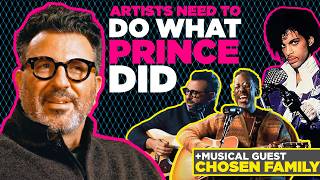
A recorded interview (YouTube) featuring Chris Collins and Billy Mann discussing how Prince & The Revolution’s album Purple Rain affected Mann’s life. Topics covered include Mann’s first encounter with the album (adolescent identity formation), vinyl vs. digital music culture, his childhood in Philadelphia and family background, his path into songwriting and instruments, parenting (including being a special-needs/autism dad), and advice to young artists about authenticity vs. chasing hits.
Questions this video answers
15
1984
Guitar and vocals primarily; also piano and a little bass.
Philadelphia (moved from Villanova suburb to the city as a child).
About 7 or 8
Chapters
So the album we're here to talk about today that changed your life is Purple Rain by Prince and the Revolution. How old are you when this album comes into your life?
15. I was trying to figure out that I didn't fit in. I was weird. I was into music. Purple Rain was like the perfect storm of awesome at the perfect time.
How did Purple Rain by Prince and the Revolution change your life?
The first time I heard When Doves Cry, I felt.
We'Ve all had music that's been the soundtrack to our childhood, to the highs and lows that we had in life. And what we want to explore here today is the albums that have changed our life.
I still can't believe that he's gone.
Today's guest is Billy Mann and a special performance by Chosen Family.
My theory, Billy, is that he who has the most books when he dies, goes to heaven.
That's a good theory.
I'm kind of living under that premise.
I feel like, what happens next? He whose hard drive is the most full with data. In a way, it's like music went from vinyl to digital.
That's a good.
You know, and it's like, what happens. I just saw that. That one book in Latin that's all dalib graphics. And it's like it's on those. Those pages are. Have, like, humanity to them. It's like, what happens when that's gone? I don't mean it to be dark.
But I also have kind of a distrust for the digital in the sense that it can be changed.
Yeah.
Where these can't be changed.
Right.
And I always worry about that too.
Right. Like, the new edition can be.
Or even the old edition.
Right.
Change it and it's a sleight of hand. Yeah. People will change things. And, you know, we just assume it is what it is. We don't even question it.
Yeah.
So I like the actual.
The physical.
Yeah, yeah, yeah, exactly. Same thing with vinyl, though. Like, how many kids today have never sat and listened to an album and had to get up and flip it?
But, you know, that's changing. There's even in la, there's a licorice pizza on Ventura. You go in there and kids go in there and flipping through records and they have listening stations and, like, they have a huge following. And I think part of it has to do with that delicacy. It's like, not just flipping through vinyl and looking at covers as art and not sort of static, I don't know, images or even like a canva. You know, a lot of records now, they have like little looped movies. So when someone's listening on Spotify, they're gonna watch like a repeat loop thing that's about as long as a TikTok. And you see kids at Licorice Pizza sitting there with headphones on, listening attentively to music while looking at liner notes. I think that's why vinyl has a resurgence now. But I do miss it. I miss that with music, we're analog people.
Like, we're analog as humans. And so digital is a separation from us. So there's something about analog vinyl, or just books, that has more of a soul, has more of an energy. Just think about this, the energy from this. And if you pull out and you read the lyrics while you're listening. Listening to it.
Yeah.
Like, look, it has a poster. Like, do you remember when you were a kid and you would get this and how excited you would be?
Like, see? But that's a part of it is the art was layered. The art was an experience. And when the. And even when the music video happened, it was little movies that piqued your imagination. Right. Purple Rain was like the longest music video ever at that moment. And that's how I think it appealed to so many people like me, who were, you know, young kids. Because it harnessed the curiosity around music videos as an expression of. On a song by song basis, but on an album basis. Think how few albums have been made into full length films. I mean, put Purple rain aside, Sgt. Peppers aside. But when you think about it, it's like Quadrophenia. I mean, some of the greatest albums ever graduated into these film experiences. I mean, I can't think of one now. I can think of movies where they've said, oh, we're gonna make a musical. And then they've worked retroactively to make sure that the music is there. Or musicals from Broadway where they say, okay, we know this works, so we'll just scale it into Hollywood. But this, this is. I hope there's still room for that. I really do. There should be. Anyway. Can I touch this?
Yeah.
This is like.
It's amazing.
It's a great pressing too.
I still can't believe that sounds so different on vinyl. I can't believe that he's gone. Yeah.
It's weird, right?
It is weird.
Unbelievable. But think of how much thought was put into this. But like, think about David Bowie, like, how much care was put into the artwork.
So you, you grew up in Philly?
I did.
Mom and dad. Both at home?
No.
Mom and dad split up. I was about 7 or 8. I lived with my mom, mostly.
Do you have any siblings?
I have two siblings. I'm the youngest of three from my parents, my biological parents. And then I have step siblings. One stepbrother I'm particularly close to. The others, I'm. I just. I haven't had a connection to. But I was the baby, and I was. I mean, some of it was the time, I guess we were more feral as kids, Gen X kids. But I was pretty independent at a really young age.
What did dad do for a living?
He started off in auto parts and then got into eating disorders counseling and psychology. And my mom was. At first she raised us, and then she was educated. Got her master's degree in writing and PhD in education administration. She was a teacher, and she worked also as a peace activist. There was an organization called PRONAC in Philly. Professionals for Nuclear Arms Control were like really rich. People got together and created a fund that was trying to bring attention to nuclear arms proliferation. And my mom was. She was a little thing. She was like a hug on feet. She loved everybody. She could find the silver lining in anything. You know, you look at. When you're a kid and you grow up and you're really independent, you can look at that independence through a few different lenses, Especially in an urban environment where it's really, really intense all the time. I struggle with that. I. Sometimes I go back and I think I was kind of unsupervised to the.
Point of, like, were you independent before you were seven or after the divorce?
No, I would say after the divorce. I mean, when you don't really have an alternative, I guess, in some ways. Because if your parents split up and both your parents are working people, a mom or a dad can only be in one place at one time if you're a single parent. So the independence, you know, at that stage was sort of was just part of my reality. But I think that's probably with most kids. It's when you grow up in that environment and then the urban element that you layer on top of it, it was a different thing on your nervous system as a kid. You learned the hard way. I better look over my shoulder and look over.
Did you get picked on?
I don't know if I would say any different than any other kid in Philly. I mean, I think I was definitely soft when we first moved. Actually, this is kind of both tragic and funny story, but we had lived outside the city in Villanova. It's about, I don't know, half an hour outside the city in A nice suburb. When we moved to the city, I remember I couldn't have been at this point. Maybe we had been there for a little bit. I was maybe 9 or 10 and my mom sent me to pick up a pizza two blocks from our house in a nice neighborhood, I mean pretty nice inner city neighborhood. I picked up the pizza. Like I said, I'm about 9 or 10. And on the way back, five kids jumped me the two blocks and beat me and kicked me and took the pizza off me. And I just remember not understanding why a bunch of kids would jump like a. And even then I was like nine, nine years old. I mean I was fine. I was like skinned my knees, but I was really. It was like, okay, this is a new reality in a sense.
You had to grow up quick.
Well, I think I had to grow a different understanding of the rules. The rules outside of the city were, you know, little league kind of rules. And the rules inside the city were, you have to be aware on a different level.
Street smart.
Yeah. And I didn't. I mean I was. I mean no 9 year old should have street smarts, but I had to, I had to learn and I learned quickly.
What did your mom say when you came home without the pizza?
Well, the punchline of this is my mom, I remember her, she was standing on the stoop and we had a dog, a collie, black and white collie, who's like really old and blind and. And my mom was clearly nervous about what to say because we had just moved to the city and we hadn't been there long. And I remember she was smoking a Salem cigarette and she's got Pandy, the dog on a leash. And she said, don't worry, come inside, Pandy will get him. Pandy's like half dead. Pandy could barely walk up four stairs. And I remember her saying that. And I remember at the time just being defeated and deflated. When you sort of circle back to those milestone moments as a kid that anchor you in that, you know, where those Michael therapeutic nerve endings really sit. That was one in particular. It was a very. But I don't look back at it and think, you know, poor. I think look back and think, poor little Billy, me. But I don't look back at it and think anything other than that. I'm glad that it prepared me because not because I think the whole world's out to get you, but more the awareness level that I had from, from that experience.
Do you see it as an advantage?
Yeah, I think. Listen, I survived the music business. I Don't know if I would survive the music business and have been so successful, frankly, if I didn't have a sort of baked in awareness that street smarts can give you.
Cheers. So you ordered coffee.
I did, I did. And I'm gonna. I don't know where we're graduating.
Is that an Americano or. Oh, okay. So that's Vivace from Seattle, that espresso. So hopefully you're impressed.
I'm excited to.
We're fans of coffee here at the library.
This is a. This is nice. This is very nice. I mean, we're. I'm sort of laughing because it's like hard without the visual of my mom being this very.
Five foot nothing woman with like the cigarette and the. The blind old collie. I mean, it was just like. I look at it.
Imagine how hard that was for her.
Well, well. And that's it. I mean, that's really. That's really. It is that it was hard for me. But you're so elastic as a kid and you're so able to bounce back.
Yeah.
And for her, I'm the youngest and I'm. And she knows that I'm on my own more. She knows that she's working. She worked two jobs for some of the years that she had lost her job a couple years after that, and then she did two jobs before she got that job at Pronac. I do think as a parent now with the understanding of being a dad, you know, parenting is an equally learn as you go process. You know, everything you wanted to know about parenting books. You know, I just think it's audacious that people write those books in the world we're living in.
You know, it's funny. So I wrote this, this book on leadership and when I was writing it, I was like, this is two books. Because really, like, people think about leadership as this idealized thing, but you gotta. You gotta deal with yourself first. So the first book is I am and then the second one's Leader. And I did these workshops for a while where I was kind of teaching it live here in the library. And it was an experience or whatever. The thing that blew me away is that all these business people came in and they wanted to be better leaders in business. And by the beginning of day two, they were talking about parenting. Like, parenting is the probably most important leadership role that there is. And they all brought it local. They would say, like, oh, I went home and I called my wife or I called my son or, you know, and then they'd want their kids to come to it.
Right.
That surprised me because I'm thinking business and I'm thinking this whole other thing, but had this emotional effect that everybody was talking about family and parenting. You know how in the studio you'll have that blessed surprise where you thought it was a mistake in the moment and you hear it back and you're like, it was kind of like that. Where it was like, oh, wow, I'm connecting in a place I didn't know I would connect.
I never looked at it that way. It's so. It's so perfectly placed. Because when you're a parent, I mean, as a leader, you are leading, but you are also following leadership on a corporate level. At least in the years that I was a corporate executive, it was very much follow me. This is our initiative, this is what we're trying to do. The record company, we got to do this or we have to change strategies or whatever it is. And it's very much follow me leadership, which I think in politics and a lot of ways people see themselves as leaders. Well, because people follow me, but with kids and as a parent, and I'm a special needs dad, I'm an autism dad, I have a son who's been. No expressive language and the phenomenon of a parent. Little Chris, come and show Uncle Johnny that you can play the guitar or whatever it is. It's very performative. But when you have a child that doesn't have that natural ability and you want to connect with that child, you can't say, hey, come and let's do this. You have to go. You have to go. When I wanted to connect with my oldest son, I wasn't connecting with him. And then he would be under the covers sometimes, maybe playing with a toy or something. And then I start going under the covers with him. I would just go under and just be with him. And he was leading me. And I think what kids do is that on the one hand, as a parent, your responsibility, you have to lead through those elements. But the reciprocity, the organic reciprocity that happens, that makes you a better parent. I think you bring up the perfect example, because the accountability, the reporting structure is instantaneous and it is felt. The reverberations of bad leadership decisions are felt. And that thermostat is not just controlled by one person. It's not just, I'm the leader and so I am setting the temperature here. Your constituents are. They're going to tell you what they need and you can't fire them. That, to me, is using that as an example, is that's that's awesome. Chris, Is that a. Is that a book? Did you.
Yeah. I'll give it to you before you leave.
I would love that.
Yeah.
I mean, I saw there was a leadership section in the library. I was on the tour.
But yeah, one of those, like, you know, surprise.
Why did you think of parenting? Is that what came to you? You know, to think that that is the archetype, in a way, for leadership.
Just the feedback from people coming back after the first day and relating what they had learned that I was doing for them to be better in business, and they related it to parenting. It just surprised me because it wasn't my intention. But the way that the book lays out is it's very personal in the beginning, I think when people regress or reflect on what created them. Right. Cause that's a part of the process is you have to understand your behavioral cascades, like what happened when you were a kid that now is making you the way you are. And what one of those are helping you and what's hurting you. They start to think about what they're doing to their kids.
Yeah.
You know, it's so funny how many of them have reported back to me and how much more intentional they are in their parenting, in a sense. Right. Because if you want to raise good kids, what you really want is you want kids with high self esteem.
Right.
That's really the outcome. Right. Like, I don't think as a parent, you care if your kids are rich or successful. You want them to be good citizens that have high self esteem and do good.
Happy. Yeah, happy. And also I think the measure of good parenting is if your kids want to hang out with you when they're older and in conversation, you can share perspectives on topics and make space for one another and keep that going throughout the relationship. And my kids, my oldest is 22, my youngest is 10. So I'm in like a real sweet spot. My daughter's graduating high school and just Even the past 18 months of my relationship with her has changed as she's grown more clear what her next steps are, her confidence level, her understanding or thoughts about the world. I get to have those layered conversations with her. The greatest feeling is when your kids want to hang out and just hang out.
Isn't it funny, like, how simple it is?
There's some parents that, you know, you finish school, you're on your own, good luck. I don't think there's anything wrong with that. And then there's some parents that say, you finished school, come back home and Live here forever. I don't know how I feel about both, but I think, again, that's where parenting doesn't end. I think you're doing it forever. Do you think the parenting should end? I mean, not being there, but I mean, sort of the parenting process. Okay, you're old enough and I'm out. Or do you think parents are always parenting?
I mean, as a parent, you have the advantage of wisdom, of time and more experience. So I don't think the parenting could ever end because you have a unique set of experiences to share for the younger generation.
Right.
You know, and then that flips probably. Like, my mom is 75. There's a kind of a point where you kind of start to become the parent too, maybe.
Did you grow up out here? Is this. No.
So I grew up in Mexico, where my parents from Tijuana. My mom married a pastor, and their thing was they wanted to be missionaries. So grew up in Mexico. I was 13. When I was 13, my family was in Washington state.
Oh, I remember this because when you.
Talked to Obed, he left.
You talked a little bit about this.
And so I was raised, you know, from 13 on, I was raised by a single mom working two jobs and, you know, that sort of thing.
It's hard, right? That part of it is.
Well, yeah. Well, I'm curious, like, so what. Was your dad still involved in your life?
Yeah, no, my dad. My dad was involved.
Was he still living in Villanova?
No, they. We all. Everybody went into the city.
Oh, okay.
It reflected the times, you know.
Was your dad street smart?
I don't think my dad was fully aware of what the street life was like for me. I don't think.
But if you just look at him, would you see him as being.
My dad's a big, big strong guy. He was, you know, he's aware guy, but he was not like a street guy. Much more cerebral guy. And I think aware. I mean, he's a good guy. I think he's aware. But I think that time also my parents got married when they were like babies. My mom was maybe 19 or 20. And I think that you could ask a lot of people of my parents generation, they married to kind of get out of their own lives. You know, they didn't want to go back home. Like, they wanted a hard launch. They didn't want to. There was no backpacking through Europe. I think when my parents split up, they went backpacking through Europe in their own lives.
And do you know generation. Why they call us Generation X?
Tell me.
Because we're the first generation, where the parents didn't prioritize the kids.
Right. I didn't know that.
Yeah.
Where did that come from?
Some psychologists or something. But if you just look it up on Wikipedia, Generation X, where the first generation, where the parents didn't stay together for the kids, they prioritize their personal feelings, and the disaster follows.
I mean, I think it's interesting because on the one hand, as a kid, this is part of the, like, it's almost reluctant leadership. Leadership is. What's the guy who started Patagonia? I read a book of his about the, like, reluctant entrepreneur or something. It's like, to the point you made about parenting and leadership. I think there are some parents that they may look for the dividends of being a parent when they're older and don't get them. And it's because they didn't invest when their kids were younger and so they don't get the return. You were not there for me, mom, or whomever, and now you want to spend time with me and the grandkids, but they don't know you and I don't know you. I think my mom made a pretty hard turnaround and a focus towards her family as she got older, which is.
Probably why you turn out so good. Because she was intentional.
Right. I think she would thank you if she were here. I feel like my number one priority is being a good husband and father. That is my job.
And anything that I think our generation takes it, we see it a little different because, like, I always was, like, you know, I would stay together for the kids because, you know, I never knew my dad. So my dad left when I was two months. And what's interesting is when I had issues with my stepdad because he was short, nothing like me. Like, we were so different. He had no hair. I had hair on my back when I was, like, 13. Like, you know, they just. I was bigger than him. So I would dream about my dad.
Right.
Because there's this thing that happens with kids, right. Where you idealize the parent that isn't there. Like, they're the hero.
Yeah.
And then later on in life, when I did meet him or whatever, it was like, oh, no. Like, this isn't. There's no hero here. This guy's.
How did it impact the way you look at your stepdad after meeting your biological dad?
I'll tell you the story. So after my stepdad left us, what happened is my father hadn't paid child support for 13 years or whatever, and my mom was trying to get Child support. Well, they went after him for all the back child support plus interest. You know, he wanted to meet me and take me on a son.
Oh.
Date. So he came to the house we were staying in, this house that this church in Seattle had. It was a conversion house. You know what that is?
No, tell me.
So it's people that are gay. They're trying to pray that out of them.
Oh.
And that was the only kind of place for us to stay at the time. And so it was chaos. It was complete chaos.
What a. What a not intimate place to actually try to reconnect.
He shows up in his Ford Ranger pickup truck, and he comes in the house, and I just. My first reaction was, oh, wow. Okay. Like, he looked like me. He had hair peeking out the back of his collar. He was like the adult version of what I was going to become.
Right.
I'm 13.
He was the Papa Bear, visually.
And so that moment was liberating in a sense. It's like, oh, I could relate to this guy. We walk across the street, I get in his truck, and my mom goes back in the house. And he turns to me, he says, man, I miss your mom's.
Yeah.
And I was like.
You know, in that moment, you're thinking of your mom.
Giving him, like, by the way, in any moment.
Yeah.
Let alone.
And that was kind of my experience with him is he made fun of me because I was a city boy. And the whole thing was he wanted me to tell my mom to get support enforcement to leave. The whole time, he's selling me on how unfair it is that they're coming after him for child support.
Okay, that's just. That's awful. That's like. That's a horrible.
I mean, it is what it is. But my question to you, too, is, did you have an early kind of apprehension to authority?
Yeah.
Yeah. See, same year. Because everything the adults did, everything they said didn't match what they did.
I have been to six schools between the fourth grade and high school. I went from Bryn Mawr elementary and I went to Greenfield School, public school. I was fighting in that school. I left there. I went to a friend's school. Both my grandmothers pitched into private school. Didn't last there very long. And then my mom was very hippie ish. And there was a. I just told the story. There was a school in Philly that they formed, like an experimental school for, I guess, kids that were.
Trouble having a hard time. And it was called the Amy Schools Alternative Middle Years. These are formative going a formative moment. My mom was like, silver lining to my mom. It's going to be great. It's supposed to be a great program. She's selling it to me. And I'm like, okay. I remember she's driving me to school. We're driving on Broad Street North. Listen, Philly is a tough place. South Philly is tough. West Philly's tough. Southwest North Philly is also tough. So we're driving, and we pull up to a building, and it's like a. It's like an old office building. And we get in an elevator to go to the school. And we go to the top, we open the. Ring the bell, and it's like, this is what? This is the school. And there's a woman, like a bank teller or a bulletproof glass. And they, like, buzz me in. And my mom's like, have a great day. And my mom's, like, all upbeat. I couldn't have been. I was like, 12 years old. There are dudes with goatees and Adam's apples and Deltoids. There's like two pregnant girls. I'm 12, and I was a tall kid, but I was like, myself. I was like, these are, like. It was, like, scary. I walked in there and I couldn't say anything because I know that I had been very challenging for my parents, all this transition. And my grandmother, who was really. I was very close to, was very much like, you know, what she said was the way. And she's like, you be a good boy and do well in school and don't get in trouble. And then God shined light upon me, and the longest teacher strike maybe in the history of America happened. And there was no school for like a month. And my grandmother, who was like, this force, talked to my parents and was like, billy shouldn't be out of school this long. And so I went to school on the main line, just across City Line Avenue, to Bala Middle School, which was, like, really bougie, nice area. I would commute. I would walk through the city, take the 44 bus for like an hour, get off Cityline Avenue, walk a mile and a half to this school. And I did not mind at all, because after I went to that school, I was so scared. I was just grateful that I could go to a place, and that was a great experience. And I have lifelong friends from there. And then when I graduated, eventually I got to Capo, which is the music high school in the city. And that was life changing for me. Cause I was around all music people and creative kids. And I think the kids that were so motivated to do music and art at that age, a lot of them were gifted. So many, I'd say all of the kids were gifted in some way, but it was also. We were all kind of weird and different. We were passionate about things that were unusual. Singing or a tuba or whatever it was. And you found your people. I would say if I look back, and some of it's a little embarrassing, it's not like when my kids, they ever watch this, which, you know, I don't like admitting that I was like moved school to school to school, but I love the fact that I found my people. And I think that's from a parent's point of view. That's all I want for my kids is find the people that.
Wasn't there a lesson in that for your kids, though, that sometimes it isn't a straight line?
Yeah. I mean, because you.
In those moments, like I remember when I was a kid, like, you're so devastated and then something else happens and that was the thing. But you had to do this to get to that.
I think resilience is.
You would. You would have loathed that hour ride if you hadn't had that experience.
Right, Right. But I think it's the. This is whatever we're going to call our generations, you know, Gen Z or Gen Alpha or Gen Beta. I think Gen Beta will be most appropriate because I think that the passivity that comes as a result of the I want it, I have it now and it's this big will take some of that resilience, some of that. The inconvenience of not getting what you want on demand, that gives you that character. It's like I cannot imagine during the time from when your biological dad said something offensive about your mom to the end of that experience. You tell me that story. And beyond the sting of horrific reality that comes with somebody that you hope is gonna say something that connects with you, to me, it's the afterlife of that that you had to endure for whatever. However, how long was it? An hour, two hours a day of having to metabolize something so up and sustain your own core and then return back to what clearly is your. I really appreciate. This is a lot better. That hour and a half commute is good with me. My mom, who works two jobs, that's good with me. That's all the parent I need. I'm pretty sure that's probably something that went through your mind after that.
Well, I mean, I just look back and I think he was probably trying to Connect with me.
Yeah. But, I mean, I don't know you that well. I just met you. There's books. You're surrounded by everything that reflects depth. That depth didn't happen after that conversation. I'm sure you had that curiosity as a kid.
So, yeah, I think the depth probably comes from being more of an empath from all that. Like you. You feel things a little deeper because of that. And so you're more aware, I mean.
I think that the music is a time machine, you know, for me. I was really excited to talk to you until I had to think about what album I was gonna point to. Cause there's a lot of albums that have hit me. Songs in the key of life tapestry. I mean, it's like all over the place. Purple Rain was like the perfect storm of awesome at the perfect time. And it came out right at the time where I had found my people. I was starting to figure out that I didn't fit in. I was weird. I was into music, I was into writing songs. I wasn't a popular kid, that I didn't have that drive for social lightness, whatever that is, But I really had the drive for music. And I like. I love the danger in expression. I'm sort of thinking the other reason why this record is so pivotal, because it was like I started to find myself at the age when this came out. I found, like, my.
How old were you?
This is 1984. I was 15, 14. 15. I think it was around that time.
And what instrument did you play?
I played guitar, I sang, I played piano. I played a little bass, but mostly guitar and singing. And I was writing songs. I was writing songs, but I was writing songs that were more. Even in middle school, when I was out at that school, just on the other side of City Line, I was writing my own songs. And it's funny, one of the best drummers in the world is a guy named Steve Wolf, who's. He's in LA now. He's done Beyonce to Katy Perry to every huge record. And he always makes fun of me. And the bass player was a kid, Adam Dorn, who's Joel Dorn's son. I mean, separate from that, Adam is a genius. He has a project called Motion Worker. He'd be a great person for you to talk to, both of these guys. And I had a song I wrote called Playful Girls, and it was like a total Prince ripoff. And they still make fun of me for it. You know, that age around puberty is raging. And I found the bug of songwriting more from Prince than I did from the sort of Jim Croce, James Taylor singer, songwriter stuff that was around me that my mom was playing.
What was it about his songwriting?
At least for me, this record was storytelling. It was a narrative. It was direct. The hooks were big, which is a very Philly thing. I mean, Philly music was like Linda Creed, tsop. Those records, Gamble and Huff. I mean, it was very song oriented. City. But I liked. They had big hooks. They were very strummy and very bluesy. If you look at Take Me with youh from a musical perspective, it's like a. It's really like a blues chord progression. I like, hear the song and it's just. But it's a. It's a pop song. I mean, even beyond this record. If I look at it like When Doves Cry, it's a narrative song. It's not like a vague. It's a very. Those lyrics are very specific. I think that was the first single that came out and it just like exploded. There's a deep. There's a deep rabbit hole that I want to go down. But when you break out the songs that were the big hits from this.
Record hits aside, what were the ones that you connected with the most?
I loved all of them. I mean, I love that Computer Blue was like synth and a blues progression and change tempos. You know, he changed tempos at the end of a song and just have an instrumental section. So that part of musical part of my brain that wasn't.
So the structures weren't all.
They weren't. I mean, and then you had like the backwards. You know, the nibbling off of the Beatles backwards record playing. I mean, he was.
Was there a freedom in that for you?
Well, it was a freedom. But the other thing is that.
Because a lot of the Philly stuff was more like verse, chorus, verse in style, wasn't it?
Well, it was. But part of why I think Prince connected is that Prince was sort of everybody. Where I wound up socially was really grew up most comfortable in the black community. My friends singing in church with my friends. And that was like my typical social life. And then when I. Because I was out in the suburbs for middle school, I had those friends. So I was like. I listened to the who and listened to whatever like the Cure or whatever came out during that era. And Jay Giles Band or Foreigner. And then in the city, I'd be my city friends. And we listened to like Cameo and, you know, R and B with Luther Vandross. I was like obsessed with Luther Vandross. And Prince really was a mixture of that for me. And there wasn't an artist I could point to that was sort of taking these different elements.
How old is Prince when he records this? Is he like 20?
1984. I want.
He was young.
I mean, he was signed to Warner when he was 17.
That's crazy.
Good eye at Warner.
Yeah. Well, I mean, until then, you know, the years later, the legal. But I think. I don't know, I loved so much of it. I felt like Baby, I'm A Star is like a self esteem song. The other thing is that he was relatable and accessible to men and women, to anybody. He was an androgynous figure in a way that you could relate to, or you could. You could dive into the lyrics and take ownership of them in the narrative of your own life.
That's a. I never thought of it that way, but you're so right. Like, I never thought of the androgyny, but he really was.
I don't. And he was tiny. He was. I mean, I have so many friends that knew him, some people that worked with him. I never. I never did. I went to shows. I went on this tour. It was like one of the first shows I ever saw. I don't know.
I forget her name. But the engineer. Do you remember her name? So that was recorded at Sunset Sound, right?
This was. Well, we can look at the liner notes.
Well, he had this one engineer that he used. And there's a lot of interviews of her talking about how she would set up the studio for him. And one thing that I loved, which is just a time management thing, is that every guitar had to be tuned and ready and you just handed it to him and he would play. Because he would play every, you know, every instrument.
No, ridiculous.
So he just wanted to pick it up and play, go to the drums and play. Everything had to be ready when he walked in. Which is just a level that we all wish.
Well, yeah.
I mean, when we walk in, everybody was ready. And you could just sit down and do the thing. Right.
Clearly he had a way that he could overdub himself in the process. And then he'd bring the band in. I know that he'd bring the band in and then he could. He would say, oh, these are all my parts. I think Lenny Kravitz does that as well. I think let's Go Crazy is like, do you know what that song's about? Do you have a view on it? So let's Go Crazy was. And I played.
I thought it was Just self explanatory.
I know, but it's let's Go Crazy. It is, but it's like let's Go Crazy is about like life is short. And the lyrics, if you really break them down, are pretty. They're pretty naughty. It's like, have fun and party and get laid. And then. Because we're all going. I mean, think about this, think about Darling Nikki was the. In part the impetus for the. When Tipper Gore came in and wanted to do the censorship and rate records because, I don't know, I think her kid was. She like walked in on her kid listening to Darling Nicky and the kid was like, I don't know, 10 years old or something and thought this is inappropriate.
Well, I remember. I remember thinking that that song was pretty. Pretty exciting.
It was pretty stimulating. Yeah, it was racy. It was. I mean, I think the job of an artist in many respects in this kind of songwriting is to articulate the things that people think or feel in a way that they are not articulating them themselves in an original way or from a personal experience. So you feel less alone. You listen to that song and it's like, ah, if I could.
If drums on that song are nuts.
I mean, these are things that for musicians, like the chorus effect on the guitar on Purple Rain, that was just today. It's like nothing. It's even. It's kind of like dated, but at the time that.
Oh yeah, there was nothing like it. Nothing like this. And his guitar playing is so underrated.
I mean, how about the guitar solo at the end of let's Go Crazy? I mean, it's like you're talking about synths with Jimi Hendrix, marrying it with like a. Like a feel good party chorus. I mean it's.
It is so that tapped into something in you that you felt more like you fit in for whatever reason.
The language, the chords, the melodies, the lyrical style. If you ask anybody, they start out their. You're sort of trying to find yourself in other artists in other places. Prince is just. He's original and was an original from the get go. It's like listening to records like the earliest records all the way through. He never compromised like the funk in his stuff. He had such a clearly low tolerance for mediocre musicianship. Like the play, the level of the players. I'm thinking about the band. The Revolution was just. It wasn't like you didn't look at the revolution. They didn't all look like supermodels. You weren't like, well, fuck, I don't Relate to any of these people or it was like, you know, it was like Schmelke the keyboard player.
Yeah.
Two women. Yeah, it was very women guitarist. It was. That was not happening in music. And he created a little hall of justice around the music that he created. And when he graduated from the revolution to. I mean, I feel like I'm like boring the shit out of myself because I will nerd out on Prince. But when he went to new power generation, it was really about musical expression. And it's like an athlete who's like, okay, I've mastered the marathon. It's now time for the Ironman. It's like he just never stopped. And I really miss those artists. I really do. He didn't chase after his last hit. I mean, I could tell you as a, you know, actively in this space, so many artists are. They're chasing after the last hit. Most of the new artists that have hits, most of them at record companies, think, how can we slow the decline? Instead of the artists that's saying, how do I increase my creativity and challenge?
And, like, do you think Prince was ever trying to write a hit?
I think Prince was a straight up genius and I think in his own unique way, got the number on the music business. He knew what it was and he knew when he had the leverage that he could write, slave on his face and go on television and force a conversation. Even if he couldn't force the business to change, he could force a negotiation, which he did.
So what advice would. Would you give a young artist in the spirit of that conversation? I mean, of chasing hits?
Well, on chasing hits, I would say there's so much volume. We're talking about hundreds of thousands of songs released a day with no filter to the same digital distribution ecosystem that is applicable to the biggest artists and the smallest artists. Right? So if you start on a sure volume basis, statistically you're gonna fail. And what I always say to artists that I work with is, the least we could do is be uncompromising about experiencing, writing, creating, and recording the truth, whatever the truth is. Because that way, if it's not commercially successful, which statistically it probably won't be, you won't look back and go, oh, man, that wasn't me. I just did what they told me to do. Be who you are, express yourself, and be completely untethered with your uniqueness. Then if it doesn't connect, you'll look back on your life and you won't feel like. Like you sold out or you bent over backwards to please the palette the musical palette or commercial palette of somebody else who didn't have to live the life you lived and could be moved from one company to another. Or decide I want to be a real estate broker. And the second piece is that if it is successful, then it's the truth. Then you won't feel like shit promoting it. It'll be a mission. It'll be connected to you and you'll want to do the work and you'll want to go on social media and post about it. And you'll want to evangelize the music that you create. When you think of why certain artists are just indefatigable with touring and whatever, it's because they're obsessed with the music that they create, because they're desperate to share it with people. If you're a new artist and you're thinking about it, it's like you're going to lose statistically you're. I mean, commercially you're going to lose. So it doesn't mean you shouldn't do it. It just means start with the truth and then see where it takes you. There was no filter on Prince. Yeah, look for the purple banana. Really? He produced it.
There's no, there's no.
He.
He wasn't copying anybody.
He didn't give a.
Wouldn't you say that the artists that are mimetic and copying what's out there have. Have a shorter shelf life and it's harder to chase. But the ones. I mean, even if you only have 10,000 people following you, but you're saying something that you believe in, that's a more honest thing to grow. It's better to start small and build it over time.
Brother, you, you. This is exact. Look, small to me is the new big. If you want to build something, it's like you don't. You can't. Smart bomb. I mean, it used to be you could put out a record and you had great record companies and everybody takes shots at record companies. Record companies enabled the globalization of Purple Rain. Whether we can debate a lot of the practices and I've been inside this.
Machine, but it was a machine.
But it is 100% a machine. But it's a machine that when you do touch a nerve and you do make a dent in the zeitgeist culturally and you do need to scale it. Those companies can do amazing things. It doesn't mean they have a right to RP and pillage. Right. And we are in the middle of an enormous cycle of change. I mean, people. Look, I think the remuneration of artists and songwriters. It's completely lopsided and it's a mess. But at the same time, Daniel Ek revolutionized and some people say he saved the music business. It's like we were talking about books. It's like, what is gonna happen to books now for us, our attachment to the tactile experience of holding the COVID and the pages. Our kids, kids. Kids may not care about that, and therefore the evolution of the experience will change. Libraries may become like resorts. It's like we're going on vacation where we're going the library resort where everything is analog. But the inevitability of change in the digital world. And then, you know, where we are now and with AI is going back to it. I think it's more for a new artist take advantage of how inexpensive it is to record. Take advantage of however willing you are to take risks and express yourself. There will be somebody out there that connects with you if you like. There's this pianist, a pianist named Black Bok B L K B O K. He was a keyboard player. He's still a keyboard. I mean, he's a pianist who played with John Mayer and Justin Timberlake. And he's a dude that grew up in Detroit. He's amazing. He creates neoclassical piano pieces that are reflections of things happening in our culture. He did a piece called Michelle's First Day at the White House. It's like how he musically hears when Barack Obama was first elected and a black woman first lady walked into our highest office residence that was built by slaves and what that sounded like to him as a black man in America through piano. I started working with him and he had no audience. It was him, me and my friend Benton and a couple other people. And now he tours. I mean, he's got a career, but it's this big. He's got this audience this big. But he can build a career off doing that as long as he does that expression. And the scalability question is more a commercial question. I mean, think about. Alan Stone is a soul singer from Chilewa, Washington. He's amazing. He sells out theaters and tours all over America. I don't even know if you've ever heard of him. People love Alan Stone. His concerts are like little almost church revival, positive vibes. I mean, the guy's. He's remarkable. And he's been touring. I mean, I signed him 12 years ago just to do his admin, just to collect royalties for him. Because I saw him play at Mount Olympus in LA at someone's house party. And I was like crying, listening to this guy sing his ass off. And I just wanted to be a part of it. I flew to Seattle, signed him at an airport, and flew back to New York. But he has a career. Exactly what you're saying, which is he built off of the nugget of an audience. I'd rather somebody have 10,000 people, a thousand people who really care. You can scale from that than a million people who are voyeurs. A million people that you get 2 comments and 6 likes. A thousand people who always comment and are engaged with you. They are your best marketers.
Somebody who has something to really say.
Yeah, but you have from the heart, right. You have to have something that you're.
Not trying to copy what everybody else.
Is saying, because at which point, what are you going to do? It's like, well, I'm. French fries. They're French fries. Which French fries are the best? Honestly, people eat French fries when they're like, they just want some salt. And they're probably having a burger and that could be anywhere.
It's great advice, though I don't think.
It'S easy advice, because a new artist today has to embrace the fact that commercially, their odds are, they were terrible before, but now they're how they are. Has nothing to do with the art. It just has to do with sheer volume. I still feel that cream rises to the top.
Yeah.
But to get there is, you know, it's. The mud on the road is thicker.
So the big question, okay, how did Purple Rain by Prince and the Revolution change your life?
The first time I heard When Doves Cry, I felt that feeling you want to feel when you hear a record that stops you in your tracks. Do you ever do that when you're driving? Like, I mean, I get everybody is now in playlist land. But when you were driving when we were younger and you'd have the radio on and you'd, like, hear a song and you'd be like, yeah, just stop. Everything I heard when doves Cry. And for whatever the reason, it was just like this exotic, weird, unusual, almost drum machine, you know that.
It wasn't a drum, it was a drum machine. It was like everything about it was so guitar.







