Soundtrack To My Life: Obed Padilla & Santana's Abraxas
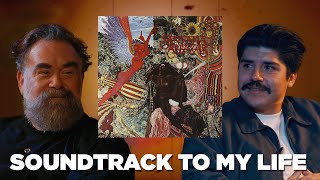
A conversational interview (YouTube) between host Chris Collins and musician Obed Padilla about the albums that changed their lives. Padilla describes growing up as a pastor’s kid, discovering vinyl with his father, and how Santana’s album Abraxas (especially the track “Oye Como Va”) influenced his musical identity, guitar playing, and artistic approach. The discussion also covers childhood geography (Oceanside, North Carolina, Pueblo, CO), family background (Mexican and Costa Rican heritage, pastor father), creative process, current projects (an EP planned for early next year), and reflections on authenticity in religious communities and music culture.
Chapters
The album that changed your life by.
Santana is Abraxas, and Oyakomoba is on there.
And our special guest today, Obed Padeep.
My dad's a pastor, a minister.
Oh, really?
Yeah.
Did you get in a lot of trouble?
I got in a lot of trouble. I didn't listen to anything else. I think I was, like, 12 years old. I didn't understand, like, pop culture, you know, because I was sheltered.
And what we want to explore here today is the albums that have changed our life. I'm a pastor's kid, missionary kid, so I'm an MK pk. So I got more demons.
What do you think of the library?
Incredible. Incredible. It's really inspiring.
You wouldn't think it's here, right?
No. This is your personal collection? Yeah. That's great. Hi.
I. I think I have the theory that he who has the most books goes to heaven, something.
I like that.
I just love books. I love vinyl, but I love books.
Yeah. My dad is a very big reader. The house looks similar to this. I mean, not as vast of a collection, but I picked that up from him. Reading is great.
So do you have, like, a library at home?
Kind of.
If you have two books, you have a library?
Yeah, yeah. I got my own little personal collection of stuff that I read. I just started reading the Carlos Santana biography, which is great. I was telling them I'm pretty into, you know, reading about people's lives and.
Yeah, biographies sometimes are the best way to learn.
Yeah. Kind of seeing the path that someone else took.
You know, you always kind of find out that it's not a straight line. Like, people went through a lot of stuff. Like, outward appearances are, oh, he was successful or whatever.
But behind the scenes, especially nowadays, you know, with social media.
Yeah.
Everything's so fast, and nobody really. Everything's kind of. Everybody wants to take a shortcut. It's like, no, this is actually the long way home.
Yeah. And you gotta learn how to enjoy the journey, right?
Absolutely.
It's the journey, not the destination.
A thousand percent.
I always think, like, the worst day is when you put your feet up on the desk and you're like, I won life because.
Yeah. What else are you aspiring to? You're already done.
Did you grow up in Oceanside?
Yeah, I grew up in Oceanside. I mean, we. I've lived around the States a little bit. I lived in North Carolina for a couple years. Lived in Colorado for a couple years. But all my formative years, I grew up in Oceanside.
How old were you when you went To North Carolina.
North Carolina. I think from like 5 to 8.
So what took your parents out there?
My dad's a pastor, a minister.
Oh, really?
Yeah. And so.
So you grew up in the church?
I grew up in church.
Like assembly God or what?
More like kind of Southern Baptist, but like, you know, I'm Mexican and Costa Rican, so on the Spanish side of that.
But yeah. So my dad had churches and, you know, he would be at a church for a few years, plant it, go somewhere, you know, to another state, plant another.
You like to grow them versus keep them kind of a thing.
Yeah, just wherever he felt led to, you know, lets it go.
Wow. How many siblings?
I have one younger sibling. A brother.
A brother brother? Yeah. Oh, that's crazy. And so he goes to North Carolina, does a church for three years, and then decides to go to Colorado.
Yeah. So then we went to Pueblo, Colorado, which is about 45 minutes from Colorado Springs. Very small town. Kind of stuck in the past a little bit. A lot of veterans, people who worked kind of like in the mining, you know, industry. And it's just. It's this really strange place that's just kind of stuck in.
The 60s, 70s, you know, and then from there we went to Oceanside and been there ever since. So.
You know what they say about pastor kids, right? PKs, they're the worst. They get in trouble.
Yeah.
Did you get in a lot of trouble?
I got in a lot of trouble.
So how was that relationship between you and your dad?
I mean, my dad was pretty crazy himself, and I feel he wasn't a traditional. No, I think growing up, he was. He was a wild guy.
They're bringing you your drink. What did you order for a drink?
Ginger ale.
Oh, that's it?
That's it.
Nothing in there?
No, I'm just.
Oh, they take this very seriously, so.
Oh, I know.
The nicest ginger.
Yeah, I love a good ginger ale.
Thanks, baby.
Thank you so much.
I'm a little more hardcore than you. I'm a pastor's kid, missionary kid. So I'm an MK pk. So I got more. I got more demons.
Cheers, brother.
Thank you.
Wait, so are you really pastor's kid as well?
Yeah. So interestingly, my. My parents were missionaries in Mexico. So from the time I was 5 until 13, I lived in Mexico.
Wow.
And they were pastors of a church and then missionaries.
That's great.
It was an MK pk. So we. We probably had very similar experiences. The rev. You know, my. My stepdad would go do revivals in Ensenada in Different places and. Yeah, very familiar. Very strict, though. Like, I wasn't allowed to watch tv, listen to music.
That's how I was.
I was only allowed to listen to praise music.
Yep, same. I didn't listen to anything else. I think I was like 12 years old. First time I like, really listened to like the radio or, or, you know, anything that was mainstream.
I was, I was 12. And this girl that was a pastor's daughter up in like, la, up here, that supported the ministry, played me Michael Jackson, Thriller. And I, I, I remember just thinking, this is evil. Because that whole like, voice of like the, you know, that voiceover, and I was like, oh, no, this music is the devil.
That's great.
I was so naive, right? Like, it's just funny. What was, what was. Do you remember the first thing that you kind of listened to that wasn't.
Well, so it's a trip. Because in Costa Rica, my dad had a big vinyl collection. When he came to the States, he had to leave everything. So up until about, yeah, 12 years old, it was all praise and worship music. You know, I had CDs and, and that's all I really listened to. And then my dad, somebody, I think, gifted him a few records, just vinyl. And he got the bug again. And so we started going to thrift stores, pawn shops on the weekends and getting vinyl. And this note, this is like early 2000s, so nobody was, you know, digging at that time. So we just got like built up this massive collection of stuff that we would get for a dollar, you know, just like Zeppelin, the Beatles, Santana, Stevie Ray Vaughan.
And that's when you were 12?
That's when I was 12.
And so now your world opened up.
I was allowed to listen to that stuff because, you know, it was just me bonding with my dad. But like, it still was kind of strict of like, you know, I'm not listening to hip hop and stuff on the radio. But yeah, so that was like my first kind of introduction was just all this stuff from the 60s and 70s that my dad was into.
So was it hard for you when you'd go to school and kids would talk about different music that was going on?
Yeah, because I, I didn't, I didn't understand like, pop culture, you know, because I was sheltered and it took, you know, a little while to like, know what's going on, like what was hip and, you know, what everyone was into. And then also there was kind of like one of my best friends. He was like a youth group leader at the church and he was really into like, Pop punk. And so that was something else that I listened to. He would give me all these burnt CDs of like newfound glory and all these different pop punk bands. And so that was what I listened to first before even listening to, you know, anything on the radio. Then I got into the radio and what was, you know, like pop and stuff and like Red Hot Chili Peppers. Green.
What's the radio station in San Diego? What was it?
KSON 91X.
91X.
Yeah. Yeah, is great. Yeah, they played my stuff on 91x before.
Oh, really? Yeah.
Yeah.
That's awesome.
Yeah.
So what does your dad think of your music?
He likes it. He knows some of it is a little vulgar, but.
He knows that I'm just expressing myself, you know.
Is he still a pastor?
Yeah, he's still a pastor in Oceanside.
Your music is great. It surprised me because like when I saw you, I didn't expect that sort of sweet, melodic thing that you have.
I love.
That's really cool. So what instrument did you play growing up?
I started on. The first instrument I played was bass guitar.
So did you play in church?
Yeah, I grew up playing in church.
Me too. I played drums at church three times.
A week because we were always there. You're bored and so there's always instruments around and so, you know.
Yeah, praise can be fun. It's jam. Yeah. Yeah.
So I started on bass.
Maybe a little different in mind because they were speaking in tongues and rolling around. Where? In Baptist churches. They didn't do that that much, so.
Years more like Presbyterian assembly of God. Okay. Yeah, yeah.
So they were rolling around like speaking in tongues, you know.
So my, my dad's side of the family, a lot of them are pastors that came from Costa Rica. But it's a lot of that assembly of God, you know, so that praise.
Can be fun because you're just jamming for a while and for sure you got to bring up the intensity and.
You really can get your chops, you know.
Oh yeah. And it's, it's repetition too.
Yeah, yeah. So yeah, started on bass, learned how to play all the notes and what you know, the notes were, and then I went to guitar.
Did you take lessons or you just self taught?
I. So I'm self taught. My dad played a little bit. My mom plays drums a little bit. So we always had instruments at the house and it was accessible but it was never like pushed on me like, oh, you should try, you know, it was just like cool. If you want to, you know, go ahead and we'll Support you. So, yeah, self taught. I started playing.
Probably around the same time. Like 12 years old.
Yeah. That's awesome. I think I started playing drums like in. I was probably like eight.
Really?
Yeah. But I mean, there's nothing else to do. It's so boring being a pastor's kid.
For sure.
You're there all the time. People don't understand how many times you go to church a week when you're a pastor's kid.
No.
And you never skip?
No. You can't stay home sick.
No. You're there like, and it's. You're there before and you're there after. Yep. You're cleaning up.
I always had music around, you know, whether I was playing it or listening to it.
Like, you learn how to hook up a pa? Yeah. Like, you know, stuff that normal people know. Right.
I was on PowerPoint duty.
Well, see, I'm. I'm older than you. We didn't have PowerPoint. But also another thing that, that I would have to do sometimes. Translate.
Really?
People would come down from America and then you'd have to translate and they wouldn't understand that you would translate.
From Spanish to English.
No, from English to Spanish. And they wouldn't understand that you got to cut your sermon in half because it takes twice as long.
Yeah. How long were you. How long were your services? Three hours.
Well, we just learned to tell people, like, you got to cut it down, you know, you got to watch the clock and that sort of thing. Watch the clock, like before phones and.
All that, you know, or.
I don't know. Do you look at it like a cool thing? Like I was cool for me to grow up in Mexico and to. To see that, like, gave me a perspective that most people wouldn't have.
Absolutely. I mean, I think also kind of moving around a little bit from a young age, like, I was just exposed to so many different cultures and places. And it's really helped me now, you know, traveling around a lot. Like, I'm not really. Nothing's really shocking, you know, I kind of feel comfortable anywhere. Yeah. I don't know. I feel blessed. Like, even. Even though I was strict and, you know, I was sheltered and stuff is great. Like, I am grateful for all the lessons and stuff that I learned.
Do you have kids?
No, not yet.
When you do, are you going to be strict with them or are you going to let them. Like, at what age are you going to let your daughter have a phone pick and shoot?
I mean, the phone thing is. Is crazy because I feel like you have like, kids have to have a phone nowadays. But it's like, why do they have.
To have a phone phone? Like, I have a lot of friends that are buying farms and moving out there with their kids.
I just. I don't know. I feel like this day and age, like, you know, being connected, like, if you have a child, like, you know, you're gonna let him go to the movies, like, you're just gonna be looking for him or you want to call them. You know.
It'S a babysitter in a way.
Yeah.
It's funny. What. So do you have a system at home as a hi fi system?
Not a hi fi system now, no.
But do you have vinyl?
Yeah, yeah, we have vinyl home.
What, like, what song would you use to test a system?
Honestly, like, Oyakomova.
So the album that. That changed your life by Santana is.
Is what Abraxas and Omova is on there.
So let's listen to that really quick.
How old were you the first time you heard it?
I want to say almost 13. I remember getting this and, like, seeing the album cover and just, like, almost not being in a trance, but just, like, so mesmerizing.
Was it the naked girl that got you?
Yeah, not the naked girl. It was just the collage of everything.
Yeah, it was just so trippy and.
Like, you can just stare at it for hours and, like, what does it mean? You know?
Yeah. What did you think it meant?
I didn't have any clue at that time. I was just so intrigued by it. Yeah.
It's crazy. It is crazy that.
Like, there's so much going on also, like, even though there's.
Even though, like, the naked girl is on it, like, it's not.
It's like, it's sensual, but, like, it's not sexual. I don't know, it's just like. It's like. It's just art.
Yeah. It's like National Geographic in a way.
Yeah.
But. Yeah, like, what an incredible album cover.
Did you ever talk to your dad about it?
We've talked about Santana never talked about the album cover.
What about the album?
It was the.
I guess, first formative thing that I remember listening to and, like, understanding it feeling like I had heard it before. Like, it was familiar to me. And it almost felt like.
This is probably one of my dad's. Probably his favorite album as well. And it almost feels like something that was, like, passed down to me from him. Not to make it super deep, but it just. I don't know, it's like I. I knew music is deep.
Like, there. There's a lot to it. Do you try to do that in your music? Like, make it sound familiar in a way that people feel like they've already experienced it at some point?
Yeah. I am a sucker for nostalgia. And so I feel like blending something that is, like, old, but making it new and taking all of these references and inspirations. There is a familiarity to it, but it's making it my own, you know, making it new. It's like new, vintage.
Yeah, I always like that. Like, I Like if there's a little familiarity.
Yeah.
That. That invites you in a little.
Absolutely. All the greatest pop songs there. There is that, you know, like, you kind of. You like, oh, I know this.
What about the production of the album? Like, it's insane. There's a couple things that I. That I notice about it is. One is how incredible Santana is that he gives everybody else space.
Yeah.
Like, he's not playing over the top of that song. He really only has a couple parts that he really goes for it. The rest of the time, he's letting everybody else shine, but they're also so, like. They're. So.
His parts are memorable.
Yeah.
It's like. You're like, oh, that's. That's the. It's almost like that's the hook, you know.
Like, you know, that you hear.
Yeah.
And you hear that, and you're like, oh, that's Santana.
Also to the. The different styles, because the organ, you wouldn't think would go with the kind of the Latin drums.
And I think that's. That was a big thing, too. Is just like, the blending of all these different sounds. Like, it's like. No. You can tell there's no rules, but there's also a structure.
Yeah. It's like organized chaos in a mutual respect, kind of.
Yeah.
Where everybody.
Everybody shines. Yeah, absolutely. I just remember hearing it. And also, I think being Mexican and Costa Rican, like, there's just the. It's just the Latin roots of it, you know, it's like, oh, I feel this. I feel this in my blood.
So what. What effects do you think this album had on. On you and your music?
I think the. The no rules aspect of it.
And just being able to, like, create freely.
Also, growing up, I never. I never felt like there was anybody who really looked like me. And so even knowing what Carlos Santana looked like, it was like I could see myself in that. You know, like, being Latino and, you know, having somebody to look up to.
Yeah. Did you experience that more in. In North Carolina?
I think I was too Young.
My dad did he definitely. Like, there was aspects of that of, like, you know, racism and stuff like that, but I don't remember anything. I was. I was too young, but.
Yeah. What an incredible album.
Yeah. No, and it's. It's. It's crazy how those sort of things can get you through times like that where you feel you don't fit in, but you relate to that. So. Yeah, it bridges the gap in a sense.
Absolutely.
Do you think it was that for your dad also?
Yeah, I feel like.
My dad's somewhat of a loner. I kind of feel the same way, too, but it's like I always had music. Like.
I never felt alone listening to music, you know, it was like a place of comfort.
Yeah. How did mom play into all this?
I mean, my mom has always been great and, like, supportive, but, like, I think she was more. So protect. More protective than my dad as far as.
Being introduced to culture and music and, you know, the worldly things.
Is your mom a good cook?
She's a great cook. She's phenomenal.
Yeah.
Yeah.
Sounds great. What's your.
You like chile rellenos? Oh, yeah, My mom makes, like, the best.
I was gonna ask you what your favorite thing is.
Yeah, Chileanos. Those are. That's why.
So if it's like your birthday and she's like, what do you want? You'll go for chili Ray?
Yeah. Yeah. Probably like eight of them.
I remember as a kid in Texas, there was always a soup, a pan of grease.
Yeah, that's the big thing.
Everything was fine.
Yeah. Yeah. But it's just. I don't know, it makes everything taste so much better. It's probably not as good for you.
But there's less and less of that.
Yeah, yeah, yeah. Even all the old school Mexican people are health conscious. They're like. Yeah, we.
I remember my friends that I would play with all the time that lived on the same street. I would just go sit next to the stove when their mom was making tortillas, and then, you know, you'd get them right off the stove.
Oh, so good.
The best you can.
I mean, you can eat those. Just put a little butter on it and like, that's a whole meal.
Like candy. So good.
Incredible.
That's the, you know, by far the best food you get. Like a mom like that that can make chili renos and.
Yeah. And it's like, made with love, you know.
Oh, yeah.
It's all love.
It's great. Was your mom into music?
Yes. But, I mean, she's always just kind of Listened to, like, worship music and stuff. She was into disco. Like, she liked, like, the Bee Gees randomly. And, like, I think that was her era of, like, you know, growing up and.
Do you, do you like disco?
Yeah, I do like disco.
One of the songs that we. We tried on this, because these speakers are new to us.
That's what they were telling me.
And how do you like them compared.
To your old system?
Well, the old system's behind us. We just wanted this for this, you know, this look and the set. They're pretty great, I think.
I mean, yeah, they sound really good.
They are definitely inexperienced, which is what we were trying to. To do. But so this is kind of disco.
Do you like horns?
Oh, I love horns.
Yeah, me too. I love the horns in that.
I like this. The subtlety of them, though. They're, like, not so in your face. They're just, like, just perfect, you know. It's great.
Quincy Jones is incredible.
Yeah. Just all of his arrangements, you know, like I said, there's a. There's a reason for everything that.
Is that what you think of when you think of Quincy Jones arrangement?
Yeah. And. And.
Just placing things, like, perfectly, like, where they're supposed to be at a specific time. And it's like, it's never overdone.
How do you approach that with your music?
I like to make it chaotic. Put everything in all at once and then arrange things, you know. But it's like, I want.
By deduction.
Yeah. Taking things out, you know, moving things around. But it's like, I want to paint the whole picture first and then, you know, move stuff, take stuff out.
What's your process for writing? Like, do you have, like, a place that you go, a certain notebook? Like, do you have a system for it?
I used to have more of a system. I feel like lately it's been a lot of, like, I will sit and record, like, right as I go.
So literally, you know, recording and writing.
Like, you're just playing guitar.
Either I'll play guitar or I'll have an instrumental or something like production that I've made already. And then put lyrics over the top. Yeah.
Do you start with the melody or the lyrics?
Melody.
The melody.
I always start with music first. There's an occasional time. Like, I, I. In high school, I was really into spoken word and poetry. So sometimes I'll have little things that I've written, you know, a line or two, and I'm like, oh, that's a cool. I'm gonna take that and try to, you know, make a song out of that, but most of the time it's the music first.
Are you into Zach Bryan at all?
I do like Zach Brown a lot.
I mean, do you like that spoken word stuff?
I love it.
Oh, my God. Do you like the.
He's incredible.
Do you like the horns on that? On. On that?
What. Which song specifically?
I'll play it for you.
Are you a big Zach Bryan fan?
Yeah. We all went and saw him twice when he was here, and I think even the. The boys who, like, aren't super into country.
Were like, wow. And his revival thing at the end of the Pentecostal thing, the second time we saw him, John Mayer came out and played with them during that. Yeah, it was great.
Do you like, as far as the revival thing, Tyler Childers?
I think that cinematic epicness to it, you know?
Yeah, yeah, it's very cinematic. I think that. That Zach Brian. Zach Brian is one of the best albums in it in a long time.
For sure.
His new one's great, but there's something about this one you should check out.
Tyler Childer's.
I think it's. Can My Hounds Go to Heaven.
Let me remember the song. There's one specific song, and I think due to our church upbringings, you will appreciate it.
Do you know which? Well, I'll just put.
I'm gonna tell. I'll give you the song right now. It's Way of the Triune God.
Wow.
And it's the Hallelujah version.
That's great. Real cool. That question that. I always wondered if I could take my dogs to heaven.
But it's, you know, the religious undertones and the. It's just relatable.
Yeah.
But I really love that guy. He's great.
That's fun. What else. What else are you listening to recently? What artists do you think are doing something special right now?
Have you heard of the Sacred Souls out of San Diego? They kind of. My boy Josh is their singer, but they're really cool. They're doing this, like, oldies, like, Motown sound. But now it's. It's really great.
I mean, the Zach Brian, Tyler Childers. Trying to think who else I listen to. I mean, I listen to, you know, Kendrick Lamar, Jake.
What do you think of Kendrick's new album?
I think it's a mixtape. I think that, like, he has an album coming.
Really?
Yeah. Yeah, man.
I think it's one of the best things I've heard in a long time.
It's really good. And I also love just like, the amount of vino.
Mexican artists that were on it. You Know, from up here in the LA area, I think that was really cool.
It's the very first song we played on these speakers is this one. Like, we couldn't believe it.
Are you a big Kendrick fan?
Yeah. Like, I don't know. How can you. How you cannot be. Yeah.
Yeah.
I don't like. You think he's still pissed at Drake? Is that what's going on there? Nah.
No, I feel like by this point, like, he's the guy. Yeah, yeah, yeah. He doesn't have to say anything at this point.
It's nuts.
But, yeah, the whole project is. Is really great. And to me, it felt like he. He was, like, really inspired and did it in, like, three days, you know, he just locked in. I was like, all right, let's do this.
Yeah, it has that kind of has that vibe. Like, it's just like, now.
Yeah.
It's like, I had to get this out.
Yeah. I love the energy of it.
But it almost feels bigger than him, too, in a way. Like, for sure he's tapping into something.
Oh, absolutely. I think he always does.
Yeah.
You can go back and listen to stuff, older stuff, and still catch something, like. Oh, that's what he meant by, you know, like.
Yeah.
Yeah.
He's special.
I mean, I still listen to a lot of older music still, you know.
Stevie Ray Vaughan.
You kind of have an old soul.
I would say so. I just appreciate older stuff, specifically music. A lot of Johnny Cash.
Yeah. A lot of blues guys. I've been listening to a lot of Eric Clapton recently.
I just got back from London, and I just. I was like, let me, like, listen to some Clapton before I go. And then, I don't know, it's kind of inspiring, you know? Like, it's cool to just be there. And, like, there's so many great artists that came from this place, you know?
Where do you rank London? In greatest cities in the world.
I mean, I haven't traveled the world like that. That was kind of my first international trip. I mean, I've been to Mexico, but London is, like, my first.
You've been in New York?
I've been in New York.
Okay.
I would say.
London, New York are almost the same to me.
Yeah, me too. Except that. I don't know. There's something a little more sophisticated about London.
Definitely. I also think New York's a little dirty, a lot more.
Walkable or, like, closer. Like, just the tube. Like, going. Getting on the tube. Like, any neighborhood, anywhere you want to go is at least 10 minutes from, you know, some stop.
Yeah. And You're a couple hours from Paris on a train, too. Yeah.
Like, which is wild.
Yeah. I love London. We're all going in January.
Oh, you are?
Yeah.
Great. How long are you gonna be out there?
A week.
Oh, okay. Great. That's awesome.
I'd go to London once a year, at least.
Yeah. It was great being there too, though, at this time of year with just like, Christmas and everything, like, you know, it felt real hallmarky.
People are nice too, right? Yeah.
Very kind. Yeah, very kind. I also think they have a appreciation for music as well, and, like.
Pop culture and, you know. Yeah.
Some of the music going out of there is pretty great too. Yeah. So just kind of just to wrap it up, like, how. How did. How did this album.
Change your life?
It's just been the biggest influence of, like, me and my artistry and me playing guitar.
I could say, like, I sing, but I wouldn't call myself a singer. I don't feel like I have, like, the best voice, but whenever I have something that I need to say that I can't say it, I play it on guitar. And I feel like Santana is the same. Like, his voice is his guitar and the things that he plays and. Yeah, I think that's why it's kind of an album that changed my life. Like, expressing yourself by any means possible.
Wow. Yeah, that's a great perspective. I never thought of that, but it is his voice. Like, his instrument is his voice.
That's great.
Yeah. And he's always like. You can hear it's. He's always saying something. It's just up to you to gather what it is. But. Yeah.
Don't you think the best music or even the best art is when somebody has something to say?
Yeah, I think maybe that's also my appreciation for older things, is nowadays it doesn't feel like too many people have something to say.
I agree with that. What do you think it is that they're doing?
Trying to go viral? I don't know. Like, it's the social media age, you know?
Yeah.
It's very microwave, quick, TV dinner. People don't take as much time to, like, really.
Make something that'll last because they were just in the now. You're like, I need something that's gonna, you know, move right now. Instead of being like, no, I want this to. You have to take this in little by little, you know? This isn't cookie cutter.
Yeah, that's really well said.
What are you. What are you working on right now?
Working on an ep, Gonna release some new music. You Know, top of the year.
So five songs, like five or six songs? Yeah. Probably next year put out like two. Two of those two EPs and you know, just be consistent and create and, you know, make. I just want to make things that are special.
Yeah, like your videos are really good too. Like, how much work do you put into those?
Oh, a lot. Me and my boys, like, we grew up in Oceanside, so I feel like we are.
Just expressing things that we've seen growing up, you know, in this place. Like, that's was crazy for us, you know, when we were younger. And.
I think there's a lot of things that are relatable to other people too. You know, in the videos, I mean, all the people that I looked up.
To.
Were all working class, you know, and I wanted to shed a light on that. So a lot of those videos, it's like me being a mechanic, working on a car, you know, something like being a busboy or whatever, you know, and like, those are all the people that I looked up to that were just solid, you know, and I wanted to shine a light on that, especially because a lot of the stuff I was putting out was very hip hop based and, you know, very rap and bar heavy. And in hip hop there is a look at my car, look at my chain, you know.
Yeah.
And so I kind of just wanted to do something that was far out from that, you know?
Yeah.
More.
More human. Yeah.
More relatable.
You definitely get that sense. But also your videos are very creative and like, well done, well executed.
Thank you. Thank you. Yeah, we. We work hard on them and you can tell, like I said, we just want to make things that are special and that are gonna last, you know?
Yeah. I think we have. We kind of have the same mindset here. Like, we'd rather do it, try to do it right, than just do it.
Yeah. But also with purpose, you know?
Yeah. Not like, not. Not doing it to show off to make other people feel inferior, but to invite a man. Yeah. Like books, you know, it's like, hey, like, everybody loves books. If you have two, you got a library, like, but tell me the one that you love, you know?
Yeah. And why.
Yeah, yeah. The story about it, the humanity. Do you think things are going to go that way more?
I think so.
Feels like they are.
I think there's a. A shift in culture and.
People trying not to be on their phones and, you know, even vinyl records and books and physical things, you know.
Yeah. What's the scene like in San Diego for music?
There's a few people out of there. Like, there's some really great musicians, but I don't know if.
There'S really, like, a cohesive scene, you know, Feel like LA is like a. A hub, but I don't know if there's really a big scene in San Diego. There's some great artists, great musicians, but I don't know if there's really a scene.
So do you end up coming up here more?
Yeah, I work a lot up here.
How often do you perform up here?
Not too often. I just had a show in San Diego last Saturday.
Next year will definitely, like, be on tour.
Yeah, I'm up in LA all the time. I love it here. It's great. You know, a lot of great musicians, producers, writers. It's Mecca.
Yeah. So much talent. It's great. Well, if you ever want to come hang out in the library, we love to have you.
Absolutely. This place is incredible, bro. You really do something great here.
There's lots of books, I think you dig.
I know I was in the kind of like, you're the waiting area, but I saw the Estevan Oriole photo book.
Oh, yeah.
One of my favorites. He's so great.
He's great. Yeah.
He actually took my portrait at a show that I played at.
Oh, really?
Yeah. Yeah. It was like, probably one of the coolest things that ever happened to me. We, like, took a photo and then he's like, can I. Can I take your photo? I was like, yeah. So I don't know. Somewhere there's a photo of me. Oh, you didn't know? That's the coolest part. He took it on a film camera.
There's a new book that he has. Maybe you're in that.
Oh, maybe. But I'd like to leave it just how it is. I don't even want to know.
It's like, yeah, that's funny.
It's just a great moment.
He's taking some great pictures.
Yeah. LA Legend.
Do you have tattoos?
Yeah, I got a. Let me show you this Johnny Cash piece.
What's your favorite Johnny Cash album?
I don't know if I have a favorite Johnny Cash album, but I love all the stuff that he did with June. That's like, my favorite stuff. Do it.
Oh, yeah, that's great.
Who is the artist that did that?
My boy Nico. Nico Tolentino.
He's good.
From Oceanside, that I grew up with. He knows all my art.
That's really cool. I like the placement, too.
Yeah.
That'S great. Well, thank you for doing this. Thank you, brother.
I appreciate it.
Yeah. Anything we can do to support.
Support you or let us know.
Had a great time. It's a great conversation. Thank you so much for having me.
PK to pk. That's so funny. I would have never guessed that, actually listening to your music, but now it makes more sense.
Like this. It's the empathy. I think you have a lot of empathy. That's a part of it.
So to finish off, that's. I think that too, of.
The black and whiteness of growing up in a religious household, you're kind of more aware of the gray area. Like, everything is a gray area. Nothing's black and white.
Yeah.
Well, what about the side of that where there's an image that you have to uphold, but what's really happening is something else? I guess that's the gray that you're talking about, right?
Yeah. I think also, luckily, my folks never.
Had me. I never had to fit the image.
They just let you be a kid.
Allowed to be myself, even if it was detrimental. You know, let me figure stuff out.
That's good. I think that's a. That's the right way to do it.
Healthy. Yeah.
I think I had a mix of that, but I had to. I had to fit a profile.
Did you?
I had to behave. Yeah.
Did you feel like it made you act up when you. As you got older?
You know, what happened to me is my. My stepdad, when I was 12, 13, left my mom and I for this girl from the church that was 21.
Wow.
And kind of before that, I. I was experiencing some things that were contradictory to the narrative that you're taught, you know, and I think.
I just started to feel like it was. It was kind of a business and a facade.
Yeah.
It wasn't genuine.
I mean, no different than, you know, some guy driving around in a Lambo on Instagram and then, you know, he rented it for a day, but he's. Or he's on a private jet, and, you know, it's all, like, relative in a sense of what the image is and what the humanity is behind that.
Yeah.
So I think I became very aware of that very, very young. I don't know. I kind of think I felt like it was all.
An act.
I relate to that.
I think that's a huge part of my bias. Even today, you know, as my dad's still being a preacher and me kind of not going to church and stuff, it's like, I'll try to go. But then it's like my own biases are like, see, you proved me right. You know, I still try to give it a chance, but it's like, no.
What was it for you that flipped? That where you were disenchanted?
Just the judgmental aspect and, like, knowing that everybody has their vices whether you show them or not. So let's not act like you're holy. Perfect. Now. And, you know, like, give me the real. I want to know your dirt. I'll tell you mine.
Yeah.
I have no problem showing you mine.
You know what's funny, too? I think something that came out of that for me is I hate small talk. Like, you're saying, like, give me the dirt. Like, let's talk about the real thing. Why do we got to do this small talk? Okay.
What's the worst thing you've done and why did you do it? Yeah. And I'm not judgmental at all. I'll tell you mine. Like, what? You know.
Yeah, I feel the same way.
It's like, you know how you have, like, the Keeping up with the Joneses, you have the Keeping up with the Jesus.
Yeah.
Like, who can be more. More holy? But the outcome of that really is people are very judgmental.
Definitely.
It's the opposite of what the Bible.
Would be teaching, in a sense.
It's funny because I've. I've met some of the worst people. Worst people, but also some of the kindest people in that setting.
Yeah. But for me, I would say the kindest people are, like, one. One in a million. Kind of like there's a certain people.
That count them on my hand.
Their energy is just love.
Yeah.
Like, they'll take whatever. They're selfless, and it's just love. But, yeah, they're very few and far between. Absolutely. The judgmental. Keeping up with the Jesus's norms.
Yeah.
And it's a business, too. That's the sad thing is it ends up being a business.
Yeah. And I've. I've seen my dad have a small church most of my life. He was never a businessman about it. And I've seen other people kind of be like, why aren't you. Why don't you have this many people? And he's like, I. If I had a thousand people in here, like, I couldn't cater to every single person.
I have 100 people that come here that I can kind of manage and, you know, have a relationship with everybody, but, like, a real relationship, authentic. How do you do that with 10,000 people? And so you can't.
No. Then it just becomes an act.
Yeah. So, yeah, I've seen the bad side and the good side, though, you know, the fake and the real.
Yeah, it's funny.
PK's, man.
PK's trouble. Great. Cool. Well, thank you so much, Chris.
Thank you, bro.
Oh, yeah. I want to give you my book, too.
Did you.
Have you seen this?
Oh, no, I haven't.
So this is a. It's a leadership book.
Great.
And it's two books. It's the I am and then it's the Leader. And I think you'll dig it. Kind of like your style of music is, like, same sort of thing when I'm doing a book is it's. It's written to be more of an experience than just a book.
Bro, this is incredible. Thank you so much.
Yeah.
And you don't.
You don't have to open it now. It might be something you want to.
Yeah, yeah, yeah.
Spend a little time with, but take your time. Like, it's not. It's not meant to be read cover to cover. It's very personal and, you know, the intention is that you kind of stop and think about it.
Yeah. Thank you so much.
Yeah. Let me know what you think.
Oh, I will. This is great.







