Soundtrack To My Life: Shawn Stockman & Public Enemy
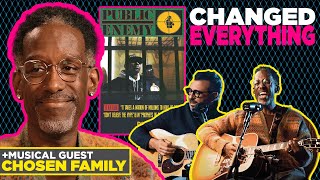
This YouTube episode (Soundtrack To My Life: Shawn Stockman & Public Enemy) is a conversation between host Chris Collins and guest Shawn Stockman about the album It Takes a Nation of Millions to Hold Us Back and how music shaped Shawn’s life. In the excerpt Shawn describes growing up in Southwest Philadelphia, his parents (mother worked in hospital cleaning and McDonald's; father was an engineer for SEPTA), a large sibling set (he lived with three brothers and one sister; he has seven brothers and two sisters total), early interests (dreaming about space, reading Malcolm Gladwell and James Baldwin, Marvel comics), and how a pivotal audition led to acceptance into the Creative and Performing Arts High School. He places Public Enemy (1988) in the wider hip-hop moment and links the group’s militancy to his family’s activist background; he also recounts his father’s lessons ("be excellent") and personal anecdotes about his father’s legacy and funeral.
Questions this video answers
It Takes a Nation of Millions to Hold Us Back (Public Enemy)
Southwest Philadelphia
Creative and Performing Arts High School
About 16
SEPTA (public transportation company in Philadelphia)
Chapters
So the album we're here to talk about today that changed your life is It Takes a Nation of Millions to Hold Us Back by Public Enemy. So where did you grow up?
Southwest Philadelphia. My dad, when he passed away, they said you couldn't get a seat in the church.
You didn't go?
I couldn't too much. I have a shirt, tongue in cheek, that says, I want to sell out my funeral.
Did you get the feeling that he was proud of you?
Yeah.
How much did that mean?
And we've all had music that's been the soundtrack to our childhood, to the highs and lows that we've had in life. And what we want to explore here today is the albums that have changed our life. So how would you describe yourself as a kid?
I was a dreamer.
And our special guest today is Sean Stockman. And a special performance by Chosen Family.
I love your place.
Thank you.
Geez.
We love. We love books and we love vinyl.
That's awesome. You could spend your. I was saying, you spend your whole life here.
Do you read books?
I do. My favorite author is, well, two. Malcolm Gladwell and James Baldwin. Oh, so those are like my two.
What's your favorite Gladwell book?
I like the Tipping Point and David and Goliath. Like those.
Such a great twist on David and Goliath. To see.
It makes all the sense in the world.
See David as the superior one.
It makes all the sense in the world. That's what made him a great king, because he was a great tactician. He understood his opponent before his opponent understood him. And I think that's what makes a great warrior. Someone who doesn't use just the machismo and the firepower and all those other things, but understanding and scaling his opponent. First. Take a look at his opponent and seeing where the chinks and the armor are figuratively and literally. That's what made David so great. And that's. And again, breaking down that actual.
Scenario, it just made all the sense in the world.
I love things like that that shift your perspective in a way that you had never thought of it that way. Like, the story's always been told as the little guy versus the big guy. But the way Gladwell shifts it, it's like, well, you know, David had a gun, right? He had the gun of that time.
He had a gun.
So he actually had the advantage.
Also, David being a man of God, you know, the scriptures talk about wisdom being the principal thing. Therefore, get wisdom with all that getting. Get understanding. Like, he understood like that. The biggest point of that whole reference Is that David understood what was going on, what was in front of him, even when no one else did, when everyone else lacked the understanding or the information to see what he saw. That's what made him great. And that's what makes a lot of people great. They see things that we don't see. You use biblical references. You can do modern day references. There's a lot of people from Noah to Prince.
You know, a lot of people didn't understand him and didn't get where he was coming from.
Yeah, it's so funny. Like, I think about this all the time. Like the, you know, as you get older, you just acquire wisdom through experiences.
That's it.
But when you look back, you're like, man, when I was younger, I was, you know, you're chasing the wrong things or. Yeah, you're pushing harder than you. I mean, there's just a lot of things that a lot of it's mindset. Right, Too. Like just your perspective. Like, as you get older, your perspective kind of shifts. Like, you see it different from the rearview mirror.
Yeah. Your mind expands. You see more, you experience more, you run into more people. And I think that's the most important thing. Like, we all have spirits and they're all meant to intermingle with each other. For whatever reason, whatever your purpose is on this planet, it's meant for you to meet the people that you're meant to meet in order for you to fulfill whatever purpose you're here on this earth to fulfill. So it's great that when you have that understanding, then the world just becomes wider because you know that part of every man or woman's journey is to explore and to discover and to ask questions and to make mistakes and to. To perfect yourself because it's a process.
Is that something that you're intentional about in your life? Like, do you make time to read or travel or do things that make you better or expand your thinking?
All the time. All the time. I'm blessed to have a job that allows me to do that in a more pragmatic level. Like, I'm able to. Like tomorrow I go to the east coast to perform for some people that I might not have ever met. That's a really good experience because that helps me understand people a little bit more just by interacting with them, just being on one side and they're being on the other. Like, you can get a lot from that. I'm blessed to have that type of job where my job is people.
And being able to.
Interact and fraternize with other human Beings that I might not have.
You ordered green tea?
I did, I did. Thank you so much.
That's gonna be the best green tea we could find.
I believe you. I believe you.
Thank you. Michael, do you make time to read and learn?
I do.
What is that process? What is your approach?
Well, it's funny because reading for me is a luxury because I'm so busy and I have a lot to do on a day to day basis for me to actually sit down and enjoy a book. People will say, well, you know, you got the plane, but sometimes the planes, you're sleepy, you're tired, you're kind of loopy because of the flight. So it's like I try my best to etch out some time to sit and read a bit of a book or two. And even if it's a comic book, I love graphic novels and I'm a Marvel fan. Oh, really? Yeah, yeah. So I'll read a few of those from time to time.
It's great storytelling.
They're amazing. A lot of people tend to get caught up in the fact that they're in pretty colors and you see zip bang and powder and people may not take them seriously. But if you've seen a Marvel movie, where do you think the stories originated from?
Greek mythology?
Usually, yeah. But even, even so, like the, the comics themselves, a lot of people tend to shun, you know, the comics because it's for kids or whatever. When I remember reading comics since I was nine and there were words and, and scenarios that I didn't understand or appreciate until I got older and I was like, this was a Marvel comic and they were speaking some really deep things, which is, again, you can't judge a book by its cover. Literally. Like they're actually really, really great stories and lessons.
So where did you grow up?
Southwest Philadelphia. Born and raised.
What did mom and dad do?
My mom did everything. Worked at a hospital cleaning up bathrooms and toilets and McDonald's and all that other stuff. And my father actually was. He's an engineer for. He was an engineer for the public transportation company there, septa. He designed a lot of the lights and all the things when you go into the subway tunnels and all of that. So he was a really smart guy. He would read calculus books like it was a magazine. And I wasn't on that level at all. I won't lie. He was way smarter than I'll ever be.
Did you have siblings?
I do. I have. I lived with three brothers and one sister. But I have seven brothers and two sisters. Well, that's Another interview?
Yeah, no, I have the. I was an only child with my mom, but I have six siblings.
Okay. So. Yeah, you kind of. So you kind of get it. You get where I'm coming from as.
A kid, what were your interests? Like, what was the early. You know, things that kind of influenced you.
I was a dreamer.
I remember probably now more than ever because I reminisce a lot and I get real nostalgic in my days lately. I used to dream of.
Space and stars and at one point I was really into science and astronomy and those types of things and. But music just, I guess, was more natural. I just got into that. Like, it was. It wasn't me trying, it was just me embellishing in something that I felt a connection to.
So did music start in church?
I wasn't a church kid. Like, no. My mom took me to a Catholic church when I was young. And no diss to the Catholic faith, but there's no, like, real musical vibe in. In a Catholic school.
No.
So. So, so, you know, so I was. I was Catholic, Methodist, Baptist, so there was no one faith. My mother, I think, was searching too. So she went from one church to the next. And it didn't deter my belief in God. I believe that God does exist. I just learned different. I wasn't in a church choir. I wasn't a preacher's kid, honestly. I didn't listen to gospel until high school. I was a kid that listened to pop and rock music as a kid and hip hop and all those other things. Gospel music wasn't introduced to me until I went to creative and performing arts.
My first concert was Andre Crouch when I was five.
How about that?
Isn't that crazy? I worked in a little Baptist church.
I worked with his son, Keith Crouch, who produced stuff for Brandy and. And he did a few songs for us too. So, yeah, Andre was. Now, I'm not saying I didn't listen to gospel. I didn't hear gospel music, but it wasn't through the church.
So what was your first memory of music? Was it what your parents listened to or what.
It was what my parents listened to.
Which was what?
Philly International, Harold Melvin and Blue Notes, gerald butler, Patti LaBelle. Gladys Knight in the Pips. Just R and B. R and B music. Like, that's what my mother used to listen. LTD with Jeffrey Osborne and Barry White. She was a huge Barry White fan.
Was music something that brought everybody together.
In the family 100%. Like on Saturdays when we'd have to clean the house, she would put on a Record player. Earth, Wind and Fire would blare through the house. And my sister and my brothers, we would think, you know, act like the broomstick was a mic. You know, that typical. That really happened. That wasn't just like in the movies. Like those things actually happened where you just kind of sat and, you know, you guys do some dance moves and we're singing and we're dancing and all that. Yeah. So I think that's the, the characteristic of, of music. Like, it's, it's, it's actual duty to bring people together and to create moods.
So how would you describe yourself as a kid?
Again? A dreamer.
Dreamer.
My, my. My eyes looked beyond my neighborhood, like always. I remember waking up at seven in the morning when nobody was on the street in the summertime before everybody woke up. And I would get out and there would just be this little stoop, like on my stairway, and I would stand up on the stoop and just look beyond the blocks. And when I was young, three blocks for me was like miles away. So I would just kind of look. And I guess I always felt like there was a world out there, even in my hood. And I don't have sob stories about the ghetto. I know a lot of people hear about the bad things that happened in the hood, and they did, But I thought it was beautiful. I thought where I lived was absolutely beautiful. Like it wasn't the most affluent, it wasn't a bunch of beautiful houses or anything like that. But to me, from looking from my innocent eyes, my block shined.
Like it looked like a jewel to me. The sunlight would hit it perfect where it seemed like the beam would light up the whole street. Like that's what I saw. Everybody has their different perspectives and experiences in the hood, but mine was beautiful. I loved my street. I loved my neighbors. I loved my friends. We were poor, but it didn't matter. Like, I was a very happy kid and I had a great childhood thanks to my mother and my father.
If you went back and you were with your friends from high school and you saw how they turned out versus yourself, do you think that the difference was that you were a dreamer? Do you think that was the thing that set you apart, maybe? Or is it the optimism?
I think it was a little bit of all of that. It's only now. And it's a shame that sometimes life tends to dim that.
Optimism and that positive energy because you get beat down so much. But as a kid, I always thought the cup was half full. I never had a negative.
Thought in my body. I Always felt like something could come out of this, even if I was scared. And there were certain times where obviously parents have to push you into certain areas or certain points in life for you to understand certain things. For the most part, I was a positive kid. Sorry, guys. I don't have a story about hardships in the hood because I had them, but it didn't matter to me.
I think that's probably the lesson, isn't it? That the way that you perceived it. Cause we have a choice how we see things, right?
Correct. I have friends or had friends that are dead and gone or in jail because their path went different. I grew up in the same neighborhood. I played on the same streets, football with them and half ball and tag and all the other stuff. We're the same kids.
I mean, that's the stuff that fascinates me about human behavior, is how people can start in the same place, and then there's a varying degree of difference between where they end up and the decisions, the mindset, their view on things. Well, I mean, your view on things really is what determines where you end up.
Life is nuanced. It's filled with little things that make up into big things. It's one big puzzle. Give you a story. I was in junior high school. A recruiter came to my junior high to speak about this school that was fairly new, called the Creative and Performing Arts High School. Again, I loved music. So when I heard about that, and then watching the show Fame, like on television, you know, when you think of Creative and Performing Arts, you thought of that show. And I. And I was like, man, if there's anything like that, I want to go. Right? So they said, okay, if you want to sing, which I did, you have to have a certain grade point average. Got that? But then you're supposed to have three sheets of music in order for you to audition and get evaluated. I was like, cool. So I was in choirs before and everything. So I'm familiar with certain things like Ave Maria and all that other stuff. So I'm gonna grab those, I'm gonna find those sheets of music so the piano can play it, blah, blah, blah. Couldn't find him anywhere in the city. I looked everywhere. So I go back home. It's the day of the audition.
And I said, dad, I'm not going. Just when I was living with my dad at the time, I said, dad, I'm not going. He said, what do you mean you're not going? Why? I said, because I don't have any sheets of music. I'm not going to go there with nothing in my hand. They're going to reject me. He said, you don't know that.
He said, you don't know. He's like, go.
And whatever happens, happens. But you're never gonna know if you don't go. So he said, take your. That's what he said. Take your black onto the trolley, go to that school and sing. And you never know what happens. If I didn't do that, if my father didn't urge me to do that, I'm getting emotional thinking about it.
I wouldn't be talking to you. That school allowed me to meet the four guys that allowed me to be in that group, that allowed me to be successful. That moment.
That one choice.
I could either have gone or not gone.
And it could have changed everything. When we talk about living in the same neighborhood, the same block, yeah, we played together, but everybody went to their individual houses and everybody had to live under certain circumstances and under certain conditions that because of that, changed their perspective and changed their view on how they're going to live life. But people don't really get into that these days. People don't get into the minutia of.
Development and what makes a person who they are. And it's the nuances, you know, we tend to augment all of the melodrama of things, of people. Well, he lived here, so he has to be like, that's not true. Because, again, I'm a product of that. I did not grow up in the suburbs. My parents were not rich yet. They gave me life.
Yeah, you don't have to have a lot of money to be a good parent.
Right.
You just have to be intentional and involved. Love.
Yeah, that's it.
So you go to the audition and what happens?
I got accepted on the spot.
But you didn't have the.
I didn't have anything. The teacher was named Dr. David King, God rest his soul. He told me to sing a few scales. I guess he saw that I could sing. He said, you're in. That was it.
Wow.
If I didn't make that choice.
I don't know where I'd be.
That's amazing.
Thanks, pop.
Yeah.
So 1988 and what we're here to talk about, Public Enemy.
Hell, yeah.
So tell me what's going on with you in 1988? So you're. Are you 16? Have that, right?
Yes. Seven to 16? Yeah, I think so. 16, 17. 16. 16, yeah, I was 16. Hip hop was, I think, at its best around that time. Because that same year you had Public Enemy. You Had Big Daddy Kane, you had De La Soul Juice Crew, you had epmd, you had LL Cool J, you had Run dmc. Like everybody knows those names. This is. This came out. They had albums during that time. It was such an amazing moment in music. And it was also a moment for black people to develop a level of self pride. Public Enemy was an integral part of that because, well, I guess you could say the musical version of the Black Panthers. White folks feared them and black folks loved them because they understood the plight of what was going on at that time. The crack epidemic was heavy. There was a lot of racist things that was going on at the time. These guys helped me understand that through music, through their message. And it did help that the was dope too. They, along with the Bomb Squad, which was the production team, created what I believe one of the greatest and one of the most important records in history. Not just hip hop history, but history.
Is it vocalizing something that you already felt, or is it helping you feel something new? Basically?
Well, I think I was always a genetic dissenter. I think because again, of my father, the reason why I'm even in. Was born in Philadelphia is because my father and mother were originally from Savannah, Georgia, and my dad was a local activist there. My grandmother, his mother.
Recommended that he leave because he was getting really popular. And, you know, when you get popular back in the 60s and 70s and you were a black activist, you didn't have a long life expectancy.
You became a target.
So she was basically like, listen, I understand that you want to do, but you gotta go. It's getting too hot, you need to leave. So you went to Philadelphia. I say all that to say I think it was always in me to have that type of spirit because it came from my pop.
What would your dad tell you about those times?
He told me an interesting story a month before he passed.
Because he knew he was dying. So he wanted me to sit and talk to him. And.
He used to tell me a story about how his father, my grandfather, went through pretty much a very sad ending at that time. He said that if you were a black man and displayed weakness, they'd kill you. They meaning white people.
He said, what's an example of weakness.
Uselessness, not being able to fulfill their duties, or being so docile that those white folks could bully you and kill you? Yes, okay. They would kill you. They said if you were too strong, they would kill you. So most black people would have to play the middle.
Which is very dangerous for them.
My grandfather defined the middle too.
My grandfather Being one of them, he was a bag handler in the local Savannah train station. And imagine being a guy that after a white man was hired, you have to teach them to be your boss.
Just that in itself was just degrading. But he had to do it because that's what paid the bills.
He had to turn on a certain type of Persona at work, then come home and be himself. Well, after years of doing that, those personalities tend to mesh, and then you don't know which is which. And this is what happened to my grandfather, which led him to drink. And.
Basically, he drank himself to death because he was trying to balance himself with trying to also stay alive and appease his superiors. My dad was very upset about that because he saw that turmoil in his father, and it angered him.
Which is again, why I think he went off and got into activism. But he would also tell me they used to have local papers in Savannah, and on the back, they would have the monthly lynchings.
Yeah, Every month there were a list of people that got lynched. And he said it was anywhere between 15 and 30 people a month of people that got hanged.
And it's in the paper to send a message.
It's in the back. In the back of the paper, you have the paper, and then in the back, they give you a list of the people that got hanged this month. This is what he grew up in, and this is what he had to endure, which is why I think he excelled in school and became an engineer and all this. And he became. He was successful, you know, and he did really well for himself.
So when he's telling you that story, though, what is. What is he trying to teach you or communicate?
He was just trying to prepare me for the world I'm about to enter.
And the same way.
My dad did it, which was his view, my mother did it in another way, the way a mother does.
She did it through cleanliness. Right.
I remember my mother showing me in the shower how to wash myself. She's in the shower butt naked, and I'm like 6 years old, and she's showing me, hey, this is how you wash yourself. You get in here, and you get in there and the whole thing. And I'm sitting there like this, you know, And I do that to this day. The reason why she did that and the reason why every time I walked out of that house, I always had clean clothes, always had clean underwear, the whole nine yards. She basically said it. She said, son, you're black, okay? And the perception is a little different with you. So you always have to be on top of everything. You have to be clean. You have to be respectful. You have to have mannerisms. Your shoes always gotta be clean. You always have to come up with clean shirts, clean jeans and everything. Why do you think I spend money on Tide and all that other stuff is for you to look presentable out in the streets. Because if you, as a black boy, don't look presentable, people will perceive you a different way.
She's right.
And it's active today. It's just as important today than me being 52 than when I was 8.
She's right. And my dad on the other end, he gave me a little more of a austere view on. On the world from a black person's perspective. These are how people are going to treat you. This is how people look at you. This is how people are going to judge you. And I'm just showing you. I'm not saying it's good or bad. It's just what it is. He used to always tell me, the world does not revolve around you, so you have to learn how to deal with that and learn how to get along and figure out ways to live a good life.
What do you think now, being 52, of what your dad had to go through and how he processed it?
He did what he had to do.
And I think he did it quite well.
He was so good at his job that even when he retired, people were still demanding him. I just created a consulting firm just to get people to do what needs to be done. He was like, but I'm not trying to do this anymore. But his phones just kept blowing up and blowing up and blowing up. Another indication on his legacy is, and I didn't go. I was somewhere overseas or something like that. But I feel I'm weird about funerals anyway. But when he passed away, they said you couldn't get a seat in the church.
You didn't go?
I couldn't. I couldn't too much.
I think I was busy anyway, but I couldn't.
I have a shirt.
Tongue in cheek, that says, I want to sell out my funeral.
I think that's the goal.
Did you get the feeling that he was proud of you?
Yeah.
How much did that mean?
A lot.
When was the first time you felt like, hey, I did right by him and he's proud of me.
Can you remember.
Also, did he hold fame as something that was important?
He didn't care.
Was it more about your work ethic?
He didn't care. He didn't care about that. Like I think he was proud because everybody else was making a fuss over me, so he couldn't help but to acknowledge it. So he was like, yeah, I don't even think he watched any of my shows or he didn't care. He just wanted me to be successful. And I think.
One of the most endearing things was I gave him one of my trucks. I had a blue 4Runner, and I went and got another car.
So I was like, here, dad. You know, that's for you. And when I say this man thanked me almost every time I talked to him, he was just so grateful for this truck. And it was just like, it's so great. It's useful, and blah, blah, blah, blah, blah. And that's when he moved back to Georgia. And he was just so happy about that. He was more happy about the truck than I think anything else, because, again, I don't think he understood. He understood what was going on with me.
I think it was just beyond his.
Thinking. He didn't care. He was proud, obviously, because people were happy.
For, I guess, me and what I've done or whatever. But again, it didn't matter to him. He didn't care about that. He really just was happy that I was able to do what I loved. And one of the things that he always used to say was, be excellent. He's like, I don't give a what you do if you're a trash man. It's like, be the best trash man in the city. He's like, don't do anything half. Like, that was his whole thing. Don't ever do anything just to be average. He's like, be excellent. That was his.
His thing. Be excellent.
So I didn't have a dad. My dad left when I was two months old. But my grandfather, my mom's dad, was kind of like my. My father figure. And he was one of those guys, you know, he's a fireman, work hard. And, you know, he would always tell me, like, hey, if somebody pays you $4 an hour, give him $8 worth of value, and they'll always be in demand. But that was, you know, show up on time, work hard. That was his. That was his thing. And when I was successful later, he had cancer, and he came down to visit me here in California. So he's from. From Washington. And I was so eager for him to see how successful I was. And I wanted him to be proud of me. Like, I really wanted that. And I remember he's sitting in my office, big office, and, you know, I'm real important or whatever. And he's like, what time do you get to work? He was more concerned about my character.
Right.
He didn't care about anything else. It was about the character. I realized that he was proud of me way before I thought he was, you know, because it was about, you know, being a good person and working hard more than.
That's it.
He didn't care about cars and houses and that sort of stuff. And I'm sure your father was probably the same way.
Exactly the same way.
It was about your character.
That's it. That's it. That's all. Like, he. He really made no big fuss of any of that stuff. Like, he just kind of. I would call him. I would talk to him. He's a great conversationalist. He always.
It was reciprocal. Like, he asked me questions, I would answer it, and then he would kind of break down what I said and why I said it, but not in a bad way, but just more so. Just like, okay, well, think about it this way. When we did talk.
I got. I have a.
Let me see.
I want to. I want to. Hopefully I can hear. Hopefully I won't embarrass myself.
I don't know what.
Urged me to do this, but I.
I recorded.
A conversation.
Of me and my pop.
No one's ever heard this except me.
So I'm gonna see if I can find it. Hopefully I can.
Was he back in Georgia at the time?
Mm. I mean, you could still answer. I'm trying to find it, but what did.
What did your dad think of Martin Luther King?
He thought he was great. He was just sad that he didn't finish the job he wasn't allowed to.
I have my views on MLK myself, which. Or what a lot of people talk about. The I have a Dream speech. You know, the one where he was at the Capitol, and it was great. But I think what was a greater speech was the mountaintop speech right before. Right before he died. When you watch that and when you read the transcript, he was kind of babbling.
It was almost like he was kind of muster up.
Whatever was in his spirit to say until it got close to the end and something clicked. Something clicked?
Yeah. There's a. There's a dramatic shift.
Yes. And that's when he started talking. That's when he started talking. Talking about the Pharaoh's Court.
Cause at first, MLK was talking about peace and togetherness with everybody and coming together. But that speech and the days leading up to that speech.
It changed a little bit. It was more focused on.
We as Black people need to stay together. Like we need to stay together. When he. When he goes into. My favorite part is when he says. And I'm paraphrasing, when he says, you know what happens when Moses went into Pharaoh's court?
He said things started to change.
And. Which is true. Read the story. Moses was not an Egyptian, yet he went into that court and changed.
Just the pages of history because of his importance and how he integrated into the system. Led his people out of the system because he understood the system, because he was taught in it. There was a lot of deep, Like Martin was dropping jewels that a lot of people didn't really catch up on. He was basically saying that it was when the slaves got together and formed unity. That was the getting out of slavery. He said, now, let's maintain unity. And that's when he went into the mountaintop speech, which I believe, if anybody knows that story of Moses not being able to see the promised land because he sinned. So he saw the promised land from a mountain. He was able to see the land of Milkahenny from the mountain because he was not allowed to enter the kingdom. I think that was him alluding to the fact that, I know I'm going to get killed.
Yeah. Can you imagine the pressure?
Yes. He knew he was dying. He didn't know when, but he knew he was going to die. That's why he made that speech. I may not get there with you. That's what he said.
He said it. He knew he wasn't going to make it. He was like, but stay united. That was the whole thing. Stay united, stay connected with each other. Do the right things.
Utilize the system like Moses did to get to where you need to go. There was a lot of jewels in that speech that he left us with. And the next.







