Soundtrack To My Life: Tarek Abdelkhalig & Racine Carrée by Stromae
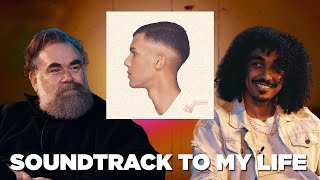
A YouTube interview (Soundtrack To My Life) between host Chris Collins and guest Tarek Abdelkhalig about the life-changing impact of Stromae’s album Racine Carrée. Tarek describes first encountering Stromae around his senior year of college (age ~21), how the album’s emotional, genre‑blending music transcended language, and how it influenced his desire to make layered, meaningful art. He also recounts his early life—born in Sudan, lived there ~5 years, then ~2 years in Egypt before resettlement in the United States (Minneapolis)—his musical memories (Sudanese live music, early exposure to hip hop), and education (University of Minnesota, Carlson School — marketing and psychology). The conversation ranges across music discovery, identity, artistic authenticity (Kendrick vs Drake discussion), and Tarek’s decision to leave corporate work in his early 20s to pursue creative work.
Questions this video answers
About 21 (senior year of college).
Sudan.
Lived in Sudan ~5 years, then ~2 years in Egypt before resettlement to the United States.
Minneapolis, Minnesota.
Marketing and psychology at the Carlson School of Management, University of Minnesota.
Chapters
The album we're here to talk about today that changed your life is Racim Kare by Stromay. How old are you when this album comes into your life?
I think I just turned 21. I don't know this guy. I've never met this guy in my life. I don't even speak the same language that he does. But he made something on the other side of the planet that I can genuinely connect with.
So how did the album change your life?
And we've all had music that's been the soundtrack to our childhood, to the highs and lows that we've had in life. And what we want to explore here today is the albums that have changed our life.
And like, when you listen to Papa the first time, you're like, oh, this just feels good. And you translate the lyrics. You're like, yo, I've been dancing to this.
Our special guest today is Toric Abdel Khaled.
It's so cool that you picked this album because I've had the most interesting experience with this one.
Oh, is this your introductory one to Straw Mai?
So here's the thing that I. That I do is in the morning, on my way to the gym, I will go through Tidal's new albums and I'll just listen to every one of them.
Okay.
Doesn't matter if it's in a genre I would like. I want to experience new stuff, Right?
Yeah, you're a sponge.
And so years ago, this one came up and I was blown away. And I've listened to this album a thousand times and it's in French. I don't understand anything he's saying.
Yeah, yeah.
I don't know why I never, never went back.
Getting a little goosebumps, man, to look at this one.
Yeah, man, like, so you, you know, anticipating your arrival, I've been listening to this one. Same magic, dude.
It's. It's wild. Cause, like, the first time I ever heard strumai, it's just like, I didn't know what this music meant, but I just felt something. And, like, I was looking, I was looking and finally I found him. Like, and it had the same exact experience that you just described. That's why I got goosebumps earlier because, like, that's what it is. That's when, if you're not a French speaker and you discover any of his works, you're like, what is this? And you're constantly listening to it over and over and over again. I think we have an advantage as non French speakers because, like, we don't understand it, so we never get tired of it, you know.
But you don't feel like you're missing anything?
No, no. I think he just like, music is such a universal language and his ability to communicate the emotion behind every track. Like, you don't have to know French to understand it. Like, you just don't. You just. You can feel everything that he's saying from his tonality to, like, the way that the production is made. I've been waiting for this. I need this tea.
That's what you ordered was tea?
Yeah, some green tea and some honey. Oh, man.
Thank you, Michael. Cheers.
Cheers, my guy. Ooh.
I will say, though, with some foreign language music, and I wouldn't even say some, really, what I mean is, with most, I feel like the story in the lyrics is so vital to whatever they're doing that doesn't make me want to hear it again. With his music, it. That is not. There's another dimension there going on where I don't feel like I'm missing anything because I don't understand what the words are.
That's how you know somebody is really good at what they do. Yeah, I feel the same way when it comes to this album and even his first one, because it just felt like he understood what I was going through without really knowing anything about me. And I felt the same way. And I think that's what it means to be an artist. Like, you're able to like, really relate to people, really. Not just people, just like this human experience as a whole. And that's what he is. He's just like a. He's a recorder, he's a documenteer of. Of this human experience. And he's really, really, really good at it. So it's natural to have like that specific reaction to it because I, Like I just said earlier, I had the same exact reaction the first time. Like, I didn't. I didn't feel like I missed anything. I felt like. And this is even before I translated the lyrics. And then when I translated the lyrics, I'm like, oh, that's why I felt this way. Or like that's why I started to think about this and that.
So, yeah, like, that's. That's definitely everything that I would probably get out of it if as like a first time listener from this specific album.
So tell me a little bit about your background. So where did you grow up?
I was born in Sudan, in Africa. Not a lot of people know where that is. But yeah, I was born in Sudan and I lived there for five years. Then I ended up going to Egypt for two years and waiting for the UN Resettlement Refugee Program to place us in a country, and eventually we got placed in the United States.
Do you remember that?
Yeah, I. My memory started at a very young age. I don't know why, but do you remember being born maybe not just playing? I do.
I remember the lights coming on.
You remember the lights coming?
I remember the lights coming on in chaos, really. And then I don't remember much after that for a little while, but I do remember the lights coming on for sure. Like, it was chaos.
That's dope, man. I've never heard anybody that said that.
No. I've met a couple people that are like, yeah, I remember the lights coming on.
I know. I can't pinpoint my oldest memory. I just can pinpoint, like, a time period and, like, I get bits and pieces. Like, a smell would remind me of something, you know?
But that two years in Egypt, did you feel any sort of, like, fear or what was the overall kind of.
I mean, like, feeling when you're young and things are going on around you, you don't really have. You don't really know what's going on, you know, that you're moving. Like, my dad actually went to Egypt before us because he was the first person to leave Sudan. Like, he. And actually, both my parents were. They stood up for civil rights in Sudan. They protested against the regime at the time, and he had to leave early. And so when he went to Egypt, he was there by himself first, and then we joined afterwards. So, you know, I didn't really know what was going on. I was like, okay, we're moving. You know, we waited for my younger brother to be born, and we went there. But, you know, I definitely felt different. That was the first time I felt like a. You know, like, not everybody around me is the same as me. You know, I went to school there. I was one of the only Sudanese people in this school. You definitely feel different. You don't. You can't really pinpoint it why. But then, like, when you. When we got to the United States, that's when I really felt like, oh, whoa, whoa, whoa. This is.
Where did you land?
Here. Minneapolis.
Minneapolis.
Yeah. Minneapolis, Minnesota. Yeah, it was.
You'd never experienced cold like that.
And I will never forget the first time we landed, and, like, those doors open when we came to the parking lot. It was in the middle of February. And if you don't know, Minnesota, that's one of the coldest months.
Hurt your feelings. Cold.
Yeah. I will never Forget this. You come out. Because my body, like, kind of went into shock. I was just like, whoa, this is. This is cold. This is cold. Then the second set of doors open, and we're in the parking lot, and we're like, is it like this all the time? It's like. Feels like you got scammed, you know, like, this is not what we were promised. And then you were running through the parking lot. We're running. We're running. I slip and fall, and I'm like, what the hell did I just fall on? Because it's ice, and you don't really see ice. And it's the first time I, like, experienced ice on the ground. And I'm just like, why is there ice on the ground? Like, I lived in a desert, you know, and, like, so your mind is trying to comprehend that. And also it's cold and you're getting into a car, and, like, our aunt got us in this car, and she got us, like, all these thrifted, like. Like, gloves and all this stuff. So we're just putting these things on. First time I put on a glove, like, it was such a surreal experience, and I'm just like, where the hell. It felt like a montage in a movie, you know, you're, like, running away from something. That was, like, the first experience. Like, my first vivid memory of Minnesota. And, like, we stopped in New York prior, but it wasn't that cold. You know, you're just like, oh, this is cold. But, like. Cause, like, in Egypt, it got a little cold, you know, got down. I don't know, maybe like, 45 degrees Fahrenheit at some point, but, like, it didn't get Minnesota cold. That was wild.
What's your first memory of music?
Oh, so, I mean, music has always been around me. My mom played the lute, still plays the lute. That's like a prominent instrument in Sudan and a lot of the Middle east as well. So it's always been around me. Actually, my dad wrote songs too. And.
Was it kind of like a family thing?
It's not like a family thing. It just was there. You know, I come from a family of, like, lawyers and, like, scientists and very highly educated people with the ability for music. But the majority of us, I would say 90% of us chose, like, the, like. I don't want to say the smart path, like, the. The more concrete path of, like.
But everybody embraced an element of creativity.
Oh, yeah, There was creativity through and through. My. My mom's a lawyer right now, but my dad was mainly a writer. In the beginning. And he was also a lawyer in the beginning, but then became a writer and a journalist because it was hard to, like, win any cases against the corrupt government in Sudan. But, like, yeah, there's always been an element of creativity in my entire upbringing. Like, I'll give you an example. Like, when we were kids, like, we didn't have toys. We didn't have, like, enough money to go get toys. So we literally made our own, like, little toy cars from, like, old cans. And we would. And my parents hated us for this. We would cut out the little. We would make the wheels out of flip flops that our parents bought for us. So they would have, like, all these holes in our flip flops, and that's how we would make our little toy cars. So every single facet of my life in the beginning and just up until now has always been creative. And as far as, like, the first memory of music, like, I would say one of my birthday parties. So here's the thing about Sydney's people. We will find any reason to party.
When I was a. I think I was like, two or something, they threw me a party. And it's not really a party for me. I just happened to be the cause of the party, you know, but, like, the excuse. The excuse, you know? And, like, people come out. Everybody comes out from, like, different towns. And you hear. And it's like. It's live music around me. Like, people are setting up. People are going up there, they're singing. The instruments are being brought out, and, like, it goes on, and you can hear it. But that's, like, my first memory of music is just live music in my own back. And this doesn't happen, like, at an event. This happens in my house. So, like, the way that, like, Sudanese homes are set up is, like, they have this giant yard, basically, right? And because it's so hot during the summer, every night we actually brought out our beds and we would sleep in this yard, like, under the stars. So for the first, like, four or five years of my life, I always slept outside, like, it was a house. But, like, we brought out our beds because it was so hot. And that same area is so big that it can serve as, like, you know, I guess, an event space.
So, yeah, that's, like, my first memory of music is just being live music in my own backyard for whether it's my birthday or my brother's birthday or whoever's birthday or if it was a wedding, as far as English music, I would say it was, like, 1999 or something. New Year's Eve, I was in Egypt, and it was like, mark Morrison, Return of the Mac, was all. Yeah, it was on this Egyptian programming for some odd reason. And I was like, what is this? I never heard anything like this, you know? Like, it just felt, like, surreal. And I was like, I gotta figure out what this song was. And I couldn't find the song until.
I was in the US And I was already an adult. I was like, I think it was 2011, spring of 2011. Some dude at college just played this. No, it wasn't some dude. It was my homie Sean from college. Yeah, I remember now. He went back there and he put it on the speakers, and I was like, what is this song? What is this song I've been looking for? And you gotta understand, this song has been dodging me for a while. I would hear it on the radio. I would try to, like, listen for the words, but, like, the sound quality wasn't the best. And, like, the Internet wasn't like. And so I'm looking for this song during the Oo's, like, in 2000s, for. For a minute now. And then finally, somebody in college, 11 years later plays it on the speakers, and I'm like, what is this song? And I finally got it. It's one of my favorite songs of all time.
That's kind of your first memory of.
English music, I guess you'd say, or American music.
What happens after that as you're going through, like, junior high and high school? What are your musical tastes?
I guess when I first got to the us I was always fascinated with hip hop. It's always been hip hop. It's always been.
You related to it.
Yeah, and, like, I related to it on, like, a subconscious level, because I didn't really. I was still learning English. Like, when I came to the us I didn't know English, you know, I just. I knew I liked this thing. I don't know why, but I knew I liked it. And as I started to learn English more and I started to, like, really listen, I was like, oh, I really like this stuff. You know, My first CD I ever had was Nelly, Nelly's first album. And I found it in the dirt, and it was just covered up in dirt. And I was like, is this Nelly's album? And I knew Nelly was, man. Like, I knew they say his name all over the radio. And, like, I was like, there's no way this is Nelly's album. Because, like, you know, it was like, I found something in America on the street, like, what the Hell, who would throw this away? So I found it and I polished it off. I, like, cleaned it, and my dad had the CD player and I put it in there, and I was like, it is Nelly's album. It was true. I couldn't believe my eyes. So I listened to a lot of hip hop in elementary school and then also in junior and junior high and high school. But my music taste didn't just center around that. Like, I listened to a lot of different music. My parents had Arabic music in the house, a lot of Sudanese music in the house. And I also listened to, like, a lot of foreign stuff because, I don't know, I just had, like, a wide palette for things. Ironically, my parents liked a lot of bluegrass music and a lot of blues. Like, just blues in general. We went to a music festival in Duluth. Actually, that was a whole blues festival. That was like the first family vacation we took together in. In America. Like, we went up to Duluth, a bunch of, like, black Sudanese people going up to this blues festival in northern Minnesota. My mom and my brother actually made the paper because my mom was throwing my brother up in the air and catching him. So this crazy picture, like, was in the newspaper for that. Wow. I don't know where that picture is these days. I had, like, a lot of different experiences. My dad loved Ray Charles. Like, we had a lot of. A lot of those CDs in his. In. In the car. And.
And every. Every other day, my mom would get her little instrument out and we'd listen to. To some old Sudanese music, and she would. She would, like, play it, and I'd be like, why do you care so much about this stuff? Right? And like, you never understand the value of your culture until you get older. And, like, you're like, oh, oh, this is. This is home. You know, this is where you feel seen. It's where you belong.
What did you go to college for?
I went to the University of Minnesota, and I studied marketing and psychology at the Carlson School of Management. So I studied business. Like, I studied business. I went into. My whole idea behind studying business is like, you know, we grew up very, very, very, like, poor. Like, coming into America, we came in as immigrants. We started with nothing, literally nothing. And I just wanted a stable job to, you know, help provide for my family at this time. Like, I'm going through college and, you know, my parents careers still haven't taken off. You know, they had to come to the US and, you know, these are very highly educated people with law degrees, you know, and they thought they could, like, Pick up where they left off. But no, they had to redo everything. They had to go to community college. They would work as caretakers and.
They would bike to Century College in Minnesota and they would go to school at night, come back, take care of us in the morning, and then redo all the, all their degrees. My mom finished law school, like, and right around the same time I actually, like, I was in college when she finished law school, which is, which is crazy to think about that. You know, you're simultaneously going through the same thing. So I went in like, you know, with my intentions of like getting out, getting a job and, you know, helping provide for my family. But then like when I did all the internships, like I did an internship in London, I did an internship at Target, I did internship, a lot of internships, man. And like I worked in corporate advertising for a bit. It just wasn't for me, man. Like, I just felt like I kept seeing like the department head walk by my desk every day when I was at corporate advertising. And I just looked at him and I'm like, if I stay here, that's gonna be me in 10 years. And I just didn't want that. A very stable future, you know, and a very great company. Like, I just didn't want it. My heart wasn't in it. It didn't feel creative enough for me. I just don't like the idea of just being.
At a desk and going to the same place every day. Just. It felt so constricting. So that was very long winded answer to tell you. I studied business.
No, it's. It's fascinating. So you get the degree, you're out there doing it, and so then what do you do? How do you unwind all that?
It was hard, man. Like.
I just, I couldn't. It didn't feel authentic. So I just jumped. I quit my job.
Did you have money saved?
No, this was a dumb idea I didn't have.
How old were you?
I was 25. One.
Oh, 21.
21. 22. 22, I think. Wait, let's go 22. Let's go 22. I was 22. And you know, I had a little bit of savings. Like I had like probably like a thousand dollars or something, but I was just like, this is just not it. I came to LA for a reason. Like I came to pursue this film and pursue this music stuff. And I felt like the job was just like not allowing me to do any of that. And I was like, I just got to jump. And I jump started doing all these Random side jobs. I was ubering for a bit. Like, man, did I really find myself through that experience? Like, you really find out what you're made of when you, when you really just take a huge risk. Do I regret it? No. Not one bit. They put all the skills that I developed over the years to the test, if that makes sense. I just jumped and I started taking classes at ucv. I started taking improv classes. I started like auditioning. I actually had time to audition now. Met some people, got a couple commercial agents, met some more people, kept meeting people, kept jumping on projects. Figured out I was a writer somehow. Yeah, man, LA is such a weird city to jump into without any like actual feasible plan, but having the confidence to be like, I'll figure this out somehow, you know?
Yeah, it takes a lot of confidence.
I just jumped, not really knowing that I was going to be okay somehow.
If somebody younger was asking you advice and they were saying, I got $1,000 in the bank and I want to jump, would you tell them to jump?
I would ask them about their support system and I'll ask them about the type of person they are first. It depends case by case, if I knew everything about myself, like if, let's say I'm, I'm 32 now and I saw my 21 year old version of myself and I knew everything about him, you know, at the time, I would tell him to jump for sure. But depending on like other people, I.
Always feel like if somebody's asking, they're not ready to jump.
Yeah.
Because I didn't ask.
That's the thing. I just did it too.
Yeah, Like I'm not asking, like it was, there was no option. Yeah, it's the same thing, like for working for other people. Like, I just knew that I, I didn't want to work for anybody else.
Yeah. It felt like you're building somebody else's dream and it's not like you're collaborating to help them.
Right.
You know, like I'm all for collaboration. I'm all for helping other people achieve what they want. That's a big part of who I am. And for like the corporate world, it did not feel at all like I was part of something bigger, you know, it felt like I was a rat in a lab. Yeah, yeah. Like amazed, man. Like I was just like, yo, this doesn't feel good, doesn't feel good. And everybody's playing the game around you and you're like, I don't want to play this game.
Like, I'll have people ask me frequently, like hey, you know, I want. What should I do? I want to do this, or I have the side hustle. And I'm always kind of under the mindset of, if you have to ask me, you're not ready. It's going to be hard when you jump. So if you need permission from me to jump. Yeah, you're not ready, because it's not going to be easy.
Yeah. I also don't like having that much responsibility or somebody's, like, life path. Like, I like to think the fact.
That you would ask is a flaw in your thinking.
Yeah, I think. I think when people are trying to ask, they're trying to ask for permission, like you said. Right. Which. You don't need permission to do anything in this world. Like, you really just gotta ask yourself.
First and foremost, why do you think people.
Need permission?
Because that's how we're programmed. Like, we're from kids. From kids. We're programmed to get up at a certain time, go to school, learn all these things that we really don't really want to learn. It felt like we were told to do everything from the minute that we were born, and we didn't really have much agency. And you expect us to have agency about what we want to do after we graduated high school. Here you go. Here's all the tools. Now go figure out what you want to do. And I think that's why a lot of people struggle with it, because we were not really given agency at all. And I had to find it through a set of life experiences that, you know, made me question a lot of things.
Well, showed you what you didn't want.
Exactly. Showed me what I didn't want. And, like, it never sat right with me. Like, I just. I want to be making decisions because I want to be making it. Not because somebody else is telling me to do something, not because my parents expect me to do this thing. And, like, my parents are very supportive. Like, the one caveat they have for me was just get educated. That was the one thing. They never pushed me to do one thing or the other. They never pushed religion on me. They never pushed a certain major or minor career path. When I told them I want to do this art stuff, they're like, all right, bet. You know, they never. I'm very fortunate. These are African parents, by the way. Like.
Yeah, they just. They trust me. They know that I know what I'm doing because I proved to them that I can. I can do this education thing. But circling back to what we're talking about, like, yeah, I just don't feel well.
I think when it comes to permission, I feel like it's also attached to your identity in the sense of if you follow the rules, then you are a good person. And so there's this underlying idea that to not just follow along, you're being a bad person, you're stepping away from the tribe in a way, and that makes you.
You know, an outlaw. But being a good person is in line with following the rules or following waiting for permission, that sort of thing.
I think a lot of us want to be liked. A lot of us want to be a good person. Has a lot to do with, you know, how we were raised, the experiences we had in. In school. A lot of us just want to fit in. To follow the rules means that, like, gives this weird false sense of security. So that's why a lot of us ask for permission to do things, because if it's okay with other people, that means it's okay for us. But that's very backwards if you think about it. Like, it doesn't make sense. Like, you got to ask yourself deeply, like, do what do I want? And I. And honestly, like, going back to my decision to jump, I really asked myself. I'm like, is this corporate path the path that I really want to do? Or how could I feel whole? How can I feel authentically me? And I didn't know what that was when I jumped. I just knew that this wasn't it.
It's hard when you're young.
Yeah. And they just.
There's so much pressure.
A lot of pressure. You got to get a job. You got to do this. You got to provide for yourself. Then you got to get kids, or you got to get married. You got to get kids. Like, there's, like, this weird path.
You got to have a future.
Yeah. And, like, that doesn't mean you're not gonna have a future if you don't have any of these things. I think there's not just one way to do this life.
That's not how it's sold, though.
So how old are you when this album comes into your life?
This album came into my life when I think my senior year of college. I think I just turned 21.
21?
Yeah.
So what's going on at that point in your life? Like, are you. Are you writing songs? Are you. What kind of music are you listening to?
Also, I'm still freestyle rapping during this time.
Were you going to rap battles?
I mean, we rap battled back in, like, middle school, but nobody really rap battled around me anymore. We were just doing it because we were drunk college kids having fun, you know? And at some point, somebody was like, yo, you should. You should think about doing something about this. And I was like, really? Nah, this is just. This is just a fun little thing that we do. My dreams of a rapper are not.
Let's leave it here. But then, you know, who are you.
Listening to at that point?
At that point I'm listening to. Man, this is hard to think about asap. Rocky was crazy, man. Kendrick Lamar. Yeah. Kendrick is, like, popping. Like, was it 2012 when this thing came out? It's 2013, I think. But at that time, I'm listening to a lot of Kendrick Lamar and, like, he's popping off. I'm going through his. I'm introducing everybody that I know into Kendrick Lamar. Chance the rapper was popping at that time too. Kanye is always popping. Like. He's. He's in. He's in my shuffle. A lot of EDM was coming into the scene at this time too.
So were you digging the EDM or were you just observing?
I was a little bit of both. Okay. Cudi was. Was doing his thing too.
I was gonna ask about cutting. Yeah, so what. What sort of edm? Because there's a bunch of different flavors.
Yeah. So liked Ro Grind. Ro Grime. Took hip hop and took all this stuff and added these huge energy, like, digital drops to it, and it was. It was outrageous. It was outrageous. You know, he. That Love Sosa flip with the chief Keef. Flip is just crazy, man. So I'm listening to high energy. They call the trap music. I still. I think they still call it trap music. There's weird. It was, like, trap music from Atlanta and then, like, trap EDM music, which is. I just had the same meaning, but, you know, it's the English language. But I'm listening to a lot of different stuff, which I think why it made this. I mean, I would listen to this either way, but it made this album a lot more digestible because it combines all of that. It combines hip hop. It combines, like, dance house and all this energy stuff into.
Yeah, there's DJ vibe.
Mm. It's a DJ vibe.
So who introduces you to it?
The first song I ever heard by him was Aloriz on Dance. That's the famous one that blew him up. And I listened to it. I was actually at this club, and it was playing on, like. Oh, no, I don't think it was playing. The first time I went to this club, I think it was just on. Right. And, like, I was Trying to find it for a few months. And still you can see a pattern of me trying to find music here.
Like, Shazam has to be your favorite.
Shazam was not a thing back then.
Now, though, it's gotta be your favorite.
That was perfect. I Shazam so many things. Like, I will go. I will stop what I'm doing to Shazam. A song like this is the most inconvenient thing. It's like, the most convenient thing, but it's also the most inconvenient thing in my life because it will. I will stop whatever I'm doing. So, yeah, I'm looking for this song. Looking for this song. Still can't find it because, again, it's in French. I don't really know what he's saying. I just know that the melody is dope. I don't want to hear this.
Yeah, there's no. You can't come up with a title from what he's saying, right?
I'm typing into, like, Google random words that I think it sounds like. Nothing's coming up. Nothing's coming up. And then I go back to that same club, like, three months later with my homie Duran, and I look at the screen. They have a projector. Now they're playing the music video of that song. And I'm like, this is it. Okay. Okay. Music videos, they always come, and they always have the little. This is by who? You know? So I'm sitting there, my friend Duran is talking to these two girls. I'm ignoring the whole conversation. I'm just, like, focused on this. I'm like, I'm not missing this. You know, I've been looking for this. So then finally at the end, it says his name, and it's, like, kind of blurry because, like, the projector is over somebody's head or something, and I can make out the word Stromais Drohma. And I'm just like, okay, that's all I need. I found it right away. When I went back home that night. I went home my laptop, and I found it, and I found his first album. I was like, wow, this dude has an album? And da, da, da, da. And then I just. I had that album on repeat. Forever. Forever, Forever. And then later, this came out. I was like, what is this? The follow up to his original. I was like, whoa, this is a masterpiece. Yeah. I was just blown away. I had that on my ipod. What was the ipod? You know, the little nano ipod with the video that. I had that on there. And like, man, it was wild. It was Wild.
What is your. What is your favorite song?
Let me think, let me think. It's hard, man.
I have favorites. That's the thing. Every single time I listen to this album, I find a new favorite. Originally, it was, like, the first song. It was Tophe. I was like, what. What a way to. To start an album. Like, what a way to, like, just, you know, come in and just had so much energy. And I'm just like, this. This. This is anthemic. This felt like.
An anthem for something way bigger. Do you have a favorite one off of this?
I've only been listening to this for the last, like, three days. I don't think I have a favorite, but let's just.
What does TA Fett mean?
I think it's your party. The whole track. Like, I listened to this album for the first three years. I was not gonna translate these things. I was like, I don't wanna translate this album, and it's gonna ruin it for me or something. I was just like, I'm here for the vibes. And then, like, I listened to one day, I was like, okay, maybe I should actually, like, learn what the hell this means. And this, the first opening song, is about, like, the consequences of, like, going out and being out all the time. And, you know, sooner or later, you're gonna face the consequences of, like, your actions. And he does a really good way of telling this in the. The music videos. His music videos are so, so wild. This is what I love about him as an artist. It doesn't just end at the music. It's a whole. It's a whole thing through and through. And, like, that's how I like to approach my art. But it's like the music video, if you haven't seen it yet. It's like he acts like this, like, almost like a. I don't know if I'm using the right word, like a general almost walking around. It's like there's this one character who's running around this maze and every, like, every now. And though he faces somebody in this maze, whether it's like a bride or like, some other thing that represents, like, a challenge in life, it's just talking about, like, you know, you going through life and, like, all these responsibilities that come with it. And, like, if you don't, if you're out all the time, you're gonna face the consequences of it. That's what I got out of it. And then Papa Ute, man, that. Ugh. That. That is so deep. And, like, when you listen to Papa Ute, the First time, you're like, whoa, whoa. This is. I'm dancing again. I'm dancing again. This feels good. And then you translate the lyrics. You're like, yo, this is about trauma. This is about, like, fatherhood and, like, not having an absent or not having a father who's present. And, like, you're like, I've been dancing to this. I've been going on runs to this. Like, and then you watch the music video, and the music video is just like, oh, wow. And, like, what he did in this specific music video for Papa Ute.
With the mannequin is so symbolic because, like, it just. It means, like, we'll find any way in this life to fill that void of fatherhood. And I think he said on an interview one time is that, like, anybody can become a father, but nobody really knows how to be a good father. There isn't, like, a book out there on, like, how to be a good father. Like, it's just life. It was actually this. This song that actually had me reconcile with, like, a lot of the grievances I had with my parents growing up. Because, you know, it's true. Like, our parents that bring us into this world, they have their own mistakes. They make them. They make their mistakes on you. It perpetuates the cycle. And then, you know, you grow up blaming them. But, like, you know, my homie Ian always said this, man. He said, parents are just kids who had kids, you know? And, like, when you think about it that way, you're like, yeah, you got to have a little bit more empathy for, like, their position.
But so is Papa Uday, Father.
Papa Ute is. Yeah, he's talking about, I think Ute. Like, I think the lyrics go, father, what are you. Father, I need you. Father, where are you? Father, I can't exactly remember because, again, it's, like, no joke.
That's what it is.
Yeah. Papa would say. It's about. It's about.
I would have never guessed that in a million years.
Yeah, it's about, like, fatherhood, man. And, like, his dad died in the Rwandan. In the genocide against the Tutsi in Rwanda, so he reconciles with that. Like, I haven't lost any parents, but, like, you know, I have a lot of. I have a lot of friends who've lost parents, and I see what that does, especially when, like, you lose a parent at a young age.
I've seen what it does to people, and it's. And I've just seen, like, not having fatherhood in your life or having, like, a traumatic Turmoil. Relationship with your father can do to you. It manifests in such different ways. So, yeah, like, that one's like. Like I said, it hits home before I even know why. Like, you don't have the words or, like, the knowledge.
Yeah, that's what's so crazy about his music is. You know. Yeah, but I would have never. I would have never made that connection. But, you know, it's smart. You can tell that it's. It's many layers.
Yeah, it's. It's. It's. It's art. It's art. That's what it is. That's what art is supposed to do. Art isn't just something that looks cool. It's a reflection of our human experience. We come into this thing, we don't really know what the hell it's about. And the only way that we can actually cope with this existence of ours is to make things to describe and communicate with other people. Hey, I'm going through this thing, and this is how I feel about it. Do you feel the same way remotely? And people say yes, and you feel seen. And that's what's so beautiful about it, is like, you can, like, I don't know this guy. I've never met this guy in my life. I don't even speak the same language that he does. I mean, he probably speaks English, I think. Yeah, he does speak English, but he made something on the other side of the planet that I can genuinely connect with. And, like, that's why I think it's so special. Like, it just comes from nothing and you can just communicate with somebody else about it. That. That. That's just profound. That is unreal to me.
It transcends.
Yeah. For real.
So how did. How did. How did it affect your music?
Yeah, so I think.
How did it influence it?
I got attracted to hip hop in the beginning because of how dense the music was, how incredible how much information you can pack into a single line in hip hop. I thought it was the most difficult, magnificent, like, form of music when I was growing up just because of how much knowledge you can go into it. I said all that to say that I wanted my music to mean something. I want my lyrics to mean something. So I stayed. I really worked on getting really good at my lyrics. Like, I idolized lyricists, like, from, like, MF Doom to Most Def to, like, like, obviously Kendrick Lamar and, like, his ability to just paint a picture in, like, everything that he does. And when I hear this and I see the juxtaposition and the contrast of, like, the production being so high energy and then the lyrics being translated to have such deep meaning and such vulnerable subject matter. That's what I want to accomplish from my art. I want you to feel good, but I also want it to, like, stir up emotions in you. So I want it to be layered. I want it to be extremely layered. So when I hear his music, it makes me. It's like game on, you know, like, yeah, okay, bet that's the bar. Let's keep going. Let's see how far I can, like push this song. Let's see how far I can push this film. Like, that's, that's what I get out of it. And also the blending of all the genres.
Yeah, that's what I was going to say is.
Yeah.
How could you put him in a category?
I, you know, growing up, I just wanted to be honest.
Electronic.
Yeah, you could say it's electronic. You could say it's Afro Caribbean.
He's rapping, he's singing. Like, and same thing. Like the music. Like, how do you put it in a category?
I think what ended up happening right around this time, actually maybe even before it, like, we're having this genreless era and we have genres, but like the blending of. We humans like to put things in boxes. But I think that's why he was so successful is because it was so genre bending.
It was about the music, not about the category.
Yeah, it was about the music, not about the category. It wasn't about him trying to fit into something. It was about taking all the things that he likes and putting that into his original style. Which I think why we go back to these songs and we listen to them over and over and over again. Cause it's like he almost like he did create his own genre. Like, it's like got all these influences. You hear all these like, samples and then like all of a sudden you got these African drums in here or like this jazz and like this house, like this house music that you're listening to and you're like going off like it's.
You. You don't have to put it in a genre. Like, you kind of just got to listen to it. Like, music is just music you got to use. If it feels good, it feels good.
Okay, can you explain the Kendrick Lamar, Drake.
Oh, we're going to talk about this situation.
Explain it in what way?
Just so I can understand it.
Have you been on the Iraq? I was like.
No. To me and to a lot of people, I think this wasn't just about them beefing. This was A moment for music. This was a moment for the culture.
What are the two sides that are represented in this moment?
Think commercial success and artistry. Like, real, genuine artistry.
So Drake is commercial success.
He is the most commercially successful rapper ever. Like, he is the numbers for him, like, there's no, there's no denying it.
So he's like the Taylor Swift, I guess.
I've never heard anybody call it like that, I guess. Yeah, that's a good, that's a good way of putting it.
Just in my taste, in my sensibility, I don't even comprehend how it's even a conversation.
So I think people forget that hip hop is a contact sport. Like, it's, it's a competition hip hop, like, at the roots of it, you know, it's the voice of the people. It's the voice of the oppressed. It's, it's how we. It's, it's the anthem for, for the revolution. But there's this other side of hip hop that it, that it is a contact sport. Like, I'm the best. I'm getting on this mic and I'm saying things and I'm showing you why I'm the best. So from a sports standpoint. Yeah, that's, that's what you can say, that part of this beef is, you know, like, who's the greatest rapper of all time? You know, that's, that's, that's always gonna be up for grabs.
But top 10? Is Drake in the top 10?
I mean, he's in some people's top 10.
No, we're just.
Me and you are talking right now top 10.
We're talking about the other thing too. That to me, I always think, like, because I don't relate to him whatsoever, but to me, he seems like an upper middle class kid from Canada. Yeah, like, there's no, there's no real. I don't feel the same honesty as I feel from Kendrick.
I feel like.
But I also live in L. A.
And so I love Drake. In the beginning, like, I was really cool. I love, like the. So far gone. I was even up to, like, nothing was the same. I was like, this guy's really groundbreaking. Like, you know my homie Juice. Actually, one time we were, we were, we were listening to Nothing was the same. And we were listening to like, hold on is going home. And I'm looking around like he's got a bunch of dudes singing right now before we're about to go out. We're singing hold on, we're about to go out get drunk and hang out in Gus and, like, my homie just, like, he's got a bunch of dudes in this room saying it. Like, I was like, yeah, man, he's doing something. And then, like, as the years went on, went on, it just felt like there was just, like, a lack of authenticity for me. And, you know, nothing's wrong with commercial success. You can get up there, but this is hip hop, where authenticity is the core of it. And for somebody like Kendrick Lamar, he's always maintained his authenticity. And to me, authenticity is the ultimate form of freedom. Like, that. That is just what this life is about. So I think it is a battle between authenticity and, like, you know. You know, this fake stuff that is being, like, peddled to us and fed to us. That's part of it. As far as, like, the top 10, like, you know, it's kind of hard to do a top 10 in rap because, like, rap is like. Or hip hop, and rap is not just like. Like a. Like, basketball. All right? Basketball is like, okay. It's like, you know, it's very obvious who those are. But hip hop, it's like. I think it was like, Lil Yachty or somebody, or like J. Cole. On the interview, they were saying, like, it's like a track and field. You know, there's. In track and field, there's all these different types of sports in it. There's like, the long jump. There's the 100 to 200 to 400. There's distance. There's shot put. There's the relay. So that's why hip. Because hip hop is so huge. You know, you can say. Maybe you could say, like, the top 10 in each one of the categories. But as far as, like, having a whole comprehensive list, it's very hard to do. And everybody. Everybody is. Is going to have something different.
The question is, though, would Drake make your top 10? You want me to make it easier when you make your top five?
No.
Yeah.
My top ten, probably not either.
But Kendrick would. Would be very high on my list.
Kendrick would be high on my list. I don't think Drake would make my top 10. He's up there for sure. Don't get me wrong. Like, you. He. He did come in and. And, like, you know, so what is the beef about? Oh, man, we're gonna get into this. Okay.
I think it started right after, like, Kendrick dropped that control verse, you know, and he called everybody out on that control verse. I don't think Drake took it too lightly. And the control verse, he just called out people and it was supposed to be like, hey, this is hip hop. I'm just trying to raise the bar. This is competition. Since then, like, they started trading subliminals left and right, left and right. And it just got to the point where, you know, it was time to air it out. And it's a multitude of things. It's about their personal relationship or, like, I mean, we don't know these people. We don't know these people. I don't personally know Drake. I don't personally know Kendrick Lamar. You know, there could be things behind the scenes that we really don't know about.
Well, there's no way that there's a deal behind the scenes, in my opinion, just because of how bad Drake has lost.
Drake's taking Ls, like, repeatedly. I've never seen somebody take somebody else. Like.
Like, I don't know how you recover from that.
Here's what I'll say. Like, it depends on what you're coming to the store for. All right. Why are you listening to this music? Okay. Do you want authenticity? Do you want real artistry? Go to Kendrick. But if you're here, if you just want to listen to a vibe, I know a lot of people that listen to Drake. They don't know a single word of him. They just listen to it for the music. And that's not a bad thing. I'm not saying that that's bad. I'm just saying.
Let me just introduce an idea.
Okay.
This.
Yeah.
So this is a blend of those two. There's an authenticity, but there's also the poppiness of the sweet molasses. Like Duchamp would say, right in the creative act, he says it's gotta be sugar and, like, molasses to get people to like it. So this is a melding of the two, I would think. It doesn't just have to be authentic, but it has to be.
We consume music differently, though, in the.
US to touch you.
We. I think people outside the US Appreciate art and consume music a lot more. Like, they're a lot more ready to get behind somebody that's doing something versus here.
It's got to be, why are we leaving the U.S. we're in the U.S.
Because music is global. It's not just here. It's not just here. You got to see how, like, everybody's consuming music. And it's probably the reason why I consume music like this. I think we in the US need to. We need social proof before we can decide to like something versus, like, for example, people in India, like, they see they get behind their people, bro. They get like, anywhere else. I feel like anywhere outside the US they really get behind their people. Like, if you up and coming, you doing something, like, you see people in Brazil, like, there's a lot of engagement, a lot more support because, like, you're doing things back to. You're creating. And we really, like, appreciate creativity and we fund it. Like. Like, in Sweden, there's a reason, like, there's a bunch of Swedish DJs is because, like, like, the Swedish government allows people to work on their craft and, like, subsidize their living versus here. Like, there's a starving artist. You have to be a starving artist to make it here. It's different.
What was your question again? How does this relate to Drake and all that?
No, let's just. Would we just agree that Kendrick won?
What do we need to ask that question? Yeah, come on, come on, come on. Is that what you wanted this entire time, is to tell you that Kendrick Lavar won? Like, you don't need me to tell you that. You don't need me to tell you that. Like, you could ask Drake, too. Like, you could ask him. Like, he'll tell you who won is. Yo, where were you when, like, the songs were coming out, though? Like, cuz, like, I was working and, like, I went on my break and, like, he dropped something. He dropped. I think it was.
I forgot what it was. I forgot. But it was the day that he dropped both of them, you know? And, like, I went on break prior to him going on. Prior to me going on break. Drake. Kendrick dropped that. Then Drake dropped Family Matters, and then Kendrick dropped, like, 30 minutes later, he dropped the other one. That was so crazy. Like, those two weeks in our life was probably the best two weeks of 20, 24. Like, what was going on? Like, so. Yeah, Kendrick, Juan, man, what you mean? Like, you know what.
You know what kind of cemented it for me was at the World Series.
Yeah, they.
They were playing They're Not Like Us. And the. The crowd is chanting it at the Yankees as they're coming out onto the field and was like, oh, this is like a soundtrack for a city.
Like, yeah, yeah, it's.
It's the underdog.
It united California, man. Like, like, my. My brother lives in Oakland, and he told me when that song came out, like, there was just. Everybody was outside, you know, like, running that song over and over and over and over again. It's. Yeah, man.
What else are you listening to now?
What am I listening to right now? Obviously, I'm I got the Kendrick album on repeat. Still trying to get familiar with all the songs. It takes me a minute to, like, you know, because it's so dense. You got to, like, listen to it over and over and over again. I'm listening to. Obviously. This is. I got this on repeat, too. I still listen to this every day.
Where does this fall into your.
Oh, yeah, this was great, man. I really thought he was pushing the boundaries with this one. He, like, went all over the world and collaborated with a lot of unique people for this.
You know, there's a Marcel Duchamp picture like this.
Yeah. I mean, isn't that the same dude that you. Yeah, yeah, yeah. It's great. It talks about a lot of different things. Again, the subject matter is deep. I think it was. He took a lot of classical music and, like, blended it with this one. I don't know. As far as, like, I'm not. I can't rank his albums. Like, I can't rank these albums. They're. They're all special in their own way. What else am I listening to right now? I'm looking. I'm listening to a lot of foreign stuff. I'm listening to a lot of Brazilian rappers, a lot of Afrobeats. I listen to a lot of Afrobeats. Like. Like, Victony, man. Man, that dude's got so much sauce, bro. Like, I saw me and my girl, we went to see a sake at the YouTube Theater last year, and Victony came out, bro, and he just stole the show, bro. Like, he. The swag. The way that his demeanor is, the stage presence. And I love a sake too, man. Like, the energy and obviously Burna Boy. And. I don't know, man. I kind of just go in my mood. I kind of just. I'm listening to a lot of old music, actually. A lot of, like, some of the soundtracks I grew up with, I got those on Repeat, too. Like 50 cents, get rich or Die Trying. Like, that was a core, man. Like, well, 50 Cent came on to see back in the. Everybody wanted to be 50 Cent, man. That shit was crazy with, like, the bulletproof vest and all that. I listened to a lot of TI Back in the day, too. I remember, like, at every track meet I had, I would always start it with that TI Song. What you know about that? I just, like. I felt like I was walking on the scene, you know? Like, very movie. Picturesque. Yeah. I'm digging a lot into my old bag. It's hard for me to fall in love with new music. It's really hard for me to fall in love with new music.
What do you think that is?
I think it has to do with social media and everybody's chasing like that hit, that TikTok song. I think one of the songs on here actually talks about social media. It's Carmen and this is like 20, 2013. And he talks about the effects of social media. I have a hard time with that myself. Like, it just feels so exploitative and, you know, being an artist and being a musician and being a film. Right. A screenwriter and film director, you have to use the tool in order to advance your career. But like, the way that these algorithms are set up is like it feeds you like the most polarizing stuff. It's not healthy for us. I look at it like money, you know, like money can. Can do. It's a great tool. It can do amazing things, you know, if you have it. But it can also do terrible things if you have it. But the effects of social media on music, just making these.







