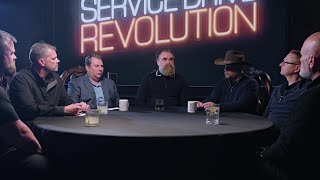
A short panel-style discussion (Chris Collins, Cliff, James, Speaker D) about how individual success is ultimately a personal choice and the heartbreak coaches feel when people refuse to change. The conversation links underperformance to identity and low self-esteem, describes coaching challenges, and emphasizes how one person's decision to improve quickly amplifies across team culture and home life.
Chapters
I think so. I think Cliff said something that's really important that we should unpack a little bit is he said it's a choice. And doesn't it break your heart sometimes when you see potential in somebody and they just won't make the choice? And no matter what you do.
They'Re just committed to the fatalism of not performing? It's almost like being an underperformer is part of their identity. And no matter what you do, no matter what you say it, they just. They won't make the choice. They won't even try.
Yeah, that's the. That's the hardest piece to. To kind of get through to somebody when, like, you can just see it. You can see the potential. And you've tried multiple angles, you've talked to them, you've shown them, you've worked with them, and you just can't get through to them. Like, it's so, like, as a coach.
Like, it's so hard to understand.
I swear, it's like raising children. Like, it's. It's literally like, you know, where you see your kids do these things, and, man, if you had done this other thing, it would have been way different. And they just can't seem to connect those pieces because of maturity, maybe. I don't know. That's a piece of it, too.
Yeah.
It's self esteem.
Yeah. I'll beat myself up because I feel like the. Like, the answer is so obvious. Right. Like, the one thing that, you know is that coming out on the other side of maybe there's, like, a little bit more work, but the other side of it is, like, the freedom and the, you know, like, going home and having, like, that feeling that you accomplished something today or had a great month or broke records or whatever it is. And the activity and energy required to do that is not that much different than the activity or energy required to not do it, if that makes sense. Like, you almost have to work harder to make the decision not to be better, if that makes sense. But I totally understand. Like, it's. It's frustrating, it's painful. And the only thing I can think of is, well, there's got to be a way in at some point in time so that somebody kind of sees something. But I think the getting them to make a choice is a very interesting.
Because you have to make the choice for yourself. You can only want it so much for somebody before it's on them. They have a vote. They have a vote in what they're doing.
I spent a lot of time in my Career being held hostage because I wanted success more for more. More for somebody than they wanted it for themselves. And I would just keep saying, if you just do this, like, if you. You know, I'm trying to coach, coach, coach, but at some point they have to make the choice for themselves. And, you know, and it is so frustrating because you can just see that a couple little tweaks, you know, you're going to be there for the same amount of hours. Like, why wouldn't you want those hours to be more valuable and more fun?
I think the part of that that's really frustrating is I think all of us at one point or another have made that choice. Right. And so you know what it's like to be on the other side and feel bad and need to disrupt your routine or need a change. And so, you know, it's possible. Cause you did it. And like, I don't know, I always think, like, if I can do it, you certainly can do it. Like, you know, and they think like, oh, no, you're special. Or you're like, you have some superpower that I don't have. And it's like, no, trust me, it's just as hard over here as it is over there.
I think about when I became a new client so many years ago, and I was so negative and fighting everything so much for, you know, even before we partnered up, you know, for years, and I was having very marginal success, like, really none. But then after making that decision and saying, wait a second, I gotta do something different, and going all in. In 90 days, it was fixed like 180 degrees. And so it is so frustrating when you know that once you that decision, it ends up being less energy for better results.
Also, too, if you just think back, like, the thing that stuck out to me is your team was, you know, a conduit of that energy. Like, everybody else got excited.
Absolutely.
And that was contagious. Right. Like their lives got better.
Yeah, it amplifies on itself. When you decide to fix that for yourself and you're in charge of other human beings, it just spreads. And so then their effort multiplies on your own. And so the result is very, very quickly, a huge shift in the culture, in the numbers, in everything that goes on.
There's a little bit of a salvation thing that happens too. Once it turns a corner, they almost.
Well, their quality of life is better.
Yeah, I was gonna say it doesn't get easier in a sense, because then they're just seeking other. Like, there's not one of us at this table that hasn't asked somebody else at this table. Like, I need some coaching here and I need you to tell me what I'm doing wrong. And we've all been on the receiving end of that and like we're seeking that. But there is a salvation that once you fix it and it goes back the other direction, that, man, it just feels so much better. And you can almost kind of relax.
And breathe into their home life, like they become better spouses and parents and you know, I mean, it just it. So there is this salvation thing, like when you're, when you, when you've got the thing fixed that you spend most of your day doing and that is going so much better, you feel self esteem, which makes you more capable of being a better husband or wife and a better parent.
Yeah, your kids and your spouse want to be around you because you're kind of admitting that positive.
Well, back to what James said too is like that positivity and that openness will affect every part of your life. It'll affect your relationships, your family, everything. Because if you have that open kind of positive outlook, people respond well to that and you're always learning and you just see the brighter side of things.