Susan Lucci on "Find Your Glow, Feed Your Soul" || Books That Changed My Life
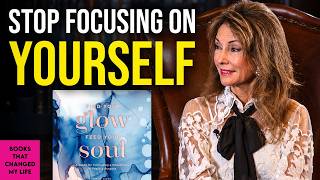
In this YouTube interview for the "Books That Changed My Life" series, host Chris Collins (Speaker A) talks with actress‑author Susan Lucci about how Emily Silva’s three books—Find Your Glow, Feed Your Soul, Moonlight Gratitude, and Sunrise Gratitude—guided her through the profound grief after the death of her husband Helmut. Lucci recounts her early life, how she met and married Helmut, the challenges of losing him, and the ways she reclaimed purpose through daily gratitude rituals, intentional self‑care, and the tools from Silva’s work. She discusses themes of authenticity, self‑love, the power of light and gratitude, judgment versus gratitude, intuition, faith in an afterlife, and how she applied these lessons to her own writing (La Lucci), home renovation, and community service. The conversation also touches on her personal habits (morning/evening prayers, massages, library), her belief in life after death, and advice for others coping with loss, emphasizing vulnerability, intentionality, and the importance of giving back.
Chapters
Tell me a little bit about your husband. How long were you married?
52 years. My mother and I were walking in one of the hallways and there was Helmut. And my mother said, we're having Susan's engagement party. Why don't you join us after you visit your friends? So he sat across from me at the end of my engagement party. What I didn't know is that Helmut, who was sitting between my mother and my then future mother-in-law, he turned to my mother and said, this thing between Susie and this boy is never going to last. And my mother said to him, I think you're right, but I can't say anything to Susan because she's 21 and very headstrong, and she will marry him tomorrow if I tell her that.
And so then how do you call off the engagement?
We are at the house of the Redeemer.
Okay, so the big question, how did Find Your Glow and Feed Your Soul by Emily Silva change your life?
Begave me.
Welcome to Books That Changed My Life, New York City edition. Like Hunter S. Thompson, we're going gonzo on the hunt for fellow book lovers. It's taken us all the way to the beautiful House of the Redeemer Library here in the heart of Manhattan, and we're joined by legendary actress and author Susan Lucci, and she's here to talk about the book that changed her life Find Your Glow, Feed Your Soul by Emily Silva. Hey, I got a treat for you— 50 signed copies of entertainment icon Susan Lucci's new book, La Lucci. Here's how you claim your copy: hit the link in the description, subscribe, like, and comment. That's it. If this is still up, they're probably still available. We'll cover shipping so you can get your book right away. Now sit back and enjoy the conversation. Okay, so we're here to talk about Find Your Glow, Feed Your Soul. But I'm curious what other books are on your list of top books.
Well, the 3 books that I read and reread almost every single day are all by the same author. Her name is Emily Silva. She worked in corporate America and after several years decided that that wasn't for her. She knew she had another calling, which was to be a life coach and an author. She wrote these 3 books. I am amazed when I read these 3 books how much they have spoken to me and helped me over the last several years. Anyway, so as you said, Find Your Glow, Feed Your Soul. This is the one I came to most recently. The first one was actually Moonlight Gratitude. I will tell you that I begin and end every day with gratitude, with prayers of gratitude. And a friend of mine, a lifelong friend of mine gave this to me. I was not having trouble sleeping. This is Moonlight Gratitude. You can read it daily or wherever you wanna open it to. They're dated days, as is this one, Sunrise Gratitude. And They are just calming. And when I lost my husband, I needed some of what each of these books has to offer me. I read and reread them.
Can I see that one?
Sure. This has a lot of stuff in it.
So when you say in the morning and in the evening gratitude, what is that like specifically? Like, what do you do?
Before I get out of bed and before I Turn off all the lights. Actually, I'll probably turn off the lights and then thank God for the blessings, for so many blessings, and for blessings on the people I love and for strength for me and that I do the best I can with the gift of life he's given me.
So you're starting the day with the context of gratitude and ending the day with that context.
Yes.
So what are examples of some things that you're grateful for today?
Well, there are things I'm grateful for every day and so on. But the last 4 years, 3 years and change, just after I lost my husband, I was totally lost. I mean, I was lost. I didn't remember what I do, although I've been an actress my whole adult life, and I wanted to be an actress since I can remember as a little girl. It's how I played, and I would make up stories and act out all the parts. And my mother was very nice. She let me play in her top drawer where she had scarves and all sorts of wonderful things that I could make myself into whatever it was in my imagination. So, but when I lost my husband, I I didn't even know that I did that and had been doing it for my whole adult life. And I couldn't imagine that I would ever do it again, that I would ever step on a stage again or ever be in front of a camera again. And that's how I was for a couple of months. I just, I turned, I canceled some appearances, which I do not do. And then I realized because I had a commitment to something called Celebrity Autobiography, which is comedy. And I had done it a number of times, so I knew the material very well, and I had committed to doing that. And suddenly I thought, maybe I'm lucky to do this. Maybe we should remember I used to love this, I've always loved this. Maybe I can love it again. And maybe this is actually gonna save me and can get me to a place where I put one foot in front of the other again. And so I did keep that commitment. I knew there would be laughter that would be good for me. I knew the cast, it's revolving cast, but I knew that Mario Cantone would be there and I would laugh just because he was there and he'd make me smile. And so that was my first time back on stage. And it was everything I hoped it would be. There were many hurdles to get over in myself because my husband had always been with me during these times. So there were, he was missing obviously, but he was also there. I could feel him saying, as he always did, you can do this with your hands tied behind your back, get out there and do this. It was wonderful for me. And I learned that. And then I had this book that a friend had given to me that I pulled out again. Actually, in my own book, I have a list of all the books that I read, including these 3 that helped me for people who are going through grief themselves and want to find themselves again. Because I mean that, I was lost. I know that people used to say to me, oh, you're so resilient. Oh, blah. And I knew that I had been, but I could not imagine that I had been. And I wanted to find that again. I wanted to find me again. And these books helped me tremendously.
So tell me a little bit about your husband. How long were you married?
52 years.
And how did you meet?
I worked for him when I was in college in the summertime. My parents paid for my education, but I had to earn my spending money. And so I worked at the Garden City Hotel, which was in my hometown. It was a Stanford White building. It was a beautiful old hotel with a lot of history. Lindbergh made his first flight from those grounds. In any case, my husband was from Austria. He was classically trained pianist. In Europe as a chef in Austria and Switzerland. And let's see, so when he came to North America, because the time for he would have to wait to come to New York, which was his dream, was longer than if he went to Montreal. And so he went to Montreal and he thought, I'll drive down and see Niagara Falls and the Great White Way. Broadway and all that New York is supposed to be that he saw in movies and he grew up watching. Anyway, so he went to Montreal 'cause he could also speak French and German. German was his first language. He could speak French and some Italian. He didn't speak English. So he went to Montreal and he learned English by when he had a break from his work, he would go to the movies and watch old Humphrey Bogart movies and John Wayne. And so he slowly learned to speak English. Well, I guess pretty quickly.
By watching movies?
Watching John Wayne and Humphrey Bogart.
Those are good ones to emulate.
Yes.
Especially John Wayne.
So yeah, well, he grew up seeing American Westerns too, you know? So anyway, that's—
So was he a chef?
Executive chef, yeah. First of all, when he first came, he was, I think he was, I didn't know him then. I think he was 21 or 22. He was in Montreal and his mentor was a very very esteemed French chef who I later met. Just a wonderful man. And then Helmut came to New York and became the executive chef at a couple of these, of the top hotels in New York City. And that's when I met him later. When I met him when I was in college, he was 10 years older than I was. So there was too much of an age difference. I wouldn't have been allowed to go out with him. By my parents. But then I got engaged to someone else. And do you really want to hear this whole—
Yeah, it's fascinating.
I was engaged to someone else.
And so how old were you when you first met him?
When I first met him, I was 18.
Oh, okay. And you were working in a restaurant?
In the summertime to earn my spending money for college. It was a my summer vacation.
What would you do in the restaurant?
The first year I was the waitress, and that's how I then became in contact with Helmut because that was my first year at the hotel was his last year in the kitchen. And that was his goal to get out of the kitchen. And after that, he became in charge of the food and beverage operations for the whole chain throughout the country. So that's how we met at that point.
What was your impression of him? 'Cause in that sort of cooking, especially French, it's very, disciplined and pretty high standard, right, of what they're doing.
Yeah, I think he also loved the American cuisine. He loved it. He said when it's grown properly and it's prepared properly, that's why you don't have all those sauces in America, because nobody's hiding anything. A lot of the sauces apparently were created because refrigeration was not so wonderful at the time in some of those countries. So Escoffier came up with the sauces which are very beautifully done and they enhance something. But he loved the pure flavors of America too. So he, and the hotel was here in America, so he was also doing lobsters and steaks and things like that. But yes, I'm also, you know, classic.
So what was your impression of him when you were 18?
Well, I'll tell you. So he was the executive chef. I was a college girl waitress. They brought in college girls and boys every summer. To augment their staff because they grew in the summertime. The clientele grew in the summertime. And I had no idea what I was doing as a waitress. No idea whatsoever. And I walked into the kitchen to pick up my order and I picked it up on a tray like this instead of like this. And that's when I met him. And he was standing there, he was 6'2", but with his chef's hat on, he looked like he was 7 feet tall. And he said to me, young lady, Your skirts are too short, your hair's too big. You have no clue what you're doing. You're a young lady, not a teeny bopper. So, and then he wiggled his ears at me and I thought, and I asked the girl next to me, another college girl said, who is that? And she said, he's your boss, stupid. And I didn't know that as the executive chef, that's who I was working for. And I thought about that. I thought, oh, he doesn't know what he's talking about. My skirts are too short. That's the style. You know, it was the late '60s. And anyway, but I knew already that I didn't want to continue to be a waitress. If I came back the next summer, I'd rather be the hostess. I thought that is what I'd like to do.
And being a waitress is stressful.
Stressful. Being the hostess is seating people. How was your dinner?
Yeah, you just make friends.
Yes. I thought, that's what I would rather do. So I did the next summer, but he was gone by that time. And then I got engaged to someone else. My parents had my engagement party in the hotel that night because it was in my hometown and it was a place where people did have their events, their beautiful dinners whenever they wanted to celebrate something. And my parents had my engagement party in the hotel that night. Helmut was back in the hotel visiting his colleagues. His friends who he had worked with. And my parents, because they also frequented the hotel, they knew Helmut. They knew him as the chef. And so my mother and I were walking in one of the hallways and there was Helmut. And my mother said, oh, chef, hello. We're having Susan's engagement party. Well, at that point it was the Hunt Room. The dessert. We were just, it had pared down to about 12 of us at the table, 10 of us. And why don't you join us after you visit your friends? And he did. So he sat across from me at the end of my engagement party the rest of the evening. And by then I was 4 years older than when I had met him. I was 21. And I thought to myself, hmm, I really, you know, I probably shouldn't be engaged to this very nice guy sitting next to me because I'd like to know that guy better. And What I didn't know is that Helmut, who was sitting between my mother and my then future mother-in-law, he turned to my mother and said, this thing between Susie and this boy is never gonna last. And my mother said to him, I think you're right, but I can't say anything to Susan 'cause she's 21 and very headstrong and she will marry him tomorrow if I tell her that. There's a reason I played Erica Kane. Anyway. Anyway.
And so then how do you call off the engagement?
We are at the house of the Redeemer. Okay. Well, I didn't know that he had said that, but I was already having misgivings, as I told you. And I—
Was there a lot of pressure to get married?
No. No? No.
You were just—
It was getting closer to the wedding date. And the thing is, but I just had a feeling this was not right. Even if I hadn't met Helmut, if I was having those feelings now and I'm just engaged, it's probably not right. And I was 21 at that time, turned 22 in the fall. Anyway, I did, I broke the engagement. It just wasn't working, I didn't think.
That takes a lot of courage though. That's a hard thing to do.
It was hard to do. Because I—
It disrupted the whole system, right? Because when you're getting— there's planning, there's expectations.
Yes. But my parents never put that pressure on me, I must say, much to their credit. And I know that that exists, what you're saying.
Sounds like mom had a little reverse psychology going on anyways.
I think you might be right about that.
She was smarter.
Yeah, exactly. Anyway, I had to cancel my— my wedding gown. And I did.
Did you feel a sense of relief when you finally called it off?
One of Helmut's colleagues, who was also older than Helmut, but I didn't know that, had asked me out and I'd been going out with him, but not seriously, but going out with him. He was showing me New York City, which was thrilling. As a young girl, you know, to go to the Rainbow Room and go dancing. And, you know, and the owner knew him and, you know, that was all very, very interesting. Helmut had lunch with him when he found, and during lunch, his former colleague said, did you hear the news? Susan Lucci called off her engagement. Lucci is my real name. My maiden name, called off her engagement. And Helmut said, oh really? And he excused himself and went to the phone and called me. So it's before cell phones, you know, I was making rounds in the city. When I got home, 'cause I wasn't home when he called, my mother said, oh Susan, do you remember the chef at the Garden City Hotel? I said, of course I do. And she said, well, he called you and I told him you'd be home at such and such a time. He said he'd call you back. And he did. And he invited me to a dinner dance at the Waldorf where there was a 12-piece orchestra playing Viennese waltzes and beautiful music. And people were speaking several languages, including Helmut. And he taught me to waltz that night, actually. So how old are you?
You're 24 or 25 at this?
No, no. I was 22 when we got married, so I was probably still 21 then.
21? And so he asks you out and— And what were you thinking?
I had broken my engagement already.
Yeah, but he's older.
Yes, he's older. 10 years older, which at that time seemed a lot. It was not, and certainly not by modern standards. It isn't. But yeah.
And so he takes you dancing. When did you fall for him, or when did you kind of know?
Well, dancing that night, I remember thinking, gee, maybe because I had broken my I had broken up with him too because I said I wanted to pursue my career because I did. I was brand new in New York City and I wanted to be an actress and I was making rounds and I wanted to do that.
And so you dated him for a while and then broke up with him? Like for how long?
A few months.
And you, did you just feel it was like too much pressure?
I didn't feel pressured, but I also didn't want to lead him on if he was becoming more serious than I was because I had my eyes set on my career. The night I went to the Waldorf with him dancing, which was a couple months later after we had broken up, he went back to Europe to visit family and came back and asked me to go to that dinner dance with him. And it was an industry dinner dance. It was for the hotel and restaurant business, those people. So I remember looking at him while I was dancing with him, waltzing with him, thinking, Maybe I have made a mistake here. Maybe I should reconsider this whole thing. And he was very, he was smart and funny and confident without being full of himself. A lot of good things, which in the course of time I began to realize and value.
That's when you felt—
He's very handsome too.
That helps. So is that kind of when you, Fell for him or like when was the moment? When was the moment you knew?
Well, over the course of time, you know, the butterflies and all of this and all that feeling fantastic and so on. The real moment that I knew We were in my parents', at my parents' home. I was living with my parents still. And it was January night. It was very cold. And, but we were sitting in the sun porch of my parents' house. And I had on a cotton dress that was, I thought, very pretty. I didn't care that it was January. I had on this dress and And my feet were cold. And while we were sitting there talking, and I must have said that my feet were cold. God, I'm talking to you in such a personal way. I can't believe this. Um, he took off his socks and put them on my feet to keep me warm. So regardless of dancing at the Waldorf or his taking me to plays because he knew I wanted to be an actress or tennis matches because he knew I grew up playing tennis. Regardless of all the glamorous stuff, he was real. He was real and he was caring and he, he knew what to do. That's beautiful. Mm-hmm.
And so how long after that do you get married?
8 months.
How did he propose?
Oh, he had proposed several times, but that night too.
Did you say no?
I said, please give me some time.
Oh.
Oh.
Do you know how hard that is for a guy when they work up the courage to propose?
Oh, it has to be so hard for a guy even to ask a woman out or to make any advance at all.
I have somebody who works for me who recently proposed, and he'd written this whole thing, and he was reading it to me, and it was beautiful. But I said, just a little advice. Just getting on your knee in the ring is all you're going to be able to do. That isn't the time to read something. It'll be overwhelming in that moment. And it is. It's a big deal.
It's a big deal. And now in modern times, it's an even bigger deal in terms of the presentation. And the place that you get engaged and all of that.
Oh, and the flash dancing and people parachuting out of planes and putting it on TikTok.
Yes.
It's funny. Now you can't do it without having somebody filming it. Exactly. It's different. It's a performance more than anything. So how did he propose the time that you said yes? Or did he just ask?
Well, as I said, he had proposed several times. And I just asked him to give me some time. And in that time, I really fell in love with him. I write about this in my book about, I call it despicable vulnerability because I knew once you love like that, the thought of it ever ending for whatever reason is more than I ever wanted to experience. So, but I didn't wanna walk away from him either at all. I remember thinking, I wonder if we could just be friends. I don't want that. I know he doesn't want that, but it crossed my mind, is there a way to keep him in my life? But the only way I wanted to keep him in my life too was to marry him. And he certainly made it clear. And I loved that about him. He was unabashed. Unafraid to say how he really felt. As you say, I think it's hard for a man too. And he seemed to be unafraid. He was respectful of how I felt or might feel, but he was not, his ego was not gonna get bashed. You know what I'm saying? He was confident that that's how he felt and he wanted me to know. And I really respected that too.
And that probably stuck out comparatively to other men in your experiences up until then, right?
He certainly stuck out. He was different. Yeah. In a good way, how I felt.
And so you get married, and then he's your partner, your best friend. And then I don't want to— the premise here is that this book came into your life at a very hard time.
Very.
And for the audience, I think we've all had experiences where we were going through something and then there's a book that magically appears or somebody gives it to us. You can't always explain why or how it happens, but it makes a difference. And so after he passes away, you're devastated. And then kind of explain what happens with the book.
I had been reading nonstop, like, the first year. And again, I list everything in my own book. In case anyone is looking for tools to help them through. But there were other more spiritual books.
Incredible cover, by the way, your book.
Thank you. Thank you. These books, these 3 gave me tools to help me take me further to find myself again because I knew that I was in there somewhere. But I read a lot of spiritual books too. And I read Elizabeth Kübler-Ross and I wanted to know also what life after death was. Was it real? And you know, it tested my belief. I turned out to have a very strong faith, which thank God I do, because if it hadn't been for my faith, I wouldn't even be here today, I don't believe.
So what do you believe about life after death?
I believe it exists. Now, certainly I want to believe that it exists. I had asked Monsignor, Monsignor Vlaan, who, big jolly presence, who did all of Helmut's services. I've worked with him. I've done his telethon every year. In any case, he gave Helmut last rites and he did all of the funeral and all of that. But he was also in my son's and my life and really helped us very much. And his big jolly presence was just what we needed. But he's these, also very grounded man. And I asked him to have lunch with me. And I asked him, you know, Monsignor Vlaan, do you believe in life after death? Really, do you believe that? He said, without batting an eyelash, he said, oh yes. He said, that's what's promised to us, that there is life after death. And I said, well, will I recognize Helmut? Will he recognize me? Will I be able, is he just ether now? Or I wanna put my arms around him. And he said, oh no, it's written. We know this. They will know you and you will know them. I knew he was gonna answer in the affirmative. He's a man of God. Of course he is. But the way he answered, and because I respect him so much, and as I say, he's also very grounded, I thought, I have to go there. I have to embrace this. And I wanted to, but at this point I do now. Part of it, to is I think that I'm a New Yorker, that I grew up here, and there is always that it's not, it can't be proven, really.
So is this the skepticism?
Mm-hmm. There is some of that. So knowing that about myself, there was a book by Dr. Alexander. He was a brain surgeon, and he was very skeptical about any of this. But he had a near-death experience himself.
Yeah, I think I'm familiar with that. You know what I mean?
It was number one on the New York Times bestseller list. And he recounts his experience and it, I mean, he had no belief at all. It turned him completely around. And I read a number of those accounts, including Dr. Kubler-Ross, Elisabeth Kubler-Ross, who spent her lifetime with patients who, from 4 years old to elderly who had life near-death experiences. And what really, I guess, convinced me mostly was the 4-year-olds who couldn't read, who had no knowledge of anybody else's experience with near-death experiences, what they described and the length of the description of what they, and they would have no way to know these descriptions unless that's how they had this encounter. So these things have helped me very much.
Yeah. So knowing that you, that you'll see him again in heaven is comforting. Yeah.
I, um, will tell you that I had lost any hope. People would say something about hope to me, and inside I was thinking, the only thing I hope for is that he comes walking through this door again. That's all I hope for. And of course I knew that wasn't going to happen. So I felt kind of hopeless, you know, I was losing hope. So that also helped to restore my hope, reading what I was reading and having the faith to do it. And these books took me to the place I am now because I found that I do have resilience, that I am able to put one foot in front of the other, and that yes, I am in there. I was lost, but I'm okay now. I'm thinking about that song, "Amazing Grace," you know. I was lost and now I'm found.
And so is there a specific part of the book that is where you started to kind of heal?
I was starting to heal from reading this book in particular, this Sunrise Gratitude. It is affirming, it's supportive, but it's not saccharine. And at least to me, it spoke to me. Everybody's different. Everybody's grief is different. Everybody's life experience is different. I came across a photograph of me when I was 5 years old. I was sitting on my father's lap. It was a summer evening. My mother was sitting next to us. And I saw me in that face. I know we can't go back and be who we were at 5 or 15 or 25, but there was an essence there that I recognized that I wanted to access again, that I wanted to find again. And these books helped me.
How would you describe that essence?
Comfortable in my own skin.
Mm.
Confident, capable, not performative, real.
Not performative is powerful.
Yes.
Genuine, right?
Genuine.
Authentic.
It's the thing I've admired most about Helmut, that all those good things I said about him, he was authentic. That was really impressive to me. And I loved that. And I love that in people when they're authentic. Having been an actress my whole adult life, there is a performative— of course I'm performative. It's what, you know, playing a part. But I didn't want that to be— I didn't want to be that way in my real life ever. But in this particular scenario, this part of my life where I was struggling, I remembered my mother when she lost my dad. She would put a pleasant look on her face, but I knew it was just a pleasant look on her face. And I admired that she was doing that. She didn't wanna bring people around her down. You know, she wanted to exist in the world in a pleasant way. But I saw that look on my face and I wanted to go, I wanted it to be legitimate. I wanted it to be authentic. I wanted to get to a place inside me that, that glow would be real again, that it wouldn't be performative.
Yeah, that's beautiful. Can we go through some parts of this book?
Sure.
So I'm just curious, your thoughts on some of this. So I'm on page 11.
This was a gift. I mean, it's amazing how things come to you that are supposed to come to you.
Yeah, it really is. That's what's magical about books and just the human experience. Also, the design of this book is incredible.
Isn't it?
I just— I love that it's square. I love how it feels in your hand. And then I love how easy it is.
It's so easy.
It doesn't really make you work. It's just there for you in a way.
Exactly. Exactly.
That's hard to achieve.
I think so, too. I am just a big fan of this woman, Emily Silva.
Okay, so you were kind of talking about performative. So on page 11, there's this quote, and you might, if you want, I have the highlights in there for you so we can kind of go back and forth.
Thank you.
So it says, have you noticed that it is impossible to ignore someone who emanates light? They are magnetic and radiate warmth, and when they smile, they beam from the inside and draw people towards them. Their eyes light up and they exude warmth. There is a vibrancy that is deeper than physical beauty, which draws people in.
And I knew that I had been that. I knew that I had a light in me and it was gone. And I wanted to find it again. And it's interesting that you mentioned that about light too. This is— it's amazing you zeroed in on this. This is one of the passages that really spoke to me so much. And And now just in my own book, there is a thread that Laura Morton, who wrote this book with me, from her vantage point, and she's fantastic, she said, do you notice, Susan, that there is a theme of light going through your book? The book begins with me, a 17-year-old self, standing on an empty stage in college, standing on an empty stage with an empty audience and just the ghost light. On because I would be the first one at rehearsal and the last one to leave. I waited till everybody left so I could be on that stage and belt out all the Barbra Streisand music that I could, the songs, and dance. I say in the book, like everyone is watching because in my mind's eye, the audience was full. I was having my dreams come true. And so that's the beginning of the book. Now, we didn't orchestrate that. We didn't design that, but there is the ghost light. It shows up later towards the end of the book too in another experience. But throughout the book, when my children went to college, my daughter was the first to go. I would walk past her darkened room at night and that made me so unhappy to see it dark like that. So I would reach in and just turn the lights on after about 4 nights. And I thought, oh, that feels better. I could kind of feel her presence in there 'cause she would be doing her homework. So that felt better. And then I did it when my son, who's 5 years younger, he went to college, I would do that. So there was the light again, and it comes up in different ways. And also Laura reminded me, and I was in Florence this past summer, my name, Lucci, is a derivative of light in Italian. So it's just kind of amazing. And I was not thinking any of those things when I saw this passage. It just really spoke to me. And you picked it up.
Yeah. It's authentic to who you are. That's so great. Yeah. And it is a lesson when you meet people that have that light. There's a lot of things in this book that go into that recipe, and one of them is being selfless, also being comfortable with yourself and working on yourself and how you feel about yourself. But it's something you can achieve if you work at it.
Exactly.
But it does take work and self-reflection and wanting to— there's also a part in here that maybe we'll talk about, about intentionality. You kind of have to be intentional about that. Like, you were intentional. You wanted that back, right?
Yes.
It doesn't happen by accident.
No.
And I think that helps a lot of people out there that are grieving or going through something. Tough is like you have to set the intention that you want to be perceived in a different way. You want to add value and make others feel better about themselves. And you can accomplish that, but it does take work, right?
Yes. And as you say, an intention. I mean, my intention in this book is to talk about the most impactful experiences, many of the most impactful experiences, including the one where I begin on the stage. Grief certainly, that other people would be going through, that they will not feel alone because there's a very isolating feeling that comes from those experiences. And the thing is, we're all in this human condition. We all go through these things. So I think when we share our stories, I would say to Laura, no teaching moments here. I'm not teaching anybody anything. No bumper stickers. I'm just I'm saying my experience and the choices that I made, and even when I didn't think I had choices, and maybe somebody else will read it. The audience, the readers are smart enough to take what they feel they relate to.
Yeah, but you bring that up, so I would love to kind of just touch on that for a second, is your willingness to be vulnerable in sharing stories. Is what helps others relate and then helps them through whatever they're going through. Right. So I think your gift is the vulnerability of telling the story because most people have a hard time opening up. And it is a vulnerable exercise of sharing yourself like this. Right.
I felt compelled to. And Laura would say to me, you know, you're very brave. And I didn't, I didn't feel like that. I didn't, I felt compelled.
And do you think that that comes from a higher place?
It could. I don't know.
Yeah. But it is that vulnerability is what helps others. And then you're giving, and then that giving is what feeds you in return. So it's like a full circle.
It has turned out that way. Yes.
Yeah.
Thank you.
Like, I'm sure you're getting feedback from people that are saying like, oh wow, this is really helping me.
Yes, yes. And people even mention, and you know, just what you were saying, and then they will say, and you write in detail, and those details, even though it's not their details, maybe it's like reading a novel. It's not about you, but you fill in the blanks somehow. You read on a whole different plane when you're reading, you know? And it helped them, maybe. Think about the details and what they're going through.
Yeah. And since you're somebody who's admired and respected, sharing, being able to share that with you in a sense through a book helps them in whatever they're struggling with or will someday. They'll remember. So we can kind of go through this. The next one I have here is when you're in a dark place or you're struggling, it's hard to find joy in celebration. And one of the things she says is, fear of celebration might sound silly, but once I started my coaching business, I realized just how many women struggle with this issue. The common theme usually came from fellow overachievers who, once they achieved something, tended to just move on to the next thing.
Oh, that's so interesting. Yes. I don't see where you are in the book, but what did you—
on 38.
But yes.
Have you struggled with that?
Yes. And it's funny you mentioned joy. I write about this in the book too. My daughter had given me— it's a sign, joy. It's metal, silvery metal. And the letters are all together in the word joy. And it has little tiny light bulbs. And if you press the the switch. It'll go on and then it goes off. And my birthday is around Christmas. It's the 23rd of December. And I never put it away after Christmas. It's still up and I don't want to put it away. But I had a hard time walking by that for a long time because I had lost joy. I had lost joy. And so then it would make me feel like, will I ever find that again? Will I ever feel, have that again? And, um, so that's also been an intention, you know, to find it, to find it. I'm okay now.
Yeah. No, but it's, it's hard. Then the next one that I highlighted, and if there's any, any specific spots in here you want to talk about too, I don't, want to impose all of the ones we found interesting on you. But it's this quote that says, if the other prayer— if— sorry, if the only prayer you ever say in your entire life is thank you, it will be enough.
It's the first thing I say and the last thing I say. Yeah. I don't know if it's enough, but it's The most that just has to come out, have to say it.
Yeah, it's that context of gratitude.
Yes. Yeah. And that's through the book. The book was driven by gratitude.
Don't you see gratitude and light kind of being friends?
That's a very good way to put it. Yes, absolutely.
Maybe almost best friends in a way. Okay, so this is page 59, self-love. Tell me your thoughts on self-love.
Well, this was good, and it's good where it comes in the book because you're starting to— it's full of tools. These are tools to help you get to where you want to go. And I love what you said about the intentionality because a lot of that is getting out of your head, you know, and not wallowing and not ruminating. And you have a goal to go to. And this is very important. And again, there are things here, there are tools. First of all, you know, the questions, what are your top 3 qualities? What is my favorite thing about myself? What am I most proud of? And sometimes it's hard it's just you, so you can think about it and say it to yourself. But these are not things that you kind of say all the time about yourself, you know? So that takes a little getting used to and a little courage to say those things or come across those things. But then to put your hand over your heart and feel your heartbeat, this is very grounding and very real. And Very warm.
Very in the moment.
In the moment, yeah.
Present.
Present. And the breathing, as you feel your heartbeat. These are tools. These are tools.
Okay, what are your top 3 qualities?
Well, I'm gonna say resilience is one of them. Now I can say that. I think warmth, you know? In a lot of ways. That's just a natural thing, me. And I was always happy since I can remember. I was happy. That was part of it. I couldn't even remember that I was happy. But when it came to my senses, you know, I had always been happy and I wanted to be that again. And I am by nature a happy person. And that's a good thing.
Yeah, those are great. What is your favorite thing about yourself?
It's not my height. 5'2" on a good day. I guess my resilience. Maybe that's why I was missing it so much.
Can I guess what you're most proud of?
Yes.
Your kids.
Oh, yeah. No question.
Yeah. Just the way you talk about them. Okay. This one I love. And there's so many times— it's page 73. There's so many times that I will meet somebody and they will be going through a hard time and they will say, I'm just working on myself. Like, they want to be isolated, they want to be alone, and they're just working on themselves. And whenever I see somebody in that mindset, they're headed down. And what she talks about here, so she says, I have a friend. Who is the epitome of giving back. She is constantly helping her neighbors and friends. I commented on how I was impressed by her selflessness, and she replied, the best thing to do when you are caught up in your own problems is to do something for others. Get outside of yourself. It will change your perspective on whatever is going on in your own life. There's that quote by the monk who says, if you're having a hard time, go home, close up your home, and go serve somebody else. And in that service, kind of like writing your book, is you're giving to others, and then in giving to others, you get something back. But if you're just doing it in isolation, you close in on yourself. It just gets worse.
You're so right. I agree with you 100%. 100%. Part of, for me, was that I also realized I was so lucky to have a place to do this with the, I work with the American Heart Association. I had a couple heart events and so I've had the opportunity to again pay that forward to tell women to put themselves on their to-do list and listen to their bodies. And if it's not normal for you, take action, go to the doctor and don't be afraid to go to the doctor. You are not gonna be bothering the doctor. These are the things that go through our minds. And you can, in the meantime, have a heart attack. And those chapters are in the book too, just in case somebody wants to have access to the information again. And there's information in there. But exactly. I was so lucky to have that outlet.
Yeah. And if somebody's struggling with that, just go volunteer in a soup kitchen or just do something.
Absolutely. Absolutely.
There's so many people out there that need encouragement or need something. It isn't hard to find, but if you're looking for it, it'll appear. Yeah, I love that part. And then on 91, so nice that you have read this too. This is the intention part.
Okay.
So what we pay attention to grows. With an intention, there is a clarity. With clarity comes focus. With focus, actions can be taken. And results then occur. Intentions are goals with soul because it takes more than writing a to-do list to achieve them.
Yeah. Well, that certainly has been my experience by paying attention to trying to find my resilience, trying to find my glow, trying to find that light again and to feel that light, legitimately feel it. To find joy and to try to be the best I can be given this gift of life. Not to thumb my nose at it, not to ever take it for granted, and also to make the most of it.
Yeah.
It's a way of saying thank you, you know?
Yeah, it really is.
God gave me this gift. Let me be the best I can be.
And I think, too, like, if you find yourself in a place where you are depressed or you just feel like you don't belong or you don't fit in, you have to understand that that's not normal. And so your intentionality should be to figure that out. Like, whatever the process is going to be, everybody is different. But you should understand that you're valuable and you're worth saving in a sense, and your intentionality should be that.
That's exactly it. Those things have spoken to me. I mean, here and in the sunrise gratitude, exactly that, that you have been tested and you have taken the high road and you are amazing. And that's okay to say.
I'm curious too, like, have you met Emily?
I have never met her. No, no.
Oh, well, hopefully she watches this and sees, you know, how this has affected somebody.
And, and these books are written about in the list of books that have helped me, so somebody can order them, access them.
Yeah. And I will say, Emily, whoever's designing your books is really good.
Really good, right?
The layout. Um, so on 128, it says, sometimes the most important place to be is nowhere.
Oh, that's great. That's great because the truth is for my whole adult life, I have felt like I'm just shot out of a cannon. And the problem with that, I mean, so it's all good. It's all good stuff. It's been all good. It is all good. But I know my dad would say to me, this is great, Susan, but take time to smell the roses, he would say. And yes, in the stillness, there is value too. And there's creativity and creative people, I think maybe all people need some moments of stillness. And I know when I am most overwhelmed, it's when I can't have that balance, when I can't find that balance of being, you know, onto the next and having to accomplish, uh, with also needing to have the freedom of my mind and not be on such a tight schedule.
So when you feel like that's getting out of balance, how do you fix it?
I try to figure it out.
So do you look at your calendar and schedule in the time?
Yes, sometimes I do. Yes, I do that now.
What are the things that you schedule in that give you that space?
Time with friends. Time with friends. Because we laugh a lot and have pleasant times that are not performative and are not even goal-oriented except just to have a good time. Go to the theater, go to a concert. But even in my own house, to take a moment to read something I really want to read or listen to music I really want to listen to. It can be simple things like that.
Do you have a place in your house where it's like a little sanctuary where you read and you can pray.
My bedroom is that. My bedroom is that. One thing, speaking of this, I did an entire renovation on our house too. I decided to stay in the house. My husband used to say to me, if something ever happened to you, I could not stay in this house. Couldn't stay here. And I wasn't sure how I felt. First of all, I thought, I always thought we were going together because he drove very fast.
You thought you were going in a car accident?
Yep. Yeah, I would say to him, you're not going for injury, are you? You're going for the total thing. Also because we traveled together all the time. We were flying all the time together. And in many ways it would have been great because then he wouldn't have to go through this and I wouldn't have to go through this. And that would be terrific. However, here we are. And so I thought to myself for a while now, am I supposed to go to a condo? Am I supposed to downsize and sell the house and go to a condo? And I looked at several lovely ones, but I would, for one reason or another, they weren't right for me. And I'd come back thinking, oh, that had such a great view. Oh, wasn't that pretty? And I'd come back and see where I was and think, well, I have a great view and I have terraces and this is good. Over the course of time, I started to think, you know what I really would like to do is do the renovations we had talked about doing and didn't get to. So I, I found the right contractor who had actually worked with us before, my husband. So he was, my husband was a very smart man. And so he, he knew this contractor was working for us over the course of years. He was vetted, so to speak. It's the first time I've done a construction project. On my own. But he was great. He and Helmut were great together. The results were wonderful. And I decided to then, I was just gonna do a couple things that my husband and I had talked about, but our house is almost 100 years old. And downstairs in the basement level, there were very spooky closets. You know, the kind that you look in, I would like peek in every couple years and say, honey, you go in, you go in. Do we need this? What is this anyway? And so now they are all, it's a china closet, it's a toy closet for when my grandchildren come. It's not spooky. And I wound up doing the entire house and it's lifted my spirits and it's been good for me too. And again, that's another thing. I didn't know that writing the book was gonna be so good for me. And I didn't know that renovating my house and totally redecorating was going to suddenly make it Yes, a happy place for me to go to.
Yeah, environment matters.
It does.
Yeah. Either fix or change your environment. It'll give you a new perspective.
Exactly.
Okay, so this one on 135 says to create a self-care ritual, come up with a list of non-negotiables, the things that you must do to feel your best.
I've got those. I hair, my nails, massage, a facial.
How often do you get a massage?
Uh, once a week.
Oh, that's great.
Mm-hmm. And also I go to a great, um, Korean woman who does a pedicure and does a whole leg massage up to the knees. And she's— you could tell a lot about a person about how they give you a massage. She's very generous. And so Sometimes she will just also do my shoulders. She does scalp and face. She's very knowledgeable and very generous.
That's one of your rituals?
Yes.
That's fun. Okay. Page 156. And this one I find is where a lot of people get stuck. So this is on judgment. Will you read this one?
Yes. When judgments are negative, they can be addictive and help us create a story that keeps us from the truth. When we judge others, we are judging something inside ourselves. I think that's so true. And that's that negative inner monologue that can be so destructive to ourselves and when it's outside, when you take that inner monologue out and apply it to others, it's just, again, destructive. Yeah.
So there's also something going on that when we judge to save energy, because judgment can save us energy. And for a long time, the thing that was most valuable to our bodies was energy, because we didn't have sugar, we didn't have the sort of diets we have now. And so to conserve energy, we kind of developed the system in our brain that when you judged, you got a hit of dopamine and you moved on. So if you think about it, and I'll just use an abstract example, let's say I'm a Giants fan and I say, oh, that guy, he's a Jets fan. Well, I get a little hit of dopamine and then he's dismissed in my mind as a reward.
Oh, wow.
And so a lot of times we get addicted to judgment because it's a shortcut. It's easy. Whoever we're judging, judging is dismissed because they're not part of our way of thinking or our tribe, that sort of thing. But it's terrible.
That's really something I never—
because we have more in common than we do differences, but we focus on the differences and they become the priority because of that reward. So one thing that's really helpful is to try to catch yourself doing that and reprogram your mind not to judge. And I think judgment is the opposite of gratitude. It takes away that gratitude in a lot of ways.
This is wonderful.
Yeah, I love that.
I never realized that people get it, or we all would get a dopamine shot of dopamine at that, too. That's just so amazing.
Yeah. If you pay attention, if you're in traffic and you're like, that guy's a whatever, if you pay attention, you get a little hit of dopamine. It's a little reward, and then they're dismissed. Like, it's kind of final.
Wow.
Okay. 180. This is more about intuition and trusting yourself. So it says, when are in Intuition speaks. It can sometimes feel like a gentle nudge, and other times the signs are unavoidable. Do you believe that you have a strong intuition?
Yes.
Have you always had that?
Yes. It's funny, as you were talking about judgment, I was thinking about the difference between judgment and intuition, because some of the judgment is your instant reaction to something. It probably was a survival thing. To begin with a long, long time ago, and even now, to a certain extent.
Well, I think intuition can come from two places. But if your goal is to understand, then your intuition isn't judgmental. If your goal is to be in a rush and just get through things, then judgment saves you time, and it's a natural part of the process. And so if you're aware of that, And if you try to meet people where they are and understand everybody has a story and you're dealing with the symptoms, right? If somebody seems aggressive or they seem unhappy or unapproachable, that's a symptom. But there's a cause.
And you may not be the cause at all.
No, most of the time it's bad parenting, a rough childhood or something like that. Your intuition, you can see that in somebody, but also then want to help or maybe do something that would make them feel included or even just listen to them. Okay. And then the last one here on 223, and I'll ask you if you'll read this one.
It says, when we surrender and trust that everything will be all right, We can be pleasantly surprised by the grace of the universe. Situations that seem hopeless when in our control are completely turned around. When we let go of the reins, the universe lovingly allows us the time to realize that we need to let go. And when we do, that's where the miracles happen. Don't you think this is such a beautiful, wonderful, important book?
Oh yeah. It's so great. So how do you let go? How do you trust? How do you trust the universe?
Well, it's just so interesting that we talk about this because I know that I could make judgments that I will think something. And more, I remember reading that Oprah got very wise when she got into her 50s. And in my 50s, I kept looking for that wisdom to kick in, and I didn't think that it really did. But later it did, and it has. And so I am aware of that. I could think that I have the answer. Or I know the best way. And in recent years, I'm thinking, now maybe not, maybe there is another way. Maybe, you know, part of it came from going onto Broadway in Annie Get Your Gun. And this goes back to 1999. So it was a long time ago, but it's never left me about seeking perfection, you know, about wanting, not wanting to make a mistake, about wanting to to be what they want me to be. You know what I'm saying? And would be the best anyway, you know, but thinking maybe there are other ways to do this and can be freeing and let go of the reins. I remember reading something about don't think about the outcome. You know, that you have no control over the outcome. Truly. You can make decisions that can help you get there. But perfection, some sort of dream about it, is not the way to go. It can tie you in knots.
So if you don't think about the outcome, then do you think about the process?
Yes.
And be in the moment and enjoy it?
Yes. You are very wise.
I don't know about that. Okay, so the big question How did Find Your Glow and Feed Your Soul by Emily Silva change your life?
It gave me hope. It gave me the confidence to know that, yes, I was right to know that there was resilience in me and that I could find it again. And I could find it again. I got tools here to help me find it again and to find to find confidence again, to find that light.
Great job, Emily.
Yes, Emily, thank you so much.
Great job.
Really.
So good. Okay, let's talk about your book. So how long did it take you to write this?
It was 2 years from start to pub date.
So that's pretty quick for a book.
Is it?
Yeah. I mean, it can take people 10 years sometimes to do it.
Oh, yes. A novel for sure, I guess.
Yeah.
Dependent.
So what would you want the reader to take away from the book?
Well, I begin by saying in the introduction that I've never considered myself a writer. I'm a storyteller. I know that. But I've been telling stories always from someone else's words. The ones I'm most known for, the words of Agnes Nixon, who was a groundbreaker in television. And I was lucky to have those words. But she also said something to me one day, and her words that she said to me stay in my mind. And she said to me that with her platform, her audience, she felt an obligation first to entertain, And secondly, to inform. And so with that in mind, I'm telling these stories. And that is, I'm telling them in the hopes that people will find them interesting, interesting to them, have some relevance to them, and that they will find some information. As I said, I have these books that helped me very much, that gave me tools to put one foot in front of the other and to grow. So that there is information in there as well. And there's information in my telling my stories in detail. Stories about things I've gone through, stories about people in my life who have influenced me and who I think are worthy, that I treasure, that I want to share their words with people.
What do you think will surprise people most when they read it?
It may surprise them that in addition to all of what we're talking about, that there is humor in the book, which is important to me, important, I think, in life.
Have you always had a sense of humor?
Yes.
Did you get it from one of your parents?
I might have gotten it from my mother's mother who lived with us, just like the DNA, the chip, because she was very jolly and she had her own challenges in life, but she just was ready to laugh and ready to find those little laughter. And I just loved that about her. And so it can be that I got the chip or I just loved it so much growing up that I wanted to have it in my life. It is in my life. Yes.
Yeah. So you were sharing with me before that the picture on the back, your late husband took, but there's a smirk on your face.
He was making me laugh.
In this picture that kind of shows your mischievous side. It's very cute, very fun. Well, congratulations.
Thank you so much.
Thank you. I think it's going to help a lot of people. Um, just a question about your library at home. How many, like, how big is your library at home?
Well, it's not as big as this one, that's for sure. But it is a room. And, um, actually, uh, when my husband worked with the architect and the contractor, he actually, because we did an expansion on the house, he actually wanted this room, our library has a fireplace as well, to be a place where I could go and read my scripts as well. And that atmosphere, that it would be just a place of, um, uh, that would nurture me and also give me some space. And, and so it is that, and it's very comforting. And, um, it is full of books, but not as many as these.
What, what kind of books? Like, what would surprise me if I went in there?
I don't know if you'd be surprised. I mean, certainly there are some novels. Nelson DeMille was a very good friend of ours, and became really my best buddy after my husband passed away. And I mean that buddy, he was just such a good friend. And also there are, there's a whole fashion shelf and there's travel. And there are some books that reflect our travels and my travels. And there's some classics, things that I had read growing up. And there are things about, Sondheim and Marvin Hamlisch and Annie Get Your Gun and some other wonderful things. There are some books by Joan London who has a new book coming out, just came out last week too. And so friends.
Do you have a favorite bookstore?
I really do love Books and Books in Coconut Grove in Miami. It's where my son lives and I go and visit there. And whenever I'm on my own and I wander around, I always go there first. I love the privately owned bookstores. They just, the wood in there, there's so much wood always that just smells so good. And the hardcover books smell so good and are so much fun to look through. I could spend, you know, a week in these these stores. And I find the staff always very helpful and personable. And I also, there is a Barnes Noble not far from where I live to go to the larger bookstores, but they too, they have a lot to offer.
So the Barnes Noble by where I live, the people that work there love books. Like whenever I go in there, they're excited to help and they always are very knowledgeable and I find that too very helpful, very knowledgeable.
And, um, so it's a really nice experience.
It's fun. Well, thank you so much for doing this.
Oh, thank you.
It was great. We are so excited to announce the Books That Changed My Life website. We made a way for you to show your book pride and that you love books. Hats, tees, hoodies. Check it out. Link in the description. Everybody needs a self-help hat.







