Tembi Locke on The Sum of Our Days by Isabel Allende
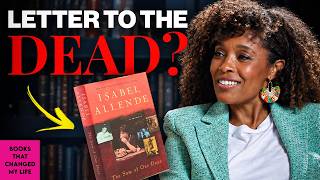
Tembi Locke discusses how Isabel Allende's memoir The Sum of Our Days transformed her life after her husband Sato died from a decade-long illness in 2012. She discovered the book while traveling to Sicily to scatter his ashes and found in Allende's letter-format writing a model for her own grief and memoir work.
Chapters
This time on books that changed my life.
This book fell into my hands at a time when I was doing a lot of soul searching. So in 2012, my husband Sato passed away after a very long illness, a decade of a rare cancer. And I had been his caregiver and I had a seven year old daughter and my whole world shattered. I'm thinking like I am living the. I am married to like an Italian chef, I'm an actor, I'm living in a life I have hit the jack like la dolce Vita right here. A mother is only as happy as their saddest child. I knew that everything that we as parents had poured into her now it was on me.
What did you learn in that? 10 years growing as his caregiver, in watching that happen to somebody, he didn't hold anything back.
I'll never ever not know that, that that's possible.
But the big question, how did the sum of our days change your life?
The sum of our days made me believe.
Welcome to the Syndicate X Library where we love books, especially books that have changed lives. We have a really special guest joining us today. She's an actor, an author, a TV writer and producer and the host of of the podcast Lifted. And her most recent project, the audiobook memoir Someday now is available. She's here to talk about the book that changed her life, the Sum of Our Days by Isabel Allende.
We are so excited to announce the books that Change My Life website. We made a way for you to show your book pride and that you love books. Hats, tees, hoodies, Check it out, link in the description. Everybody needs a self help hat.
Please welcome Temby Locke.
What do you think? How would you analyze me psychologically with my collection of books? What do you know about me?
You were in deep inquiry about the world that you live in.
And very curious.
Seen and unseen. The seen and unseen world. I love that also there's a vibration, an energy, an energy to this room that is essentially a collection of ideas and thoughts bumping up against each other.
Yeah. And imagine it, imagine it without the cameras. When you're just alone. That's the best. When there's no agenda and it's just you in the books and you can go where you want to go.
Wow.
And spend as much time as you want with like your favorite cup of coffee or whatever.
So when I went to college.
I went to a university that had a very large library. And hanging out in the stacks was actually really calming for my nervous system because I felt like, okay, everyone's been Writing to figure something out. Like, you don't begin a book because you have all the answers.
Maybe. Maybe you do, but there's. It was like, the stacks were this, like, calming place for me, particularly, like, my first and second year, where I could go and it was quiet, the lights would be low. Sometimes you could sleep in the library overnight, and I get that vibe here.
Yeah. And also, there's just so many cool things about books. Right. Because you could have a whole library just focused on covers of books or design of books. I mean, there's so many different variations that break the rules of what you perceive a book to be. And so, I mean, that stuff fascinates me. I really like stuff that is a pleasant surprise and more of an experience than just what you expect it to be.
Yeah. Thwarting expectations. Right. And it's funny, we talk about COVID art for books. There's, like, obviously whole departments at publishing houses around the COVID art. And it's interesting. I was surprised when I wrote my first book and even my sister, who's an author that, like, authors actually don't have a lot of say in their covers initially. And I always thought that was interesting. It's a market. It's, like, what they think the customer will want. Sometimes there's colors that are in season for certain book. Types of books.
Oh, sometimes they change them.
Oh, yeah, for sure.
Like thumbnails on YouTube, like, trying it out.
Yeah, yeah, yeah. Testing to see kind of what works.
Are you familiar with Chip Kid?
No. Yes, yes, yes.
He does a lot of covers, and there's certain authors that require that only he does their cover. And he did the logo for this library. So I asked. I'm like, I know it's a logo, but would you. Would you do it? And so he's so sweet. And he did. And it's so great.
I love it.
I love it. He made me take a picture of the grate, and then he laid that over the top. So. So great. But, yeah, like, there's an art to that. And I've talked to him many times about color design, because the way that he can instantly tell the story, almost like a trailer of a movie with the COVID of a book is special.
I wonder what his process is, I mean, in taking that on. I mean, obviously, I would imagine he reads the books, or is he just given a summary and kind of goes in his.
You know, whenever I've done something with him, he asks a lot of questions, and it's very much about the spirit of it. You order orange wine.
Hi, Chris.
Welcome to.
We're gonna have some fun.
We are.
This is orange wine.
It is orange wine, yes. Same year as me and you, but. Oh, wonderful.
Cheers.
Look at us. Cheers. We're improving.
Day drinking.
Mm.
Oh, that's nice.
That's nice.
That's smooth.
That's very nice.
So you. You were picking out books in the front room.
Books. This is the front room. You're.
But one thing we should talk about, because you and I both have the same view on. This is the Rothko Chapel in Houston, my hometown. But I. I was telling you how many people I meet from Houston, and I'm like, roscoe Chapel. And they're like, huh? And I'm like, you've never been to the Rothko Chapel.
Completely insane. Because it's a jewel of the city. And I was telling you it is, like, one of the most peaceful, centering spaces in the entire city. And it is stunning. It is simple. It is unifying. It is grounding. And, like, I can't believe that. Well, I can believe because Texas. But, like, kids need to go there as part of field trips to, like, even just understand this is a public space in our city. And Rothko, the Manil family collected his art. He designed this chapel. It is beautiful.
And when you walk in, they have every kind of religious.
Yes.
So there's a Bible, Quran, on and on, but everybody's welcome.
Everybody's welcome. It is a space, and then you.
Step inside, and you're just like, what? And it's. It's lit by the light outside through, like, a skylight, a kind of pantheon. So it changes. You're just sitting there, and whatever clouds are going over, change how it feels in the chapel.
Yes. It is this beautiful conversation between architecture, peace, silence, spirit, ideas. It is just like. You have to experience it. You have to experience it. I think I stumbled onto it. I don't even know. I was an art history major, so I remember, you know, studying Rothko, and then I saw that the Menil family, which is a wealthy Texas family.
Collected art, and they had a lot of his collection. I was like, the Manil family. I know that from Houston. So I was like, oh, let me go to that museum. And then there's the Rothko Chapel. And now it's like my beacon. It's like my. You know, I have to go every trip.
Yeah. Their, like, museum is just down the street.
It's just down the street. Yeah. It's on a kind of an entire complex of a.
But the chapel, you would never know from the Outside, what's inside?
No, at all.
It's incredible design. Yeah. So cheers to that. What else did you grab?
I grabbed. Well, so I have this book at home, and I am not from Detroit, but I spent six weeks in Detroit working on a project, a film project. And it was just.
So. Detroit at that time had not had the kind of renaissance it's having now. So we were in this, like, fallow period between the fall of the auto industry. Right. And a lot of downtown was quiet and shuttered, and not a lot was happening. And I was staying in a hotel downtown, and I thought, okay, well, what the heck am I gonna do here? And so I found the Museum of Art. And if you have not been to the Detroit Museum of Art, I tell you, get on a plane and go, it is beautiful. It is a beautiful building. The collection's beautiful. And I kind of fell in love with the city. And this book was a book that I brought home from that trip. And I thought, I don't. You know, Detroit is like.
And this is Detroit in the late 60s, so the height of the automobile industry when it was at its kind of height also. And it's a gorgeous, gorgeous, like, look at America before I was born, but in a time that deeply influenced my parents. And it's a look at, like, also race in Detroit. Detroit is a very black and white city, a labor city, a manufacturing city, but also elegant, which I didn't know.
Yeah, kind of. There's a gap, too, between the have and have nots.
Exactly. And it's all captured in this book. So when I saw it on your shelf, I was like, ugh, we are kindred spirits.
That's fun.
I love it. And I think there was a big event that happened in Detroit in 68, because I just flipped to a page and there was, like, a protest of some sort, which.
I love photography, as you can tell.
I know.
Love it. I wish I was better at it, but it's. There's something about it that's so special. Especially now, too, in film. Like, in film. I miss film and film people. Like, when I do photo shoots, you get, like, a thousand pictures back.
Do you have. Do you have a film camera?
No, I have a digital.
Well, you know, you can still get one.
Yeah.
And they are fun.
I've actually been thinking about that lately.
And you know what? This space would be really good to do a dark room. You would have a lot of fun. I did a lot of. So when I. Early. Before writing, which we'll talk about between my career as an actor. And I wasn't really writing. I was like, what creatively feels interesting? And so I took photography classes at ucla, like their extension program. And at that time, they made us develop all of our own prints. And it was the process really, of developing is where I really fell in love with photography. Because I understood that the amount of light you give or withhold from an image changes what you see. And I thought that was fascinating. So it really, like, deepened my both understanding of the technique and the med, but also, like, how light can tell such a beautiful and specific story. So this is black and white. I was not printing in color. I was just doing a black and white, you know, and it was just fascinating. And there were lots of just regular folk who would rent dark room space. I think it was like $25 an hour on the west side of LA. And I would drive across town and just spend an afternoon inhaling, developing fluid. Probably not great. You know, I didn't even wear gloves. Probably not great. But I'm in there just doing. And like, it was just fantastic. It was really fantastic. It's very meditative.
What's your favorite film camera?
I have a Hasselblad, a medium format Hasselblad. And that changed. Kind of, like changed. I'm gonna say it changed my life. And I know we're talking about books. That changed my life. But that camera, what it did for me was take like, you know, it always had like, a little Kodak snapshot kind of thing, the disposable things. Then I had a 35 millimeter. But when I went to the medium format, holy moly. The world comes in in the Hasselblad as this beautifully designed camera.
Very special.
It's very special. And the stillness inside of the frame is, like, powerful, and it's potent. And I think it made me realize that a single moment in time and a single photo can tell a beautiful and elongated story. Because I started thinking about what lives outside of this frame. Like, I remembered when I took it, but then I tried to remember, like, what was on the outside of the frame. And later, many years later, when I began to write, I returned to those photographs to write about Sicily. Because I took that Hasselblad to Sicily. Because I didn't speak the language. I didn't really know what to do when I was there. I was kinda like, okay. Those early trips I took the Hasselblad, I was like, I'll just take photos of the people in this town if they will let me. And I was given the grace of Them letting me take the. Mostly because I was American. They were like, she didn't speak any. Give her something to do. Give her something to do, let her take the pictures. And, you know, several of them hang in my home now. But they became a kind of a visual tool that I would go back to when I needed to pull up memory to write a story.
What's your favorite lens?
I just had the. You know, I don't have a lot of fancy lenses, so I had. I'm trying to remember. It's the. When I bought my Hasselblad, it came with four different lenses and I'm blanking on names, but.
What I often did was do a polarizing filter. So I didn't really. I never felt that I learned enough to invest in a variety of lenses, but I knew what to do with polarization. And so for me, I played a lot with filters. And how could I make an image more saturated.
Or, or opaque in some way? And that was really where my joy came with playing around with the lenses that I had. Was it the filter?
So fun. Do you still. Do you still shoot?
Not as much, but now you're reminding me I need to get back into it.
Yeah, that's really fun. I'm excited about this conversation, but I will say up front.
How I appreciate you doing this because your story is pretty vulnerable and, you know, at a time of probably reinvention. But you were, you were going through some stuff, and it's a story, I think, that will inspire. Inspire others. But. And also just like, you know, your positivity and energy is so contagious too. But let's just kind of start back to. Did you grow up in Houston?
I grew up in Houston.
Mom, dad, what did they do?
So parents were activists when they met.
And they came out of rural East Texas, you know, segregated schools, one room schoolhouses, and they met in college and I think, you know, had me, had my sister separated not long after that because I think the movement was more of the pull than the actual marriage. Then after that season of activism, which really kind of dipped off in the mid late 70s, my father became a lawyer and my mother became a business owner. And so in the 80s, I grew up with parents who were 80s professionals, right. A lawyer and a business owner. But what they always were were activists. And they found ways to do that through the profession that put us through school and paid the mortgage and kept the lights on and all that stuff.
How old were you when they separated?
Seven.
Seven?
Seven.
And did they both remarry?
Yes. Yes.
And so you kind of. Would you go back and forth, back.
And forth between houses? We had. We spent, you know, sort of like school days and weeks with my mom and then weekends with my dad, and then summers we'd spend with my dad and reverse it into weekends with my mom. So it was kind of. And they were never lived far apart from each other. I think the furthest they ever lived from each other was like 30 minutes. So I had a very being of a generation of kids who were a lot of my peers. Their families divorced. We had a really. My sister and I had a good situation. Our parents were friends, they got along. It wasn't contentious, but it was. There were two different worlds and two different families. And I think when you grow up as a child, experiencing that your POV on everything is just. Even who you are in one household is different than who you are in another household. And I think it took a while before. I think it was well into my 20s, before I felt like either parent could see me wholly. Because I was kind of one way at mom's house and one way at dad's house. And I don't think that's an uncommon experience.
Is your sister younger or older?
She is younger, but if people say she's older, I don't correct them. Oh, that's our joke.
What kind of business did mom have?
So my mom had a very. It was very interesting. So she had a facilities maintenance company. Said more pedestrian. She had a janitorial company.
Yeah.
And she claimed.
Which can be very profitable.
Well, I mean, I don't know how. You know, there were times when it certainly was not, but she was able to carve out a niche joint, commercial real estate, primarily. And what it meant to watch a woman build a business in the 80s and a black woman in a very good old boy business community, which Houston was at that time, and to create those inroads and get those contracts and watch her grow. And by the way, she started this company with my stepfather at the time, her second husband, and they out of the back of the car. Like I remember my job was to go with her after we did homework and after we did dinner and we would go to a strip mall and we would pull the vacuum out of the car and I would have to empty the trash cans. And like, the first early contracts were that. I mean, we were in it. And then, of course, I watched it grow. And by the time I left home and certainly through college, she had built a company that was in several states and had contracts across the Nation. And, you know, that the arc of that, I think I didn't really appreciate it at the time. I was just like, ah, that's mom's work. Like, whatever, you know, mom, she's busy. But I can really see that what she was doing was building something where there had been nothing. And she was saying, I will work, I will find my own way and create my own career and forge ahead through a lot of obstacles.
And so like the thing that you're witnessing in that is somebody being very intentional and then paying the price, right? The hard work, the sacrifice.
And where, you know, I saw where she really, you know, had to manage both the teams of people who were doing the hands on work as well and be right there with them and talk with them and then also up with her clients who were, you know, often men in, you know, management or executive level management who, you know, certainly didn't really like the line item on their business agenda for that day that had to do with janitorial was not top priority. So it was a kind of like a dismissive way to do it. But often she interfaced with them when there was a problem, right?
The only time they cared about it.
When it wasn't working, there's a problem like, you know, my toilet seat was up or like somebody moved my cheese. You know, there was a lot of that. And so she came home, you know, and she would tell these stories. And I think those stories made me try to imagine, well, who are these people in these buildings that I will never go in, right? Or like the people running these companies. And then who. What's the story of the person who's working for her, her company, right, Whose whole livelihood is doing. They're doing a shift overnight where they have another day job, and then they come during the night and they are cleaning this building, like, what's their story? So I think I can see now that there was a richness to her sharing that experience.
Because it made me really think about everybody in the picture and in a story.
What kind of kid were you?
I was very like, I wanted to get things, I wanted to do well. I wanted to make my parents proud.
So you got good grades?
I definitely got overachiever. Chris. Chris. Overachie. Over, overachieving. Competitive, not competitive. I never played competitive sports. I really always felt like I just have to do my best, you know. And the things I was interested in were I was not always in direct competition with anybody. I was into theater. Like, theater's a community, you know, you're not like competing against your fellow actor in a scene you're in the.
You're helping everybody.
You're helping everybody get better. But, no, I think that the overachieving piece was twofold. One, by the time I hit middle school, I was like, there's a world out there, and I wanna see it. And how do I get out of this public school and get the grades to go to the places where people that I see in magazines and books are doing these exciting things? And I felt for me that the path to that My parents were always like, well, you're going to college. You can go anywhere you wanna go, as long as you get in. They always said that, like, we'll find a way. So I was like, well, then, if you mean it, I'm gonna go for, you know, the best I can achieve. And so for me, I knew also I was in a big public. My high school had 4,000 students. Oh, wow. So suburban Houston, football lovin', pep rally, you know, 4,000 kid school. And I thought, if anything, you say, what competition? I was like, well, how do I distinguish myself among this. These 4,000 students as someone who. A school in a state far away might consider me? And so I thought, well, I'm gonna join everything, and I'm gonna be the yearbook editor. Okay. I'll be the class president. Oh, I'll be in the school play, you know. Oh, I'm gonna do volunteer work.
Wait, you were the class president?
Yes.
Chris, just a minute ago, you said you weren't competitive. That's the competitive.
Wait, here's the thing. No, it's not. Not the way I did it.
Because it came easy for you.
I don't know if it came easy, but I was like. I got the football players and the theater geeks and the band people. I was like, guys, this could actually be fun if we. I was like, tell me, what is your. What is the thing that matters most to you? I was being a little bit of a diplomat because I kind of had friends in all these different groups. So I was definitely. What do they call that? Like a floater? Socially, I didn't have, like, one group that's like, I'm this. Yeah, I kind of floated. And so I think that floating allowed me to hear what mattered to the football players and cheerleaders of, you know, what mattered to the theater folks. What mattered to the. You know.
Did you hate it when you were younger when they tried to put you in a category?
Yes, because. Well, first of all, with a name like Timbikile, you know, in Houston, at the time I was growing up, I knew I didn't fit into a box. I knew I was not Janet. I was not Janet. I was not Jennifer. I was none of those people. And also, I think going back to my parents, because, you know, first of all, I was bused a lot to school. So I also knew that the people I went to school with were not the people who lived in my neighborhood. And so I also knew that, like, I'm not, and I can fit in both spaces. So that constant code switching culturally, socially, linguistically was just a part of my day. And I think that that is a gift. I mean, it was hard, but it gave me a gift, and I wanted to. And I changed schools several times. And so I was always trying to sort of like, well, find my place in this. And usually it came down to words. Theater, you know, something with art, wherever, whatever school I was in, it was usually like I wanted to find what was happening with the play. Where were they doing art. Like, if I found that I could find my way.
What's the most trouble you ever got in?
Are you saying at school?
No, just with your parents.
Okay. Yeah.
Well, it could have been at school.
No, I didn't do. I knew. I know I didn't carry the bad school because I knew that had a record. It was called a transcript.
So seventh grade, eighth grade.
That's the time.
Yeah, it is. It is. I will. The. The young man will remain unnamed. So as a boy, and he had this thing called weed. And he was like, you should try this.
Which is very interesting, because I was trying to figure out what an herbalist is on.
So he was like, try this. Try this. He's like, we're gonna. Like, at my house. And I was like, what? And he's like, we're just gonna smoke it. And I was like, I am not smoking it, but I will come over, because, boy. So we get there, and I barely take a puff. But here's what happens. And my sister's gonna laugh when she hears this story. She was hanging out with the boy's younger sibling, and they had just seen the Nancy Reagan. Don't do drugs. Your brain will fry. You will die. Like, you just want any symptoms. Just say no. All the things. She ran home and she said, mom, Mommy, Tammy's on drugs.
She needs rehab.
And I got grounded. I got serious. When I say grounded, I mean grounded at a level that.
To make a point, like, to truly make. Yeah, your parents are trying to make a point.
They made a very serious point, Mom.
Or Dad.
Mom. Mom made a very serious point.
What was Dad's take on it?
I think dad hurt because he wasn't. I was staying with mom at the time, so I'm sure she called him. What they did do well was they didn't tag team me too hard, like, so I knew if. If one person knew what the bad thing that happened, they had told the other one, but the other one didn't need to pile on. So dad never piled on, which I really appreciated. So I could just kind of hang out in my, you know.
Weed shame, you know, grounded. And I think the grounding went so far, Chris, as I could not walk to the mailbox to get the mail. It was like, you come home, you stay in this house, and you don't. And it went on for a month.
You had the ankle bracelet on.
It was terrible. It was terrible.
You had to check in with your parole officer.
So here's the silver lining, though. So I think my mom and grandma.
By the way, mom never smoked weed.
I don't know what she did. She probably did. I don't know.
Come on. That generation.
Anyway, it was overkill. But I'm gonna tell you, here's the silver lining. She talked to my grandmother, who was an elementary school teacher, was retired at the time, and she said, you know, TEMBY did this. I'm grounding her. And my grandmother was like, this is what you need to do. She can't watch tv. They took the TV out of my room. So I'm literally in a prison cell called.
Wait, you had a TV in your room?
I had a TV in my room. Wow. I was fancy. I was fancy.
Gone. But my grandmother said, take her to the art store. She gets one field trip in this month. Take her to the art store. Tell her she can buy anything she wants at the art store, and she can put it in her room, and she can make art. And I was like, what is this? But okay, I get to get out of the house, and I'll go to the art store.
Secret psychological warfare from Grandma.
Grandma. Grandma did the thing. So here's the thing. So I'm moody, and I'm mad, and I'm really mad, and so I paint everything black. Like, all the paintings are blues and grays, and they are black, and they're all. And my grandmother, at the end of that month, she was like, show me what you did. Showed her one of my paintings. She was like, this is beautiful. I'm gonna frame it and put it in my living room. Now. My grandma, so smart she hung it in her living room. So here's the thing. Now I'm like, oh, the reframe happened. Cause I'm like, wait, is she proud? Like, what just happened here? And I felt like, oh, this was peaceful. I enjoyed the painting. Now it's being framed, and she actually says she likes it. And I think it opened up this sense of, like, wait, I can do many things, and this is a tool, and art can be a tool. Because I had to do a lot of thinking during that month. That was their whole. That's why you lock a kid. Lock a kid in a room and give him paint. And I think I left it thinking, okay. And my grandmother held that in her. That was on her wall until she moved in in her elder age. And when she had, you know, early stages of dementia, moved in with my mom, it still hung in her. In her.
You have it?
I don't have it. I think my mom has it somewhere in storage.
You know what's so smart about that is when you're caging a kid like that, what your grandma knew is you gotta give him an outlet, a door.
A door, yeah.
And then she rewarded the door by validating whatever you did.
Whatever. That process was so smart.
You're. You're outcome of some pretty good parenting they did.
It was a group. It was a group effort. A lot of group effort.
Takes a village.
Yeah. And I think there was a lot of talking amongst, you know, I. I've asked them, now that I'm a parent, you know, like, did you guys, like, how did you figure out what to do?
Because they were Machiavellians.
They were. They were. They were on it. But for us, I think we just had consistency. And we were told, if you can dream it or see it, it's our job to help you try to achieve it. Now we can't. We'll go as far as we can, but we will give our best. We'll give our best effort too, but you gotta give your best effort. And I think that message consistently over time really gave me the kind of freedom to say, like, I want to be an actor. And then, you know, later I want to write. And for my sister as well, and my brothers as well.
Yeah, that's really cool. It was really fun. Okay, so let's go to go to it. The time in your life.
Shall I print the copy out?
Free the book.
Thank you. This book fell into my hands at a time when I was doing a lot of soul searching. So in 2012.
My husband Sato passed away after A very long illness, A decade of a rare cancer. And I had been his caregiver and I had a seven year old daughter.
And my whole world.
Shattered, changed.
Tell me a little bit about him. He was a cook.
Yeah. Yeah. He had restaurants or what? Well, he had a restaurant in Florence, which is where we met. But when he moved to the States, he worked in several kitchens here in LA until he was diagnosed. And he.
Did you bring him over here?
Yeah.
He came here for you?
Yeah.
So you met him over there?
Uh huh.
What was the, what was the. Who approached you?
We bumped into each other on the street, quite literally.
And then he was like, let me.
Cook for you, kind of, sort of. He was just. So I was walking with a friend. The friend. I'm walking with an expat friend. She happened to know. Florence is a small town. She knew him, she dined at his restaurant. So they talked and I'm just standing there, they're talking in Italian. I don't really know what they're saying. And then.
But he's clocking me and he says, you should come have dinner at my restaurant.
I'll cook for you.
Yeah.
And I thought, oh, okay, I'll enchant you.
Sure. And I had no money. I was a college student abroad and I had spent way too much money on purses in Italy. And I was like a free dinner. Great. So I brought friends to dinner at his restaurant. That began a kind of friendship between us, which evolved into a romantic relationship over.
How, how long before it was romantic?
About three months.
Oh, so pretty quick.
Pretty quick. Pretty quick.
How do you get this man to leave his restaurant and come to America? That's the fascinating part.
I mean, Chris, come on. I understand what's still going on here. No, so here's the thing. He actually initially, Sato was kind of. He was just incredible because he was older than I was. First of all, he was in his 30s and I was 20. So I was like, you're cute and you make great food. I am going home to America. Like, what is this?
Such a funny role reversal? Because it's guys that the weight of their heart is their stomach.
What path forward is here? But he was so steadfast and tenacious and he was a lover of poetry and books. And he kind of, you know.
The friendship evolved very organically. And I was like, oh my God, I think I've fallen for this person. And I said, but I literally will be finishing school. Like, I am not, not finishing. I'm going home. And he said, he literally said, People eat all over the world. I will come to you. So I credit him with the vision of what could be right. He was willing to do that. And then it became about the logistics of how do we actually pull that off? Like, what does that actually look like? And it took time. It took almost.
I went back, you know, for my senior year of college. It was two years after I finished college before he actually moved. So we dated a lot. Yeah. We were going back, dating back and forth for a couple of years. Yeah. And then the time came where he said, okay, I'm ready. And he sold his interest in his business. He had his money, he came, we lived in New York for, like, a hot minute, and then we headed to la.
And so then you're establishing your career here?
I was establishing my career.
And he's cooking in different restaurants.
I was cooking at different restaurants and trying to figure it out and trying to understand what LA is.
How long into that do you get married?
We got married almost immediately when he got here because.
Oh, he needed that to be here.
Yes. Yeah, yeah, we know. We know that. We know that story. And so, yeah, so he.
So we're together, we get married. I'm thinking, like, I am living the. I. I am married to, like, an Italian chef. I've got. I'm an actor. I'm living in a. Like, I have hit the jazz, like, La Dolce Vita right here. It's happening in real time. And then he was diagnosed with cancer.
So how. How long were you married before that happened?
Before the diagnosis? Seven years.
Seven years. So do you have your daughter at that point?
No, we did not.
Oh, you decided after?
Yes.
Whoa, that's heavy.
After. We always knew we wanted to be parents. We were, you know, like, okay, it'll happen, it'll happen. And then.
She's the magic child.
She's the magic. She's the magic. She's the magic. And so he lives forever. He does. He really does. And. And, wow, the power of win. Of 2012, of his loss, and the. When I.
Wait, one more question before that. What did you learn in that 10 years as his caregiver, in watching that happen to somebody that, like. I mean, first of all, when you get that diagnosis, that creates all kinds of panic and weird stuff, but then watching somebody deal with that, like, what did you learn in that process, just about us as humans?
I can tell you what I learned from Sato was he had a capacity to be with. What was. What I mean by that is he didn't understand why this happened. He resented It. He was angry initially, but he said, it's also not. Not happening. And he said, so I just want to be as present and with you for as long as I can be with you. And I think what that taught me was he didn't hold anything back. He knew the stakes were high. He knew every day mattered. He knew every treatment was a roll of the dice. So he was in for, like, full throttle, all plugged in, hold nothing back kind of living, because he didn't feel like he had a choice. So that's what I learned from that, because I was riding sidesaddle and I was caring for somebody who was in that state of being. And it wasn't easy. He had his dark. You know, I have his journals. I know the darkness. But he had to write through the darkness to show up for his friends and family and me and our daughter with that force, that life force. It was the greatest thing I ever witnessed. I'll never, ever not know that. That that's possible. That's possible. And it was hard. I mean, it was, like, difficult on our marriage. It was difficult. It was a lot of challenge. I mean, it was all kind of hard.
Things.
Uncharted in all charted.
And, like, I don't know. I've never been a caregiver. None of my friends, I was like, 31, 32. Like, none of my friends were, you know, some friends weren't even married, let alone with an ill husband who was unemployed. And I was like a sometimes working actress. And I was like, what is this? How do we pull this together? I was like, give me whatever commercial, whatever thing I can do to keep health insurance. Like, it was literally. There was so much pressure, and yet he found a way to make. You know.
He said, I'm going to read the Odyssey again.
He read it in school, primary school in Italy, growing up. He said, I wanna read it again because I know it must mean something different now. That's the kind of person that I was married to. Chemo and the Odyssey.
That's rough.
Yeah.
And so he passes away and now what happens?
That's exactly the question I had. What the hell happens?
Where were you at in your career at that point?
I was.
A journeyman actor, happy to get a job. And, like, you know, I didn't have a. I had a steady, consistent career, but I had spent so much time as his caregiver, unable to take the job that would take me six months out of the city to go do something that I really had created a career for myself that was right here. In LA that, you know, was like the job I can get, but it wasn't. It didn't hold the kind of sparkle that I wanted it to hold. And I thought I literally all bets were off after. I was like, maybe I'm not. Maybe I just do a page one rewrite. Maybe I literally, like, buy some tango shoes and move to Argentina. I didn't know what like my life would look like, but I knew I was a mother. I knew I needed. I knew we had just undergone and passed through a portal that forever changed us. And I knew we needed grounding. She knew that I needed that. And so I kind of. She became the organizing force around me, pulling through grief.
Because you're concerned about how she's going to process this for the rest of her life. Right.
And you know that saying that a mother is only as happy as their saddest child. I knew that everything that we as parents had poured into her now, it was on me. And I took that very, very, very seriously. And in a way, it helped me to reach for life. It helped me to like, what can we do that might lift us from this? And so the answer to that was initially to go to Sicily and be.
Closer to his family, to his family. And did he have a big family?
He did not. He just has one sister and his two parents. Lots of extended family, but the nuclear family, just brother and sister. And he had asked me, and I eventually will write about this in my first book, he asked me to take his ashes to his hometown. So he gave me a call to action that I did not want to answer. I thought, I can't do that. Like, I don't want to do that. I couldn't even imagine. It was hard for me to drive to Trader Joe. The idea of getting on an airplane and flying halfway around the world to inter his ashes just seems like beyond beyond.
But because he wanted it, you were doing it. Yeah, yeah. Which was probably a blessing.
Exactly, exactly. So we get on a plane and we go to Italy, go to Sicily and we're with my mother in law.
How long are you planning on staying there?
I had a ticket for like three, which I think my family thought was insane because they were watching me here in LA and they knew I couldn't. Like I was barely functioning here. They're like, why is this ticket so long? Like, shouldn't you.
It's not gonna get better.
Yeah, yeah.
We can't help.
Yeah. And I. But some part of me just felt like, well, you know, I can always change it and come Back earlier if I have to, but like, maybe I just need this time. It was very opaque to me. It was very nebulous. But I just had this intuition that we needed time there.
How do you get the ashes there? Oh, in your suitcase.
That's a very practical question. Well, there are all kinds of ways that people do this. What I did was I had them divided and I had a transport. I did it all through proper documentation because I did not want to be stopped or questioned about this. And it would. So his ashes were in a carry.
On at my feet and like they sign off on it or something?
Yeah, you have a document that says you can travel with. So they, when they scan them, they know what it is. They don't think it's. You're carrying any kind of contraband or anything else, you know, and that mattered to me because I knew as a widowed mother of a child, we were traveling solo. It was already a big deal to be going. I could not handle my nervous system, like getting stopped and being questioned or the ashes being taken away or like, you know, held until people. I was like, nope. So whatever is the proper procedure with the airlines, with customs, with immigration, whatever that is, that's what we're doing.
But there is a process.
There is a process. There is absolutely a process. And any, generally, any funeral home can walk you through it. It's not, you know, it takes time, but it's not an impossible thing to do. I land in Sicily with his ashes. I give them to my mother in law. Her son is being returned to her. And that was day one.
How many times had they spent time with their granddaughter?
Stateside once and in Italy twice. Okay, so not really a full, like, you know, a deep relationship, but holidays. Yeah, well, we would go for the summers. And we had gone just the year before he passed because he, the summer before he passed, he knew, we kind of all knew that things were changing in the trajectory of his illness. And we thought, well, let's get this trip in, you know, because, you know, maybe next summer you'll be on a different clinical trial and we won't be able to go. I don't think we really thought, you won't be here a year from now. So we had taken that trip and so she'd seen her grandmother just the year prior over the summer. But now we are there. And I write about in my first book from scratch, what that first day was like. And then that second day. And I am literally falling into a community, small, rural, agrarian mountain town of people who are all close knit and closely related. And they are like, you have brought one of us back. Thank you. And they proceeded over the next three weeks to take care of me and to teach me how to grieve. And they took care of my daughter. And I had nothing like that in the States. I had nothing even close to that. I had my family who traveled and they stayed with me. My stepmom stayed with me for three months. The first three months after my husband passed, she moved in my house with me to take care of me. But eventually she had to go back to her life. And, you know, but here I was in a town full of people who knew him and who held his childhood stories, streets he'd walked on, the school he went to, the place he got bread. A whole life before I ever knew him was right there in this town. And my daughter could hear stories about her dad from the person he went to school with. Stories I could never give her. So now I'm finding something here that I never expected. And I'm kind of beginning to put myself back together. And my mother in law is saying, stay as long as you need. Let me help you, I've been where you are. And she tells me the story of when her father passed away when she was 7, the exact same age her granddaughter was.
Oh, wow.
So now I'm like, whoa, what is actually happening here? That three weeks ends and I don't know how, but I got on a plane and I went back to la and I thought, I've got to figure out a way to come back to Sicily. And so I came back the following year and I did the same thing, but for like a month. And it's that summer before I leave for the trip that I find this book.
And I think I was drawn to this book. We talked about COVID art. I had not read Isabel Allende, any of her work, but I had been married to a chef. And here was a memoir with a woman eating food and family photos. And I thought, well, huh, picked it up and then I flipped it over and I opened the jacket and then I know that it's a memoir about her loss of her daughter and the story of the time after her daughter has passed. And she's writing a letter to her daughter telling her everything that has happened since she left this planet. And I am hooked. So I say, give me this book. I'm taking it to Sicily with me.
Do you remember the bookstore?
I don't fully remember, but it may have been Skylake.
Do you start it before you go?
No, I don't.
So it's like a treasure that you're taking.
It's a treasure that I'm gonna have with me when I get there. Because I understand that in Sicily, my mother in law had a television with knobs and no cable. So there were three stations. And everybody takes a siesta from 1 o' clock until about 4 o'. Clock. And I can't sleep in the middle of the day. So that appointed hour from 1 to 4, I walk down the cobblestone street to the edge of town to my mother in law's sister's house that sits empty because she immigrated to Switzerland. But my mother in law keeps the key to it because she turns the water on and off every now and then to make sure nothing happens to the pipes. And she says, you can have that key. You can just go down there if you don't want to take a nap. So I know that from one to four is my time.
You know what you can't do from 1 to 4?
What?
Get lunch. Everything's closed.
Everything's closed. She's already fed me. Like she was very prompt.
But if you're a tourist.
Yeah. No, you're not.
Good luck.
Good luck. No, especially in a small, small town.
It's a thing.
So that is where I fall. I literally. And the house was very sparsely furnished because they've immigrated to Switzerland. So there's like a bed and a chest of drawers, one kitchen table, two chairs, and I would plug in the refrigerator so I could keep ice cold water. But like there's nothing else in the house. So I lie on the bed in this room and I open the window just to get a little light in and a slight cross breeze because it's summer in Sicily and there's no ac. No AC in this place. And I say, well, teach me. Because here is someone who.
Has walked a path of grief and has this book is, I believe, at the 12th anniversary, it's 12 years later that she's writing about what has happened over a 12 year period. And at that moment, I could not cognitively imagine a decade ahead of me without Sato. Like I'm still trying to wrap my head around time. So how does one add a decade onto these very two hard years I've had? Like I've had. He's been gone for now. This is the second summer. And you tell me there's 10 more of these things I've got to do. Teach me now.
During that process, did you stop and then come back? Stop and think and come back Yes.
I had to, because it's.
It was like fractionation, in a sense.
Absolutely, absolutely. Because it's. Memoir often does that because you know, you.
Are reading someone's actual lived experience. So you have to take a moment and reflect on bits, pieces, whole sections, reread. And also, I was captivated by the voice, and I was captivated by.
Yeah. How would you describe the style in the voice?
Oh, my gosh. It's so intimate. It is vulnerable, it's opinionated, it's funny. And I'm like, how is this all in a one book?
Yeah, I think our thought was kind of like, it's like if. If you were just talking to friends, like. Yes, it's a conversation.
It's a conversation. And. And then when I realized that this book is. She wrote it using her own journals and letters she had written to her mother. So it's a letter to her daughter that is informed by letters to her mother. So there's this multi generational piece there. And there's also inviting her deceased daughter to be a part of her now. And I thought that was, like, wild. Like, just the concept was wild to me. It was beautiful. It was, like, harrowing. It felt like, how does one do this?
Okay, so I'm gonna hand you this.
Okay.
And then I'm going to point out a tab.
Okay.
And then you read it, and then we'll talk about it.
Okay. I've got to put my glasses on so I can see what's happening here. We're going to talk about this.
Page two. The first tab.
Page two. Oh, my God. We're at the beginning. Beginning. Oh, I love it. I love it, I love it, I.
Love it, I love it. Oh.
Oh, you want me to read this? Okay. January arrives after a few months without writing, months in which I've lived, turned outward in the uproar of the world. Traveling, promoting books, giving lectures, surrounded by people, talking. Too much noise and more noise. Most of all, I fear going deaf, not being able to hear the silence. Without silence, I am done for. You understand why this book will change your life. Because sitting in that house in Sicily.
In the silence of a sparsely populated mountain town, having left the noisy world of la, and here is someone saying what I was kind of feeling like if I don't. If I can't slow the world down, I don't know that I'll survive. And that's kind of like a grieving person's set point and starting point.
So I only have my human experience, but to me, that only comes after the decision has been made to grieve, because a lot of times people will run from the silence, and they never want to face it. So isn't the silence, in a sense, the step to healing?
I absolutely feel it is. And you're right.
There is another way to do it, which is to run and keep busy. And noise and chaos and distractions.
I'm gonna tell you, it's gonna find you.
Well, yeah, but you can up the drama, you can up the speed.
You can up the speed, but it is still gonna come for you. So eventually it will come for you.
I agree. But a lot of people have a hard time with silence.
I know. I know, I know.
How important is silence in your writing?
Oh, it is incredibly important. I mean, even when I'm working and I'm in a draft or I'm trying to sort of not noodle out a scene or a section, I can have, like, almost no. Like, the slightest bit of distraction or sound will pull me out, and I feel like I've lost the thread. Now, it doesn't mean I can't come back to it, but usually what I will do is I kind of, like, tee the creative juices up. So I go. I might play music. I might go on a nature walk. I might have. Be in a kind of oral experience. But then when I get to the actual page, I need quiet, Especially if I'm in discovery. Now, if I'm in a rewrite and if I'm in a particular scene because I write memoir that is of a particular season in my life or a particular event, I sometimes will play music from that era or that time or that event as a kind of, like, highway, emotional highway into that time. Because music will evoke a memory, a scene. I'll, like, remember what the clothes look like, what the cars look like, and I can bring that to the writing. But that's in the rewrite. That's in the. I'm coming at it for, like, a second draft. I'm not trying to just make the scene stand up. If I'm trying to make a moment have a beginning, middle, and end, I kind of need to just, like, silence everything and get it out. But that's my. My. My wacky process.
Yeah, I. I think silence is a. Is an interesting thing because I think silence plays into everything, like friendship, too. Like, you know, you have a good friend when you can just sit there in silence and you don't have to fill the space. You know, you don't. Or there's some sort of insecurity. Or something once when somebody has to.
Fill the space 100%. And I also feel that much like the expansion and contraction, it's always happening around us. It's happening in our body. Like right now, my lungs expanding, contracting. I need that inhale and the hold and the pe and before the exhale. Like you need those moments of expansion and contraction. And for me, silence is often. I need to contract. I need to go really quiet, go in before I can expand back out. So I have to be in this dance with expansion and contraction, which to me looks often looks like silence. It looks like everything isn't like front facing out there doing all the things. And I think that's what she's saying in this scene, what we just read. She's like, I've been out there publishing books, doing this, doing all of this front facing stuff, and now if I don't.
I won't survive. Yeah.
24 page 24.
Oh, karma again. Karma. How many times have I heard that term in California? The idea of karma drives me up a wall. To believe in destiny is limiting enough, but karma is much worse. It goes back through a thousand previous lifetimes. And sometimes you have to carry the misdeeds of your ancestors. Destiny can be changed. But to be clear, your karma takes a lifetime. And even that may not be enough. I love the way Isabel is like, okay, California, with all of your, you know, woo, woo, you know, come on, are we also doing this now? Are you putting the misdeeds of like seven generations prior on me? You know, I love the voice, I love the humor. I love the, like, you know, kind of like poking at a conventional way of thinking. And she's telling us who she is. It's very vulnerable. I like it. It's spicy.
So going back to your mom. Yeah, like, that's not an example of karma or destiny. That's an example of creating your own.
You mean in terms of her business? Business, yeah.
She wasn't waiting for a tarot card. Like, she was inflicting her will on the world.
Absolutely.
So I would guess you kind of have the same point of view.
I have the point of view that.
Are you going to a psychic and having your.
Well, here's the thing.
Why miss the fun?
This is a yes.
You've been in California.
This is a yes and world.
You want me to introduce you to my shaman?
You think I'm gonna sit here and say, I haven't talked to a medium, you need to drink some more wine? Because I have talked to several mediums. Okay, I'm not mad at it.
I got a bunch of books right there on how to do that on mad.
Because here's the thing.
I'm fascinated by that.
I'm sorry, but like, piercing the veil and understanding, there is a lot of invisible things that are happening that we don't know. I bow to it. Tell me your take on it. I'll sit with it and see if it resonates with me. So I am a kind of seeker in that way. I'll touch on a lot of different things.
You took a. You took a turn. Right. Because if I'm talking about karma.
Yes.
I don't really believe in that, and I don't believe in destiny. Now, if you're talking about realms that we don't understand. Yeah. Like, I don't believe in stuff until I see it, but I also am open to the idea that it exists. And so I don't know.
Yes.
But I think that mediums and that sort of thing are a different conversation than karma.
They are a different conversation. They are a different conversation. However, said differently, not using the word karma, I do think that if we look at ancestral trauma and thought forms and the epigenetics, there are sometimes things that you are carrying that happened generations before that you don't even know. But I wouldn't call that karma.
Right. I agree with that.
I wouldn't call that karma.
I don't think that that's even been proven.
Yes, yes, yes.
That's great. Okay, 37.
Oh, oh. Keep putting the glasses on.
Who are your Sisters of Disorder?
Okay.
This chapter is called Powerful Circle of Witches. I mean, come on. Right? Like, yes. Right.
Every woman in this world should have a circle of friends. Each of us is witness to the other's lives. We keep secrets, help in difficulties, share experiences, and stay in almost daily contact by email. However far I may be traveling, I always have my line. Tutera, firma firma. My Sisters of disorder. Ah, yeah, you gotta.
Who are your Sisters of Disorder?
Oh, my gosh. I was with them last night for dinner. We were contestants.
How many bottles of orange wine did we get?
I'm the lightweight in the group, so I don't have as much, but I would say so. I have my literal sister. My literal actual sister.
The narc?
Yes, the narc. My sister. Wait until I tell her that. Oh, you have given me a gift. Yes. So the narc. Yeah, she's my tribe. She is like the powerful. We get in a circle, and we are, like, going to conjure up something. We're going to make Something. And by the way, we did that as kids playing.
I know, but we could have somebody here call her and pretend to be a police officer.
Would love this. I kind of would love this. And if you know her, anything about her, she will fall right into that trap. So, yes, my actual, literal biological sister is a part of my circle, but I have this group of friends who have been my ride or die, my ride alongs, who I can, like, call and kind of say anything to. And I'm given grace, you know, and I can call in.
Woe, times of woe, in moments of fury, in laughter when I'm indignant, when I'm righteous. Like, they can hold it all because we've all seen each other's stuff.
Yeah.
And that's a kind of to be seen and held and accepted.
Nobody's keeping score.
Nobody's keeping score. And we all have each other's, like, you know, often I say the. Really, your good circle, they can see things that you don't see, and they help you to move closer toward parts of yourself that you may not be ready to go toward.
Yeah, that's great.
What?
Page 68.
Tio Ramon gave me my most useful guidelines for living, as I have discovered in therapy as a mature woman, a selective memory for remembering the good things, a logical prudence to avoid doing anything to ruin the present, and a defiant optimism for facing the future.
The selective memory of remembering the good things, I think is really powerful because I'll give you an example. When I was reading this book 2ish years out after Sato's death, I was still in my mind replaying the difficult moments, the moments in the final months and weeks of his life. I was still really processing it, and I didn't have as much access to the earlier memories of when we'd met and fallen in love and all of that. And so this selective memory of remembering the good things, I started making it a point to remember the good things as a part of my healing, as a part of balancing out the heaviness of grief. And I think that that is. It was a useful tool to be able to not just always focus on.
The hard parts in a sense, because if you focus on the good parts, that becomes your context.
It puts it in balance. Grief is very repetitive.
And I think when you have a traumatic loss, you are processing the trauma, and sometimes you have to get to a place where then you can remember sort of the other colors on the canvas. And so when I read this, what I hear is.
The permission to remember the good things. Permission to remember the good things.
I love that 137.
North Americans.
Love the idea of immigration.
It's basic to the American dream that the son of some poor devil who comes to these shores carrying a cardboard suitcase can become a millionaire. But they detest immigrants. That hatred which marked Scandinavians, Irish, Italians, Jews, Arabs and many other is worse when directed toward people of color, especially toward Hispanics. I think she said it all.
I mean, close the book. We're living in that, right?
Yeah, but it's. It's a complicated conversation. It's not.
Linear.
It's not. The one thing that is consistent and constant is the ability to revere and deny simultaneously and to live in that state of denial and kind of gaslighting which is like we love you but we don't love you. The idea of immigration, but not the immigrant.
I've never thought of it that way. I mean, I don't know what those. Those sort of things. My opinion is they start way earlier in the process. We're treating the symptom, not the cause. And if you.
Like, I'm sure you've had a friend that like had no boundaries and they had really low self esteem and people would take advantage of them. They're always trying to please and they really.
Never really.
They really never believed in themselves enough to think more for themselves. That to me is the idea of open borders and that we don't care.
Like our self esteem is so low as a country that we don't think that there should be a value to come here. And that like people should come here the right way. Like, yeah, we want people to come here. And then also. Then the other part of it is then the people that are here that are mothers and doing things that aren't criminals, like that's a whole nother. Like it gets very complicated.
It's very complicated. And I think that the perspective that she brings to the table as an immigrant and that she writes about that and because she fled a country in war and then her children were living in two other countries and then she settles here and marries in America. So she has this global look at what does it mean to be crossing borders.
And the contradictions.
And the contradictions.
Yeah. 173.
A tribe has its inconveniences but also many advantages. I prefer it a thousand times to be the American dream. I prefer it a thousand times to the American dream of absolute individual freedom which though.
It may help in getting ahead in this world, brings with it alienation and loneliness. Yes, I understand this. I know, we talked about Sato earlier when he came to America. The idea of this kind of hyper individualism, as someone who had come from a much more communal way of growing up. You know, there's a saying in Sicily, My harvest is only as good as your mule. That idea of collective action, to work together to get something done. So if you grow up in a society like that, where your success and my success are deeply intertwined, and we can help each other to come to a country where that's not often. That's not the ethos everybody for himself.
We had a lot of conversations about that. And I think he was always like, let's find community.
Let's make it.
174.
His affair precipitated an investigation worthy of the Inquisition and cost a trifling $51 million to taxpayers. During that time, I was asked to be on a live call in radio program. Someone asked me what I thought about the matter, and I said that it was the most expensive blowjob in history. That phrase would follow me for many years. It was impossible to hide from the kids what was going on because even the most obscene details were shown on tv. What is oral sex? Nicole asked, a term she had heard ad nauseam on television. Oral. That's when you talk about it.
Andrea, who had the vast vocabulary of every good reader. I mean, that's. Yeah, yeah, yeah.
Okay. 286.
286. 286. Oh, my goodness. The ritual of beginning another book is more or less the same every year. I left nothing on the shelves lining the walls other than the tightly aligned first editions of my books and pictures of the living and dead who are always with me. I took out anything that might muddle inspiration or distract me from this memoir that demands clear space in which to express itself. It was the beginning of a time of solitude and silence.
That is.
Because of this book.
How I knew I had to begin to write my first book, and certainly now with my new audiobook someday, now that's coming out, they begin this exact same way, with this kind of quiet and silence and a question. And I think what she's saying is, as a writer is she's claiming.
First of all, I love that she has a ritual for beginning every book. She begins every book on the same day every year. So I thought, what? That's a thing. You could do that. And then she has. So she's had. There's certain rituals that encourage her to meet the muse, if you will. She calendars it. She's in contract with her creativity to do that. But that also requires that she kind of clear away whatever came before it, whatever was the work of last year to make space for what is to come through now. And she needs the quiet and silence to do that. And I remember when I read this, it made me think, oh, maybe that's how I began my process of writing a memoir is silence is required. And.
She'S not just talking about an external silence, she's talking about an internal silence that's required in order to run your fingers along the topography of your life and then offer it up as an art through words. And you can't do that being busy, noisy with a lot of things.
It's very personal, right?
It's very personal.
What rituals do you have?
So, first of all, I journal. And that's kind of like my most. It's like the fundamental building blocks for me of writing, because what I'm doing is I'm clearing out the clutter, the writing. The journal writing is like. It's just free writing. It's whatever is at top of mind and is coming through. And it helps me to see what I'm actually. What's happening, actually seeking to either be lived within, what's bothering me, what's keeping me up. And I kind of clear that out. And it's on the page, it's in the book. It's three pages in a journal. I don't do it every morning, but I do it consistently in the morning. In the morning, in the morning. Sometimes I'll circle back in the evening, but it's usually the morning. And I love that liminal space between opening my eyes and before I've had the coffee, because I'm able to in that space. It's like I'm kind of. My unconscious mind is kind of relaxed, Relaxed. And I'm coming in for a landing for whatever this day is gonna be. I've been out in the outer realms of sleep and that dream state, and now I'm coming in for a landing to start this day. And in that transition in that on ramp to the day, there's magic and sometimes there's things that might come out in that free writing that attune me to something I need to think about for the day. Because I'm like, oh, that came in the liminal space. So I need to actually carry that into my day and think about that. So that's like a fundamental thing that I do with my writing. But when I, in earnest, am working on a project, a book, that process often begins with a scene that comes to me so clearly that I'm like, I need to just write this scene down. And I know it will be a part of a larger story. I don't know where it will go yet. So I give myself.
So you're not intentionally sitting down to write it. It comes and you gotta do it.
Well, the decision, the conscious decision has been I am going to write this story. And I think this is the arc of it. But now it's, you know, day one, if you will, of writing the project, and I'm like, what's the most urgent scene? What's the top of mind scene? Let me get that out of the way and get that on the page and then see where that takes me. So I'm really a. There are people who are outliners, they love to outline. And there are people who are what they call pantsers. I'm sure you've heard that term. Okay, so people who are pantsers are people who kind of fly by the seat. Well, they fly by the seat of their pants. They're just kind of like, okay, we'll see what happens. There's people who are outliners and people who are pantsers, and then there's kind of somewhere in between. Like, I like a little outlining. When I get to a certain point, after I've done a lot of pantsing around kind of outline, and then I do a lot of research. And that research is helping to weave the structure together with the discovery that I have found. That's a part of my process. And so some days I research, some days I write, some days I outline, and some days I just take long walks and think about the story. And if you're writing memoir, it's often, what is the universal thing in this specific thing? So I had this one specific experience. What about that is germane or relevant to anyone else in the world? So it's my job to find or to ask to push at what is universal in this core thing. So with my first book and now with my second book, they both had two questions. The first one said, can I carry a love with me after loss and can I rebuild? And with someday now it is, what can I hold on and let go at the exact same time? And I think most of us are doing that in some form or fashion. Our entire lives, we're in this dance between holding on and letting go. And I kind of go right into that.
The first thing that comes to mind for me with that is family.
Yes, yes, yes, absolutely.
And those are like, you love them, but there's certain things that you're like, oof.
You said that.
You said that. Huh?
What is that? Is that kind of.
Yeah, I mean, it's definitely, you know, we, I think when we're in these relational dances with each other, it's like, you know.
Where'S like the optimal sweet spot? And then where do I just let you be? You and me. Be me. And I see you and you see me. Okay. And then can we find that sweet spot again?
Yeah, it's a lot of that. What's this book?
So the big question, how did the Sum of Our Days by Isabel Allende change your life?
The Sum of Our Days made me believe in that I had a story possibly to tell about a profound loss. And it gave me. It cracked open what memoir could look like. Because it's a letter, it's a recollection, it's memory, it's in person, in moment scenes. It's this beautiful quilt that is so rich. And I think I loved the story. Sum of all of its parts. And I thought, oh, I want to. Oh, oh, maybe I could use all this raw material of my life to tell a story and to tell a story. And I think it's so intimate. The thing about this book is it's so intimate, it changes you to read it because you don't know that a book can be that intimate.
Beautiful. It feels like an eternal conversation. She's having a conversation with the eternal in like a very practical, mundane. There were blowjobs that happened kind of way. Like it's like all the things. You know what I mean? It's like politics, you know, what, what are we talking here? What is happening?
It's so funny.
It's very funny.
This has been a really beautiful conversation.
Oh, yeah. Like I said at the beginning, like, it's so sweet of you to do this because it's very personal. I had one more question because when you were talking about grieving, you insinuated that your in laws had a different way to grieve. Do they grieve different than we grieve here in America?
Yes.
What's the difference?
An old world Sicilian culture, you can grieve openly and publicly. My mother in law wore black. Everyone knew she was grieving. People went out of their way to say the name of her son, ask how she's doing on a daily basis. It isn't hidden. Grief isn't something that is private to be had and experienced alone in your home by yourself. It is a communal experience. They literally have days that are named for the dead, where you walk and you honor the dead. And you are kind of in a living conversation with the idea that grief is ever present and that is not an American way of doing things.
No, not at all.
And I was shocked when I went there that first summer that people who I had never met knew that I was Satter's widow and said, come into my house. Sit down, have an espresso. How are you doing? Tell me. Tell me the story. They let you talk, they let you unfurl.
Your experience.
And it happened over and over and over again. And it was very healing.
Yeah, it seems like a much healthier way of doing it here. We're all like. And it's rushed and.
Yeah, yeah. Most sort of. I call it feral grieving. Everybody's kind of like, alone kind of out there in the wilderness, you know?
Yeah, that makes sense. We are so excited to announce the Books that Change My Life website. We made a way for you to show your book pride and that you love books. Hats, tees, hoodies. Check it out. Link in the description. Everybody needs a self help hat.







