The Book That Helped Nikki DeLoach Take Back Her Life
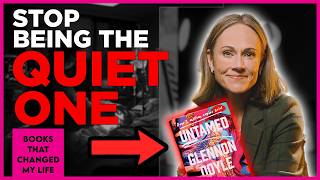
YouTube interview (uploaded Dec 11, 2025) in which actress and podcaster Nikki DeLoach describes how Glennon Doyle's Untamed helped her reclaim herself after childhood sexual and physical abuse, disordered eating, and later crises in adulthood. Nikki recounts early reading achievements (Georgia Reader of the Year; ~300 books in a year), how books provided escape, her marriage and family, and two pregnancies — the second (Bennett) diagnosed in utero with multiple congenital heart defects at about five months. She describes Bennett's induction and first open-heart surgery on day five, trauma therapy in 2023, and how Untamed offered a roadmap to feel, say no, and stop people-pleasing. The interview also covers her advocacy for Children's Hospital Los Angeles (surgeon Dr. Von Starns; a fundraising charm called the "Benny" whose proceeds support the hospital), how often she’s gifted and reread Untamed (bought ~60–70 copies; read/listened ~20 times), and actionable lessons she applied (feeling first, disappointing others rather than self, guided recovery).
Questions this video answers
December 11, 2025.
Just short of 300.
About five months.
Five days old (first open-heart surgery on his fifth day).
Dr. Von Starns (Children's Hospital Los Angeles).
Chapters
This time on books that changed my life.
Ten is when we learn how to be good girls and real boys. 10 is when children begin to hide who they are in order to become what the world expects them to be. So at 10 years old, I was told being a good girl was letting boys do anything to you, to letting adults do anything to you, and you just keeping your mouth shut.
There's something really powerful in a negative way that happens when you're a kid and the adults that you trust for basically everything can't be trusted.
Books allowed me to imagine a way out of no way.
Just like the book had that effect on you. There's so many people out there that feel like they don't fit in, that feel inauthentic. They're trying to please.
It's so hard.
It's really hard.
I was just a caged girl made for wide open skies. I wasn't crazy. I was a goddamn cheetah.
Then the big question, how did Untamed by Glennon Doyle change your life? Well, Welcome to the Syndicate X Library, where we love books, especially books that have changed lives. We have a very special guest joining us today. She starred in dozens of films. She's the host of the podcast Mind what Matters and the co chair of fundraising for Children's Hospital of Los Angeles. In 2020, her life turned upside down. At the height of the pandemic, Nikki faced an unimaginable challenge. Caring for a newborn son as he recovered from heart surgery, visiting her father on the other side of the country, all while maintaining her career and service to charity when she needed it most. She reached for a familiar book, one that empowered her to save herself and overcome. This is Nikki deloach and the book that changed her life, Untamed by Glennon Doyle.
Thank you. Thank you for having me.
Welcome. Nikki, can you look in the camera and give advice to any young men that are single and tell them what the sexiest thing is that they could do here in the library?
I sure can. My biggest advice for any young man, and I tell my boys this all the time, there is nothing sexier than seeing a man with a book in his hand reading. This is backwards, but reading it the right side up. There is nothing sexier than that. Women love it.
Actually, if you saw a man reading a book upside down, you could just fix him. If you like projects and then we.
See what we think fix him. But it's not about the project.
A book.
Yeah, you're right. At least he has one in his hand.
So funny.
Earlier I Just for everybody that knows I walked in earlier and I totally. There's no chill whenever I. There's no chill for me, especially in a place like this. And I was like, does everybody react like this? And you were like, yes, they do. Yes, they do.
Sometimes they. In. So in that front room where we have most of the photography books.
Yeah.
They're just piled like.
Cause they're just looking.
Just consuming, which is kind of how I do it too.
Yeah. Thank you for having me.
No, thank you for being here. There's an automatic common language between book lovers.
Absolutely. Yeah. I mean, I asked you earlier when you first read that book that changed your life. I grew up and we'll get into my story and stuff and also why this book changed my life. But I started reading at such a young age. In fact, my mother told me that I was reading in Preschool at 3 years old and 4 years old, and I would read to the class as a three and four year old in preschool. And they would just have me sit there and read the books to the kids. And my dad read to me every single night, every night as a kid. And then I even won the Georgia Reader of the Year award whenever I was a kid because it was. You had to read the most books in a year. And I won the award. And to this day, it's one of my, like, most. The awards that I'm the most proud of. Like, who needs an Emmy when you could get that right?
So is that how many you read in a year? In a school year? And do you remember the number?
Yeah, it was just short of 300.
Wow.
And obviously some of them, I was like, oh, this is a short book, but I can count it, you know, But I read every single day, with every minute that I had and went through as many books as I could. And obviously I was young, so it's not. You're not. You're not reading this. Right. But I think I was like 11 when that happened. Like. Yeah, I just. I took down like a book a day almost for about a year.
So isn't it interesting that you would read to the class and then acting becomes something you're performing and then how do you think your reading helps you with scripts and memorizing?
Oh, it's everything because. And also being a writer, creating worlds. Right. You know, your imagination. Because even with my acting technique, I don't use. I don't substitute my own life for it. I prefer to live in imagination because the things that I've experienced as a person is very finite. But I might be playing a character, and I'm like, ooh, I've never experienced that. You know, I've played a lot of really intense characters. A woman who's in the military who was raped, and I hadn't experienced being in the military. And even though I've experienced sexual assault, I. You know, I haven't experienced it in that way. And I feel like when I get to live in my imagination for characters, it's infinite what I am able to play or able to create or able to do. And that began when I was a child and imagining a way out of no way. That's what books gave me as a kid who went through abuse. You know, I would lay on my trampoline and I would read, or in my bedroom, I was constantly reading. And books allowed me to imagine a world outside of that, and I would just disappear into them. And then I think I do the same thing. It's harder for me to be on a red carpet and just have somebody take my picture or do a photo shoot or, like, it's easy here for me to be myself, because you and I are just having a conversation. I feel much more comfortable when I'm getting to disappear into something, which is something I've, you know, been working on most of my life and is talked about heavily and untamed.
Do you think that there was something that happened in childhood that influenced that?
Oh, yeah. So there was physical abuse in my childhood, but it was the sexual abuse that really honestly just made me want to disappear. And that happened, you know, one of the chapters, the first chapter in this book, which we can get into, that's not what happened to Glennon, but she talks about being 10 years old. And at 10 years old, that's when we're taught what it looks like to be a good girl. Right? And at 10 years old is when this happened to me. And I was silenced and wasn't allowed to actually say what happened to me. And so at 10 years old, I was told that being a good girl was letting boys do anything to you and keeping your mouth shut to letting adults do anything to you. And you just keep your mouth shut and you take it that my life was not worthy of protection, that there was something so deeply broken and unlovable about me that I didn't deserve that. And that's when the disordered eating started. Just like Glennon, at 10 years old, she became a bulimic. For me, it was anorexia, and I just began to disappear, because if I was small, that's what I was being told, be small, don't speak, look pretty. Nobody wants your opinion on anything. And man, did it take me decades to untangle that and to learn to love myself. And this book was such a huge part of me being able to do that.
There's something really powerful in a negative way that happens when you're a kid and the adults that you trust for basically everything can't be trusted.
Oh, I mean, I think trust was such a big issue for me my entire life because.
So then you want to control everything later on, right?
Well, that hypervigilant brain is wired and that hypervigilant brain saved my son's Life. Cut to 2017 and in one week and I'm pregnant with my second child. I found out that he had multiple congenital heart defects. Without a life saving surgery immediately when he was born, he wouldn't survive. We went on to have more heart surgeries and it was years of just really intense, like just keep the child alive, you know. But I was the perfect mother for him because I knew how to do that, I knew how to survive and my brain was wired for that. Where I got in trouble was when I got, when things became okay eventually. But she was still in the driver's seat. That little 10 year old girl was still driving the truck and she was gonna drive us off the bridge like 100%. And so I went through some much needed, really intense but incredible life changing trauma therapy in 2023. And what I learned is like these parts of us that are developed, these pieces of who we are, just say the brain take it into, right? And there's the perfectionist and there's the hyper vigilant and there's the, the person that wants to control, which is all part of it. And then there's the person that wants to love everyone and then there's the, there's all the pieces of you that are wrapped up in it and instead of trying to make them go away because it's hard when they're very alive in you get to know them and pull them super close and love them really hard. And I got to know that 10 year old little girl so well and I'm so grateful for her because she is the person who has helped me to survive and keep going when I wanted to die at so many points in my life like truly and tried. And she's also the one that kept Bennett alive, that saved his life. Especially the second heart surgery. I knew something was wrong. People told me I was just, you know, it was my PTS And I demanded another echocardiogram, and sure enough, the kid had a giant aneurysm in his pulmonary artery. And I knew it. I knew something was wrong, and I saved his life. I saved my grandmother's life when she had stroke and knew exactly how to jump into action and do that. So what I've learned is, like, would I take back the things that happened to me as a child? Obviously, I wouldn't want that to happen to me or any little girl or boy. But also, instead of making those parts of ourselves want to go away, how can we get really close to them and understand that we can actually create meaning and purpose, and they are a part of us that we can use for good in the world and in relationships. And that is what I've done instead. And now she sits in the backseat most of the time until I say, all right, sister, I need you to drive this truck. I need you to, like, take over. And then she. She jumps into action. She knows exactly what to do. But that's kind of the way that I. And in a way, grateful is not the right word, but it's everything that's happened to me up until this moment, it all has. It serves the perfect purpose, and I've fortunately been able to use it to mean something in my life.
Would you say part of the recipe of coming to, you know, some sort of healthy balance with that is that you have to turn around and face it?
Yes.
So for how long did you kind of run from it? Cause, I mean, that's. That's a normal pattern.
I took a baseball bat to this glass house of perfection that I had built around myself because my little girls, you know, as a teenager, and it's like, if I could be perfect, then nothing bad's gonna happen. If I could be perfect, then, you.
Know, probably mixed in with a little controlling everything.
Controlling everything.
Because it can't be perfect if you don't have control.
Absolutely. Hence the disordered eating. Right. It was. The one thing that I could control was the food I was putting in my mouth. And when something felt chaotic or something felt out of my control, my go to still to this day, don't eat. Nope. Not doing it. And it is that disordered eating brain. That's how it tries to get control over your life or a life that feels out of control. And then I got in the music business when I was 17, 18 years old, and I just took a baseball bat to that glass house of perfection. I mean, I left it all on the field, and till one day I woke up and after a real crazy night out, a bunch of them, and I was 20, 21, 22. And.
And by crazy night out, do you mean making some bad decisions? Oh, yeah, just trying to numb.
Oh, trying to numb. And that's all I was doing. And at the time, I didn't know that at the time I was just beating myself up every day and saying, you're a bad person, you're a bad girl, you're girl for what you're doing. And it was only with distance that I realized, oh, I was trying to kill myself. I just wanted the feelings to stop. I couldn't feel the pain of everything. So I was numbing it and I just wanted it to go away. I wanted myself to go away. Because again, when you layer that on top of your unlovable, you're not worthy. All of those things that you internalize others, can't trust anyone as a child. And then you layer and then you bring that into the mix, you know, which I know so many people struggle with. It just made sense. Well, if I just disappear, then we don't have a problem anymore. There's no problem. And so I woke up that morning and looked myself in the mirror and I'm a big faith person. And I just did not see God in myself anymore. You know, we are created in the image of likeness. I did not see God. I couldn't recognize myself. And the first book I picked up after that is a book called Anatomy of the Spirit. I don't know if you've ever heard of it. And I started there and then I just started reading and reading and reading the Seed of my. The Seat of My Soul and all of these books and got into too much needed recovery for disordered eating and therapy and all of that. And I would say that's where the beginning, that's where it really began of me being like, I have to save myself because nobody's coming to save me.
Which goes back to being the child that's alone because the adults I have to save can't be trusted.
That's right. Nobody's coming to save you. So that's. But that, that brain and that thing was the same thing in me, however damaged you wanna call it. It was that same little girl at 22 that said, you have to save yourself. She saved my life. So again, grateful, right, for that. She came in and did that. And would it have been easier if I could have had a bunch of adults around me at that age, at 20 something years old to be like, we've got you. Let's do this. Sure. But I do think that it is a good quality to have in our lives because it keeps us out of victimization and victimization keeps us stuck. When we are victims of our circumstances, we are stuck. We are paralyzed. You know, we blame, we project, we shame. We do all of these things instead of take being accountable. I may not have done those things to myself, but I'm responsible for them now. And if we continue to stay in the world of victimization, we often don't take those steps to saving ourselves. We're waiting around for somebody else to do it for us, you know? So I do think it's important to know how to do that.
Did you always want kids?
I didn't know that I wanted kids, no, because.
How did you meet your husband?
We met in the music business. We were both. He was in a boy band and I was in a girl band. And I met him in this really not healthy time of my life. So God bless him if he could fall in love with me then. And I kept saying to him, if you can hang on, I'm gonna be the best girlfriend you've ever had. Because I knew myself like my knowing, there's the brain and there's the body, and then there's your knowing, which is that thing that's deep, deep, deep, deep, deep. That goes back to, like, your creation of who your soul came here to be. And I knew that that soul was beautiful and perfect and alive and smart and good and all the not good, but, like. And kind and compassionate. If I could just get back to her, you know? So he patiently waited.
How long did he wait?
How much shit together he waited for? I mean, I think once I began to really come into myself, it wasn't until my later 20s, but we left the music business. We moved out to LA together. I had lived in LA whenever I was younger as an actor. And we came back out here and I went to college. I had been in a terrible record contract. That was a whole thing, you know, Lou Perlman, NSync, battery, boys, you know. This guy ended up going to prison. He was not. Not a. He was a criminal. He was a criminal and made my life a living hell. And so I didn't even know. I didn't even know what I wanted to do. I just knew I had to get out or I would die there, like, literally.
What did you go to school for?
Sociology and psychology.
That would have been my guess.
I mean, come on.
Yeah. Did you see all the books?
Yeah, I did. I Was like, oh, I've probably read most of these. I had no money, and he had no money. So we went to Santa Monica Community college. It was $7 a unit, you know, we ate ramen noodles and slowly began to put the pieces of our lives back together. Together. And thank God for him. He's steady Eddie. You know, I, I, I really, you know, I give my husband. We've been together 26 years, so I give him shit all the time. But, my God, thank God for him. I don't know where I'd be without him in my life.
How long after that do you get married?
We got married five days before I turned 30. And I say five days before I turned 30. Four days, because I did not. I still don't really believe in marriage before the age of 30. Like, people who get married in their 20s, I'm like, how? I mean, maybe they weren't the mess that I was in my twenties. You know what I mean? But.
Well, a lot of us know it all in our 20s.
Yeah.
We're experts on everything.
Well. And I was just like, it's only.
When you get older, you realize you don't know anything.
Isn't that so, so funny?
It's re. It's the reverse.
Isn't it beautiful, though?
Yeah, it is. Because you just go for stuff.
Well, I was just saying, like, yes, in your 20s, but when you get older. One of the nicest things that I've experienced about getting older is realizing how much I don't know. And the humility that comes with that. There's a softening, Right?
Yeah. And a love of learning. Like.
Yeah, your curiosity is. It's almost like it's brought back to you because you realize, oh, I don't know. I know this much. Right. So we got, we got married four days before my 30th birthday. And so you can't tell your kids.
Not to get married before 30.
Exactly.
By four days.
Exactly. And I honestly, I didn't know if I wanted kids because of all that I had gone through as a kid. Would I be a good mother? And then something came over me when I was 33, and I could feel this little bean, this soul floating around me. And I knew it belonged to me. And, well, it belonged. I was supposed to help bring this soul into the world. And I really like.
You feel like you felt the soul's like, you gotta let me in.
Oh, yeah. Well, so here's another thing. Whenever I was a kid, I communicated with the other side all the time. They were just in My bedroom and everywhere I went, and I. And then when I was 10, people on the other side who had passed away, then.
What are you talking to them about?
Life stories. For me, specifically, one day it won't be like this.
You know, they would say that too.
Yeah. Like, you know, I know it's scary right now, but one day it won't be like this. Conversations about what it felt like to be on the other side, that was so much of my childhood. And then when this one incident happened to me at 10, it just went away. Just went away. Until one day, I'm 33, and I'm like, I feel this energy, this soul around me. And I just kept sitting with it, sitting with it. And I was like, I think it's supposed to be my baby. And then I could not. All of a sudden, the feeling that I got in my body of becoming a mother, it's all I wanted. It went from I don't know if I can do this to I still don't know if I can do this, but I want it so badly. And Hudson, who's 11 now, I had him at 34. And I just can't imagine my life without my kids. They're the greatest decisions I've ever made.
So you're pregnant and you feel like something's wrong.
So Hudson was my first and then my second.
With your second, did you feel the same thing? Let me in.
Yep.
Really?
He came to me in a dream.
Just. Just. Oh, okay. Tell me that.
He came to me in a dream. Hudson was not even a month old, and he was in a little bassinet next to. Cause I would wake up and breastfeed and put him back down.
And what was the connection with him in reference to you having a sense that he was meant to come into the world? Like, how. How was that relationship like when you first saw him? What. What went through your head?
When I first saw him, like when I first held him in my arms.
Yeah. Just for me. It's fascinating that you had this feeling that there's a soul.
Yeah.
That. That is waiting for you to let them into the world. And then you.
I felt so honored that he chose me.
You feel like he chose you?
Yeah, I do.
How does that work?
I don't know. I don't know. But I feel like he chose me. And it's so interesting. I. I had never shared that with him specifically. And then one night, he was having. I was away doing a movie. I usually have to leave to do movies and then come back, and my oldest was really struggling with my husband at the time, and they were just butting heads and really struggling. And he was so upset and he had facetimed me and you know, he said like, oh, sometimes I just wish that it was just you and me that dad wasn't here. And I was like, well, buddy, you know, you're just frustrated right now because you two are butting heads and you're gonna figure it out and this is part of parenting and we don't know everything and we're learning too, and all the things. And he said, yeah, but I chose you. I didn't choose him. Wow. And I said, what do you mean? And he goes, when I wanted to be born, I chose you. And I would choose you every time. And I just went, wow, that's fascinating. And I mean, now my husband and my 11 year old are in a great, great, great place. You know, it's parenthood. And it's harder, I think, for like a mother to parent daughters and men to parent sons as it is the opposite sex, because my boys think I'm the greatest thing in the world. And yet they feel fight with my husband. You know, I just think it's the nature of it all. But he said that. And I said, you know what's so interesting? When before I got pregnant, I could feel you. And the first thing when, when you were born and you were in my arms, that I thought was, I'm so honored and lucky that you chose me that I get to be your mom. And he goes, you thought that? And I was like, it was the first thing I thought. And so it kind of wrapped around in this interesting way. And then Bennett, you know, when Hudson was in his little crib and next to the bed, you feel another knock, knock. Well, I was dreaming. And in my dream I, you know, it was just so. All of these colors and they were moving and it was so beautiful and it was just getting bigger. And you know, when you dream, it's like it took up the whole, like everything from right to left. And I tried to reach out and touch it in my dream, and I couldn't touch it. And then finally I asked it, I said, what are you? You're so beautiful. And then in my dream, this energy said, my name is Bennett. I am your son. I am going to change your life. And I went like, you know, like in the movies, you see people wake up from like the dreams. I did that. And then my husband woke and he was like, is it okay? Is it the baby? Is it the baby? I was like, no, I just. I had the craziest dream. It was this beautiful light, and it said that its name was Bennett and that it was my son. And he was like, you're pregnant. How could you be pregnant? We haven't even had sex. And I was like, no, I don't think I'm pregnant. I don't know. And three years later, I get pregnant. And I was like, there you are.
So you had the name?
Had the name, yeah. And, boy, did he change my life. Yeah.
And so when you're pregnant with him, you just have a sense.
You mean about the heart? I didn't. About that. I actually. It wasn't until we went in to get the 40 echocardiogram, which allows you to really see everything. And then. And the technician. I just started shaking as she was, like, doing the echocardiogram, the fetal echocardiogram. And I started shaking and getting, like, having that visceral reaction to the experience. And Ryan was like, are you okay? And I was like, I didn't want to say anything while she was in the room. And then she got up and she left. And I was like, something's wrong. And he was like, nikki, everything's okay. Everything. I was like, no, something's wrong. Something's wrong. Something. I think something's wrong with the heart. And he was like, nothing is wrong. Everything's fine. Everything's fine. And sure enough, the doctor came in and said that Bennett had multiple congenital heart defects, and without immediate intervention, he wouldn't survive.
So how many months along are you at that point?
I'm five.
Five.
And I was lucky that I knew.
So did they induce labor?
So we did have to induce a week early so that he could get on this specific surgeon, Dr. Von Starns at Children's Hospital Los Angeles, world renowned pediatric heart surgeon. He's got, like, four heart procedures named after him. I mean, he's brilliant. And he was the only one that knew how to fix Bennett's heart. And so whatever his timetable was for it, we needed to make sure that that happened. And so we induced a week early and then went over to Children's Hospital Los Angeles. And then at five days old, he survived. They wanted him to survive as long as he could for the lungs and for everything to fully develop, as much as it could. And then he lasted about four days. And on the fifth day, we went into his first open heart surgery.
Man, this is way more intense in the sense that. So you have this dream.
Yes.
You've already. You met him three years earlier.
I'VE met him.
He chose you.
That's right.
And then something goes wrong.
Yes.
And now your mama bear. Yeah.
Yeah, exactly.
So, yeah, I mean, that has to be. I mean, I don't even know how to put that into words.
Yeah, same. You know, I'm just really beginning to fully. Like, when I went into trauma therapy in 2023, I thought it was to deal with Bennett and my dad, because in that same week, I got the diagnosis about Bennett. I also got the diagnosis of my dad, who was so young at the time that he had Pick's disease, which is a very rare and aggressive form of dementia. And so I knew my dad was gonna die, and it was going. And our time was limited. What I didn't know is if my son would also make it. And so that week changed that. It's like everything that became. It's like before Christ to after Christ. Right. But, like, that week changed everything for me. And so I honestly. So when I went into the trauma therapy, I thought I was dealing with that, but I was really dealing with the stuff as a child. I ended up having to start there. So the processing of what went down with Bennett and my dad through those years, I'm just now starting to unravel, because you know what? And I tell people this all the time. When they're in recovery or when they're healing or whatever it is, your body will tell you when you're ready. My body was not ready to be in the place of working through this stuff because it was still trying to keep Bennett alive. So one of the crazy things that happened to me whenever I was in therapy, and I don't know if you've ever heard of emdr, so it's essentially a way that you put the. These paddles that pulsate in your hand, and you follow this light. And what it does is keeps neural pathways open so you can essentially rewire them because they get stuck. And so people often are like, I don't know why I can't get past or get through or stop thinking this or whatever. Well, you're wired a certain way, and 75% of our wiring is done by the age of three. Right. Well, before we even have, often, memories of that time. And so you're really trying to rewire parts of your brain in terms of trauma. And so for me, I was able to go back to these moments in a way that kept me out of fight or flight. And almost as if I was inside of them as an observer, you could disassociate. So I Could disassociate. And the first moment that we had the first heart surgery, and nobody prepares you for this. And he's this tiny. You know, he's on this giant medical bed, and you're in this hallway that is so quiet that you could literally hear a pin drop. And the medical team is standing around, and you essentially have to say goodbye to your child. Right. Because you don't know if they're coming out. I was not prepared for that emotionally. I prepare parents now. But I went back to that moment, and then my grandfather appeared as I'm, like, going back, and my grandfather, who was a big part of my life and also Bennett, was born on his birthday. And my grandfather says to me, I said to my therapist, I was like, my grandfather's here. And he's like, well, does he want to say anything? And my grandfather says to me, you see that kid over there? It's not an accident that that kid was born on my birthday, because that kid is made of the same piss and vinegar that I'm made out of. And I said, well, I know that, papa. And he goes, I think you've forgotten, because he left this hospital victorious, and you're stuck in this hallway as if he never left. And I was like, I'm treating him as if he is still a child that is sick, fighting for his life in a hospital, and he's a thriving child. Like, what am I doing to my child? And so, you know, I have recently started to really begin to work on all of that stuff, because my child didn't fight that hard for me to hover over him all the time and to, you know, to control everything. That child fought to have a life.
Yeah. And just to get. To give it context. So when you go through what you went through as a kid.
Exactly.
You want to control things.
And so nothing bad about it.
Being a mother that controls things can keep a kid from developing on his own.
That's correct. That's correct.
Is that what the charm represents?
Oh, the bracelet, yeah. Okay. So thank you for asking me. This charm. It's a paperclip bracelet with a heart charm dangling from it. And the design of it is very purposeful because it's delicate but strong at the same time. Just like the heart is very delicate and it's very fragile, but at the same time, it's incredibly strong. And it's called the Benny, named after Bennett, and it is raising money for Children's Hospital Los Angeles. And all the proceeds of the bracelet go towards the hospital, which, you know, saved my son's life. But also it is a safety net hospital, which means we turn no family away, regardless of their financial situation. So part of my job at the hospital is we raise money that not only helps for research and innovation, you know, for Dr. Von Starnes to perform a surgery on my son that has never been done before. Right. He was able to wire him. He had four congenital heart defects and normally that would take two separate surgeries. And he figured out how to do it in one, which obviously is so much better for the child not to have to undergo 2, 2 back to back heart surgeries. And then he published that data and then sent it out to hospitals all over the world so that other surgeons can know how to fix a heart like Bennett's, you know, because other children do have what Bennett had, but they now know how to do it in one surgery. So the research and innovation, making sure that all children have access to healthcare, because as Glennon says in this book, and it's something I repeat all the time, there is no such thing as other people's children. Truly no such thing as other people's children. What can happen to that child can happen to my child. What can happen to my child can happen to that child. And I would, I just could imagine. We were lucky we had health insurance. I like being a mom and a dad who doesn't have the health insurance and the finances to be able to save their child's life. There should never be a situation where parents end up like that. And so Children's Hospital Los Angeles, we see about a million kids a year. And it's such an honor to be able to work at a place where they also see that there's no such thing as other people's children. So all the proceeds of the bracelet, please go buy the. Please go buy the bracelet.
So if somebody wants to get that or to donate, where would they go?
Well, if you want to get the bracelet, you can go to my Instagram, Nick DeLoach n I k D E L O A C H There's a link in my bio that will take you to the site to purchase it. And then if you just want to make a donation to Children's Hospital Los Angeles, you can go on the website and there's a place where you can donate.
It's beautiful.
Thank you. But again, taking it back to that is that 10 year old child, right? That's the 10 year old child in me that says this can't happen to other people. They can't be in this position where they don't have access to healthcare. We have to do something about it. So. Yeah, yeah, yeah.
So who introduces the book?
Well, I had been following Glennon because, you know, I. A person with deep faith, and, you know, she wrote in that world for so many years, and she had a book called Love Warrior that I had read. And so when this. This. When she began to post about this, I was like, ooh, this is different. This is so different. Right? And I would read anything that she wrote. And so I ordered it, and Covid happens in March of 2020. And I was like, now's as good a time as ever to just read, you know? And I think I devoured the book in, like, two days. I could not stop. And I read it again, and then I read it again, and then I bought it on Audible, and I just kept listening to it until I could repeat the words back to myself. And then I proceeded to buy it for every set that I was on for years. I would buy it for every woman on that set. And then friends who had never. I would say, have you read Untamed? No, I'm gonna send it to you. I've probably bought between 60 and 70 copies of this book. Like you, I love to gift books. I love to find that perfect book for somebody and give it to them at that perfect time. And, you know, and because books have changed my life throughout my life in so many ways, and this was probably. It's my most purchased book for sure.
How many times do you think you've either read or listened to it?
20.
20.
Yeah.
And so what's the. What's your kind of overall explanation of the book for anybody who hasn't read it? Like, how would you describe it?
Well, I would say that we are all placed in cages, usually at a very young age. How a boy is supposed to be, how a girl is supposed to be, what a good boy is like, what a good girl is like. And society, because most of the time, they don't know any better, right? It's what their parents taught them. And then that's what's taught to us. You know what I mean? The people, the adults in the room do this to us, and we lose who we are. We absolutely lose who we are. And then if we're lucky, we spend the rest of our lives remembering getting back to what our soul, that soul, came in this world to be. And so it's really. When she says untamed, it's. What is your wild. Who are you authentically? Your wild, Untamed, uncaged self. And how can we become that and bravely live that every single day in spite of what society tells us? I think that is in terms of a big purpose in our lives, like, of how we're supposed to live. And what are we doing here?
Right.
What are we doing? It's like, for me, there's two parts to that. It's becoming my truest, most authentic self and trying to leave the world better than I came into it. And that is a huge part of it, right? That is a huge part of being able to leave the world better than we came into it, is learning how to become that in ourselves.
That's a great way to put it. So let's kind of go through some of the tabs in here.
Oh, yeah. The things that I chose were kind of from the perspective of if you're a man or a woman listening to this and you've gone through any semblance of what I've gone through, or you're feeling lost in your own life, or you're asking yourself that question, am I living the life I'm supposed to live? Am I the person I'm supposed to be? Who am I? These were the first three things that I think I was like, oh, first acknowledgement, right? And this was the moment in the book. It's literally chapter one. It's called Spark, where I went, oh, I feel seen. So she says, 10 is when we learn how to be good girls and real boys. 10 is when children begin to hide who they are in order to become what the world expects them to be. Right around. 10 is when we begin to internalize our formal taming. 10 is when the world sat me down, told me to be quiet and pointed towards my cages. These are feelings you're allowed to express. This is how a woman should act. This is the body you must strive for. These are the things you will believe. These are the people you can love that's important. Those are the people you should fear. This is the kind of life you are supposed to want. And then she says, goes on to say, all of the things that make a woman human are a good girl's dirty secret. Because she goes on to say that she was. You know, she went to get treatment and she said, back then, I suspected that my bulimia meant that I was crazy. And in high school, I did a stint in a mental hospital and my suspicion was confirmed. I understand that differently now. I understand myself differently now. I was just a caged girl made for wide open skies. I wasn't crazy. I was a goddamn cheetah. Over time, I walked away from my cages. I slowly built a new marriage, a new faith, a new worldview, a new purpose, a new family, and a new identity by design instead of default, from my imagination, instead of my indoctrination, from my wild, instead of from my training. What follows are stories about how I got caged and how I got free. I read that and went sobbed. Sobbed. Because I was like, 10. 10. Yeah, same.
So what were the specific cages that you like, instantly were like?
These are the feelings you're allowed to express. Big one.
Which ones weren't you allowed to express?
Anger, sadness, frustration, being upset. Anything that wasn't happy. Polite. Yes, ma'. Am. Yes, sir. Your feelings don't count. It's what we think you should feel.
Yeah. And especially with girls. Like, if you're disagreeable, you're crazy.
And if you're disagree. Ugh. She's disagreeable. She's such a diva. That's what they say when you get over.
It's agreeable and it's.
Yeah.
It's what I should be.
And you're strong.
Yeah.
You're a strong man. Right. You're brilliant. You're smart. You're the.
So a leader.
You're a leader, but for women, you're crazy. You are a diva. Or even worse, a bitch. You're all of these titles just for having an opinion about something. I can't tell you how many times people DM me and say, ugh, I really wish you would leave your opinions about politics out of your social media. Do you say that to a man? Probably not. Probably not. And also, there's nothing in our lives that politics doesn't touch. Everything is political. So you're damn right I'm going to have an opinion about it and how a woman should act. That's a cage. Be seen and not heard is what I was told every day of my life. Be seen and not heard. Don't speak unless spoken to. That's what I was told a lot. This is the body you must strive for. That was a big one. Stay small. Tiny, Right? That's what that.
I never made that connection.
Oh, yeah.
Skinny is tiny.
Skinny is tiny. Stay small. And this one. Thank God. Never. The indoctrination of this never entered my being, and I'm grateful for that. These are the people you can love, and these are the people you can fear. Because for me, right, growing up in the Deep south, obviously, racism, right, that was something that never. I loved all of humanity from the time I was a Very little girl. Because. Because I took Jesus's words and those stories from the Bible to heart.
You also are probably very empathetic. Like, you're an empath. Yeah. You feel things very deeply.
Oh. I mean, if something was going on with. I mean, it would just, like, all I could think. I just have to save them. I have to, like, you know, I have to be there, and I do. I literally will feel in my body what somebody is feeling in theirs. Like, I'll be like. Like, oof. That's in your chest, right? They'll be like, yes. And I'm like, that's grief. And so that was from the time I was a little girl. So the one thing I am grateful for, that a cage that I. That did not get built around me was who I can love. Because if we are all made in the image and likeness of God, we are all equal and we are all lovable and we are all worthy.
Yeah. We're all valuable.
We're all valuable. And so that I held onto that as a child, and I didn't get that cage. But the kind of life you're supposed to want, like, all of that, those were all cages that, you know, that were built around me, for sure.
It's a great setup for the book, isn't it? It's a pretty big promise.
Yes, it is.
We're gonna undo. And she delivers.
She delivers.
So give me. Give me another one.
Okay, so the next step in that I feel like you acknowledge, right. I'm in this cage. I was put in this cage. So what do we do first, besides acknowledging it? We began to feel. And for me, that was important because spending the earlier part of my early 20s and even before that, trying not to feel.
And so. And just so I can clarify, because I'm imagining. But you tell me.
Yeah.
When you feel something and then you deny it, you're denying your authentic self.
Correct.
And so then you start to feel over time that you're not authentic because everything you feel is pushed down or.
Hidden or wrong, whatever it is, or shame.
So then you feel.
Because I'm not allowed to feel these things. So then you lose yourself. You've been placed in this cage, and then slowly, over time, you acclimate or you become the thing that society expects of you.
There's like, this mask that just gets further and further away from who you really are.
And then one day you wake up and you're like, I'm a fraud. I have no idea who I am.
And these people I'm trying to please don't really care.
They don't know.
It's like having a bunch of followers on social media that you don't know, and you're just trying to please them.
And the people pleasing is such a big part of it. I mean, this book ended that for me. It really did.
The good girl part.
Oh, the good girl part. The people pleasing.
Because the good girl becomes part of your identity, right?
Oh, it was. It was my identity. I did things perfect. I graduated high school in two years straight A's, never made a B. College, I was, you know, until I. And I think part of destroying that glass house of perfection was wanting to disappear, wanting to kill myself, eliminate the problem. But then what I then wrestled with after that was I went right back to that. Well, I do know this was acceptable. This good girl was acceptable. So let me just go back to her until I can begin to figure this out.
Mm. You relapsed.
Oh, yeah, I relapsed.
Cause it was safe.
Cause it was safe. And I knew. I knew how to do that. But it wasn't familiar.
It was familiar.
It wasn't safe because I didn't trust myself. I didn't know myself. I wasn't safe in my own body. And now I know the safest place I can ever be is in my own body. Like, I trust myself implicitly. And so.
And that goes both ways. Right. Because you're denying it to yourself, so you feel inauthentic. But we also have to think about what we do to others when we judge them and how we make them feel correct. It goes both ways.
Absolutely. All feelings on the table. Right. At least with my boys, you don't.
Have to agree with them. Yeah, but you should validate them.
Yeah. And that's what I do. I will validate the fact that you are angry right now that this happened. Absolutely. The question is, how are we gonna resolve this? Right. And I do ask them a lot of questions because I want their brains to begin to figure it out.
Guided discovery. Hopefully they don't watch this and figure out your technique.
Well, I want them even with grades. Even with grades, my son will come home.
And that has to be hard for somebody who got good grades.
Perfect grades. And it was very hard. Like, he came in with a D on something, and I was like. Like, I just, like, wanted to melt into my floor like this. And instead I go, well, how do you feel about that grade? And he's like, not good. I. I didn't study, and I don't feel good about it at all. And I was like, okay, well, what do you think we could do differently next time maybe so that we can bring the goal, the grade up. And then he talks to me about what he thinks he can do. And then I say, is there anything I can do to help? Help, yeah, it's great, you know, and then he'll say, actually, yeah, or no. Or, you know, like if it's anything outside of math, I can help him with. I don't math, but you know, I don't math. I do not math, don't I? Like, literally like F. I've never heard.
Anybody say it that way. That's funny.
I mean, in school I worked my butt off for that A in every math class that I ever took. And then I just dumped it. It's like pumping and dumping. I just like. Then it's gone.
I'm pretty good at math, but you know why?
Why?
Because I just had a teacher tell me that I was good at math. And so then I just tried harder because I felt like I was good at something and I'm probably not good at math.
Isn't that interesting?
But just because an adult. Yeah, that was in a position of authority.
Yeah, yeah.
Encouraged me. I put more effort in. Just funny.
I love that. That is funny.
Cuz when people say they're not good at math, I'm always like, well, it's a lot of work for me. But I. But I did it because.
Yeah.
And for me, Mr. Campbell said I was good.
Bless Mr. Campbell. I did it because the good girl, right?
Oh, yeah.
Oh yeah. Good Girls don't make Bs. Good girls make A's. So feel. It's like after we acknowledge and we know we've been in a cage and we, you know, we've been tamed, what do we do after that? We begin to feel. And so she says it's okay to feel all of the stuff you're feeling. You're just becoming human again. You're not doing life wrong, you're doing it right. If there's any secret you're missing, it's that doing it right is just really hard. Feeling all your feelings is hard, but that's what they're for. Feelings are for feeling all of them, even the hard ones. The secret is that you're doing it right. And that doing it right hurts sometimes. The day I began returning to myself, fearful, trembling, pregnant, six days sober, in a church basement with shitty fluorescent lights and terrible coffee, she's gone to her first AA meeting. When a kind woman revealed to me that being Fully human is not about feeling happy. It's about feeling everything. From that day forward, I began to practice feeling it all. I began to insist upon my right and responsibility to feel it all, even when taking the time and energy for feeling made me a little less efficient, a little less convenient, and a little less pleasant. She says, first, I can feel everything and survive. Second, I can use pain to become. I am here to keep becoming truer, more beautiful versions of myself again and again, forever. To be alive is to be in a perpetual state of revolution. And I like how she says revolution and not evolution. Whether I like it or not, pain is the fuel of revolution. Everything I need to become the woman I'm meant to be next is inside my feelings of now. Life is alchemy, and emotions are the fire that turns me to gold. I will continue to become only if I resist extinguishing myself a million times a day. If I can sit in the fire of my own feelings, I will keep becoming.
Do you remember how you started to put that into practice?
Absolutely. How I began to put that into practice? Number one. I began to, number one, be honest with myself. Because that's first.
So truth.
Truth to myself. What am I feeling right now? Anxiety. It's uncomfortable. I hate it. But what am I anxious about? Sit in that. What is making me anxious. And right. This is Covid. So this is. I have a heart baby who just came out of three heart surgeries. There is no vaccine. Doctors don't even know how to deal with this virus that is killing millions. Will it kill my son if it gets close to us? We are on lockdown.
So it's the loss of control.
I am completely out of control. My dad with Pick's disease is in Georgia, all the way across the country. I don't know how much time I have with him. I can't get to him. I have zero control. And that was what came up. Oh, you don't have control over anything. None of this is in your control. And I was months into controlling my food again, not eating right. Okay. So that is when I began to feel the anxiety. I'm scared. I'm really scared, you know, will I even be able to work? And it wasn't even about money as much as it was about keeping my health insurance for my. For my family and especially for my child. You know, all these things are swirling, swirling, swirling, swirling. And I would literally just sit there sometimes in a closet door shut and just allow myself to feel and allow my feelings to tell me the truth. And then I Could do something about it. Right. All right. I can't control this pandemic. I have no control. But what can I control right now? I can go into the kitchen and make sure that I eat something, even if it's a smoothie. So I'm going to go and I'm going to put some food in my body.
So you shift the focus to the things you can control.
Yes, yes. That are healthy, right?
Yeah.
So that's something I can control. I can find a great movie to have movie night with the kids. I can maybe turn this experience for all of us as a family into a bonding experience, which it became. You know, my husband and I got closer during COVID My boys, who really had not been connected because Bennett had been in this bubble, you know, and Hudson was at preschool and coming home, and Bennett couldn't get sick. And so there was not time for them connect. They could connect. And so I was like, okay, what is in my control? Well, I can just do the next right thing. And what is that next right thing for me? Right. So. But I couldn't get to what the next right thing was because I needed to feel first. I needed to understand why I couldn't sleep and I wasn't eating and why I was in a panic all the time.
So, in a sense, you had to stop.
I had to stop. And. Which will bring me to what I'm gonna read in a second. So feel first. And the one thing that she does say, and this was huge, and this is what I live by, and I say it to myself maybe 10 times a day in moments, not as much anymore, because it's so a part of who I am now. She was in the room with her daughter Tish, and she was having a conversation. And Tish says, chase wants me to join the same club he joined in middle school. I don't want to. Glennon says, so don't. Tish says, but I don't want to disappoint him. Glennon says, listen, every time you're given a choice between disappointing someone else and disappointing yourself, your duty is to disappoint that someone else. Your job throughout your entire life is to disappoint as many people as it takes to avoid disappointing yourself.
Read that last part again.
Your job throughout your entire life is to disappoint as many people as it takes to avoid disappointing yourself.
So when you read that the first.
Time, what I said, I have betrayed myself my entire life to please everybody else.
So in a sense, it gave me permission.
Yeah, I literally had Abandoned myself and betrayed myself at every turn for most of my life to make everyone else comfortable, happy, pleased. And then Tish says, even you. And then Glennon says, especially me. And I say that to my kids all the time. We don't abandon or betray ourselves for anyone or anything. That is such a slippery slope. And so even though it's hard and in moments when I'm asked to please, or moments when I'm asked to, you know, potentially betray my knowing, it is a very kind. Sorry, I'm not going to be able to do that. Thank you so much. But I'm not going to be able to do that because disappoint everybody else before you disappoint yourself. And how do you know that? Which brings me to the other part I was gonna say is her chapter on no. And it's really be still and no. And remember earlier when I was saying, there's that part of me deep, deep, deep back there that despite the mental gymnastics of the brain and the body, feeling all the things that I haven't yet sat inside of and all of that, there's that part of you that does know, that knows exactly what you need to do, that knows exactly what's right for you. For you. Right. That's the truest thing for you. And the job is allowing that, that knowing to be the place that you go before you seek, you know, acceptance, validation, any of that in the outside world. Go inward, be still, you know. And so for me, this book with each chapter and the way that she built out the story. Yeah, it did. First of all, so much of myself, I recognized in her, so much of it. But then also, like, including the taming as a young child and the disordered eating and all the things. But I think it offered a roadmap. How do we untame ourselves? And there was this very clear roadmap that she offered, and I literally just followed it one chapter at a time. Yeah, Change my life.
So then the big question, how did Untamed by Glennon Doyle change your life?
Oh, I'm so grateful to her. Well, I have full acceptance of who I am, flaws and all. Mistakes. I don't beat myself up for mistakes. I'm human. I know how to repair with myself. I know how to repair with others. I don't betray myself or abandon myself anymore. And I know the safest place I can possibly be and is in this body, this body that experienced abuse, in this body that had disordered eating and all of these things. But I love this body. And I finally finally, after so long, I finally love myself.
Have you talked about this before?
Nope.
I mean, I don't know if you're aware, but when you were going through some of this, how many people need to hear your story?
Oh, thanks for saying that.
There's. I mean, just like the book had that effect on you. There's so many people out there that feel like they don't fit in, that feel inauthentic. They're trying to please, they're trying to survive. And they don't have the circle or the confidence to just stop and feel and start pushing through some of that.
That. It's so hard.
It is. It's really hard.
But, you know, she has a podcast, we can do hard things. That is the. That's the call. That's the cry. Right? That's the we can do hard things that she talks about and that I said to myself thousands of times, we can do hard things. I can do hard things. It's so worth it. You are so worth it. I can't express how valuable you are as a human. Every single person.
And also a lot of times when people are feeling that way, they make themselves, like you said, small and undesirable and it's hard to get love.
Yeah, I'm gonna reject myself before somebody else does.
It's a self fulfilling prophecy in a way. Right, right.
Yeah, it is. Because then, then that mind will say, see, I was right.
I mean, just so many people go through life and nobody stops and just accepts them or validates them for who they are or sees the things that are special in them.
Yes, that. That is a superpower. I have to really see people.
You also have a charismatic superpower. You're very charismatic, so it's inviting.
Thank you. But I think again, that superpower is because of everything that I went through and understanding how important it is to be seen by somebody.
How long until you write your book and what is the book going to be called?
Pretty is as Pretty Does. Maybe.
Because that's a great title.
Well, because, you know, I was told that every day of my life. But when I was young, does meant falling in line, keeping your mouth closed. Like be seen and not heard. You know, all of that's what they meant by, well, you're only as pretty as what you do. Right. But now, as an adult who has gone through all these things and still a work in progress, does means owning my worth, having love for myself. Does means valuing humanity. And not just one portion of humanity, all of humanity. Does is what are you doing to be of service in the world.
It's so funny. Like, so much of your evolution is about changing perspective. It is like you're just changing the perspective on that word.
Right? Yeah. So I'm. It's also a way to kind of take your power back. Yeah, yeah.
See yourself as the one in control.
Yeah.
Right. Well, I thank you for sharing your story. I can talk to you for hours, but I know you. You're four minutes over your heart out.
I just sit here in this room. Honestly, come back. I would love to come back, write that book. Thank you for saying that.
We would all love to read that book.
I've been asked and I'm chipping away at it. It took me two years to say yes and finally I did. And so I'm working on it. I would love that. I'd be honored. And I love what you do. I think it's really special. And thank you for giving me the opportunity to.
You made it easy.
Something that means so much.
We are so excited to announce announce the books that change my life website. We made a way for you to show your book pride and that you love books. Hats, tees, hoodies. Check it out. Link in the description. Everybody needs a self help hat.







