The Book That Taught Me To Live My Truth || Kimberly Ann Harrison
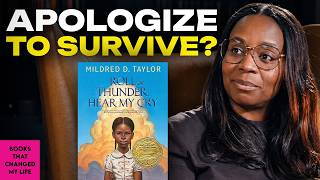
Kimberly Ann Harrison talks about how Mildred D. Taylor's "Roll of Thunder, Hear My Cry" shaped her understanding of truth and identity. She also discusses adapting "Washington Black" and raising her children in equestrian sports.
Chapters
This time on books that changed my life. Do you remember those conversations with your grandma?
Absolutely. The idea that her and her five siblings could not walk from Battle street down to school without being called the N word every single day. But to pick up a book and literally hear the same type of stories that my grandmother was telling me, I'm like, okay, this really happened. The idea that children have to deal with adult situations at that age, you're killing their imagination. The mental toll, their creativity. And it's such robbery. It's just learned helpless, and that's scary.
How did you decide to adapt Washington Black?
I've never seen a show told through this lens. I have two boys.
Did you have them in mind?
I definitely had them in mind. There's no limit to what any of us can do. And I just wanted my boys to sit down and watch that.
So that's why you wrote behind the Paddock.
Yes, exactly.
It's a big question. How did Roll of Thunder Hear my cry change your life?
Roll up to hear my cry changed my life because it's allowed.
Welcome to the Syndicate X Library, where we love books, especially books that have changed lives. We have a very special guest with us today. She's an executive producer and showrunner. She's worked on Friends, Law and Order, Criminal Minds, and the Crossover. Her adaptation of Washington Black and her debut novel, beyond the Paddock, are both now. And she's here to talk about the book that changed her life, Roll of Thunder, Hear Me Cry by Mildred D. Taylor. Please welcome to the show Kimberly Ann Harrison. Thank you.
Thank you.
This is a real book.
It's a real book.
This is a real joke.
No joke. It's no joke.
I like it. I like. I like deep conversations. No small talk.
No small talk. We're gonna get deep.
Very, very fun.
Yes.
So tell me a little bit about these two.
All right. Yes. So, Washington Black, it's such an epic adventure. It's an inspiring epic adventure of. It's the definition of you're born into something, but it doesn't define where you are. You can dream further than what your eyes can see. And it's going on this adventure with this young boy. I've never seen a show told through this lens. And that's what really attracted me to that. To, like, tell a story through the lens of this young boy who, you know, everything around him was a certain way. You were expected. You were expected. This you were born into, you know, enslaved. And he never accepted that. And it was all about dreaming and flying. And we go on this epic adventure with him across the world.
It's about imagination.
About imagination, dreaming, believing, and flying.
Do you have kids?
I have two boys.
Did you have them in mind?
I definitely had them in mind of just.
Thank you.
There's no limit to what any of us can do. And just seeing where Wash started from and where he ultimately ends up is the most epic journey I've ever seen. Emotionally, physically, mentally. And I just wanted my boys to sit down and watch that. Watch that. This isn't just mom telling you you're actually seeing this. And that's what attracted me so much to the project. I haven't seen this through this lens. We've seen stories of enslaved, you know, folks, but nothing through the lens of a young enslaved boy.
You wanted it to exist.
Absolutely.
So you ordered a lemon drop.
I did.
I'm curious how we did.
I.
Did they take this very seriously. So cheers.
Oh, yeah.
Oh, that hits. Nice.
I mean, kudos. Standing ovation for. That's great.
So just a little bit about what is the process. So did you find this? And then.
So the book was adapted by Selwyn Hines, and then I came on to Shell Run with him, and it was. Our cast is from all over the world. The idea that, you know, Gotham and TW and Hulu, you know, really were behind this idea of truly being authentic and telling this story, you know, true to Essie. You know, when you're doing any adaptation, you want to get that spine. You want the heart of it to be conveyed.
It's a big responsibility.
It's a big. Let me borrow your baby for a second.
Yeah. And was that sleepless nights and a lot of stress, or you just had it?
I think. I think we had it. I think we had it. And the excitement behind going all around the world. Not on a soundstage in Burbank. We'll drop a little snow. This is. Hey, we're going here. We're going here. We're going to Nova Scotia. We're going to Mexico. We're going to Iceland. We're doing all of this. And so it was an adventure that I got to witness along with my kids, that my boys. I got to bring them to Nova Scotia. We would have never gone to Nova Scotia, but to see the history of, you know, that's one of the last stops on the Underground Railroad. So much history.
I was so honored to be a part of the project and have my children there to witness that as well.
That's amazing. And then beyond the paddock.
Yes, beyond the paddock. That little thing Little.
That thing started. Okay, so my boys had severe ADHD, and in 2020, during the pandemic, we gave it a go of taking them off the medication and got them into horses. They offered Zoom basketball in the kitchen. Not in my kitchen. They offered all these sports through Zoom, but my kids needed to get out. They have all this energy. So I'm like, go, put him on a horse. I thought it was western. They left in cowboy outfits.
Okay, they left the cowboy outfits. And then about a month later, it was about a couple of weeks before I actually went out there, because I'm working on a show. I'm dealing with COVID and I'm running a show, and it's a bunch going on, and I'm like, why? What are they wearing? What is. What happened to the flannel? What happened to the flannel? And they just took to English equestrian writing. And five years later, four or five horses later, I go, this is a story that needs to be told because they look up to each other as far as representation in this sport, which is a beautiful sport, and shout out to all my questions, my groomers. It's just such a community that has taken my boys and embraced them and embraced me and just love, love, love. And this is my love letter to them and to that community. And I tell my boys, I'll give you $100 right now. You show me another book with two black boys and a horse on the COVID I don't need anyone to read. I need that visualization to see that.
Who did the book.
It means something. It was a couple of friends of mine.
It's pretty cool.
Yeah. Yeah. And so that is. That's. It's such an important and so personal, you know, speaking of, like, the foster system and being a fish out of water in a sport. I grew up playing team sports, and then I'm putting my kids, you know, that were doing team sports prior to 2020 into one of the most elite, exclusive sports.
Where, for the most part, they are the only people of color there.
But they love it, and they love it, and it's an amazing story. It's an amazing community. And I just. I wish every kid could have these moments. I say it all the time. This one horse that we have in particular, Jagger, he taught my son how to be a man. They're the biggest co parent, but they're best co parents.
Unpack that for me. Explain.
Absolutely.
Explain that.
So the confidence that these animals were able to take. I saw the evolution, the confidence of getting up on that horse and knowing that this 1800 pound, that 1500 pound animal has your back, that's your partner.
That'S your partner, you have this sort of control.
And they have this control over you. Like this partnership where there's this respect that I don't feel like us as humans kind of give each other that. I saw the evolution of my older son.
How did he start? Like, how was he?
Timid.
Timid. Shy.
Shy. Both of them were kind of like. I mean, this isn't something that you see on television. So you can't reference a Laker game. I can't reference this. It's going on YouTube and pulling videos of, you know, McLain, Ward and all of these other greats and just putting them in front of them. And I got my kids at a. Got them into this sport at a time in which they were very. I feel open trying something different and just seeing the way that this one animal in particular now this, at this time, this is his. He started at age 10, but by age 15, I just saw him step onto this horse, Jagger. And this horse Jagger is a. He just turned my older son. I don't even know how to articulate it into this man. There's this grace, this chin up, keep your head up. Just. We might not make it over this jump, but we're gonna. I can't even describe it.
It's like a calm confidence.
A calm confidence, challenging him to do things, jump levels that I don't think he would have come to on his own, but this horse showed him, hey, it's okay to jump. I got this. I got you. Hold on. I got you. I get intimidated watching them on horses now. I get very intimidated. Oh, I'd be very intimidated.
Like, horses are no joke.
They're no joke. So I, you know, I owe a lot of parenting to them, to these horses that came into our lives at this certain time.
So in a sense, you've seen his kind of self esteem and confidence.
Absolutely. Both of them. Both of them. My younger was 8 and he was 10. And both of them, the confidence on these horses and they are the best co parents. Every day they are at the barn every single day. Mondays the barns are closed, but every day, sometimes 11:30 at night, they're like, I just want to go up and love on the horse. 16 year old for my birthday. I don't need a car, I want a horse. Because I'm ready to jump higher.
Wow.
I'm ready to fly higher. And so that's why with Washington black and beyond, the pedicon at the same time, they have a lot of the same themes that I didn't even realize at the time. We're going to just kind of come together as they're kind of being released, you know, at the same time. It's just. It's magic.
Great parenting. You're a great mom. They probably don't tell you someday.
They will. Someday. No, someday.
But you're manufacturing an incredible outcome. Like, that doesn't happen by chance.
I mean, it's divine intervention, but it's a village. I truly believe in the power of a village. The equestrian village, you know, from top to bottom.
Yeah. Like you said, a community. Right, Community.
What is your process for writing a book? Do you make time because you're like. You're doing a lot of stuff.
Yeah, I do a lot of stuff.
Do you put aside so much time? A day, a week?
I have to, because it's a story that has a bigger purpose, in my opinion. Right. If just a little child, this walk happens to be passing through a Barnes and Nobles and just happens to see the COVID they will have seen black boys on horse. They will see that. So for me, the COVID was the most important thing. So this was something where it's a lot of sleepless nights, but had to make the time because I felt that important, that this story needed to be told.
And so was it at night?
Mostly that you wrote was at night. It was on vacation. It was on.
Most of the time, to be honest with you. Most of the time, I do a lot of riding while I'm out there watching them ride on horses.
And you just take your laptop.
Absolutely. It's covered in dust. Just covered in the layer of dust, but yeah. Yeah.
And so do you like writing? Writing when other stuff is happening?
Yes.
Outside of your peripheral vision?
Yeah, I do.
I do like how some people like to write in a coffee shop. They like all the action, but they're really right here.
That's how I am. I love conversations while I'm writing. I like TV on while I'm writing.
I don't think I can just. I am someone who multitasks for a living and, like. So for you to tell me to just lock in and just quiet and do any. I don't. That doesn't work. That doesn't. That has never been my process. And so I've just kind of, you know, I have a baby and I'm writing Criminal Minds episodes and, you know, so that's always kind of been my process in writing.
Yeah, I know. People like you.
Yeah.
I'm different when I write. I like to be alone and I pace.
Interesting. Okay.
And then go back to it and pace and go back to it. But if there was other stuff going on, and it also might be a male, female thing.
Okay, okay.
Like, my significant other, she's way better at multitasking. Like, I kind of gotta do one thing at a time.
Right, Right.
To do that thing. Cause I just. Squirrel. Squirrel.
Yeah.
I get off on it. So it's incredible that you can do that, man.
I mean, it's a balance, but it's.
You're producing a lot of work.
It's a lot of work. It's a lot of work. But I have a lot of stories to tell. And to be honest with you, it's why I've worked to become a showrunner. That's why I take that very seriously. Because I put myself in a position to be able to then tell these types of stories, tell stories that I want to tell, tell stories that mean something to people, that unlock certain things for other folks. So for me, losing a couple hours of sleep in order to get this story on the page to be told, to inspire, like, a whole culture or whatnot.
I'll sleep.
What's that saying? I'll sleep when you die.
I'll sleep when I die. Exactly. That's.
That's incredible. So where'd you grow up?
Diamond Bar, California.
Oh, so you're local?
Yeah.
You're OG that's right. OG not too many people here are og. No, most people are from the Midwest.
Yep. Yep.
OG and what did your parents do?
Everybody in my family. School teachers, my mom, my dad, bless them, my aunt, my uncle.
So what. What did mom teach? What grade?
From kindergarten to sixth grade, she was in it. My dad was middle school and high school. My aunt and uncle, middle school and then college. So we had the game on lock. Still do those kids slipping in the grades.
What did dad teach?
He taught middle school history.
History?
Yes. And high school history.
I didn't do good in history.
I didn't do good in school.
What the expectations must have been. So did you go to the school where your parents teaching?
I did not.
That's probably better.
Yeah. Yes. I did not. I did not. That was.
Do you have siblings?
I have a sister who is in the industry. Shout out to my sister.
Older or younger?
Younger. Two years younger.
So you were the oldest?
Yes. Yes. And she's an executive producer, too. So it's her and I and then everyone else.
How old were we when we realized we weren't a good student from kindergarten because what was that conversation like with your parents?
That's when I first started lying. I grew up watching soap operas. My mom would go to school. What would you take us to the soap opera loving for the 30 minutes? All my Children, One Life to Live. In General Hospital, it was three and a half hours of soap operas every single day. My sister and I. My grandmother was a nurse, so she watched us during the day. So she worked overnights. She put us in front of a tv. So for three and a half hours.
We'Re watching soap operas. So we're getting character development there. So then now it's time to start kindergarten. What do you mean start kindergarten? My soaps come on at 12 and I needed to know if Erica Cain was going to sleep with Jackson, with, stay with her husband, or sleep with her brother in law. Like as in kindergarten. That was concern. So I made up every excuse not to start school. And I mean, that's been my track record ever since. So for my kids, I'm like, see her? Just see her, bub. Like, I'm not straight A's. I'm just like mommy.
So you were shy, were you? Shy and kind of introverted?
Born in 79. I was a closeted lesbian growing up. So for me, that was my way of kind of living, is watching these characters on television. Cause there's no way I could. There's no way. You know what I mean? So like that was an escape for me. Writing became an escape for me. But I got years of training of character development with three and a half hours of soap operas every single day. And this was until I turned 18. So unbeknownst to, you know, my sister and I, cause we would at night say, well, what do you think Erica Cain's doing? We didn't realize these are characters. This isn't real. This is not real. They're not real. And so, yeah, that, so school was a struggle.
Wait, how is that conversation with your parents? Because it doesn't make sense.
I mean, it was a lot.
They had to have been so upset.
They were like, I mean, there were notes being sent home. I can't read at the time because it's kindergarten. It's like, hey, we have a, we have a, we have a math test. Okay? They tell me in kindergarten you have to count to 100. I will never forget this. You have to count to 100. Test is tomorrow. So I go home, I go, I'm really sick. I'm really sick. I'm really sick. I cannot Go to school.
I'm surprised you weren't an actress.
Really sick.
And then my mom, you know, got the. Whatever. It's like the test. She's like, you can count to 100. No.
Guess what I did for the next. You know. And so I specifically remember that. But I remember the reason why I did not want to go. Because I needed to get to my soaps. So on the Betamax, every day, my grandmother's responsibility, had to record it. It's a push record. And you rushed home every single day. And you better start that Betamax hit record at 15 minutes early so the tape has enough time to get on that spindle. Don't make me miss any of my. You know.
Did you flunk any grades?
Okay, next question.
I mean, there are subjects that I struggle.
Did your parents, like, pull some strings?
No. No. I mean, grounded.
There's a saying in the car business. Not to buy a mechanic's car because the last thing they want to do is work on their car. School teacher's kid.
I was just like, man, I just can't get it, Mom. I can't get it. Because I was too focused. But when it came. But English, it was all a.
I think I still have the fifth grade. The book I wrote in fifth grade, it was like, murder on the Fifth Floor. And I know the teacher was like, why are you talking about murder? Like, what? You know. But, yeah, school was a struggle.
That's so funny. So what's the plot of that book? Murder, I think.
I don't.
What's the title again?
It was like, Murder on the Fifth Floor. And I asked my. This is fifth grade. So I'm like, hey, can you draw me? You know, you go to the kid with the, like, best drawing.
The one in the back that I had to draw.
Yeah. You're like, can we talk at recess?
I'm writing a book.
Right.
See, there's this book together. There's a knife.
Seriously. It was like. And then, like, in the. You know. So I still have that.
Wow.
Yeah. But. But again, growing. But then I. Okay, yes, there's that. But growing up in Diamond Bar, I didn't think there was anything past Pasadena. So the idea of Hollywood or actually being a TV writer. Please. That was not even in the cards. It wasn't even brought up. That wasn't even a thing. Until it became a. You know.
Yeah. Until it was. Cause really, you were right down the street from those shows.
Looking at it now like. I was right down the street?
Yeah.
That's a commute. You Know, but, you know, growing up and then this is what you're supposed to do. This is the path. Everyone else is doing it. You're like, that's the path.
That's so funny. You know, just the soap thing is funny because my. Well, two things. Like, I grew up a missionary's kid in Mexico.
Okay.
But in the summer, we would come up to Washington state and we would stay with my grandparents.
Okay.
But my stepdad was really strict. I wasn't allowed to watch TV or listen to music or anything, but my grandma always watched the soaps.
Okay.
And her favorite soap was not on your list. But it was Days of Our Lives.
Okay. Okay.
You didn't like Days of Our Lives?
We're just very loyal. You know, we're very.
Well, yeah, no, I know, but you never.
No.
Was that on at a competing time? Okay, well, Grandma loved Days of Our Lives, and I think that started at 11. Yeah, I'm guessing.
Yeah. 11 or 11. Yes. That was another clock slot.
So, you know, she. I was there with her and I got to watch TV because, you know, I wasn't allowed to and. Oh, so good.
So good.
Right. But just. They gotta hook you into the commercial. They hook you into coming back tomorrow.
Yes.
Like, that style of writing is not easy.
It's not. But let me. Okay, but let me give you this. Let me tell you this. I kind of brought that to Washington Black, where you launch a story, episode one, a mystery, and then you end it by three, launch another one. So a lot of my soap stor.
Yeah, that's a skill.
Yeah. Gotta pay it off. You gotta pay off that mystery that you just launched. And that was one of our kind of. I will.
I will be paying attention when I watch it.
Yes.
Yeah. That's amazing.
Please do.
As a consumer, you. You don't really understand how it all. It's all about keeping people there to see the commercial.
Yes.
You think it's about the story. It's about selling commercials.
The build to the commercial.
You have to come back.
Yes.
You can't. You know, if you. If you go. Go get a snack and don't come back, it's all ruined.
Yeah, it's ruined. Get your snacks before then.
That's why those soap operas are just nuts.
Yeah.
Like, I remember some of those story lines, and they would kill people off and then bring them back from the dead.
The new name or the same person? Vicky Smith. Yes.
The twin. That's my favorite part is the evil twin.
Evil twin.
I love the thought, man.
They did like, how can you be so different, Nikki? How can you be so different than Vicki?
Same practice. Like how did they shoot that?
I know that's a great question.
Cuz they'd have them together sometimes. So funny.
Good times.
Yeah, like the girl would sleep with the evil twin and you're like, yeah.
But he had a tattoo of. You're like, oh my God, the best.
That's so funny. So in kindergarten you were watching kindergarten adult subjects. Yes, that's very adult.
Very adult.
You grew up fast.
I grew up fast.
In a fantasy world.
In the fantasy world. In a fantasy world.
So when you started to date later on, did you treat your relationships like that?
I'm an expert.
Were they drama? Were you drama?
I know, but I was, I knew how to talk to people because I watched Antonio Vega, I watched Erica Cain, I watched that they were how they manipulated people. And like I like it was now that I think this is very Murder.
On the fifth floor.
My God.
Did you ever think you could kill?
I didn't.
Somebody.
I didn't, but I didn't.
Come on. Your relationships had to be drama in the beginning.
I'm more drama now that I know how to like bring it all, you know, Like I definitely dip into those characters. I have my Erica Cain moment, you know, how could so fun. You have those moments, you know, those epic characters that just shape who you are. You don't get them out your system.
Okay, so.
Roll it.
What are you in seventh grade when this comes into your life?
Seventh grade.
So tell me about.
Your.
Feelings on life in seventh grade.
Yeah, okay, so my feelings on life in seventh grade, it's my first black teacher, my second black teacher.
In middle school and her name is Ms. Baker at Lorbear Middle School. And we're going to read Roll of Thunder, Hear my cry. Okay, this is our first kind of. This is my first type of like chapter, chapter type book. Like heavy stuff. But I didn't know that. And living with my grandmother, she told us these exact stories growing up. But as a kid, you don't, you're like, okay, you're making up stuff or okay, whatever. But to pick up a book and literally hear the same type of stories that my grandmother, you know, was telling me, I'm like, okay, this really happened. And it made me look at her through another lens, a different lens. But this book was the first time through the lens of a character in which it's one thing for a 75 year old woman to tell me, to talk to talk to tell me at the time in middle School, like, this is what I went through. But then for someone my age, Cassie, like, you know, our main character in here, to kind of go through it with her and understanding, like, this is exactly what your grandmother went through in Jackson, Mississippi. Because my family's from Yazoo City in Jackson, Mississippi. So I'm like, this is his last name Taylor. I'm like, let me pay attention. Let me just sit up a little bit. And I think my teacher at the time saw that I sat up, you know, a little bit more. But this was like a. This was a big book for me. This truly is the book that changed me.
Okay, but in seventh grade, are you popular?
In seventh grade, I am 100% that basketball girl, that soccer girl.
So sports.
Sports, yes.
So popular.
Popular.
You feel good about life. You feel good about where things are headed.
I am closeted, so everything is great except for.
Do you date boys?
I don't date anyone.
Oh.
I don't date anyone.
And does anybody ask?
They ask. They ask. It's there. You know, the questions are there like, oh, you're in sport, you know, but you deny, Deny. I mean, this is like, what. He's early 90s, so. And then there's, you know, nobody around you. You got Ellen, you know, but that, as far as what I'm seeing, you know, the representation. So it's very kind of like there's a whole part of me that is nobody knows about.
And you knew from kindergarten.
Kindergarten. Kindergarten. I remember standing up on top of that slide in Golden Springs elementary talking about, yeah, you like girls.
Do you remember the first girl that.
I sure do. I will not reveal the name, but I do. It was in kindergarten. Long brunette hair. I don't even. Like, maybe it was the hair, but, yeah, I do. I do. But you're still a kid, so you're like, I like you in a way more than a friend.
Yeah.
Because I like these people as friends.
But there's something magic there.
There's some magic there.
Yeah.
Yeah.
But you don't. You don't tell anybody.
No, no.
When was.
Absolutely not.
When was the first time you told somebody?
I. I want to say it was probably when I was working on Friends. It was that long? Yeah.
When was your first relationship that you would consider substantial?
I would say substantial. Like in college. In college. I say college, but, like, once I kind of got into the industry and it was no longer Ellen was my only kind of.
Representation that I saw. So it felt like the moment I came in, you know, came into the entertainment industry, I came alive Because I was around people that were like me of all different colors, of all that. There was no judgment. There was, you know, so, like, a lot of my freedom came from, literally, the show friends.
So how do you navigate all those expectations in school? Like prom.
I'm a storyteller.
Right. But what is the story? I'm a storyteller situation.
I have a soccer game that weekend. I'm busy. And not even a dress, you know.
Were you just happy to have it off the plate, or did it. Did it bother you?
It didn't bother me at all. I was happy to have it off the plate. No, I'm not. Kim will never run to jump in a dress. No, I'm not. I'm not running. So I'm just looking to dodge that.
You know, they want you dodging. You're good.
Dodge it. Good. I don't care. Yes. Yeah. Yeah.
That's good.
Yeah, yeah, yeah. Saved money.
Yeah.
Yeah.
How did you feel about race in seventh grade?
I was cool. I never have had.
I grew up in Southern California, so it's everybody. It's a melting pot.
You know? But, like, that book in particular, I think it was the first time I had to hear this out loud. This was reading out loud with your friends and your peers. And this isn't like a book that you just kind of go home and you can talk to mom and be like, hey, it says this in here. Or grandma says this hits different. It hits different in front of everyone, you know, and being one of a few black people in that room, you know, in the classroom, and you're reading out loud. When I look back, I'm like, there was a reason Ms. Baker had us read that out loud. You know, everything that was all kind of calculated. And I'll never forget when we got to the first kind of moment where, you know, in the book, Cassie does something and she stands down, or, like, one of the big moments where she has to apologize for something that she didn't do. And I will never forget the comment I made. And I was like, I would have told that girl X, y, Z. And Ms. Baker was like, no, you wouldn't have. Not in that time. You wouldn't have. No, you wouldn't have.
And so that made me go home and ask my grandma, like, so let me ask you a little bit more. So this book actually allowed us to bond in a different way, you know, that we hadn't before.
And you. Yeah. Cause you understood her.
I understood her, yeah. Through the lens of a. Yeah. I mean, she, like, you Know, the opening is, you know, Cassie and her brothers walking to school and having to deal with the white kids on the bus and intentionally, you know, swerving to get mud. My grandmother, every day we had to walk to school from Battle street all the way down Jefferson. And the kids are like, look at all the inns. Look at the little inns walking. I'm like.
That'S so that. I'm like, grandma. Like, that's what she's like, yeah, it's every day. Every day. I'm like, wow. So this became like, this is real. This is real in a way to engage with my grandmother besides soap operas in history, in a lived history. And from that moment on, I was just constantly kind of going to her that to inquire. I mean, the book takes place in Jackson, Mississippi. My family's from Jackson, Mississippi. Lenny Taylor, my grandmother, Mildred Taylor. I'm like, there's something very special about that book that I will always.
So just for the audience, kind of explain the premise of the book.
Okay, so the premise of the book is we follow the Logan family in Jackson, Mississippi. And, you know, at the time, owning land is the biggest kind of flex, the biggest kind of security. You take so much pride in it. And it's about.
These siblings and their interactions, you know, with different white people in Mississippi and what that looked like you know, during that time and having to learn tough lessons of, like, pride versus, you know, safety and, you know, all of these type of situations. Just a lot of life lessons that these children had to kind of endure during, you know, that time in growing up. And a lot of choices that the adults kind of had to pass that had to explain to these kids as to why you can't talk back to this white man who is whatever you will be there is a mob going to come. You know, every action has a reaction, and you can't always react. And it's just about living down.
In the south and what they experience. And just through the lens, and I'm really seeing a theme of something that I really love, is really.
Telling stories through the lens of kids in which you can actually relate to. You can relate to them. And so Cassie, our main character in Roll of Thunder, Hear My Cry, gets into an altercation with this little white girl, and her grandmother basically tells her, you need to apologize. And for her, that is the most heartbreaking moment because she didn't do anything wrong. And now she has her grandmother telling her apologize. But understanding the bigger lesson in that, which is for safety, not every. You don't have Pick and choose. Pick and choose the battle. So there's so many lessons that I learned.
That's kind of a theme.
Is a theme.
Yeah. The compromise.
Yes. Yeah. In a sense, definitely. Throughout the book, so many. Each one of the characters is learning that type of lesson, but you lose.
A little of yourself in the process.
You do, you do, you do. And the question is, does that make you angry or does that push you to make change? To change. And it's okay to stew in that ang like, you have 24 hours. I tell my kids, you have a moment, you could be mad for a moment, but you have to move past. You can't live in that emotion. You can't live in that motion, in that experience. And I think that's where the Logan family really thrived in the lessons that they kind of passed down. It's like, no, it's not. No. For no reason. Or don't do that. It was. Let me tell. Let's get out of this situation back home and let me explain to you why.
What is the biggest moment in here that stands out to you?
The excitement. Looking back at the excitement as a child getting that book on the first day of school and the table of contents, like on the heart part of the book where you see who had the book before you. That was actually one of my joys growing up to see like, oh, if the cute girl before had the book before that I had a crush on that was older than me because it was, you know, the books are basket down. But the reaction of her brother when he saw that.
Those books were thrown out, those books were trash. It was only for the white kids. And then now that they're just destroyed. Here you go. For the black kids, you couldn't even cover that up. Like it was like every moment in that book, or especially like in that moment with the book, those children didn't need to know that these books were basically going in the trash. But then they could just be given to the black kids. Those are moments that scarred. That scarred him. It scarred, you know, her brother because he couldn't understand. I mean, I think he got kind of some lashes at school for that, for the way that he acted of like, this isn't fair. This isn't fair. I deserve what they get. I deserve a new book the same way they do. I deserve to ride on a bus. I know the excitement of taking a look at who had the book before and putting myself in that position, you know, as a seven year old, you know, is that sticks out for sure.
Okay. I think this is really well written, this part.
Okay.
It says. Well, I just think you're spoiling those children, Mary. They got to learn how things are sometime. Maybe so said Mama, but that doesn't mean they have to accept that. And maybe we don't either.
That's right. Resistance.
But that you do it, but you don't accept it.
But you don't accept it. Yeah.
What do you think about that?
I agree with it. But I also disagree with it. I agree with it because I do understand that there are situations where you just like, you just gotta make it home safe. But what are we teaching our kids when we say, just accept that we're empowering that person to do it yet again on someone who might not be as strong, strong willed or have that home to go back to, to vent or decompress. So then what ends up happening is you have someone that acts, that would act out, and then we're in an altercation. Right. So hearing that passage or hearing that quote back then and then versus now, it's wild. It's pretty wild.
Yeah. And what happens invariably, and I mean, that's just how it is, is when that becomes the default setting and you accept it, then.
Then that becomes the default.
That's your identity in a sense.
Yeah. Yeah.
Which is. Yeah. The saddest part.
Yeah.
Or the hardest part to get your head around.
Yeah. So what I have is the black lines continued down to line 20. And I knew that they had all been reserved for black students. A knot of anger swelled in my throat and held there. But as Ms. Crocker directed little man to bend over the whipping chair, I put aside my anger and I jumped in. So he was getting whipped because he spoke up and said, like, we deserve books the same way they do. The idea that these children or that children have to deal with adult situations at that age and it's just. It's such robbery.
Yeah. It's impossible to get your head around.
Yeah.
Because at the time you're developing your belief system.
It'S just being put in a little box.
You're killing their imagination and their creativity. And it just learned helplessness.
It's chapter six. A little ways into chapter six. They also said that slavery was good for us because it taught us to be good Christians like the white people. She sighed deeply, her voice fading in a distant whisper. But they didn't teach us Christianity to save our souls, but to teach us obedience. They were afraid of slave revolts and they wanted us to learn the Bible's teaching about slaves. Being loyal to their masters.
They wanted us, but it's not that, like. And I think children like Cassie push back on.
They push back like this. Look, going back to read this again, that resistance was there. That was there within these children. The questioning of, how can you use this religion to keep me in? Like, they were asking very. When I go back and I look at them like, wow, these are the thoughts and the questions that these children were able to kind of ask or kind of speak up about whether they were gonna get spanked or, you know, whatnot really speaks to the adult conversations that they were around and that they heard, but that they understood and that they understood what these people at the time were trying to do to them.
What was behind slavery, what they hoped to have gotten out of slavery.
I kind of think of two things. One is, like, at a high level, I had a friend trying to change the political system in a country on the other side of the ocean, in a country that's maybe kind of corrupt. And he hired some of the top political advisors here to help. And their advice was to get the Christian missionaries in there, and if you could make Christianity be a little more prominent, you would now know where the levers are. Second thing, and something that I kind of studied a lot when I was writing the last book, is the most religious countries are the poorest. And when people don't feel like there's opportunity, they tend to externalize control to fate, to luck, and to God. And so when you. You have no opportunity, it's natural as a coping mechanism to externalize control to a higher power because you can't make sense of it.
Right.
It's the only way to survive.
Right.
That's powerful, but that's religion.
Yeah.
What's your. What's your thought on religion?
No, I'm just. I'm. I'm literally just, like, listening to what you're saying. I'm like, that's. That's. That's it. That's it. I do feel like at times religion is. Is for control. Absolutely. I do. But I do feel like we are in a world today where people have their own relationship, their own spiritual relationship, and are okay with that, are more in tune to their spiritual relationship and their connection that they have. It's more personal to them. As opposed to, like, for example, growing up, it was church every single Sunday, no matter what, every single Sunday. Until I got to a point, I'm like, my relationship is with God. It's not about this building. It has nothing to do with where I am. That's my relationship. Because I was feeling that sense of that control. I'm like, that's just brilliant. That doesn't make sense. And you start to like kind of.
Question, but not allowed to question.
Not allowed to question.
That was the thing that drove me crazy.
Don't ask no question.
Yes, it is. Because you know. Because I say so. Or if you question, you're a sinner and.
Yeah.
You're like, no. Like, right.
No, I'm asking the question. I can't ask questions.
Yeah, yeah. It made no sense to me as a kid.
Yeah. And that went on with me for a while. It was a while before I had enough nerve to question stuff. Because it's so embedded. It's so embedded.
Yeah. It's compliant.
Yeah. Like, absolutely. Yep.
Behave.
Yeah.
Mind your manners. Don't ask questions. And then you do that. But inside a piece of you. I don't know. For me, inside a piece was dying.
Yeah.
Like, I'm like, no, I want to talk about this stuff.
I want to, I want to learn.
This is this.
Yeah.
You guys are all miserable.
Right?
You keep saying that if I do this stuff I'm going to be happy. But you're all, all cheating on each other.
Right.
You're all miserable.
Right.
It doesn't make sense. I can do math.
Right.
One plus one is not that.
Yes, exactly.
Yeah. Did you feel that way as a kid?
100%.
Did you question authority as a kid?
No, no, no, no. It was more of the. It was more of like you were.
A better kid than me.
I was. That was very disenchanted.
Yeah. Oh my gosh. I just keep going back to the books. I just have a bunch of quotes like around that area of just like the excitement, the making of the kids promise to take really good care of the books. These aren't new books. This is trash. But you are trying to make these children believe that this is. You're welcome. This is a gift you should just be grateful for and just the soul crushing ness of, you know, Ms. Crocker with her announcement this year we all have books and we're fortunate to get these books as readers. Now everybody make a promise to take very good care of our new books. So now you have these adults just fall face lying to these children. And that's where the confusion of do I say something because I know this adult is wrong. They're not new books, like on a very simple basis, they're not new, but just to kind of keep the smoke alive, you know, and you just comply. Comply Just comply.
Even when the math doesn't add up.
Even when the math doesn't add up. And these are people of authority, These are teachers that you're looking up to.
You know, Uncle Hammer's principle that a man did not blame others for his own stupidity. He learned from his mistake and became stronger for it. I kind of like that.
I will say, like, this is one of the books that I felt for the first time, like, visceral reactions as I'm reading quotes and kind of putting myself in Cassie's position. Like, at the time I remember back in seventh grade, just like, really, like, this is. I know this is real because my grandmother lived it. So, like, quotes like, as I followed, as Jeremy touched my arm, telling me I didn't have to do that. That little Jean, she isn't worth it. I wanted so bad for. In that moment for Cassie just to, like, stand up for herself. But I knew in that. But I knew that feeling where you just let me. I just gotta get home. But there was a part of me that wanted Cassie just to smack the shit out of that girl. Just smack her. Because then she won't think about doing that again. But in that time, that wasn't. That's life or death. So there's just so much frustration in rereading the book, even reading it at semi. Like I was starting to feel those same feelings again. And then I have Ms. Baker, you know, my English teacher, like, you wouldn't do that.
Well, yeah.
You trying to survive.
It's not fiction.
It's not. Right, right.
That's the problem.
Right.
Do you remember those conversations with your grandma?
Absolutely.
Like, what would you ask her?
I didn't even have to ask her. It was about telling these stories all the time. And the idea that they could. Her and her five siblings could not walk from Battle street down to school without being called the N word every single day during the snow. In this and that, it's like, how do you get. How do you even get educated? How do you even educate yourself? Now, my grandma went on to be a registered nurse and, you know, came out to California and all. But how does a child on a walk to school, you know, my kids walk to school to be berated and called, like, the mental toll. And then going home, you know, she would tell you, go home. And then you hear the adults and. Cause you're a nosy kid. You're listening to what they're talking about. So and so got lynched and. And you know, they set so and so, you know, the house on fire. And you better. So they didn't need scary stories. My grandma's like, I don't need scary stories. I don't get scared of scary stories. I'm scared of people. I'm scared of people. I'm scared to close my eyes at night because the house might be set on fire. That's what scared them. That's what their horror was. And so, like, I would ask her, like, just watch this scary movie with me. For what? That's not scary. You know, scary is walking home alone, you know, through the white part of town. That's scary. So a lot of these stories, you know, I didn't. I used to love New Kids on the Block. I remember wearing my little Jordanite necklace, my little Jordan Knight necklace from Target. $7. Not Target, Kmart. And she was like, why do you have that white man around your neck?
Making a pop star. But, like, for her, living with her.
It was something else.
It's something else. Yeah, it's something else. And so just to kind of, like, rereading this, I saw the weight that children carried. Because with COVID and everything, I'm like, wow, our kids these days carry a lot of weight. But this. There was no separation between adults and children, I feel like. And that's scary.
How do you think that those conversations with your grandma about that affected your storytelling?
Wanting to be as authentic as possible, I strive to get a visceral reaction out of people in some way, whether it's tears of joy, fear, or whatever, because listening to the stories that she told me, I felt something in every single story. And I don't feel that you are a proper storyteller unless you're. You're. You're stirring up some sort of emotion.
But unless you would have felt that, you wouldn't know what the note is, right?
You wouldn't know. You could read about it.
You gotta think that that had an effect on your storytelling.
Yeah, for sure. And showing all sides of things. I think it's very interesting. I mean, even in Washington Black.
We get insight into the plantation and the enslaved owners. The owners and their drama that they had and, you know, kind of was going on. And I just feel like it's very interesting to be behind the scenes of these characters and kind of like behind the curtains, you know, on the page, kind of getting insight to. Why do you think like that? How did you get.
How.
How did you start thinking like that? How do you. Even though you were born into that, how do you think that that is okay, treating people? Is that okay. Like, I really do search for the why and why people do things. Because I think that you can understand folks better if you understand why. I don't have. It doesn't have to make sense to me. It just needs to make sense to you because it's the way that you're acting. But if I can get some insight into why you feel that way, then as a human, I can kind of. I want to be able to relate to you as a human.
So in a sense, what you're saying is you can't judge.
Yeah.
You have to just try to understand, even if it doesn't make sense.
It doesn't need to make sense, but I want to be able to try to understand where that thought came from.
And in a sense, you have to be selfless. You have to.
Yes.
You have to put this to the side.
Yep. Yes. You have to put that to the side and really try to understand. Right.
I don't. I think that's a really hard thing for most of us to do.
Absolutely. But when you put it on the hinge of between life and death, I'm like, okay, you said that because you are just ignorant. I'm not engaging. You know, moving on. That doesn't take too much for me to kind of have to do that. But yeah, it does. It takes a lot of work to be able to. Because we're taught. Going back to what we said earlier.
Well, that's what I was taught.
We're taught.
How much of it is mimetic?
Yes. Right. We're taught. And we could be untaught.
We're very intelligent folks. Humans are very intelligent folks. And we can be un. You know, so if I could. If I can listen to you purely and really understand why you made that comment or why do you feel you have to X, Y, Z, then I have insight. And maybe I can tap something in you. I can maybe tap something in you to relate in a different way or have you see things maybe in a different way.
Yeah. You know, I would say one of the most disappointing things for me sometimes in conversations is when you're really trying to understand and you kind of figure it out. And the thing you figure out is that you're just copying the thing because you think it'll make you liked by this group. It doesn't matter. That's the most disappointing answer. You're not thinking for yourself. And that's why you're not questioning what you're saying, what you're saying. You're just doing it because. Because it's Memetic.
Yes. Yeah. You're just regurgitating.
And how much of civilization has been that.
Isn't that wild?
Like, a lot of times, if people just stopped and thought about it, it doesn't make sense.
Right, right.
Like, even in the political environment we're in now, people are arguing about the wrong things. And if you just stopped and thought about it, we have way more in common than we do. Different.
Yeah, Just stop.
Yeah.
Silence is. Okay. Think about it. Yeah, I totally agree with you.
And let's get our priority. Like, let's. Let's talk about what's important, and then let's prioritize that. Because everybody's. We're easy to control and we're this affected.
Absolutely. Because it's chaos.
Yeah.
Right.
So then you grab for safety.
Yep, absolutely.
Which is a storyteller's tool, too.
Yeah, Right. Yeah.
Oh, yeah, sure.
Yes. This is from a quieter moment. Right. Just walking beside Cassie. I've been thinking all week about what happened back in Strawberry or what happened back in Strawberry last month. And just the idea of, like, these adults still thinking about what happened to Cassie a month later. Children back then kind of just seeing, like, I'm just with Cassie in that time, and just a month later, this one incident that happened with this little girl is still weighing so heavily on her. That's just one. In Jackson, Mississippi. Like, that's just one. I mean, like, can you imagine? Every single day, every single moment, that's why going into town was such a big deal for them. And when Cassie's mom was like, okay, we're gonna go in and we're gonna. I'm like, don't go. Don't go into town. That weighing on that child for months and kind of becoming, like, her focus and how she's gonna go back and get her revenge.
It's the quieter moments for me with Cassie where she's just kind of when people are commenting on how she's feeling or commenting on what she went through. It's just those quiet moments to me are very impactful. Very impactful.
Okay, this is my last one. The beginning of chapter 11.
Okay.
Roll of thunder Hear my cry over the water by and by Old man coming down the line Whip in hand to beat me down But I ain't gonna let him turn me around.
Cassie made a decision for herself, and I think the journey from beginning to end of that character is pretty phenomenal. It's pretty phenomenal when you have a child that stands in what she believes, no matter what the consequences are. Doesn't matter.
Courage.
Yeah, courage. And then, you know, looking back at, like, the. Then you look back at the lessons along the way that her family has taught her. Even though in that chapter, maybe I would have handled that differently in this chapter, whatever, all to get to that moment of that quote, help build character for Cassie. Help build Cassie to. Doesn't matter. I'll take what's coming, but I'm standing 10 toes down for this.
It's a big question. How did roll of thunder hear my cry change your life?
Roll of thunder My cry changed my life because it allowed. It empowered me to live my truth.
With or without any repercussions.
It's amazing, period.
Do you have these conversations with. With your boys?
I have different conversations with them because in this world, I'm dealing with two boys. So they're different. It's different. But there are things in there. I tell them about what happened with Grandma and the snow. They can't fathom that they can't fathom. And I think that's good. Yeah, it's good. It is good. But I want them to be aware of how far we've come. I want them to have the backing, the power that Cassie has to have that quote, that comes with a lot of power. And I want them, in their own way, to be empowered and I think very much through beyond the paddock and their journey, the equestrian world is like their own kind of journey to power.
To be true to themselves.
To be true to themselves. No matter how much the kids make funny at school, no matter how much someone says, that's not the sport, no matter what the resilience, you know, the knowing self. One thing Cassie never did was question who she was. She always knew who she was.
But she knew how to maneuver the world. And I think that's what a big lesson in this was, was how to maneuver the world. When to speak up, when to walk away, when to pick and choose your battles. There are a lot of life lessons in here that I do want to teach my boys about. Some of the life lessons in there. But these types of experiences, I felt like they really hit me growing up with my grandmother from Jackson, Mississippi, you know? Yeah, yeah.
How did becoming a mom change you?
Oh, my God. Fear. Now I have other people to worry about. So much easier. It was so much easier. Just me now. I'm kidding. But it changed me because I'm responsible for these two individuals. Well, way past my time on this earth. And I'm hoping that I'm instilling enough in them so that they do have their chapter 11 quote roll of thunderhearmica over the water. They have that moment and they can look back at all the lessons that I've taught them to be able to have that confidence that Cassie had.
I get that. But I don't, I don't get the impression you're one that's ran from responsibility. My question, my question more is like, how, how did it change you?
I live in fear. I have two black boys. It's a constant fear. I used to go out, check the mail. I don't send my kids out to check the mail. There's the fear I, you know, walking the dogs. There's certain things that I question before I send them to do. Just as a mom, I just, I just felt more of a. There's a fear, there's responsibilities that go beyond the norm. I'm not talking about just on the surface level. I'm talking about if, for example, my youngest 13 year old's like, I'm gonna walk here and grab. I want to go grab some candy from the liquor store, which is at the end of the block. No, I'll go with you. No, I will drive. There's that fear of I don't know what could happen. I don't know what could happen. So as a parent, it just amplified everything. I became a parent on Criminal Minds so I started writing from my fears. So I feel like becoming a parent and writing kind of. They kind of really went hand in hand and gave me an avenue to write from my fears. And yeah, that's what I could say is becoming a parent. It's the most beautiful, the best job in the world, but it comes with a lot of fear.
What are your favorite books in reference to? Stories. Like just well told stories.
Oh well, Washington Black for me was a that. Bringing it back to that, that was a really epic adventure. I called it the black Peter Pan from jump and I look to go on those types of adventures and that was a beginning, middle, end. It has every ingredient in there that I could sit there and I would watch it by myself, but I would also watch with my kids and like that takes. I hadn't done that in a long time. I'm talking about since Blue's Clues and stuff, you know, like it really checked every box. This family adventure overcoming, you know, dreaming beyond what you can see inspiring in this worldwide adventure.
What are you reading now?
I'm reading the Rich People have Gone Away by Regina Porter.
What's that about?
It takes place during COVID It is.
About have the rich people gone away.
I don't think they have, and I don't think they ever will.
The title confuses me.
It's a mystery. It's a mystery book of just kind of like these double lives that folks were living during kind of COVID It's kind of a project, a development project. We're kind of working, and I'm really excited. I mean, when I get hooked on a book, I get hooked. And Regina and it just kind of took me back to Covid and took me back to, like, the isolation and kind of all that. So Covid. It's been enough time since 2020 for me to go back. I'm like, this is a mystery book that took place during COVID I'm like, okay. You know, and all these kind of different lives and interacting, and you're kind of stuck in Covid. But then all these secrets that, you know, these different people around town had kind of been hiding kind of get revealed. So it's really kind of cool. It's a cool kind of. Let's go back to those Covid times, you know, but kind of with mystery and these really, really interesting characters.
Is there a job out there in other industries that is comparable to being a showrunner?
Yes.
What?
An air traffic control. In the air tower. In the air tower. I always say that air traffic control is what a showrunner is. They're up in that tower. Right. They don't fly the planes because you have people that fly the planes. Like, I'm not going to tell the wardrobe lady how to do the wardrobe. You know, you let everyone do their job, and you just tell them where to land. Right. You don't need to micromanage. Don't want to land.
That's a great analogy.
You know, everybody has their job. Land it.
Because it's such a unique thing.
It is. It's a. It's a. It's.
It takes a certain kind of person.
Yeah.
To just kind of remain calm.
Yeah.
I mean, because you're telling stories, balancing chaos, a lot of things.
Yes. Yes. Yeah. But that's why your village is important. That's why when I. When you call upon your village and you say, was this not crazy? And they say, yeah, it's crazy. Then you're like, okay, as long as.
You know, just to be able to know it is a lot of crazy. Sometimes you question, you know, certain things. But air traffic control, you have. You work with the greatest of the great. You work with these amazing, talented cameramen. Wardrobe, make actors, let them do their craft. Let them do their craft. You just make sure that the planes don't crash.
You know, what have you learned in a leadership sense about leading creatives? Like, what is the secret to getting the best out of them while maintaining structure and delivering something on top?
Keep people excited.
How do you do that?
Feed them.
Keep people excited. Keep em excited about the stories that we're telling. You know, understanding that there's life outside of the writer's room, respecting that sometimes people's kids get sick and they can't come into work. And you what? Just understanding that we get paid to do the coolest things, which is tell these stories. And I think when people understand that you respect and see them, then they respect and see you. And I show up for people and I feel like I don't keep my staff past the time. Like I'm respectful. You want to get home, you need to get to the bank. You have family. And I think when you do need people to stay late and show up for you, they are the first ones because they know that you respect them and you respect their life and their families and, you know. Yeah. I think this whole world, this whole human experience is about respecting each other.
Lemon drop?
Yeah, you kind of.
I took my second drink. I was like, okay, I'm alone here. Oh, you did on this journey.
I was waiting on you, but I.
Snuck it, you know, I guess.
Okay.
That was fun, right?
It's a lot of fun. It's a lot of fun.
Well, that was awesome.
This is great. This is great.
We are so excited to announce the books that Change My life website. We made a way for you to show your book pride and that you love books. Hats, tees, hoodies. Check it out. Link in the description. Everybody needs a self help hat.







