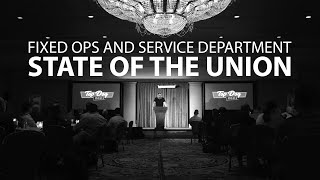
Chris Collins delivers a State of the Union–style monologue for fixed ops/service leaders reflecting on how the automotive industry and car ownership have changed. He contrasts a past era of local dealer communities, pride of ownership, and national infrastructure leadership with current trends—dealer consolidation, manufacturers changing relationships with dealers, direct-to-consumer brands bypassing dealers (Tesla, Rivian), and evolving ownership models (leases, subscriptions). Collins shares a personal anecdote about buying a Jeep pickup with cash, forming an emotional attachment, and plans to drive it for a year then give it away at Top Dog as the prize for the service manager challenge. He emphasizes human connection over digital automation (tablets) and values team storytelling in contest submissions; he announces the winner as Amanda.
Questions this video answers
Amanda
Drive it for a year and then give it away at Top Dog next year as the prize for the service manager challenge.
Chapters
I've wanted a Jeep pickup for the longest time, and I bought one. I'm gonna drive it for a year, and then at Top Dog next year, I'm gonna give it away to the winner of the service manager challenge.
I want you guys to kind of, for a second, think back to a time in our industry where things were a little simpler.
Right? Like, I think about handwritten ros. If you didn't press hard enough, it wasn't going to be on the bottom copy, right? But it was really in a lot of ways, a simpler time. And our industry was leading in manufacturing. Our industry led in technology. Our industry had a dealer body that was something special.
It was the advantage in the marketplace because you had local dealers that were a part of the community that were selling cars and trucks to the community. They were leaders. They knew everybody. If they sold somebody a car and it didn't work out, they saw them at the grocery store, they saw them at church. It was a different time, different ethics. Things meant more.
As a country. Like, just think about early on how we led the world in roads, in freeways and bridges and infrastructure. Like we. We were on the cutting edge. You think about too, like your car kind of meant something. It was freedom. It was part of your identity. It was community in a lot of ways. And people would save up their coffee can cash and they would buy a car. They would actually pay for a car and own it, right? Like, I remember my grandpa, every seven years, he would take his cash that he saved and he would go in and he would buy a new car. And then he had a plan that that car was going to last. Right.
Even when I got my first car on the weekends, you would wax and wash your car, right? You guys remember that? Like, it was something that you were proud of that you held kind of dear to yourself.
Now, as we sit here today, it's a completely different situation.
Our industry is changing at a rapid pace. The dealer groups are eating up and consolidating our industry like, you know, something we've never seen really in any other time. And the manufacturers have a completely different relationship with the dealer body. They really want to have five people sitting at a table to make decisions. They don't see the benefit in the local communities anymore. And dealerships sometimes represent more running a Best Buy or a Costco than that local community feel, in a sense, right? And so you have brands like Tesla and Rivian. They're bypassing their traditional dealer model completely.
They're paving their own road. They're going around it Completely. As we look to the future, there's less and less kids out of high school driving cars or even wanting cars. Right. I'm sure a lot of you in this room have kids that are in their 20s. They probably still live at home and they're not driving, which is terrible parenting, by the way. But it is, it is what it is. You're letting it happen. So. But it's, it's completely different. And they don't, there's no ownership. Right. It's leasing. We have, we have subscription models coming. It's a, it's a completely different thing. And I, you know, in the neighborhood I live in, I have never seen, never seen somebody wash and wax their car on the weekend. I've never seen it. It doesn't exist anymore. Nobody has that relationship with their vehicle. It's a completely different time in that sense. So then I think about this Jeep.
Like, I didn't plan on having the relationship with this Jeep that I did when I bought it. I paid cash for it. So it is, even though the company bought it, it is the first vehicle that was new that I've ever paid cash for and owned. And it surprised me that I had a different relationship with that Jeep.
Most of the new cars I've leased because of tax write offs and that sort of thing. And then we had Covid and I was living downtown at the time and the riots happened and we moved out of downtown because it was just too crazy. But I always kind of thought like, hey, this Jeep, I own it. It's my getaway. There was something about it that felt like freedom that I hadn't felt in a long time. It was special in an interesting way that I didn't expect. I have this special relationship with this truck. And now tomorrow it's going to belong to you.
You know, when I, when I drive here tomorrow, it'll be the last time I drove the truck. I was thinking about that when I drove here this morning. It just, it means something. And the truck to me represents progress and sacrifice in a lot of ways. Like it, it's values that I think maybe we lost and forgot about a while ago. The way we treat each other, the way we act, the way we do business. You know, people always say we, oh, Kris, you guys have the new stuff. We don't have the new stuff. We have the old stuff. You just think it's new because you're so disconnected from humans.
You want to talk about tablets. Like that's the question we get asked the most. Like, what do you Think about tablets. I don't care about tablets. I can connect with a customer with paper or a tablet. If you want me to use a tablet, I will. It doesn't matter. It's about that connection. We've lost those values by trying to automate everything and, you know, push everything away from the human connection. And so everyone that's entered the competition, to me, is a winner for that reason. You did something. You got outside of your comfort zone. You kind of. You paved your own path, and you weren't a sheep. You created something. You stepped out of what was comfortable and tried to do something. It's unique to you in a real way. Whether you win the truck or not, it's. It's something that you'll remember forever.
We really get to know who we are when we shoot for something bigger than us. We really do. We learn more about ourselves when we shoot for something bigger than us. This kind of brings me to my last favorite thing is when you enter the contest for the you versus you challenge, you send in pictures of you and your team holding the poster. And I can stare at those pictures forever because they tell such a story. Like, I sit there and I stare at you and your team. It isn't even about the numbers on the poster as much as it is about the story that you're telling with your team. You got a group of people together and you decided on something and you went after it and you're writing a story. Those pictures are a story of what you did together. And it really is my favorite part of the whole thing. It gets me every time. It's the first thing that I. That I want to see when. When they're turned in is I just want to see the pictures of the team and how different your teams are. And I can almost tell what part of the country you're in from. From your picture. In a. In a weird way, it's special. So you can't put a monetary value on those. Those experiences. You can't. And you. You won't. You won't ever forget them. You'll remember them forever. It means much more than anything monetary.