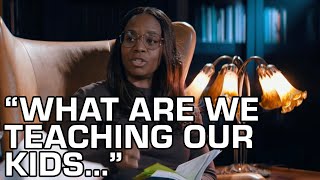
A short YouTube conversation between host Chris Collins and guest Kimberley Ann Harrison reflecting on a passage from Mildred D. Taylor. The speakers discuss the tension between keeping children safe by accepting harm and the danger of normalizing injustice—arguing that acceptance can become a default identity and that resistance is necessary. The excerpt focuses on parenting, socialization, resistance, and how repeated acceptance can shape behavior and identity.
Chapters
This time on books that changed my life. Okay. I think this is really well written, this part.
Okay.
It says, well, I just think you're spoiling those children, Mary. They got to learn how things are sometime. Maybe so said Mama, but that doesn't mean they have to accept them. That's right. And maybe we don't either.
That's right. Resistance.
But you do it. But you don't accept it.
But you don't accept it. Yeah.
What, like, what do you think about that?
I agree with it. But I also disagree with it. So I agree with it because I do understand that there are situations where you just, like, you just gotta make it home safe. But what are we teaching our kids when we say just accept that we're empowering that person to do it yet again on someone who might not be as strong, strong willed or have that home to go back to, to vent or decompress. So then what ends up happening is you have someone that would act out and then we're in an altercation. Right. So hearing that passage or hearing that quote back then and then versus now, it's wild. It's pretty wild.
Yeah. And what happens invariably, and I mean, it's just how it is, is.
When that becomes the default setting and you accept it, then.
Then that becomes the default.
That's your identity, in a sense.
Yeah. Yeah.
Which is. Yeah. The saddest part.
Yeah.
Or the hardest part to get your head around. Yeah.