This is a YouTube video titled "https://www.youtube.com/watch?v=SgpftZxtc_8" containing an interview or discussion featuring Tony Weaver. The content focuses on personal storytelling, challenges in traditional publishing, and the importance of authenticity and representation in storytelling, particularly regarding diverse voices and access to stories for vulnerable populations. The conversation highlights Tony Weaver's experiences with his works "Weirdo" and "The Uncommons."
On page 19 in here, there's a. There's an interaction between you and your dad. And he says, I didn't send you to that school to be challenged. I sent you there because I wanted you to challenge them. And you said, I wish I believed in myself like my dad does. And he said, instead of adjusting who you are to the situation, I need you to show the situation who you are. How much of that was this?
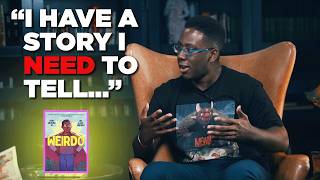
100%. That scene was very important. I think when we were doing thumbnails, we came back to that page a lot because I didn't like the composition. Because what I explained to the twins was, I said, it's very important that when he says that his face is in frame and my face is in frame, and they're like, he's in the front of the car looking at the road. You're in the backseat. We could, like, shoot from the front of the car and draw it that way, like, through the window. But that screen's gonna be there. You're gonna get the rest of the car. The background's gonna dilute it. But the shot that they decided to go with is one where he's looking up at the rear view, and you see me in the rear view, and you get this juxtaposition of my dad, who's, like, super cool, man. My dad's just cool. When I was younger, he would pick me up from school. They call him the Terminator because he has chronically dry eyes. He wears sunglasses indoors. He had to use eye drops for a while. So this, like, brolic dude in a black T shirt, his, like, biceps are rippling out with sunglasses on, is just standing there silently. And everybody's like, who's what? What child are you? Who are you here for? And he's like, the one with the Pokemon cards. That one's mine. Come on. So, like, my dad's super cool, and him believing in me as deeply as he does is something that consistently moves me forward. Prior to writing Weirdo, I was working on a series called the Uncommons. And I was really frustrated because the Uncommons felt like a really good story. And I still feel like it is. The people that have read it like it, but it wasn't picking up seem in the way that I wanted it to. And I was kind of sitting and grappling with this idea of, well, what do I do? Do I keep writing? If people aren't going to appreciate the story, then, like, what's even the point of doing all of this? But Weirdo was really my way of saying, oh, oh. You all aren't seeing what I'm attempting to do, because you're looking over here. Weirdo was the Uncommons was on Webtoon. Webtoon is a virtual app. Schools and libraries aren't looking at online webcomics. Remember what I said earlier about the economic stuff? When they send out their school supply resource list, they're not saying, and make sure Webtoon is downloaded to your student's Chromebook so that they can read the Uncommons by Tony Weaver. I said, oh, you all have such a limited view of stories and where good stories can come from that your entire infrastructure is built on the, like, 2 to 5% of authors that manage to figure out how the traditional publishing system works in order to get in your system in the first place. Like when we did a print version of the Uncommons, and even though I had an ISBN number, schools couldn't even get copies of it because since it was published by my organization, we weren't an approved vendor in their procurement system. Just to get in one school, I would have to do, like, mountains and mountains of paperwork. Whereas when Penguin, Random House or McMillan or Harper Collins publishes something right there. And I said, I don't like that. Because you know that traditional publishing is a system where diverse voices aren't always able to be heard, and yet you've gatekept act access to some of the most vulnerable populations in these stories behind this dang obstacle course. So me showing the situation who I am was me going, and you think doing that gonna keep me out, huh? Nah. But I don't play about these kids. I got a story that I need to tell. And weirdo was kind of my way of saying, I'm gonna navigate this system, but I'm gonna maintain my soul while I do it. And y' all are gonna be forced to see it. You're gonna be forced to hear the story.
And instead of adjusting who you are to the situation, I need you to show the situation who you are. Yeah, that's exactly what you did.