This 100-Year-Old Book Inspired Amy DuBois Barnett to Live Authentically
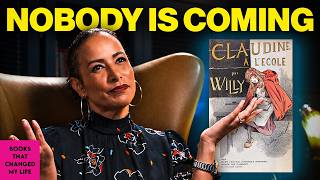
In this YouTube interview, host (Speaker B) and author Amy DuBois Barnett (Speaker A) discuss Barnett's peripatetic childhood across 13 cities on three continents, her parents' academic careers, and early exposure to reading. Barnett recounts how a French immersion school and the Claudine novels by Colette gave her permission to be independent and unapologetically female. She describes her unconventional career path: a brief stint on Wall Street, a fashion merchandising certificate, a role as an assistant buyer, an MFA in creative writing at Columbia, and a 20‑year media career culminating as fashion and beauty editor at Essence. Barnett explains the evolution of her debut novel—originally titled Sugar, later If I Ruled the World—its 1990s New York setting, its fictional protagonist Nikki, and how the book blends personal anecdotes with broader themes of misogyny, sexual violence, and Black women’s agency. She emphasizes the novel’s intentional balance of fun, sexy glamour with serious issues about the perilous era for ambitious Black women, expressing pride in its page‑turner quality while hoping readers feel inspired. Barnett shares pre‑release vulnerability, fearing criticism over authenticity and potential misrepresentation of cultural details, and reflects on the moment the book leaves her hands, becoming subject to readers’ interpretations. Throughout, she emphasizes self‑authorship, the importance of taking risks, mentoring others, and standing against all forms of discrimination. The conversation also touches on Barnett’s love of music, her tattoos, and her philosophical moment after her mother’s death that propelled her toward an authentic life.
Chapters
Who you want to be in this world? What is it that you're meant to be? To be giving back to the universe?
A lot of times we try to please others and we lose track of what we can contribute the most.
Colette was certainly a person who lived a life without boundaries and wrote about a lot of that in her books. The paradoxes of great literature are those of human nature, and Colette is nothing if not human.
Very Pankhr.
Yeah, exactly.
Let's talk about if I ruled the world. My first question. Don't you rule the world?
I find it very important to tell stories of unapologetic women who are living the lives that they devise for themselves,
not living somebody else's life.
That is exactly correct.
Okay, so then the big question is, how did Colette change your life? Please welcome to the show Amy dubois Barnett. You have a fascinating story and background. Let's just kind of start at the beginning. Where did you grow up?
So I was born in Chicago, but I've had a very anomalous and peripatetic upbringing. So I have lived in 13 cities on three continents. You know, I am from New York. That's where I spent most of my life. And that's also where I hit puberty. I feel like wherever you hit puberty is where you're from. Like, those are your formative years. So I was. I lived in New York for most of my life, but I, you know, I lived in India, I lived in France, I lived across the United States. So I have a full perspective, you know, on many different. On many different cities.
So born in Chicago. How old were you when you left Chicago?
I was 2 years old. I think my parents were doing their respective PhDs at the university of Chicago. And so I was born actually in the University of Chicago Hospital. And then they took me with them to India when I was about. I guess maybe four, now that I think about it, to do the end of their respective dissertation research. So that's why we were in India. And then when we came back, we went to Princeton, where they both became professors.
Do you have any siblings?
I have one half sister, yes.
Older or younger?
She's younger.
Younger. So do you remember the moves? Do you remember going to India?
I remember I have flashes of India because I was really young, but apparently at one point, I spoke with Tamil and Hindi. I remember the house. We had a crow catcher in the back, so there would be a backyard. I would hang out with my ayah, which was like a nanny, and she would give me coconut from this freezer that was on the ground so she would cut me pieces of coconut and we'd go out in the backyard and we'd watch the crow catcher slingshot rocks at crows to keep them away. So I have vague memories of elephants walking down the street. I don't know why it wasn't a regular occurrence. I'm confident it must have been a parade of some sort. So it's flashes like that.
What kind of kid were you?
I was athletic and bookish. You know, I was very athletic, very active, but also very geeky. You know what I mean? It took a lot of years. I had a very long. I was super cute when I was young. And then I had a really long awkward stage, you know, that had to do with braces and skin and not knowing what to do with my hair and many different things. And so during that period of time, my bookish side really kind of came to the fore.
Was it easy for you to adapt when you moved around so much? Like, was it easy for you to make friends? I.
Yes and no. You know, I mean, you move around so much, you know, you get used to being the new kid. Right, exactly. Being the new kid and, you know, and what I figured out after a while, it took me a few moves, but I figured after a while that what it does mean is you get to be a new person if you want, you know. So like a reinvention, right, Exactly. So, you know, whatever it is you want to leave behind in this place, if you're intentional about it, if you really want to have, you know, be new, you know what I mean? Like, present yourself in a different way, you can. This is an opportunity to do so. But it took me several awkward moves to realize that.
And how old were you when you read your first book?
I started reading at a really young age. I think I was around 2.
Oh, wow.
I know. I mean, it wasn't like War and Peace, you know, but I did start reading really young and my. My mom told me that, you know, I don't know, it was like a little party trip. They would like sit little me on like one of their laps and be like, here's a book, you know, because they were in academia so they can be excused for this very wonky kind of party trick. But they would put a little book in front of me and I would be like, you know, this is what they've told me. I can't speak to it myself, obviously, because I don't. My memories don't go that young. But I have heard this.
And so at a young age, did you have any concept of what you wanted to do or what your thoughts were of the future?
Interesting. I loved writing and reading above all else for my life, you know, but I was not necessarily encouraged to go into that field. You know, both of my parents were academics. You know, as I mentioned, you know, my mom eventually became president of a couple of universities. She was actually the first black woman to be president of a major research university in the country. It was the University of Houston. And she used to say to me, as I used to talk about writing, not necessarily creative writing, I was talking about journalism for a while. I was just trying to figure out where my place in this writing world would be. And I was not encouraged to do that because she felt that it wasn't really a stable field. There was a triangular field with everybody at the bottom and just a few at the top. And she was concerned for me. You know, if I had wanted to become an English professor, you know, that might have been. That might have been better. It's like the family scandal. I didn't get a PhD so that might have been sort of okay. But writing was not something that she. She really felt confident, you know, that I was going to be able to make the life that I wanted to make. And it was only after, you know, she passed away when I was 22, which is the worst thing that's ever happened to me. My mom was amazing, you know, so I don't want to give any other impression. She was an amazing human being. But it was in that moment, in that devastation, that I was able to get comfortable in my own skin and figure out for myself what I wanted from the world.
What was Dad's opinion about that? Did he share the same worry as your mom?
My dad was less constrained by some of the kind of. How do I say this? Some of the perspectives that my mom had. Because my mom is. I'm black. My mom is black, and my dad is white. And so from my mom's perspective, she was really interested in me having a stable career, something that would enable me to have a good life, enable me to make enough money, enable me to have a family, all the things that are not a foregone conclusion for African Americans in this country. My dad, you know, had a very evolved perspective, you know, around a lot of things, but he didn't have that kind of, you know, real sort of organic, you know, fear for the future. Do you know what I'm saying? So from his perspective, you know, he was just a little Bit more like do what you want, you know, But I'm my mother's child. I was for many, many years. So I listened to her more.
What. What would you say the biggest thing was that you learned from your dad?
My dad is brilliant. And I don't say that lightly. I don't say that easily. I mean, he is a fascinating person. And I learned to question from him. You know, he questions everything and he develops his own thinking on things, which is rare these days. I think most people regurgitate other people's opinions. But my dad possesses a real ability to analyze and formulate his own opinions, and his recall is amazing. I don't know how every time I'm stumped on something, I call him. He's 84. And I'm like, hey, dad, what was the blah, blah, weird random factoid? He'd be like, oh, yeah, so blah, blah, blah. And I'm like, really? But you can't. I operates your iPhone. It's really fascinating. But anyway, so yes, I learned to question and I learned to analyze. I learned to be a little skeptical, you know, I learned to not immediately respect authority, you know. You know, I think my dad probably gave a little bit of, you know, instilled a little bit of rage against the machine in me.
And that had to have helped you. Going into different situations and not assuming things in the beginning, but asking more questions and being more curious.
It gave me a lot of curiosity and it gave me an ability not just to accept things at face value, but to really want to probe a little further, to understand, you know, whether I actually believed in this thing, whether I actually respected this thing or this person. So I'm grateful to him for that. Although there are times in this life and in this society when it is much easier to be able to take things at face value and have faith in things, you know, to sort of have faith, you know, I wish I could sometimes I wish I could just have faith in the way that people, some people seem to.
Can you think of an example of that?
You know, once my mother, when my mother died, you know, I had a lot of very well meaning, very lovely people tell me that she's in a better place, you know, and that I would be seeing her eventually. And I wish. I wish I could just believe that. I do.
Yeah, me too. That's a hard one, right? It's interesting. When my grandfather died, I had somebody who worked for me that was Mormon, and he wrote me this really sweet letter that I would see my grandfather again. And I called him in my office. And I was like, pretty sure my grandpa didn't go to heaven. Wasn't. And he goes, no, what we believe is that you can pray your relatives up to heaven. And I was like, oh, wow, I hadn't heard of that. Like, I was raised in a Christian household, but I hadn't heard. It's like, pray all the different options.
How much prayer does that take exactly? What are we talking about here? Is it nightly? Is it how long? Like, what do I.
You can almost just find the thing you want, you know, Find the beliefs you want if you look long enough.
Right, exactly.
But, you know, you won't really ever know until you're dead.
And then you shuffle off this mortal coil.
Yeah. You can't come back and tell yourself.
Right.
It's funny.
Pray every night for four and a half minutes and you're gonna pray your mom, you know, I mean, who. Who knew?
So how do you end up in France? And how old are you?
How old was I in France? So I. I went to a French school when I was in Maryland, and my mom and my dad were going through a divorce. And my mom, who was at the time chair of the political science department at Howard, but she didn't have a ton of money. She was. They were trying to figure out their finances in this divorce. And she found this incredible public school. I think it was actually a system, you know, of multiple schools in Maryland that still exist. That is bilingual, that does. Immersive instruction. And so she enrolled me in French school when I was, I think, six years, five or six years old. And I was very fortunate. I had a French. I had a Parisian, actually, teacher, Madame Francis. And my entire instruction was in French. And so I was in that school from kindergarten, I think, through to 11th. No, not 11th grade until sixth grade. And that, you know, I was fluent in French when I came out of there.
It's like the perfect age. Cause you can learn as many languages as you want at that age.
Isn't it funny? It was amazing. You're such a sponge, you know, And I really came out of that place. I lost a little bit of it because I went into an English speaking school. Because we moved. One of my moves, actually, we moved from Maryland to New York. And I went to an English speaking school. And then I went. But then I went into the United Nations International School for high school. And even though it wasn't fully immersive, they did have. Obviously, because I had so many native speakers, I had very high level French instruction. So that kind of helped Me. And that was when I went to France for the first time. I lived in St. Mallow for two summers while I was at Eunice United Nations School as part of one of their exchange programs. So that was my first experience living in France.
What was that like? Like, was that scary being away from your parents and.
No.
No. You liked it?
Yeah.
So how old were you when I was 14.
14 when I went the first time.
And are you living with another family?
I was living with a family, and actually, it was hilarious. I mean, my. It's a different tie, but I went. How did I do? I flew by myself to England. A family friend met me, and we went to, like, wherever he was living in somewhere outside of London. And then, you know, it was a time when I was. I was, like, really into ska and, like, really into, like, you know, punk rock, whatever. And I was like, I have to go see Kings Road. He was like, well, have at it. So I found the bus, and I got myself on the bus and I took myself to Kings Road, and I walked up and down Kings Road and bought some neon, like, got back and, you know, took the bus back to his house. I don't remember where it was, but. Was it in London And. And then went to the ferry. I guess it was some ferry across. I can't remember what channel it was, obviously, but it was. You know, I took the ferry by myself, you know, to France, and I guess some. Obviously somebody met me, but this was all, I'm 14, you know, there's no cell phones. No, there's no cell phones. Like, good luck, you know, one voyage, you know? You know, and it was. But it was incredible. I just. I felt. I don't know, I felt very. Maybe all the moves and the kind of way I had grown up, you know, kind of prepared me for being independent in that way. And then I was in France, and it was incredible. You know, Saint Malo is a small city surrounded by. It's on the ocean, surrounded by high walls, you know, and. And you can get around by bike, you know. And there was a little kind of crew of us, and we would all just take our bikes and, like, you know, like, roll around Semalo and get cafe liegeois. And I met a little boyfriend. My fridge family actually taught me to smoke also. I swear to God, this was. I. Because I. I didn't smoke. I'm like, you know, they're like, oh, you have to learn. And so they, you know, it's good for you. Literally. They were like, here's how you Light this cigarette. I'm like, okay, this is crazy.
Did that. Did that become a habit?
You know? Yes and no. I don't have. I know, prude, but I don't have the most addictive personality. And so, yeah, I smoked on and off. Like, I was a social smoker for a bunch of years. You know, I'd be out, like, in, you know, France, like, having a smoke and, like, you know, in bars and, you know, in New York City, you know, in the 90s, whatever. But, you know, at most it was like, you know, hanging out at the club, smoking, you know. But then at some point, I gave the whole thing up because it wasn't. It wasn't that interesting.
One of the funniest things I've ever seen over there is somebody kind of running along the beach and then they stop and they have a fanny pack, and then they pull out a cigarette and start smoking. And they're, like, gorgeous.
Like, you know, but they live longer than us. So, you know, what does that tell you?
Well, do it.
Not like I'm advocating for smoking. I gave it up a long time ago. But.
But smoke after you run.
Who doesn't need a cig after you've exerted yourself like that?
Any kind of, like, things you missed about the United States when you were there? Any cultural shocks?
No, No. I love France.
You were just very adaptive.
Yeah, I love it over there. You know, when I was in college, I lived in France. I lived in Paris specifically, and feel extremely comfortable there. It's interesting. Over this past year and a half, I guess I would say I have worked from France for about three months, and I recognize that it is somehow very much of a spiritual home for me. I feel very comfortable in Paris. I just. I feel more comfortable in Paris than I do in Los Angeles. So, I don't know. I'm hoping to eventually structure a life where I live half my time. There's.
What's the best city in the world?
Paris. And I love New York. I'm sorry, I know I should say New York because it's my home, but, yeah, I would say Paris.
Yeah, that's a popular opinion. So then how does this come into your life?
Oh, my gosh. These books, you know.
Is this your original copy?
You know, I'm going to be honest with you. It isn't. But this is the version that I read in English, so I did painstakingly find the specific version that I read, and I do have this exact version. It's just I couldn't find it on my bookshelves. It is in my attic in a box. But I know that I have a slightly more worn version of this exact. More worn copy of this exact version. I started to read the Claudine books when I was young in high school. And I actually first read them in French, which was incredible, you know, and kind of life changing because it. It really started to get me into French literature, which I hadn't really been up to that point. I mean, I was a bookworm, but I was really reading in English even when I was in French school. But this. These books started to. Could really warm me to reading literature in French.
How is it different experiencing it in French versus English?
The translation is lovely, but I like the way the French structure their sentences. And it felt in French more like a consciousness I could step into. It felt a little more, I mean, obviously grounded. It's, you know, the language in which the books were written. And so, you know, there was a lyricism to it that you still find in the. In the English translation. But in French, it's just you, you, you. You are steeped in it aesthetically as. As well as linguistically, somehow.
So do, you know, did somebody introduce it to you? Or how did you. How did you come about?
That's a really good question. I really don't know. It may have been a class. I may have been assigned to read the Colorado books in a class and then was like. And just read the rest on my own. That may have been. I don't recall, but I'm grateful to whomever introduced me.
So kind of explain the series in the book for the audience. Like, what is it about?
Colette is a really interesting woman who was writing in the 1800s, I think. And that's when these books are set. And there are four of them. And it's about a sort of plucky, really smart young lady named Claudine. And Claudine is just a character that I love. You know, she is very unapologetic. She is. And this is, you know, written during a time when women were expected to move along a very particular, you know, and prescribed path, you know, where they were expected to, you know, get married and have a domestic life. And that was the future that one could hope for as a woman. And Claudine was rebellious. You know, she was very interested in her own independent thoughts. You know, the interiority in these books is incredible. Cause you get this sense of how she's thinking about the world and how anomalous it is, you know, for the time. And so, you know, the book starts out with Claudine at school where she's coming into her own and really understanding, you know, who she is as a thinker. And then it goes into Claudine in Paris, you know, where she moves to Paris and starts to really question, you know, what it is that she wants in life and whether she likes Paris, whether she, you know, how she wants to be an independent woman. And then the next book is, you know, Claudine Married. And she enters into a marriage that is at first hopeful and then ultimately disappointing. And she's able to eventually leave this marriage, you know, without judgment. And this is at a time when people. Women do not leave marriages like that. But she finds her way out of this marriage in a way that doesn't damage her self esteem. And then the last book is. Is, you know, where she enters into a friendship and she finds herself this independent woman and what that life is like for her. And, you know, these are very inspirational stories for any woman at any point in time. But certainly when you kind of understand that Claudine is really the. That's the word I'm looking for. She is. These books are like a roman acclay for Colette, the writer. And so when you understand that they're really based on her actual life, it just becomes even more inspirational to really. To process how much she moved against the tides in a time that was difficult to do.
So is there an overarching kind of lesson or message?
The message is about finding your voice and being independent and being unapologetic about your intelligence and questioning things and constructing the life that you want for yourself. This was, for me, these were deeply important messages and themes to explore at a young age.
Yeah, because most people don't think that they can create their own outcomes.
Right, right, exactly. Exactly. And it took a while for some of the. I mean, I definitely absorbed these messages at a young age and. And started thinking about my life in a different way and my intelligence in a different way and my goals in a different way. But as I became an adult and really got comfortable in my own skin, I really processed that I wanted to create the life that I wanted, not that other people told me that I should want. That's when I kind of turned back to these books and I was like, oh, that's right.
Do you remember meeting any resistance from that?
Not as an adult? You know, when I. It was when I understood that about my life and how I wanted to move through my life, it was very definitive for me. It was a very specific moment. It was almost it was one of the more religious moments I've had in my life. You know, I'll never forget it. You know, I was. It was after my mom had passed away, maybe, I don't know, six months, a year afterward. And I was wandering around my room, devastated, depressed, and I came upon this framed picture of me and my mom sitting together. We were in India, you know, sitting together on a log. And I looked at this picture and I had this revelatory moment that she wasn't coming to save me, which seems rather obvious as she was dead. But in that moment, I was like. I had this moment of like, oh, my God, my mom isn't coming to save me from this misery. She's not coming to save me. And it was this sort of terror. I was like, nobody's coming to save me, actually, nobody is coming to save me from this. And there was this terror that sort of ran through my body. And then immediately, like, this, this other thing came up. You know, I say it like that because that's what it felt like. It was like terror and then empowerment. And then I was like, well, wait a minute, wait a minute. If nobody's coming to save me, then this is that I'm saving myself. And this is my life. And it's nobody else's life. Nobody else can live this. For me, it is my life and mine alone. And it was the most deeply empowering moment of my adult. Like, all of a sudden I was like, this is my life. And in that moment, it was like a philosophical 180 for me. It shifted everything about how I think about the world, how I think about myself in the world, and how I wanted to approach creating this life that I wanted. And so, no, I did not receive any resistance to that because I was so absolutely determined in that moment to live the life that, that. That I envisioned for myself.
What, what specifically were. Were those things that you envisioned for yourself?
Well, the first thing was getting out of the job I was in. I was working in finance. I was like, well, this sucks. Look at me. The very first thing I envisioned was not working in finance. So I quit.
Were you doing that because of your mom? Like, she would be proud of that.
I kind of was. I mean, she passed away after I graduated from college. Maybe like nine months after I graduated. Maybe when I graduated from college, I got this very fancy job as an analyst on Wall Street. It was very competitive, difficult to get. And my intention at the time was to work that job for two years because it was a two year corporate analyst program. Apply to law school and then go to law school. Because law school was like the sort of repository for liberal arts, smart people who don't really know what they want in life. Right. So that was the path that I was on, and I did not like it at all. I was working on Wall street at a time. I'm going to age myself here a little bit, but at a time when women were not allowed to wear pants and we had to. Not only were we not allowed to wear pants, but we had to wear hose with our skirts. So the very first thing that I envisioned for myself was not doing that anymore. And I quit that job and I took off those hose and I got a tattoo on my ankle, and I was like, never again.
What's the tattoo?
It's actually the sun. It's a sun from the inside of my mother's favorite scarf.
Oh, wow, that's cool. So it probably always reminds you of that a little bit, right?
Yes, exactly.
So you decide, I'm not. I'm not doing that. I'm going to do something I want to do. And then what are the steps you take?
Well, I, you know, had a very kind of circuitous path to my goals. I actually. When I left my job on Wall Street, I thought for a while I wanted to work in fashion. So I got a certificate in fashion merchandising from Parsons School of Design and then became an assistant buyer for Lord and Taylor, then a department store in New York City. I realized after about a year, it's one thing to like. To like clothes, it's a whole other thing to work in fashion. And it was. It was too narrow for me. I couldn't do it. And so I left that job. And I actually, at that point was like, okay, I want to write. This is the thing that I love the most in the world, and this is what I want to do. And so I moved to Ireland, and I studied writing at UCD University College, Dublin, for a year. And while I was there, I was putting together. I put together a portfolio to apply to graduate school. And I got into Columbia's MFA program in creative writing. And, you know, came back and I was like, okay, this is what I'm going to do. I'm going to write the great American novel. Like, this is my goal. And then while I was in grad school, I needed to, you know, like, I don't know, eat and, like, you know, have shelter over my head. And so I was like, what. What am I going to do? And so I leverage my experience in fashion to working for a kind of fledgling fashion magazine and that ended up starting a career in media. You know, when I was, I won a fiction award for a short story that I wrote while I was in grad school. And the person who presented it to me was the then editor in chief of Essence magazine. And when I graduated my MFA program, she offered me a job as the fashion and beauty features editor of Essence. And that started me on a 20 year career in media that I am very, very, very, very proud of. And I was able to write a nonfiction advice book for women during that time. But I put my creative writing largely aside because I just, I didn't have the mental space to do it. And so now my debut novel is a return to a dream that I had in my 20s.
That's fun. Do you ever find yourself giving advice to people who are kind of stuck in the thing that they think they're supposed to do versus the thing that would be what they should do so
much of the time? Yes, I love mentoring women. I big sis women all the time and I love it. And I speak to and men too, women, I guess, more gravitate toward my messaging. But I've mentored a lot of different people who are living a life that is not for them, you know, that wherein, you know, where they're following somebody else's advice or moving along a path that was set out for them as opposed to a path that they created for themselves. And, you know, the question is, how do you get comfortable in your own skin and take the risks that you need to take in order to have the life that you want? And that's a whole other sort of separate lesson about fear, because I personally believe that fear equals growth, that you can't possibly become the person that you are meant to become if you don't make yourself uncomfortable, if you're not afraid, if you stay within your comfort zone, you can't possibly technically become the person, become everything that you could, could be in this life. And so I talk to people a lot about not just living a life that they envision for themselves, but also taking risks and understanding that it's in that discomfort, it's in that fear that you are growing and expanding into this greater person.
Is there like a key that unlocks that and gives them permission?
For me, it was when I got comfy in my own skin. And what that meant for me was that I processed that, you know, no one was going to love me like I love myself, which is a bit of a trite thing to say. But how I interpreted that was that if I, you know, I had better love all of me, not just the parts that I really like, but all of me that's physically, intellectually, just everything about myself, I had better love. Because you can't sort of cherry pick the things that you love about yourself. It doesn't work that way. And when you get to that point where you're like, that's true. I'm comfy in my own skin. That's for me, what gave me the permission to really start taking risks and pushing outside of, you know, what were the boundaries and parameters that had been set up for me.
That's beautiful that so many people struggle with that. And I think a lot of times we try to please others and we lose track of what we're good at or where we should be or where we can contribute the most.
That is. That's. That's exactly right. You know, it's. You know, it really helps to understand, you know, who you want to be in this world. Not just what you want to do, but how you want to contribute. You know, like, what is it that you're meant to be giving back to the universe? You know, how can you productively exist in these spaces in a way that makes the world, the universe, better once you. Once you leave. Yeah.
Can we go through some of this book?
Okay. Some of this book. Oh, okay. Who's got little.
Little highlights? So, I mean, it is kind of interesting, too, because she's talking about growing up with a sense of fitting into expectations.
Right, Right, Exactly.
Okay, let's go to the first part. I found that first tab pretty interesting.
Ooh. Colette has always been admirable for reasons that have nothing to do with political correctness. Me, a feminist, she scoffed in a 1910 interview. I'll tell you what the suffragettes deserve. The whip and the harem. She saw no contradiction between supporting conservative positions and living her life as an erotic militant in revolt against them. Better worlds and just rewards were of no more consequence to her than. Than the prospect of an afterlife. Preferring passion to goodness, she seduced her teenage stepson and neglected her only child. The paradoxes of great literature are those of human nature. And Colette is nothing if not human.
Very punk rock.
Yeah, exactly. I mean, she raged against the machine, you know, I mean, you know, I love the fact that she. The paradoxes of great literature are those of human nature. And Colette is nothing if not human. I mean, you know, she was certainly a person who had many admirable, admirable qualities. Who was very controversial, you know, who lived a life, you know, without boundaries and wrote about a lot of that in her books.
Do you want to look through some of those tabs and see if any of them resonate with you?
Age, corpulence, and unremitting pain. Geez, did we have to go? Corpulence? That seems unkind. Oh, I like this one. Tomorrow would be Sunday, no school. What a bore. It's the only place I find amusing speaking to the intellectual qualities of Claudine. I like that. Let me keep going. This is a funny line and maybe a little bit how I feel about math too. Odious suppositions and probable hypotheses that have made me refractory to arithmetic for the rest of my. My life. That's hilarious.
Were you good at math?
I didn't love it, so I didn't do that well in school at it. But actually, you know, weirdly, on my SATs, I got the exact same score in math and in English, but I didn't like it, so I didn't put any. Any time into it. So I. So, no, I was not a good math student. Maybe I could have been if I gave a crap.
Yeah, I mean, it's funny. I had a teacher when I was young tell me that I was good at math, so then I just tried harder at it. And I probably wasn't good at it, but because an adult, like, made me feel like I was, I worked harder.
Right.
And thought I was right. And if you think you are, you are.
That's you. Always you rise to me expectations. Interesting thing in life. And nobody ever told me, hey, you're good at math. So I never thought that I was. And I was like, I don't like it.
What about page 182?
Yeah. Can I read it? Should I read it now? For the wreath. Ah, how well it suited me. A little Ophelia. Hardly more than a child with those amusing dark shadows round the eyes. Yes. They used to tell me when I was little that I had a grown up person's eyes. Later it was eyes that were not quite respectable. You can't please everyone and yourself as well. I prefer to please myself. First of all. So emblematic of the greater themes of this book and how she kind of existed. She was precocious, Right. So when she was little, people said that she had a grown up person's eyes. She was observant, she was skeptical, she was questioning. She was independent. Profoundly. And later it was eyes that were not quite respectable. Right. Because that's how people judged her. They judged this sort of plucky young woman in that way, because she was all of those things. Right. And then when she says she prefers to please herself, you know, please myself, first of all, you know, that resonates with me. Absolutely. Because I think that that's not a selfish attitude. I think that it is the way that you live the life you're meant to live.
Yeah. It's interesting how much of an effect that had on you.
Really. It was. I mean, it's. You know, to this day, it's very core to my personal philosophy and how I choose to walk through the world.
Yeah. Okay, so then the big question is, how did Colette change your life?
The Complete Claudine. You know, the four different books, you know, they changed my life because when I was first reading them, I was a bit between cultures myself. You know, I had gone to French school. I was in an international school. I was black, you know, but my dad was white. I was in New York City, you know, kind of getting used to being in that environment, and I was trying to figure out who I was, you know, against all of these, you know, seeming contradictions and, you know, challenging circumstances in which, you know, I had to acclimate also as an awkward teenager. And when I read these books, I. It gave me permission, you know, it gave me permission to follow my own dreams and to be independent and to, you know, kind of be this. This anomalous young woman who didn't quite fit into anybody's box, you know, and to not be a stereotypical anything. It really gave me permission to do that. And that kind of permission followed me throughout my life, you know, through to my career in journalism and now my career as a writer, where I find it very important to tell stories of unapologetic women who are living the lives that they devise for themselves. And I'm deeply grateful, you know, to this book, for sowing the seeds for that. That philosophy.
Yeah. That's amazing. Like creating your own outcome, right?
Exactly right.
Not living somebody else's life.
That is exactly correct.
Yeah. Okay, let's. Let's talk about if I Ruled the World. And my first question was, don't you rule the world? Did you ever consider I Rule the World as the title?
No, I never considered that. I never thought about it that way. That's so funny, though. Don't I rule the world? Interesting. I mean, I don't know. I guess I. You know, I don't know. Rule is a funny word, though. You know, Do I exist In a world that is of my own making. Absolutely. Do I think that I rule it? Probably not. But, you know, that title is really, is meaningful to me, especially because it was not the first title of my debut novel when I was first writing it. And then when I picked it back up again years later, the title was Sugar, which is the name of the magazine that my protagonist eventually edits. And I liked that title because I felt it had, like, double meanings. And I felt there was also sort of a dog whistle to a particular audience. But then as I was getting closer, I was going through the edits and getting closer to publication, I realized that it didn't fully, you know, reflect the vibe of the book and the journey of my protagonist. And I wanted something that was, you know, more about what, you know, my Nikki Rose, my protagonist, is going through. And also, you know, it's a song title of a song that was incredibly popular, is still one of the best, you know, anthemic songs of hip hop by Nas. And, you know, it was. But it was very popular, rose to popularity during the era in which my book is set. And then Lauryn Hill is on the song if I Rule the World. And that's a little bit of an if, you know, you know, moment, because she was actually the very first cover subject of Honey magazine, which is a magazine where I first became an editor in chief and somewhat inspires the magazine Sugar that my protagonist eventually edits.
How long have you had the idea for this book?
I began this book when I was editor in chief of Teen People, and this is back in my 30s, and I wrote about 100 pages back then. And I initially saw the journey of my protagonist as she became editor in chief of Sugar and what that was like. But I put the book down for over a decade, for about 15 years almost. And I picked it up every now and then. I would, you know, look at it, read it every now and then. But I put it down for a long time, in part because, you know, I was in a profession where I didn't have the mental space to really work on it, but in part because the story, while I loved that part of her journey, it didn't feel urgent to me. And it was years later when I realized it wasn't just the story of a smart young woman becoming editor in chief of a magazine, but it was the story of somebody who is coming into her own voice and who is dealing with some real challenges, you know, of that era. She was contending with misogyny. She was contending with sexual violence. And she was dealing with the complexities of being an ambitious woman in industries that doesn't necessarily support that. And that became when I really understood those were the things themes of the book. Then I was like, oh my gosh. It became more urgent and I had to pick it back up and finish it.
How much of it is autobiographical?
None of it. I know it's interesting. I'm going to get this question so much and I'm stealing myself for everybody who's like, this is your story, but it's actually not my story. I did pull maybe four small anecdotes from my real life and I put them in there as little moments in the book. But the journey of my protagonist is not my journey. For example, when we meet her, she is an editor at a high end fashion magazine. And she goes from that to becoming the editor in chief of Sugar magazine. I actually went from working as a fashion and beauty editor at Essence magazine, which is a very, very different environment than Stylist, the magazine where Nikki is working when we meet her. Even though it is set in a world that I know better than almost anyone. And there are some similarities between myself and the protagonist, her particular journey and what she goes through as she becomes learns how to be a great editor in chief. None of those specific incidences happen to me.
It paints a pretty vivid picture of New York in the 90s. How important was that? And why did you feel that that needed to be done that way?
You know, I love that era. It's an era when I really cut my teeth as a woman, as a journalist, as an editor in chief. And I don't think there are that many portrayals actually, certainly in fiction of that particular era. You know, there's just, there's really very few and certainly not from the perspective of a woman who is in a position of relative power. And I wanted to offer a behind the scenes peek at this, one of the most culturally important, you know, moments, you know, of our history in this country. And I also wanted people to see. See what it was like to be a woman moving through culturally influential spaces during that era.
Yeah, it's funny that unless you live in New York, you don't understand how much New York sets the tone for the world and a lot of things.
Exactly right. You know, and, and it's a huge
pipe of culture and like, you know, publishing fashion, like so much of it is either coming from there or consumed there and made popular there.
That's exactly right. And this particular era was one in which hip hop, hip hop culture Hip hop music ruled. Ruled mainstream culture. I mean, mainstream culture and hip hop culture were basically indistinguishable at that moment. You know, you had, you know, a lot of, you know, models walking runways and like, you know, big dookie chains and durags. And, you know, it was music executives that were. That were kind of running the social scene. And you had, you know, everybody in New York City who worked in, I don't know, everybody from, you know, finance to fashion to all sorts of industries like really vying to get into these hip hop music, you know, parties. And, you know, it was just this heady time because we knew that we were creating something huge and we were watching the culture being exported internationally. And New York always exports culture internationally. But that particular moment, the music and this sort of newish culture that was being exported was so powerful. And to be in the center of that was something.
How would you explain Nikki's evolution in the book?
She goes. I mean, Nikki, I love my protagonist. She is messy. She. She's. We're going to watch her make so many mistakes along her journey, which is really important. But I feel like she's ultimately very inspirational because when we meet her, she is insecure and she's a bit of an ingenue. And she is trying to find her way and her voice and she's got these big ambitions, you know, but she doesn't really know how to exist with confidence in her own. And so we watch her as she goes from being this sort of more innocent but ambitious young woman into finding her voice and coming into her power. It's not a coming of age story, cause she's an adult when we meet her, but it's a coming of power story. And so we see her ultimately find her voice and that's when everything pulls together for her.
Won't it be interesting someday if I have somebody on here and this is the book that changed their life?
Oh my God.
It would be, wouldn't it? Can we go through some. Some sections here?
Sure.
So, same thing just highlighted.
Ah, yes. Out on the street, Lucinda paused. She didn't look up as she took a small silver case out of her bag, pulled out a cigarette, lit it, then blew a long stream of smoke into the crisp evening air. For a second it seemed as if she might be contemplating my idea. Then she took another hard drag, exhaled practically into my face, and said with finality, black girls don't sell magazines. This. Now, remember I mentioned to you that there were four sort of small moments from my life. I say four but maybe three to five small moments from my life that I put into the book, this is one of them. This actually happened to me. This was somebody that I was working for actually at that fledgling magazine where I first became an editor, where I was working when I was in grad school and I was proposing putting somebody black on the COVID And it was actually a gentleman who said this. It was a Italian man who owned this magazine. And I will never forget, we were in his office, not on the street, but, you know, he was smoking in his office, totally illegal. He didn't give a shit. And he was like, eh, me Black girls don't sell magazines. And so I. That stuck with me and I put it into my novel.
Your did your dad's challenging of authority kick in? Or how did you feel in that moment?
I felt utterly dismissed, but I wasn't yet at a point in my life where I felt confident enough to combat it. I mean, I said words, but I. I didn't say the things that I would say with 15, 20 years plus of experience after that.
Yeah, that's what I was going to ask is how would you handle that if it happened today? And it probably wouldn't happen today just because nobody would talk to you that way, but if it did, how would you handle it?
I don't know. We are in an era in which people feel very comfortable saying all sorts of things. So it's increasingly, I am thinking that we might be returning to a moment when people look at you, in your face, blow smoke at it and tell you black girls don't sell magazines. I think that today I would talk about cultural influence and I would talk about the way in which black people, Black women in particular, rally around causes and products. And the fact that when I think it was. I want to say it was Vogue when they did. I think it was Vogue, maybe it was Elle, I'm not sure. But when they did an issue highlighting all black models and it just sold out, you know, Sold out completely, you know. So I would just cite a bunch of these things, you know, to sort of calmly combat this. And that's what I'm telling you I would say. But the reality of what I would actually say is probably just a little bit more purple.
Yeah. Page 35. I love this part because it's one of the things I think I've learned is that it's better to win than be right.
Oh yes. I like this moment. Pausing the doorway, Joseph turned and said, I told you what I like and how I'd like to See, you. Either you can continue to be right all by yourself, or you can consider the possibility that not everyone around you is wrong all of the time. I love this moment. This is when my protagonist, Nikki's boyfriend at the time, Joseph, is talking to her about sort of her intractability and the fact that she's sort of inflexible and defensive in this moment. And so he's telling her about herself a little bit, you know, in a way that she can't necessarily hear at that time. But I would like to think that she absorbs.
I love that part. Page 104. And I'm asking, is this another autobiographical moment?
Should I read it first? I know my start in journalism was inauspicious at best. I acknowledged seeing her eyes crinkle at my use of one of her favorite words. One thing my mother and I shared was a love of beautiful language. No, no, this isn't. Yeah, this is not an autobiographical moment. By the time I started working in journalism, my mother had already passed away. When she. When she passed away, I was still working in finance. So some of this book is, you know, my imagining of what. I mean, this character, the mother character, is not really like my mother particularly. I mean, some small aspects of her are. But there is some imagining of what it might feel like if an extreme partial version of my mother were reacting to me going into journalism.
Okay, page 125. And you mentioned this album twice in the book, and it's one of the greatest albums ever. But most people don't know about the album.
You know, I have. So shall I read first?
Yeah.
By the time I cracked open a bottle of Pinot War on Pinot Noir on Sunday Night and popped Massive Attacks Mezzanine into my stereo, I produced a declaration of editorial independence into which I'd infused every ounce of passion I had for Sugar's audience, for my career as an editor, and for the opportunity to create a space where I belonged. You know, I mentioned music a lot in this book, and one thing I will say is that my protagonist Nikki's musical taste does reflect my own. I have very broad musical taste, and I thought it was important that she, as somebody who very much identifies as being black, very much knows she's a black woman, is organically comfortable in all of those spaces, but that she also represents something that is outside of a stereotypical box. And so that's why I mentioned her love of Led Zeppelin, which is my favorite band ever. You know, I mentioned her love of. I don't know if I say Pink Floyd. But I talk about, you know, all of these various musical genres that. That may not be sort of stereotypically black, but were, again, interesting to me to flesh out a character of somebody who is anomalous to a certain extent, but still is very, very comfortably black.
So later on in the book, you talk about Mezzanine as a top 10 desert island album.
Yes.
What are your top five desert albums? Is Mezzanine on there?
Ah, is Mezzanine on there? Yeah, actually, I guess Mezzanine will probably be on there. As I think about it. It's probably my favorite sort of trip hop album, if you will. I mean, I would definitely put, you know, Hendrix on there. A Band of Gypsies, I would put. I mean, it's. Again, I probably list some of these in the book, but I would put Stevie Wonder on there. Mine would probably be Hotter Than July. You know, I would add probably like Arrested Development or, you know, Tribe Called Quest or something. You know, one of their albums on there. You know, I mean, there's so. There's so many albums I could. I could probably Bob Marley, you know, which one? I don't know, actually. Probably like something sort of like, I don't know, mid late career. I'm blanking on the actual album names. I'm not excellent at album and song titles, actually, but probably something like mid late. I used to DJ classic reggae when I was in college. So I do have a lot of classic reggae in my library. I'm just again, blanking on the. On the. On the album title. And a lot more hip hop in there. Probably some Biggie. Probably some Nas, you know, probably some Queen Latifah. Probably some MC Light, you know, it's fun.
Okay, let's go to page 237.
Okie doke. You guys have no idea how completely absurd it is to be me right now. If I'm too aggressive, I'm an asshole. If I'm too submissive, I'm a doormat If I'm at the office too much, I'm a workaholic. If I'm at the club, I'm a party girl If I grow the business, I'm a sellout If I protect my readers and ignore the business sugar might go away. I put on my sunglasses to hide my damp eyes Am I a slut or a boss or a bookworm or somebody's? Honestly, I have no idea. And I don't know what you all want from me.
That's incredible writing. Like, what you do in that little passage is insane.
I Appreciate that this was such a moment of desperation and revelation for my protagonist, who is at this point in the book hitting an all time low. And she is being pulled in all sorts of directions. And I wanted to reflect how it felt to have everybody expecting something from her and to have her not know how to satisfy everybody and being sort of miserable in that space at the same time as she's really trying to make something happen for herself and for Sugar magazine.
Yeah, that's great writing.
Thank you.
Very, very powerful. Let's go to 274.
This is the desert island section.
No.
274. Here we go. Wait a minute. That was 269. Your convictions mean nothing if you can't maintain them in all areas of your life. And I will try to do better. Love, Nikki. A narrative device, I guess, that I use throughout the book is Nikki's editor's letter, which she calls Nikki's notes. And it's something that she kind of reinvents. You know, she reinvents the traditional editor's letter for Sugar magazine. And instead of doing the normal editor's letter, where she's like, oh, on page 55, there's a great fashion story. On page 26, there's a great beauty story. She chooses to use that page to write about her own life experiences and her own reflections. And, you know, we get a lot of interiority here. We get a lot of her, how she's experiencing, what's happening to her, you know, in the world and in this moment, you know, she is reflecting on how she is choosing to defend her vision and, you know, defend her readers. And she's regretful of the fact that she didn't defend her friends, you know, in a moment that was important. And she's recognizing the fact that she wants to walk her talk and she wants to be somebody who does what she says she's going to do. And that's what she's talking about here. When she. In this editor's letter, she's talking about how her convictions are meaningless if she doesn't maintain them all areas of her life. And she's apologizing to her friends for not having the clarity of conviction to defend them in an important moment.
What are some convictions that you fight for in your life?
You know, I am somebody who doesn't tolerate any phobias or isms relating to any community, whether that's racism, homophobia, Islamophobia, sexism, you know, discrimination against trans people. I just. I just, I don't. I don't do that. I. I will not. I cannot. And so anytime that I hear somebody talking about any group of any underserved community in a way that is discriminatory, I will pipe up immediately. Damn the consequences.
Great. Well, Amazing. I hope the book sells a ton.
I am so proud of this novel, in part because I love the way it's written. You know, I was very intentional about making sure that it was a fun and juicy page turner, but that it also addressed very serious issues that I think are important, you know, And I am proud of the fact that, you know, people will come out of reading this book, hopefully very inspired, but also having understanding of what this era was like for women. You know, that underneath the fun and the sexy glamour, you know, there was a lot of danger. And it was a very perilous time to be an ambitious woman, specifically an ambitious black woman. And I really love the fact that I was able to weave these important themes throughout the book while still making it a super, super fun read. So I can't wait for this book to be out there in the world. And I'm excited for people to meet my protagonist, Nikki, and to watch her on this really messy journey, but then come out at the end feeling inspired.
It's fun. Do you feel a little vulnerable in this between time before. Before it's out?
Oh, totally. Yes, I really do. I mean, I know it's a good book, and I am thrilled for people to read it, but I also know that it is the kind of book that could invite some haters, because it is a very specific peek behind the scenes of a very important cultural era. And so there will be some people, I imagine, who might be like, oh, it didn't happen that way, or, this is not what this particular thing looked like, or, this isn't how people talked. And, you know, I think that knowing that authenticity is so incredibly important to this culture, you know, I really. I know that I captured it, but I really hope that everybody sees it that way. And I'm a little nervous about that. And also, I'm stealing myself for everybody who's like, oh, it's your story. Cause I read about some gnarly shit in here, so I'm like, oh, my God, I'm stealing myself for that as well.
I mean, I love that moment between where, you know, it's coming out, but then when it comes out, it's not really yours anymore.
Oh, interesting. Yeah, exactly.
Because people are gonna impose their own interpretation on it. And so that's exactly. This is probably the most purest moment right now.
I know. It's coming out under two weeks.
Well, good job. Thank you. We are so excited to announce the books that Change My Life website. We made a way for you to show your book pride and that you love books. Hat. Hats, tees, hoodies. Check it out. Link in the description. Everybody needs a self help hat.







