This Book Changed How She Thinks About Living
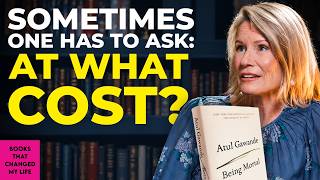
Kisa Haier, CEO of Dream Foundation, talks about granting end-of-life wishes to adults with 12 months or less to live. Atul Gawande's Being Mortal shaped how she thinks about the difference between medical care and actually living. The foundation has granted roughly 35,000 dreams over 31 years, from trips to home repairs, and the data shows that restoring agency and hope measurably improves wellbeing.
Questions this video answers
Adults age 18 and older with a life expectancy of 12 months or less who lack financial resources to fulfill their request.
On average between 600 and 1,200 per year, depending on funding.
Over 35,000 dreams served across about 31 years.
About 13 staff and approximately 1,500 volunteers nationwide.
The veterans program is about 10 years old and has served roughly 1,200 veteran dreams.
Chapters
Life's fragility is primed. People's goals and motives in their everyday lives shift completely. It's perspective, not age, that matters the most.
The thing with this book, it makes you look at a subject that you wouldn't normally want to think about, and it gives it a different perspective.
It's not about peaks, it's endings.
When you read a book, do you do tabs?
Sometimes if I'm really naughty, I'll take a highlighter.
You think highlighters are naughty? We're really naughty here then. How many industries are created because of people trying to appear younger, feel younger, people, want control? Pointing people in the direction of positivity and hope and acceptance really does change somebody's quality of life from the inside out.
Absolutely. It's not just at a point at the end of life, it's the entire human journey.
Okay, so the big question, how did Being Mortal by Atul Gawande change your life? Please welcome to the show. Kisa Haier.
Yeah.
This book kind of reminded me. Didn't remind me, but inspired another book. Have you heard of the Tibetan Book of the Dead?
I have heard of it, but I confess I have not read it.
Well, this is for you.
Thank you. Wonderful. I have an inkling what it's about.
Yeah. So this is kind of a heavy subject. And I think the thing with that book and with this book is it makes you look at a subject that you wouldn't normally want to think about and it gives it a different perspective.
Yes, I think that is very much true for this book. So I look forward to reading this. And it's very much true for just the work that we do at Dream foundation as well. And you think about end of life and difficult conversations during that time with loved ones or family ones. And oftentimes those conversations are very hard and things that you don't necessarily want to talk about. But in reading this book, it became so clear to me that they're just vitally important and really an impetus and a testament to the work that we do at Dream Foundation.
Maybe the only subject that is inevitable that you, most people don't want to talk about.
Well, absolutely. So Dr. Gawande has a quote that really resonated with me, and he says, from the moment you are born, you are advancing towards death, and it is the nature of biology. And so when you think about that and you think about mortality, as it were, it's not just at a point at the end of life, it's the entire human journey that we all face. And so for me, we think about the question arises, how can you live that life well at any point during your life? And so that's really why this book resonated with me. And it's the reason we do what we do at Dream Foundation.
Yeah, that's beautiful. Tell me a little bit about your background. Where did you grow up?
I grew up in the Bay Area, went to school in the Bay Area, lived and worked all over, and now I live in Southern California where I've raised my two children and as you said earlier, care for a parent and came to this role about 12 years ago. I'm not a doctor, I'm not a social worker. I was actually trained as an accountant. So something completely different was raising my children. Got very involved in nonprofit volunteering and it was through a mother daughter organization. I was volunteering with my daughter when she was in middle school that I first learned of Dream foundation. And they were at the time looking for an executive director. They were doing a nationwide search and I was very interested in the role as I began learning more about the organization. So I was very pleased to be appointed to the role. And I'm now the CEO. I've been there about 12 years.
So I think most people don't understand how hard nonprofits are to run.
It's so hard.
I will tell you, like, it is way easier to run a regular business maybe than a nonprofit.
You know, nonprofit is really hard because we are, are completely limited by the revenue that we receive, is how much work we can do. And with what we do, there's so much unmet need and we're very scalable, but we're limited to serving as much as we have funding for. And in times of uncertainty, that can be really hard. So, yes, it is a grind. I will tell you.
It is hard to raise money.
It is hard to raise money. I will tell you that. 100%.
I have some experience. And it is harder than just selling something, especially consistently because every year you kind of gotta go back and do it again.
It's true. It's true. The budget starts on January. We're on a calendar year. Budget starts on January 1st and start all over again.
So explain kind of what the Dream foundation does.
So we serve end of life dreams to adults. So anyone over the age of 18 with a life expectancy of 12 months or less, and they're lacking the financial resources to do whatever the request is on their own, and they can apply to us directly, or if they're already on a hospice situation, a social worker can refer Them as well. And all of the requests come entirely from the individual. So there's no menu. It's a very personal desire to have something. To have something voiced and communicated, acknowledged and then hopefully fulfilled by us.
How many would you fulfill in a year?
In a year, we average between 600 and 1200, depending on the year and the funding available. And in our history, we've served over 35,000 dreams. So we've been around for 31 years.
And what is the kind of range of requests? Requests?
They kind of fall into buckets is what I've seen. One in three of our applicants are actually younger. They have children living in the household. And so, you know, it's horribly poignant. I would say they just want to create memories for the children, something big and bold that the children will remember. So those are the types of dreams. We get a lot of theme park requests. We get a lot of maybe returning to a place that was really special to someone in their life and they want to share it with their children to create that memory or build that legacy. So that's with some of our younger dreamers. And then as they age, there's often a personal desire, sort of what I call aspect. Maybe that's meeting a personal hero, a celebrity, a political figure. Maybe it is examining, in the case of a poet or an artist. Thank you. Displaying their body of work. They want a retrospective of all of their art. And so they've asked, I'd like to pull it all together or maybe publish a book of poetry. These are all dreams that we've done that kind of come to mind. So something that's very unique and personal to that individual. And then as the recipients age, oftentimes the items, you and I might not consider them a dream, but there's something so vital to that person to alleviate suffering at the end of life. And so it could be a comfort item. It could be a lift chair to give independence or autonomy. Somebody who's not able to get up on their own and they would like to be. Or we had a woman once that was housebound. She couldn't leave her house because she uses a wheelchair and her church was across the street and she missed that socialization with her entire community. So we found someone to come in with some donated lumber to build a wheelchair ramp. And so suddenly that woman is able to leave her home and rejoin her community again. We've also had some really hard things. A bedbug eradication for someone who is bed bound. Can you imagine? So some of the things are really Quite hard and very much needed by the people. So it's a huge variety We've seen.
How many employees and volunteers do you have?
We have many volunteers. We work with about 1500 across the country who help us. We're nationwide, so we serve Dream anywhere in the US as well as Puerto Rico. And we actually have volunteers who will go and assist us and present the elements of the dream to that individual at their home, at their bedside, their hospital, wherever they are. So that's quite large, but we operate on a very small scale. We have about 13 staff and sort of consultants that help us. Mostly based out of our office in Southern California, but sort of around as well. And then we have a very active, two very active advisory boards, one for our veterans. We have a sub program for veterans. We have regional group in New York. The board of directors, all who are very dedicated and believe in the mission are super involved.
What is different for the veterans? Like, what do you see that they need?
Really an interesting group and something that we're really proud of. This year we're celebrating our 10th anniversary of the program. It's something that we launched in Washington 10 years ago. And we had always been serving veterans in our history, but we saw kind of a common theme going through the requests, and oftentimes it's revisiting an aspect of their former service. So we had a man, and we've served over probably 1200 veteran streams in our history, but one, a couple that stand out. We had a man by the name of Eddie who requested a tour of the USS Arizona at Pearl Harbor. He wanted to go back to pay his respects to his fallen comrades. And it was very meaningful, important to him, and offered him a sense of peace and closure. And that's a very reoccurring theme. And there's many ways, and it certainly varies by the individual. Closure could be achieving something or seeing someone for the last time. A bedside reunion, for instance, saying goodbye, repairing relationships, having that closure at the very end. But the veterans, sorry, got off track a little bit. There could also be other ways of revisiting service. Visiting walls, memorial walls. We get lots of requests to Washington, D.C. to see the names of their comrades again that are posted. We have replaced lost medals, lost uniforms, and then sometimes it's just reuniting family members again. And oftentimes on the veterans program, we find that the veteran will start talking about their service with their family when we start asking them questions. And maybe it's something that's been buried for a long time that they haven't really talked about. It's a difficult subject depending on when people served and what they did. And so it's something we're really proud about and trying to do. We've had World War too. And they don't have to have served during active duty. Sorry, they don't have to have served during wartime. They could be active. They could be in the Reserves and the National Guard.
So if somebody wants to get involved or donate, where should they go?
They should go to dreamfoundation.org we have a how to help. We have a donate button. It's all there. But we're always looking for volunteers. We're always looking for funding. And in addition to financial support, we rely heavily on in kind donations. So if we have a trip, for instance, we will fly the family on donated flights. It could be through the airline or individuals can donate air miles as well to us and we can use those. We will get discounted or donated every single aspect that we can, whether it's hotels, whether it's cars, sharing services, meals, and so people give us gift cards. But we also have programs with companies that offer those items and are wanting to do something philanthropically good.
So tell me a little bit about when this book came into your life.
This book, it was so serendipitous, I couldn't even really believe it. It was a bestseller right at the time when I joined Dream Foundation. And it was the first book that I had read that really explained mortality in a way that I could understand and that I could draw it back to the work that we do at Dream Foundation. And it was something in reading it, it validated and all of the things that we've been doing and we had been successfully doing for 20 years. And it became sort of just our mantra within the organization. New staff members get a copy, new board members, volunteers. He's quoted in different things that we've produced. And so it's very much. We're very much in line in that. One of the things he finds is people at the end of life aren't necessarily looking to extend their time, they're looking to improve it. And the way that Dr. Gawande walks us through in a series of examples of people, both to him, professional, maybe their patients he's treated over the time, also his family members. He has two examples of family members at the end of life. He's also mentioned some friends. It brings it in a very humanistic level that you can really respond to and understand. And his thought that people want improved time. They want to have an Element of control. They want to be able to voice what they value and how they want to spend the limited time that they have left and how they want to live well. And in a nutshell, that's exactly what we strive to do and try to bring his principles to life in the dreams that we serve every day.
So did you come across it or did somebody introduce it to you?
I honestly can't remember. It was just like I remember walking through the door and you must read this book. It's out there. So it was truly, it should be something that I remember, but it's something that everybody in our organization just absolutely is excited to know. And I think around the time, maybe about a year OR 2 Later, Dr. Gawande was involved with the PBS show called Frontline. And it was. It was on the New York Times bestseller list. He's written four other books that were also on the New York Times bestseller list. And so with that TV show, I think he really started a movement around end of life and awareness. And just to go back, you were mentioning difficult topics. I think it's people like Dr. Gawande that are bringing these topics to the forefront and exploring them in ways, hopefully. And there's a lot of different movements happening around the country about it. But it's still, I think at present a difficult topic where maybe in previous cultures and previous times it was a little more widely accepted.
Yeah. What do you think we get wrong about death here in the U.S. well.
I think it's so personal to everyone the way people respond. For instance, even just around a funeral after someone has died, there's a lot of different responses. I just experienced that with someone who was close to me who turned tragically, passed away this summer. And I really noticed the responses of the people who were there. This was with an open casket. So you can imagine it was really very difficult for some people and shocking for others and something that other people really embraced. And so that's one example. But humor, humor around death, some people think, oh, that's a bridge too far. You can't go there. You know, it's just. It's so personal. And I think oftentimes it's maybe religious. And background to some can also be an experience. As a child, I know so many people who feel they were like terrified to see an open casket in their. At some point in their childhood, maybe a great grandfather or grandfather or something. And so I think as part of our culture, we have these predispositions to be really afraid of. But I think if you really look at it as our mortality is ever changing and this is part of the human journey. Sadly, some people end a little sooner than others. But people are often surprised that we treat people from the age of 18 up. And we have young recipients, we have many that are older as well. And so looking at what we can do to make the most of the time that they have, we can't do a medical intervention. And in many times medicine is unable to help people. And in that case, that's where we come in and really try to make the most of that time so that they can live well. Throughout this process, the book kind of.
Addresses the tension between care and independence.
Yes.
What have you learned about that?
Well, I've seen it firsthand in my own family and I know people want control and I think there's a perception of losing independence. You're losing control, definitely. So I have seen that. But by asking someone what matters to you right now, that's kind of flipping the switch and giving the control back to them. And so I think those conversations and being able to just take a step away from the medical side and asking what's important? How do we want to focus Your time is really important. But loss of independence is a really hard thing. And one thing that I think was really eye opening for me, I was going through a family member had a medical emergency and his perspective on here really stood out to me as a medical kind of touch point to really understand what was happening in that with this type of medical emergency, say a broken hip for an elderly person, it's a series of small step backs that will continue to come. At each point, independence is slowly chipped away. And so how do you adjust to that for the person this is happening to and for the caregivers, frankly, because oftentimes the challenges are double fold. Those who are caring for the one person who's ill. And we definitely see that.
And so is the answer there communication and listening or what did you think?
Communication and listening and look, acknowledgement, you know, asking what is important to you? Acknowledging, yes, I understand this is important to you. And then, you know, there's organizations like us that can help if those dreams aren't possible because of the means that the people have.
Did the book change your perspective on your personal mortality?
Absolutely, absolutely. I mean, you know, I think it's very easy to compartmentalize. You know, this is the work I do. We're managing a nonprofit, we're fundraising. But then you come and you think, you know, here my personal life and my professional life are intersecting at this moment. And I have certainly found that it's opened up my awareness to be able to help friends and family. I don't get to meet as many of the patients as I would like to. Very few, in fact. But one thing that I found that was really helpful in Dr. Gawande's writing was understanding the importance of communication, because that's something that we can train all of our staff, we can train all of our board members, all of our volunteers on exactly these principles. And so that's been really helpful.
How do you think we do in Western medicine and in our country in regards to late healthcare?
I think we don't have enough conversation. I think sometimes we are intervening medically and sometimes doing too much for limited benefit for people with a terminal situation, I'm talking about. And so I think there comes a time, and we see many examples in the book where people have made a choice. I would rather accept there was a young woman that was portrayed and she was going through very aggressive interventions and she said, I would rather just accept where I spend my time with my young children than to go through in the school horribly incapacitated because of over interventions.
Yeah. Like I, I had that with my grandfather where he was terminal and they wanted to still give him chemo. And it was like, yeah. Why? It felt like it was because he had good insurance, not because.
Well, then you wonder what's the quality of life going to be at that point and how much would it buy him and is he suffering? And let's give him a moment to do what's important to him and let him make that decision. Right.
Yeah. It's interesting because it feels like it's for profit in a lot of scenarios and not about the person, which is different than how they approach it in other countries.
Yes, that could be. And I think also in modern medicine, our physicians are excellent and they are so cutting edge, but they are dealing with saving lives or prolonging them. And sometimes one has to ask, at what cost? Is that really what the patient wants at this point?
When you read a book, are you a. Do you do tabs?
I do tabs sometimes. Sometimes I dog ear. Sometimes if I'm really naughty, I'll take a highlighter.
You think highlighters are naughty? Sometimes we're really naughty here. Then we found some, you know, interesting stuff in the book that we, you know, we think is relevant and want to talk about. So they're tabbed and highlighted. I'm going to ask you to read it. And then, you know, we'll kind of talk about it. So if we could start on page nine. It's tabbed and highlighted. Oh, I love your glasses.
Those are cool peepers. Okay. You don't have to spend much time with the elderly or those with terminal illness to see how often medicine fails the people it is supposed to help. The waning days of our lives are given over to treatments that addle our brains and SAP our bodies for a sliver's chance of benefit. They are spent in institutions, nursing homes and intensive care units where regimented, anonymous routines cut us off from all the things that matter to us in life. It's really sad, isn't it? If you think about is one thing that is interesting is the concept of hospice. And hospice was started in the UK in 1967 and eventually came to the US in the 70s. And it wasn't included as a benefit until 1983 by Medicaid. And so that's when hospice officially kind of came to being here. And the concept of palliative care is a medical term and now covered under Medicaid. But I like to think of it as human dignity. And, you know, wouldn't it be so much nicer for someone to be dying at home, comfortable if they're able, if that's what they choose, rather than alone in an intensive care unit?
Okay, the Next1, page 18.
People have always lied about how old they are. Demographers call the phenomenon age heaping and have devised complex quantitative contortions to correct all of the lying and censuses. They have also noticed that during the 18th century in the United States and Europe, the direction of our lies changed. Whereas today people often underestimate their age to census takers. Studies of past censuses have revealed that they used to overstate it. The dignity of old age was something to which everyone aspired. The wise elder of the family. I think it was really wonderful. When he talks about this, he talks about his grandfather in India, how people used to come in and bow to him or stroke his feet as a gesture of honor. Really interesting. And feels the opposite here in this country now.
Yes, completely the opposite. I mean, how many industries are, you know, created because of that, because of people trying to appear younger, feel younger?
I. I have heard, and he mentions it in this book, and I just heard it from a friend recently, last week, who is in his twilight years. And he said to me, I'm invisible. And it's such a sad thing to, to. To voice that and to hear that. And I imagine for him to feel that and I think that is the way most people in this country feel after a certain age.
It's funny. It makes me think of a marketing campaign that I did once for a BMW dealership that was beat by Mercedes all the time. But the average buyer of a Mercedes is much older.
Oh, that's interesting.
And all you had to do is say that and people would want the BMW. Isn't that funny?
That's hilarious. I mean, talk about it, like, extends the automotive industry. Not just the beauty, everything.
People. People want to appear younger.
The fountain of youth.
Yeah. Okay, next one.
Oh, here he's talking about his grandmother. He says there's arguably no better time in history to be old. Modernization did not demote the elderly, it demoted the family. It gave people, the young and the old, a way of life with more liberty and control, including to be less beholden to other generations. Well, we've certainly seen a level of independence up to a certain point for the elderly. Here he's talking about the advent of retirement communities, the sun cities, and all of these places. I forget the population of a place in Florida called the Villages. It's enormous. I'm sure you've heard of it. Right.
People aspire to end up.
People aspire to that, and they want to go in while they're still independent. The joke is they want to walk through the front door. Right. And I've seen this in my own family with a family member who's gone into retirement community. And it can be a very active life. Very active life. And I think if people are able to do that and not rely on their family, there's something in this country that. That is the trend. People are aspiring to it. As you say, in other cultures, it's perfectly acceptable to have that elder in their home, take care of them, and almost expect it.
It is interesting. Like, so I'm. I'm the generation where, for the first time, parents prioritize themselves over the family and the kids.
Right. Mm.
And that definitely has been a theme since then, is like, you just, you know, even though you would have a kid, you deserve to be happy. And it's about your personal thing over the kid or the family. Where previously, like, my grandparents would have stayed together for the kids and fought like crazy, but.
Right.
It would have been about the. Or it was about the kids, in a sense. And that independence later in life does play a part, and then losing it is. Is terrible.
Even harder. I mean, some of these places are. I don't know if you've read some of the stories. They're quite Social?
Well, no, I think about that for, for my parents, like, you know, having a church or having a community and all the activities that they have in those communities keep people social. They keep them busy, keeps them engaged.
They're around like minded people experiencing the same thing. That is wonderful. I think that is not the what's happening with the kinds of patients that we're seeing. They don't have the financial means for that. And so you look at the opposite end of the financial spectrum. It's pretty dire.
And then that's where churches come in and other things, right?
Yes. And nonprofits and, you know, whether that's government assistance or nonprofits helping our volunteers, there's so many wonderful church organizations that are doing this kind of support.
So the next one on page 32 kind of plays into that too. And so while you're looking for it, I'll just say the life expectancy in the 16th century was 25 to 30. I mean, now it's 73, but there are countries that it's 80 plus, different by country.
Here we are, it says, indeed, for most of history, death was at risk at every age of life and had no obvious connection with aging at all. As Montaigne wrote, observing late 16th century life, to die of age is a rare, singular and extraordinary death and so much less natural than others. It is the last and extremist kind of dying. I mean, it seems to be flipped completely. Now you look at just general frailty or terminal conditions. But think about all the ways you could die in the 16th century.
Yeah, yeah. And now we expect to live right into our 70s or 80s.
70S plus.
Yeah, yeah. I mean, I, I know a lot of people that are in their 80s that are very functional and are thinking 100 plus.
Like, I have a family member who is 89 and is planning to live another 20 years. Yeah, yeah.
I mean, it's, I mean, I hope so. More and more common.
Yeah, yeah.
But I do think we lose perspective of how we live in a time that is, you know, as far as life expectancy and safety. If you compare it to other times in history, we're pretty lucky.
Look at the incidence of surviving childbirth, for instance. You know, think about how common or how common that was not.
And then the. So the Next one on 74 is just the, the question is like, what's the gap between caring and living?
Yeah, interesting. Do you want me to read the front passage? In a nursing home, the official aim of the institution is caring. But the idea of caring that had evolved didn't bear Any meaningful resemblance to what Alice would call living. And, you know, a regimented nursing home situation where she was bathed whether she wanted to be or not fed, whether she was hungry or not woken when it was time to wake up, wheeled out to an activity that she may not want to experience, is that living that's taking away the control. And probably. And this is. Alice is his wife's grandmother that he's sharing her experience with. And he describes her before she moved to this house as a very sprightly, fully independent woman who did everything on her own terms. And so you could imagine what a challenging transition and how struggling this was for her.
Yeah. And like, people have a hard time coming out of prison and adapting because you don't make that many decisions for yourself in prison.
Right. It's red.
It's exactly like you described. Yeah. And so it's the reverse of that as you're taking away that independence and self agency.
Self agency. And there's. I think he shares in here. And I can't remember if it was his. It was Alice or someone else. Just the person repeating every day, I just want to go home. Even though that was their home, it wasn't their concept of home. I mean, really hard.
That's really hard.
Yeah.
So then the next one is talking about a study that shows that people's preference about how to spend their time is affected by how close to death they are and how old or young.
I mean, here the passage is, when, as the researchers put it, life's fragility is primed. People's goals and motives in their everyday lives shift completely. It's perspective, not age, that matters the most. I mean, I think that's something we see. And he's talking about. He's relating it to the SARS epidemic as well as Tolstoy's Ivana Ilyich. When somebody receives a terminal diagnosis and they know that they have months, not years, left, suddenly everything shifts. Something that might have been important yesterday is no longer the thing that matters most to them. And I love. He's got a wonderful analogy in this book, the football story.
Oh, yeah. And ice cream.
Yes, but the football. How a three hour game is almost perfectly played, but the team botches the last three minutes. And the fan says the game was ruined. And he questions to the football fan, but that was such a great game. And why would you let the last three minutes be ruined? And he says, no, it's not about peaks, it's endings. Endings are important. And so even if someone has a wonderfully fulfilled Life full of joy and adventures, happy relationships, professional success, whatever it is, the end is just as important, if not more in that moment. And so perspective and thinking about in those final moments, what is the most important. And the ability to do that, I think is really crucial.
The next one just kind of is a little bit about there are people inside of the homes that want to make a difference and want to change things. Like for the example in there is they wanted to bring in pets.
I love that. Yeah.
And they're like, okay, we'll just start with the dog. And he's like, no, I'm bringing in two dogs, cats, birds, and it's all gonna change.
And it was so interesting how people just sort of were. Suddenly they had hope. They were filled with hope and joy and interests that they could do something and have look after something. And I love the story how he talks about the woman who was watching him go on the rounds to take care of the. And he said, would you like to come with me? And suddenly she goes around with him. But imagine how challenging it must have been because they had to go through a whole permitting process to get approval to have all of these animals. And at first it was like one cat would be crazy. And suddenly he's like, no, we want. What was it, 200 birds. And the residents all of a. Suddenly claimed a parakeet. And they're watching the parakeet and recording it all day. I mean, something that really sparked interest and keeping interest, I think is. Was wonderful.
And then the. So the Next1 on 124 is also talking about. There was a study where they. How's it worded? So they gave some of them. Well, they cut the group in half and they gave some of them a plant to take care of. And they had them watch something on personal responsibility. And then the other group, they had them watch something that said that the caregivers were the ones responsible and that they would water their plant for them. And the ones that had the personal responsibility were happier and lived longer.
I mean, it's so interesting. And it again comes back to independence and autonomous and feeling heard, purpose. Feeling heard, feeling valued. It doesn't surprise me at all. And I think it's wonderful that they did that.
And it's a plant.
It's a plant. Something.
Imagine if it was something human.
Let me tie this back to Dream foundation for a moment because the concept of well being and longevity we have found. When someone finds out that they are even thinking about the notion of what their dream might be, their well, being index increases dramatically.
Just the thought, oh, I can imagine of what a dream might be.
The possibility, the possibility opens up this feeling.
And so, and the attention on them.
Yes, they're heard, they're acknowledged, but the excitement that comes. And we've seen this. I mean, we have probably 35,000 examples of this. Right. But that notion of what might be possible and is this possible? And then I think our dream coordinators who actually work with the families that apply to us, like have the best jobs in the world, they get to tell them this is going to be possible and families will tell us how. The ill person has just rallied with excitement and suddenly they can take a step away from being framed by their disease and they can feel humanistic again and go back to what's important to them. We, a story comes to mind. A family who we had the privilege of meeting was a veteran and he wanted to bring his family to Washington D.C. to show them what compelled him to serve. And we contacted his senator's office and suddenly the doors to Washington opened. We had private access to all kinds of museums, Congress, and just it was an amazing trip. And the senator staff got really behind it as well. And we're so excited and our whole office was just thrilled and very sadly and this does happen, the recipient started to decline. He died the night before he was meant to go to Washington. And of course we were all devastated and we had to call the senator's office and explain to them what had happened. The staff were completely devastated as well. And his wife called back a few hours later and she said, I know you worked so hard on this, and I want to tell you that one of the last things he said to me was the very virtue of being granted this dream that he didn't even get to experience restored his faith in humanity. And that is something that has sat with me forever and thinking about that joy of having that well being sort of increase. He left this earth in a good place, a much better place than he had been before. You had this experience.
I mean, you, when you kind of toured the library, you saw that I have a lot of books on magic and mentalism and psychology.
Yeah, I noticed that whole section over there.
And that, that fascinates me. Healing fascinates me. And you know, in a lot of the, the psychology books on healing, you know, just how the mind works. And there's the, you could call it the Pygmalion effect. Are you familiar with the Pygmalion effect?
I'm familiar with the book Pygmalion So I can infer.
Well, I mean, it's a Greek myth that has kind of been adopted in different places. But he was an artist who had sworn off women. He gets this marble slab. He feels like there's something special about it, so he decides to carve his dream wife. And he falls in love with the statue. And then he asks, I think it's the goddess Athena at the time, please, you know, I know I've sworn off women, but make it real. And she does. And he lives happily ever after. But the idea is when you intentionally want something and believe in something and work towards something and you have this positive outlook, you know, you, you end up getting there. And they later have adopted it with a study that was done in the New York school system where they had these teachers and they said, hey, we can't afford to give you a raise, but what we want to do is because you're a higher performing teacher, we're going to give you students with the most potential next year. And, you know, just kind of insinuating like, these students have the most potential. And we're going to set you up.
You can do your best work with these students.
And so then they go a year with these students, and then they outperformed all the benchmarks. And then at the end they said, ends up, we picked you out of a hat. There was nothing special about you or the students. But because they believed that they were special and they were getting students with more potential, they outperformed in a way. And then there's all kinds of stuff in some of these books about how the magic of a doctor and just, you know, whether you're a psychologist or, you know, a regular family doctor, the placebo effect, from what you say, and, and it kind of is addressed in the book a little bit where they talk about, doctors overestimate how long somebody has to live. And if they have a connection with the patient in some sort of personal relationship, they will way overshoot it.
Yes.
Out of, you know, out of optimism. But I'm fascinated by how that plays into our existence, our belief. And then, you know, just the placebo effect of somebody has a degree and has credibility and then they tell you something and you're more apt for that to become true.
Or some letters after their name. Yeah, absolutely. It's really fascinating and I think it's interesting how you tie that back to the doctors. And you noted that in here, I being just overly positive, perhaps.
Yeah. And I mean, it, it is interesting. Like if you think about kids Right. Like how many kids have their trajectory, trajectory in life change because this teacher or an adult believed in them?
I mean, I think. Doesn't everyone have a story about when something changed because of one teacher? I mean, teachers have the greatest power to transform a life.
Unfortunately. No, everybody does it. But we wish they did. We wish in a sense. But it applies later in life. Right.
Previous generations had that.
But it applies later in life in the sense of, you know, what somebody gets out of volunteering and just providing like bringing your dog to a rest home or, you know, reading with somebody or just being somebody that listens and puts a positive spin on things. What a difference that makes in somebody's longevity and their quality of life. Being recognized as a human in a way.
Yeah, absolutely. And we find that the volunteers who go and visit our dream recipients stay in touch. They'll present the elements of the dream. They'll spend a few hours with them all. They stay in touch, in many cases have gone over and above and beyond and done incredible things for these recipients. And they'll write to us and say, thank you so much for this opportunity. I got more out of this than they did by giving back in this way. Yeah, yeah, absolutely.
And that's, that's the beautiful thing about being a volunteer.
And yeah, that's true.
And you, you hold a lot of power. Like the, you know, the Pygmalion effect of pointing, you know, pointing people in the direction of positivity and hope and acceptance really does change somebody's quality of life from the inside out.
Absolutely. We've had numerous social workers who will tell us they're working with a patient who has a very grim diagnosis and prognosis and they're just trying to speak with them and engage with them on some level. And again, it's this notion of a dream that will get them out of their depression and rise them up to think about the possibilities.
Yeah, I mean, I think, yeah, when you, when you were talking about just the idea of it happening changes how they feel. It's that placebo effect and completely. Yeah, it's beautiful. Let's, let's jump ahead to 183. And so this is what I thought you were talking about, but you weren't. But the chocolate ice cream in the football.
Uh huh. She told him, I need to understand how much you're willing to go through to have a shot at being alive and at what level of being alive is tolerable for you. We had this quite agonizing conversation where he said, and this totally Shocked me. Well, if I'm not able to eat chocolate ice cream and watch football and tv, then I'm willing to stay alive. I'm willing to go through a lot of pain if I have a shot at that. Down to what's important, what matters most to you at the end. And football and chocolate. I can relate. Well, maybe not on the football, but chocolate, definitely. Yeah.
I think, though, to your point earlier is it's about listening to that.
It's about listening and what's important. And this person went on to say, I never would have expected him to say that. And we've had that a couple of times on people applying for dreams. And the spouse will be like, where did this come from? I never knew you wanted to go off of a hot air or in a hot air balloon. Who knew? But you know, that's okay. It's the individual and it's. It's something they want to do well.
And presented with a different circumstance, it changes. Of course, what you want to do changes it a lot. Okay, let's jump to 249.
Okay.
And the question is, how do you try to allow someone to fulfill their dying role?
Technological society has forgotten what scholars call the dying role and its importance to people. As life approaches its end, people want to share memories, pass on wisdoms, keepsakes, settle relationships, establish their legacies, make peace with God, and ensure that those who are left behind will be okay. They want their stories on their own terms. This role is, observers argue, among life's most important for both the dying and those left behind. It's funny, when I knew that I was coming to see you today, I had marked this exact passage as something that I think is just fundamental to.
This entire book and the Dream Foundation. Right.
And exactly what we do. I mean, this was. You hit the nail on the head here, but sharing memories, passing on wisdoms, creating a legacy, all of these things happen all the time. We've had some really lovely reunion type stories, people having final goodbyes. Sometimes we will move patients in what we call an emergency dream. We'll move them in 24 hours to have a final goodbye, you know, from one part of a country to another, just to be there for those final moments. And I think that's making peace, settling relationships, these things are all crucial. And especially when there's a family involved and a caregiver and maybe children, those memories. We have one story, and I'm often asked, what's your favorite dream? Like people ask me, what's the favorite dream? You've said and for me that's impossible because they're all so special. But there is one that stands out so much. And it happened a number of years ago, seven years ago to be exact. It was a 40 year old man with glioblastoma and he had a four year old daughter named Bailey. His name was Gary. And Bailey loved to dance. And they had all these videos of the two of them dancing. She's at ballet class, she's dancing around and they've got little snippets. And so the request to us was that they wanted a movie made, a visit to Disney with a final dance in front of Sleeping Beauty's castle. And so we went down with the film crew and we filmed this movie to make to them. And the reason, even seven years later, I tear up a little bit thinking about it. The reason Gary wanted this video is he wanted it to play one day at Bailey's wedding in place of the father daughter dance. And I think that just sums up creating memories, creating a legacy more than anything you can explain. And the reason I know it was seven years ago is we just checked in with Bailey this year. She's 11, mom is doing really well, she's remarried, she's in a great situation. Bailey's doing very well. She has that video on her phone and she plays it every day. The image of her daddy and her dancing when she was 4 years old. So that is the story that I always share when people ask me, you know, in a three second, what's the most powerful dream? I think that summarizes not only this passage, but what you picked up on and what we do.
Yeah, it's good. Okay, so the big question, how did Being Mortal by Atul Gawande change your life?
It changed my life because it validated everything we do at Dream foundation professionally and personally. It helped me deal with those in my family who were getting towards the end of life and really understanding various options by looking at all of the stories and really seeing that mortality is ongoing. And it's something many of us don't want to recognize or admit to, but that's where we all are and it affects everybody. So it's a great book.
Yeah, it's good. What else are you reading right now.
I'm reading the Nurses by Kristin Hannah. Have you heard of it?
I have because my fiance is reading another one of her books and she saw you reading it in there and she wanted she going to go in there and show you.
Okay, fabulous. I wonder which one. I've read a few of hers but that's the one I'm reading right now and it's really interesting. It's about female nurses in the Vietnam War who were never officially acknowledged by the US Army. It was never acknowledged that they were actually there. And it's an account of what it was like during that time. They were very much there. They were in, you know, active combat areas. It was very good. Yeah.
What would your top five books be?
My top five?
Oh, gosh, I know that's a hard question. Well, you could take one off.
I like a lot of novels, I have to say. A Suite Francaise by Irene Nevrosky. French book. I really enjoyed that. I was a French major in school also, so kind of stuck a chord. Yeah.
What did you go to school for?
I was a dual major, finance, accounting and French. Small liberal arts school in California.
And so did you start working in an accounting firm out of school?
I did in San Francisco. It wasn't really cut out for me.
Why?
I lasted two years. Yeah, I didn't enjoy. It wasn't my chosen profession, but it was a great thing. It gave me a great understanding of reading my way through a financial statement. I can do that. It's been very helpful for working nonprofit. But it wasn't something I saw myself practicing as a public accountant for the rest of my life.
Was it the numbers or the people that you didn't enjoy?
Well, actually.
Really?
Yeah. It was kind of an interesting first gig though, I have to say, because I worked in the audit side, which sounds quite dull. We had really long hours. But then at that time, the way the firms worked is all the overtime you did, you got to take off in the summer and the non busy time. So I had some excellent extended travel in my early 20s, which I wouldn't have had another professional, especially in the US with at that time it was what, 10 days vacation a year?
I mean, the auditing is fun. You get to find all kinds of crazy stuff.
I mean, sometimes, but a lot of time it's pretty dry.
Yeah, I guess it depends. It's good. How many books will you read in a month?
Depends on the month and what's happening.
I mean, just on average.
On average, three, four.
Oh. Do you read to go to sleep or.
I try not to read to go to sleep because it keeps me awake. So I'm better on a plane. Like to read on a plane or on a Sunday afternoon, particularly in the winter. I read more in the winter when I'm less outside. I don't know why. I just sit by the Fire. A cup of tea and I'm pretty happy. I'll go on one side. Tea.
What kind of dog?
I have two.
What are they?
Golden retriever, which is what I always had. And then during the pandemic, my son, who is a huge pit bull advocate, encouraged me to get a rescue pit bull. I was terrified. We fostered this dog. I was terrified of him for three weeks. He's now my baby and the best dog we've ever owned.
Yeah, they're sweet. Yeah, bully breeds are very sweet.
Yeah, he's a good boy.
It's bad owners most of the time.
It's bad owners.
Yeah.
Yeah, it's good.
Well, thank you for doing this.
Thank you.
It was really fun. This book was incredible.
Did you enjoy it? Good.
I mean, like I said at the beginning, it's not a fun topic.
It's not a fun topic. But for me, it was very enlightening and, you know, it was really fun rereading this again now, 10 years ish later and putting it into context and just reaffirming because we talk about all of the principles, but to read all of the stories and think about them, it was a fun exercise for me to go through again. And you really chose some great passages.
Yeah, Well, I have a great team. That helps with that too. It's good. We got a little gift bag there. The tote says there's always room for one more book. What?
This is so nice of you. Thank you. And is this really for me too?
Yeah.
Thank you.
Well, it's incredible what you're doing.
Thank you.
We are so excited to announce the books that change my life website. We made a way for you to show your book pride and that you love love books. Hats, tees, hoodies. Check it out. Link in the description. Everybody needs a self help hat.







