This Book Turns Fear Into Freedom || Raegan Revord
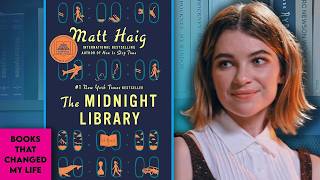
Raegan Revord discovered The Midnight Library by Matt Haig during the pandemic at 13 and credits it with helping her let go of anxiety and the need to control everything. The book's themes about regret and choice shaped her own writing, including Rules for Fake Girlfriends, which she wrote at 15 and published in September after signing with a publisher in June 2023.
Questions this video answers
15 years old.
About six months of writing; the full process from outline to release took about two and a half years.
June 2023.
Beginning of September (stated in transcript as 'this came out beginning of September this year').
Around 13–14 years old.
Chapters
This time on books that changed my life.
To fear love is to fear life. And those who fear life are already three parts dead. I was fearing life.
So you were 13?
Yes.
What is your perspective on the world at 13?
Honestly was very small because it was Covid. I was trying to control everything I wasn't living. I was just so heavy with this stress about keeping people that I love safe and trying to control every aspect to do so.
You put a lot of pressure on yourself, huh?
Oh yeah. I'm a perfectionist.
You wrote Rules for fake girlfriends at 15 years old.
A lot of times people say that a kid shouldn't do anything. Like a kid shouldn't write a book or you're overachieving or something. Kids are so creative and to limit.
That you think everything or anything is possible when you're young and then it just kind of gets chopped off and.
Everyone has their area that they shine in. And if no one is encouraging you to go for it, how are you gonna know to do that?
One reason why this is so cool, because this is gonna inspire a lot of kids that this is possible even.
If it impacts one person. That's all I want.
So, big question.
Yes.
How did the Midnight Library by Matt Haig change your life?
Oh.
We'Ve talked about.
Welcome to the Syndicatex Library where we love books, especially books that have changed lives. We got a great conversation lined up for you today. Our guest is an award winning actor, a published author and a member of the hello Sunshine Collective, here to talk about the book that changed their life. The Midnight Library by Matt Haig.
Please welcome to the show Reagan Revered. I think you're gonna have something like this someday.
Fingers crossed. That's the hope. That's my goal. I think I have like half of these, but they're all just like stuffed in places where they shouldn't be because I'm running out of room.
Yeah. So what I did is I would have the stacks and then every once in a while we would clear it out and put it in storage.
Yep.
And then I would just buy more.
It's a cycle.
Yeah. We have that thing in common where I'll go places and then I have to buy luggage to get my books that I buy home.
I. Whenever I was in London over like the winter, I had to, I bought like a Harry Potter suitcase. So it's this like ravenclaw looking like trunk. And I put all my new books in there and it felt very Harry Potter and I loved it. And I don't think I could ever buy as cool as you can see. Again, for my books.
That's fun.
It was so cool.
So this was another one that I pulled. That's kind of fun.
I'm like scared to touch them. I don't want to do anything.
It's fun. Same thing. I got that one in London.
The little page. Wait. This is so insane.
Is it just like a little circus?
Wait.
It's so cool because it's so simple. Simple, but like. It's so insane.
Yeah. Do you see the little.
Yeah. I could never imagine making that. This is so cool.
I know. And then this one, you have to read it with a mirror.
What?
Yeah. So like you. You got to do that and then it's a dental mirror to read it.
What in the world?
Hold on. How.
How do you. Whoa.
I just thought that was like the coolest thing ever.
So insane.
Nuts, right?
Come up with the craziest things.
I'm like, I don't want to do anything.
Oh, yeah, there's your gift bag, your tote bag. There's always room for one more book. So we're doing different stuff after the categories in the library. So there's like self help hats, fiction. It's pretty fun.
I love it. I love it. I love the self help hat on him. This is so fun.
I have too many of these books that changed my life. I have too many.
Was it hard to. To pick one?
It was really difficult. It was so difficult. I.
The contenders.
The contenders. Oh, I think the main one was in between Midnight Library and.
Wolfsong by TJ Klune. Love that book series. It, like the concept, if you explain it, just like a quick synopsis sounds like it wouldn't like mean a lot, but reading it, it's just so impactful. And I was so torn between picking the two. And then I think, like, I. I didn't want to go with the stereotypical like Harry Potter, but that was one of the books that got me into a book series that got me into reading. And so like that one. And then also Eragon, which is a fantasy series. That one I thought was so cool because whenever the author wrote it, he was 15. And then I started. I got my book deal when I was 15, so I thought that could have been cool. There was a lot. It was very difficult, but I thought the message of Midnight Library was probably my favorite. And I haven't really been able to have a conversation about it yet. Meanwhile, I tell everyone about all the other books. So that's how I ultimately picked this one.
It's Hard.
It's so difficult. It's like whenever someone asks what your favorite book is, like, it's impossible to pick one. It's so difficult. And it's the hardest question someone can ask me.
I think sometimes the safest thing is just to go to the first one.
Yep.
Because it's. Yeah, yeah. There's so many. And for different reasons at different times.
Exactly. Like there's always. That's always my thing, whenever I read a book, if I don't like it in the moment is like, I don't like, get rid of it, or I don't like, donate it or anything. I will put it down and I'll come back to it in a month, a year and then. Cause I feel like there's always, like a book can resonate with you at different times in your life. So even if you can't connect with one at a certain point, maybe in a year, the message of that book will mean something to you. So I give it another chance, basically. And I've had books that I gave another chance to and they became one of my favorite books.
Things change.
Things change. Exactly. You go through different things, you experience different things, you learn different things, and that can help you connect to the book.
So how long did it take you to write this?
Writing wise, like just writing the book? It took me six months. But then the whole process was probably like two and a half years. Starting from writing the outline, pitching it to my public, pitching it to publishers. And then it coming out was actually, I think it was almost exactly two years. Cause I got with my publisher June of 2023, and this came out beginning of September this year. So it was basically two years, which is crazy.
That is crazy. What is your process for writing or what was your process?
My process was so chaotic and all over the place and not a conventional writing process whatsoever. I was on set writing it, and so I would have my computer literally like tucked away. And then whenever they would say cut, I would write for a bit, like literally two minutes and then hide it right before they said action. And I would go back and forth and like have to like switch brains from like acting brain to writing brain. And it was so chaotic. And then whenever we finished filming, I got to write the rest of the book with a normal, calm writing process, which was so nice. But it did. Like, I wrote half of the book on set just in those two minute little.
Is the tone different between the first half and the second half?
I think if you. If there wasn't the editing process, it would have been the. In editing I did. I was like, I know I wrote this in two very different, like, mindsets. So I did kind of try, like, I smooth it out a little bit. But if that didn't happen, you definitely would have seen where I started writing from home in the, like, comfort and calm of, like, my room with my cat. Like, it was much different than being on set. And you definitely would have been able to tell. But I knew that you would have been able to tell. And I was like, they can't know. The people are not allowed to know. So I did, like, smooth it out.
When you were riding from home, what was your process? Did you have, like, a ritual to get in the mind?
I. I am very much like a ADHD procrastination kind of person. So it's kind of when I'm in the right, like, state. I guess I'm not the kind of person that can block out 4 hours and write 10 chapters. Could not do that. Could not be me. I envy the people who can do that. And so anytime I ever was, like, I'm gonna be productive. Like, I feel like I can be productive today. I would go in my room, have, like, a cup of tea or something. I have my cat. I put music on. I have a playlist for my book. And so I would listen to the playlist at the point that I was writing the book, because the playlist goes chronologically. So I would listen to that part of the playlist when I was writing and just do what? Like, write what I could. And that was how I wrote the rest of the book. But there was no way I could ever be, like, four hours, set an alarm. I'm gonna write this many chapters. I wish I could do that. I cannot.
Yeah, it's more fluid. Have you shared your playlist?
I mean, in the back of the book, my playlist is there, and so it isn't the entire thing because the playlist is so long. It's so long. I have two separate ones, and it's the main Rules playlist and then backup songs for Rules. And so the one that you see in the book is the ones that I thought were most beneficial or related most to the story. And I really like the songs that are in it. It's really good. I'm such a music person, so I had. I had to have.
I can't wait to check that out. What did you learn about yourself by doing this?
I think the main thing probably that I learned was going with my gut. Honestly, Whenever it's your first time Writing a book or first time doing anything, really, you have to learn to go with your gut and you have to trust your gut. But whenever it's your first time, you're kind of like, is my gut right? I don't know what I'm doing. And a lot of times you rely on other people's opinions too much and you trust their opinions too much. So it's finding, like, this gray area, like, balance of knowing that your gut knows what's right and knowing that the people who are helping you are there for your and the book's benefit. And so it's a balance because obviously you as the author, know the book better than anyone. You know the character, the plot, the story. Just, you know it so well. It's a part of you. It's your baby. And so I had to. I had to learn that because I'd never written a book before, and I had two. There was basically I. It was between writing that line as a YA or an upper middle grade, and in my mind I was like, this is a ya. Like, I know this. But then my book agent was like this. It's better to write as an upper middle grade. It's easier, be more marketable. And what he was saying made sense, and I'd never done it before. And I was like, yes, you know what's best? Even though, like, in my gut, I knew it should be ya. And so I wrote it, we sent it out, and this wasn't for rules. This was for a fantasy that I was working on that ended up making me work on rules. And the publishers that I sent it to said, it's great. The world is too complex. It should be ya. And I was like, that's when I should listen to my gut. And so it is this balance of taking the opinions and taking the tips that people give you and applying that, but then also reminding yourself that you do, as the author, know the book better.
Was there anybody that you know was a mentor or gave you advice that you cherish?
I am really lucky because I have a book club, so I know so many authors through that I've befriended so many authors. And the book community in general is just such a supportive, uplifting place. It's so insane and so amazing, and they're all just such sweethearts and so nice. So I was able to go to a lot of authors and say, hey, this is going on, or I don't know what this means. What do I do here? And they were so ready to just help and, like, be a part of the process and offer their opinion and just help you in whatever way they can. And it's so cool to see. And they're all just so nice and they care so much about each other. And I. Whenever I was first writing the book, I didn't want people to know that it was my first time writing a book. I was like, you can't know that. I've never done this before. I can't seem like I need help. I can't be confused about anything. And then eventually I was like, no, this is my first time writing a book. People are allowed to know that. And so then once I had that realization, then I allowed myself to go to author friends for help and ask questions. Veronica Bain is an author who has helped me a ton of. We both have gone through book struggles together. She's just the sweetest. Alexa Dawn. She is another author. Love her to death. Michelle Schusterman helped me write the outline for my book. She became like my writing mentor. And I would not have been able to write the outline without her. I had no idea what I was doing. And she just was such a great help to me. And she's just such a smart, intelligent person and. And just is so clever and is such an amazing writer.
You put a lot of pressure on yourself, huh?
Oh, yeah. I'm a perfectionist, so it's what we do. We're great at putting pressure on ourselves. But at the end of the day, like, I think me being a perfectionist, even though it gets in the way sometimes, was in the book's best interest because I was like this. I want this to be the best it can.
You'll put in more work.
I'll put in more work. Exactly. And so I did really give it my all, and I think it came in handy. Sometimes it doesn't, but for this, it came in handy.
Who did the COVID Do you know?
It's illustrators at my publisher. It was a such an insane experience working on the COVID I've heard so many different, like, cover stories. I love it so much. It was very much trial and error where I would, like. They would send art for the book and I'd be like, I like this. Don't like this part. Keep this element, Add more of this. And it was very collaborative. And I loved that so much because a lot of times you hear from authors that they didn't have control or input on their cover. And I wanted that so much, and I was so happy to have that. And I'm so happy with how it turned out.
Like, how could you not exactly.
How could you not? And I'm so happy with how it turned out. I love it so much. So much. And just who. The artist who did it just. She killed it. Like, it was so amazing. I. I remember. I. It was a Thursday night, and I. It was the first time I started working with her, and I told her. I was like, this is kind of what I have in mind. Thursday night, I told her that Friday morning, she had this to us.
Wow.
And it was such an insane. Just, like, it was immediately. She knew what I wanted and knew what the book needed, and it was so insane. And she sent it. And I was like, yep, that's it. You did it. Good job. That's it. It was so cool. And I love how it turned out. I'm so happy with it.
That tells a lot of the story.
Yep. And even just, like, there's little, like, things in there where, like, the. One of the hands has an infinity bracelet on it, which relates to the story. One of the hands has a ring on it, which is a really big part of the story. I'm gonna spoil something. A really big part of the story as well. And then the postcard and everything, and you see that it's London. And, like, I love. Whenever I'm reading a book and I go back and look at the COVID and there's little, like, things in there, little Easter eggs that you wouldn't have known until you read the book. And then you go back and you're like, oh, my God, this is. This. And this makes so much sense. And I really wanted that with my book. So being able to have those little surprises in there that you would only catch after, you know, the story is so fun to me because I love it. And anytime anyone's like, what do you like about the COVID I'm like, if you read the book, you'll know, because there are some things on there that's fun.
So is London your favorite city?
Oh, yeah. Yeah, 100%. I love everything about it. Couldn't tell you what it's like. It's just. There is. There is not a single thing about it I don't like. It's the people, the food, the architecture, the accents, the bookstores. Like, just everything about it I love. I always say, if I was a city, I would be London. I love it so much. I've been twice this year. I already want to go back. I love it so much.
Yeah, it's. And it's clean, and it's just kind of sophisticated and, like, it's. But still approachable.
Exactly. I say it's like a calm. It's like a calm New York, which, like, I don't know if New Yorkers would be happy with me saying that. But like, it's New York is so intense and just so like fast moving. And I think, I think London is like. It's a calm, calmer version of that, cleaner version of that. And I love it. It's such an amazing place. And the bookstores, London, like just. They have such an insane rare book, first edition, like, book scene there. That's so insane.
Totally different game there.
It's totally different game.
It's insane stuff that's so old that you can't even imagine.
I went to a bookstore there called Peter Harrington and they had like. It wasn't, I like to joke, it was a first edition odyssey. Obviously that's not what it was, but it was a first edition of the translated version and it was in this old, like, wooden binding. And then they had ones in Greek and I'm such a mythology person, I lost my mind over those. And then I got first edition signed philosopher's stone, which is like my prized possession. It's so cool. And they just have such insane books there. They have a thing there called Booksellers Row. I don't know if you've been highly recommend. And it's just this alley that's just bookstores. It's so cool there. And I will spend days just going into bookstores. I took my best friend, who was also a book lover there, it was her first time in London and I was like, so we're just doing bookstores while you're here. You don't need to see the city, you just have to see the bookstores. And we spent like two, two, three days just going into bookstores and looking at books. It was so cool.
Yeah. Even in three days, like, you can't.
You can't fit everything in. No, there's so many just small, like back alley bookstores that you would never know about unless you just wandered in and found it. And it's so cool. I love that aspect about it. And just like in London, if you see a bookstore, go in because there's going to be something cool in there. It's so fun.
Okay, you finished the book, the COVID is done, and then there's that time period between. It's final in a sense, but it hasn't been released yet. How vulnerable do you feel in between before it's released?
Once it's locked in, like once it's locked in place. Like, it's locked in, set in stone. You can't. They can't do anything with it. And so I. This is where the perfectionist thing came in, where I would see something like, oh, my God. Oh, my God. I want to fix that. I'm like, I can't. It's set in stone. I can't fix it. And one thing that I will say did help with just that, like, empty space with nothing to do was I did the audiobook. So that was a lot of fun. And it made me look at the book in a different perspective. I got to read it without a critical eye, without the author brain, like, in place. And it was so much fun to do. It was such a, like, grueling experience. It was so exhausting, but it was the most rewarding thing I've ever done. It was so insane. I had to do dialect coaching. Cause it's set in England, so I had to do all the accents and I had to do the different characters and find voices for them. But I think that's what's so much fun about doing the audiobook. As the author is. As I said earlier, you know the story so well, you know the character so well. So it's so easy almost to know what these characters sound like and know what their wants and needs are and know where they're going to put emphasis in a sentence. It's such a fun thing to be able to do as the author, because it brings them to life in a way that you wouldn't have had otherwise. It's so cool. It was such a fun system and process, and I loved it, and I hope people enjoy it.
So you were directing almost.
I basically, it was like a collaborative thing because I had a director there who would help me with it. I had never done an audiobook before or voice acting or narration or anything, so it was my first time. I was so confused. But what was great about being the author in there is instead of having to run it by the editor and the author, the director could just be like, hey, this is this. How do you feel about this? Would you want to change it? And then I'd be like, oh, yeah. And that was it. That was that. And so that was great to be able to make that decision just in that second and then not have to worry about it. But I. I loved it. It was so cool. It was so insane. And. Yeah.
Well, I'm gonna have to listen to the audiobook now. Oh, no.
Oh, no. I. I don't think I could ever listen to It. Oh, yeah, no, I would criticize it too much. I don't think I would like the accents. I've been told the accents are good. I think I'm good at doing the accents. But, like, I would critique it so much that I could not listen to it. People tell me they're listening to it. I'm like, no, I don't want to know that. I don't want to know that. It's, ah. I can't imagine listening to it, but I hope people are enjoying it.
So once it was released, what, what have you learned?
Oh, I think the thing that I've learned is someone told me this probably a month before the book came out, and I was like, oh, yeah, yeah, yeah, I know. And then didn't really think about it and then realized like, yeah, this person was right. Is after your book comes out, literally the day of, it's, you're basically jumping from being in this eye of a storm, or you jump from being in the storm to the calm. And instead of appreciating that calm and being like, I've done it, the process is over. A lot of times it's jump right to the next book, jump right to the next project. And the author that I mentioned told me that she was like, be careful, celebrate it. Don't jump to the next thing. And I was like, I will. And then the day it came out, I was like, well, what's next? I was like, no, I can't do that. Like, I had to really remind myself, like, I wrote a book, like, that's so cool. And to celebrate that. And I was really lucky that one of my best friends, the one I took to London, her older sister, had a book come out the same day as I did. So we both got to celebrate it together. And that was really nice because it was like someone else to go through the process with. We both were like, you did it. And then she was like, you did it. And it was so cool and so rewarding. But now I've jumped and I'm working on another project. But that first week I was like, take your time, be in the moment. Don't think about work stuff. Just celebrate that you did this really cool thing that you've wanted to do since you were five years old.
Has it had the impact or the impression that you wanted? Like, have people approached you?
And I, I'm such a, like low bar person where, like, if one person reads it, I'm gonna be surprised. Like, whenever I would have a book event, I was like, no one's gonna show up, no one's gonna be here. And people would. And I'd be like, oh my God, this is so cool. And so even if it impacts one person, that's all I want. I have the same mentality with my book club. People will be like, with your book club, has it reached what you want it to? And I'm like, if my book club helps one person find their favorite book or their love of reading, that's all I want, that's all I need. And I have this same with this. If someone reads the book and they figure out they love reading because of it, it might not even be their favorite book, but it might be a book that they pick up first. And they're like, this is cool. I'm in this world, I'm going to go look at other books. I'm happy because I have those books where I've picked up the book and just been like, this is so insane. I'm in the world. And it just like changes the reading mindset or scene for me. And so if I have that for one person, I'm happy. But I think it has. Hearing people talk about my book and pick up on the same things I put in there, I'm like, oh my God, you get it. Like, you know the book so well. And I've been so excited to be able to. To talk about the book of people, people who have read it and not have to like gatekeep secrets or anything and just be able to talk about what this character did and what this means and what this scene meant to this person. That's what I've wanted for so long and it's so cool. So it definitely has, like, done what I want it to do. And I'm so happy with it.
Yeah, I think too, like, you're also inspiring somebody who's young that this is possible because you're doing it so young. I mean, that's a very positive, cool thing, right? Yeah, if you see somebody do it.
Exactly.
Then it's possible. It's like the four minute mile, in a sense.
Yes.
Like, you think, oh, I'm, you know, I'm just a kid or I'm too young. And you're proof of that's just. Yeah, that's just a boundary that you can jump over.
Oh, yeah. I mean, a lot of times that our people say that a kid shouldn't do anything. Like a kid shouldn't write a book, a kid shouldn't do this cool project in school. You're overachieving or something. Kids are so creative and like imaginative. And to limit that until later in life is so insane to me because whenever you're a kid, you have this unbiased opinion and perspective of an imagination, an imagination.
Anything's possible.
Anything is possible. And it's like whenever people talk about little kids and how they have no filter, it's the exact same thing where teens or not little kids writing stories like they are writing what they're thinking and what they're imagining, what they're imagining. And it's such a cool thing. I've been writing books for my parents since I was probably five years old. And I would just write three page things and be like, read this, read this. What do you think? And I would write books on set. I would write little short stories, poems. I've always been writing. And so even though my writing has gotten better as I've gotten older, because I've practiced. It's like anything you work a muscle, it grows, it strengthens. And so. But going back whenever I was little, like, seeing that imagination in those stories, it's so crazy to me that people would limit that for other kids because so many kids have that.
And then you end up, you're in your 20s and you're just on automatic pilot, just you've surrendered to the adults in a sense.
Exactly.
Like, I remember being a kid and like, just thinking, like, hey, like, you guys seem miserable, but you're so sure that I should do it that way.
Yeah.
And like, that kind of created this, like, you know, I don't know, distrust of authority in a way, because it really, like, you think everything or anything is possible when you're young and then it just kind of gets chopped off, like piece by piece, and then you surrender and you're a drone on automatic pilot, just living somebody else's life.
Yep. No, I mean, that's like. That was the whole thing with, like, how I mentioned the book Aragon when I was little. He was 15 years old when he published the book. And that was so insane to me because I'm lucky enough where I have parents who do encourage me to write and be creative and go for what I want. But there are just people in the world who are like, you're 10, you're 15, wait, give it a few years. But it was that example where it was a 15 year old who published this incredibly successful book. I was like, if he did it, why can't I? And so I kept writing. And my whole thing is, if you're going to write anyways, if you love writing, and you're going to keep writing anyways and it's this important to you, why not try and why not put it out there and see what happens either way? Like, even if one person reads it, if you put it out there, one person reads it and it impacts them. That's cool enough.
Yeah. Also, too, just how important it is to, like, stop and like, encourage people in the areas that they shine. Because it's crazy how many kids grow up and nobody stopped to, to acknowledge anything. In a sense. Right. Like, I was lucky that I had some of that. But you talk to people and they're like, you know, what were you good at when you're a kid? And they're like, oh, I don't know. You're like, what? Like, nobody, like, was paying attention.
Yeah, I, I 100% agree. I was like, I said, I'm lucky enough where I've been surrounded by such a great, uplifting community all my life, whether it's my parents or teachers or friends or co workers, where they have always uplifted me and encouraged me to shine and go for what I did best, which was whether it was acting or writing. And I've been lucky enough that I've had that. But a lot of kids growing up don't. And it saddens me because, like, how I say, kids are so creative and everyone has their area that they shine in. And if no one is encouraging you to go for it, how are you gonna know to do that?
Yeah. Well, that's one reason why this is so cool, because this is going to inspire a lot of kids.
I hope so. That's. That's the goal. I hope so.
So, the midnight library.
Yes.
Tell me a little bit about where you grew up.
Where, Where I grew up. San Diego.
San Diego.
I'm a San Diego kid. Yeah.
Oh, wow.
I love it there. It's my favorite place.
Yeah, the weather is probably the best in the country there.
It's so nice. I'm such a, like, 60s overcast, I think, like Seattle weather. That's my kind of weather. And San Diego also is like that. It's never hot there. Like, it's never like the LA Valley, like 115 degrees hot. It's so perfect. And I loved it there. I still do. I go and visit all the time. I still have a lot of friends there. It's such an amazing place.
When you were really young, like, did you read books early?
Oh, yeah.
What else were you into?
I. I've always been like a fantasy kid that's always been What I was reading.
Any idea why?
I don't, I don't.
You know, a lot of times fantasy is like escape.
I. I think I've always loved, like I like to do. I'm still waiting on my Hogwarts letter. That's my. That's my running joke. I've always think that I. I've loved the concept that there is a world for everyone. And fantasy has that where there is literally different worlds, there's different galaxies, there's different planets. And I think that's one of the reasons that drew me to fantasy. I. One of the first, actually the first two book series that made me love reading was Eragon and Harry Potter, both fantasy. And that was kind of where it started. And I don't know what it was about them. It was just. I love the world building. Don't get me started on world building. It's my favorite thing ever. And I just. There was something about it that I was like, this is, this is for me. And I have a photo of me when I was 7 or 8 holding a Harry Potter book from the library. That was the first book I ever got from Harry Potter. And it's the coolest photo. I go back and I look at it and I'm like, this is where it started. This is all where it began. This is where my reading craziness began. And it was just like it unlocked something. And I love fantasy so much. It's definitely my favorite genre. I know I wrote a rom com, but fantasy is my fantasy, my happy place.
So did you have a lot of friends?
I had a great friend group in school because growing up in San Diego, I was in a public school up until third grade and I had such a great friend group there. And one of them actually, she was a great like illustrator. Great for like six, seven years old. That was my child standards. I don't know if I would look back now. I don't know what that would be. But when I was seven years old, I was like, she knows, she knows how to draw. And. And so I would write and she would draw the pictures for the book. And so we. I actually got banned from the library at my school because I would spend lunch and recess in there and I wouldn't go socialize with the kids. And we would just. She would draw and I would write the book. And that was what we did. And we got banned from the library. But my friend group was such big like readers and just book lovers and it was such a. I loved my friend group. I'm still in friends with a lot of them, actually. I did find out three years ago that my mother was the one who banned me from the library. It wasn't the school. Biggest betrayal ever, apparently. I have to go socialize. I don't know, man.
Tell me how mom manufactured that.
I actually don't know. I'm pretty sure she was like, reagan needs to go outside side. Because I would just read too much. I don't think. I don't. I don't think you can read too much.
So she, like, called the principal.
I. Did you call. Did you call the principal?
Yeah. Yeah.
Oh, you were. You were watching.
So Mom's saying she was a homeroom mom. She was working at the school.
Yeah.
Yeah. She knew.
Yeah, but. So I got banned from the library. But that didn't stop.
It worked out.
We would just go sit outside at the play at the playground and draw and write anyways. It didn't stop us, and we were just outside.
That's funny. And so when does this come into your life?
I want to say probably. I think I first read it when I was maybe 3, 13 or 14.
And do you see it? A bookstore? Does somebody recommend it? How does it come into your.
I'm pretty sure it was a bookstore. It pretty sure it was just super random. And I was like, this is a really cool concept. I see a book that says library on it. I'm like, oh, my God, what's this library? Right up my alley. And so I read the synopsis. Like, this is fascinating, and got it and read it and just sobbed my way through the book. It's such a good book. I love it so much. It's probably top five books for me.
So you were 13.
13 or 14 around. Yeah.
What is your perspective on the world at 13?
My perspective. The world at 13, honestly, was very small because it was Covid. And so it was mid quarantine, mid pandemic, and I had my circle, and that was it. And you couldn't, like, go out and do things. It was very small, very isolated. And this book literally explores every aspect of the world, because the whole thing is, you see the different lives Nora, who's the main character, could have had if she had made this choice. So you see her in Alaska. You see her in England. You see her different places. And that was so cool to me as a teenager who was stuck inside.
And stuck at home and maybe a little scared. Like, Covid was kind of like the unknown in a way.
Exactly. And I think this book deals with the unknown so beautifully. And so well. And that's what. What drew me to it was it opened up these doors that as a 13 year old stuck inside in a pandemic, couldn't go see and I could read about it. So that's why one of the reasons I loved it so much.
And so you identified with Nora.
I think the main thing with this book is it deals with like second guessing and regret because the whole thing is Nora is in a place in her life where she wishes she'd done other things. She wishes she had made this choice or gone down this career path. And she feels like stuck in a place, which is how Covid was. You were literally stuck in a place. And she wishes she had done this and done that. But I think the thing that you take away from this book that's so important is that even if you second guess this or that or you wish you had this life, it's not that yours isn't perfect, it's just different from that. And so it's seeing the beauty in what you have in that life and not. I wish I'd gone off and done this. I wish I'd made this choice. And I loved that about the book.
Do you believe that aspects of life are predestined, like you have fate or do you believe that you're writing the story as you go?
I feel like I believe that you are kind of writing the story as you go. I think it's scary to think, like, no matter what, this is gonna happen. This is written for you. And so I do like the idea that you do get to make this path for you. One thing I like about this book is it's not either or it's not it's written for you or you're writing it yourself. It's just that whenever you make a decision, it becomes kind of an alternate you. And so Nora makes this decision to go and follow this life path. And that's current Nora. And then in the book she sees different Noras. If she had done this. And that's kind of what I like. I like that idea that it's not you're like on your own writing the story or it's already written for you. It's just that it's like branches basically going off and following different routes depending on what you choose.
Yeah, I think that goes back to what we were talking about earlier, is the older you get, a lot of times people just kind of have learned helplessness and they. They start to externalize control to like a fate or luck, and they give up on themselves. And it becomes very fatalistic in a sense, because if you don't, if you're not writing your own story and somebody else is writing it, then you're always at the mercy of some unknown thing which can create a lot of psychosis because you're like, is it God? Is it luck? What? You know, what is it? Right?
Ye. I mean, that's where she's at, where she is like kind of just floating along. And it is kind of this thing of like nothing is really happening in her life and it's really. It weighs her down. And once again, this goes back to the pandemic where nothing was happening. And I think I found the book at like the perfect time because it was like I had like, I had such bad anxiety about like the pandemic and going back to work especially and getting my co workers sick and stuff. And this book deals with mental health in such a beautiful way. And so I thought it was just like the book found me such a good time. I love the book so much. And Nora is just such a relatable character that I think everyone can see themselves in and everyone in their life experiences a point where nothing's really happening and they're kind of stuck and they're kind of floating along like she is. And instead of seeing that as the worst case scenario, you can almost find the beauty in it and just going with it and just going with the flow and floating along. And I do really like that about this book.
So when you were kind of feeling that anxiety and that pressure and confusion and you decide to just kind of go along with the flow, what changes, like, what changes in how you see things?
I think the main thing was I was trying to control the circumstances.
You're a perfectionist.
Because I'm a perfectionist. Shocker. Make it drop.
If you want things to go well, you gotta control em.
Exactly.
You can't trust old Joe down the street.
Exactly. And so I was so like, with like going to the store, I was so careful about that. We had people on our show who were older who have health issues. And there was one time where mid pandemic we'd been back to work and my mom had to go to the store and she's like, do you want to go in? And I had a full panic attack. I was like, I can't cl if I go in and I get sick and I bring it back to set and then this person dies because of it. And I. I was like very. It was very heavy on my shoulders.
It's very real with that mom. It's very real.
Yeah. And that's not anything anyone, let alone a 13 year old should be panicked about is having this. The weight of someone's life on their shoulders. And so I kind of had to. This book helped me realize like just going with it, like obviously not doing whatever and not trying to keep people safe, but not trying to control every single element because that was honestly making me more stressed. Because if I was trying to control every single element and one element went astray, I lost it and I was like, like panicked about it. And this helped me realize, like, you can control what you can control, but the rest of it, you just have to leave.
And I love that that that book helped me with that.
And so once you made that decision, what changed about the way you felt?
I was just less panicked. I was less. I genuinely felt lighter. Which sounds crazy.
No, it makes sense.
I was just so heavy with this stress about keeping people that I love safe and trying to control every aspect to do so. And once I kind of realized that, it really helped me literally just feel lighter and just feel not weighed down by this burden that the pandemic brought.
Yeah. And you're not. You're not a relinquishing responsibility. You're still making smart decisions, right?
Yes.
You're just not obsessing about it. Yeah, yeah.
That was the thing was I was obsessive about it where everything had to be perfect, everything had to be controlled. Perfectionist. And once I realized that, I was able to relax a bit, which 13 year old me really needed.
Oh yeah.
It was a crazy time.
Crazy time.
Let's start on page 36. There's a little highlighted part there. And my question is, what does love mean to you and why do some people fear it?
Bertrand Russell wrote that to fear love is to fear life. And those who fear life are already three parts dead. I love that quote so much. That was one of the ones like how I was saying that was a quote in this book that just like helped so much because I was fearing life and cause like I was so afraid to go out and live in a safe way, obviously with the pandemic, but. Cause I was trying to control everything. I wasn't living even in like our small bubble. And this quote especially sticks out to me.
What does love mean to you?
Besides the obvious. But for me it's like being there for someone, it's not just like a romantic thing, but like I'm such a found family person. And so for my friends especially, it's just being there for someone. It's like a quiet presence where it's not so much telling the person, but small actions. If a person I know has a headache or something, I'll bring, like, pains, like a pain relief for them. It's stuff like that where it's the quiet consideration for a person that shows love.
Why do you think people are afraid of love?
I think it. Honestly, it's the obvious where if you love someone and you give, like, that part of your heart to them, there's always a chance that you won't receive it back. Even if it's romantic or with a friend or a family or anything. I think it's that, like, if you dedicate your, like, a part of you to this person and they betray that, not even betray that, but they don't even show it back, that that's hurting you, you know? So it seems very obvious because that is what it is. It's like unrequited love. But I think that's what's so scary about it, is it's so vulnerable.
Yeah. Also, you have to give it to get it.
Yeah.
What do you think about the notion of you have to like yourself or love yourself in order to love somebody else in a way? Like, you have to. There has to be some sort of peace.
Yeah.
And the less peace you have, the more it seems like people keep score where it's not really love, it's a ransom note. It's like, I'm going to do this for you, but I expect this in return.
Yeah.
Where real. I think real love probably is a little more selfless.
Real love is definitely selfless. I have so many friends where, like, it's just like my best friend, he's like my soulmate. Like a platonic soulmate. Like, we're the same person. And it's just like that. Like, I just love him so deep, deeply. And if he ever needed anything, I would be there and I would not expect anything in return. And that's how it. Like, that's how, like you said, it's not a ransom note.
You're not keeping score.
You're not keeping score. Exactly. It's just if you need in there. And that's what is, like, so important to me.
That's Great. Okay. Page 83.
Well, that you can choose choices but not outcomes. But I stand by what I said. It was a good choice. It just wasn't a desired outcome. Love. That. That kind of goes back to how we were talking about fate and, like, it being written. Like, I think that really like that.
You can be okay with it.
Yeah.
And it's a learning experience. Like, you learn something. It wasn't for nothing, right?
Yeah. I mean, this whole book is about how Nora would choose something in her life, and you obviously don't know. It's kind of like the butterfly effect. You do something, you don't know what's going to happen. You don't know where that's going to go. But you can't not make a choice in life, no matter what, you're always going to choose something, even if you choose not to do anything.
Yeah. The most dangerous thing would be to be indifferent.
Yeah. Some good quotes you guys are picking. I love these quotes.
Cats are too disobedient, he said, sounding like the brothers. He remembered dogs another place. Disobedience is the true foundation of liberty. The obedient must be slaves. He looked perplexed. Where did that come from? Is that a quote? Yeah. Henry David Thoreau. You know, my favorite philosopher.
Cats or dogs?
Cats.
Dogs.
Cats.
Dogs.
I have a black cat who's the sweetest angel.
Show everybody your water bottle. There's no guessing where your loyalties are.
If I said dogs with this next to me, that would have been crazy.
Yeah. I mean, have you ever had.
Oh, my God. And my phone case.
Have you ever had a dog?
I have four dogs.
Oh, okay.
Yeah.
So you just have a preference, but you still love dogs?
Oh, I love dogs. I have had dogs since I was five years old. I have a dog myself. I have a dog and a cat. My parents have three dogs. I. I don't know what it is about cats. I just, like. They're so funny to me. I will sit for hours and just watch my cat just do anything. She's so fascinating to me, and you can just see, like, thoughts just going through her mind, and she's just so insane. Her name's Cersei, like Greek mythology. She's so crazy. She's very aptly named because she is the kind of cat that would turn men into pigs. She would do it. I love her to death. She's so chaotic and just so fascinating to me.
Is she a hunter?
Yes. She's not the best at it, but she tries.
It's in there.
There's a fly in my room. She's stalking it. She's so funny. I love her.
Okay, go to 149.
Humans are fundamentally limited, generalizing creatures living on autopilot who straighten out curved streets in their minds, which explains why they get lost all the time. I love that who straighten out curved streets in their minds is such a good sentence.
What does that mean to you?
I think it means to me always trying to fix something. This sentence is, like, very much like. If you think about, like, how OCD could be, that's kind of how it is to me. That's just my opinion, though. That might not be how people perceive it, but that's how I'm.
Yeah. You know, I find myself in situations sometimes where somebody will ask me, like, hey, I wrote a book. Will you. Will you read it? And then they don't really mean, hey, tell me.
They want me to just say it's good.
Yeah.
And so, like, I spend all this time, like, trying to help them.
Yeah.
And then that's never what they wanted. And I. I have to really. Like, I'm. I'm always trying to fix stuff, like design stuff. Like, I hate bad design. I hate. Like, it just drives me crazy. And people aren't asking for that.
People aren't? No.
So it means a lot when I create something. Like, I'm going to control the design, but I have to be aware that I'm always straightening stuff out. And everybody is. They want you to just tell. They want you to just validate that it's okay.
Yep.
Because they're shooting for okay. Where I'm like. I'm like, well, how good could we make it if we wanted to?
I have a friend who. She always says, do you want me to listen or do you want advice? And that's how this feels where it's like, sometimes people just want to talk, and they just need.
They just want a friend.
They just want a friend. And then sometimes they're looking for advice, and they're looking for a solution and looking for an answer. But then sometimes they just need someone to just hear what they're saying. And like you said, just say, that's great. And I love that she says that because it gives you the option between what kind of person you are. And I love that.
Yeah. It just depends on where you're at in that moment. You might just need the friend.
Exactly. You might see the friend, and you might need the person who's just listening.
Okay. 179.
I think it is easy to imagine there are easier paths, she said, realizing something for the first time. But maybe there are no easy paths. There are just paths. That sentence summarizes this book entirely. Like, I do think, like, sometimes a path might be viewed as easier because you're a billionaire or something, or you don't have this hard of a life or something. But everyone's gonna have struggles and everyone's gonna have things that they go through. And that's what this book is about, is Nora is seeing these other lives where conventionally that's an easier life, but then whenever she's living it, she's realizing this other me has these struggles that I don't have. This other me goes through this that I don't understand. And it's slowly teaching her that, like she said, there are just paths. They're different. People go through different things, but each, Nora is going through a different thing. And I love that. I love that there are just paths.
It makes me think of the study on the key to happiness. So there was like a 20 year study, actually, London University did it. And what they found was that the key to happiness wasn't money. It wasn't any of that. It was your expectations. And so if you expect things to be easy and they're not, you're unhappy. Like, if you think about most of the times you've been unhappy, it was because you expected something and it didn't happen the way you wanted it to. Right. So a lot of people go through life wishing it would be easy, but their expectation is often. And what's great is you control your expectation if you want to. So, like, you know, I'll have friends that'll start a business and I'll tell them, like, hey, I'm just gonna tell you right now, no matter how positive you are about this, six months from now, you're going to run out of money. A year from now, you're going to get sued. Like, you have to expect it is going to be hard or you won't make it. Most of the time, people don't make it because they're expecting to get lucky or expecting it to be easy or they're modeling, like, their perception of other people. Like you said, they look on the outside and like, oh, they have it so easy. And it's like, no, they're making it look easy, but you have no idea what's happening.
Yeah.
Like when I was asking you about writing the book, like, I know you gave a piece of your soul to write this.
Oh, yeah.
But nobody, nobody would really understand that. Yeah, but there's no way you did this and you didn't give a piece of your soul because it's why most people can't write a book. It's hard.
Yeah.
And it's vulnerable.
And it's work, it's creating music. It. You have to be so vulnerable. With others and with yourself.
Like, you gotta be honest.
You have to be honest. You can't whenever, like if you're writing a song or if you're writing a poem or if you're writing a book, you have to be so honest with yourself to get in touch with what you're trying to say, because you can tell if what you're saying isn't truthful. And not that you're lying to the world, but if you're lying to yourself about something. So you do have to be so open and vulnerable about it and realize a lot of stuff about yourself whilst you're making art.
And that's the kind of the key to being authentic, really.
Yep.
You have to be vulnerable.
Exactly. Authenticity is vulnerability.
So what do you think about that? Expectations that the key to happiness is low expectations.
I think it's not being an optimist or like a pessimist. I think it's really just that you have to be aware that even if, like you said, you do know someone who makes a business and even if you do end up with it being hugely successful in the early days and going about it, you have to be aware that you're being vulnerable with something and you're taking a chance. And there's a risk. There's always going to be a risk whenever you do something like that. There was a risk when I wrote the book and. But I also think the only, like, you can't get through life with being a pessimist. And you have to keep in mind this hope because hope is what drives you. And so if you're just being a pessimist, like, if you're just being a pessimist about it and just saying this, this is going to end badly. It's not going to go anywhere because you have to have hope for it. So it's a balance between being aware it might end up badly but also having hope that it won't.
I think the. The thing is, is, like, you got to be optimistic.
Yep.
You have to have like a, you know, a star that, that you believe in. But you have to expect it to be hard.
Yes.
And also, like, you have to have low expectations of others and high of yourself. But most of the. Most of my unhappiness comes from other people not meeting an expectation that I assumed.
Yeah.
Would happen. And so if you don't assume and you know, you just, you. It makes you work harder and have more of an attention to detail to cover not having that disappointment. But if you accept that it's way funner it's just. If it's just accepting that it's hard, I guess not expecting it to be easy.
Exactly.
That's what I've figured out.
I agree with that.
I'm still, you know, people still disappoint me, though.
She. She realized that she hadn't tried to end her life because she was miserable, but because she had managed to convince herself that there was no way out of her misery. That, she supposed was the basis of depression as well as the difference between fear and despair. Fear was when you wandered into a cellar and worried that the door would close shut. Despair was when the door closed and locked behind you. Oh, that's good. Matt Hagman, he knows how to write a book. I very much agree with that. Fear is like the anticip. Anticipation for something. Despair is when that thing happened and what you're going to do to get out of it. And I love that.
It's great.
I don't ever, like, tag my books, but I'm loving this.
Oh, you're not a.
My book has to be so clean. I don't write in books. I wish I could. It looks so cool. People do, but I don't know. I'm. I can't. Like, my book has to be so clean. I can't highlight anything.
I love that. I can go back and just jump in anywhere and just kind of remember.
That's true.
I love that. I also love getting books that somebody else highlighted in reading.
I would like that.
What they thought was interesting first.
What I think is interesting, I definitely think I would like receiving that someone else has put in a book. But I don't think I could do that to my own book. But if anyone was to send me a book with, like, their thoughts in it, I think that would be cool.
Yeah.
This one says it's not what you look at that matters, it's what you see. Ooh. I think that is just really talking about how if you look for something that's not important, but it's just what you experience. That's how I was saying, kind of going with the flow and relaxing. I think that's what that is to me, that's how I read that.
Is it perspective?
I think it's perspective. I definitely, throughout this book, she sees so many different perspectives. And that's also what I love about books and stories in general is that's also how you see different people's perspectives, how you step into other people's shoes is you read a book through someone else's eyes and you see that life and that story playing out. So that's what I love about stories as well, is that it is a perspective thing. But I do agree with that, that it is a perspective thing.
Isn't he, in a sense, disassociating.
The reader because he's giving them different storylines and so you're not married. There isn't just one, there's a bunch. And then that disassociates you in a sense. And if you can disassociate a little bit, you're not in it.
Yeah.
You can see it as a bigger story, not just the moment.
Hundred percent. You definitely see it as this big picture instead of how you said the one moment that you're reading, you can compare it to the different stories and lives that play out in this.
Yeah, that's. It's really smart the way that he kind of does that in the. Okay. 277.
277.
This. The whole page.
I don't know. Do you want to read that or do you just want to explain it?
I can read the whole page.
So it's her, is it? Facebook post before she tried to kill herself.
Yeah. This is what she posted. Yeah. Things I have Learned, written by a Nobody has been everybody. It is easy to mourn the lives we aren't living. Easy to wish we developed other talents, said yes to different offers. Easy to wish we worked harder, loved better, handled our finances more astutely, been more popular, stayed in the band, gone to Australia, said yes to the coffee or done more bloody yoga. It takes no effort to miss the friends we didn't make and the work we didn't do and the people we didn't marry and the children we didn't have. It is not difficult to see yourself through the lens of other people and to wish you were all the different kaleidoscopic versions of you they wanted you to be. It is easy to regret and keep regretting ad infinitum until our time runs out. But it is not the lives we regret not living that are the real problem. It is the regret itself. It's the regret that makes us shrivel and wither and feel like our own and other people's worst enemy. We can't tell if any of those other versions would have been better or worse. Those lives are happening, it is true, but you are happening as well. And that is the happening we have to focus on. Of course, we can't visit every place or meet every person or do every job. Yet most of what we feel in any life is still available. We don't have to play every game to know what winning feels like. We don't have to hear every piece of music in the world to understand music. We don't have to have tried every variety of grape from every vineyard to know the pleasure of wine. Love and laughter and fear and pain are universal currencies. We just have to close our eyes and savor the taste of the drink in front of us and listen to the song as it plays. We are as completely and utterly alive as we are in any other life and have access to the same emotional spectrum. We only need to be one person. We only need to feel one existence. We don't have to do everything in order to be everything, because we are already infinite. While we are alive, we always contain a future of multifarious possibility. So let's be kind to the people in our own existence. Let's occasionally look up from the spot in which we are. Because wherever we happen to be standing, the sky above goes on forever. Yesterday I knew I had no future. And. And that is impossible for me to accept my life as it is now. And yet today, that same messy life seems full of hope, potential. The impossible, I suppose, happens via living.
I love that.
Do you remember reading it the first time?
I do.
What were you thinking?
I was thinking about the beginning of the book. Because reading this is such.
It almost is like reading something written by a different person. Because in the beginning of the book, it's obviously told through Nora's perspective. And the beginning of the book is such this, like, hopeless, heavy, weighted down feel. It feels like a rainy weather situation and it's so heavy and dark. And then this one. There is just so much hope. And that's what she said. And yet today, that same messy life seems full of hope, potential. And that's what you get from this, is that through the midnight library and through her experiencing all these different lives and all the different things she could have been and could have done, she sees so much hope in what her life is now. And I think that was what was just so cool to me is that in the beginning there wasn't any hope. She experiences this and she's so excited for what her life could be. And the way Matt Haig communicates that in this page and a half alone is so cool.
Okay, one more tab.
You don't have to understand life, you just have to live it.
Does that sum up the book?
That sums up the book so well. I think all of the quotes that was highlighted just showed all the different pieces of the book that you take away from it, but that one especially, like, you want to control and you want to understand and you want to ask so many questions, and asking questions is a good thing, but you also want to be in the moment and you want to live, and you don't want to think ahead, and you don't want to think about the future too much because then you miss the present. And I think that last one is just such an important quote about what this book means.
So great.
Such a great book. I love it so, so very dearly.
So, big question.
Yes.
How did the Midnight Library by Matt Haig change your life?
O. I mean, I think this whole time that we've been talking about Midnight Library, we've talked about the need to be in control.
And this book came to me when I was needing to control the most, and that was when I was the worst about it. And I believe that, like, books find you. It's like how in Harry Potter they say the wand chooses the wizard. I truly believe a book finds you when you need it. And that happened with this book. I needed it in that moment where I wanted to control so deeply and everything had to be perfect. And don't get me wrong, I'm still a perfectionist, but this book really showed me, like, in the end, you don't have, like, how it says in there, you don't have to understand life, but you have to live it. And that really taught me to do that and to be in the moment and to not miss out on the present because I'm in.
Beautiful. It's amazing. I do agree with you that books find.
Oh, yeah.
100% crazy.
It's so insane. They just know when you need them, and they're like, I'm here. And something about them calls to you. People say, don't judge a book by its cover, But I think that if you see a book that you need, there's something about. There's some little glow that you're like, this is. I need this.
That's great. So tell me a little bit about book club. How does that work? How do we join it? What. What happens?
It's really easy. It's just. It's on my Instagram. I have a website for it, and that has all the different things. But basically, I pick a book a month and I talk about it. It's kind of like the highlight of it. I interview the author a lot, and it really is just highlighting an important story that I think should be told. Sometimes it'll relate to the month. So if it's Pride month or Black History Month, I'll find a book that really spoke to me that relates to that month that still has a beautiful message. And it's really important to me to pick stories all across the board, so different genres, different voices. I am constantly looking for just, like, diverse, authentic stories because I want everyone to be able to see themselves in a book that I recommend. And I love doing the book club so much. It's so much fun. I'm constantly getting to share my love of stories and why stories are so important. And I have people come over to me, and they'll be like, this book you recommended. I love Reading now because of it. That's my favorite book. And that's so crazy to me, and it's such an honor, but it's such a fun thing to do. It's technically work, but it doesn't feel like it. I just get to tell everyone about books. Like, it's kind of the best, and I love it. It's so much fun.
What's the book right now in the club?
The book right now is by invitation only by Alexandra Brown Chang. It's the friend that I said has the same book launch as me. I was like, well, obviously, I'm picking your book for my book club. So that was the one. I did an interview with her. It was so much fun. It's such a good book. It's about a teenager who gets accepted to the debutante world. She's never been in it before, has no idea what she's doing, and learns a lot about herself along the way. It's a remarkably written book. It's so good. The story is so important. It's about finding out who you are in a place that you don't really think you fit in in. And it's such a good book. I love it so much.
That's fun. Well, Reagan, you might be one of the few people that is as much of a book nerd as I am. Like, recently, I started pulling books out and showing you. Yeah, that doesn't happen that often that people are like. And you're into photography, you're into all kinds of stuff.
I have so many interests.
Most of the time, I feel crazy doing that.
Oh, most of the time, I feel crazy. I have friends come over to my house, and I have, like, think, like, Belle and, like, Beauty and the Beast. Like, Belle's, like, library with, like, the rolling ladder and stuff. I have that in my room. So I got the ladder and everything. Friends come over. I'M like, oh my God. Here you go. Here you go. Oh, you should. You would love this book. I feel insane. They end up loving the book, of course. But I was walked in here and I was like, oh my God. This is so insane. It's so cool. This is the dream room for me. It's so insane. I will one day have this.
I don't doubt it. Also, your mom is right there with us.
Oh yeah. No, she's like if this is us, she's like right there. We're just a bit more obsessive about it. But she's. I mean she's the reason I love reading. She's. I always like to joke that whenever I was born, I left the hospital with a book in my hand. She was always reading to me and just always so supportive of me writing and creating stories. Even though she demand me from the library. But that's fine.
Yeah, we should. At some point we gotta address that. We do what that story is. I know it's probably good parenting because you turned out pretty good technically.
It should be good parent like it. It would be considered like if we.
Go judge on the outcome. It works.
Yeah. In the moment. I wasn't the happiest about it.
So funny. Well, thank you for doing this course. Thank you for having. Is there anything else you want to talk about?
I don't think so. We covered so much. I had so much fun.
Well, you're always welcome back.
Thank you. I get to talk about books again. So I would always love to be back.
We are so excited to announce the books that changed my life website. We made a way for you to show your book pride and that you love books. Hats, tees, hoodies. Check it out. Link in the description. Description. Everybody needs a self help hat.







