Top Dog 2025 Roundtable: Fixed Ops Leadership Lessons from the Service Drive
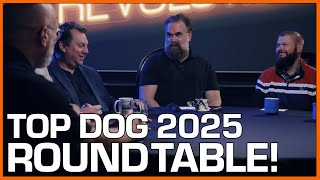
Chris Collins leads service coaches Vicki, Christian, James, Cliff, and Adam through what's shifted in automotive service and what hasn't. They argue technology often replaces human connection without improving results, and that parts-counter knowledge is disappearing. Peer learning and consistent coaching still matter most.
Chapters
Welcome to the big show. We have a very, very special episode that we've brewed up for you. Christian's idea today. And we're going to talk about what has changed and what has stayed the same in our industry. We're lucky enough to have everybody here because our top dog event is this week. And I'll introduce Vickster, the Oklahoma Smoke Show. Hoagie Adam. Christian.
The handsome devil. Cliff. And Captain. Or James, whichever you prefer. One over the other.
No, both are good. Captain James is good.
Captain James T. Kirk.
We're gonna have a very fun conversation coming up right now in Service Drive Revolution.
Okay, so there's something that divides this table. Does anybody know what it is?
Vicki, how long we've been in the business? No age, no experience.
No.
Three of you were something, and three of you weren't something.
Three of us were service managers.
No.
In elite.
That's a fun dig. Three. Three of you had me as a coach. Three didn't. Right. I always think it's funny that you guys forget how. How difficult you were.
When you're. When you're complaining about clients being difficult or hard. And I'm always like, yeah, sounds a lot like that time when, you know, whatever. I won't tell those stories, but.
Very.
I remember a couple of those times.
Do you want them to tell the story?
No. My daughter's in the other room.
Oh, gotcha.
Not those stories.
I remember one time where you scared the crap out of me because you packed up your stuff and started walking out my office and told me that I was wasting your time. You were. And my life flashed before my eyes.
But you were wasting my time.
I was wasting your time.
It fixed it. We got to work.
Yeah. If you think about how much stuff we've. How many divorces have we been through total on this? Just Christian.
One for me.
One for me. James and I went through a divorce at the same time.
Not from each other.
I don't think anybody thinks that.
You helped me through mine.
Yeah, that was rough. But then you did good. The. The next. Your next hire was good.
Yeah.
Put minimum standards in place.
What is your. What is your biggest memory from back then with me as your coach?
My biggest memory is I would never think of not doing something that you've asked me to do.
Ever. I would never have. Not send my numbers to you. I would never have thought. I wouldn't share the competition with my advisors. I would never not have known my financial statement.
And miss our monthly meeting in Los Angeles. Flying from Northern California down to la. There's no way.
Remember how excited we would get when the financial statement would print? Be like, I got it and then what does it say? What's the net to? Gross.
Yeah. Because you didn't want to be the bad person in that room. I didn't want to. I didn't want to be less than James and Julie. I did not want to go up against Carl because Carl was brutal with the financial statement. But it made me better.
Yeah. So people listening don't have context, but that was a. The group of kind of the original managers in the coaching group in a sense.
Right.
What about you, James?
What do I remember most about those times?
Just big, you know, most fun memory.
I love the monthly trips up to LA too. And some of them were brutally difficult. Like, we would talk about financial statements for hours and numbers and way to improve and. And it seemed like every month there was a new person at the table that was kind of getting picked on about something and you just kind of wish the whole day was over. Like, I'd be so tired. But the next day you felt great. It was just like a really great workout kind of. You just felt good about yourself after.
I remember one time in one of those meetings comparing financial statements, James noticed that his uniform expense was higher than everybody else. And I remember he called me on his drive back. So he left LA and was headed back to San Diego and he was like, man, you know, just like, that was crazy, my uniform expense. And he goes, so do you think you can come Tuesday? Because I got the uniform company line. He'd already called and lined up uniform companies.
I had him a half hour apart. So they all just sit in the waiting room together and wait for me to come and talk to me.
So wonderful.
And you got your uniform expense in line, if maybe not lower than everybody.
Else or close, I don't remember. But it worked out good. Yeah.
Yeah. But the thing that impressed me is you weren't even home and you'd already set it up. Like the, the, the tempo that things moved at was pretty fast.
Speed and execution. That's where that came from.
Oh, yeah, yeah. A lot of the motto came from that.
That was a very coveted meeting. It was hard to let new people in. I remember when, yeah, you guys got mad when I saw people and they flew from Chicago to LA and they were there every single time. It was a good meeting. We learned a lot and we came up with. You had us come up with different labor operations that we were going to use and create an effective labor rate. And, and something that was going to move the needle during those September months and those February months. So that we were prepared because we know that happens every February, every September. Maybe it's a little bit different now after Covid, but we're still not prepared. We still let it happen to us, but we were prepared down in that room.
Yeah, there was a lot of leverage in place.
I remember when I really wanted to beat Nick Alexander and I wanted my technicians in on it. And so we had a bullseye with the service manager's face on it above the urinal. And I took a picture of it and I sent it to Carl and Nick Alexander called me and he said, are we going too far with this? And I said, nope. And he said, game on.
Didn't Carl send you all the pizzas?
That was Natalie.
No, that was Carl's service advisor. I forgot his name. And he sent at the end of the month. We were beating them and he sent me I don't know how many pizzas just to carb up my service text.
I think that's so brilliant.
And so it worked. And then I just bought them ice cream so I could get them all spazzy out at the end of the same day. And that worked and we won.
I mean, isn't it, isn't it funny how much the industry has changed and then how much it hasn't changed? Right.
I think in so many ways it hasn't changed. Yeah, there's certain things. Hoagie and I were talking about it earlier today, my first service manager, just as an 18 year old kid taught me table of contents. Exactly like the we teach it now. This is the late 80s. He didn't call it table of contents, but the way he taught me to write service and sell stuff is exactly what we do today. So there's a lot of that stuff that is the same.
Stuff. That's different technology, obviously. You know, back in the 90s before all this, we were just trying to write as much as we possibly could as fast as we possibly could. You're trying to write 20, 30 cars a day. We're just going to get in the last seven of the VIN on a little scrap of paper and going back in and writing them up when we got time. I think now the advisors have so many layers that they have to do.
I think it makes it worse in a lot of ways. Like I, I had an experience where I hid something with my mirror on, on my car and I went in for service and I said, hey, I want to get that mirror replaced. And they said, okay, it's this much, which was a lot of money. And I said, okay, well can, can you order the parts? And they're like, we have to prepay for them. And so I prepaid for the parts for them to order them. And they said, they literally said that they would be in within a couple days and don't hear from anybody. Don't hear from anybody. Two weeks later I call.
Can'T figure it out. I call again and I get somebody in parts. So instead of calling service, I called parts. I was on hold forever. I think I have a screenshot. I was on hold for about 30 minutes and the person comes back on and says, oh, your parts are here. And I'm like, well, why didn't anybody call me? And they said, because your service advisor that wrote you up is no longer here. And I'm like, yeah, but I prepaid for the parts. And then there's no answer. Like there's really no system that serves the customer. It still serves the dealer. Right. Because it's about the advisor leaving, not about me ordering apart. I paid thousands of dollars for these parts and I, I, I have to do the work to try to figure out if I can get it done or not. And they have my money. It's very inefficient. You're talking about a dealership here in la. Like it's, you know, it's a dealership that sells a lot of cars and.
Yeah, well, in this week's SDR you tried to call that dealer and try.
To get through the interaction we're talking about. He was on hold and, and I think Hoagie and I were talking, but it was a really long phone call. Like that episode got edited because he was on the phone so long.
So that's been a problem, answering phones from customers forever. And with all the technology they have today, it's not any better.
I just wrote down customer service that.
Still is in place.
Customer service is still missing. Like it's still that thing that we still forget about. Like it's about the customer and we still, I don't know, it's just amazing.
Layering in the software, different technologies, and it still is a problem.
I think it's one of the best things that Hoagie's ever talked about is using the tablets. Is it treating the symptom or the cause for the check in portion of a service advisor? I think there's still tons of stuff that's missing. Like even down to we didn't miss very many customers when we had the piece of paper stuck in the file, and now we got a computerized system that will notify us when it's. And notify everybody, but we still can't. Like, how about just mail a postcard? Could we go back to that? Just a simple stamp anyway.
Yeah. It's also funny, like, to sit in a service drive where a dealership spends thousands of dollars on rfds. So when the car pulls in, it triggers a thing that says the customer's here that nobody's looking at. And it's just like, nonsense, like, ding, ding, ding. And the advisors are still in the back. Nobody's. It's just funny.
I went to a dealer visit one time with you, Christian. You remember that? We were in Massachusetts, and they had one of those in the driveway, and the service advisors told me, oh, I can't sell wheel alignments without that. And they were selling maybe 2, 3, 4 a week. So I asked the owner, I said, can I unplug this and get rid of it? He's like, sure, whatever. And they sold a ton of alignments. Because it's once a year, you're in preventative wear wheel alignment. We're going to sell it to you. And they sold more without that technology than they did with it.
I call that your gangster move. She walks into a service department, looks at that Hunter machine, light drop, and alignment sales start. It was the coolest thing I've ever seen.
The one that. Were you talking about, the one that checks, like, you pull in, and it has your appointment scheduled on there.
Yeah.
So they put in RFD, so they'll pay. I think it's down to two bucks, but they used to be 15. So there were these dealer groups that would spend $15 during the PDI. The other thing is funny is they're spending $15 on the PDI, and 25% of their cars are out of the market or whatever. Right. So. And the whole thing is that when they pull into the drive, it alerts on a screen that the customer's there, which is only second to the Penske Hertz thing where the names are on the screen and your name is never on there.
It's so interesting to me that I've gone to multiple places like that, and. And you ask the advisor, like, oh, did you check that car? And they're like, oh, that thing's never right. And you're like, why don't we have it? Yeah, that's happened multiple times. Sure.
But if you. If you meet the. The manager or the dealer, they're like, oh, we got this technology. And you're like, I promise it isn't as good. Like, you can't replace the human connection.
Yeah.
It's funny when you. When you talk to a person because every once in a while, you. You run across somebody that just gets it. And like, I did a master class in Northern California for a group, a new group of ours, I don't know, a few weeks ago. And after the last day of masterclass, they were having this huge barbecue for an employee that was retiring that had been with them for a long time and all that stuff. So all these people were there, and they were introducing me to different people. And.
This guy's like, hey, everybody's raving about the class today. He's like, but I have a question. He's like, I haven't written service in 20 something years, so just tell me if I'm wrong. Because he's like, this really keeps me up at night seeing what's happening with advisors today. And they tell me I'm crazy, and I probably am, but I do X, Y, and Z for the group, so I'm not in the service lane all the time. But it's just what I see. And I want you to tell me if I'm wrong. He's like, it took me about three years into writing service, and I realized it was all just getting the people to trust me. He's like, and I just feel it's missing on an epic level today. And I don't know if it's really that simple or not. And it just like, I was like, that's the most amazing thing I've heard in a month. Like, that's exactly it. You're refreshing.
When someone's.
All of our processes are built around taking away decision making and making customers trust us. That's it. Having a plan for them, executing that plan, making them feel safe. They don't have to wonder where to go or what to do, and then just, you know, treating them like their family. And oddly, that still works. It's always worked in it. I mean, for the longest time, our marketing was we had the new stuff. And every once in a while, a client would come in and then be like, you know, your new stuff is the old stuff. I'm like, yeah, but people just love the novelty of new stuff, right? Like, we could. We could tell everybody we have some, like, software thing or tablet or whatever, and people will be all excited just to find out that it's actually the old stuff.
Speaking of, of new stuff.
You were walking to Work today?
I. I didn't walk to work today. I drove, but I walked home.
You walked home yesterday?
Because I did.
He declined a ride.
I was offered a ride and said no. But speaking of new stuff. And I feel like there's, you know, these new drivers coming into the world, but.
Why is it that witches are better drivers than the youth of today?
Why are witches better drivers than the youth of today?
Anyone?
Something about a broom.
I don't know, riding a stick?
Witches know how to drive stick pretty good.
So that's you together.
Got that joke.
You know, I did. Did I forward you that article on the. The manuals that are being produced? There's only four cars you can get with the stick, and two of them are Cadillacs.
Isn't that crazy? And I'd never think of a Cadillac as being the one that would have the stick.
I used to leave the keys in my wrangler when I had the wrangler out front of my house.
Because you knew no one could drive.
The millennial theft deterrent. Like, they weren't.
It was the. It was the best. When I was up pulling my boats out.
Earlier this month from the lake and I took my mom's stick Jeep. Just so fun to drive because you're just engaged. It's just active, you know. Really, really fun.
Yeah, they're fun.
I've got a question for Fixture. So one of the things I always admire about you is like your organization and consistency. Have you noticed any difference? So let's say like 30 years ago, your consistency in terms of the stuff that you have to do every day versus what you're coaching the stores to do now. Do you notice any difference or is it still the same?
I do notice a difference. I feel that there's not enough consistency and maybe I'm boring, but I found consistency worked for me.
And I use it today. And I try to impose that. I don't know if that's the right word with my clients. Encourage. You have to be consistent with your morning meetings. You have to be consistent with what you're talking about in your morning meetings and that you're doing your pre writes and that numbers. You're doing numbers, numbers, numbers all the time and you're talking about it and sharing it with your staff. If you don't, if you only do it when we're there, it's going to fall off and it's not going to have any weight and we're going to come back and we're going to be doing it all over again. I Just talked to this about a client recently. I was out in Chicago.
Do you think that are you coaching harder out of the store or in the store?
Hmm, That's a good question. I think out of the store, because since I'm not face to face with that person, I don't have that personal touch with them. And so I want to make sure when I'm talking to them on a coaching call, and I'm being very consistent with what I'm talking about, along with whatever they have on their recap report that they want to talk about. But I'm talking to them about the basics, because the basics is what matters and keeps everything gelled together. And if they're not even doing the basics, we're getting off into the weeds and doing all other sorts of things.
Yeah. One of the things I think about you and your coaching style is that, like, what you hit home is what you do when nobody's looking is what matters the most. That's kind of what I see. And I don't know if it's easy. It almost feels easier to hide behind all the other junk that's going on in the stores, to not do those little things when nobody's looking. Like, there's more opportunity for people not to look. Does that make sense?
Yeah. Well, I think to Chris's point, when my dad was moving, I found a brochure that he had gone to an AMC school in the 70s or something. He was a service director. And it says the same thing that we're talking about now. And it's all about the people and the commitment to the people, getting to know them, being friends with them, and having them experience something different than what their expectations are when they walk into a dealership. And that's where I think we do best on coaching, that it can't be like every other experience. They can't have their iPads in front of their faces because the most important thing is to circle the car and take pictures of it. It's got to be the connection with the customer. And it was the same back. It could have even been in the 60s when he was the service director in San Francisco. It's the same thing, just with the clipboard.
Same thing.
It's super fascinating to me. So I wrote down a couple notes. When you are talking, but just think about the consistency you were just talking about. You said, never not do. Like you would never not do something, whatever it was your monthly meeting. So there's consistency there.
Never not know. You would never not know your numbers. So you're consistency consistently looking at them and measuring them and judging yourself on them and measuring yourself on there. And then the last thing just. You just got things done. So it's just interesting that consistency because we've talked about it before that the managers that go to a different level, the advisors that go to a different level, the parts people that go consistency is the, the one key piece of that.
What's different in parts?
Oh man, we don't do microfiche anymore. We don't do card stock anymore.
I miss. I missed the microphone.
I was going to say I feel like it's more reliable than the catalog.
It might be.
A lot of things are done more online but I still think there can be some personalization there. Some more things are done online. No microfiche, no cardstock, not the knowledge I think is a piece that stands out to me. I don't know if you know because we've discussed this before, but if you were having someone convert metric to standard there that ability has gone away. Like you don't have true parts people anymore, if that makes sense. You don't have the parts person, especially as a, from, from a technician background where you could hand somebody something and they could go yeah, get it. That doesn't happen.
Yeah, it's being much anymore.
Ingenuity is always the word that comes to me when you think of like a old school parts counter person to newer and like if it's not on the screen you're not getting it. Whereas like the, the guy that or gal and I've had both that really took pride and was. Was truly a parts professional. Like and it was a career to them and although they took pride in that stuff and like the most common part numbers they had a memorized and the associated parts and things like that. Like they took pride in when you turned a job in sending you out with the set that you needed and be like whoa, whoa, you're not done. You're going to need this and you're going to need this. And yeah, it was fun thing to watch.
That level of ingenuity.
I learned very quickly that if my back counter guys said to me I've never ordered one of these, we're wrong in our diagnosis.
Yeah.
And now that wouldn't be the case. I remember the gentleman that, that I would attribute to kind of bringing me up and I was 22 when I became parts manager and he's the one who came to me and was like hey, did they offer you the job? And I was like yeah, I don't think I'm gonna take him too young. He's like, no, no, I'll teach you. So that. The guy that kind of brought me up, I remember he would. It was Jeep, and he would kind of hide things. So he had this one book that covered everything, and so it didn't matter what year model it was. He knew he could go to that book, and he knew what to the ingenuity point. He knew what fit from 87 to 97.
I'll tell you one thing that hasn't changed in parts is the inability to track lost sales and the argument around it, which is funny because preach that. We were looking at some numbers of truck dealerships the other day with Adam, and do you know, in truck, proficiency and efficiency are backwards from car? It doesn't matter which one's right. They're just backwards. The formulas are backwards. And we started talking about the difference between proficiency and efficiency, and I want to kill myself. Same thing when you start getting in an argument about what truly is and what, in most parts, managers don't want to track lost sales for any reason whatsoever. Which is hilarious to me, in a sense.
That's funny. I called you about that the other day about that. What is considered lost sale, anytime you don't have the part.
Yeah.
You know, talking about having an AI girlfriend and everybody looks at James.
It's a. It's a funny thing when you. When you think about human nature and the way that we are vulnerable to that sort of stuff. Right. Because any sort of attention and intimacy, even if it's virtual, can feel special. You can feel special from a virtual girlfriend. And I mean, a lot. Like, it's a thing with AI now that a lot of people are getting kind of trapped in that. But Hoagie and I were talking the other day, and I thought about this in relation to our customers, in a sense, is.
It'S still really difficult to get your car serviced, and it's still really difficult to buy a new or used car, in a sense. Right. And he was talking about how he was waiting for his. His flight at the airport, and he was just sitting there talking to his daughter, and he was telling her to, you know, fly. And basically in 10 minutes on the phone with her, he bought a Tesla. And somebody that was sitting there with them in that area goes, did you just buy a car? And what's interesting is Hoagie perceived that Tesla cared about him more, even though he never dealt with a human, than if he would have dealt with a human and been disappointed. I mean, it's just a funny thing how fragile that line is, is if you deal with somebody and you feel disappointed, you feel unimportant.
Right.
You feel like you don't matter. And that, you know, makes you, makes you feel bad. Like it, it gives you that feeling of like loneliness or whatever. And you can make people feel important with software easier than you can humans nowadays.
Well, it's clear to me that how Tesla approach that is they try to be the anti car buying experience. That's where the care comes.
But you're not dealing with people.
I know.
And you feel like people are taking better care of you because it's just, you can buy a car in 10 minutes. Yeah, there's no, there's no, you know, back and forth. There's no how much will they. I mean, the car is what it is.
I would say that's why Amazon and all those places are doing better than like going to Walmart because at least you're not going in there getting let down. You're just searching for it on Amazon. You're probably paying more on Amazon convenience fee.
Since the instant I don't need to deal with any of that garbage, I can just click be done.
The rudeness, the just or whatever feeling.
That they're doing that day.
Well, it's one of the things Chris said a long time ago. It just stands out to me.
Well, that one does. That's, that's a great advice.
The, the piece of ordering a book off of an online store and being thanked instantly versus going in a bookstore and them never even looking up from.
The register thanked and hey, you might like these.
It's just, it's just so fascinating that we've lost that, that, that piece. But it didn't change from, you know, 1900 to now.
Yeah, trust still works. Like if people feel like you care and you're organized and prepared, they perceive that as trust. And the thing with Tesla is because there's very few options, you order the thing and it's really easy. You trust them because there isn't a chance for you to feel like, oh, are they pulling something over on me? They didn't call me back. There's never any disappointment because it's so controlled and easy and linear.
It's an interesting thing that nobody talks about in our industry, but the psychology of it is something that we miss because we design it from our point of view, not the customer's point of view, where we've always had the opposite approach.
We make it difficult for them to do business with us. Because we want it our way.
But here's the cool thing about that, is that I believe that if we kind of think about customer service over the years is, believe it or not, I believe it's easier to be successful because the bar has gone lower.
That's exactly what I wrote down. The expectations.
I would say, too, that even worse than doing it our way is it's just mimetic. Most people are just doing it because that's how it's always been done. And they worked for somebody who, like, it's just handed down. It isn't even. It isn't even questioned. Nobody stops and goes, hey, is there a better way to do this? And then the idea is to put software in place that does the exact same steps just on a screen, which is even less efficient. Right?
Yeah.
It's funny and personalized. I had to replace my air conditioning unit recently in New Orleans. You can't live without air conditioning. And we had people that came in, we interviewed them, how much it was going to be. I went with somebody. We went with somebody who was extremely more expensive because of the way that they treated us.
Yep.
Easy decision.
Probably easy decision because of the way they cared on our house. The way that they presented was amazing experience. And I've talked to people about that in my coaching call, and gladly, I would pay that much more again to have that experience.
You might be able to make the case that you paid less in the long run.
Yeah.
Yeah.
And they did it right.
Yeah.
It's like going to an independent. People think it's cheaper to go to independent, but in the long run, you're going to pay more because they don't know what they're doing because they haven't been to school in forever. So you're going to pay more hours even though they have a cheaper rate.
Yeah. So the. The one thing that hasn't changed is the most important part of our business is the customer experience. Everything revolves around that. And it still doesn't seem like as an industry, that's a focus.
I know where I need to look when I go to a store and I find out more about their customers than the advisors do. And I shouldn't know about the customers more than the advisors that's writing them up. But they're not asking.
They're distracted by all the other stuff.
Yep.
Yep.
Yeah.
It's interesting. Any final thoughts, Christian?
Well, I was going to ask because I look at James, just because I've known him for a long time, I feel like he's a collector. Of advisors. So I was going to ask you if you thought that the kind of avatar of a service advisor, has that changed over the years for you? Like thinking about the team that you had assembled at your store versus what.
You see every day.
You notice any differences?
I think a great Advisor in the 80s is a great advisor in 2025. They have the same characteristics.
They get it.
Yeah. They have processes like we were talking about. They follow them every single day. They're great at chatting with customers and, and being nice to them. They know them on a personal level. That is exactly. That has not changed.
Yeah. They keep a log, they call people, they do the basic stuff. Right?
Yeah.
It's not a high bar.
It's not, it's really not. It's just kind of being a professional and seeing it as a career and doing the stuff you're supposed to do.
Yeah, yeah.
I think that's an important thing. And, and I was thinking about when they were talking about consistency and, and, and that whole conversation. One, one thing coming into, to this side of it, to the coaching side of it that are dots you're able to connect very easily. Once you get this perspective on the industry and you're going into different stores and things is. I was kind of taken back by how the highest performers, whether it's advisors, managers, whatever, high, really high levels of success. There's, there's a, it's kind of weird to perceive that there's not like a lot of excitement. It's almost boring. They're very, very good and consistent with the mundane and the daily, the daily non negotiables.
I remember when we had like way back when when we had all the advisors go to an event, all the top advisors. And I remember just looking around and like Harris and like all the advisors and I was like, oh, these are, they're very boring. None of them have this crazy presence where they command a room or they're extroverts and they're just more like great waiters that take care of people. But they're not super outgoing. They're not dressing super flashy. You know, they all kind of had kids and like a what, like, or a husband, whatever it was. But they were pretty, pretty plain.
But that's, that's the thing about a high performer is it's like this focused hustle. It's not this crazy run around, wavy arm, inflatable tube man or, or whatever. Like you don't have to. I think a lot of people think of the best advisors as like these big huge Personalities and it's a focused hustle. It's a different. It's a different thing.
That's another thing from the motto. The quiet, humble ones in the back.
Of the room, 100.
They fit that mold 100 of the time.
It's great.
Yeah, they're competitive for sure, but they're.
Not loud about it, right?
Silent. It's good. Awesome. Well, what's. What are you guys looking forward to the most with top Dog? Seeing everybody.
Yeah.
Seeing the dealers and seeing everybody.
The awards of ceremony is always my favorite part. Listening to the coaches.
Talk about, you know, what the person went through to win the comp and like the, their level of success and how they got there and all that stuff.
For the people not familiar with what he's talking about, there's, you know, in our advisor and manager competition, there's a winner for the year. We're doing it a little different this year is we're, we're giving them out throughout the day instead of one big one at, at the end, which will be kind of fun. But yeah, there's.
There'S winners, top performers.
I like it when I see the top performers seek each other out.
Yep.
Where is this guy? I want to meet Patrick or whatever his name is. And you see him in the side of the room, three or four of them, and they want to know what they're doing to win the comp. That's super fun to me.
They all think there's a secret, but it's not a secret. It's just being consistent.
I like the sharing of knowledge. Just get getting all of your top performers in the same space sharing different, well, same ideas. Different ideas. It's all like. It doesn't matter where you're at. It's just sharing. All that and the interaction, it's just. It's like you're one massive 20 group on steroids.
Yeah. Yeah, that's great. Good. Well, it's going to be fun. Thanks, everybody. Thanks so much for watching this episode of Service Job Revolution. We're uploading new stuff every day, so make sure you subscribe and click the bell icon so you don't miss out. If you have a question you'd like us to answer on the show, call 8333 Ask SDR and we'll answer your question on the show. That's 8333 Ask SDR. For special deals on our books and training, head over to offers.chriscollinsinc.com now that's offers.chriscollinsInc.com I'm Chris Collins, and I'll see you in the next video.
Sam.







