Tori Kelly on “The Ruthless Elimination of Hurry” || Books That Changed My Life
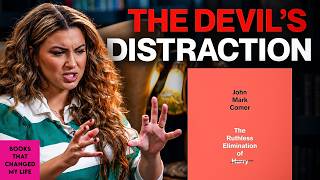
In this interview, host Chris Collins and singer‑songwriter Tori Kelly discuss John Mark Comer’s book The Ruthless Elimination of Hurry and how its four practices—solitude, Sabbath, simplicity, and slowing down—resonate with Tori’s experience in the music industry. They explore modern consumerism, AI‑driven recommendation systems, and the anxiety caused by information overload and the pressure to stay constantly relevant. Tori reflects on the book’s central message to “inhabit the moment,” noting how it challenges the hustle culture of touring, social media likes, and political discourse. The conversation shifts to Tori’s personal life: the impact of the book on her mindset, her desire for a quieter, more present life, and how this perspective shaped her upcoming album God Must Really Love Me. She describes the album’s rapid two‑week creation, its three pillars—faith, family (husband and son), and motherhood—and shares specific song inspirations, including the closing track “Bliss.” Throughout, Tori emphasizes gratitude, connection to God, and the therapeutic potential of performing intimate, family‑focused songs.
Chapters
Paralogical busyness, distraction, and restlessness are major blocks today within our spiritual lives.
If the devil can't make you sin, he'll make you busy. And I was like, oh, I was like, shoot.
So the big question, how did The Ruthless Elimination of Hurry by John Mark Comer change your life? I mean, I'm Chris Collins and you're watching Books That Changed My Life. This week we're joined by singer and songwriter Tori Kelly, and she's here to talk about the book that changed her life, The Ruthless Elimination of Hurry by John Mark Comer.
Oh, what do you have?
That is an espresso tonic.
Oh.
We're going hardcore.
Why?
If I get the shakes.
That's why.
I don't wanna sleep tonight. That's the thing.
Yeah, this is so cool. I'm loving it in here.
What is your personal library like at home?
So I'm kind of in between houses right now. I have a really great opportunity to create like a really dope library. That's why I think that's why I'm really inspired right now too, 'cause I have somewhat of a collection of books, but they're all just in boxes right now. So I'm like looking around the new spot and be like, okay, how do I make this look cool and feel special?
What's in the collection currently?
Honestly, I kind of, I related to the Matt Damon section a little bit because there are a lot of gifted books. I feel like a lot of just, yeah, people in entertainment world have sent me their books and that, you know, they've signed them. So some of them feel like special because of that and gifts for people that I know. I have briefly mentioned like the Harry Potter collection. I have the whole Lord of the Rings collection.
Do you have like a first edition?
I have to, you know what, it's a combination of my books with my husband's books. And I'm trying to think which one. I feel like we both had one. It's some kind of like special edition, but I have to—
Like he had the Harry Potter set and you had it?
I think he had the Harry Potter one and then I had the Lord of the Rings one, something like that. But we kind of like combined them. But yeah, certain, We actually might have a few different sets. That's why I'm getting mixed up because sometimes I'll just get a set just like because I think it's pretty and I'll never touch it and I just want it to be art. And then I'll have like another, you know, another set that I actually read. But yeah, I feel this is like all new for me, by the way. Like just being on this kind of podcast, talking about reading. Like I feel like this is kind of a, a side of me that people haven't really seen. And I also feel a little bit intimidated walking in here 'cause I'm like, I need to read more. I feel like this is inspiring me to read more books.
I mean, that's probably not a bad thing.
I think it's a good thing, yeah.
What's the side of you we're gonna see today that we haven't seen before?
Maybe a little more, I'd say just going a little deeper, I think. I think people, Maybe some people know, maybe this wouldn't be actually that surprising for people, but I think there might be some that are like, oh, I didn't know she thought about things that way, or, you know, is trying to slow down since that's what this book is about.
Yeah, so the book we're here to talk about, the book that changed your life.
Yes.
"The Ruthless Elimination of Hurry" by Jon Mark Comer.
Yes.
And yeah, there's a lot of topics in here.
There's a lot packed into this little book. And it was actually kind of hard to pick one book, by the way. I'm sure a lot of people say that.
What else was on the list?
I mean, I was kind of torn. Do I go nonfiction? Do I go fiction? Because I've gone back and forth quite a bit. There'll be certain seasons in my life where I just get, I'm like, right now actually I'm reading, I'm more on the fiction side 'cause I love like fantasy books. I've read like, I feel like I'm gonna mention this so many times, "The Lord of the Rings," "Harry Potter," "Narnia" was a big one for me. Those three series actually are kind of what got me into reading, I would say. 'Cause I read here and there growing up, but there was a time probably in my early 20s where I was just like, you know, why don't I read more? I feel like I'm missing out on this whole beautiful world of books. And I knew it was a desire that I had and I just had to like start somewhere. So yeah, I just remember thinking, okay, what are the most popular books, you know, popular series? And I was always a fan of the Lord of the Rings movies and the Harry Potter movies. So I was like, I should, if I'm gonna call myself a fan, I should probably— Yeah. Read these books. So I told myself, I'm gonna complete, yeah, the whole Narnia series. And then I did Lord of the Rings after that, and then Harry Potter after that, just to say that I did it. And I was like, this, you know, I just wanna be able to like cross it off the list. These are popular for a reason. You know, there's gotta be something in them that makes them amazing. So I fell in love with— Mm-hmm. Just reading fiction through those. And how, I don't think I realized how much depth there was. I think before I thought of fiction as just kind of like, I don't know, you can't really get super deep. It's just for fun. It's just like, you know, these fairytale stories. And then by reading those books, I was like, whoa, there's a lot of like, you know, crazy life lessons in these books. And— Yeah. Yeah, I just loved how it unlocked my imagination. And yeah, so that, I think that got me into reading. And then I would always try to have like a nonfiction book set side by side with that, just to like balance it out a little bit.
But yeah. How does it change your relationship with like Harry Potter, Lord of the Rings when you read the book and you've seen the movie?
I just feel like it opens up the world so much. I think I had this realization while, I forget which one I was reading, probably while I was reading Harry Potter, 'cause again, like I said, I liked the movies. And then I think I was reading a scene and it dawned on me like, wow, I actually understand now why people will say, oh, the book's always better than the movies. I realize is because, at least for me, is because I, in a movie, you can't hear someone's thoughts. I guess you can if that's what the idea of the scene is, like to have a voiceover kind of thing. But usually they're acting out the scene and then that's just, you know, the actors are trying to portray what the character is thinking. But when I'm reading the scene, I can literally, I'm inside of the character's head. And I was like, wow, there's no way that they would've been able to pull this off in, in a movie. So that for me is when it clicked, I think.
Your imagination is so much better.
Yeah, so much better. Right now I'm reading, I just got into Brandon Sanderson. I'm getting some nods, I'm getting some nods.
Is it fantasy?
Yeah, would you call it fantasy? I'm learning about—
The team here is super into fantasy.
Okay, yeah. Are you not as much?
No.
Okay, okay.
Although when I was a kid, I was allowed to read Narnia.
Okay.
For some reason in a Christian household, Narnia was okay.
So you grew up in a Christian home then?
Like very strict.
Okay. And Narnia was okay, probably 'cause it's by a Christian author then?
Right. Yeah.
So C.S.
Lewis was a Christian.
Right.
So those were probably my, one of the first books I ever read.
Okay. Nice.
The Lion, the Witch and the Wardrobe.
Yeah. Yeah. See, that was one I had always heard about that book in particular. But I was so curious about what the rest of the series was. So that's, yeah, I ended up reading all of those books and really enjoyed them. Did you read just the one or did you read the whole series?
I think I remember reading 3.
Okay.
How many are there?
I think there's like 6.
Yeah, something.
Yeah, but they didn't do movies for all of them either.
But once again, like I saw the movies later on and I was like, "No, the book's so much better." So much better, yeah. You just have to take short, you're trying to fit it in 90 minutes.
Right.
It doesn't work.
You can't read all of that in 90 minutes anyway, yeah.
And the books are just, yeah, the world That they build or that he builds in those books is insane. Especially for a kid, like—
That's the thing, yeah, that was the thing. I remember people saying they're kids' books, but then as I was reading them, I was like, I'm loving this. Like, I don't feel like this is necessarily just for kids at all.
No, it's great storytelling.
For sure, yeah. And I guess that's what I was kind of getting at with the, in the world of fiction is just how much you can, get lost in the world, but then also take, you know, these deep life lessons, I guess, out of that and bring 'em into real life, you know, rather than it just being, you know, like for kids or something like that. So yeah, that's kind of how I started my journey with reading, I guess.
How does your husband's taste in books differ from yours?
That's a good question. We both love, I would say we both love fiction and nonfiction equally. He, when we met, I think he was a little ahead of me and he had read like all the Lord of the Rings books and he was, yeah, I think he was, I would call him more of an avid reader I think when we met and then, Somewhere along the way I started kind of trying to catch up here and there, but I would say he's definitely read more books than me overall, and he would love it in here too. He would be geeking out and probably know way more books than I do.
When do you read?
I read, you know what? I actually think something that really helped me get into reading was I love reading on planes, and I was traveling so much. So I got to this point where Even now, like the second I sit down, I just get this kind of like itch. Like I just wanna read and I feel like this is me admitting something. I don't know what your thoughts on this, but I'm really big into my Kindle. I wish I was more of like a purist where I could just like walk around with my book. But I think I like being able to sort of switch around, you know, even just in one day, like, hey, I wanna read this now and then let me go back into my fiction book and, pop around like that. So while traveling, it became really convenient 'cause I would have my Kindle or even like my iPad, have the Kindle app. And yeah, the second I'd be on a plane, which was often, I would just like go through so many books.
Yeah, if you look around here, do you think I'm into Kindles?
No, that's why I was kind of nervous saying it.
I was like, I feel like— But I mean, you have millions of books in your hand when you have the Kindle, but it's—
I know it's not the same. It's not the same. Yeah, no, and that's the thing. I agree with you. So I wish I was more of a purist.
Well, I just throw them in the bag. Like, I'm leaving tomorrow and I'll take 2 at least.
Okay. But then you're committing to those 2, right? So it's like if—
Yeah. But I mean, those are the 2 in the queue. Like, I have a queue. I'm usually reading between 3 and 5 at a time. Okay. Where I go back and forth.
Just whatever your mood is.
It's not linear.
Yeah. Yeah. What are you reading right now?
So there's a show in New York at MoMA for Marcel Duchamp, and I don't know if you saw the Duchamp collection. Yes. But I have like one of the largest private collections of Duchamp books. I almost have them all. Wow. And so I'm going to go to the show. But for the show, there were a couple of releases. One is an interview by Marcel that was done. That's never been released. And so I'm almost done with that. But I like just psychology and human behavior and stuff like that. Mentalism. Like, why do people think or believe the way they do?
Okay. I was going to ask, like, explain mentalism for me.
But that's— it's just the part of magic that's mental, not physical.
Okay.
So if I can get you to see things in a different way or believe things a different way.
Wow. And this whole section behind us is—
well, in the magic collection, there's a focus on mentalism. Okay. I mean, you could learn card tricks. Sticks and dice and things like that. But for the most part, I love it. What interests me is the mentalism part. Very cool. But magic is fascinating. I mean, it's fun.
Yeah. Yeah, it is fun. It's like, well, I— the first thing I thought of was Harry Potter, but yeah. Yeah, I realized that's not where I'd find—
I wanna— I wanna do the Harry Potter at some point.
Yeah.
Um, so tell me, where'd you grow up?
So I grew up, uh, not too far from here. Southern— Southern California girl.
San Diego?
Inland Empire. So kind of in between. Yeah, LA and San Diego. San Diego. I always say Temecula, it's kind of like the place people might know, the wineries. Yeah, so I'm just, I'm a Cali girl through and through.
But the, just for people that don't know, the Inland Empire and Temecula would be like more farms and—
Yeah, a little. I mean, it's getting, I'd say people are kind of moving more out there nowadays. When I was growing up, there was like nothing. But yeah, it's more, a little more open. Like I said, the wineries are out there. So definitely kind of like opposite of the beach towns. It's like straight across.
And a little warmer.
Yes, definitely desert weather, kind of on your way to Palm Springs.
Yeah. A lot of dirt bikes too, like that sort of thing.
Yeah, yeah, yeah.
What did your parents do?
So my dad was actually a musician and he, I grew up, you know, having like his band would have band practice at the house. My mom was a nurse. So, and my dad did a few different things. He was in bands, he played soccer, he did construction. And then, yeah, my mom was always in the medical field and then she also played a little bit of piano. So I grew up in a very musical household.
Wow. And do you have any siblings?
I have one sibling, yes.
Older or younger?
Younger.
Younger, so you're the older?
I am.
You're the more responsible?
Yeah.
Hypothetically?
Yes, I am. Yeah.
Somebody laughing?
No, yeah, I'm saying that directly to my brother. Yeah, I'd say we're pretty close though. I really, yeah, I love my brother. I love getting to see him. He doesn't live close anymore, so I get it, you know, when we do get to spend time together, it's just even more special.
What kind of kid were you?
Well, a lot of my memories, a lot of my childhood memories, I think really were centered around music, to be honest. It feels kind of cliché to say that 'cause I happen to be I'm a musician now, but really when I look back, I'm like, wow, my parents really surrounded me with just the right tools. I think I was, as far as what kid was I, I think I was actually pretty responsible growing up. That's why I laughed when he said that because I was kind of like a rule follower, I would say, wanting to, I think, impress my parents and make them proud. And maybe it's like an older, older child. I'm getting more nods. Yeah. An older, older child thing. You know, the performer in me is like wanting to get the applause, which, you know, later on as an adult, you kind of have to work through those things. Like, why do I—
Did you get the performer part from your dad?
Yeah, I think so. I think so. He's— he— because, yeah, I grew up getting to see him on stages and different you know, coffee shops, and he would play. He played bass and he sang at our church as well. So very young, I would be doing that with him, but I was really shy actually. So he would have like a gig somewhere super small, like we're talking like coffee shop vibes, and that was almost worse for me. Like the less people, the more nervous I got.
Yeah.
And because I could see everyone, and some of my early memories are, yeah, me basically going up on stage during soundcheck, just wailing whatever I wanted. And then when it came time for the actual showtime, I was like, no, I'm not going up there. And we're talking like 5 years old, 4 or 5 years old. So I had to work through some stage fright at a young age.
Do you remember the first time you were aware of being a performer that you had a, reaction from an audience that you noticed?
That's a good question actually, 'cause my—
I mean, even if it was just at a family event or something, like, do you remember performing?
Yeah, I performed quite a bit at home. I mean, there's a bunch of home videos of me just like dancing around the living room. So I felt like I always had the audience of my family. So, and based on their reaction, I must have felt like, okay, maybe I'm pretty good, I guess. I was doing singing competitions by the time I was like 6 years old. So I think that's probably when it felt a little more real for me, 'cause I, yeah, I remember, you know, it's almost like being in a pageant or something, but for singing, you know? So it was like all these little kids like in a competition together. And I have a bunch of trophies at home from those days, which is, it's just pretty funny to look back on. Yeah, it's just wild how I was, I just really loved it at such a young age and it felt really natural for me. And I never really, I never pursued anything else, to be honest.
That was it?
That was it.
You just knew?
I mean, I think it was a combination of knowing that I, you know, believing that I could do it. And then I think the timing of when everything started working out was, was just, it just worked out because I, it was kind of right around the time where you have to like figure out, okay, what am I doing for work? You know, I gotta like move out. Is this like early 20s, you know, where it's okay, what's gonna happen here? And that's pretty much right when things started, you know, taking off for me. So—
You never thought like I'm gonna go to school and become a lawyer. You never had any of those thoughts?
Nothing. If anything, I did, I had some friends that went to Berklee School of Music. So it was always, music focus. I couldn't see past that. But I did consider, just 'cause it looked so fun. I just loved the idea of having that community of people just all loving the same thing. But a lot of my friends who went there said, "Save your money. You're already doing what we're all kind of trying to do." So I always admired it though, from afar. I remember doing a show at Berklee School of Music. And I felt like I was almost fangirling over the audience 'cause I could tell they were just like, you know, high-level musicians. And I remember feeling kind of nervous 'cause I was like, these are my peers. I feel like they're so much smarter than me. Like they know how to read music and stuff. But that was one of my favorite shows because it just felt like there was this understanding of musicality. But I always, yeah, there was a part of me that was like, you know, always kind of jealous of that experience of going to some kind of college or even just specifically music school. But yeah, I always say that I went to YouTube University. That's what me and my friends say, 'cause that's where I got my experience. And yeah, that all the jam sessions and stuff were—
Yeah.
We would just throw up videos on YouTube. And I feel like I learned a lot from that season. Not the same, of course, as going to school, but probably the closest thing.
Well, I think one of the outcomes of college is not so much the education as the friendships you make. There's like a bonding that happens, it seems like. I don't know, I didn't go to college, but—
You didn't either? Okay, that was my next question.
I was working.
I don't have time for that. Yeah, yeah, so yeah, I guess, from two people who don't know exactly what it's like. But I mean, we turned out pretty good, I think.
Yeah. I mean, I wouldn't discourage anybody from going, but it wasn't in the cards for me. Yeah. So then when does this book come into your life? What was going on at the time?
So this book came into my life 2021, actually.
And not that long ago.
Not that long ago.
So we're coming out of COVID We're coming.
We're kind of still in COVID. I think at this point, and I didn't realize this book actually came out right before COVID started, which I thought was kind of interesting. It was like 2019 and I discovered it not till 2021, but the title alone intrigued me, "Ruthless Elimination of Hurry," just 'cause I feel like I'm always looking for ways to center myself and kind of, be more grounded and more present with the people around me and with myself. So the title alone was interesting. And, you know, it was during COVID so the world was slowing down, but I think in turn, like externally everything was paused. But then I think this book really challenged me to look inward because I, there was, it was not slowing down internally. So everything is, I think by the world shutting down, it was almost like a magnifying glass on myself of like, wow, there's a lot of stuff happening internally. And it kind of forced me to ask the question, am I being present, you know, or am I just sort of like moving through life and just letting life happen?
What was making you feel like you weren't being present?
I think with everything going on in my career, I, you know, there's so many things that you can like hyperfixate on. Even though I felt like I had success and I was like doing pretty well, I think it's easy to fall into, this is, I mean, this is probably not just for artists, but just in general. I think it's easy to fall into the, trap of, okay, I've got to this level, now what's the next level? And just like kind of keep climbing and like, when does it stop kind of thing. I think, I wanna make sure I'm being clear because I don't think it's bad at all. I think we should be like dreaming and obviously wanting to achieve our goals. But for me, I've always tried to figure out what is that balance between, you know, actively pursuing something and letting it fulfill you and, and achieving your goals. And now even another layer, like as a mom, like wanting my son to like see me do that, but then also balancing that with how can I make sure that it doesn't affect my happiness? Like I would never wanna say, oh, I'll be happy once I achieve that. Or, you know, if I could just make it to this thing, then everything would be good. So I think that's, yeah, that's what this book was helping me kind of navigate. 'Cause there was a lot of things that I think I was aware of, but I just didn't know how to articulate it or that there was even like a language for that. Yeah, so just the idea of slowing down has really helped me and not rushing to the next thing. Mm-hmm. Yeah, just trying to stay present in the moment.
So for somebody who hasn't read the book, kind of explain what it's about. I think he was a pastor in Portland, right?
Yeah.
And he had a church that was growing pretty fast. Yeah, really fast. And then he decided it wasn't for him.
Yeah, so I don't want to speak for him, You know, I wanna make sure I get it right, but I know the gist of it is, like you said, he was a pastor. His church grew really, really fast, and I think it just got to be too much where he felt like he didn't have the capacity to, you know, be there for everyone. He's the leader of this church, you know, has to be kind of like put on this front of having it all together, and I think he just hit a breaking point and realized, I can't keep up with this. This isn't healthy. And I think stepped away from that and started to like reevaluate his life. He looked at, you know, the teachings and the life of Jesus and, you know, realized that Jesus is this figure who was, you know, very popular and, you know, had people wanting to be around him all the time during his life, but yet never came off in a rush. He was always very present. And yeah, so I think he dives into that a little bit as well. And yeah, I just, I really resonated with that part of it because my faith has always been, I think like you, I grew up, you know, learning about Christianity, learning about Jesus and his teachings. And my faith has—
Mm-hmm.
Been something that I've carried with me my whole life and has really been a foundation of who I am, I would say. So I just, I really liked though how he, the book doesn't feel churchy to me, you know?
It's not a religious book.
Yeah, I love like how practical it is too. Like he had the first half, it feels like, okay, this is the problem. This is, you know, what I see in my own life, but also what I, how I see, you know, how our phones are affecting us and our attention spans and social media. We're constantly being hit with just so much information all the time. And so what is that actually doing to our brains, you know, and our attention spans? And so he kind of sets it up, but then I like how he doesn't just leave it there and how the end of the book feels very practical. Like here are some things that I've done, you know, that have helped me in my life. So. Yeah. That part I liked about it too. Yeah.
He, he talks about how today in this world, like, people feel more kind of alienated and anxious. Mm-hmm. Why do you think that is?
Yeah, it's, it's interesting. I think COVID was so wild because it, we have this huge thing called the internet and in some ways we're more connected through that. But then otherwise, I think it's so much more isolating. You know, I grew up in the '90s where we obviously like didn't have phones and didn't have, and we had dial-up and it was just different. So I think my generation, it seems like we're kind of the last, like we remember what it was like sort of without all of this technology and this like, you know, gadget in our hand 24/7.
Mm-hmm.
And don't get me wrong, he talks about this too. It's not like all technology's bad and the phones are bad and we need to get rid of everything. I think it's more asking the question, like, what's your relationship to technology or to, I mean, now there's AI. It's like, it's just, oh, it's going so fast, you know? And how do we have a healthy relationship with it? There was one thing in the book that I really liked, one of the practical things that I've tried in the past. I think this is the type of book too where I feel like it's kind of like a reread. Like I have to remind myself of some of the things. I get to this place every few years where I just like wanna throw my phone out the window and disconnect from everything, like go in the mountains or something. Not literally, but I feel like mentally that's kind of where I get to that place. And there's something, I've done in the book. He calls it making your smartphone dumb, and it's essentially just like deleting all the apps on it, and then I think you would— I think he says like you slowly re-download the ones that are actually necessities, like Maps or something you would actually use on a day-to-day basis. And then things like email and texting, obviously for certain people that this is impossible to do because that's a part of your job. But I like that he said he set aside time to actually check those things. So rather than like notifications going off all day long and just letting that, like, you know, letting myself react constantly to that noise. So I got really good at the do not disturb button. That's my favorite button. But allowing myself to sort of set, okay, for this hour I'm gonna— Yeah. Check email, answer texts, maybe go to social media and kind of like condense it to this. It's just be, I guess it's just being more intentional with your time. And that really was a concept I didn't think about it that way. And I think he really opened my eyes to like, okay, I actually have the power to change things around in my everyday life that will, be beneficial for my soul.
So which apps did you delete?
So I did all the basics, Twitter, Instagram, all the social media ones. I mean, I had random apps.
You deleted them?
I did not. Well, right now, this is back when I read the book a few years ago. Right now they're all on there, but I'm kind of tempted to delete them again. I did all like the games on my phone and then I would, yeah, I would just kind of, I would tell myself, okay, I'm starting at zero. And then anytime I feel like, okay, this actually makes sense to have, I would redownload it. And what was interesting is I didn't really get the urge to redownload certain apps that I thought I would miss, like an Instagram or something. I went a pretty long time without, having it, or I would just have it on, I would have it like on my iPad or something to where I would have to, it wasn't something I was carrying around with me, but it was like, okay, I'm home now. Let me, you know, go on my app. So it's, some people might think it's kind of, you know, like a little extra, but I think it's those little things that—
Well, what did you learn in that process?
Well, I realized that, there's so much time I'm giving to this device. And sometimes, yeah, it's to connect with other people, which is great, FaceTime or texting and stuff. But it's like, how many times do we actually, I think he actually has like a statistic in there of like the amount of times we like reach for our phones or touch our phones.
Oh yeah, we're gonna get to that.
Okay, okay, yeah.
There's some great stats in there.
There's like so much, I'm trying to remember all of it, but. Yeah, that was just so eye-opening and convicting because I was like, dang, there's— that's so much time that I could be doing.
He has an analogy in there that was a study presented to Congress about how you could read 200, or I don't know, 150 books a year.
Yeah.
And it's still like a third of what people spend on their phone.
Oh, I bet you loved that stat.
I did.
I was like, you're like, yeah. But I mean, And I'm coming from a place of humility because I'm not above any of that. I'm like, I totally relate to it, but I'm aware of it. And I'm like, okay, how can I change this behavior? Because like I said, now I'm stepping into motherhood and I'm like, that's a whole re— I actually reread this book more recently now as a mom. And I'm like, this is a whole new layer now because now I have—
Mm-hmm.
This other little human that I wanna make sure I'm giving my time to, you know? And yeah, so it's just helping me think through, yeah, how am I using my time and just being more mindful, more aware of it.
So Comer has 4 fixes for busyness in the book, solitude, Sabbath, simplicity, and slowing down.
Mm-hmm.
Which one of those is the— hardest for you?
Honestly, I think I've tried to practice all of them except for I haven't been super intentional about Sabbath, but it's something that I actually, I'm really intrigued by, and I could see implementing into my home. It has to be, I think it has to be like the whole family has to be down, you know? But the way that he talked about Sabbath, it was like, wow, this kind of, this actually sounds really cool, really fun, because I think growing up in church, I think of Sabbath as like, you know, like not fun. Like we have to like no technology and no fun things, and like we just gotta sit there and do nothing. That's kind of how I used to think of it, and the way that he describes it as like, you know, his kids get excited now, and they ask like, is it Sabbath yet? Because they'll have these little traditions of like, I think he said it was like Friday night, And he said he doesn't believe it matters like what day you choose either. But he's like, for them it's Friday night and they would, I think he said like they'd make homemade pizza as a family and they would, I forget if he said watch something together or, I think the whole concept that I took away was it was just about the intent, like the intention of it and being really—
Prioritizing it.
Prioritizing it and just, Yeah, and just making it, yeah, like a tradition that even now, like his kids look forward to, and it's just that togetherness. I really liked that. And it was a time of prayer and just like connection and sort of like getting back to center. And they do that every week. So that's one that I've been, yeah, I've been kind of thinking about it more, especially during my reread. I'm like, how can I implement this? It's, I mean, yeah, it's tough with like, with schedules and especially in my life, you know, it's not really like a 9-to-5 type of thing where, you know, where I can have that consistency. But that's also not an excuse because we're talking about, you know, things that if it's something you really want, then, you know, you'll do it, I think.
But how do you do that as busy as you are? 'Cause like, how do you live a slow, quiet, reflective life?
Yeah. That's a good question.
'Cause it's almost like you're just—
Yeah, that's why I read books like this.
Different universe.
Yeah, I think it's in the little choices. I don't think it, 'cause it feels daunting when I step back and I'm like, okay, this feels like a lot. How am I supposed to have this kind of life? But it's the little things like what I was saying about my phone or, It sounds silly, but even honestly just being, it's such a mental thing. I think even just, I love books like this because at the least, like at the bare minimum, it's just in the back of my head now. So when I wake up and I have, you know, my baby and I have my husband and, you know, everyone's baby's crying for something or, you know, everyone's got their own, desires or their own things going on, and it can start to feel a little chaotic. It's like, okay, let me— there'll be like a line that sticks out in the book, or just the general sense of slowing down, and I can just in that moment like take a breath and just not let it affect me so much. Something that— he doesn't actually say this in the book, but something that I thought about on the drive here was and the reason I think why I love this book so much and just like the idea of slowing down and being more present. I pictured myself at 80 years old and I get emotional a lot now because I have a baby. I feel like moms can relate. But I've been picturing this a lot lately and it's me at 80 years old and I think I have,— I'll call it a fear. I have this fear of looking back on my life and wishing that I was more present with now, yeah, now my son, but also just the people that I love. And I keep picturing myself at 80 and it's like, hey, what do I want? What do I want to be feeling like as an old woman? I don't wanna have any regrets. I don't wanna look back and be like, ah, which I just, like, I don't think I'll look back and, you know, I would hate to say like, oh, I worked too much or I gave my time too much to a device. You know, I think that's the, it kind of comes from a place of fear in some ways and wanting to make sure that I'm living a life that I can be proud of when I'm older. So I don't know if that, I feel like it was worth saying to give kind of context.
Yeah, well, that changes the context a lot when you think about it from being 80 and then looking back.
Yeah.
You wouldn't wanna say, hey, I had a lot of screen time.
Right, and I'm like, that would be—
It's about human connection.
Yeah.
Experiences and those little moments. That's what you're gonna hold dear.
Yeah, and I mean, the irony as we're talking about being on our phones left, less. I saw a TikTok the other day that gives me great reminders sometimes, but I saw a TikTok the other day.
You go to TikTok for my solitude advice?
Yeah, when I have alone time, I'm just scrolling. No, I'm just kidding. No, but I did see a TikTok that was kind of the same concept of like being older, looking back on your life, and it said something about like the the stress that you're feeling now or like the chaos you're feeling. It was in the context of being a mom, but I'm sure, you know, everyone can relate to it. But just, you know, those late nights of like, you know, waking up in the middle of the night, you know, trying to feed your baby. Like it's a crazy time, you know, having a newborn. And it said something to the effect of like, yeah, like when you're older, these are gonna be the moments that, you actually miss. Like, this has gotta be the time, you know, I'm in my early 30s, like it feels like I'm kind of in my prime in some ways. Like, not that this is it, but it's just, it does feel like, you know, I'm starting a new family. Like, it just feels like a lot of cool things are happening right now. And anything that feels stressful or just like really hard, 'cause it can get really hard, I just try to remind myself of that old lady looking back at her life and being like, I think these are going to be the moments that I'm probably going to miss the loud house and the chaos a little bit. I can imagine.
Is it the same when you make an album? Isn't it the making of the album and that experience that you remember more than once it's done? Yes.
Yes, but I might be maybe a little different than most artists because I actually love performing the music afterwards. So it almost like doesn't feel complete until I'm on stage. But yeah, you can't obviously perform anything until, you know, you have to create the music first. So yes, I think that's a good analogy. Yeah.
Okay.
Are we getting into it?
Let's get into it.
Like yours are pink and mine are green.
Do you want the pink?
No, it's okay. You can have pink. I like pink.
Yeah. Look, my socks are pink.
Oh, nice. Yes, it matches.
Oh, and I'm wearing— I always try to match the tabs to my socks. So the first tab on page 9.
So these are like spots that you guys—
Yeah. My question for this one is, how did you feel the first time you read this?
I need a little refresher. There's so much packed into this book. I feel like I could reread it. Like, this is like a once-a-year type of book for me, I think.
Oh, wow.
I think so. Yeah. 'Cause I feel like I need the reminder of just, yeah, to slow down, like exhale. Anyway, sorry.
Will you read this?
Oh yes, I will. This first tab, the, on page 9?
Yep.
Okay. The Korean-born German philosopher, I'm gonna butcher this name, so I apologize in advance.
Han.
Han, yes, we're gonna say Han. German philosopher Han ends his book, "The Burnout Society," with a haunting observation of most people in the Western world. They are too alive to die and too dead to live. Whoa. That was me. And then he says, that was me to a proverbial T. Yeah. So he's describing his life and what got him to that breaking point, right?
Yeah.
That's a heavy line.
Oh, it's great. I mean, we kind of debated whether to start with that or start with this.
Oh, okay. Yeah. What is that in the—
So that's the Bible verse at the very beginning. He says, come to me, all ye, you who are weary and burdened, and I will give you rest. Take my yoke upon you and learn from it, for I am gentle and humble in heart, and you will find rest for your souls, for my yoke is easy and my burden is light.
I love that verse.
But we thought this had more of a punch.
It does have a punch.
They are too alive to die and too dead to live.
It's like you're in this in-between kind of blah.
Do you ever feel like your life is on automatic pilot? Like you're just—
I would say that's what I want to avoid. I don't feel that way now, especially I think by me having a baby, it's actually like, it kind of forces you to be present because especially in the beginning, there's, I mean, you have to like, keep this child alive, you know, like they're fully dependent on you. And I'm, you know, I—
It's a responsibility.
Yeah, and so I think it kind of has like forced me to be present, even though of course I want to be present, but I—
The stakes are higher.
Yeah, the stakes are much higher. It's not just, oh, let me try to be present so I can be like a better person. It's like, no, now I'm responsible for, you know, this, this baby too.
You don't wanna mess up the kid.
I don't wanna mess up the kid. And it's crazy 'cause he's, he is what, almost, gosh, he's like almost 6 months, which is so wild. What's his name? Zayden is his name. We call him Zay.
Zay.
Thank you. And he's almost 6 months and he's already so aware. Like if I, and it's crazy. Like if I, you know, pick up my phone around him, he'll like try to get the phone and he's like already aware of screens and just, if you make a face, he's like reacting. So I feel like for a little bit in the beginning, he's kind of just like a blob. So you can kind of live however you were living. And now I think I'm much more careful with just what I'm exposing him to also, 'cause I don't want him to be looking up at me and I got my attention is elsewhere and he's like, hello, I'm here. Hello. I'm here. So yeah, much more, much more mindful, I would say, in this season of my life. Yeah. And just wanting to be better at that.
Yeah.
Yeah.
What is, what is Zayden?
Zayden.
What does that mean?
So it's, it technically is an American name. So it's like kind of, it's like made up, I guess. But I got really hyperfixated on Z names. Like when I was thinking of, we didn't know the gender, so we had to think of girl names and boy names. Boy names are so hard in my opinion.
What was the top girl name?
I won't say.
Oh, okay.
Yeah, 'cause you never know if I have a girl down the line, I want it to be a surprise, you know? But yeah, Zayden was just a name that I, you know, found online. And I did like that it has, has a loose tie to the meaning growth. And we, yeah, we liked that because it was like he was in a literal sense growing our family, making it bigger. But yeah, also I just, I kind of liked how it just felt a little rockstar with the Z. And I knew we, I love when there's like a nickname. So we right away we're like, oh, we'll call him Zay. And— Yeah, and his middle name is Michael, which means who is like God. So we liked kind of the combo of that. That's what Michael means? I believe so, yeah.
That's my middle name.
Is that your middle name?
I didn't know that. Yeah.
I like it.
Michael. Okay, the next tab.
Okay.
Hear from Ronald Rolheiser.
Oh, wait.
My undisputed favorite Catholic writer of all time with hurricane force. Today, a number of historical circumstances are blindly flowing together and accidentally conspiring to produce a climate within which it is difficult not just to think about God or to pray, but simply to have an interior depth whatsoever.
Mm-hmm.
We, for every kind of reason, good and bad, are distracting ourselves into spiritual oblivion. It is not that we have anything against God, depth, and spirit. We would like these. It's just that we are habitually too preoccupied to have any of these show up on our radar screens. We are more busy than bad, more distracted than non-spiritual, and more interested in the movie theater, the sports stadium, and the shopping mall, in the fantasy life they produce in us, than we are in church. Paralogical busyness, distraction, and restlessness are major blocks today within our spiritual lives.
This reminds me, I think he Maybe goes into this right after. I feel like there's a line in here that he quotes someone who says, "If the devil can't make you sin, he'll make you busy." And I was like—
That's great.
Oh, I was like, "Zoo." 'Cause I feel like it's true. It's like he says, "We're more busy than bad." Like I think a lot of us, we don't walk around as like bad people. You know, we like to think that we're, decent humans, right? Like, we're not just actively, like, trying to be— do bad things in this world. But I— that was really convicting for me because I was like, how— yeah, how often have I, you know, instead of taking, like, my anxiety or, you know, anything that I'm feeling, instead of letting it bubble up and, like, taking it to God and kind of releasing it and praying to him about it, how often have I just, like, stuffed it down and then distracted myself with whatever. Like there's so, and that's why I brought up earlier, like growing up in the '90s, I'm sure, I mean every generation I'm sure says like, oh, it was so simple and so much more simple back then. But it just feels like it's more and more like getting, there's just so, there's so many things to fill our brains with and Yeah, there's— it's just, it's just a lot. So I think this paragraph is really, is really interesting to read. It's like, it's— I agree with that. I think it's really true.
It also makes me think of friends that I have that are just running from something in the way they do that is just making more money, being busier, piling on more. And if they had to stop and really sit quietly with themselves, they would go crazy.
Yeah, yeah. No, it says actually on the next page, it says, we hear the refrain, I'm great, just busy so often that we assume pathological business is okay. After all, everybody else is busy too. It's almost like by being not busy, that's like terrible or that's bad or that's like lazy. It's not like every shoe fits or one size fits all, I guess is what I'm trying to say. But like there are people that are lazy, of course. But I think for the most part, yeah, we hear that all the time. Like, oh, I'm just busy. I'm just busy.
Like, let's— Well, and it's admirable to be busy.
Yeah.
To be successful or to be achieving something or pursuing it.
But it's like, how, like, that's all great, but then like, how is your soul doing? Like, how is your heart? I think that's more what I'm after. I'm gonna start saying that to people instead of—
How is your soul?
Yeah, that's kind of a lot though, huh? It's a little direct.
I like it. I like direct. That's right up my alley. I'm just trying to think of like when you say—
How's your heart?
How's your soul? People don't understand what their soul is. So you might have to explain what that is. How's your heart?
How? Yeah, it probably would work better with people that you actually know.
Like your friends.
Yeah, not like a stranger. Like if I stepped up to you today—
I don't think I could ask you. How is your soul? How is your soul?
Maybe now you could.
How would you answer that?
How is your soul? I would say my soul feels very full today.
Is that good or bad?
It's good. Yeah, yeah. Good. Like a good kind of full. I'm feeling very grateful. Grateful.
Yes.
Yeah.
I love this part in this next tab. A brief history of speed. And it's talking about time.
Yeah.
And how time is kind of imposed on us, like the calendar. And it started with the sundial and how we've kind of forced our lives into this architecture that is, you know, it's minute after minute. Yeah. Hour after hour. And now you're late for stuff and you have to be on time and you have to have an appointment. And it's a whole nother filing system on top of what we already have going on.— that doesn't allow relaxation or freedom or creativity.
Mm-hmm.
Okay, the next tab is the one we were talking about. One famous Senate subcommittee in 1967 was told that by 1985, the average American would work only 22 hours a week for 27 weeks a year. Everybody thought the main problem in the future would be too much leisure. Are you laughing right now? Yeah, it's funny. Kind of. Unless you're French. To all my French readers, we mock you, but it's only because we're jealous. The exact opposite has happened. Leisure time has gone down. The average American works nearly 4 more weeks per year than they did in 1979.
Well, he's saying unless you're French. Isn't that also— is that a lot of Europe, I'm thinking of like, doesn't Sweden also take—
Spain, yeah.
Like a big long vacation month. So it's, is this an American problem?
American, I think Japan—
We love working.
Japan works harder than us.
Yeah.
Which I don't know that that's a badge of honor, but yeah.
Yeah, I feel like we're workaholics, which isn't, I mean, Yeah, it's not saying that work is bad, obviously, but it's just how—
Well, being busy as an escape is bad.
Yes, exactly. Like, what's your relationship to busyness? If you're so busy that you are finding yourself rushing through life, or I only have this much time for connecting with people, or 'cause I gotta do this, your plate is full and you can't keep up with it. I think that's when I would say it's time to reevaluate, reassess. But yeah, being busy is of course not necessarily a bad thing in and of itself. But yeah, I was in, it just reminded me of being in Sweden.
Mm-hmm.
And I've worked with quite a few producers and songwriters from Sweden. Such a big thing there. Like they, I just feel like there's this kind of, there's like this looseness there and this carefree vibe. And they, I've asked them about it. They have told me like, we, yeah, we take a lot of time off. I think it's like a month or something in the summer maybe. And that's like a total common thing. I feel like no one really does that here.
No.
Just like take a whole month off. It's crazy. Seems to have a good effect.
Yeah, they always have a higher happiness rating.
Yeah, is that what it is?
Yeah.
How do you rate happiness?
They— I think they do it in a bunch of different, you know—
You just ask people, like, are you happy?
No, it's a study, but they are always, you know, 1 or 2. And oddly, they have a better education system. Like, interesting. They, um, same thing, like, when you have a kid, you get time. Like, it's just different.
Yeah. I mean, when you have a kid, you're—
I think you can take a year off.
Oh, oh, oh, yeah, yeah.
Maternity leave.
That's what it was. Yeah, because I was, I was very pregnant when I was out there on tour last year. And we were— yeah, we were talking about that and they were saying, yeah, how they, they, they get like so much time when they have a baby to where it's not this like stressful thing to have to like get back to work and things like that. But yeah, it's fascinating to me just how you can— every country is even different in their view of it.
And then he has here on 48, he has the— he calls it the hurry test. How many of them are there? There's 10. So here are my 10 symptoms of hurry sickness. Check if the symptom rings true to you. So the first one is irritability. Yeah. Hypersensitivity, restlessness, workaholism. I definitely have that one. Emotional numbness. Probably have that one too. Out of order priorities. If you're trying to do too much, that just happens by default. Lack of care for your body, escapist behaviors, slippage of spiritual disciplines. And then the last one is isolation.
Mm-hmm. But it says you're— he says you're not alone if you Yeah. No matter what your score is.
Does that make you feel better?
Yeah, it does. That's, that's the thing though. I feel like so much of this is, it's things that they're not crazy concepts, you know, it's not this like, wow, I've never heard of this before. I've never heard of this concept of slowing down and, and resting. Like, but he puts it in a way It's things that I think I, it's like, okay, I already know this and I want this, but just reading about it has, I think, made it more real for me and more, just made it more of like a weighty thing that I really wanna care about and kind of check back in and be like, okay, am I feeling any of these things? Even like on a day-to-day, you know, it's not, I don't think it's something that, It's like you just check it off. Like, all right, cool. I'm not a hurried person anymore. I think it's a pretty daily thing to do those self-checks and figure out where you're at.
Yeah, 'cause it's complicated. Yeah, it is. And everything comes in season. So it depends on where you're at in life, what you're experiencing.
Totally, yeah.
It isn't a straight line or just an on and off switch.
Yeah, and I appreciate too, I think he talks about that at one point of like, he would never, I think he says like, I would never try to identify or say that I understand, you know, like everybody's situation. 'Cause that's a whole nother thing. Like certain people are just in different places in life. But then I think there's other things he says that are, you know, relatable for, for everybody. But I think he has a section where he talks about that. He wants to be sensitive to the person who's like, you don't understand what it's like to have to make ends meet, and you don't know my situation, and this and that. And he's totally aware of that, which I appreciate. I don't remember where that is in the book, but just throwing that out there as well.
But I think this next tab is the one about having time. Nobody has more than 24 hours in a day. We simply can't see, read, watch, taste, drink, experience, be, or do it all. Not an option. Life is a series of choices. Every yes is a thousand nos. Every activity we give our time to is a thousand other activities we can't give our time to because, duh, we can't be in two places at once. We have to learn to say no constantly. Mm-hmm.
Yeah.
Are you good at saying no?
No.
No. You just said it.
I know I did. Yeah. I think I'm getting better at it.
What kind of things should you say no to more?
Oh, that's really good. To be honest, I think even though I said no, I'm thinking of just where I'm at right now and I feel like And I hate to, you know, bring up the mom, pull the mom card constantly, but I really feel like it's a lot easier to say no, I think, when you have a baby. You're like, "Sorry, this is literally my number one priority right now." And that just comes first. So I think it started when I was pregnant last year. I said no to a pretty, it was a pretty big performance opportunity. I won't say exactly what it was, of course, but it was something that I would've said yes to, I think, in the past. And just like a really cool opportunity, but I would've had to, I was like super pregnant and I was already, you know, super tired. I was getting to the end of the pregnancy and I would've had to like stay in Europe a little longer just to do this performance. And I was, I like cried one day 'cause I was like, I felt like I had to say yes 'cause it was so cool and it was this like awesome thing that I actually wanted to do. But when I just like listened to my body in that moment and I was just like, I think this will do more harm than good. And even like mentally, I was just already prepared to be home and like nest and just like, slow down and like chill for a second before the baby came. And so I remember, you know, just trusting my gut and I said no to it. And then I remember when, you know, when the performance happened and everything and I was kind of like looking how it went and I had this feeling of peace and I was like, wow, that's kind of cool that I don't have any FOMO. Like I don't feel like I need to be there right now. I'm really happy with my decision. So that kind of felt like the start of just trusting my gut more, knowing myself and what's gonna be good for me in that moment.
It was a confirmation.
Yeah, it felt like confirmation and kind of just the start of a new chapter of saying no. And yeah, so that's like the last one I can kind of remember, but Even, I guess, yeah, even little things. I mean, things that are awesome and that I want to do, like hanging with a friend, you know, stuff like that. But it's just, you know, the season of life, it's like my family has to come first. I mean, they should always come first, but I think it's so concentrated right now because like I said earlier, this baby like actually needs me to survive, so. All that to say, I think I'm stepping into a season of being good at saying no. Trying to be.
Yeah, it's hard.
It is.
Page 72. Here's the simple truth behind reading a lot of books. It's not that hard. We all have the time we need. The scary part, the part we ignore, is that we are too addicted, too weak, and too distracted to do what we all know is important.
This is calling me out for what I said earlier.
He says, apparently I know as a reader, I read 2 or 3 books a week, which normally comes in at around 125 books a year. And I feel pretty good about that. At least I did until I read Charles Chu's calculations. The average American reads 200 to 400 words per minute. At that speed, we could all read 200 books a year. Nearly twice my quota in just 417 hours. Sounds like a lot, right? 417. That's over an hour a day. So an hour a day.
So doable. Yeah.
But can you guess how much time the average American spends on social media each year? The number is 705 hours.
Crazy.
TV, 2737 and a half hours.
And a half.
So that's like—
He had to include that.
Yeah. The 0.5, 2737.5 hours.
Yeah.
Meaning for just the fraction of the time we give to social media and television, we could all become avid readers to the 9th degree. We should frame this and put it in the hall of the library.
Honestly, I'm behind that. That's pretty cool. I want to frame it for my house. This would be cool right next to the library that I'm planning, that I'm gonna copy this room.
Are you gonna send us pictures of this library? I'm curious what you're gonna do.
I mean, it's not like I have a separate room like this for a library, but—
No, even if it's just—
Yeah, some kind of—
I mean—
You know what I love too? I love like the layout of books. Like just how, like at one point I color coordinated all of them. 'Cause I was just bored one day.
We've done that.
Makes me so happy. I guess it would be kind of hard. I guess you could do it. Yeah, by section, huh? Oh, it's just so great. Yeah, this is good though. It's so convicting. Like I'm reading this, like how—
You can't disagree with what his logic.
It's nuts. Yeah, and it's like, I think there's a meme or some joke I've seen too where it's like, we all have the same amount of hours that Beyoncé has. In a day because it's like, how is she?
We do.
She's, you know, she's just—
What did you think of her dress at the Met Gala?
Oh, I thought it was great. Yeah. What did you think?
I don't know.
No?
The spine thing.
Was it freak you out a little bit?
It doesn't freak me out. It's interesting. It's original.
I didn't know that was her story.
I've never seen anything like that before.
Yeah, I liked it. I didn't know what the story was or anything behind it, but I just, I mean, I thought she looked great.
Never seen anything like that before. It's very original.
Like the gloves and stuff too. It's kind of cool. What was the theme? Do you know? Isn't there always like a theme?
Oh, I was told it was fashion is art. Yeah, fashion is art.
Oh, it feels kind of vague.
Yeah.
But isn't it always, isn't that always like the vibe of the Met Gala? I think the elephant did though. Oh.
Like Heidi Klum tries to stash.
Yeah, that, yeah. That makes sense. That makes sense.
Okay, page 121.
121.
Yes. I think this is funny because I— this made me look when the book was written because I'm like, he doesn't know that there's already waterproof stuff for the shower. But he says, pretty much the only place we can be alone with our thoughts anymore is in the shower. And it's only a matter of time until our devices are waterproof, which in turn will trigger the apocalypse. Our phones have been waterproof for a while. That's true.
Or like the watch.
I take my phone in the shower all the time. I play music. From my phone and Echoes. It sounds great.
I've never tried that.
You can sing in the shower like that?
Yeah.
I mean, I'm not on social media.
Yeah, yeah. You're just using it for music.
But I'll play music or I'll watch a video.
Oh, really?
Yeah.
Because it can get wet and it's fine.
Yeah.
Yeah. I'm sure they have now too, like, like stands that you can like squeegee to the wall at this point for your phone. Yeah.
I thought that was funny.
That is funny.
Yeah, he's a, he's a veteran.
But it is, it is interesting 'cause the only place, like when, how often are we actually alone with our thoughts? You know what I mean? I feel like the, the second I'm alone or have any free time or not, you know, in front of somebody, it's like, so like my knee-jerk reaction is to go to this. And I think that's become really normalized. And yeah, and I don't even have all the answers. I think that's why I'm drawn to books like this is 'cause I'm aware of like, I used to, and this is what I meant earlier by I think we're the last generation to remember what it was like before because I have memories of just like sitting, like just sitting in the car looking out the window, you know, letting, that's where creativity is born. You know, you have to have like— Yeah. Stillness and sort of nothingness, I guess, to be able to create. So I think, and maybe that's why I'm a little more aware of it, maybe because I remember the feeling of writing my first song or where that kind of started. But yeah, I don't know.
When's the last time you just sat?
Probably. I mean, now—
It's different with a kid.
It is, yeah. But even, I mean, even that though, I could be very present with him, but that's still not, that doesn't qualify as like my alone time, right? Which I still think is important. He gets into that too, of just having real solitude, you know, of just being by yourself. And it's scary though, It's like then you gotta face whatever is going on in there. And yeah, I think it just makes so much sense why we would avoid it, you know?
Really, I like it.
You like it?
Yeah.
Yeah.
I think having a newborn is different though. But for me, like I've, I've sit alone all the time.
Do you have kids?
No.
No. I think I'm somewhere in the middle because I do, like I was, I think like I was saying, as a creative, I do enjoy that feeling of like right before I'm gonna create something, there is, you know, there's that time of like no distractions, just kind of with my own thoughts. What is my, what is my brain, where does my brain wanna take me kind of thing? What am I feeling? Very going inward to try and get inspired or even just looking out in the world and observing. So I am, I think I am comfortable with being alone, but then there's— Yeah. Other times where I'm just, yeah, I'm so quick. I think those are the times where I do feel like I'm combating like that sense of hurriedness. And that's one of the symptoms I think is just, you know, grabbing. It's like every little minute is just taken up by—
By nothing.
By nothing. But it's like, it bothers me a lot because I'm, rather than trusting myself and like spending time with myself and thinking that I'm like, none of this makes sense. Like hanging out by yourself, I think should be cool. I think that should be fun. Like if you, if you think you're—
Wait, it's not cool?
No, I think, I think—
You're telling me I'm not cool?
No, I think you're very cool.
No, I'm joking. I mean, I don't think I'm ever hanging out by myself. I'm always with, with my fiancé, but—
Yeah. But when you said you like being alone.
Just going for a walk. Yeah. Or just reading or— I always think it's funny when you see people walking with earbuds in.
Yeah.
Like, why don't you just walk?
Yeah. I think that's— it's like you're allowing— you're kind of like, I wanna walk through life like this, where it's just, I'm like kind of ready to receive, whether it's like a hit of inspiration or maybe God's trying to tell me something or— you know, whatever it is, if I'm constantly like listening to a podcast or like on social media or like receiving, receiving, receiving in that way, then I think it blocks my own mind from like thinking of something dope or being creative.
Yeah, no, that's well said.
You know what I mean? That's what I've been trying to say. Hopefully that makes sense. Yeah, so I think being alone and just learning how to shut off those, you know, those different outlets is important for me.
You're gonna have a challenge as a mom because these kids—
I know, I know. I'm saying this now, moms are probably watching this like, "Haha, just wait." Good point.
But— Mom, all the other kids have a phone in kindergarten.
Oh my gosh, I know. Yeah, that's—
That's one of the things I love to ask parents is like, what's the plan for the, when they get their own phone?
I know, in 2026.
And the excuse is always, "Well, you gotta know where they are. You gotta track 'em." And that's—
Yeah.
That's easy to resolve.
Put an Apple tag on their—
There you go.
In their bag or something.
This part—
No, that's, I don't, yeah, I don't know how, I don't claim to know anything obviously.
Oh, and I can't judge 'cause I don't know. I don't know. But it is an interesting obstacle.
It's so interesting. And we're having conversations with other parents too and kind of asking like, what do you guys do? You know, or if there's kids we see that feel seem like really obedient and like present and, you know, just chill. We're like, what are you doing? And a lot of times they'll say like no screen time or they'll like limit it to a certain, I don't know, I'm still trying to figure out what to—
The best one I've heard and the reason why I know this is so we have somebody that works for us that lives in Oklahoma and he's a huge Kansas City Chiefs fan.
Mm-hmm.
And the The Kelce brother that isn't dating Taylor Swift, the other one, they have kids and their rule is that the phone when they're in the house has to stay on the dinner table. Oh, and he does that and he even does it himself. So if you want to be on the phone, you got to go to the dinner table to go to it. But you can't— it doesn't leave. And he has charging stations there and they can charge.
I like that.
But you have to go to a destination and then If you want anything else, you got to leave the phone.
Yeah. And I'm sure a lot of times it's— yeah, it's like adding the physical action. Sometimes you're like, I don't even feel like getting up to get it.
This next part's my favorite part of the book. Page 180.
Oh, wait, 180. Okay, wait.
For a lot of people, things aren't just things. They are identities. Shopping is now the number one leisure activity in America. The place previously held by religion. Amazon.com is the new temple. The Visa statement is the new altar. Double-clicking is the new liturgy.
Mm-hmm.
Lifestyle bloggers are the priests and priestesses. Money is the new god. There's a reason the only other god Jesus ever called out by name was Mammon, the god of money, because It's a bad god and a lousy religion.
Why is that your favorite part?
Oh, just because I think, like, you know, the idea that a purse or a watch makes you important is so funny to me.
Yeah.
Like, the consumerism.
Yeah.
Or the, you know, the idea that going and buying something, then that makes you feel—
Yeah.
Like, you're more important. Yeah. Or like, I'm the guy with that watch. Yeah. Whatever is. Is funny and we're all guilty of it.
But I'm totally—
but it's an epidemic for sure. And it causes a lot of problems for people that can't afford it, making them feel inferior. It's just a mess. Consumerism. Like, it used to be you'd buy a pair of pants because you needed a pair of pants. Now you buy a pair of pants because it says something about you.
Yeah. Yeah, like the brand of it.
I mean, we have a bunch of books on that and the psychology of it. And yeah, it's pretty interesting. It all started kind of in the early 1900s where a car was just a car and then it was like, well, a Cadillac says something else about you.
Or the jeans say something. The status of how much money you have or something. Yeah. This, what section is this in? Is this when he is talking about simplicity as one of the four practices? I think. Yeah. And yeah, Simplicity. Yeah. And he uses, um, he goes into like minimalism too. Yeah. It's, it's interesting cuz yeah, like he mentions Amazon and it's, it's crazy how accessible it is now. I can just think of something and have it at my door the next day.
Oh, well it's funny they talk about AI. Amazon's had AI forever because they, yeah, they know what serve up. Like, how many times you go on there to buy a book and you buy 5?
Yeah, because it's like, oh, you would like this. Yeah.
And you're like, oh, that's a cool— you read the reviews, you're like, oh yeah.
Yeah, it's crazy.
They know what they're doing. I like this one on page 249. Um, Christians and not have come together on one point: if there's a formula for a happy life, it's quite simple— inhabit the moment.
Yeah.
That's kind of a drop the mic moment.
Yeah, I like that. Yeah, it's this universal truth that we can all kind of agree on. And he says, yeah, all the great wisdom traditions of history, religious and secular, Eastern and Western, Christian or not, inhabit the moment. I mean, yeah, that's kind of, it's easier said than done, I think. It feels like the, the great challenge of this life to prioritize. And yeah, how do you decide like what's important, what's not important? And yeah, especially now, it's like, I might have said this before, but just I keep thinking of how much information we're seeing. And I don't wanna sound like the, like, you know, the old guys, like back in my day, like, but I, But sometimes I'm like, dang, it would be so much easier to live, like I feel like back in the day, like you had your community and you know, there were like horses and like you didn't know about things that were going on outside of your little village. And of course, like there's pros and cons to everything. And I love what technology can do now and I love planes and all the things. But it does make me wonder like, wow, I feel like it must have just been so much more simple, you know, to worry about just like your tribe, your squad. And now I just, I think we're almost like expected to know about so much that's going on in the world. It's like how, I don't think we have the capacity as individuals to, feel everything and to hold like everything that's going on in the world. Like the world is too big, you know? I think that, and I would have to think that can cause anxiety, just that alone and wanting to keep up, you know, with everything that's going on.
Yeah, I always think about that when people wanna argue about politics and all this stuff and I'm like, I don't know enough. Like, let's stop pretending like we know.
Right.
Like everyone— We're getting briefed by the CIA or whatever.
Like we just— Yeah. It's like—
We just know what they tell us.
That's it. Yeah. Yeah. Yeah. And it's like, on one hand, we all get to have a voice, which on one hand is actually cool. I think that we can have, you know, we all have our own like little platforms, but then yeah. And I think the negative side of that is like, everyone has, you know, the platform now and can say whatever they want.
It's like whatever they want.
I don't know.
And then he ends with the Bible verse. So I think, yeah, I'll read the opening Bible verse and then you read the closing one.
Okay.
It's that last tab. So he opens the book with, come to me, all of you who are weary and burdened, and I will give you rest. Take my yoke upon you and learn from me, for I am gentle and humble in heart. And will find rest for your souls. For my yoke is easy and my burden is light. Matthew 11:28-30.
Mm-hmm. And then this is, this is literally the last page in the book. He says, we urge you brothers and sisters to make it your ambition to lead a quiet life. That's Paul talking in 1 Thessalonians. 4, verse 10 through 11.
We urge you, brothers and sisters, to make it ambition to lead a quiet life.
Which like goes, it totally goes against just what we're naturally driven towards. I mean, especially in my industry, like I just speaking from experience.
That's why I was asking you, like, how do you, how do you do it?
But I think that's like even more reason for me to, yeah, it's like, it's like a constant constant battle. Like, I'm kind of going against the stream a little bit because in my industry, um, you know, it's all about like the shock factor and how do we stay relevant and like get attention and look at what I'm doing over here. Okay, now look what I'm doing over here. And like staying busy literally is kind of the name of the game. And while some of that is, is great, I— and I love what I do. I actually— I love, you know, being on tour and like all the stuff I get to do. I can't even complain because it it doesn't even feel like work all the time. It's like my passion, right? So I feel very lucky, but I think it's, there's this constant pressure and this like tug of like, you're not doing enough, do you gotta do more? Okay, you're losing, you know, they're not interested anymore. Or like, oh, you're getting a little older. You gotta do something to like, you know, get back in the game. And so there's all these fears and things that—
Yeah.
Can come into your head. And I think that just, it makes me, it makes me just wanna combat that. Like, 'cause I really think that's not the way to be happy. I think that leads to a lot of anxiety. I think it leads to, you know, like he talks about loneliness and isolation because it's such a, it's already such a unique lifestyle. And then I think when you fall into that trap of like, you know, and I've only, I think I've gotten enough of a taste of it to be like, ooh, that's not where I wanna be. You know, I'd rather, I really want to live. I think I'm at a place in my life where I'm like, I think this is when I'm the most happiest. When I'm the most happy is when I'm with the people I love, when I'm connected to, people, I'm connected to, um, you know, myself, and I'm connected to God. I think that's, that's like when I'm in that sweet spot and when I feel the best. So yeah, so it makes me want to strive at least to, to try my hardest to live that quiet life and find that peace.
I think that that will help a lot of people watching this. Like, I think a lot of people struggle with that, and a lot of people are miserable and unhappy and they don't understand why. And the fix is to pile more on.
Yeah.
And to scroll more and have more likes. And at the end of the day, like, how much does it really mean when you have likes from people you don't know?
Right. Well, and it goes back to what we were saying, like, what will it mean at the end, at the end of our life? I think when I zoom out, that, that's like the biggest tell to me. It's like, okay, whatever, what does my life look like right now? Am I going to look back on this and what's gonna really matter? What am I gonna care about? I probably am not gonna care about a lot of this stuff, you know? And so that's been like a helpful kind of compass. But yeah.
So the big question, how did the ruthless elimination of hurry by John Mark Comer change your life?
I mean, how do I pick just one thing? Everything I just said in the last, however long that was. No, I would say to summarize, this book changed my life because it opened my eyes to the state of the world, all of the distractions that are in it. And yeah, it forced me to just look inward and challenged me to be more present. Which I think ultimately leads to more happiness, more peace.
Great answer.
Thank you.
That's good. Thank you for introducing us to that book.
Yeah, of course.
It's very, very fun.
Shout out to John Mark Comer.
So you have a new album coming out?
I do.
"God Must Really Love Me" is the name of it?
Yeah, it is.
How did you come up with that title?
I was driving to a session My son was about 2 months old and I was eager to get back in the studio. Yeah, when he was only 2 months, 'cause I had just all this inspiration, just like I needed somewhere to put it. And that's the only way, that's the only place I know where to put it is in my music. So I, in January, I, yeah, basically booked all these sessions. So one of the sessions I was, I was just in the car driving to it and I was like, what do I wanna say today? 'Cause I usually like to have some sort of concept before going in just to make sure that the song feels like I'm starting it and it doesn't get too carried away if I don't have, you know, some sort of topic in mind. So I was literally just driving and thinking of how, I was just thinking of my son and he had, I think he was like smiling a lot. Like he was just starting to smile and I was just like, man, I am so grateful I'm so grateful right now. Like, I've never felt this amount of joy. I was just like on cloud nine on my way to the session. It just dropped into my mind. I was like, "Man, God must really love me. This is awesome." And like, it was a sunny day. And yeah, I was just thinking of all the blessings in my life and everything that, you know, I feel like God has had his hand, you know, in my life this whole time. So this album is really that feeling. I didn't, it was just a song at first. I didn't know it was gonna be the whole theme of the album, but when I kind of took a step back, I was like, you know what? That really does feel like this chapter in my life. 'Cause I think there's a season for everything. You know, there's a time to be sad. I think there's a time to be happy. Yeah. You have to, I think as an artist, you have to like follow that and not shy away from those feelings. But I'm the type that in the past, I think if I was feeling really good, I would overthink that and be like, "Oh, I wanna make sure I have, you know, like this feeling too though, because even though I'm not feeling that, but I wanna make sure like everyone can relate." And I would really get in my head about it. And this is the first time I was like, you know what? 'Let me just really write about exactly where I'm at. I am gonna lean into being a mom. I'm gonna write songs about my son. Even if people don't fully relate to it, I'm just gonna fully dive in, and I'm gonna write about my faith. I'm gonna write about this feeling of gratitude.' And yeah, so that's kind of where this album came from. And a lot of it really was written in within 2 weeks. It happened so fast because right when I had—
Once you like decided that, it just kind of came out?
Yeah, like, well, basically I— for some context, all last year, uh, during my pregnancy, I was on tour. I was in Europe, and I was feeling kind of anxious because I was like, okay, I'm trying to collect as many songs as I can because I've never been a mom before. I was like, you know, who knows, maybe I'm gonna have this baby and then I'm gonna want to like I'm gonna take some time off, or maybe it'll be too hard, and I just, who knows when I'm gonna put music out again. So I was starting to feel rushed and kind of anxious. So I was collecting all these songs, but it still didn't feel complete. I was hoping to actually finish the album before he was born, but it just, I was like, something's missing. Like, it just doesn't, it feels like I'm forcing it. And so I finally gave in to, okay, it's time to have the baby. Let me, you know, take some time off. And it was like right when he turned 2 months, or no, actually it was really like 10 days after he was born, I started singing ideas into my phone and I got this wave of inspiration. It was looking back, makes a lot of sense, you know, but I just—
Why does it make sense looking back?
It makes sense because I was feeling such big feelings and music is the only place I know know where to go with those feelings. So it makes sense that that's, you know, that was my first instinct was to write a song because I didn't know how else to express it. And so, yeah, so January I went in the studio and then it was like something clicked. All of the songs I had from last year, you know, kind of sprinkled into the album. But for the most part, it was like a 2-week stint of just in the studio grinding. Mm-hmm. And it's the fastest I've ever put an album together as well, which feels really cool because I feel like I'm still inside of the songs. Like every song feels very present for me now. It's not like, oh, I wrote this a few years ago when I was going through this. Like, it's like, no, I'm feeling these songs still right now, which doesn't always happen. So that's another exciting thing is it just—
Yeah.
Yeah, it feels very now, so.
How many of the songs are about your son?
Probably, I would say like about a third of the album. I like to think of this album as there's sort of like 3 pillars for me on this album. I think I mentioned this before, but my faith, my, there's some songs about my husband, and then my son. So like motherhood and those 3 things I think really shape the album and kind of weave together.
Give me an example of one of the songs about your son, like what, how it was inspired and what the vibe is.
Well, the first one I think, so the first one I had thought of when I said he was like 10 days old and I started singing my phone, I have a voice memo of it. It's actually, The— I can talk about this. When is this coming out, by the way? Oh, we don't know. I'm just going to give all the tea.
We'll time it for whenever you want.
Okay, cool. No, but there's the last song on the album.
Also, if you don't want this, we'll edit it out. I'm just genuinely curious. Yeah.
Okay, perfect. Yeah. So the last song on the album is called Bliss, and that was the one, right? I just sang, you know, I was literally holding him and I was thinking of the idea, singing into my phone. And it's just, the lyrics are literally just, I've never felt a love like this, sweeter than any kind of bliss. I'd stay here forever. There's nothing else I need. If I have you, I have everything. So it was just, I just felt—
Wow.
I was like, I don't wanna leave this moment. And I've said this 40 times during this podcast, but I literally was thinking of that old woman. I was like, she is gonna, me as an older woman, I'm gonna look back on this moment And I think that's why it felt so big. Like I knew that it was gonna be like a core memory for me. So I think a lot of this album, it feels like kind of like snapshots of those really kind of life-defining moments in my life that I feel like I'm in.
How did your husband feel about having a song written about him?
Oh, he's, I think at this point he's probably used to it. He's had some songs sprinkled here and there. But this album is probably the most I've gone like more in-depth, more specific to our story. I think in the past, maybe the love songs I've written were a little bit more just, I guess I didn't get like as specific as that.
They're more vague?
Yeah, maybe like I still felt them, but now I'm like adding details of, of, you know, there's a song called Tokyo that I really love because it's so specific to a memory I have of us being in Japan and just, you know, walking around when it's raining. And yeah, I mean, we've been together now, we're coming up on 11 years being together, 8 years married. So a lot of inspiration there to pull from. Yeah, so it's— Yeah. It's cool now. I feel like I've unlocked this kind of new layer to my songwriting, which has been really fun.
Have you performed any of these songs?
No.
How do you think it'll feel to perform them with the— I mean, they're a little more intimate, right?
Yeah, they're intimate, but there's some bops on there too. I think you can dance a little bit still. So I think it'll be really— fun and probably therapeutic for me as well. That's why I love performing, 'cause I get to just relive those special moments that I've been talking about. And yeah, I hope the fans can relate to certain songs. And I think—
Well, I certainly can't wait to hear it, and I'll try to pick out which ones are about your son. Yeah.
I think you'll be able to tell.
That's fun. Well, thank you for doing this.
Thank you so much for having me. This is awesome. Thank you.
We are so excited to announce the Books That Changed My Life website. We made a way for you to show your book pride and that you love books. Hats, tees, hoodies. Check it out. Link in the description. Everybody needs a self-help hat.







