Unreasonable Hospitality with Will Guidara | SDR #289
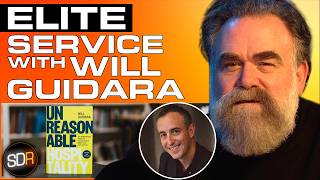
A recorded conversation (YouTube episode) featuring Will Guidara, former co-owner of Eleven Madison Park and author of Unreasonable Hospitality. Hosts Chris Collins and Christian explore Guidara's hospitality philosophy—distinguishing service from hospitality, hiring and interview approaches, the role of obsession and team alignment in achieving impact (e.g., EMP's recognition), and how the book's ideas translate beyond restaurants into healthcare, retail, and other sectors. The interview includes personal anecdotes (his father's influence), publishing reflections, and micro-examples of thoughtful service.
Chapters
Welcome everybody to the big show. Today we have a guest for you, a very special guest. Would you say special?
I would say extremely special.
Who's our guest? Will Guidera, who is the former co owner of Eleven Madison park, which under his leadership received four stars from the New York Times. Three Michelin stars.
How hard is it to get not two, but three?
People brag about having one Michelin star.
He's got a trio there.
And in 2017, the restaurant was named number one on the list of the world's 50 best restaurants. So best restaurant in the world. Will is an entrepreneur, best selling author of an incredible book that I think Christian and I and Patricia have given to a lot of people. Unreasonable Hospitality, which he chronicles the lessons in service and leadership he has learned over the course of his career in restaurants. This is a really fun conversation. Christian makes him laugh.
Oh, I did, didn't I?
Yeah. Well, Christian's always funny. It's always good. But you're going to enjoy this, so check it out.
How's it going, Will?
Going well, man. How are you?
Pretty good. You? You know, why? I have a bunch of questions to. To ask you, and Christian has a few too, but we were turned on to your book by. By clients, actually. So we had a couple clients say, you guys gotta read this book. And as you can tell the library behind us, we're not a. We're not unfamiliar with the reading of books, but Christian was the first one. And if anybody hasn't read it, I don't think that there's been a book in the last five years that has been so highly shared and recommended.
Yeah, for sure. It's not even a close second place.
And so you read it and then you were like, oh, yeah, no, we. And we've bought the book and given it to so many people.
And it has to feel really good from your point of view to have created something, even if you had help or collaboration that is creating such positive conversations and kind of improvement in many different areas. Actually, Christian would describe this book not as hospitality, but as a leadership book. That's what he says all the time. Does it feel pretty good, man?
Well, first of all, thank you.
Those words mean a lot to me coming from you guys, especially with the vast collection of books behind you.
And yeah, it does. You know, I talk about the book as being my lessons of service and leadership.
Kind of gained over the course of a career in hospitality and, and yeah, when I wrote the book, I hoped that it would kind of make impact and be received beyond the restaurant industry. But you never know.
And so it feels good when you know that something you invested a lot of your time into is well received. But for me, the great thesis of the book is whatever you do for a living, you can make the choice to be in the hospitality industry. And the book only has that impact of people far and wide, beyond just restaurants. Not only pick it up, but read it through to the end. And yeah, the short answer to your question, it feels really good, for sure.
Yeah. Isn't it interesting that people kind of either have the hospitality bug or they don't? Like there's really not an in between.
Yeah, I mean, you know what? It's an interesting question, and I think you're right. People either have it or they don't. But I think there's a distinction there where when I was coming up, a lot of the people that I actually like looked up to the most would say, when hiring, you hire for hospitality and you train for excellence. Either people have it or they don't have it. And I think in any moment of time, someone either has it or they don't. But I believe everyone has it in them. They just need someone to draw it out of them, whether through bestowing graciousness upon them and showing them firsthand how good it feels to receive hospitality or working alongside them to show them how unbelievably energizing it is when you see the look on someone else's face when they receive an act of hospitality that you are responsible for. I think once you feel that high for the first time, it's pretty hard to not get addicted.
Yeah, I was going to say the word addiction. It is addictive, right? There's a. There's a chemical thing that happens that bonds you to it.
When you were interviewing, is there a question or a specific scenario you would put potential candidates into that would tell you if they had the bug or not?
I have, like. I have so many thoughts on interviewing generally with that exact thing in mind. Back in the day, I used to have a list of questions that I'd run people through, and the question that probably would have answered that, what you just asked me was, what's the difference between service and hospitality? And gauging whether or not people understood that those two words are not the same. I think far too often people conflate them into one idea. Service is the thing we do. Hospitality is how we make people around us feel when we're doing it.
But then over time, I realized that sitting down for an interview with a list of questions is kind of crazy.
I think that the lessons we learn from relationships in life can be applied to those in work. And I think the biggest interview of your entire life is your first date with the person that you end up marrying. And imagine if you sat down on your first date and you're like, all right, hold on. I'm just gonna. Just real quick. Few questions I want to run through with you that would very likely not be the person you would marry. And yet, I mean, an interview is, in many ways, a first date. It's us determining whether this is someone you want to surround yourself with for some measure of time. And so my interviews now are okay if they are across the table from me. They have whatever experience I've decided they need for the role, whatever credentials, experience, whatever. And then my role is just to identify three things. Do I think they have integrity? Do I think they have a good work ethic? And are they someone that me and my team want to spend time with?
Because there's very few jobs where you can't teach them whatever else needs to be learned.
Yeah, but you're gonna spend a lot of time with them, so you want to like them. Like, I always. I always think, like, I wouldn't hire somebody that I wouldn't be friends with. Like, I consider everybody I work with a friend.
Where people say that that doesn't mix. But to me, if you care about somebody, you would call them a friend. You know, I've been on dates where they had a list. Do you want to know what the makeup was of that when I was single?
Yeah, 100%. I want to know the answer to that.
Female.
29 to 32, not married. Family thinks they're a little crazy because they haven't had a serious relationship. And they will ask you three times on the first date if you want kids.
I remember this one. This one date I went on, she literally asked me. She had a list. Like, you know, it was all about checking off the boxes and wasn't much about an actual relationship. And that's how it felt. It felt very transactional. But she asked me three times if I wanted kids. And I. I answered it the same every time. I'm like, well, if I met the right person. But that answer somehow, what, she couldn't check the box, yes or no, with that answer. So it was pretty funny. In the. In the book, you talk a lot about your. Your father and his influence on you. You know, just kind of.
Whatever the. You know, the answer is, it comes to your head. What is the biggest thing that you took away from your father.
And then anyone who has not read the book yet. My dad is a very, very, very big part of my life. He's my dad, my mentor, my best friend. A lot of people have asked me since they read the book, when's your dad gonna write a book? Because there's so much stuff from him in there. And I always say, I think I took all of his best stuff. So I didn't leave him with any book.
A short book.
Yeah. We went out to dinner and I went to pay. He's like, no, I'm the father. Like, you can't. I'm like, I owe you definitely some royalties on this book. So.
Man, so much. I mean, you talk about integrity.
My dad showed me firsthand what integrity looks like. I mean, my mom was a quadriplegic when I was growing up. My dad, in addition to working restaurant hours, managed to also take care of her, which means getting her out of bed, putting her in the wheelchair, showering her, dressing her, feeding her, doing the whole thing in reverse at the end of the day, and yet somehow still had time to be a good dad to me. He taught me the power of intention, which for him was not an option. It was a requirement. He could not navigate through all of his responsibilities without being very intentional with every movement, not just in pursuit of efficiency, but also in pursuit of compassion. He. I mean, I quote him so many so often. One of my favorites of his quotes is adversity is a terrible thing to waste.
If I could go back in time and make my mom not sick, obviously I would have. But he created.
A culture in our house where we didn't feel bad for ourselves, but we used that dose of adversity to make us stronger.
Another one of my favorite quotes from him is when challenged, when faced with challenging situations, ask yourself what right looks like and just do that.
Saying that so much of light life exists in the gray, but when it comes to what's right and what's wrong, it's normally pretty black and white. And if you make the decision to always do what right looks like, you actually never have to make a challenging decision again for the rest of your life.
I mean, if you wanted to make this a seven hour podcast, I could totally unpack all the stuff for my dad.
I think people would listen.
Yeah, we could cut it up. It'd be great. No, that's. That's beautiful. That's really beautiful. I mean, the. The premise of the book is you.
Taking.
Madison park to number one.
But I would be curious.
Since you've put the book out, like, there were a lot of lessons that you learned and then put into the book. But since you've put the book out and you've seen the content absorbed and interpreted in different ways, have there been any new lessons that you've learned by. You know, it's different when you're actually doing the work and you're the one in there with your team, but now other teams are taking pieces here and there or trying to apply it in different situations. It isn't just, you know, a restaurant in New York.
What.
What sort of things have you observed or learned from that experience?
I think the experience has really validated that these aren't. This is not a book about restaurants.
It's a book about so much more. I was literally in the playground just the other day with my kids, and a woman walked up to me and she said, are you Wilder? I said, yeah. She goes, I have to tell you, I'm a nurse. I work in the hospital network that has nyu, Columbia and Westchester hospitals. And we read your book, and it's become, like, the underlying thesis of, like, our program now. And before we read it, we were at a customer whatever happiness score. I forget the acronym she used of 2.4 out of 5. And now we are consistently averaging 4.4.
But the coolest part was she's like, and we are all having so much more fun at work doing it. And it's really cool. I mean, listen to hear that in a hospital. And I've heard it. Retirement homes and luxury retail and kind of everything in between.
Before I said, the thesis of the book is that I don't care what you do for a living, you can make the choice to be in the hospitality industry. That was the thesis. Right. And it's really fun to see a thesis proved out.
And.
I mean, listen, I. On my Instagram, I always do these unreasonable hospitality out in the world segments where I'm just sharing stories that people are sending me. And.
Hearing the crazy, creative ways in which people are manifesting these ideas and bringing them to life has most definitively inspired me to be more creative in my pursuit of it. I love the idea that you can write about something, and the way that people internalize it makes you, the person that wrote it, better at that thing.
That's a lovely kind of virtuous cycle when it happens.
How vulnerable did you feel when you were writing the book?
I mean, I wrote it during COVID Right. And Covid was this emotionally hazy time, right, where you're just Kind of in your own bubble and you're doing this thing and you kind of forget the world outside actually exists. But when I put it out, it was, it was, it was weird because.
There'S actually like a reasonable, reasonable amount of overlap between opening a restaurant and writing a book. Takes a long time.
You kind of pour all of yourself into it. You're working on this thing for years before it ever sees the light of day. And then one day you release it. Right? Differences in a restaurant, there's however many people in the dining room, you can see right away whether they like it or they don't. And if they don't, you can make a bunch of changes for day two. A book, you put it out there, you have no sense of how people are reacting to it for a matter of weeks. And if they don't like it, well, you're kind of screwed. It is what it is at that point.
And it was in those first few weeks that I felt that sense of vulnerability knowing that there were people reading it and I had no sense of whether it was well received.
Did you have anybody read it before you put it out?
Oh, for sure.
And you kind of had a sense that it was good at that point.
Yeah, but I mean, for obvious reasons, I didn't have a stranger read it.
Oh, I guess the editor was a stranger.
I have a book coming out and I woke up from a dead sleep this morning at 3 o', clock, just panicked that, that, that people are going to take the stuff in there that's really honest and twist it. And like, I was deathly, like, I was like, I got to change. Like, I gotta change it. Like I was thinking that and then I reasoned through it, you know. But it is very vulnerable when you put something out there because then it's not. It's, in a sense, it's not yours. It's like art. It's up to the interpretation and people bring their context and their ideas to it and it's mixed with that. So it, it, you know, it lands on different opinions, I guess.
You know, it's funny every. I've opened a lot of restaurants and right before you open a restaurant, you do something called Friends and Family, where for a certain number of days you invite people that you know and love and they come in and they're like kind of your guinea pigs, right? You're giving them free meals to kind of work out the kinks.
But it's safe because they'll have a little more patience, right?
Yeah, but we would always take the actual Night before we opened, and we would not do friends and family that night. We'd have, like, all the managers, like, the key members of the team, and we'd order Chinese food and we'd eat dinner together in the dining room. And it would be. We had, like, this kind of ceremony that we would do, and it ended with these toasts, effectively. And my toast was always the same. That tonight is bittersweet because we've been working on this thing for years with the sole intent of, like, giving it to the world and allowing people to walk through those doors and breathe life into this place. And yet, at the same time, after tonight, it's not ours anymore.
Right now, it is ours. Tomorrow, it will never be ours again.
And so there is a bittersweetness to all of it.
Yeah, that's a. That's a great way to put it.
And there's. There's a. There's a love and a heartbreak in that. Right? Like, it's some of the. It's one of the, you know, most pure things and also one of the most difficult things, all at the same time.
You're. Are you friends with Simon Sinek? Did I get that right?
His did. Has he had an influence on you at any point with the book and that, or even just how you're navigating this? What sort of advice has he given you?
Well, AI, my first big piece of advice I got from him was that I should write a book. That's good advice. He did that. I never would have written this book if not for Simon. And if you look at the spine of the book, he's the publisher of it.
And Simon was. Simon is the greatest editor in the world, in my view.
When I was done, done, done with the book, I went to la, sat across his dining room table. I had printed out two copies of it. I gave him one, I had the other. And I read the entire book out loud. And we collectively edited it down by, like, I think, 40 pages. That was the best advice he had, was if it's not fully serving the purpose of the book, it needs to go.
And there was one chapter. We got to the chapter and he started reading. It's like, let's just get rid of this chapter.
What was that chapter? Do you remember what it was?
No. I released it, like, five months ago. It's called the Lost Chapter. It was about.
It was called Whatever It Takes. It was about this collab that we did with this restaurant called Alinea in Chicago. And it was about.
How inspiring it is to mesh your Culture with that of another. And if you're really open to kind of.
Like opening yourself up and being open to what you can get if someone else does so in return that magical things can transpire.
Yeah, that's. That's fun. So you kind of had to kill your babies a little bit there at the end.
For sure. Yeah.
Was it weird reading it out loud?
No, because I'm a better speaker than I am a writer.
It's much easier for me. I mean, all of these chapters started just coming out of my mouth, and then they ended up on the page when I sit down to just start writing. It doesn't flow as naturally from my brain as it does when I just start talking.
Well, you're really good at it. So the final product is something I think that'll be around for a long time and help give you a lot of equity because you're helping a lot of people in a really cool way when it comes to customer experiences. And it doesn't have to just be restaurants. What are some favorite experiences that you've had that kind of are almost like hard to describe in words? Like, it's just like you'd say, like, oh, you just got to go, or that sort of thing. Do you. Do you have any. And maybe it's meals. I don't know. I have a couple meals like that.
Yeah, for sure.
Yeah, I have meals. I have some hotel stays. I mean, the thing.
I do this newsletter every two weeks called Premium, which is like what I would be talking about, a premium if I still had a restaurant.
And what I actually.
Another my dad thing, he always says, keep your eyes peeled. Like, if you walk through life with your eyes, like fully wide open, it's remarkable how many little nuggets of inspiration you can collect along the way. And the things that I'm more struck by are less like the crazy, ethereal, over the top magical experiences and the little micro points that you find if you're looking closely enough.
Like, I'm just sitting down to write on the plane today a newsletter.
About.
Being on a plane and have you guys flown and.
Everyone'S asleep. It may be a red eye or something. And yet someone in that airline has decided that the flight attendants need to, at full volume, try to sell you a credit card at the end of the flight. Yeah, that's great. Start cranking into your ear when you have like 30 minutes of valuable sleep left, trying to sell you something that zero people on the plane. 1.
I was on a plane the other day and it was a red Eye. And I just couldn't really sleep. And so I was awake when everyone else was asleep, and I overheard the flight attendants have a conversation. They're like, hey, let's just not do it. We don't need to wake everyone up.
And that was a lovely little micro step of service. And now, I don't know. I can't say for certain whether they were just saying effort to the rules that they've been given, or whether that airline had given them a modicum of empowerment to make that call when it felt like it was actually doing that much of a disservice to the people they were there to serve. But.
If they were just saying effort, it's a beautiful reminder that people in the positions to write the rules are creating enough flexibility where the people on the front line know when it's the right time to flex those rules. They did the right thing.
And to the good people that run American Airlines.
If they were breaking your rules, maybe it's because it's time for those rules to change.
Yeah, that's great.
When they try to pitch those credit cards, even if you're wide awake, it's really annoying at any time. Like, it's funny.
That's actually what they don't tell you is that the last time they had one of those things where somebody tried to open the escape hatch, it was right after that presentation.
No, right in the middle of it.
I do.
It's great.
All right, so. So, well, I've got a couple of. Maybe a comment and then. Then a question. But the first thing is that the way that I've been describing your book to people is that it's a transcendent message. So your. Your thought about whether or not it would make it through just the hospitality or restaurant industry, it's very transcendent. Like, it's easy to put the lessons that you can get out of the book into life and leadership. And I just. I think you hit the nail on the head. And then the other thing I was going to tell you that I got out of your book or reading a lot of the stories in there, is that it restored my belief in both conscious and unconscious obsession. So some people think obsession is a bad thing. I actually think it's a really, really good thing. But the question that I had for you was really about your team building. And then, you know, obviously the things that you did at emp, I think were. Were amazing. But it didn't just happen with you on your own. Was there a time when you looked at your team and it just clicked, and you're like, oh, yeah, we're gonna get it. Was there any kind of, like, pivotal moment, moment where you recognize that maybe I'm not the 50 anymore, I'm number one or number two? And you just looked at the team, and that's. I think, at the end of the day, that's probably the. That's what that, you know, that category or that those awards are about is who has the best team.
Yeah.
First of all, thank you for the compliment at the beginning. That means a lot. And by the way, you say some people think obsession is a bad thing. I mean, it was one of the fights I had around the title of the book was people saying that unreasonable carries with it negative connotations. And I said, no, it doesn't.
It only does when it's focused on negative things. If you are obsessed or relentless or unreasonable in pursuit of the good things, then it actually makes being obsessed or unreasonable one of the most beautiful things anyone can choose to do.
I think that a lot of people that feel like obsession is a bad thing are the type. There's a commonality between them is they really don't stand for anything. Because when you really stand for something, I think part of your. Your childhood and experiences that you had, you know, if you stand for something and you kind of know who you are, obsession isn't a scary thing because there really isn't anything else. You want to make an impact or you want to make a difference or you want to contribute in some way, and you have to be obsessed to do that. I find that most of the time when people say that to. To us or they have before, they're people that don't stand for anything. They don't really know what.
They stand for at the end of the day. Right.
I never made that connection before because.
It'S scary to them. They're almost. They're afraid of it. They're like, oh, you're. You're. It's like you're a heroin addict or something. And it's like, well, there's healthy. You know, there's. There's healthy and there's outcomes, and the outcome is very positive. If somebody really cares about something enough to, you know, really double down and obsess on it and figure it out, and, you know, that's only positive.
I think there's something there. I also think that it's like, yeah, listen, if you are obsessed with one thing at the expense of things that are very important in your life, and you're forsaking Them in pursuit of an obsession. I like that is when things become challenging and problematic, when someone is so obsessed with success at work that they stop being a good husband or father or wife or mother. Right. Like, I think it's. You can indulge in obsession without it coming at the sacrifice of other things.
Even obsession can be treated with moderation.
Was there a moment when.
I knew we were ready?
So, listen, I believe that what earning the top spot on that list actually recognizes is that you are the restaurant having the greatest impact on the world of restaurants at any given time.
It's absurd to say one restaurant's the best in the world. There's too many restaurants. But when you look at the restaurants that have earned that top spot, it's either a restaurant in Spain called El Buli that inspired the world towards Malek Gastronomy, or Noma and Copenhagen, the foraging.
And so it's your impact that the award celebrates. Impact. You can't win the award without a team that's fully aligned in the spirit of the collective endeavor and pursuing that impact.
I think our evolution.
Happened iteratively, not all at once. And so I can't point to a moment where it was like, now we got it. I can point to the moment where I identified what I believed our impact could be, and then some of the various hurdles, or not even. That's not the right word, hurdles. Inflection points where we were able to more fully articulate how we were going to make that impact. And that obviously was unreasonable hospitality.
But I'll tell you, the 50 best awards were in New York the year before we won. And I remember when they were in New York, obviously, just a lot of the people that are involved in that community were in the restaurant for, like, a week straight.
You watch teams when they get to the finals. There's some teams that you can tell are, like.
Trying really hard but emotionally struggling because they're so overwhelmed by the anxiety and the intensity of that moment. And other teams that are just having so much fun because this is their chance to show what they've been working so hard to achieve. And that's what it felt like with my team that week.
And I'm a superstitious person, so I never like to. I like to have very audacious goals, but I never like to say, this is the year we're gonna win it. You know what I mean? But in my head, even though I never said it out loud, I was pretty certain at the end of that week that that then in that moment, we were finally, the number one restaurant in the world.
Excellent.
That's great.
Well, we appreciate you taking this time with us, Will. So we have your team coming out and doing a workshop, a customer service workshop, and then you're going to be a speaker at our top dog event this year, which we look forward to. And I don't think we can recommend the book enough. It also just creates incredible conversations. The conversations that come from your book are maybe the best part because you're talking about how to. How to do something great. I mean, and I don't know that there could be much better than that.
No. And it's hard to put into words. And you did it.
Yeah.
You hit it on the head.
So, yeah.
That's great.
And you're gonna have fun with my team. Billy and Lindsay both were with me in the restaurant for years and years and years and years. So they're not just people that are good at delivering a message. They lived it and developed it alongside me. So I'm excited for them to be with you.
Well, thank you for taking the time to do this, and we. We look forward to seeing you and hope you have. Are you. Do you still live in New York?
Yeah.
So hopefully you have a good flight back. And sign up for that credit card. You get extra miles.
See you, Will.
Bye. Thanks so much for watching this episode of Service Job Revolution. We're uploading new stuff every day, so. So make sure you subscribe and click the bell icon so you don't miss out. If you have a question you'd like us to answer on the show, call 8333-ASK SDR and we'll answer your question on the show. That's 8333 Ask SDR. For special deals on our books and training, head over to offers.chriscollinsinc.com now that's offers.chriscollinsInc.com I'm Chris Collins, and I'll see you in the next video.







