VALERIE BERTINELLI'S #1 Book of ALL TIME!
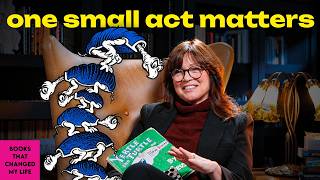
In this interview, actress and author Valerie Bertinelli talks about her extensive reading habits, describing how she organizes her personal library by genre and maintains a queue of about twenty unread titles. She explains that she reads primarily at night and also consumes books via Audible during dog walks, noting how listening helps her grasp the flow of her own writing. Bertinelli reveals details about her forthcoming memoir, Getting Naked, slated for release on March 10, 2026, which focuses on vulnerability, self‑reflection, meditations, and confronting grief, trauma, and anxiety. She discusses the motivation behind sharing personal secrets, emphasizing the therapeutic value for both herself and readers. The conversation shifts to her upcoming Lifetime film, Love Again, about a caregiver dealing with a spouse’s early‑onset Alzheimer’s, and her plans to launch a cooking app called Valerie’s Place, which will combine cooking videos, live book‑club discussions, and a direct‑to‑consumer platform. Bertinelli reflects on her career trajectory from early corporate TV work at CBS and the Food Network to navigating modern streaming economics, and she shares anecdotes about family comfort cooking, such as turkey meatball soup and beans‑and‑weenies, illustrating how simple meals foster connection. Throughout, she balances candid personal storytelling with insights into her creative projects and media strategies.
Chapters
Dictators will never, ever be satisfied. Some billionaires will never be satisfied. How much is ever enough? I don't know what size their penises are, but once it's, you know, obviously it's never going to be enough.
I'm your host, Chris Collins, and you are watching Books That Changed My Life. Today we have a very special guest. She's an award-winning actress. She's a cook. She's a mom, but most of all, she's just an overall incredible person. Valerie Bertinelli. And she's here to talk about the book that changed her life by Dr. Seuss, Yertle the Turtle and Other Stories.
Am I the first to bring a children's book?
Yeah.
Am I? Oh, wow. Okay.
We have comic books, but we don't, we don't really have that many.
Everybody read this book and see how you feel after you read it.
It's so fun. I was so glad you picked this book. It's really fun.
Do you remember it?
I don't.
No. Was it ever read to you as a child?
I don't think so. I think it was Green Eggs and Ham.
I think I loved that one, too.
But I had an interesting childhood. I grew up a missionary's kid in Mexico, and my parents were very strict. So this was like, you might go to hell if you—
well, Yes.
You have to be careful.
Mr. Geisel was—
Jesus isn't mentioned in here.
No, no. But a lot of the way Jesus, a lot of what Jesus believed and how he inspired good people to treat other good people or other people is definitely in here. I think the workings that Jesus believed are in here. I think what Jesus believed is in here.
Yeah, there's a lot in there that way. So, um, let's just kind of go back a little bit and, and to, to the, the place and time. Where did you grow up?
I was born and raised for the first 7 years of my life in— I was born in Wilmington, raised in Claymont, Delaware. My dad worked for General Motors, so we moved a lot.
What did he do for General Motors?
I don't know.
He worked for General Motors.
And it forever made him crazy.
Did he always have a demo, a new car?
Yes. Yeah. Every couple of weeks. As a matter of fact, one of my brothers, David, and I crashed the car when we were like 6 and 5 in our front yard. There's a, the street we lived on, South Avon Drive in, in Claymont, has a slight hill to it. And I've been back since then, since I was a child. And I always thought this hill was like dramatic. It's just like barely— Little slope. It's a little slope, but we used to sled down it. Anyway, my dad had the car parked on the street and David, one of us, and David and I still argue to this day about it, undid the brake and it just like cruised right into the neighbor's car. And we ran into the house and hid in our bedrooms. And then the police came and we thought we were going to jail and we didn't go to jail, but we did get grounded, so. No.
Yeah. Just a part of growing up.
Yes. Yeah.
So Dad worked for General Motors. What about Mom?
Mom is a stay-at-home mom. She was an artist. She was a— What did Mom— I don't know how she did what she did, actually. She had 5 children, 4 of which survived. My brother before me, when my mom was pregnant with me, died when he was 17 months old in a bizarre accident. He drank some, he drank out of a Coke bottle that we later came to know that was poison. So it was in, it was a long time ago. It was in the '60s, you know, 1959, 1960, 1960. And it was sitting on a shelf in a barn. Way out in the country, and Mark picked it up and drank it and died. And they were too far away to get to the hospital. I don't know a lot about it. My mom and my dad— my dad never talked about it. My mom rarely talked about it. Not until she was near the end of her life did we start talking about how difficult that must have— I mean, I can't— I have a son. And I remember going to my grandmother's funeral and seeing Mark's grave there. He died when he was 17 months old. My son happened to be 17 months old in my arms as I'm looking at this grave. I'm looking at my son going, I don't, I don't know how she got up in the morning. I don't know how she took a breath. I don't know how she did it, but she did because people carry on after really hard things. Because I guess that's the, the human in all of us. We don't have a choice to just stop living.
Yeah, that's really hard. Where were you in the hierarchy of the kids?
I have an older brother who's 5 years older, Mark, who was older, who died, me, and then my brothers David and Patrick, who are younger.
So you're kind of in the middle?
I am the middle child and the only girl.
So, were you like the peacekeeper, or what role did you play? You were the instigator?
No, I was the peacekeeper. I believe that I was born, without getting too woo-woo, I believe that I was born into this family to keep the peace, to please people, to make people happy. The burden of responsibility to be the good one was definitely on my shoulders without even knowing it. And watching a family grieve, and watching, you know, what happens, and soaking all of that up as a young child, and trying to, you know, be the one that doesn't cause any commotion, any ripples, you know, just make sure everything's okay. And for most of my life, probably still, I try to be the one not to upset anyone. Which I think is why it's so difficult for me to talk about politics, because for me it's not politics anymore. It's actually about a moral responsibility about what's going on in the world. But it's become such a thing of like, ooh, if I say anything, people are gonna be mad at me and they're gonna hate me. And I actually have no business being aware of what people think of me. It's none of my business really, in reality.
But it's your default setting to be the peacemaker.
Yeah.
Yeah, that's—
yes, that's my long-winded way of saying yes. Yes.
So was the Mark thing just hanging over everything?
I think without even knowing it, yes.
And always just looking back, is there a lesson in that? Or— I mean, it's such a hard thing. I don't know if there is, but I wonder sometimes, is it better to talk about that stuff or is it just too hard No, I think talking about it—
Well, the Bertinelli way, and all of my brothers joke about this too, the Bertinelli way is to not talk about anything. To communicate just like— So everything gets swept under the rug. And I think I'm disrupting that to a certain degree with all the books that I've written. And I'm slowly disrupting it more and more. And I think this book that I've written now, will disrupt it all and really has freed me from caring to a certain degree what people think of me. I mean, I care what people think about my actions toward them and if I've been unkind or if I haven't treated them the way that they've been treating me, if I haven't reciprocated, I care about that. But I don't, I'm doing my best to not care as much about what people think of my opinions, what people think about how I feel, what's going on in the world.
Do you feel a bigger responsibility?
I think it's none of my business. I think my responsibility is to take care of my own lane, and when I see injustice, speak up. But I'm— it's so volatile.
Yeah, people are polarized, and there's really no reason for us to be. We have way more in common.
I mean, there's empirical evidence that shows that what's happening in the world right now is morally wrong. Like literal evidence that it's wrong. And yet we're having conversations about it.
Yeah. Okay, so you're the peacekeeper. When do you become the performer?
While you're keeping peace, because you're denying all of your own feelings.
So how did you—
stuffing your own feelings down. You're not having feelings. You're not allowed to cry when you feel like crying. You're not allowed to be angry when you want to be angry. Decide on how the room looks and how people are feeling, on how you're allowed to feel.
Yeah. So you're always reading energy, kind of, in a sense.
Yeah.
So how does the performer come out of that?
I mean, how did I start performing since I've been 12? Like, why? I don't know. I mean, nobody in my family are performers. They're all artists in a way. My mom was an artist. My brothers are artistic. I don't— Sometimes I think, that we're just drawn to and motivated to do things that we don't know why. And I think as a young child, I was drawn and motivated to be an actor, or at least to be on commercials, 'cause it looked fun. But it was pushing me in that direction so that I could learn a bunch of stuff through these last 60-some-odd years to become a better human being. Without that sounding so— 'Cause acting doesn't make you a better human being. But I think what happens as actors, as artists, is you're— And as a child in that industry, it makes you believe things that are not true about yourself. You're too fat. You're stupid. You're this, you're that. Or you're amazing. Or, you know, nobody's better than you. All these things are untrue about you. And I think my lesson for me is to learn that we're just good in and of who we are. Just by being a human being and being in this world now, today, and choosing to be here and to learn and to love is enough. That just— that in and of itself makes you enough. You don't have to prove anything. And I think I needed to learn that, and I needed to go through a lot of experiences to get me to here.
Was that your escape, acting?
In a way, yeah. And it was also where I was able to do the things I was most afraid of and get to the other side of it. Like, when I would read a part, and if it scared the hell out of me, and thinking, "There's no way I can do this." And when it comes to the day that I have to film this, I'm going to fail miserably, but I want to try. I think that that excited me. And I still— I don't know what happened to that girl. I mean, I'm still feel the fear and do it anyway. That's kind of like what I like to do because I like to get to the other side of all of it. But I don't know where that innate wanting to feel the fear and do it anyway came from. I don't. I just—
It must be youth, like just being young and—
Maybe. Maybe.
I mean, I was way more into taking chances when I was younger.
Yeah, before I had a baby.
Now I look at stuff and I'm like, ah, it's going to be way more work. I don't want to—
like, I look at roller coasters now, I'm like, oh God, I don't want to get vertigo, you know? And I used to love roller coasters. I used to love, you know, I mean, I played a part in the '80s where I went up in biplanes and open cockpits and the pilot would take me up and we would do death spirals and he would cut the engine and we would like fall and then he would do— and I was screaming at the top of my lungs, this is the most amazing thing in the world. This is better than sex. And I was like, I can't imagine doing that now. I would be too afraid. It's like, no, I have to stay alive for a little bit longer. I'm more afraid to die, but I'm not afraid to die.
Well, probably having a kid changes you a little bit there too, because you—
well, I don't want to die because I don't want to leave him. Yeah, he already knows what that feels like. So it's not worth—
it's not worth being in an open-air airplane.
And no, but I sure— oh my God, it was so amazing to do it. I'm so happy I have—
you had a little adrenaline fix?
I don't think so. Sounds like I'm like— but I'm— but I'm like Miss Nervous Nellie, and like safety is my middle name. Maybe. I don't know. Because there is a part of me that's like, no, no, I don't want to do that. Even back then, you know, I mean, I was smart enough to know that I didn't want to try certain drugs because I might like them. So I didn't do that, you know, and smart enough to stop doing drugs when I knew it was, you know, not the right thing and not helping my life. So I, I don't know. I'm just a big dialectical— we all are.
Yeah, for sure. Were you very empathetic as a kid?
Yeah.
Do you think that's what made you good at acting, was that you could feel things?
Yes. But funny enough, because crying scenes were always the hardest things for me to do because you were buttoned up, because I was very buttoned up, and you're not supposed to show people your emotions. And these days— And you're the peacekeeper. Yes. And these days it's like, oh yeah, I'm sobbing, snot coming out of my nose. In this new movie that I just did, it's like all I do is cry. So it's like, it's weird how when you just pull away the barriers and feel your feelings, it's— that's a little invigorating and a little like getting up in an airplane and doing death spirals. Yeah, being that vulnerable in front of people.
How long did it take you to be able to do that? Like, before you would go to the tank and it wasn't there, but now you can, you can do it.
I think everything that I've been through in the last just 5 years alone has filled up my tank of sorrow that I can tap into it when I want to because it's there. There's just so much. Sadness that is just right there, ready to be tapped into because it's like, fuck, life sucks sometimes. And really shitty things happen to you sometimes and you gotta work your way through 'em. And when you do, you're able to sit on the other side and go, God damn, good for you. You got through that and you still stayed kind. You still stayed you know, mature. You still didn't stoop to their level. Good for you.
Would you make the connection from being the peacekeeper as a childhood that it is kind of similar, that you can keep your cool in those situations and not—
That's a nice observation. I like that. Maybe.
But you're older.
I think it's a good point.
You have a better grasp on it.
Of?
Well, you probably have a better grasp now of how to mourn and not sweep things under the rug.
Oh, for sure. Yeah. Losing 3 people close to you within— yeah, '16, '19. So I lost my dad in 2016, my mom in 2019, and Wolfie's father in 2020. So that was just like boom, bang, bing, you know, and lost my job. I got a divorce. I, you know, yeah. Lots of crappy things happened in a short amount of time.
Were you just numb for a while?
Yeah, and I drank myself numb for a while too. And now I haven't drank for 2 years, but I don't think that's why. I think I'm just one of those people that likes to challenge myself.
Yeah, that's tough. And COVID—
COVID really came in the middle of like the worst part of it, and then to be isolated. Yeah. And isolated with someone that you know it isn't going to work anymore. So, yeah.
Yeah.
So there's a lot to tap into.
Yeah. So you were a reader very young?
Yeah.
And so how old were you the first time you read this?
Well, the first time it was read to me by my dad, I believe I was 5 or 6. As a matter of fact—
Like, you would ask your dad to read your story?
Yeah. Daddy, please read Doctor. So my dad— when he was cleaning out his home, and this is before we had to put him and my mom in assisted care, he gave me my book, this book. And I think, I believe he gave the other one to my—
Oh my gosh.
Brother.
That is so sweet.
Yeah. So I think Green Eggs and Ham, my brother has, and my dad gave me this one. And I think he probably knows better why. I don't know, because I loved Green Eggs and Ham too. I also, I mean, I loved Are You My Mother? And what are some of the other ones? Let me—
You know, a couple times I've almost bought the collection of all of his books that I've seen in auctions and stuff. And I think someday I will, because they're so great.
They're so good. They're so good. The Lorax. Yeah. I could have sworn that in the beginning here, there were a list of his books, but I guess I was wrong.
You know what's— fascinating to me about books. Well, many things, but one, one is that you like books. No. When you're a kid, you read this and it has one meaning, and then when you're an adult, you read it, it has a completely different meaning.
Yeah.
And that's happened to me so many times with different books where the meaning changes, but the book is the same.
That's the brilliant thing about children's books and children's authors and how they are able to tell a story so that it's engaging, and then yet still give us a moral. I mean, starting with Aesop, you know, giving us these beautiful morals that we need sometimes to live by, 'cause sometimes our internal compass gets a little mixed up. So when we have these kinds of books as children, as we're learning how to navigate being a human being, I think they're incredibly helpful.
Yeah, and it's harder to do this than to write a normal book.
I would think.
Yeah.
Yeah.
Okay. So for the audience, if they haven't read this book, just kind of summarize what it means to you.
I guess in a super compacted summary, for me, it's treat people kindly, be nice, um, do unto others as you would have them do unto you. Um, and if you see injustice, speak up.
Yeah.
Or burp. And if you've read the book, you know what I mean.
Did you read this to your son?
I think I did. I believe I did. More of the— What did I read to him more often? If I did, I didn't do it as often as my father did. But my son has an amazing internal compass, so I don't know where he got it, but I'm so flippin' proud of him.
Okay, so can you think of any historical figures who might have inspired Yurtle? Which is funny.
Well, we can go back to Geisel himself.
I went and asked you before we started, like, is it okay? Because I wasn't sure if, you know, if that—
well, I believe he literally said at one point, and I could be absolutely wrong, that he talked about Hitler and Mussolini.
Yes.
Or was it Stalin? Mussolini? Yeah. So basically dictators. And kind of— Gödel is a dictator. Yeah. And he's telling people what he wants, what he wants from them right now. And he calls more turtles to come and get him what he wants. And you will give him what he wants right now. I don't care how much pain you're in, but we're going to build this until I can see everything I rule over.
So he gets the turtles to stack.
Yes. He starts with a small amount, and then he gets more and more because he realizes that he wants to see more and more. And then—
The turtles comply.
The turtles all comply because isn't that what we do? We trust people that are in charge to want the best for us. And so we're going to listen to them. And do what they ask of us because we trust that it's for the greater good. So this must be for the greater good. So let's all get together and make sure that Yurtle can see everything that he wants to see and rule over. But Yurtle doesn't care about the greater good. He just wants what he wants. And eventually, he wants more of what he wants. And the turtles at the bottom are like, "Damn, this is getting rough. This is not comfortable. Are you done yet?" Can we, you know, go get some dinner now? It's getting late. And then once Yurtle sees the moon and he sees the moon is higher than him, he's like, no, no, I need to get higher and higher and higher. And Mack, the turtle at the bottom, says, you know what, dude, can you just lighten up a little bit? Because we're getting tired and we're hungry and we need rest and our backs are hurting, our shells might crack. And Yurtle's like, I don't care. I need more. I need more. And he'll never, Yertle will never be satisfied. Dictators will never ever be satisfied. Some billionaires will never be satisfied. Like how much money is enough money? You'll never spend all this money before you die. There are people starving in the United States and you won't even miss the money that you could spend to save all of these children that are starving. But you want more money. You want the title. Of richest man in the world. So how much is ever enough?
So you've thought about this? How much is enough, right? No, I'm asking.
Yeah, how much is enough?
The number. What's the number?
There is no number.
It's got to be a number.
And it varies with different people. Like, if you're a billionaire who has billions and billions and hundreds of billions of dollars, it's obviously never enough. I don't know what size their penises are, but once it's, you know, Obviously it's never going to be enough because it isn't always men. I don't see— I see women that are billionaires that are giving back to the communities. I don't see men billionaire. No offense to men. I have brothers, I have a son. No offense to men. I love men.
I hear Bezos is actually pretty well equipped. I don't know about Elon, but I can vouch for—
I care that he behaves as a dick. Don't be a dick. I don't care what your dick size is, but please don't be a dick. But how much is enough? How much is enough? How much do you think is enough?
Oh, I think about that all the time. I don't know. I wonder, because sometimes I feel like—
or as a whole, like as other people, or individually for you, what's enough?
So I don't know.. But I think about both of those things, and then I think more like, what can I build? And the building involves other people, so how can I make them better? Yeah, it's a complicated question, but I will say that I'm running from something. Like, I think most people—
have you ever looked internally to see what that is?
Oh, yeah, for sure. I know exactly what it is.
What?
I mean, I grew up very poor, and, like, I did not want to be humiliated and feel the way I felt when I was a kid wearing donated clothes as a missionary and getting made fun of and picked on and never feeling like you fit in. So then you have this thing you're trying to fill and you're running from something, but then you miss a lot of stuff by running because that controls you. But then also, like, you're validated by success. It's a mess.
It is a mess.
If I get a couch, And maybe you can help me work through it, but I think most, most, uh, billionaires are running from something. I mean, they will even say that. Most people I know that are very successful will clearly admit that, but then kind of like what you alluded is, we don't know what enough is, so then you just keep going.
Well, for me, enough is, um, logically and externally enough for me is just being able to make my nut so I can pay my bills. I don't need to be a billionaire. I don't need to be awash in money. I just—
Is it $20 million? Is it $50 million? Is it $100 million? Everybody's got a different number.
I don't have a number. I just want to be able to pay my bills and have enough to be able to make other people's lives more comfortable. I want to be able to give. I want my money to be of service if it can be. And if that can't, then I can do it with my time.
Yeah. And isn't part of the story here power? It's about power and control.
I don't want power. Do you want power? And what would that mean if you did have it now? Because you've told me, like, power over the people that mocked you and made fun of you back then, their lives weren't any better. They were doing that because someone always needs, or some people need someone else to be below them. And I've never understood that. It's like, don't you want everyone to lift up to the same so we can all look at each other in the eye? Why do you want to look down at somebody? Why do you want to look up at somebody? Why can't you just look at people and we all be on the same level playing field? No matter how much money we make, or, you know, just I'm talking emotionally, you know, people can make, be in different tax brackets, but if you're being kind and good to humanity, then you'll never look up or down on anybody. And you don't need to look down on somebody to feel better about yourself. Yeah. In fact, I think you'll feel better about yourself if you feel like you can lift somebody else up. And give them— There's no such thing as pulling yourself up from a bootstrap because you can't even get boots these days. So, you know, to be terrible, you know— What? You're wearing boots. Yes, I am. And they have no straps.
I like them too.
There's no straps to pull them up.
Yeah. No, I agree with that.
Like, you— I don't feel better in a situation where someone feels less than in my— That doesn't make me feel better if someone feels less than. In the same room with me.
Now, the, the part of that that is missing from that, which I agree with, is the part that power is a thing. And if somebody had to be in power, most of the time I'd prefer to be the one in power because I can stop that.
Is power the thing, or just being a good manager to manage a group of people together? Not necessarily, because you can be a manager without powering people over or powering over people.
For sure. But as soon as you get the title or as soon as you have the position, you're in a position of power.
But you can welcome people into that. I mean, sometimes there's too many cooks in the kitchen, but you can welcome people into a community of good.
Yeah. And if you're the one in power, and you don't see yourself as better than everybody else, that creates a better environment. Correct. But if I had a choice between some clown or me, I'd rather be the one doing that because I don't trust that clown.
But who put the clown in power?
We did. We vote that way.
I didn't. I didn't vote for this.
Well, when you say this, I don't know what you mean, because the part of—
I'm being coy.
The part of this that affects me the most is here in California. And the, the government here is, uh, not great for me being a business owner.
It's terrible. That I have heard from a lot of chef friends of mine.
Oh, did you read the, the 100 restaurants that closed in 2025? I mean, it's insane.
So I know it's terrible when I—
when we're talking about that, and I know I'm assuming you're alluding to the bigger the bigger power, but just locally, it's a mess for me. And it's, you know, it lacks all common sense. So given the choice, I'd rather be the one making those choices because I don't see myself as being better. I just want to make things work for everybody. Same.
And same. It seems like it's, you know, people, especially in the government, wonder where that budget is going to then.
Oh my gosh. It makes no sense.
I don't like— because that—
the taxes, it's crazy.
So just back to you.
But again, I'd rather be the one with the dice in my hands. Okay. But not because I want to rule people, because I feel like I would make it better for everybody else. I would serve others in a way that maybe they wouldn't like at first, but in the end, they would be better off.
That's dangerous territory.
Oh, yeah. It's a tightrope. Yeah. But I mean, it's business.
But yet these are personal lives at stake. Yeah, it matters.
Yeah. It's a big responsibility. Yeah. I don't think you can be doing it because you want to control others or because you want more money.
No.
You have to do it because you genuinely care.
Yes. Because you genuinely care and you want to make people's lives better. I don't know that there's anybody in government that's doing that. I mean, I can think of a few people that aren't, but they're so demonized.
I'm like you in the sense that I'm an empath. Like, I feel things very deeply. And so it doesn't make me feel good for other people to hurt. Right. That would make me want to work harder.
Right. Yeah. Think of what we could do if we had so much money.
Why don't you run for office?
No.
I think you're thinking about it.
No, I'm not. Oh, absolutely not. No. I have a thick skin, but not that thick. No. And the minutia of it would drown me. This is why I don't want to direct either. I don't want that many questions coming at me. I can take care of my— I almost said I can barely take care of my own life, but I do take care of my own life. Um, but, and that's enough for me and, and my circle of friends and my circle of family. And I still have my— I have a, a big life, but I keep it as small as I possibly can. So the minutia of, of governing people would drown me. Yeah. And, and the empathic part of you would probably drown you as well.
Yeah. So what happens in the book Mac burps and Ural falls. And what's the lesson in that as an adult?
I need somebody to let out a big old fucking burp. Let it all fall. I need somebody, and I don't know who that person's going to be, but it's usually someone, something burps when we're all feeling constricted. And we're getting so constricted right now, a burp is about to happen. And I don't know where or when it will happen. It's just the— I would think the law of nature or science or whatever it may be. I am not a scientist, you know, or— but I think when something's constricted enough, it has to.
So— or what goes up must come down.
Always. Which is Yurtle. So you're—
you're the dictator falls.
I'm trying to think of any dictator that hasn't fallen in history, but I don't know history well enough. I mean, eventually any dictator— eventually they fall or they die of natural causes. Yeah, but—
or of ill health. Anybody who rules people with a heavy hand, usually the people turn on them.
Yeah. Per you.
Yeah, you can't keep people down for—
you can't be that cruel.
It gets harder and harder to sustain.
Yeah, because you got to be more and more cruel, and then more and more people take their head out of their, um, blankets and pull down the sheets and go, oh yeah, this isn't going away by me hiding.
Yeah.
Have you heard of that? I'm sure you've heard of that theory, that 80-year Is it the 80-year theory? Every 80 years, like, we go through these stages. There's the 1, 2— there's 4 stages. And someone smarter than me said we're in the 4th stage and we're about to start the 1st again, which is the regrowing, the, you know, everything falls apart and then we grow everything back. So I'd like to be alive for the growing back part, but I don't know how much longer it's going to take. But I don't—
I don't— it does feel like we're in a cycle.
It does. Yeah, because things don't make— this just happened. This was written in the '50s after World War II. Yeah. So I feel like this could be written today very easily. And, uh, about any— like, any dictator around the world. We have plenty of dictators around the world. So I don't know, do we learn anything from history, or do we— are we just We're supposed to just go through these waves of times, and it gets better, and then we all think it's going to be great, so then somebody is able to come in again. And, you know, I don't— I don't know.
I don't feel like we pay enough attention to history. We should, because it's all mimetic. It's all a pattern.
It's also being denied. There's a lot of, like, actual history deniers out there because Schools are able—
I don't know.
Oh God, I'm going down rabbit holes that just make me uncomfortable.
Do you remember any of the other stories?
What was some of the— with the feathers? What was the one with the feathers? Gertrude. Gertrude McFuzz. Yeah, that's a good one too. That's where— oh, and oh, what was this?
Is Gertrude about self-acceptance?
Yes. Gertrude doesn't like that she watches a bird fly by with two feathers and she only has one. So she goes to this bush and starts eating all the berries, and she keeps growing feathers. And she's like, "Ah, now I'm better than Lola." I don't remember the character's name, but then the better with— "I'm better than the bird with two feathers." And she isn't happy with just three feathers now. She wants to have all the feathers. So she— eats so many berries that all the feathers weigh her down and she can't fly any longer. So then they have to come and help her. And speaking of which, they can't— they have to fly by and help her and pick her up to take her off the mountain. And she has to— they have to slowly pick out all the feathers and she has to go through that pain. So yeah, that's just basically be happy with what you have. The grass isn't always greener. It's not. We may think it is, but it's not.
Just kind of thrive where you are. Add in case you can.
Yeah, you can thrive wherever you are in this world. And it all is attitude. I think Betty White taught me the best about that is gratitude. When you have gratitude, the energy is— it's just a different energy. Even— and I remember going through some of the absolute hardest shit I had to go through. And I still say grateful for what I did have, that what I could look at, and I could look at my cat and see that it was purring and it was happy. That made me happy. I could look at my dog wagging its tail and she was happy. So that made me happy. Little things like that. I could look at a sunrise or a sunset and it just melted my heart because I think looking at the moon, looking at sunsets, looking at sunrises takes you outside of yourself, and you can just appreciate how flippin' gorgeous everything can be. Even when you're feeling like nothing in your life is working out the way you want it to, you can still look around and see beauty. So that's staying grateful. And Betty taught me about gratitude and finding gratitude in anything and everything, no matter how sad and down you're feeling. And I was able to do that. There's a quote by Louise Hay, who is another good book, You Can Heal Your Life. It's a really great self-help book. And that's been out for, since the '50s maybe as well. I still have a yellowing copy. All is well. Everything is working out for my higher good. And even in this circumstance, Only good will come. I am safe. And I remember saying that over and over to myself at some points because as I'm sobbing, thinking my life is over, that I could just, I could at least say that and just remind myself that I'm safe. I'm safe. I'm safe. And you can talk your brain into believing that you're safe when you tell it.
You're safe.
Yeah. No matter how crazy your emotions are going.
How often would you do that to yourself?
When I was in the depths of— I, I would just sit outside and look at the moon or look at the rising sun and just like over and over and over again as a mantra. And they go, okay, once I've gotten my breathing calming, calmed down, I could go inside and make my coffee and feed my animals and clean the litter boxes and pick up in the yard, and I could just like, okay, and not be shaking. That's great. Yeah, it's Louise Hay. It was pretty powerful for her day. And another one of her quotes is, just look in the mirror in the morning and look into your eyes and tell you— and just say, I love you. Have you ever done that? I have. It's hard, isn't it? No, no, no. No, but I love all of— all the guys are like laughing because I guess they know you better than I do.
There's a story behind it though. Like, so there's a lot of books that say like, love yourself, right?
It's hard to do though.
Yeah. Well, yeah. And so that, that's an exercise in a lot of those books, and it's hard for people to do. I have a different opinion on that in the sense that I, well, first of all, what is love?
But before you go on, when you look in your eyes in the mirror and you say, I love you, what happens to you? What are you feeling?
Can I answer that in a second? Because, well, I feel ridiculous.
And then once you get past that feeling, what do you feel?
You never get past that feeling. You don't?
No. Do you ever see the little boy in your eyes that was crying and asking people to not make fun of them?
No, because I'm not that little boy anymore.
Yes, you are. No, he's still— Yes, you are. He's still in there. He never went anywhere. He's still waiting for you to protect him.
I think I worked that out a long time ago. Okay.
No, then I'm wrong.
He was a version of me, but I've reinvented myself. Like, he doesn't have a hold on me.
Oh, I'm not saying he'll have a hold on you. I'm saying he's still in there either cheering you on or saying, oh, hey, that hurts, or, hey, good job.
That little boy was confused. He didn't know what to do. He didn't have good advice. He didn't have good—
but that little boy grew up with you.
Well, that little boy turned into me, right?
So you're saying you left your little boy behind and you have no, like, little boy urges to do things that little boys would do?
Well, in a in a more global sense, is when you're a kid, you control very little of how your life goes. Your parents absolutely control it. So as soon as I could get a job and make my own money, I did. And as soon as I could move out, I did. But once I could control my life, it had a different sensibility to it. I wasn't at the mercy of other people's bad decisions, which was very freeing.
I can just— at the mercy of your own bad decisions.
Well, when I make a bad decision, I can learn from it.
That's what they're for.
And also, I can do another thing that nobody did when I was a kid, is I can own up to it and I can say, hey, the reason why I made that bad decision is I was too greedy or too—
and I was wrong and I'm sorry.
Practice more, ask more questions. Like, I can get better from that situation. And that's empowering and exciting.
Yes. Have you ever apologized for something and had it accepted? Yeah. Have you ever apologized for something, had it not accepted?
Yeah. Okay, question. What is love?
It's a feeling. Safety. It's calm. It's magical.
Exciting. Okay, so I'm looking myself in the mirror and I'm saying I have a feeling that's magical and safe. Like, that doesn't make any logical sense to me.
It does.
No, not to me.
And that's okay.
I've seen so many people, and I'm an empath like you. It hurts me to see these people trying to learn to love themselves when they're in the situation they're in. They're not doing that well. What they need to do is they need to get off of trying to do something that they don't understand, because most people can't explain what love is. And it's this pie-in-the-sky self-help thing that keeps people on the field.
You sound so angry. Why are you so angry?
Well, just let me finish. The thing that I've figured out that's worked for me, and when I've talked to people about this, they're like, wow, thank you so much for letting me off the hook. I think you got to like yourself. But we're not all so great. We got to get better.
We have to agree 100%.
This love thing puts people in this thing. Most people have never been loved. They don't experience love in a way that they would know how to do it to themselves. And so you got to root for yourself. You got to prioritize yourself. You gotta like yourself.
That's the same thing.
It's not. The love thing makes it too unobtainable for most people.
You know what though? What I like about what you're saying very much so is that you're right. You gotta start with just liking yourself. I hated myself for so long because I don't even know why. Because of shame. Shame will do that to you. When you learn shame and you learn shame at a very young age, you will learn to hate yourself and hate anything that you do and hate anything that you say or think. Or think, God, thinking. I finally learned through thinking therapy that what I think doesn't make me who I am. Like, I could think angry thoughts and jealous thoughts. It didn't make me behave angrily or behave jealously. So you are allowed to think those things. You're processing them. Yeah. Thoughts and feelings are— they're information to let you know what's going on, what's being— I hate the word triggered. I gotta come up with another word besides trigger. But what's activating something in your body to make you uncomfortable, anxious, warm, flighty, nervous, happy. What, like, what's happening? And this is all, this all takes place like bing, bang, bing, boom, boom. You know, it's not something you sit and navel gaze about. It's just feelings. And some feelings are really hard on us and some feelings feel really terrific. We're all looking for the really terrific feelings, which is why drugs take over this world, why alcohol takes over this world, because we're all looking for that quick dopamine and all that stuff that we can feel better because we don't wanna have to look at the trauma in our life that fucked us up as a baby. But when I look in the mirror and I can look into my eyes, not at my whole face, but if I look into my eyes, I can see that little girl looking back at me going, I needed to be protected and I wasn't, and I need that now. Protect me. Protect me as a full-grown human being, a full-grown adult. Even though that little girl just still sits inside me, she's me grown up. Like you said, that little boy is you, but grown up and having gone through a lot of stuff. But I wanna feel the good stuff, but I, but the good stuff feels so good because I felt all the shit. So now I'm grateful for the shit. I'm grateful for the shit year that I had just the last, like 2024 was the most fucked up year I've ever had in my whole entire life. 2024 was— 2024 fucked me over. Yes. Physically, emotionally, mentally. So many things. And I worked my way through it. I'm so grateful for it. I learned so much more about myself. I learned what I'm strong at. I learned that I am strong no matter what happens to me. I'm not strong because of that. I was strong. That's why I could handle it. That I'm like proud of myself now. And when I look at myself in the mirror and I see that little girl, I'm like, I'm here for you and you're here for me. And we both remember what happened and we're doing this. Look at us. We can do this. I love you. I like you. That's okay to feel all that. Yeah. I'm also mad at you. Why didn't you take care of me when I was little? I'm mad at you. Why did you say that? Well, I won't say it again, I promise. I learned that was wrong. Just basically what you're saying, but still bringing the little, the little kid into it. Yeah, but, um, no but.
Yeah, well, I just, I find that, uh, some people can't make that jump, and you're right.
And that's why I like your— I like, uh, you have to learn how to like yourself. I think that's a better way of putting it. One other— I'm talking over you because I want you to acknowledge what I just said. I see no buying signals from you.
No, I, I— yes. One other part of this ingredient that I think messes people up is when you say, I'm gonna— I gotta work on myself, a lot of people go— they go internal, and it's very lonely. And the best way for you to get better is to give and contribute. And so that tricks people. You're—
there's that— well, because some people will start navel-gazing far too long and then just start internalizing everything, and, and then they live as martyrs and like, oh, poor me. And like, you— I don't want to be around those people either. Like, dude, get over yourself. Yeah. I mean, you've had a hard life. We've all had hard lives.
Hence, like yourself.
Yes. Get to work.
Yeah. Contribute to society.
Right, right. And stop blaming other people for what you're going through.
And accept the fact that we're not all so great. Like, we all can get better and we're all learning and we're all trying. And that's enough. Yes, that's enough.
Yes. Even at our worst, we're still enough. Because we can learn to be better. I know that it's a phrase in DBT, dialectical behavior therapy, called, I know I can do better. I know I could do better. Fuck, I can't think of it right now. Damn it, damn it, damn it. I know I can do better and I'm doing the best I can. Yeah. So I think you're right about having to give yourself a break a lot. And I think that's part of knowing that you're enough. Knowing that you're enough, give yourself a break. But believing you're enough is so hard to do because it sounds so like— it's impossible to grab onto. Like loving yourself, it feels impossible to grab onto. Liking yourself feels more doable. Like you said. And I like that. I'm agreeing with you. To others, always get outside yourself and go help somebody else. Yeah. Go work at a food bank.
Yes. And I would just make the connection back to what we were talking about earlier, is that mindset is the mindset that I wish more people had when it comes to power. Because if you're in that mindset that you don't have to be the greatest, you're working on yourself and you can always get better, then we all get along because I don't have to be better than you. It's not a competition. I want to contribute to you. I don't want to take.
Well, I gather this from you, that you want to be around people that you can learn from. You want to be around people that you would think might be better than you at something. So that's who you can learn from. I always want to be doing projects with people that know more than me. When I started doing my cooking show, I was with people who knew all about cooking and knew all about how you put it on television. And I was a novice. I didn't know how to— I knew how to cook. I've been— I knew how to cook since I was a little girl, watching my grandma cook, watching my mom cook, my aunts. So I knew that, but I didn't know how to then put it onto television. And because it's a different animal, but I knew how to act, so I could put those two together. But I needed someone to teach me, so I needed some people that were better than than me at that. And instead of looking down on them— why would I? I just soaked up their information. I gather you're the same kind of person.
Oh yeah. What's that Dale Carnegie quote? Everybody's better than me in some way, and in that I learn of them.
Oh, I love that quote. Yeah, yeah.
No, like, everybody's special and they have something.
But it's the people that believe that they're the best at whatever they're doing and cannot and don't need to learn anything else that are the dangerous ones. And those are usually the dictators.
They have big dicks and they're lonely.
They're— well, when you think about it, I mean, that— what are you going to do with that? That's far too big. This is fine. Maybe this is even fine. That's way too much. I— no one— no woman needs that.
Are we talking about fish?
No man needs that.
Because I caught a fish this big.
That would be this. And I never caught a fish any bigger than this. No, because I really did fish. Now I'm talking about fish.
There's one more in here about worms.
Yes. That's like, shut the fuck up, you two. Stop trying to be better than— basically a conversation we just had. It's stop trying to— the bear and the— is it the rabbit? The hare? Trying to out— like, my hearing's better than you. My— is it eyesight or smell? Smell is better than you. Yeah, that's like everyone wants to one-up somebody as opposed to— and then the worm comes out and says, I can see all the way around and you guys are assholes. Yeah. So basically what you're seeing, believe your eyes. We could go back to 1984. I mean, you know, there, there people are telling us right now that we didn't see what we saw when we saw what we saw. And we know we saw what we saw. But they're gaslighting us. I want another word besides gaslighting because it's been overused as well. It's driving me crazy. Triggering and gaslighting have been overused, but it's pissing me off because it's a good word. Yeah. And it is true. And I've been through it personally and I've been through it watching the world slowly destruct itself. It's not proper English, but you know what I meant. Yes.
Okay. Okay. The big question.
Yes, sir.
How did Yertle the Turtle and other stories by Dr. Seuss change your life?
I think it changed my life by making me just as annoying as I've been today with you in this interview. That may— has made me so verbose and judgmental in the way that I think it's okay for people to be. But sometimes I give myself a hard time about doing it. But I think it's made me, it started my road to becoming aware of external things around me, people around me, how I need to treat people, how I wanna be treated. And if I treat people a certain way, they'll treat me a certain way. That's a selfish way of do unto others as you would have them do unto you. I now have gotten to a point where I want to treat people well because it feels good to see people thrive. And that, I guess, is still selfish in its way because it makes me feel good. Mm-hmm.
Yeah. I would say, though, like, with your experience and who you are, you're a huge inspiration. And these sort of conversations, I think, let people into, you know, the understanding that it's not a straight line and we're all working towards it.
There may be no line at all. Yeah, like they say, you know, time isn't linear. It's right up and down. Something— everything's happening all at once. I don't know, I can't wrap my brain around that. I don't use enough of it to be able to, but I know there's something there.
This is great.
Isn't it great? I think we should all be reading this to all of our children, and we should all be reading this as adults or adult children. Yeah. I think I'll go home and read this to Wolfie now.
Will you see Wolfie tonight?
I will. He's already sent me two cat pictures.
Oh, what kind of dog do you have?
She's a little mutt. She's like 35 pounds. She's sweet.
Just out of curiosity, what books were on the bingo card for this show that you were thinking about?
Well, I went over so many books that, like, the very first book I read for book group, which was Angela's Ashes, which is one of my favorite books. I think it talks about poverty in a way that is sadly poetic, but so— Frank McCourt just brings you so deep into that world that you— it opens your heart up. And if you're not an empath, I think it will make you one. Then there are so many books. I love Geraldine Brooks as a writer. I loved Horse. I loved to— I loved historical fiction that takes different eras and weaves them together. I love The Pillars of the Earth by Ken Follett, but I read it so long ago, I don't remember why I loved it. I just remember being enthralled by it. So I need to reread it, but it's 800 pages. So there's so many books, and I know I'm leaving them out. I mean, Margaret Atwood, her books are flippin' phenomenal. She's a beautiful writer. Oh, I'm gonna walk outta here and I'm gonna be so upset that I didn't bring up certain authors, but— That's just coming to the top of my head.
Yeah, it's a tough question.
It is, because as a lover of books, as you know, it's really hard to put— I watch these TikToks or Instagrams of people giving their top 10 books of 2025, and I'm like, how? How do you do that? There's so many good books out there, and they're kind of like— what was the year that Lincoln Highway and Cloud Cuckoo Land and Tomorrow and Tomorrow and Tomorrow all came out? I'm like, I was just like, Sucking them up. They were so good. So there's a lot of good books out there.
When people ask me—
Ian McEwan, another great writer. Oh, my God. The one— what was the one with the balloon and the— oh, God. See, I can't remember titles, but I can remember what happens in a book. Or sometimes I can only remember titles and not what happens.
What's your system at home for books? Do you have a room, a library?
I do. I have a library. It's not like this, obviously, but I have all of my book group books on one side, all alphabetized by author. And then I have my self-help books. I have my religious books. I have autobiographies. I have cookbooks. Yeah. And then I have political books. I only have, like, a shelf this long of political books. I keep throwing them away.
I got political books.
Yeah, I'll come here if I need to read anything.
Do you have a section for books that you just acquired that you haven't read yet?
Like, they're in the queue? I have a shelf of that.
How many are in the queue right now?
I have a couple on my, on my, um, stand by my, uh, bed. And I have that there. Those aren't sitting on my bookshelf. Some of them aren't bought yet, but, um, 20? Yeah. I want to read The Correspondent. I've not read that yet. I want to read On the Calculation Volume. I want to read Atmosphere. Everyone talks about it. So, yeah, there's a lot. And right now I'm just finishing up Infinite Life, Infinite Lessons by Susan Graal. There's a lot of good books out there. A lot. And then I'm going to start On the Loneliness of Sonya and Sonny.
When do you read?
At night.
Before you go to sleep?
Or I'll read uh, like when I don't have to work on a day, I'll do that. Or I will listen to the Audible on my dog walks. So Audible— I, I do like listening to books, and I read my book so people could listen to it because I love that too.
Yeah, I know it's probably more work, right?
I love it though. It's, it's— it, it gives me a chance to read the book in full all because I've only done it in sections all during the process of it. But when I read it in full, as opposed to reading it to edit it, or to look at the editor's edits, it's finding the flow of it. And I was really happy with the flow of this last one.
So your next book coming out is called Getting Naked. When's it coming out?
March 10th.
March 10th. Is it done?
Yeah. I just read last week. I just read the Audible.
How do you feel about it?
I feel really good about it. I feel very nervous about it.
Nervous?
Why?
Because you're getting naked. What's the getting naked about?
It's about getting naked with yourself. About looking in the mirror. Vulnerable. Vulnerable.
Yeah. Is there an exercise in there where you look in the mirror and you tell yourself you love yourself?
It's not the exercise. I do have some meditations in there, though, to help you work through some anxiety. I have a couple different— I have a bath meditation. I get a little woo woo in the book, and I get a little embarrassed about that sometimes. But I can also be very grounded and like, this woo-woo shit is whatever. But there's sometimes it works. There's like, there's something like, I'm reading Susan Graal's book right now because I met with her. And I do believe that we feel energies of people that have passed. And I do believe they show up in different ways. And I have my son's father showing up. I have my mother showing up and I have my father showing up in different ways. And they all show up differently. And she was able to, like, confirm that with me. When my mother shows up through numbers, my father shows up through electronics, and Ed shows up through birds. And it's always when I need them. And it's kind of like, wow. Now, this could also— and this is where my rolling my eyes at woo-woo shows up, where I'll be like, okay, fine, right, whatever, this is bullshit. So I'm always doubting, but I'm also more than happy to believe. Yeah.
So when I read Getting Naked or listen to the Audible, what is it I'm going to learn or walk away with?
Basically what this has been with us now. You're going to listen to me talk about my working through some challenging things in my life. And working through them emotionally, talking through them. And hopefully it will be something that you, the reader or listener, can then match to your own life and go, wow, that's very similar to what happened to me. And that's very similar to how I feel. And this is how she got through this. I wonder if I can try that as well and if that will help me get through this. This challenging part of whether it be grief or whether it be childhood trauma, whether it be abuse, it, it will hopefully help you identify and maybe ease some of your pain.
So you're getting really vulnerable because you're giving to get, kind of?
I'm get— because at this age, I feel like at 65, almost 66, like, what's a secret anymore? You know, why be ashamed of anything that happened in my life if it can help somebody else not feel alone? If it helps somebody else go, oh wow, that happened to you too? Yeah. You know, and also I think people here, everywhere, all around the world just wanna be seen and just wanna be heard and just wanna be acknowledged. And I think when you're given the gift of me being the gift of being able to write about my life and people, some people will find it interesting, that it would, it would be a disservice for me not to. Oh, it sounds so high and mighty. No, it wouldn't be. It— I just feel like if I can talk about something that hurt me really deeply and badly, and it makes someone not feel so alone, that makes it worth not keeping it a secret.
Yeah.
Were there times when you were writing it where you're like, yeah, I'm not going there?
Did you cut pieces out?
Oh, I stopped, right? Oh yeah. No, I didn't cut pieces out. No. In fact, I got more comfortable with adding stuff in.
Wow. So you really got to the roots.
This is probably my last book. I think the next book and next few books will continue to be cookbooks, but this is my last, I think, unless of course something wild happens to me in the next few years, this is probably it for a while, 'cause I have no more secrets to tell.
Well, you might get feedback from the audience that you help them, and then you might continue down that path too.
Oh, I might do more woo-woo stuff. Yeah, I might give someone a lesson on how to look in the mirror and find their little child.
Yeah, you could. Little Chris.
And then they'll give me a hard time about it.
Little Christopher. Yeah, that's great. You have a movie coming out on Lifetime?
I do. What's the movie? I think the title is still Love Again, and it's a beautiful film. I've not seen it yet, but I experienced it, and I've been told it's really good, but I have not seen it. It's about a married couple. They've been married over 35 years, and he gets early onset Alzheimer's, and it's about dealing with that as a caregiver. And she falls in love with someone that she meets, a doctor that she meets at the hospital, and the intricacies and the delicacies of that and how— It's just a beautiful story told with heart and humor. Oh, that sounds so— that's like an elevator pitch. But it's a really— I mean, it's a beautiful script written by Nancy Silvers. Like, she did a ridiculous job of just weaving humor, real-life humor, into really devastating circumstances. That's great. Yeah, it's a tearjerker. I suggest definitely a box of tissues.
Yeah. And then you have a lifestyle cooking app?
I do. I have a cooking app that I'm launching at the end of February, beginning of March, somewhere around there.
Busy.
What's—
can you download the app now? No. No. What is the app going to be called?
It's going to called Valerie's Place. And it's really hard these days to sell your own show to traditional networks and traditional streaming services. So I'm going to start my own. And it's going to be on your phone, and it's also going to be on your television, on Roku, I think. And you can go to ValerieBrittNelly.com. To sign up for when it's going to be released. But it'll be cooking. I'm also going to do a book group. I'm going to do live cooking. I'm going to do interactive book groups with people. It'll be on Zoom. So we'll all have read the book and then we can all talk about it. What else am I going to do? Just basically kind of stuff that I do online already, but, you know, other people are making money off me, just like the way it works in this world where the big, you know, billionaires make all this money and don't pay anybody for the content. Do you have any experience with that?
So, a little— no, I wouldn't. I'm not— I self-publish. I do all my own stuff.
So you know what I'm talking about.
Never have a boss like that. Yeah, it would piss me off. I like to do things the way I'm gonna do them.
I've always, always worked corporate. From the time I was 15 years old, I worked on CBS, and CBS was a Brilliant network. Norman Lear, I mean, he started something on CBS that is, like, unmatched for sure. And I don't think that's arguable, but it could be. Anybody can argue anything these days.
No, but it was a different time. It was a much different era. The ethics and the quality was completely different.
Mm-hmm. Yeah. But, you know, I loved my time on Food Network. Loved it. And I love everybody that works at Food Network.
So, um, have you always been a good cook?
Yeah, I'm a good cook. Key, I'm not a great cook. I'm a good cook.
What is your son's favorite thing that you make?
He loves my turkey meatball soup, my meatloaf. This is as he was a little boy. I mean, as we've gotten older, he—
what does he want?
He just asked me to make the other day, but this is silly. This is— it's beans and weenies. He just needed some comfort food. So we all had beans and weenies one night, which is not cooking. It's just putting a can of, you know, I do sauté the hot dogs first, but, um, but I'm not embarrassed by it because like cooking doesn't have to always be from scratch. Sometimes it's just cooking, just, you know, and, and eating a meal together just makes you feel good.
Oh, and sometimes just because mom made it.
Yeah, like, yeah, like he could have put beans and weenies together, but he wanted me to make it. Mom. Yeah, great for him and his wife. So fun.
Yeah, that's good. Well, thank you for doing this.
Thank you for having me.
We are so excited to announce the Books That Changed My Life website. We made a way for you to show your book pride and that you love books. Hats, tees, hoodies. Check it out. Link in the description. Everybody needs a self-help hat.







