What I Learned As A General Manager!
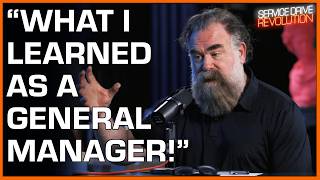
Chris Collins shares 20 years of lessons climbing from lot attendant to general manager and dealer owner. He emphasizes repeatable systems, CRM data for service efficiency, and community events like chef tastings and car-seat clinics that bring customers in and build loyalty.
Chapters
Welcome everybody to the big show. Today we are going to talk about my experience being a general manager, what I think created the environment that I became a general manager and dealer, what I learned in that process. Also just what we have seen people be afraid of and why they don't think they can make that jump, even though we've had quite a few people go from our elite group to becoming general managers, which is an interesting, interesting journey. We talk about that. And, uh, what else do we talk about?
Books.
Books.
Oh yeah.
Music.
Books. We love books. We love books. And much, much more coming up right now on Service Drive Revolution. So we're not live today because of the fact that I'm, I'm recording Books that changed my life, and it was on my schedule. I'm actually, while you, you are watching this live, I am doing an interview with Joan London about a book that changed her life. And so I apologize for that. We're trying to clean up the schedule, but this is prerecorded. And so we can't respond in the chat or do any of that stuff this time, but in the future we will be live again.
That Books That Changed My Life, uh, lineup is, uh, getting pretty exciting.
Oh, you should see the people we're saying no to. Like, it's a thing. Yeah, like, uh, yeah, you know, we were— we had to put out 2 a week for a while. Yeah, yeah, which was never my intention for— and it, it'll— by the time people hear this, it'll be over 100,000 subscribers on the channel, so we'll get the little plaque from YouTube.
Always fun.
But yeah, it's great. Some of those conversations are so fun.
They're so good. They're so good. Yeah, I was just listening to part of the, uh, uh, the little Shawn Johnson— Shawn Johnson clip, uh, Olympic gold medal gymnast.
Yeah, Shawn Johnson.
Sobering to hear her talk about like reaching the finish line and it was other people's start, like It's fascinating conversation.
Yeah, it's really cool. Her husband's really cool too. So then we recorded one with her husband and then them together because they wrote a book which, which is in my queue to read. I, I was thinking about asking him to come speak at Top Dog. Oh, her husband, that'd be cool. I mean, they're both really smart, but he, he was really fun to talk to. I've had some conversations lately that just blow me away. The thing we were talking about Yesterday, so we're hiring somebody to rent the library out for events and things like that. And, uh, we're talking about doing a supper book club where we have a chef come in and curate a meal, and then in between, people bring the book that changed their life, and then they talk about their book. Because I thought it'd be too much to do a book You know, like kind of how we do the book report. Yeah, with the coaches and that sort of thing. So we do a thing internally where we will take a book, assign a chapter to each person like on our coaching team, and then they will do a book report on their chapter. Because it's really easy for somebody to do a book report on one chapter. Our coaches are super competitive though, so they're doing PowerPoint and, you know, kind of up one up the next one, whatever, pyrotechnics. But the, the outcome of that is hopefully it inspires them to read the book. But even if it doesn't, they will have learned the book by watching the other chapter book reports. So it's easy. But I don't think you could do that over a dinner because they get long.
Yeah.
Like you don't want to cut somebody off on their chapter to 5 minutes if it's a long chapter and it needs 20 minutes. And so I think doing dinner parties where people just talk about the book that changed their life And then I don't know, I was kind of imagining this in my head. Like, you start off the dinner and I'm like, I'm Chris Collins. This book's changed my life. Everybody's brought their favorite book. We have 7 personal development books tonight. We have 4 fantasy. We have— and just go through the different categories of what they are. And it's, you know, it's funny.
That'll be a cool experience.
It's funny how many of the books are personal development.
What do you think that says? That just everyone's always trying to continuously improve themselves? Insecurities? What?
Well, a lot of times, like, uh, one, one thing that comes to mind is Susan Lucci. So Susan Lucci had a book that changed her life, and the book is a, it's a motivational book written very much like easy to read, lots of quotes, like, you know, but really, you know, done Her husband of 51 or 52 years passed away and she was having a hard time. It was her best friend. They were so close and she was depressed. Like she was really depressed. And this book, she said she, she sleeps with the book on her, on her bed stand. Like it's, it really like touched her. Like it helped her out of a hard time. You know, words are powerful. Words on, on pages are, are very powerful. Mm-hmm., and the author of that book saw the episode and then she came on the show and then did a book that changed her life. And, you know, just asking her like, what does it feel like that, you know, somebody you had an effect?
Mm-hmm.
And, you know, she sells a lot of books and she does very well, but I think you, she would trade it all. She was never doing it to be successful. She was doing it because she was going through something and she wanted to share her experience to help others. And the fact that it's a bestselling book and all that is secondary to that human connection. And so, so much of Books That Changed My Life is about this human connection of this time in your life where you were struggling or trying to figure it out. You know, a lot of times because we're in Hollywood, it's about trying to figure out your career as an actor or an entertainer. Where, you know, it— there isn't a model, there isn't a roadmap. It isn't like you just— like, the thing that I love about the car business, and I've always said this because I was in bands, you work harder, you get ahead. Like, literally, if you just work harder, you get ahead. It's not like that in Hollywood. The work harder is assumed. You, you gotta network, you gotta— you, you have to you know, almost be everywhere at one time. It's, it's a really hard thing to do. People are so judgmental, like, you're too fat, you're too skinny, you got a big head, you got big eyes. Like, the stuff that people say, the reason why you're not right for a part, or you're, you know, your voice is this, or everybody wants also to make you that you're like somebody else. Like, I remember when we would come down from Seattle and showcase here when I was younger And they would be like, oh, you're grunge. And I'd be like, you don't know what grunge is, huh? You just want to say— we're— you got to put us in a category. Yeah, that's kind of like when I meet people sometimes and they're like, well, what do you do? And I'm like, oh boy, it'd be easier for me to just tell you I'm a plumber. Yeah, because I don't know what I do. I do a lot of stuff. I'm Chris Collins. It's funny when I call, call a place and there's a gatekeeper, you know, and I'm like, uh, they're like, can I say who's calling? I'm like, yeah, Chris Collins. They're like, who are you with? And I'm like, Chris Collins. And they're like, no, who are you with? And I'm like, Chris Collins. It turns into that. I don't know, I'm Chris Collins. What do you, what do you want? Plumber? Yeah, I'm a plumber. And then, then they're fine. Okay, he's a plumber. They can put me in a category. They can size me up. Like, you know, it's that sort of thing. But it's hard in Hollywood. And so these books come into their life and The, the other thing about it that's, that's crazy is sometimes it's like, Hoagie, I know you're struggling with this. I think you should read this book. And somebody, a parent or a friend or just a person that you're having a conversation with, recommends a book. And that's the right prescription for the thing you're in. That happens. But like with, with my first book that changed my life, I walked into a bookstore, and something magical happened where even the title of the book doesn't make sense to what I was dealing with, but that book was the thing that I needed. So books just come into your life. Like, there's this magical thing that when the student is at the highest need, the teacher appears, and that teacher is a book. Sometimes it's just so fun. Yeah, it's such a fun thing.
Yeah. Yeah, it is neat to watch. And, and, um, we've talked about this a little bit before, but, uh, like, how, how many times a guest on the show is, uh, like, man, I didn't expect to get this emotional. And, uh, or I don't know what I'm doing. Did you research me? Did you, you know, or I feel like I'm talking to my therapist, or like, or how many times they're like, are you psychic? Yeah, yeah, yeah, yeah.
We're put— we're putting a trailer together of just people saying that.
That's great.
Like, are you psychic? Yeah, that sort of thing.
I can read you like a book.
Yeah, I'm not psychic, but you can just tell.
Like, you—
it's just, I don't know, if you know enough about human behavior, you know.
Yeah, that's really—
that certain things are connected and personality types.
Yeah. And as much as people are different, we're way more the same than we are most of the time.
I don't know who they are. Yeah, I don't watch a lot of TV, so like the the boys will be like, no, we got to have this person. And they've been right so many times. But I have no idea who the people are when they come in. I mean, I know who Joan London is, of course, and I, I know like Susan Lucci and that sort of thing. But a lot of times these guys come on and they're in a Marvel movie, or they're, you know, they're huge stars, and I will— I wouldn't recognize them on the street.
Yeah.
But we have these incredible conversations about life and all centered around a book. But, you know, I think that for the audience, when, when somebody that is admired or respected for their work shares their story and you start to realize that everybody has their challenges and it's not a straight line, it is, you know, people don't get lucky. Yeah, it's rare that people get lucky. It's a lot of hard work and You know, perseverance. Um, they, they stepped on a lot of rattlesnakes on the way. It's, you know, it's never a straight line that way. So yeah, it's really fun. What would be your— what would be your book that changed your life?
Oh man, you put me on the spot with this one.
Uh, what did you say? I forget.
A couple different times. I don't, I don't know. I don't know. And it's like, we'll go through the list.
What are the choices? What are the— what are the 2 or 3?
Well, um, so, so, uh, one, one that you and I share is, is, uh, Dale Carnegie, How to Win Friends and Influence People.
That's mine. Yeah, that book changed my life. It had me in tears.
Yeah. And, um, so, uh, I had a mentor that gave that to me, uh, you know, 20 years ago, and just it helped me understand, like, he was trying to have a conversation with me about, like, customers being right and stuff and like walking through that, that whole thing and gave me that book. So that's a, that's a, that's a big one. And then like my first, I go back and read it still sometimes today, but there was a book called Counter-Mentor Leadership and it's, it's actually not that, not that good, but it was kind of my first introduction to what leadership actually was, and it had a lot of good insights into it. And there's still— there's still a couple of key things I quote from it to this day, but like, I didn't take it in what I thought leadership was and what it wasn't.
What is that? What did you think it was and what is it?
I thought— I thought it was about like getting Uh, well, I, I guess I thought it was way more, um, management and, uh, and like, uh, how people feel and motivating people and like more, more along things of that line. Um, just, uh, I don't know, I was lost. I was lost into the trap of, uh, like really as a young manager, uh, wanting people to like me. Like, I wanted to be liked. I thought that was a thing, and it was a huge, uh, handicap for me. Um, and afraid to make changes because of what the people in the department would think and, and things like that. And, um, yeah, so that was a difficult thing for me to navigate.
It's great. But what about you, Adam?
I don't look it up real quick to make sure I said it right, but it's like The Subtle Art of Not Giving a Beep.
Oh really?
Yeah, I had— well, it's a little bit probably more recently. And in all fairness, I used to, like, growing up, I used to hate reading. It was funny because, uh, in a way that, uh, especially growing up, my mom reminded me of that. She goes, you don't— because Peyton, our oldest, is, uh, you know, learning how to read and going through all that stuff. And I'm like, man, like she just always wants to pick up a book. She'll— she's got this amazing imagination, will go through all this. And I was talking about that with my mom a few weeks ago, and I'm like, I hated reading, didn't I? She goes, oh yeah, you— that was not your strong suit. Like, I tried— she goes, I tried so many times to give that to you and try to like go through all the things. Always a challenge. So I was never really a big reader. I found into like history, so like, um, kind of going into those things. But up until like really meeting you all, like, what, 7, 8 years ago, I didn't really start, like, truly reading and finding and expanding my horizons. But one of the bigger— so I don't have a huge list, I guess, is the long story short. But one of my mentors gave me, uh, suggested that I should read that book. And there's a couple other, like, what, um, books that complement that one. But, um, it was really like, I'm always like probably overanalyzing things and looking at that stuff and like seeing people for like, in a way, like who they are. So I think we sometimes say like, oh, Midwestern people, like always like real nice and kind.
We say or I say?
You say, but I say we because I hear it from him. And then I think about that a lot too, right? We're super nice and like, you don't wanna like—
You don't wanna argue.
Speak the truth. Yeah, and it's like, yeah, that's one thing. I do wanna cut through the BS of certain things. But it's also, it's, I've always, I guess I've kind of conditioned myself growing up that I think there's other ways about like doing it, but sometimes that's just takes a lot longer.
Yeah. It's funny, like when you're trying to be polite, you think telling somebody the truth is like yelling at them.
Yeah.
Like I'll have people say that to me. Like, well, you were— I think Adam has said that to me before. Like, you were yelling at me and I'm like, Adam, I never was yelling. You just didn't like what I said. You remember that?
Yeah.
I'm not yelling. I wasn't yelling at all.
You want to like yell?
Like, imagine me.
My trauma yelling.
No, just—
but it is interesting that, uh, I think through books, even in regards to— I'd say it's direct correlation within our business. It's just that continuous improvement loop and learning and, and just challenging yourself. Like, I probably won't necessarily read a lot, but I, I've gotten into more of the audiobooks. But what I do find myself is listening to an audiobook whether it's Planes, Trains, or Automobiles, and, you know, in the field, but then I go and buy the book. Now, I don't do it—
If it's good, I do too.
Yeah, and I don't do it probably as much or as well as, like, I know you, like, will write notes in the book or, like, highlight certain sections. I started doing that with, like, this last one. Well, that was probably several months ago, but I would like to get more in the habit of that because there are certain quotes that, like, you can pick out of there that it's just, you know, in the Audible you can, you can set a marker.
And so then if you're at like, if you're in chapter 3 and you're like 7 minutes in, you can kind of find that page.
Oh yeah, I guess I didn't really realize that.
So the, they usually are, are the, the same. Sometimes the Audible is abridged or whatever. That, that always messes it up, like it's edited down a little bit more.
Oh, I haven't came across that Yeah, 'cause like you had Rob Riggle on the Books That Changed My Life. And I mean, I've seen shows, movies, thought it was hilarious, right? But then I started his book, but I also bought it. And I love him sharing like his story. And I think that's probably— I ate that. Yeah, and it's like, I knew some of those things, like, but he did all of those things and the way that people grow up. And honestly, I think it helps us even when we review coaching candidates. And the same way, like, we talk about even, like, potential clients and trying to get to know and build those connections with people on that human level. And, uh, yeah, it's kind of— it's interesting because, uh, from someone that really actually honestly did not like reading or really was very specific on reading, it's opened up— books will open up more of that curiosity to other, other people. But yeah. It's fun.
Yeah, I crave deep conversations. I don't like small talk, so I like conversations about real substance and really understanding. Yeah, I think I've kind of always been that way because sometimes people will be like, oh, nobody's ever asked me that. Like, really? I'm like, how has nobody ever asked you that? I don't know. I'm sure you guys feel that way. Like, I ask you questions that surprise you, but to me it seems totally intuitive?
Um, well, you, you, uh, I want to understand. Most, most people aren't, um, like your fascination with human behavior and psychology and all of those things. Um, yeah, I think you, uh, people aren't used to that. You're so fascinated with that, you're so well studied in that, that, uh, you can, um, you can ask questions, uh, that get to an answer that most people, if they got to that point, it was a long way around. It wasn't such a straight line. I still think about that if I hear you interview someone. Just like the amount of time you're there, you know, talking at a deeper level. Yeah, that doesn't come natural to most people. But also, I think it's a learned I think it was a learned thing for you too. I just think—
yeah. And I would also say though, like, people aren't used to, in my opinion, in like for a while— I wouldn't want to say like today's society— but they're not used to people having a genuine curiosity of other people.
Yeah, that's true too. It is.
Yeah, there's this weird— there's this weird thing where you'll say, you know, I'm an actor or whatever, and then you're like, well, what's acting like? Well, that's off limits. You're like Yeah, you just said you're an actor. Like, what do you mean that's off limit? It doesn't make sense. And that, you know, that's just an analogy for what it, what it seems like to me is, you know, you can tell somebody's had a hard time, you can tell that they're struggling with something, and then it seems like the most human thing would be to ask them what that is. It's like, you know, people that are handicapped, right, is like the thing that they hate more than anything is you pretending they're not handicapped.
Yeah, yeah.
And it feels like that to me is it's like, I see you're in a wheelchair, why are we pretending like you're not in a wheelchair? Like, they're usually— they'll, they'll usually make fun of themselves.
Yeah.
And everybody else is like— and the thing that they don't want is to— they don't want people to treat them differently. They want to be treated like everyone— what it is, you know? And they're living that reality every day.
Yeah.
And so it always surprises me when people are like Well, I don't want to talk about that. And it's like, well, you clearly should. Yeah, the amount of people in therapy too is crazy.
Oh, and it's just getting worse.
So like, the less human connection we have, the more people are in therapy and the more artificial the conversations are.
Yeah, if you go down in, in, in younger ages, like the, the— yeah, the artificial thing is, uh, like, it's, it's just crazy to listen to them.
It's virtual. Yeah, it's like a virtual world.
Yeah, well, I think we were talking about that earlier though, is, uh, we see that things should be going back to more human connection, like even down to the technology, right? People are more— I mean, COVID, I think, definitely exploded this, but the vinyl, right? People going more towards like the vinyl and music and not the digital or mostly digital stuff. Yeah, and having those experiences Oh, right.
So earlier, because, um, so I played a record in our company Monday meeting, but you guys were off of it by then because you were not here, you were on Zoom. But I played the new UHQR ZZ Top, uh, what's the album called? Well, it's the only ZZ Top UHQR, but it's the, their third album from like the '70s.
Trace Something, isn't it?
Tres Diablos.
Tres Hombres.
Tres Hombres. Yeah, that's what it is. So I played, um, a song off of that. I was telling you guys, so I played it for you today. So it's vinyl here in the, in the library, playing a record. There's, there's nothing like that experience. You can't experience that any other way. And I, so I told him, because, you know, we have, we have, uh a younger group, and I said there, there will be people that live their whole life and don't experience that. Yeah, they never experienced that analog, like that sound, that musical thing that touches you in a way that you can't put into words. You, you can't explain what that is. You can talk about the guitar, the drums, but what it is as a whole is not something you can explain. In words. Yeah, there isn't a word for that. It's— you just have to experience it. And I almost think trying to put it into words ruins it. Like, just enjoy it.
Don't even try to do it, just soak it up. Yeah, I agree with that.
Yeah, it's magical.
Yeah, yeah, it really is.
Like, it's— I read a quote the other day that some— somebody said, uh, music is talk— is the conversation with God. And I'm sure at the time they were, they were thinking classical or, you know, something like that. But there's, there's rock, there's jazz, there's even electronic music that is— it's just— yeah, I mean, on Sunday I put on this Nicholas Jarre and it's just— I don't understand how he does— like, it, it's, it's a way of communicating that's, that's talking to a part of us that we don't have a dashboard for.
Yeah, yeah, yeah. Similar to like what you were talking about with books, uh, music can find people in, in, uh, the same type of relationship, right? Like whatever you're in, you're—
that's always—
we were doing that, we were doing albums that change your life, but it just— it's too much.
Yeah, it's too much because that, that's probably where I connected more with childhood with music because my father, like, dude, I still got crates of his albums and I remember changing the records as a kid And then you'd have an 8-track player too. But it was mostly music, not really like books. Music's always associated feelings like childhood, growing up, all that. But that's where like, if you're like, oh, what's your favorite music? Like, I can tell you that what I grew up on, but I don't really try to like discount anything. I'll kind of try everything because there's always some experience. With that.
Music is an interesting thing too, because it doesn't, it doesn't ask for anything back.
No.
Like, you know, if I— there's songs that I could put on right now that would just take me back to being 15.
That's what I mean.
Like, if I put on Anthrax, Among the Living, right now, I would go right back to my bedroom in my grandpa's house. That feeling of just hating everything, like, it would all come back.
What do you call that?
Uh, Mad at My Parents.
Yeah, Mad at Your Parents.
Adam listens to a lot.
That takes Adam to today. Yeah.
Adam is watching.
I love you, Mom.
That—
no, I love you, Mom.
Adam is always sending me these songs and then I'll put it on. I'm just like, why is he so angry?
I did. It's a different— it doesn't make me angry. It's actually— I don't know. It's a weird—
I know it's the same with me. Like, I like, I like music that people will be like, oh, it's so sad. And I was like, oh really? It doesn't feel sad to me. Yeah, I get it. Yeah, they're minor chords. And so you're— it gives you that sensation, but Yeah, it's not—
it's not— I've got that before too. They're like, you listen to that first thing in the morning? Doesn't it get you down?
I'm like, no, I don't know.
There's a couple times because we're like roommates, right, when we come to LA, and there's a couple times you were playing like country music. But if you would ask me, um, there was certain country music growing up, like in high school, I'd be like, oh, like I kicked my dog or whatever, like real sad kind of stuff. But like, I don't even look at it that way anymore. It's just, it's a collective kind of thing. You can like whatever mood and sometimes it like, I don't feel that way about at least with country music anymore, but I do like.
So funny.
Other stuff.
Yeah.
Okay, so reminder for everybody. We have the Service Drive Revolution Academy where we are teaching how to run a profitable, healthy business. We're also going to teach you how to become a better leader. And how to become a better person, more effective, how to think about things, how to approach them. You can go to ChrisCollinsInc, chriscollinsinc.com, sign up for on-demand and we will get you access to that. But we're going to be doing that live. It's every other week currently. So there isn't one this week, but there will be next week. And then I will pick up and start doing the opposite weeks as Hoagie's doing. And I'll be talking about leadership in that, but super fun. We, we had one last week. Great. We're going to, you know, we learned a lot. We're going to change it up, but this is, this is going to be a fun community for everybody to, to learn. So today we're going to talk about going from fixed ops, from being a service or parts manager to being a general manager. And I talked about this a little bit in a past episode about when I was a lot attendant standing in the alley of the dealership I worked for with the dealer and the GSM and asking the dealer, how much does it cost to buy one of these dealerships? I think he said like $7 million. And I was like, okay, how do I come up with $7 million? I always thought of myself as being the owner of the thing. I never thought of myself as just becoming a service manager and that's where it would end. Now that is a different experience than most people. Most people think becoming a service manager is the accomplishment. And what I, what I've been very passionate about is trying to encourage really high functioning, performing fixed stops managers to think about being the one in charge, to think about being the general manager and the one running things. And there's always this kind of stigma of the unknown. I mean, I don't know how many times I've had to talk somebody through the, yeah, but sales, yeah, but you know, that it's this unknown thing that they're scared of, assuming that it's harder than what they're doing. And so I, you know, I, I will, uh, I will preface this by saying I'm different. I've always thought about being the one in charge. No, never thought that being a middle manager was the end. And, and that's a thing. Like, if you're happy being a manager, that's okay too. But you also might be missing out on some experiences and growing and improving and learning that way. The other part of this equation, and I went from lot attendant to general manager to then car dealer. So I owned my own dealership. When I was fixing stores and learning financial statements, I was paying attention to the other departments. So I would help my clients in my off time set up a BDC. Then that led to setting up an internet sales department. And I probably set up 10 internet sales departments when it was new.
Mm-hmm.
Because nobody understood it and I did. And so I, I would set them up. So I, you know, even when I was a service advisor, I tell this story in The Millionaire Service Advisor, I sold cars. I would sell cars in the sales department while I was writing service. I always just wanted to understand how other things work. Like we're talking about my curiosity with human behavior. I'm also very curious about business and different business models. If I meet somebody and they're in an industry that I don't understand, I'm like, okay, how does that work? How do you make money? How do you get customers? What are the nuances? What's the psychology? What are you actually selling? I know you say you're selling software, but what are you really selling? You know, I want to understand what, what's going on. And I've always, I've always been that way. So when I was fixing service departments for dealers, I also was learning about sales and learning about the financials and asking a lot of questions. And I would, spend a lot of time with dealers going to lunch, going to dinner, you know, going to their beach house for the weekend and hanging out. And in those moments, I would be asking them like, how does this work? What, you know, what's going on here? That sort of thing. And then my goal was always to be a dealer. I kind of figured out— so everybody would always tell me like, hey, you're never going to be a dealer because you're not a minority. And there was just a time in the auto industry, there was a focus on promoting minorities to dealers. And so they'd say like, marry somebody and they could be the dealer and you could be the person behind the scenes, but you're never going to be a dealer being a white male. It's just not going to happen. And I always was like, nah, tell me I can't do something. Please tell me I can't. I dare you to tell me I can't do something.. So I was, I was kind of dead set on becoming a dealer and what I learned in asking, you know, bro brokers. So there were some brokers that would buy and sell dealerships for people that would, would actually hire me to go in and fix the dealership before they sold it. And there was this one, this one kind of well-known broker. And I asked him like, what do I got to do to, uh, to become a dealer? And he goes, well, You just got to go to the NADA Academy, and if you pass that— and so I, you know, looked, looked into that, and they said, well, you have to have a dealership sponsor you, because really that program is developed for second-generation kids. I'm not second generation. I'm a dad or mom to send me. So I had a client that, uh, I had fixed stores for and was really close with. We were friends, and I just I asked him, I said, hey, I want to go to this dealer academy, but I need a sponsor. I'll pay for it. I think it was like $12,000 or something for the year. There was some sort of price. I said, I'll pay for it, or we can make some sort of side deal because, you know, I was working for him. I was helping him with his business. And I just need you to sponsor me. That's it. And he was like, no problem, whatever you want. So I was, I was going to— that was my plan. I was going to go to the dealer academy. And get that certificate by, by NADA. Thank God I didn't, because I don't know that— it's a piece of paper, but I wouldn't have known how to run a dealer. I don't know anybody who comes out of that who knows how to run a dealership.
You really got to experience it. It's foundational.
And so what that did is that opened up that client to understand that I wanted to own a dealership. And so I ended up becoming a general manager for him. Which was the other way to get there. So if you're an operator, if you're the operator of record for a couple of years in a successful dealership, then you can buy your own dealership. And so what happened was in the, in the months following, he said, well, why don't you just come run my stores and I'll, you know, I'll help you and then we'll buy stores together was the idea. Well, I'll help you buy a store kind of was the thing. So Um, going into that, you know, I, I told him I had to think about it and, uh, took a huge cut in pay. It was a interest, kind of an interesting thing. I also had to do something with all my clients cuz I had a bunch of clients. It was, it was a, it was a hard thing. It took me 90 days to unwind all of that. But going into it, I already kind of understood sales. I already understood the financial. I had asked so many questions. I'd been around so many successful dealers and just pick their brain. Like, people are willing to tell you stuff if you ask. And so I had a pretty good idea of what I was stepping into and, you know, what the, what the business was like in the other departments where I think a lot of people in fixed ops think of— I don't know, what do you, what do you, how would you describe how most service managers think of sales? It's a foreign country to them.
Yeah. Yeah. Well, and they don't, they don't want to learn it. That's a, that's a, that's a, I think an important piece of this is like, there's almost a, there's almost a weird sense of pride in like you'll hear a lot of service managers talk about that. That's what I like about services. I don't, you know, I don't have to.
Sales is a flashy, sexy upfront thing that always gets all the marketing dollars and all that other stuff.
I think there's a lot of that in You know, uh, instead of looking at it as the next step and understanding, um, it's looked at as, uh, I'm thankful I don't have to be a part of that, almost.
Yeah.
Um, it's a weird, uh, yeah, it's, it's a weird relationship with that side of the business for sure. Um, but don't you—
do you think— I don't want to assume, but do you think like sometimes each department almost kind of acts that similar fashion, whether it's—
oh yeah, sales guys. Yeah, like we see it all the time. Even a general manager will just really be in charge of sales.
Yeah, yeah.
Because they really don't— they might get paid on the overall net, but they don't really— they'll tell you, like, I don't know.
Yeah, we've ran into that recently where the, uh, GM comes in, he's like, oh, I got you guys, like, I'll just stay over here.
Yeah.
And I'm not going to impede on that. And then like even one of our coaches like, no, no, we want you a part of this. Like we can help, you know, bridge that gap.
To that point though, you being a general manager that knows fixed ops is an unfair advantage for a couple of reasons. One is you understand it. You can drive so much profit. The second one is the things that make you successful in fixed ops don't exist in the other departments in the business. And if you apply them, the leverage is 10 times like it's a force multiplier. And like, so my, my experience with, with the sales department was people came and went as they pleased. There was no shift meeting, there was no structure. If there was a shift meeting, it was really like, go get them, Tiger. Like, remember to pull your pants up. Like, it was pretty like You know, you just see these salespeople like come in at 9, at 9:30 somebody takes a breakfast burrito order and goes and gets them at 10. They're all in the lunchroom eating burritos and it's noon and nothing's happened. It's kind of like, you know how when, uh, when a service department doesn't have any work for a tech in the first hour, the tech stands around, they never get momentum the rest of the day. It's just like how you start is how you finish, right? That's how the sales department was. It's like the, the other thing is like they have a CRM, but no, like they're in a meeting going, we got a CRM, we're on DealerSocket, we got a CRM. Nobody uses the CRM. Like they have no idea what the CRM is. Like it was just like, hey, yeah, we, we got, we're modern. We got a CRM. It's like, no, it's a, it's a, you're supposed to use the thing. Like, you know, the systems are super loose. Uh, yeah, the, the paperwork, all of it. Like, you know, there's some commonalities. Like, if you go through a stack of ROs and you go through a stack of deal jackets, it's exactly the same experience. It tells you everything. Yeah, it tells you how tight things are ran, what, you know, what the process is. You can tell the process by the paperwork.
Yeah.
Or the lack of process.
Yeah.
Which is more the case, you know. But there's so many, so many different softwares and programs and, you know, advertising. That's a funny one in the dealership because they spend so much money. Like there was this NADA talk. So I didn't go to NADA when I worked there, but I would buy the DVDs. And the reason why I bought the DVDs one year is there was one speaker, and I don't know who that speaker was or remember them, but the title of his workshop was 50% of your advertising works, 50% doesn't, you just don't know which. Like you're just throwing it against the— and that's how it felt for me is like I had this marketing agency that I would meet with every week., but they never came in and asked me how many cars I sold. They were like, oh, Howard Stern's got this special that if you commit to 2 weeks, how much more can you spend without an hour off? You get invited to this party. And I'm like, well, I don't want the party. I don't, you know, I don't want the cruise or there's a lot of that. Like you get a free cruise if you do this thing.
Like the novelty piece to it.
Yeah.
Then the other thing is how the fa— the people you are interacting with from the factory are completely different than the people you interact with, with fixed ops. You're interacting with like the market manager, not the— the— you're interacting with people that can make decisions right now. They don't have to check. It's a completely different game because the, the top of the food chain is sales. Nothing happens until you sell a vehicle. You sell a truck, you sell a car, whatever it is, that feeds the rest of the, the machine. And so it, it is the most important part of the whole thing. And when you come from fixed ops, like, you know, I would get teased from, from my, uh, managers in fixed ops because they're like, oh, you turned your back on us, or whatever.
Okay, you went to the dark.
Yeah, you went to the dark side.
I, you know, but no, that, that's feeding you. Like, you don't, you don't understand that that's feeding you. Like The reason why you're booked out so far is because we're really good at selling cars. And being really good at selling cars ends up being the secret. And so like the same approach to fixing a service department was the same approach I had to fixing a sales department. All, all the while, I mean, it's just so funny, you guys will understand this. All the while, people telling me that it won't work, that I don't understand, that it's different here. You're like, Yeah, yeah, yeah. Okay, let's go.
Yeah, yeah, yeah.
Okay, let's go. It's just, it's just, uh, it's really funny. I saw this documentary the other day with, um, ah, what is his name? He did all those, uh, funny kind of parody movies in the '60s. Ah, what is his name? Damn it. But anyways, he was telling this story about how he wanted this specific actor for this part. And he had, he had, uh, got funding for the movie, and he, he— this actor was unknown, but he, he wanted somebody who could play the part very straight who was unknown. That was his idea. So he's, he's shot like, uh, a quarter of the movie. Oh, okay. Who was the actor that played, uh, Willy Wonka, the very first one?
Oh, I could picture the—
what is the best one?
Yeah, but the boy, the actual Willy Wonka?
Yeah. Okay, this movie was about him. This documentary was about him.
I can picture him. I don't know names. I am the wrong person to ask for actors' names.
Uh, what is his name? Are you looking it up?
He had like blondish brown curly hair. See, I got you.
Very kind of unique looking.
Gene Wilder.
Gene Wilder. This documentary is about Gene Wilder. So he'd cast Gene Wilder in this part, and Gene Wilder was unknown.
Everybody listening to this is screaming Gene Wilder. That's one of those things that comes to you right away when you don't have to—
yeah, not this guy— when you don't have to think of it. Yeah, so he's, he's like, uh, and the— it's that movie, The Producers was the movie, but I think the original title was like Hitler something Hitler, but it became, became The Producers. He changed the name of it, but he'd filmed like a quarter of it and they thought it was going really well, like, and he plays it for the executive at the movie studio and I guess this guy was just like kind of like a no BS executive and he goes, uh, replace that guy, nobody knows who he is, you need a real star in this part. Because he was watching the dailies. And, uh, the, the director who had written it or whatever says, uh, no, he's really good, like, it's, it's really working. And he goes, no, I'm not giving you another dollar until you replace that guy and get a real star. Make it happen right now. Tell him he's out or I will, kind of a thing. And he, he just goes, okay. Yeah, I'll do that. I'll replace him. And then he never replaced him. And they got so far into it, like he stopped sending him dailies and he got so far into it that there's no way that they would pay to refilm everything. And so then the, the guy just kind of started acting like he was okay with it. Like there was never another conversation about it. That has been my experience so many times in the, in the auto industry where there's this dealer that thinks he knows everything. And they're like, we're not changing the pay plan, or we're not whatever. And I'm like, oh yeah, yeah, no, we would never change the pay. And then we change the pay plan. Like, it's just so— like, you have to trick them into success.
Yeah.
And you got to agree with them, because to argue with them is just like talking to a 2-year-old. Like, you hired me to fix it, and now you're telling me not to fix it.
Yeah.
What am I supposed to do? Yeah, you want to argue?
Fix it.
Yeah.
Do you want me to fix it, or do you want to argue? Like, you It's okay that you don't know what you're doing, but could we, you know? Yeah, that sort of thing. It's just funny.
So what do you think it is that, uh, like, you know, I, I've been told multiple times, and, uh, and, and you even said it yourself earlier in this conversation, that like, um, you look at things a little bit different. Like, you're, you're working as a porter at a dealership and you look at the building, you're like, what's it— how much does it cost to own one of these things? Or Um, and, and like I was saying, most service managers, there's, they almost take, they almost take pride in like, oh, well, I, I don't even want to be a GM because I don't want to have to learn sales or, or whatever. So what, uh, what do you think is the best piece of advice you could give to somebody, um, that, uh, is listening to this and is like opening their, you know, maybe opening their perception to wanting to learn sales to wanting to learn the other pieces of the business. And, and, you know, like, hey, maybe he's onto something there. Maybe I should be thinking about like what it looks like to be a general manager. Yeah. Like, what is the, what is the best piece of advice you think you could give to somebody that, you know, is listening to this and is maybe wanting to open themselves up to the possibility of, of looking at what it looks like to, to run the thing instead of, uh, instead of the spirit behind the question is how do, how do you inspire or motivate somebody to think more?
Yeah, yeah, yeah.
I don't know.
Remember we talked about on the last episode, you can't change people.
You don't.
You either— Don Krevia used to say you either had a lemonade stand when you're a kid or you didn't.
Yeah.
I don't know, like, you know, you talk to somebody and you're like, uh, Well, you could have learned the financial. Well, no, nobody would teach me. Yeah, nobody would teach me either. But I learned the financial. I bribed people. I was annoying. Like, I got the nickname the Bulldog because people knew what I was going to say when they saw me coming because I was a broken record. Teach me this. I want to understand this. Like, they weren't— they didn't care if I learned it or not. I had to trade or, or bug them enough, or, you know, I was always curious. Nobody's gonna hand it to you. I also would say somebody's gotta clean the rooms in a hotel. Somebody's gotta bus the tables at a restaurant. Somebody's gotta fix cars in a dealership. Somebody's gotta be the service manager. It's okay. Like those are very respectable things to do. Especially if you do them really well and you take pride in what you do. It's okay that that's the end of the road and you're happy just being, uh, you know, a house cleaner. That's, that's okay. There's no— that doesn't make you less valuable or more valuable. Yeah, I, I think I just grew up in a situation where I was poor and I didn't want to be poor. And also I had— I grew up in Mexico and I had different experiences that I never fit in anyways. So I'm not trying to fit in because I never did. I was the only white kid in Mexico. I was the poor kid in America. I never fit anywhere I went. I didn't fit in. And so I think that I just don't try to fit in. I'm just trying to figure out what's really going on. And I know there's another, there's another game going on that I'm not invited to, and I'm trying to figure out what the rules are to that game. And at every level, that's how it is. Like, there's nobody invites you in. Nobody invites you in.
You have, you know, you have to have that drive and wanting to figure it out.
Yeah. And there's a, you know, there's a different set of rules for billionaires. Like, there's a whole nother banking system. Like, it's completely different than what we experience. And you— nobody invites you in. Like, and so I understand, like, the idea of this is to motivate people, but I, I don't think in every situation that we've had somebody get promoted to general manager, it was either because they were invited and then we just had to encourage them to give it a try, or they wanted it. But I don't think that we've ever taken somebody who didn't want it and made them want it. You either do or you don't. And most of the time, if you just go through the faces of the, of the people in our program that have become general managers, they were always a little different than everybody else in their intentionality, how quick they made it to elite.
Yeah, right.
They all made it to elite. They all held themselves to a different standard. They all asked questions. Yeah, they were very intentional in what they did. None of them thought that they had it figured out either. None of them had arrived.
Yeah. I mean, like, they were very humble. Yeah. Yeah. And you talk about winning the comp really quickly and, and asking a lot of questions.
So the comp is this competition we have between stores in our coaching program.
Yeah.
For anybody who doesn't know, right? A little inside baseball. But yeah, if you think about them, they're all very similar.
Yeah. Yeah, they, they really are. And, uh, and it's funny, the reason they win the comp so quickly is the, the, the main thing that separates them in how You know, if you're one of the stores that has won the comp in the first 6 months, you're in a, in a 1%, uh, category. It's a, it's a hard thing to do.
Remember 2 years ago when we had the Elite meeting at Top Dog at my house?
Yeah.
And I forget who we were having speak, but I think I was talking about leadership and I said, how many of you bought my leadership book? One person raised their hand and they were the they were somebody who'd made general manager and they were there with their manager kind of introducing them to everything. Yeah, that was it.
Yeah.
The rest of them.
Yeah.
Aren't thinking that way. And they're an elite.
Yeah.
So out of the elite, like you just said, it's 1%. Yeah.
Yeah. It's a, it's a small, it's a small, it's a small thing. But they're one thing that's really easy to, to connect between all of them is how open they are. And when I say how open they are, like when they were looking at winning the comp, they saw stores that were numbers that they'd probably have never seen before. And there's two paths you take when you see something like that. You either try to dismiss it that they're in Los Angeles or they're in— and usually they're not. That's always a funny thing too, where if I— I'll show some people intentionally stores sometimes and ask them where they think that store is and it'll, you know, yeah, they're like, Dallas, Texas.
Yeah, yeah, no, Pocatello, Idaho.
Yeah, yeah, exactly, exactly. And, and then, you know, and they're like, oh, you know, how, how are they doing it? Like, what are they— because it's just a funny thing where they, they, they want to satisfy a need as to answering the question of why they can do it, because it has to be something else other than they just decided to do it and I haven't yet. Like, and they're just more open to that, that if I can figure out what they've done and how they've done it, you know, if they can do it, I can too kind of a thing. But yeah, it's a, it's an interesting thing to, to observe. Uh, but those are the people that, that get results in advance, um, especially at speed. You know, they do it and it doesn't, it doesn't take a lot of time once you're, uh, approaching the world that, that way.
Stuff travels in packs. Yeah, it's, it's makes sense that the people that execute really well when given the tools can execute really well when given the tools.
Yeah, yeah, yeah.
It's, uh, just cause and effect.
It's truth.
Can you think— so can you, from the outside looking in, can you think of any questions about being a general manager that you think the audience would want to know?
Um, because it's a—
there's a lot to it.
Yeah, yeah. Like, um, I mean, uh, what, what is the— if, if there was, uh, well, I, I guess I would ask it like this. Going, looking back at it, what's the one thing that you would do different, um, go, going into it? So, so the same story you just told about how you landed in the general manager seat, once you got to the general manager seat, what's the one thing you would do different Um, if you had to do it over again and I know what I know now, oh, be more charismatic, be a better public speaker.
I was deathly afraid of public speaking back then. I was very shy. So I mean, I ran that thing from the— like, I would have my managers go up and talk to everybody. I wasn't— I never, never spoke in front of the whole group. I was deathly afraid of speaking in front of a group.
That's a good one.
So I would have, I would have worked more on my charisma and my public speaking. I knew I had to figure it out, but that was kind of later. So, I mean, it's so funny, but after that, in between there and buying my own dealership, my buddy Mike and I were in a mastermind together, and he, uh, he had done, uh, a talk at this event that that group would have, and I wasn't there, but they were all praising him in the meeting, like, oh, your, your talk was so good. And I would always sit across from him. I go, hey, what was your talk about? And he goes, oh, uh, pull sheet advertising. And I was like, I thought you were the cannabis guy, like. And he's like, oh, I am. And I go, why are you talking about that? He goes, I'm just practicing public speaking. And I go, I'm deathly afraid of public speaking. I hate it. And he leans across the table and he goes, well, you better get over that because I don't know anybody successful who isn't good at getting in front of a crowd and telling them a story.
Yeah.
And I was like, oh, like, yeah. And in that moment I was like, okay, I'm gonna get over myself. Like, that's really what it was. I'm gonna get over myself. Like, I'm gonna figure this out. Like, there's no, you know. But that was one, is the, is the public speaking. Um, you know, the other side of that is what we do when we go in and fix stuff. When you take over a business and you can fire people directly, you can just make the decision. You don't have to ask permission to change the thing or hire the thing or knock down the wall or add the computer. You can just do it. I mean, we moved so— we went from number 3 to number 1 in the country We made like, we doubled our net. Like, we, I could just move. Like, I had no, I didn't have to wait. I didn't have to convince anybody. Um, but the flip side of that is when you go to the same place every day, you get stale.
Yeah.
So, you know, we're in all these, we're all these different dealerships and we see what's working and what isn't. But when you, when you're back into the reading the label, the jar you're in, yeah. You do, after 2 or 3 years, you become the employee.
Yeah, that different perspective is a pixie dust in a way. Yeah, for sure.
Because you see, like, it just is a reminder, like, oh yeah, if you think that way, that's what you're gonna get. And if you think this way, this is what you're gonna get. But you become that. You're the one thinking that way. And you just, out of just, you know, it's the nature of the system that you start thinking smaller in certain areas and playing not to lose and, you know, different things. And so that's the other part of it is like the first couple of years, I like, I created so much momentum because I was, you know, it was, it was like there was no middleman. Yeah, there was no middleman between me and the results. And I know how to get the results. Like, I know how, how to tee it up and hit it. You know, so it moved very, very fast.
Did, did people look at you different or approach you different after? Because you had somewhat of a relationship with these people before. So then when you were the GM, did it change relationships with people? Was there anything to navigate there?
I mean, you know, people in sales that would treat you like you weren't important, now all of a sudden kiss your butt and that sort of thing. But I'm used to that. Like, I don't— yeah, I don't think I'm important. Yeah, yeah, I don't— it doesn't, it doesn't feed me for people to try to make me feel good because I don't, I don't need that. Yeah, I don't think I'm that special. Yeah, I'm trying to figure it out like everybody else. I don't need to love myself, you know. I'm, I'm comfortable with who I am and the fact that I have shortcomings. And so, yeah, of course. But I mean, I had to make a lot of changes. I had a lot of sacred cows.
Yeah.
And I had to move people. I couldn't get rid of them, so I had to move them. And, uh, you have to really increase sales to be able to pay people not to do a job, you know.
Sure.
And then I had to do the job sometimes, so I had to be the GSM, or I had to do the thing. But for a while I want that because I want to learn it. But then eventually you don't want it because you can't move on to the next thing. You can't set it up and then do something else. The hardest part was probably marketing. Yeah, marketing is psychology and nobody, nobody, nobody tracks it. Like, you know, they're— you're running radio ads, you're running TV. But you don't—
how do you close that loop for the feedback? It's really hard to find that.
Well, I mean, I did a lot of things to, to close it, uh, being very intentional about our partnerships with radio stations and, you know, going out, being live on, on the radio on KISS FM. And go, you know, what we would do is we had this because we had a kind of a coffee shop restaurant in the dealership that I put in. We would do these like 20-gallon things of coffee on the back of this X3. And I forget what we called, called it, I don't know, the action vehicle or whatever. But we would have salespeople, uh, kind of go through their— the customers they'd sold cars to and the businesses they worked at. And then we would offer to bring them coffee and scones and pastries, and then we'd go live on the radio. But we were— the people in the business were excited because we were live and they were live on the radio getting coffee. And then we would get cards and we would sell them cars. But then people that were listening to it on the radio wanted to be at a party, like there's FOMO. And so, you know, we had, we had Howard Stern read our stuff, which was always more effective. Howard was really— when he was on terrestrial radio. He was very effective. Um, but more the organic events, like we had a lot of events. Like I remember, uh, I'm like, hey, I want to have a wine tasting. And they're like, you can't do that. And I just call my insurance broker, I'm like, hey, is it true I can't do a wine tasting? They're like, no, you can't get people drunk. I'm like, okay, thank you. Yeah, we would have, we would have, you know, I would just, we had some, the dealer that I worked for was so involved in the community and so respected you could have an event with another business every week of the month. Like, and so we had a showroom. I'd have people come in and talk and, you know, give financial advice. There's a million financial advisors, but those people that come to that talk buy cars. Like, so events, golf clubs, you know, just where our clients were. The other thing that I realized is like most of our advertising was on the Golf Channel, on, right-wing radio, which was trying to sell the 7 Series and the volumes on the 3 Series. So I went younger. I went KISS FM, Howard Stern, and we sold way more 3s. But the thing about human nature is the older people will aspire to be young. The young will never aspire to be old. So you get the 7 Series buyer when their kid thinks it's cool when they have a 3. Mm-hmm. And so there's just certain nuances about where you put the money and what, you know, the BMW thing is like, no kid is growing up with a 7 Series poster on their wall, but they might have the Z8, right? So yeah, you just, uh, you learn that. I don't know, I figured that out by asking and paying attention and And, you know, asking every customer how they got to us, that sort of thing. Like really, really having data and looking at the data and asking and trying to understand what the avatar was, who our customer was, that sort of thing. But yeah, marketing I think was the hardest thing to learn because it's psychology and everybody tells you the wrong thing because they want to sell you their thing. So the print people want to sell you newspaper ads. The TV want to sell you TV, rate it. But does it sell cars? Like, are we doing it because that's what everybody else was like? A lot of times we were doing stuff because the big Mercedes dealer was doing it, not because it was original to us. And the Mercedes client, although affluent, was a completely different client than our client. The B— you don't see somebody have a Mercedes and a BMW in their driveway. Way. Yeah, they're not the same.
Yeah, it's true.
The, the BMW buyer is younger, and the Audi buyer is even younger than that. And so, you know, you don't really want to advertise where Mercedes is advertising, in a sense, because when I, when I was running that dealership, the 3 Series was— could go head-to-head with a Honda, because an Accord was, you know, 4 or 5 grand cheaper, but they didn't have maintenance. So you could get in, the residual was higher on a BMW, so the payments were about the same. So you could be driving a BMW 3 Series instead of a Honda Accord. Mercedes didn't have that. We had that. So, yeah, you know, just understanding how that works and where, you know, it's just, it's a system, it's a funnel. And where are you getting them from? And then the retention aspect too is So those events that you throw in a dealership retain the customers you already have. So if you're throwing a concert, like we'd have concerts and it's somebody that, uh, is in your, uh, database that's bought a car from you, comes to your dealership for an event, they're way more likely to buy their next car because of that personal connection and the novelty of it. Like, you know, it's just novelty.
Yeah.
And, uh, so like, you know, if you— so we were spending like $2.6 million a year when I took it over in advertising, and I got it down to like $1.8 and way more effective, way more events, way more touching people. But I also got rid of the agency and, and brought it in-house. So I had in-house— I had Direct Effect, 3 people in-house that were doing it for us. Yeah, yeah, that you know, saved us money too, because the ad agency's making 10% on everything, which we just, you know, kind of more than paid for the people that we had that work there all the time, right? An agency has like 10 clients. We were our own client, so we, we were just working harder. You know, we set up stuff like, uh, birthday cards. We'd send out birthday postcards to every customer. Like every day we were printing out those and like, just imagine the dealership just going, hey Adam, happy birthday.
Yeah.
On a postcard. Like it's such a simple thing. It's not expensive to do. Does take, you know, attention and a person to do it. But, you know, if you're, we were selling, let's say 500 cars a month, 500 postcards isn't that big of a deal. Yeah, but it's a huge deal for the people.
Yeah.
Yeah.
You know, so our retention was really high. Like, our number one source was repeat or referral. That was the number one source of clients. And we really like— that was something that Don Cravier really focused on. Like, he's like— Bob Cravier used to say this thing that was genius. And it's so funny because he said it to me. Bob was, you know, he's in his 70s and he was kind of raspy. And he goes, they're not trading in their car for tennis shoes. Like, they're going somewhere else.
Yeah.
Why we gotta— we gotta make it a priority? Did you ask them what, what they're getting? Like, you know, because people would just turn their lease back in, or, you know, we made a big deal of, well, here's the— here's the new 5 Series, like, take it for a day. That's the other thing, like, they would just tell people, like, take it for a day. I mean, there were times I was chasing cars down that people didn't bring back, that we just said, take it for the day, and they had it for a week, and it's a new car, you know. But in the, in the scheme of things, the mindset and the effect that that had on the community of, you know, we're about the human, not about fancy advertising.
Yeah, yeah, it'd be a fascinating, uh, conversation. Um, You know, we were kind of talking about it earlier today. We, we briefly mentioned it about how things come full circle, and, uh, and I've noticed that with a bunch of things. And I was using the example of my kids and, uh, like certain video games that I've seen. Like, there's been times I've walked past a video game and I think a basketball game's on TV, but it was just a video game, but it looked so real. Oh yeah, but it's almost like video games got so real that the novelty now is the something like Minecraft where it's like pixelated blocks and it's going back to the simple earlier thing, what it is. And like, marketing and, and the advancement of AI and all of these things, like what the consumer wants, it's like it's, it's almost like it's circling back to that same thing again now where especially with something like their car. They don't understand it. They don't want to understand it, but they just want to know somebody that they can trust and like that does. And that's a service advisor. And I just think like the more we can understand that concept and get back to that, the more we have an advantage in the marketplace. And, and like if, if AI and and stuff takes over, like what a shame it would be if a kiosk does take the place of a service advisor because people will be begging for the service advisor.
If I was running a dealership or if we owned dealerships, I would have customer liaisons and a salesperson and an advisor would be the same. Like I would take a person and give them 200 clients and they're responsible for their service and for selling. And they would be judged and bonused on how many of those people come back and buy and service with us. But I think retention on the, on the new car side or the used car side is just as important. And so you would have a customer base that you're in charge of and you reach out to them, you call them when they don't expect it. Like you should touch those 200 customers every month. And then I would have events. I would have different reasons to— you got to give them reasons to talk to them, right? So, hey, we're having a Super Bowl party. Hey, we're, we're going to be at the World Cup in this parking lot. Come. Oh, we're having a car show. Oh, we're at this art gallery. Because the, the thing that you have when you, when you have a business like a car dealership is you have a database that people want access to. There's no art gallery out there that wouldn't partner with the BMW dealership to get their clients in their art gallery. Walking around looking at the stuff. There's no— I mean, I've had Neiman Marcus give me gift bags worth $200, giving me, you know, 60 of them for, for an event. Nordstrom, same thing. Like, they want access to those customers. Yeah. Your, your customer base is the most valuable thing. And I don't think we don't nurture it. So if you had a customer manager of 200 people and you, they had to touch them every month, and then you had reasons to invite those people to stuff, you would, you would have like, I want to say 90% retention on the new car side.
Yeah, yeah.
And, uh, also the other thing is we were number one in the world for new car sales for BMW in our market. We didn't see the grosses for the region, I don't think, but in our market How much lower or higher do you think our gross was per new car? Oh, what do you think? What do you think, uh, our competition thought? They thought that the reason we were number one is because we were giving cars away.
Yeah.
What do you think our gross was compared to everybody else in our, in our money?
5% higher.
Yeah, we were $500 a copy higher.
Yeah.
Because the people that you have a relationship with are less likely to grind.
Yeah.
Yeah.
And also, like, you get them to drive the car, you get them to pick, like, you know, just like in service, we have Service Drive Judo, which takes away decision fatigue. And, you know, we sell more because of that than we do advisor training in the drive. We have that same process in new car that takes away decision fatigue. Over and over again, people would say, this is the easiest car buying experience I've ever had. Well, the reason why is because we made— we designed it to make it easy to take. Just like Service Drive Judo's, like, the idea is we take their momentum and use it. We were taking their momentum and using it, but they were driving a car and they didn't even realize it. It was such a different experience than they had anywhere else. The way we designed the showroom, the cars that were on the showroom versus the cars that were in front, like, it was all intentional. To, to create an environment that was designed to sell more cars. I don't know anybody who does that system ever. Like, it's all, you know, so sorry. I mean, just think about that. If you had that sort of connection with people, yeah, how much they're not— I mean, yeah, they're not trading them in for tennis shoes. They're trading them in because they don't like you.
It is funny to think about, like, like I think most people would agree in just a general conversation that had, you know, insight into the car business that if I'm just given 200 clients to manage, that I could hang on to 90% of those. Like, you just kind of do the loose math in your head and you're like, yeah, no, that makes sense. I could probably hang on to 90%. And but the reality is, is the the ecosystem that the typical car dealership runs in today, like, like, what is it, uh, uh, we lose 75% of them after 5 years?
It's, it's up to 85%.
Like, that's just, uh, no, you can't even disconnect.
You can't even put your head around it.
Crazy.
Like, you have home field advantage. Yeah, like, home field advantage in football is like only 5% or something. Right?
Yeah.
You have home field advantage and you lose 85% of the time.
Yeah.
At home.
Yeah.
You hand it off. Like, that's how bad the experience is. But that's because, like, I would say you got 5 different departments.
Yeah.
And they're not working together. So when you, when you meld service and sales and you have a liaison, and I'm like, hey, hey, hoagie, it's Chris over at Bulldog Motors. How's it going? Hey, you know, we have a we have, uh, the local high school principal coming in to do a talk on whatever, and he's, uh, but I don't know, whatever it is, we have the local whatever doing a talk. We're gonna have a wine tasting. We're gonna, we're gonna be at the World Cup. Are you going? No? Oh, well, if, if you change your mind and you're gonna be there, we're gonna have a special party. Yeah, at this thing. And none of that costs that much. You can most of the time get that stuff sponsored. Yeah, but just having it— people want an excuse to go do something and be important. We're having this chef come in from Mexico City that has a restaurant down there, and he's gonna cook for everybody and do a tequila tasting. Like when we had the tequila tasting here at Top Dog a couple years ago, the guy did that because he wanted people to buy his tequila. We didn't pay. I think the only thing we paid for was the tequila. Yeah, that's it.
Yeah, I remember, uh, years, years ago when I first started, um, when I first started on, on the program as a client, uh, doing a car doctor service clinic. And, uh, one of the things we did was, uh, the Oklahoma Highway Patrol would send out troopers that, uh, were trained in, uh, teaching people how to safely put their car seats in.
Oh, that'd be—
there was like, yeah, 85 moms on the service drive.
I want to get that checked out.
Yeah. Yeah, just, just blows you away.
But just think about if I called you and I was like, Hoagie, we're having the Oklahoma State Patrol do that. And you're like, oh, I don't have kids. You still are appreciative that I thought of you and that you still think, oh, they got stuff going on down there.
Yeah.
Like, that's the place you're not going to go to an unfamiliar place that doesn't have stuff going on. It's the novelty of it.
You—
we have to go because you have a meaning. Yeah. But I don't know if you, if you guys have any questions about the general manager thing, uh, let us know and, and I'll answer them. But I think it's a fascinating conversation and something that, uh, it always surprises me nobody asks me about. That and much, much more next time on Service Drive Revolution. Thanks so much for watching this episode of Service Drive Revolution. We're uploading new stuff every day, so make sure you subscribe and Click the bell icon so you don't miss out. If you have a question you'd like us to answer on the show, call 833-ASK-SDR and we'll answer your question on the show. That's 833-ASK-SDR. For special deals on our books and training, head over to offers.chriscollinsinc.com. Now that's offers.chriscollinsinc.com. I'm Chris Collins and And I'll see you in the next video.







