When Discipline Turned Into Discovery: Tembi Locke’s Story
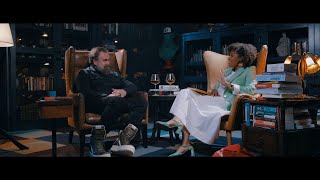
Tembi Locke talks with Chris Collins about growing up as an overachiever and a moment of discipline that unexpectedly led her to art. She traces how that turning point shaped her path to creative expression and personal growth.
Chapters
This time on books. That changed my life. What kind of kid were you?
I was very, like, I wanted to get things. I wanted to do well. I wanted to make my parents proud.
So you got good grades?
I definitely got overachiever. Chris. Chris. Overachie. Over. Over achieving. Competitive, not competitive. I never played competitive sports. I really always felt like I just have to do my best, you know? And the things I was interested in were. I was not always in direct competition with anybody. I was into theater. Like, theater's a community, you know, you're not, like, competing against your fellow actor in a scene. You're in the same place. You're helping everybody. You're helping everybody. So. But no, I think that the overachieving piece was twofold. One, by the time I hit middle school, I was like, there's a world out there, and I want to see it. And how do I get out of this public school and get the grades to go to the places where people that I see in magazines and books are doing these exciting things? And I felt, for me, that the path to that. My parents were always like, well, you're going to college. You can go anywhere you want to go, as long as you get in. They always said that, like, we'll find a way. So I was like, well, then, if you mean it, I'm going to go for, you know, the best I can achieve. And so for me, I knew also, I was in a big public. My high school had 4,000 students, so suburban Houston, football, lovin', pep rally, you know, 4,000 kid school. And I thought, if anything, you say you want competition. I was like, well, how do I distinguish myself among these 4,000 students as someone who a school in a state far away might consider me? And so I thought, well, I'm gonna join everything, and I'm be the yearbook editor. Okay. I'll be the class president. Oh, I'll be in the school play, you know. Oh, I'm gonna do volunteer work.
Wait, you were the class president?
Yes.
Chris, just a minute ago, you said you weren't competitive. That's a competitive.
Here's the thing. No, it's not. Not the way I did it.
Because it came easy for you.
I don't know if it came easy, but I was like, I got the football players and the theater geeks and the band people. I was like, guys, this could actually be fun if we. I was like, tell me, what is your. What is the thing that matters most to you? I was being a little bit of a diplomat because I kind of had Friends in all these different groups. So I was definitely. What do they call that? Like a floater? Socially, I didn't have, like, one group that's like, I'm this. Yeah, I kind of floated. And so I think that floating allowed me to hear what mattered to the football players and cheerleaders of. You know, and what mattered to the theater folks. What mattered to the. You know, the kids who were in dating.
Did you hate it when you were younger, when they tried to put you in a category?
Yes, because. Well, first of all, with a name like Tim Bekele, you know, in Houston at the time I was growing up, I knew I didn't fit into a box. I knew I was not Janet. I was not Janet. I was not Jennifer. I was none of those people. And also, I think, going back to my parents, because, you know, first of all, I was bused a lot to school, so I also knew that the people I went to school with were not the people who lived in my neighborhood. And so I also knew that, like, I'm not, and I can fit in both spaces. So that constant code switching culturally, socially, linguistically was just a part of my day. And I think that that is a gift. I mean, it was. It was hard, but it gave me a gift, and I wanted to. And I changed schools several times. And so I was always trying to sort of like, we'll find my place in this. And usually it came down to words. Theater, you know, something with art, wherever. Whatever school I was in, it was usually like I wanted to find what was happening with the play. What. Where were they doing art? Like, if I found that, I could find my way.
What's the most trouble you ever got in?
Are you saying at school?
No, just with your parents.
Okay. Yeah.
Well, it could have been at school.
No, I didn't do. I knew. I know I didn't carry the bad school because I knew that had a record. It was called a transcript.
So seventh grade, eighth grade.
That's the time.
Yeah, it is. It is. I will. The. The young man will remain unnamed. It was a boy, and he had this thing called weed. And he was like, you should try this.
Which is very interesting because I was trying to figure out what an herbalist is.
So he was like, try this. Try this. He's like, we're gonna. Like, at my house. I was like, what? And he's like, we're just gonna smoke it. And I was like, I am not smoking it, but I will come over, because, boy. So we get there, and I barely take a Puff. But here's what happens. And my sister's gonna laugh when she hears this story. She was hanging out with the boy's younger sibling, and they had just seen the Nancy Reagan. Don't do drugs. Your brain will fry. You will die. Like, spontaneously. Come. Just say no. All the things. She ran home and she said, mommy, Tabby's on drugs.
She needs rehab.
And I got grounded. I got serious. When I say grounded, I mean grounded at a level that was.
Make a point.
Like, to truly make a point.
Yeah. Your parents are trying to make a point.
They made a very serious point.
Mom or dad?
Mom. Mom made a very serious point.
What was Dad's take on it?
I think dad. Because he wasn't. I was staying with mom at the time, so I'm sure she called him. What they did do well was they didn't tag team me too hard. So I knew if one person knew the bad thing that happened, they had told the other one, but the other one didn't need to pile on. So dad never piled on, which I really appreciated. So I could just kind of hang out in my.
Weed. Shame.
Grounded. And I think the grounding went so far, Chris, as I could not walk to the mailbox to get the mail. It was like, you come home, you stay in this house, and you don't. And it went on for a month.
You got the ankle.
It was terrible. It was terrible.
Check in with your promise.
So here's the. Here's the silver lining, though. So I think my mom and grandma.
By the way, mom never smoked weed.
I don't know what she did. She probably did. I don't know.
Come on. That generation.
Anyway, it was overkill. But I'm going to tell you, here's the silver lining. She talked to my grandmother, who was an elementary school teacher, was retired at the time, and she said, you know, TEMBY did this. I'm grounding her. And my grandmother was like, this is what you need to do. She can't watch tv. They took the TV out of my room. So I'm literally in a prison cell called my bedroom.
You have TV in your room?
I had a TV in my room.
Wow.
I was fancy. I was fancy.
Gone.
But my grandmother said, take her to the art store. She gets one field trip in this month. Take her to the art store. Tell her she can buy anything she wants at the art store, and she can put it in her room and she can make art. And I was like, what is this? But okay, I get to get out of the house and I'll go to the art store.
Secret psychological warfare from Grandma.
Grandma. Grandma did the thing. So here's the thing. So I'm moody and I'm mad, and I'm really mad. And so I paint everything black. Like, all the paintings are blues and grays, and they are black, and they're all. And my grandmother, at the end of that month, she was like, show me what you did. Showed her one of my paintings. She was like, this is beautiful. I'm gonna frame it and put it in my living room. Now, my grandmother.
And she hung it in her living room. So here's the thing. Now I'm like, oh, the reframe happened. Because I'm like, wait, is she proud? What just happened here? And I felt like, oh, this was peaceful. I enjoyed the painting. Now it's being framed, and she actually says she likes it. And I think it opened up this sense of, like, wait, I can do many things, and this is a tool, and art can be a tool. Because I had to do a lot of thinking during that month. That was their whole. That's why you lock a kid. Lock a kid in a room and give them paint. And I think I left it thinking, okay. And my grandmother held that in her. That was on her wall until she moved in in her elder age. And when she had, you know, early stages of dementia, moved in with my mom, it still hung in her. In her house.
Do you have it?
I don't have it. I think my mom has it somewhere in storage.
You know what's so smart about that is when you're caging a kid like that, what your grandma knew is you gotta give them an outlet, a door.
A door?
Yeah.
A door to their imagination.
She rewarded the door by validating whatever you did, whatever.
That process was so smart.
You're an outcome of some pretty good parenting they did.
It was a group effort. A lot of group effort. It takes a village. Yeah. And I think there was a lot of talking amongst. You know, I've asked them, now that I'm a parent, you know. You know, like, did you guys, like, how did you figure out what to do?
Because they had a Machiavellian.
They were. They were on it. But for us, I think we just had consistency. And we were told, if you can dream it or see it, it's our job to help you try to achieve it. Now we can't. We'll go as far as we can, but we will give our best. We'll give our best effort, too, but you gotta give your best effort. And I think that message consistently over time really gave me the kind of freedom to say, like, I want to be an actor. And then, you know, later, I want to write. And for my sister as well, and my brothers as well.
Yeah, that's. That's really cool. It was really fun. Okay, so let's go to it. The time in your life.
Shall I pull the copy out?
Free the book.
Thank you.







