Why disrupting the auto industry might be the only way to survive - Brian Benstock Service Drive Rev
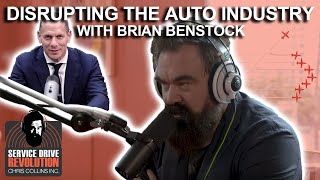
Chris Collins talks with Brian Benstock about why car dealerships need to fundamentally change how they operate. Benstock argues that adapting to what customers now expect isn't optional, it's survival.
Chapters
Foreign.
Welcome everybody to Service Travel Revolution. We have an exciting show for you today. I'm excited. Our guest, Brian Ben Stock is a pioneer in our industry and he's currently the general manager and vice president of the number one Honda and Acura dealership in the world, Paragon in Queens, New York and is known for his customer service driven philosophy. The future is frictionless is a term I think he has coined and I'm, I'm really curious to pick his brain and the reason why we're having him on as he is kind of borrowing and influenced by systems from Amazon and Peloton bicycles. And I'm kind of excited to talk about all that. How are you doing, Brian?
I'm doing great, Chris. Thank you so much. It's great to be on. Great to be on your show.
How's the weather there in Queens, New York today?
Come on. It's always sunny in Paragon land. It's always sunny in Queens. It's great. Really having a mild winter here. Cold but not a lot of snow. So it's, it's, it's good automobile weather.
That's, that's great. So I've, I've spent some time in New York, obviously. We have a lot of clients there and I have, one of my favorite clients of all time is in Long island, which I know is where you grew up. We actually created our famous margarita recipe there with Eric Haberstad on Fire Island. Yeah, Eric's a great guy and yeah, we spent a whole summer at his house on Fire island perfecting the perfect organic margarita mix which we call Erock's Famous because we named it after Eric. But it's a great place. So you grew up there in Long Island?
I did. I sure did. I grew up initially on the south shore of Long island and then later on in life moved over across the island to the north shore of Long island where I, I currently love it there.
Yeah, it's a great, great place and the, I love the people there. It's a little different than the city. A little more, you know, personal and down to earth. Everybody's got a deli and everybody's got a guy for a thing and it's amazing. So take me back a little bit, Brian, for, for our listeners kind of to the beginning. So let's say that I'm the 12 year old Brian. Growing up in Long island, you end up in the car business. But like most of us, you know, when you're 12, don't you want to be a fireman or a police officer? An astronaut. What, what are you thinking when. When you're a kid, pre preteens, about what you thought you wanted to be?
Man, I was so spot on, focused on what I wanted to be. I wanted to be a hockey player, I wanted to be a goalie. I wanted to play in the NHL. I wanted to play for the New York Rangers. And there was no hesitation that that's what I was going to do. My doors in my bedroom, my closet doors, my bedroom door was covered with pictures of hockey players from top to bottom, glued recklessly to the door. I don't know, my parents didn't kill me, but I ate it up. I lived it. And as soon as I was able to get on skates and play hockey, I did. And I think that the person that I am now was forged at that time. I am obsessive about things that I like, passionate about, and I throw myself in 100%.
So what specifically did you learn from hockey that kind of built your. Your character and who you are?
It's an interesting question. When I first tried out for my first hockey team, I don't know if you know how much you know about hockey, but goalie pads are quite expensive. And back in the day they were made out of leather and, and they were, I don't know, about thousand dollars for a set of goalie pads. And when you're 13 or 14, $1,000 in 1973 was a heck of a lot of money. And my father said, you know, I'm gonna wait to see if you make the team before we buy you goalie pads. And what a paradox, you know, how can I make the team if I don't have goalie pads?
It's the chicken or the egg kind of syndrome.
Yeah, it really is. But, you know, I took some foam rubber and covered it in denim from blue jeans and took some straps and I tried out for a, what they call junior hockey team. And I gotta tell you, the first night of tryouts, I got hit in the shins with the puck through the foam rubber, and it really hurt. So I became an innovator. I actually took magazines and taped them around my shins and then put the foam rubber over it so it would dull the pain of the puck. And of course, I mean, they were laughing at me and I looked bush league. I was wearing a street hockey mask, going mask. And I had basic equipment and I got cut from the team. I didn't make the team. But my father, to his incredible credit, saw the self as they're trying and he Bought me two months early for my birthday, a pair of goalie pads and Chris. I cried like a baby and I took them to bed with me that night. I slept with my goalie pads. I was so excited. And it started me on my. It started me on my journey playing hockey and just really threw myself at it. And within two years, I was playing on the all Star team. And within four years I was practicing with the New York Islanders and the power skating instructor with their power skating instructor, Barbara Williams. So it's just really. I think it was a metaphor for a lot of the things. If I've done a couple of things right, I think it was a metaphor for those things that I've actually been able to do.
Yeah. Because. Well, because in business and especially in our industry, a lot of people stop at the. Well, I don't have goalie equipment. Right. And the key to success is. Well, yeah, you don't. But how are you still going to get the result? Or how. You know, I think a lot of times the customers end up being the victims of our lack of pushing through because our industry is just, you know, riddled with. That's how we've always done it. Right.
Well, you know, it's never been more true than it is today, what you just said. It's. I think he said the customers suffer through what we don't do or what we don't have. And it's so true because they're so used to having it a certain way in every other touch point that they have in life. And they come to us and we've seen prehistoric. And the second the customers have an option that does not include us, they'll take advantage of that. And more and more in the transportation world and service world, customers have options and it's going to accelerate and we need to be ready for it.
Yeah, it's interesting how consumers have changed and industries have changed, but our industry, like I, I literally have a book, Brian, that was written in the 30s by the Ford Motor Company that was kind of a how to run a service department. And it is exactly like we do it today, like since the 30s. I mean, there's a chart in there, how to do a walk around. There's an inspection sheet. It tells you how to dispatch. Like, it's the. It's the same as. As what most service departments are running today. But the customers have changed, the cars have changed, the industry has changed, the. Everything around us has changed. But we're still following this model that's just been handed down year after Year. I remember years ago I was a speaker at nada and they do this thing where they have you get on this teleconference and they have you give your talk to them and it's a whole board of a bunch of people from the different parts of nada. And at the end they said there's two things. One is in your pet the dog story, we don't want you to call your ex wife Satan. And I left that in. I didn't change that. But the one thing they said is we don't want you to talk about Tesla. And I had this whole story in there about my doctor and his experience with Tesla and how he perceived he didn't have to do anything and how much easier it was the transaction, the buying process. When it came time for service, somebody came and picked it up and they, they said we don't want you to talk about Tesla. And I'm like, well, why? And they said, well, it's the elephant in the room and it will be an unpopular subject. And I'm like, really? Like we, my, my role is to talk about things that are unpopular. Like.
Yeah, go ahead. I'm sorry, there's, it's, it's shocking that this is the attitude of nada. It's shocking.
Oh, it's terrible.
Tell you, I can tell you this year a very good friend of mine had a presentation prepared. You know, as a speaker at nada, you've got to turn those in several months in advance. They want to make sure that you're not pitching all this. And this is a very well known person and in his presentation he talked about that their research showed that the SAR for retail sales is going to go from where it Is to about 11 to 12 million over the next X amount of years.
And it's going to drop dramatically.
Yeah, it's going to drop dramatically because the people are not driving less, but they're driving differently. And it's going to go and that's going to shift. And about a week and a half before his presentation he got a call, his team got a call from their team. You can't present that information.
And it was shocking to me. And what's more shocking is that do they want us to be led to slaughter? Do they want us. I don't think we want the deal body afraid. But NADA is there on our side now. I'm not asking for them to lobby against disruption. I'm not there asking them to prevent or restrict Uber or Lyft or a Carvana or a Tesla I think the innovation that they're bringing is good for the industry. But tell us about it.
Yeah, you got to tell. It's not tell the truth yet. It's like, how would you, how well would we do if we ran our companies with a bunch of yes men around us? Like their role in the industry is to provide independent information in the truth, not we don't need, you know, we don't need it curated by what they think people want to hear. It's. It's crazy. Yeah. The thing with NADA is, is nuts to me that. So the other thing is, after I spoke, I did two presentations and one on gamification and one on, you know, how to, how to fix your service department. And every day I led in attendance. So I had the most attended workshops except for one day when they had a panel with like Roger Penske and a bunch of people. And I led in attendance and nobody from NADA contacted me. I, they were the worst to deal with. They could have cared less, less about any of, of the things I was presenting or the message. I got great feedback on my, you know, they tell you after how people rate you. And I had the highest attendance and I, I had, you know, really good scores. And I just, I was, I would never go back and speak. Not, not definitely not for free. Like, they'd have to pay me and they'd have to not tell me what to say. I couldn't. I don't understand why dealers are putting up with that. The industry is changing so fast. Somebody has to be on the side of, to tell, to tell the truth, we need answers.
And I had a presentation at my first speaking at nad. It was not this year, the year before. And they gave me a room that was a small, a relatively small room. And I guess I was new to the circuit, but I mean, literally, I'm presenting voice technology with Google, the first ever app with Google and automotive in the world, where you can actually talk to Google and, and have your car picked up for service. And you know, you get nervous when you're speaking. Oh my God, is anybody come to my party? And about 20 minutes before I'm speaking, the room is relatively empty. And I'm like, oh my gosh. And then about five minutes before it's filled up to capacity and we've got standing room only and the doors close. Ten minutes into the presentation, the police walk in and say, the people that are standing have to leave or we're going to stop the presentation. And I'm like, well, you know, no, no, no, sorry. They called the fire marshal on me. So I just, it's just very, very strange. You know, they, I guess they have to support their sponsors and they do, but they certainly are not supporting to the degree that I'd like to see the, the truth as it relates to disruption and what can we do? You were at Nada and I've been sharing this with some of my colleagues. You were at Nada and you saw many of the vendors, right? The dms, CDK leads, you saw all the service vendors there. But you know who you didn't see there? You didn't see, you didn't see Amazon, you didn't see Apple because they're not interested in your CRM, they're not interested in your advertising platform, they're not interested in your dms. They've got all that they're going to disrupt, they're not going to pay attention to this stuff. And for us we have similar people from similar backgrounds looking at similar problems, coming up with similar solutions. The reason you've got that book from the 30s or the 40s from Ford and it's applicable today is because nobody's really rewritten the book inside the industry and it's being written rewritten by the people outside of the industry. And this is our game to win or it's our game to lose. Chris, let me ask you a question. Why didn't you Kodak invent Instagram? They were the naturals there they were in the capturing moments business but they didn't see themselves in that. They saw themselves actually in the film and the paper business and they couldn't figure out how they were going to monetize digital. And you know, so the CEO said, you know, it was really very difficult. It was like changing the fan belt on a moving motor. Nobody wants to stop existing business model in favor of another until the other one replaces you. You got a bunch of pimple faced kids from California that invented Instagram and they sold it to Facebook for a billion dollars. And when they sold it I thought, God, that guy Zucks, he can buy this stuff and overpay because he's got that kind of money. Little did I know that he saw the value in Instagram. I think it's worth 128 billion.
I think the revenue from Instagram is higher than the revenue from Facebook.
That's exactly it. So you know, he was smart. So isn't the same thing analogous for us if we don't look at how we can make it easier for customers and if we don't look at, I'm not in the new car business. I'm not in the used car business. I'm not in the service business. I'm in the transportation business. I'm a provider of transportation. However consumers want to consume it, it's not for me to try and fit them in this little box. So if they want an Uber, they get an Uber. If they want a lime moped, they get a lime moped. It's not my business to tell them how they should consume transportation because customers are going to do what's in their intelligent self interest always. And I think if we can remember that the customers are going to do what's in their intelligent self interest always, we're better, we're going to be better.
Off for it, don't you think, Brian? To, to, to, to that point is like, so Blockbuster Video is the same thing. They didn't, why didn't they invent Netflix? They had the technology to do it. Right. Don't you think a big part of that is they weren't listening to the customers? Because if you're, if you're listening to the customers, they'll tell you where they want to go. They'll tell you they don't want to drive and turn a video in. They don't want late fees, right? They don't, they don't want to be stuck with a movie.
Chris, that's a great example and I'll tell you why. They had an opportunity to buy Netflix for nothing. And the sanctimonious board said, no, no, no, no. People like the experience of coming to Blockbuster, meeting their friends, having late fees. Well, you know, first of all, that was where they made most of their money. I think I still have a couple of Blockbuster videos that I probably owe $2 million on.
You're part of the bankruptcy.
It was absolutely. If Ben stock would pay us, we're okay. But, but the reality with Blockbuster is, I don't know about you. I'd go to Blockbuster on a Friday night and I was a single guy and I'd have my baseball cap on and pull down over my face and I'd be in sweats and I pray nobody would see me. I would go and think of this insanity. I'd go and I'd stand in front of a wall of pictures and I'd grab an empty container. Then I'd go and I'd get on the line and turn my empty container into somebody up there and they'd go and find and see if they had it and then give me the video, it's insane. As opposed to the recurring theme of what customers want, which is they want shared control of the process on their time. Shared control of the process means when I want it, how I want it, where I want it, and think, why do we love Uber? It's where I want it, it's when I want it, it's how I want it, it's with whom I want it. So I can pick the driver, I can pick the vehicle, I can pick the time, I can rate the driver, I can see the driver's ratings. And, you know, so instead of standing like a knucklehead with your arm in the air waiting for a taxi and being discriminated against because you're black or Latino or a woman or whatever it is, you're too big, you're too small. You don't have to worry about that now. You get to be discerning. Not discriminatory, but discerning. You can pick the driver based on his or her good surveys. Now take a look at Peloton. I'm not sure if you're familiar with Peloton bikes.
Very familiar.
Yeah, me too. Right? It's a spin class. When you want it, with the instructor you want, with the length of the class you want, with the intensity you want, with the music you want, whenever you want. And I, you know, in New York City, the good instructors on our Soul cycle spin class, those good classes at 6:30 on a Thursday night at 63rd street the second, the class is announced and they announced this. One or two specific instructors, the class. The 57 seats are sold out in seconds. So then you end up with the wrong instructor at the wrong time. I never miss a class on Peloton. My girl is Jennifer Jacobs. She's beautiful. She's an instructor. And I can have her whenever I want. I can have her fast or slow, rough or easy, intervals or not. Intervals, classic.
Can I have Jennifer too?
You can have Jennifer too. That's the joy of Peloton. In fact, we can have her at the same time and we can be across the country.
So it's really caused me to say, hey, so what if we gave customers service when they want, how they want, where they want. First of all, where do they want it? They probably want it on whatever device they use. So let's not say you've got to pick a television, you've got to pick a cell phone, you've got to pick a laptop, you've got to pick you. You get wherever you want to consume what Paragon is Offering. We're going to let you consume it. We're going to let you consume it en masse. You want to come to the store? Please do. You don't want to come to the store. Whatever we sell, you can have without coming to us. You want a spark plug? I'll deliver it to your front door for free. And it doesn't pencil out, but I'm going to build the. Bring it 50 miles if you want it, to your front door if you, if you need it, and if you want it. 95% of the time, people are not using the car. I'm not in my car right now. I presume you're not in your car right now. If I needed service, why not service my car right now? It was convenient for me and make sure it's ready.
Too much sense.
Right?
And instead of, instead of the, you know, the, the what's still going on in, in my store and in other stores where you have an 8 o' clock appointment for service, the customers know 8 o' clock is not going to happen, so they get there at seven and they wait online anyhow. And by the time they get written up, it's, it's, it's, it's 8:15, 8:30. We've killed two hours of the day and it's no benefit to the consumer. We had to fix that and we did.
So tell me how you, what from Peloton have you adapted and implemented? Because, I mean, I think I want to ask that and then I want to ask about Amazon, but I think that isn't it funny that those models are right in front of us, but we get caught up or our industry gets caught up and that won't work, or we're different.
And isn't Netflix the same thing? What would you want? When do you want it? How do you want it? Where you want device, you want it, you want to stop in between, you want to watch half, you want to binge watch, you want to watch 20 episodes, you want to watch a half an episode. And so what we've done is customers need service. When they need service. We'll pick up their car at their home or their office, service it and put it back in their driveway. And they don't ever have to come to us for service unless they want to. And I'm not discouraging them from coming to us, but certainly they don't add. Their presence doesn't add any value to the transaction. Not for them, not for us.
So how do you facilitate that on the back end? You have Two porters go and want or do you take them a loan car?
Whatever they want. If they want a loan car, we certainly got to bring them a loan car. You know, one of the great things we've been able to do is pick up customers cars at night after they're done, service it overnight because we're open 24 hours and put it back in the driveway.
And, you know, the car doesn't care where it sleeps. The customer, the only thing the customer is concerned about is when they walk out that front door of their house to go use their car. It's there and the service has been done completely frictionless to them. There's no additional cost to the service. And I'm not going after the other Honda dealers. I'm going after the independents. Let's understand our business better. There are. Our service business in the United states is a $480 billion business. Dealers are getting about 21 to 22% of that. It means we're missing nearly 80% of that. So why do we chase after the local competitive dealer? And we lower our oil change price to. What is it down now to $2 an oil change. We're trying to get the customer in the door. How long is this? And even if I'm paying $2, but you're going to take up my time, two hours of my time, I still lost on that deal. Right? Because if your customer makes $50 an hour and you keep them there for three hours, even if the oil change is free, it costs them $150 or her $150. So why do that? And why are the competitors, the independents, kicking our butts? Because. Not because of price, but because of convenience. Right. And proximity. So if we pick up the car, then we've got that proximity part handled. And why not use the technology that Uber uses when we pick up the car, you get an app and you can see exactly where we are when we're picking up your car. So you don't have to wait six hours for a delivery team to pick it up. You asked about two porters. No, we have 70 porters. 7 0.
But are you sending two out at a time? I've found in those situations, when I'm facilitating that, and I've done that with many dealerships, is I ramp up my loan car fleet because it's easier for me to have them deliver a loan car, bring the car, and then take it back than it is to have to go. And so I was just wondering how you facilitated on the back end.
You got to do what's best for the customer. If I don't need a loan car, then you're giving me a hassle. You're giving me something I don't need, I don't want, and there's no benefit to the customer. Remember, I'm in a metro area. Uber is. And mass transit is widely available.
Parking an obstacle, not an asset.
Right, Right. So we have people in the city, we have people at the dealership. So we can do crisscross. Somebody could pick it up, bring it to the dealership, and then bring another customer's car back. And so we make use of the technology to get the maximum throughput on the transaction. So let's say I have 10 guys in the city. Let's say I have 10 guys at the dealership. Somebody from in the city wants their car picked up, we pick it up into the dealership, and then somebody that's at the dealership goes to bring back another car. So it really works out for us. If they want a loaner car, of course, we provide that for them as well. It's all about whatever works for the customer.
What percentage want to want a loaner car in your market?
I'd say 15%. It was higher, but when we made the pickup and delivery decision, it dropped off. And, Chris, I will tell you from a dear friend of mine who's an expert on Dealer Operations, Mr. David Spisak. We were having a conversation, and David owned a company called Reverse Risk, and he got to look at 6,000 viewers data, and when we were talking about loaner car fleets, he said there's less than 5% of the dealers in the country that run a profitable loaner car operation. Less than 5%.
Because you've got these brand new cars, you're putting in fleet service, and they're depreciating, and you can't beat that depreciation. It's very difficult to make that pencil out for a dealer. The manufacturers were very, very.
Focused on having us have loaner car fleets, especially if there was a recall and there was big support. But that support for many manufacturers is disappearing because it's not a profitable operation for them as well.
Yeah, I would say that in my experience, that depends on the manufacturer and on their subsidies, because some manufacturers subsidize loaners and you can make money on them and some don't, and you lose money. So it is specific kind of to.
The manufacturer, in my experience, and I'm sure it is. But the.
And also the programs. Right, because some of them let you. They still will let a loan car.
Be eligible for new car lease programs for six months or something. But if they don't, then it makes it hard. But if you depreciate it, you know, in some manufacturers, you end up having a nice little loss leader because your lease payments, you know, $200 and something dollars on a car that normally be 400. But it just depends. It's like a commodity and it's always changing because the manufacturers will incentivize when they have inventories and they don't when, when something else is their priority.
Listen, you've got the depreciation that we're getting from one of the manufacturers is $250 a month. There's no car that depreciates at that slow rate. You've got to be looking at 4, 5% per month, regardless of the car and depreciation and anything short of that. I think you're really doing a head fake on yourself in terms of it being a plus or minus. Now the upside is it's a convenience for the customer. But if I'm doing a service overnight, I know the customer for the most part doesn't need a loaner car because hopefully they're sleeping. And so we're trying to push a lot of that business that way. We took a look at Google or Facebook or Amazon and we asked ourselves, what are their hours? Their hours are 24,7. Could you imagine if you went on Facebook and said, no, we're sleeping now, sorry, call back in the morning or check back in the morning. It'd be ridiculous. And yet we're very comfortable with having these hours that are good for us and not necessarily the customer. So we thought if we want to be disruptive, we've got to be like the disruptors and we've got to be available for the customers whenever they want us to be available. And.
It'S really starting to pay off.
So how do you measure success when you're that far ahead of the pack? Because if we take Amazon for example, Amazon kind of their model was not to make a profit and reinvest. And so you have, you know, outcomes of that is like Amazon prime video will spend 5 billion, 6 billion on content for something that's an added value. It's a bonus, right? It's like imagine if our coffee in our waiting room was, you know, the bonus was you got to take home a coffee machine and a lifetime supply of coffee when you were getting your 2995 oil change. Like the benefit of Amazon prime with the, you know, videos and the shipping and all the things that they lose money on. But then, you know, more people have Amazon prime than have a landline nowadays, you know, an actual telephone line. And so how do you measure? Because a lot of times when you're at the forefront of this, you're going to lose in the beginning, and then, you know, it catches up because you have such, such big market share. How are you measuring the outcome of your. Your approach?
Wow, you unpacked a bunch of great stuff there. Let's just say, let's go back to Amazon. You said Amazon for years was comfortable not making any money because they took the profits and they reinvested it. And, you know, I saw a lot of people complaining about Amazon not paying any federal tax. Don't blame them for being smart. They take their $28 billion in profit and they buy Whole Foods. They just buy another industry. And that's really great.
You bring up a great point. You're talking about leadership here. And to lead is to bleed. And so what you're saying is, how do you take that leap of faith and how do you measure success? Because you can't necessarily measure it in dollars initially, you're probably going to lose some money. And I think we had that understanding and we went in that we're going to have great customer loyalty, that we're going to reach some customers that have not been reached before, we're going to provide them with service, and that in the long run, it'll pay off. I never dreamed that the payoff would be so extreme, so wicked, so fast. We're all used to looking at roi, return on investment, and we were looking for an rol, which is return on learning, and we got a very significant return on learning. I would say that. How are we measuring success? In August of 2017, we picked up 600 cars for service and brought them back to the customer. In August of 2018, one year later, we picked up 1900 cars. So that's a 300% increase. Wow. And on the surface, that would seem to be good news, but there's more. The actual average RO, Chris, the average RO went from 270 to 570. It more than doubled.
So all of a sudden, we're not chasing the $9 oil change. All of a sudden, we're not bottom feeding. We're.
We're actually controlling the narrative.
That's very well said. Yeah, we're controlling the narrative and we're actually doing what we're supposed to do. We're servicing our customers and not the cars. We're servicing our customers. And there's. When you have the car up on the lift, just think of it. You're in the service department. You're waiting an hour and a half in the service department. And the service advisor comes out and says, chris, everything's great, except you need front brakes, brake pads. You have two questions. What are the questions?
How much?
When can I get it done?
How much and how long?
Yeah.
90% of us know this. And you're not going to like either answer, right? It's 179 and it's going to take an hour. No good. I'll get it done later. Thanks. And they check out and they decide they're not going to get it done later. And all of a sudden there's a screech, there's a noise, and the independent gets it, and we lose that job.
And they're doing rotors at that point because it's too late.
Yeah, it's exactly right. But if we pick up the car and we've got the car there and it's up in the air and you're at home and we say, hey, Chris, great news. We did the service. Hey, take a look. I sent you your iPhone. I sent a picture of your brake pads. And I want you to see those are your brake pads. And next to that is a picture of what new ones look like. Now I remember. You've got a little boy and a little girl about seven years old, right? Yeah. I don't want my kids driving in this car with those brake pads. We can get that done while it's here. It's going to cost you 179. And we'll have the car back to you just to schedule. Just click on okay to get that job done. Anyways. Wow. 179. My local guy could do it for 150. I understand that, Chris. It's up in the air. I need an answer. Go ahead.
And so we did. That's it. That's. We got that in the rol. The return on learning. Because I didn't know that that's what was going to happen. And now in hindsight, of course, it makes perfect sense because time is more valuable than money. And if we're making better use of their time, the customer's time, they don't mind spending the money. They're gonna spend it anyhow. So if Cheap Charlie's breaks a 130 and I'm 170, what's the difference if they've got to go to Cheap Charlie's, it's Going to take them an hour and a half at Cheap Charlie's instead of getting the genuine Honda brakes.
I mean, I would take it a step further there, Brian, on what you're saying is also like part of the, the thing that you're doing is trust, right? Because I think the mistake that we make in our industry and my competition went around for years telling everybody that service advisors are salespeople. And that was a narrative that dealers wanted to hear. But the truth of the matter is, like I, you know, I ran the number one BMW dealership in the world, and selling a car is a lot different than selling service. And listen to me, why? It's a big difference. You can abuse them a little bit on the front end. You don't want to abuse them. And I'm not, I'm not saying you can, but you can ask five times. Like you can ask a person to buy a car five times on the front end. If a service advisor asked a customer to buy brakes five times, they're never coming back. And they're going to kill you on the CEI or the csi. They're never coming back. It's a trust sale. What advisors are doing is a trust sale. It's how much they trust us. Well, we lose all our trust when they pull into the service drive and then they're looking around, where do I go? And all the advisors are on the phone and busy and a greeter comes up and says, how can I help you? And then the customer goes inside and they're in line. They don't know what to do. They're uncomfortable. Then they wait for an hour and then we come into the waiting room and tell them they need breaks. And we've done nothing but given them decision fatigue. They don't trust us. And so the system that you're running also builds trust because you've put your best foot forward, you've put them first. They don't have to make a bunch of decisions. There's no reason for them not to trust us in that scenario. Because you're caring about them first, not our antiquated systems and how busy we are and how we're trying to cut back personnel so we have one less advisor than we need. And we're okay with advisors writing 25 every day, but we expect them to maintain a relationship with customers and take care of customers and follow up when it's humanly impossible there, you know, but we're going to 20 groups and we're trying to cut back on personnel constantly instead of, how can we take care of the customer and the customer will feed us. Right? Is, does that make sense?
Right on, brother. Right on.
Because I was yelling. I'm sorry. No, I get excited, Brian.
No, I was actually, I muted my phone and I was talking to a colleague of mine. I said this. Chris is right on. Right on. And I think Chris, you know, offline. We got to get together and let's put our little thinking together and let's. Let's rule the world. It's very nice being number one service BMW dealer in the country. I think that's awesome. Let's be the number one service providers in the world.
That's where it starts. So what. How has it affected your car sales? Because, you know, that's, that's really where, you know, where it matters to most people. So the, the average ticket has doubled, but how has it affected your, your car sales on the front?
I'm gonna say it's too soon to tell. We've been, we've been at this now for a year and a half. The loyalty, I mean, I, I can. Let me. Let's. You know, they say that the, the financial statement is the current state of your financial position, and the CSI scores are the future state of your financial position. Somebody said that. And I thought, well, that's really cool. This is the first time in Paragon's history won the President's Award, the President's Award, Elite Master Circle Award, Every award you can win from Honda, Honda Finance, Honda Service, and the same thing on the Acura side. So I think that really speaks volumes to where, where we're going to go. I was never a customer satisfaction guy. I mean, if there's any OEM reps that were my reps for the years that shake their heads. Yeah, that's right. It was never anything that. My goal was to not be the bottom of the country, sadly enough, many years ago and until somebody taught me what CSI is all about, and they told me that CSI is a way to buy your future customers for less money. And I said, gosh, I've been in this business 25 years. Nobody explained it like that to me. I didn't get it. And so we started focusing on it. And I think that this is the way to buy our future customers loyalty for little or no money rather than throwing 3, 4, $500 a sale to get them to purchase our cars. In answer to your question, our car sales are up. Our Acura store is number one in the nation year to date. A Honda store is number two or number three. Number Two in overall sales in the nation. January, we were up 30% in Honda sales on top of a record deal last year. So we're really bullish on where this is all going. And Chris, I want to say, despite whatever may be going on in the economy, there's a lot of gloom and doom now and we need to be careful or else we're going to get that self fulfilling prophecy. If we keep telling ourselves, you know, we're due for a fall, we're due for a fall, we're due for a fall, we're going to get one. And I know that markets are cyclical and I know that we've been in a very good cycle for a long time, but let's just find ways to innovate around those downturns that inevitably come. You know, if a downturn knocks Your business down 10% or 15% or got the RID 20%, is it possible we could do a better job by 20%? I think it is. And if we do that, do we avoid the recession for our particular store altogether? I think we can. So we're setting some audacious goals here at Paragon and these guys are pulling miracles every year. And I'm just going to keep stretching them until they can't stretch anymore, then we're going to stretch them some more on top of that.
What is your philosophy, Brian, on hiring talent? Like, what is your system, thought, process or approach?
I don't hire talent. I grow it, I create it. I think it's so difficult. I mean, and there are exceptions to every rule. But I, like almost 100% of my managers are homegrown. And the culture, they've got to live the culture, breathe the culture. It's difficult to bring people from outside the culture. Now the exception, of course, is our mentors. Our mentors are from every industry, from Tim Grover, that was Michael Jordan's trainer, to David Goggins, which is the hardest man on the planet, to a Scott Galloway, professor at NYU University, to the heads of Google and the heads of Facebook. Those are our mentors that we bring in. Because otherwise, if you have the same crew with the same dealer and coming up in the same organization, you're not going to get anything that's disruptive or that's cutting edge. But when we take this core and we mix the core with these outside talents, man, everybody starts thinking, everybody starts churning. The average age on the floor is a very youthful age. You know, if you want to appeal to millennials, hire millennials and then listen to them. We used to Hire a Millennial, or you wouldn't even call them millennial back. We hire a young guy. Young guy or gal would come into the store and say, wow. They go through a training process, say, well, it takes a long time to buy a car. Huh? And we convince them over the next two weeks, three weeks, four weeks. Why? It takes a long time.
Self fulfilling prophecy.
Right? We started listening to them and say, you know, well, it does take a. What? Why do you say it takes a long time? Well, it does. Look, I can get this and this by doing this and this. And we started building processes by listening to the young, the younger people and then trying to build the technology to support that.
That's great.
So I'm excited about talking to you. I mean, I'm loving this.
No, I think we, we kind of think the. The same. I mean, the customer in what we do for them drives everything. That's where the innovation needs to be in the experience for them.
There's, there's two, two interesting quotes that I've had come across in the past couple years. One is people are asking Bill Gates about the rate of change, and I'm not going to get the, quote, 100% right. But it was something like, over the next two years, things won't change that much. It'll be more or less what you expect, but over the next 10 years, the place won't be recognizable.
And I think that's very true. And the other quote is Scott Galloway, Professor Scott Galloway. And he says it's surprising how long things take, then shocking how fast they can happen. And, you know, I think that's the one we got to watch out for. It's surprising how long things take. But we've known delivery process and sales process, service processes stink, suck. They suck forever. And then shocking how fast the disruption comes in and it changes. My friend and I were at a Honda meeting in Chicago not too long ago, and we got out of the meeting and all the viewers got on the line to get their taxis to their respective hotels. And my friend said, no, no, they got this car. We got in the Suburban or whatever it was, and when we got out of the car and my friend just walked away, I'm like, I'm very sorry, sir. And I reached my pocket and I handed $20 or whatever to the driver. And my friend said, no, no, it's Uber. I go, you stiff. You still got to give the guy some money. Goes, no, it's Uber. And I gave the guy the $20 bill, and he explained what Uber was right and probably that day, the next day, I downloaded the app. I had never seen an Uber ad promoting, hey, drive with us. The only Uber ads I've ever seen were for people that were looking for employment, but I've never seen because it's, it's, again, it's surprising how long things take and it's shocking how fast they happen. Uber went from I don't know what the heck it is to I use it every day. And this morning I have about 1400 cars in stock. But I still make use of Uber because it's just so darn convenient, especially in an urban environment.
Yeah, and people are moving to urban environments. Like, you know, there were 1200 ranches in Montana and now there's like 22. Like, kids are moving to the city and they want to be in the city. So as a nation, you know, it feeds into that and it feeds into the lower car sales because the people aren't driving as much. And it's, you know, it's convenient. I don't, I. Right now, as I sit here, Brian, I don't have a car. I use Uber. I live downtown la, and I don't have. I turned in my lease late last year and I haven't decided what I want. And I haven't missed having a car because I would drive it, you know, two or three times in a month because I'm downtown and you know, downtown is growing like crazy. People are moving, moving to the city. So I mean, all those things add up to the result, you know, and what's what, what our future is in, in our industry. What. So kind of wrapping this up, what are your thoughts on the future? Because I love those two quotes, but what advice would you, would you give as how we change our approach and you know, what we, we look out for?
There are clues everywhere. I think you hit it before. Think like a customer, Listen to your customers, look at the experiences you have in your own life and see how you can use that to change what businesses are doing. Understand the reality. You don't have to like it, but understand the reality that Carvana is selling several hundred cars a day and they don't have a dealership that's fair. Out of Nowhere is selling 2, 300 cars a day with an app. People don't want to drink your bad coffee. They don't want to go to your dealership. They don't want to what you have on television. Make it easy for them to get what they want to get, where they want to get it, when they want to get it make it easier for people to do business with you. Kodak, there are more pictures taken today, today on the 28th than were taken in the entire history of photography, film, photography, simply because we made it easy for people to take pictures with our smartphone, with our iPhone. There will be more pictures taken today than in the entire 120 years of photography. And I think that's a real good metaphor for us to understand. If we make it easy, maybe the SARS should be 40 million. If we make it easy and people can trade in and out of cars as they want to, and there's always a secondary in the tertiary market, maybe we don't put people into 92 month contracts. Would you have a 60 month contract on a phone, no matter how cool it was? No way in hell. So why do we do that with a car which has got your livelihood, your life in it? And why would we do that when the technology that you're using most in your hand is changing every 12 to 13 months? You just wouldn't. But you know, again, so I would say find ways to make it easier for your customers to do business. We need to get together with the OEMs and not fight the OEMs on this because sadly, most of the OEMs don't have this figured out. And if we're going to fight the disruption, if we're going to fight the Teslas, if we're going to fight for our space here, we have to be unified in solutions. 1 dealer, 2 dealers, 10 dealers, 2100 dealers. Doing it right is not going to protect an industry against some of the disruptive forces. And again, I don't believe in restricting those disruptive forces. I'm a free trader. So the way to disrupt Tesla is not to prevent them from doing what they're doing. It's to play on a level playing field, learn from them, and then kick Elon Musk's ass. Well, we can do that.
There's no question.
We can do that so much. By the way, the number one, the number one selling sedan in the United States of America, the number one selling American sedan last year was what?
It was a Tesla. It was a Tesla. The number one selling sedan in the United States of America. So when we're hearing all the OEMs complaining about sedan sales going bye bye, this guy out of nowhere. I have incredible respect for Mr. Musk, incredible respect. But that doesn't mean I want to. We don't want to kick his ass. I mean, I'm not going to roll over. Let's get the OEMs in the electrification business. Let's get the OEMs and making it easy for people to do business. Let's get the OEMs to be flexible with their franchise rules so we can have a boutique store someplace without the 300,000 square foot facility and $20 million facility necessary behind it. And give the guy a run for his money.
Yeah. Which he welcomes. Right. He has the same mindset you do is it's, you know, whatever is best. The consumers will vote with their money and if I'm outvoted, then so be it. But until then I'm trying to provide the best thing.
Open source platform. Give everybody the same information. Let's see all what you do with it. You know, I think that's, that's, that's a good way for us to look at it.
Well, Brian, I really appreciate you coming on. I know you're busy and next time I'm in New York I'm going to try to take you to dinner. Hopefully we can make that happen.
The pleasure and the privilege of your mind. Chris, thank you so much for giving me an opportunity to speak with you.
Yeah, great, great stuff. I love it. I know this is going to be one of our most downloaded episodes because your mindset and approach is what we need as an industry. So thank you and I hope you have a great weekend. Weekend this weekend.
Thank you, Chris.







