Why Great Service Managers Don’t Always Make Great Coaches | SDR #316 Clip
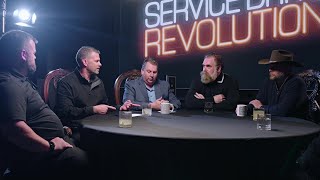
Great store managers often struggle as remote coaches because they lose direct authority and must shift from fixing immediate problems to building long-term habits. Coaches need to communicate clearly across distance, simplify solutions, and stay proactive instead of reactive.
Chapters
You know, we interview a lot of people to be coaches, and a lot of times they're service managers. They think they're really good at what they do. They get really offended when we don't hire them.
And it's always hard to explain to people up front, like, what it's like on this side, because you could be a really good service director and still not be good on this side. It's just different when you do what we do. And also, I think coming in, you probably. Probably don't think about the standard we kind of hold ourselves to, in a sense. I know if you were a client. So this is what's interesting, is half the table on this side were clients previously. Right. And then you guys came in, you know, not knowing that part of it. So you weren't. So it's a different experience. But you tried, you know, you try to explain to people up front, like, oh, it's, you know, it's way different. You have to unlearn everything you think, you know, and relearn, in a sense.
And even, you know, I think even to the clients, it's always funny, like, when, like, James or Vikir and I are talking about things, and I'll be like, hey, I did that to you. And like, it's always like, oh, you know, like, things I did to. To kind of move you mentally or whatever was.
Not, you know, it was experience different on your side as a client than it is on this side as a coach. It's just a different experience. Right. So what would you guys say about how different it is and what it takes to be a good coach, in a sense? And you're. You're kind of the newest to the group, so it'd be interesting to hear your opinion before. Before the veterans. Yeah.
What it takes to be a coach, I think, to get results, like, to.
Be effective on this side, what I.
Think, you know, when you're a service director, service manager, like, you can influence it daily through holding them accountable because you're there. Right. You essentially have the hammer.
Right.
And as a coach, like, I don't have the hammer anymore.
Right.
Like, I have to connect. I have to create behaviors that are. That you could. That you will continue to do when I'm not there. And, like, that's. There's an art to that. There's a psychology about getting you to do the thing behind the scenes whenever I'm not there. And I think when you're not there daily, like, it's. That's. That to me, that's the Biggest difference, like when I was in the store daily, like, as soon as you got off track, like, I could get you back on track pretty quickly. And I can't do that as, as a coach. So I think that's the biggest thing to me that stood out so far.
So what does that change in your mindset and your, your approach to things? Knowing that, like, what is it that has to change?
That I have to be more. Like, I have to have a, A long term plan. I have to have, like, I have to be eight steps. Like, it, like I have to be eight steps, you know, front of you.
So instead of in the moment.
Yeah, like, I can't be in the moment because, like, once I get you past step one, I got to have you on step two, I got to have you on step three, and like, I have to continuously get you down this road and I have to do it from a distance. Right. So like, I have to communicate through you via email, text, video, whatever. And that's. That takes a little different skill to, to get that done.
Cliff, I just want clarification. You're recording videos and sending to your clients. Like, I need to up, up my game. I mean, I can.
This is a great idea.
You got a face for video.
Yeah.
I mean, I think they would appreciate it.
You don't even have to say anything. They would keep it. Just take a picture of it and.
Just send it to them.
Just smile and just get stuff done. That'd be weird.
Yeah.
So I think to become a good coach from spending time in the dealership, one of the things that happens to me and it's continuing to happen to me after all these years, and I feel like it happens in. It feels like six month increments, but I feel like I'm continually reborn. Like, everything that I learned up until that point has all been a lie. And everything that I was told was the thing that I needed to chase was not the thing I needed to chase. And I think if I molded that down into one thing, the difference in sitting in this seat versus sitting in a service director's seat is sometimes there's not as much vision in the service director's seat from here, there's more closed.
And routine and keep it the same.
Yes. Yes. And on this side, it's way more a direct vision of the. Of what the outcome's going to be and how we get there.
Because you already see it when they don't see it.
Yes. And also see the full potential in this.
You're in a bunch of different Stores. And so you see what's working everywhere. So you just have a broader view of things. Right. Because you see the winners and you see the losers. And you can model that pretty easy, right?
Yes. And I think the last piece is going back to the first thing that separated good, high performing managers, techs, parts, people, like, whatever you want to throw in there. And my quality of communication was another thing that's, that's really key to being successful at this. Like, I've got to be super, super clear on what I'm trying to communicate and how I'm trying to communicate it.
So I'm going to skip YouTube because we've already made a video about this.
So a couple things come to mind. One is, and I think you were kind of touching on this a little bit, is in this role, you've got to be proactive. Like, it's very easy when you're in store and you got a fire burning. Like you're in reactive mode a lot. Right. On this side of the fence, you have to be proactive. I've got to look at a daily text or a daily tracking sheet and see a problem and know what to do about that problem. Which brings me to thing number two, which is when you're in the seat in a store, we often over complicate the fix. Like, it's really easy to be sitting there and say, oh, I've got this. My effective labor rate is nowhere near where it should be. And that's, you know, we label that impossible or, you know, whatever the thing is.
But the reality, meanwhile, it takes an hour to do all those things if you really wanted to.
Yeah. And the reality is, if I've got a pricing strategy that's designed for $200 and I just had a 50% wildcard penetration day and my ELR is 150, like there's a math problem and that's really simple to find. There's only a couple of things that I'm going to track down. And so being on this side of the fence, you realize that the solutions are much simpler than we think they are when we're in the store.
I like that. It's just a math problem.
It's just a math problem.
Jimmy?
Yeah. I think all of us see or hear the same problems over and over again when we go to stores and it's just a repetition and they can't hire techs or whatever their issue is. We keep hearing those things over and over and over again. And you want to listen to that and be empathetic. To that, but not pay attention to that noise so much. You know exactly what levers you need to pull when you go into a store to make changes. And if you get some traction on one or two things, one of you guys mentioned that earlier, it's a lot easier to get traction on other things. But there's just a lot of noise. And I got stuck in that same thing too. You get stuck in that same loop over and over again. And I'm telling you, everybody at every store has got the exact same things going on.
You can almost name the same people. Yeah, you can go in the same thing. And they go, it's way different than here. Like, well, that guy's the same as the one at this place and the same one.
What's so different?
And the turning point for these managers, I think the confidence is certainly one of those things. But there's a certain humility among the successful managers and successful advisors. I mean, we all know advisors that are outliers, that are writing more work than the other six advisors at the store combined. And they're always really quiet. Right? They're very humble, they're very open minded to things. You never know when you walk into the store. And service managers are the same way. There's outliers out there and they're not braggadocious. They're not making a big noise. They're just sitting back and doing things. Right. They're not busy, busy, busy all the time. They're working on the business. They're not stuck working in the little minutia stuff. But I think that humility is a big part of it.
What was that word that he just used?
Braggadocious fragilistic expialidocious is what I.
Isn't it funny when you hear those excuses too? And like I said this earlier, but their excuse is actually their advantage. Like, oh, you can't hire techs here because we're in a small town. And you're like, no, that's the easiest place to get texts to move where they can afford a house. And like the schools aren't like here in LA or whatever.
You go to one store.
Or they say like, our customers are different. It's a small town, you're like, that's great. So word will travel fast that we're doing a good job.
Like, yeah, you go to one store one week and they'll go, oh, it's really slow because it's tax time. The very next week you go to another store, they go, it's really busy because it's tax time.
Yeah, and both are true.
Yeah.







