Why Service Advisors Should Stop Following the Golden Rule - Glenn Lundy (Service Drive Revolution)
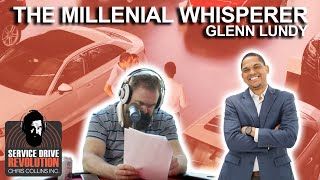
Glenn Lundy grew up biracial in Flagstaff, Arizona, and became a top automotive salesman before losing custody of his daughter, struggling with gambling and homelessness, and contemplating suicide. He rebuilt his life by training dealerships to use social media and relationship-building to boost sales.
Questions this video answers
May 13, 2019
About 9,600 people
Before: about 120 cars per month; After: between 800 and 1,000 cars per month (monthly)
Chapters
Foreign.
Welcome, everybody, to Service Drive Revolution. I'm really excited. Today our guest is an industry leader. He has been called the Millennial Whisperer. That's a good title to have. He has figured out how to make social media effective in our industry. He is a father of seven, the amazing Glenn Lundy. Welcome, Glenn. How are you?
I'm great, man. Even. Even better now, with an intro like that, talking about. That's. I'm.
I'm super excited to. To talk to you now. You recently left Dan Cummings, Chevrolet and Buick in Paris, Kentucky, where. So it's a population of 9,600 people, and they were doing about 120 cars, and you got them up between 800 and 1,000amonth, which is unbelievable. And I'm imagining that is a big part of social media and how you used it effectively, which we'll get into.
Absolutely, my man, Absolutely.
So let's just kind of start back from the. From the beginning. You. You've been living and working in Kentucky for a while, but you're originally from Texas and then Arizona, right? Tell me about growing up there and what you were like as a. As a troubled little kid.
Yeah, man, I was born in Texas and my family was military, so we ended up actually in Flagstaff, Arizona, which is just about an hour and a half north of Phoenix. And so that's where I grew up. And I grew up in an interesting environment, to say the least.
I'm half black and half white, so my dad was black, my mom was white, and they got divorced when I was about 11. And it was interesting because my mom remarried a white guy, my dad remarried a black woman, and they ended up moving two apartments apart. So my dad was in apartment 30 with his new wife. My mom was in apartment 28 with her new husband. And you want to talk about culture differences, man, every stereotype you could possibly think of existed in those two houses. Like, dad's house was crazy. There was, like, loud tv, we're eating fried chicken, drinking Kool Aid, you know, listening to rap music and all of that good stuff. And then mom's house was like my mom sitting on the couch reading a book, listening to country music and, you know, rock and roll and all that good stuff. So I grew up between those two environments, which was interesting. It ultimately ended up paying off for me. But at the time, it was a little bit troubling because I had some identity issues, had a hard time figuring out exactly where I fit in. And so I caused a lot of trouble, to say the least. I caused a Lot of trouble kind of growing up.
In my parents, you know, when I went off to college, my parents were thankful that I was no longer around. And then they weren't surprised at all when quickly into my college career, I met a young lady who quickly became pregnant with my child. And that's what kind of pushed me into the workforce. So I dropped out of college and went into start off in phone sales and then ultimately saw the wonderful advertisement that said, hey, you'll make $5,000 a month guaranteed if you come work here selling cars. Selling cars, brother.
Selling cars. That's a great. The great. A great ad. You'll make 5,000 if you sell 40 cars, right?
Yeah. Guaranteed five grand a month income. You just have to do the things that no one else has ever been able to do in the history of the company.
So let's go back though, really quick. I don't want to gloss over this because when you, when you're saying that, I identify that with that. So I grew up a missionary's kid in Mexico, and when we first moved to Mexico, we lived in an orphanage. So I was the only white kid out of 200 orphans in Mexico on an. On an orphanage, which was a crazy identity crisis for me. I remember I used to beg my mom to let me dye my hair black because my hair was light. And. Yeah, also most of the kids in the orphanage had their head shaved for lice. And I had hair. And so I either wanted to dye it black or I wanted to shave my head. But later on, as I got older and I started going to school, what would happen is we lived in Mexico and I had my life in Mexico, where I was, you know, for all purposes, well off compared to the kids that I would play with because they lived in like cardboard houses. And I would go to a private Christian school in Chula Vista, California. So they would drive me across the border every day on a motorcycle. And there in that private school, I was the poor kid and hand me down clothes. And so I. I really was two different personalities when I was a kid. Did you feel like you had two different personalities?
I did, man.
I 100% had to be a different person depending on the environment that I was in.
Now, did that help you later on or what was the lesson in that? Now that you're an adult, looking back?
Yeah. Ultimately, that's what made me such a great salesman, is this ability to adapt and be likable to all different types of people, cultures, age ranges. Like, you know, you put me in a group with a Bunch of, you know, a bunch of rich white guys. And I can play the part, man. You know, I can 100 play the party. You put me in a group with a bunch of, you know, a bunch of guys from the streets where we. We can go there, bro. Like, let's go. Let's. You know, we can. You know, who wants to throw? Let's do this. You want. You want to play some dominoes? You want to play some spades? I got all that right. So. Being able to adapt in all those different environments is ultimately been very lucrative for me in the positions that I'm in today. But, man, was it a struggle when I was a kid.
Yeah, see, I feel that. Feel the same way. I feel like I was really lucky to have that experience. But when I was a kid, I really started to struggle. The closer I got to being a teenager, it was really hard because I just felt like I didn't know what I was. Like most of the time, I was a Mexican, even though I'm white. And then when I never felt like I fit in with the rich kids at private school.
It was just. Yeah, it was hard, but, yeah, it definitely made me better. It made me able. The same thing. Like, I could adapt to any situation and relate, I think, to.
That's right. Yeah.
Relate to. You know, I don't. I don't know that you. You can explain what it's like to be, like, the only white kid out of 200 kids of a different race that speak a different language. Like, I had to learn the language. Like, it's. You're the outs. I don't know. There's just something about that. Then until you experience it, I don't think you. You can explain what it. What it's like. It's weird.
Totally, man. Like, even just filling out a form for me, you know, in school, it's like, you know, ethnicity, Black, white, Hispanic, you know, they didn't even used to have an other bubble back then. It was just black, white, Hispanic, Asian, Indian, you know, And I remember looking at the teacher like, what do you want me to put here? Which bubble do you want me to fill out? You know? And ultimately, as I got.
That's hard.
When you became. Well, yeah, man, it was. It was really hard. I felt like I never fit in 100%. Like, I got along with everyone, but I never felt like I fit in with anyone. Does that make sense? It was a very lonely place.
Wow, that's fascinating. Okay, so now we'll kind of jump to the car part. So you you answer an ad, you can make 5,000amonth. You go in and interview, and I'm gonna guess you got the job.
I did. Yes. It was. You know, the guy that interviewed me was about six months older than me, and he was the general sales manager of the store. And here we were, 20 years old, you know, and I'm like, hey, this is kind of cool. You know, this guy's 20 years old. He's a GSM. If he can do it, I can do it. And I got real excited about it, and I jumped in, you know, feet first, and just, just, just took off, you know, sales. Sales was easy, so I did really well in sales. And then I made my way to finance and made my way to sales manager way made my way up to GSM and all of those things. And I was 100% all in on selling cars and the car business and, you know, the money that came along with it. I was 100% all in on all of that. And in the background, my life outside of that dealership was a train wreck. Just an absolute train wreck, because I was in the dealership seven days a week from eight in the morning till, you know, whatever time at night. And then when I left the dealership, I was a young kid with more money than all my friends around me or all the people around me. And so I didn't want to go home to my responsibilities, which was ultimately the reason I got into the workforce to begin with. I didn't want to go home to my responsibilities. And so, you know, I hit the. Hit the streets and the party scene and things like that, every opportunity that I got. And it wasn't long before the mother of my child, she decided that I wasn't the type of person that should be in her child's life. And ultimately, she took custody of my daughter away from me. You know, we split up. I. I caught her with another guy, and, you know, I blamed her for all that, but it was obviously, it wasn't her fault. I was never there, so. But ultimately that led to me losing custody of my daughter when she was six years old. She was taken away from me. I wasn't allowed to see her. And so did you had done something.
Violent or something that you weren't allowed to see her?
No, nothing violent. My. My ex had a new boyfriend, and the new boyfriend didn't like that her. And I still had phone conversations and things like, I mean, we were all just kids, man. We were all just so, so, so young.
But how do you lose rights to your Kid.
Well, Arizona is a unique state. Arizona is called a mother's right state. And so even though my name was on the birth certificate, since we were never married, I had technically no rights to the child. The only way to get rights to the child was to do a DNA test, hire a lawyer, go through the court system. And when I contacted a lawyer to find out how all that had worked, we needed $15,000 up front. Then it was going to be five grand for this and 10. And, you know, I was a kid, I was blowing through every dollar that I had. So 30 days from the. From the minute I got the documents that she was fighting for custody, she was. She was taken away from me 30 days from that day.
That's. It's crazy. I have. That would be a whole nother show for us to talk about that because I have some strong opinions about how that works in courts with that in divorce. But take me back for a second to when you started selling. Were you aware when you were selling that you were doing something different than the other salespeople? Were you aware of what it was that made you special and different than the other people around you?
I don't know if I was necessarily aware of it at that time. I just.
I was very likable and adaptable, and I was always intelligent. I was smart and like, almost too smart to where I was. I could. I was sneaky in strategy. And so I knew if I stood on this area of the lot while everybody else was on a different area, then I could get more ups. And when I was with the people again, I could relate with them, no matter what age or ethnicity they came from. And I always knew to hang close to the guys in power. Right. And I was a bit of a. Bit of a, you know, like, I kissed teachers. Am I allowed to say kiss ass?
Yeah, but you're like a teacher's pet.
I was totally a teacher's pet, man. Absolutely, 100%. So I stayed close to the guys in the know and I just worked my butt off and I went 100% all in. And I was committed to the culture and to the environment, and I didn't complain. I just got the job done. I played the role. I was very, very good at playing the role. Whatever role that was at the time, I was really good at it. And so I just kind of blew past, you know, everybody in the store. I just had. I just had a lot of success, but I don't necessarily know if I actually knew I was doing it at the time. Looking back you know, it's real, real, real clear kind of what my assets were. But at the time, I was just. It was a place that I fit in, bro. You know, like, yeah, I fit in. Everybody liked me. They knew my name. They treated me with respect.
The harder you work, the more money you made.
Yeah, yeah, absolutely.
That was what it was for me, too, is I just couldn't believe that the harder I worked them and the smarter I worked, the more money I made. I was like, this is the. Like, it's on me. Like, this is the greatest thing ever. Like.
You know what. What happened to me, which was kind of a unique thing, is I was. I was in. I think I was like, 20, and I was a service advisor, and I was the top advisor in the store I was in. And this consulting company came in, and I was nervous when they came in because they changed my pay plan, but I ended up making more money on their pay plan. And they. They always kind of, like, left me alone because I was performing, and I. I put up the numbers and they. They actually made things easier for me with the things that they. They fixed. But one of the consultants came to me and he said, I have this Ford store in North Seattle, and I'm doing advisor training, like, I don't know, a week from then or something, and I would love for you to come up and talk to the advisors. And. And I don't know, he said something like, kind of tell him how, you know, how to be, how to sell or something. I don't know. And so.
Right.
I was like, oh, okay. And so at that moment, I started paying attention to what the difference was between me and the other advisors. And, like, the first thing that I noticed was I genuinely was interested in people. So when I walked up to a car, I don't know, maybe it's because I grew up poor, and I was just fascinated that these people drove new cars. And I wanted to know, like, what they did. And it's, you know, Seattle, when Microsoft was kind of just taking off. There are a lot of Microsoft millionaires driving Volkswagens and Audis at the time. And so I. Most people would walk up to the car and say, do you have an appointment? And then they would talk about the car. And I could have cared less about the car. So when I walked up to the car, I talked to people about what they did for work and, you know, what their family, and, you know, I just cared, genuinely cared about them. And so I had this weird trust with people and that they would just kind of do what I told them to do because I. They trusted me and I had a relationship. And so the best thing that ever happened to me was them asking me to go talk to those other advisors in the other store. Because I kind of created a little outline and it made me pay attention to what was different between me. I probably never would have if I wouldn't have, you know, had that to do that I kind of figured out, like, I checked history and recommended stuff when they would wait for the tech, you know, just the way I presented things, I. I started to notice the difference in. I wouldn't prejudge. I'd go ride any car where they were like trying to cherry pick and all that. And. Right. I think was that one too. When. When you were a salesperson was. You did. You didn't really pre qualify or did you pre qualify?
No, I. I definitely didn't mean like.
Yeah, everybody's a chance.
Yeah, that's right, man. I remember my first big deal. My very first big deal was this guy named Irvin Chee.
It's funny. Remember his name.
I can remember his name. I remember everything about him. He was a. He was an older Native American guy with long hair, wearing blue jeans with the knees on him, really worn down, really, really brown. And he had work boots on and a flannel shirt and just didn't look like much pulled up in a jalopy. And I remember showing Urban Chi. We had this little cargo. Like a. Like a cargo conversion van, right? This cargo conversion van. And the way we did our prices back then was they were. There was a sticker in the window, and that window had the year. So let's say we say it was 19. And then the price in the middle, you know, 8999. And then the last two years of the year. And so that way the customer had no idea what the price was, but we could see what the price was and what the year of the vehicle was, right in that little code. And I was brand fairly new. And I grabbed Irvin Chi and I read the price wrong. It was supposed to be 79 99. And I told Irvin it was 179 99. And we brought. And he loved this van, dude. He loved it. I showed him that we had so much fun opening all the different things. And then we went in and I went to Jason Kitz, who was my sales manager. I said, irvin Cheese gonna buy this band. And he says, what price did you tell him? I said, 17,999. And he clicks into the computer. And he's like, Bro, 79.99. I said, no, 1799. And he's ready to buy it right now. And my manager didn't believe me. We pulled his credit. He's an 820 credit score. He put $7,000 down. And we sell him this 79.99 cargo van or con grand for 17. 9.99. I make like a 13 grand, you know, gross, which I get 25% of it. But it was like. And Irvin came back every year, bought cars for family members. Like, him and I were best buds. I loved seeing Urban Chi, but nobody else wanted to talk to the guy. Nobody else wanted to talk to him. I remember forever. I wish I haven't. I haven't talked about Irvin Chi in 20 years. I'd love to go back again. He's probably buried right now with bad credit at this point because we kept stolen cars, but.
Yeah, that's. That's amazing. Okay, so one, one part of your story that's fascinating to, to me is you've. You've had some, some big failures like anybody who is successful, but you were a professional gambler in Vegas and then ended up homeless. So first, how do you end up being a professional gambler from you're selling cars and how do you go from that to Vegas gambling?
Well, my mom's side of the family. My mom is a gambler. She loves. She loves to gamble. And so Vegas was always kind of a part of our life. I used to go to Vegas a couple times as a kid. And, you know, on my senior trip, I wanted to go to Vegas. I had this fascination with Las Vegas, man. I was going to go to UNLV and play basketball, and then I was going to get out of school and I was going to be a pit boss. And I just absolutely loved the draw of Vegas. And it was only three, three and a half hours drive from Flagstaff. And so in high school even I used to study, like, I love math and numbers and statistics and stuff. And so I would study. I would draw pictures of roulette wheels and study all the different, you know, odds, and then learned how to count cards for blackjack and, you know, learning the game of poker once that got big, like, all of those things were just fascinating to me. They absolutely fascinating. And so the more I learned the games, the more of a gamble aholic, you know, I really became, because it went from, you know, it's just how gambling it is. Like, it's fun to bet five bucks when you're new to it, but then, you know, it's like a drug, you know, five bucks doesn't seem fun anymore. You got to bet 10, then you got to bet 50, and you got to bet 500. I bet 5,000, you know, so I just had this fascination with Las Vegas, which led to the gambling kind of aspect of my life. And betting on sports and things like that, and the automotive industry helped feed that because I made, you know, plenty of money and I didn't have any other thing to do with my money.
You had disposable income?
Yeah, disposable income. And instead of being responsible, you know, I could get a thrill or a high out of. Out of gambling. What would you say? That's how I really kind of got into it. I started off as a. As you know, roulette was my game. Roulette still is. I don't really gamble much anymore, but if I do gamble, it's roulette. Like, I love the game of roulette. It just absolutely fascinates me. But poker, when poker came around, now that was something different because poker was gambling and strategy and sales. Right now I gotta. I gotta sell whether I have a good hand or not, and whether or not I'm gonna let you sell me on whether or not you've got a good hand. So I'm looking at your tells, I'm reading your body language. I'm doing all the same things that I do when I buy it, when or when I sell you a car, but now I'm doing it at a poker table. And so when my daughter was taken away from me, when I lost custody of. I say taken away, it was my fault. But when I lost custody of my daughter.
I blamed the auto industry, I blamed my ex, I blamed everybody but myself. And I decided, you know what? I'm gonna pack up everything I own and I'm gonna shoot off to Vegas and I'm gonna play poker for a living. I'm gonna be a professional gambler. Brilliant idea. Solid foundation, right? And so I did. That's what I did. I packed up everything, I went to Vegas, and it was only a matter of a couple weeks before I was, you know, where I was broke in, in Vegas. And that led me to Southern California, where I happen to know some people and couch hopping and surfing and things like that, playing poker. You know, I played poker for about a year and a half in the Southern California areas with ups and downs, hopping house to house and so on and so forth. And ultimately, you know, like you mentioned, there Ultimately, I burnt enough bridges and lost enough, lost enough big poker hands to where I kind of walked out of a casino one day and I had nowhere to, nowhere to go, no one to call and nowhere, nowhere to live. And so I started sleeping on buses. The buses out there would run throughout the night and so I'd sleep on the bus and I'd have to get off at six o' clock in the morning. And I'd spend my days kind of going up and down the streets. I never was the type of person that could ask people for money. So I would go up and down the streets, kind of hunting along the sidewalks for pennies, nickels, dimes and quarters so that I could get enough for, you know, a breakfast sandwich and kind of get me, get me through the day and then just spend, spend the rest of the day getting enough money to get back on that bus so that I could sleep that next, you know, sleep that next night. And.
You know, so I, I did that for that period of time that I was on the buses was. It wasn't super, super long and a lot of that area gets. Gets a little bit fuzzy and time blend.
Were you drinking a lot?
Not, not a ton. Not like, no, no drugs at that point in my life. They did come, but, you know, drinking, I would drink. I could always turn things on and off. So if I wanted to drink, I could drink with anybody. And later in life, when it was a drug thing, I could drug with anybody, but when I didn't want to, I didn't want to. So it wasn't really, it wasn't, it's not necessarily foggy because of that. I think it's just foggy because I was in such a deep, dark, lonely place and the days would become nights, and the nights would become days and all I remember is the despair that I felt. And I remember it didn't help that I was in San Diego, California, surrounded by wealth.
Yeah.
Beautiful people.
Yeah.
Oh, man, it was all around and I was invisible. People literally wouldn't make eye contact with me. They wouldn't, they wouldn't look at me. They, you know, because I was a freaking bomb. I was a bomb. And so I felt invisible. I felt like a loser. I felt like. And I still blamed everybody else. It was everybody else's fault. I'd gotten the bad, you know, the bad hand. And, and so after, I want to say that period of time probably was.
Any four to six weeks probably.
So the whole time, though, you can go get a job selling cars. What, what is going on in your mind that you don't go sell cars? Like what?
I blamed the auto industry for me losing custody of my child, and therefore I blamed the auto industry for me being in the position that I was in. Completely blame. I hated it. I hated the auto industry. I swore I would never go back.
Wow.
And, yeah, so finally I was just like, you know, there's. There's one way out of this mess. And, you know, going back to the stereotypes being. Being. Being. Being half black, I'm not a very good swimmer. And I figured if I could swim out into this ocean here, this great big blue ocean far enough, I wouldn't be able to make it back. And so I did. I. I waited till, you know, sun kind of went down and I was headed down and people had kind of cleared the beach and.
How long had you thought about this before you. You tried to commit suicide?
Probably. I mean, it had popped up in my head often over this whole period of time since I lost my daughter. So over that whole year and a half, you know, it would pop in here and there, especially after a bad night on the card table or whatever, it would pop up. But at this point, I was.
It's probably good. Two solid weeks of just darkness, invisibleness, despair, zero hope.
Do you make a decision, though, that you're like, tomorrow I'm gonna do it, or two days from now I'm gonna do it? How does that process in your head?
It was. It was. Yeah, it was. It was a morning. I woke up one morning. I actually slept on the beach that night. I didn't. Wasn't able to get on the bus, so I slept on the beach. And I woke up and I was like, today's the day. Today's the day. We're just going to put a stop to all this.
I went about the day.
Processing.







