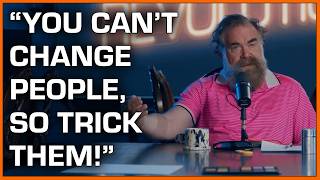
In this monologue, the speaker shares a counter‑intuitive coaching and management approach: instead of trying to directly change resistant people, he first validates their statements, then subtly guides them toward better practices while allowing them to believe the insight was their own. He argues that most people’s lack of success stems from a conscious choice of indifference and low self‑esteem. By “tricking” them—letting them take credit for the idea—he boosts their confidence, especially among service managers who often lack financial literacy and are overlooked. This method leads to higher influence, a seat at the table, and tangible business results such as doubled sales or increased earnings per labor hour, all while preserving the individual’s sense of ownership and self‑worth.
Chapters
So I had to figure out, like, another thing that I got really good at, and I talk about this to you guys all the time, is when people say stupid stuff, I would just agree with them. Like, I would just agree with them because I tried so hard to get people to think in a different way. I tried so hard to change people, and I just came to the realization that you can't change— you got to trick them into success. Like they would already be successful if they wanted to be right. Like I figured out how to read financials because I wanted to. Nobody, nobody had to convince me. I knew, like, I'm like, I know that this is the secret. The key to the lock is there and I gotta, I gotta get that key. But, uh, you know, most of the time, the reason why people aren't succeeding is because they don't want to be. Indifference is a decision. It's, it's a, it's a very strong position to, to take indifference that we want to stay the same, that we want to keep doing things the way that we're doing them. And so you, you can't change, it's really, really hard to change somebody's mind that they could do better, that, that they could double their sales. Like we, we talk about this with our advertising, right? Like if we come out and we say, hey, our average client sees an increase of $30 in ELR, people go, oh, well, you're ripping customers off. And it's like, no, we're not. Not at all. We're just fixing, we're fixing all this stuff that isn't fixed. Like, it's not one thing. It's a bunch of different things that are doing that, but nobody believes that that's possible. So you got to just do it. And then, then the other thing, the funny thing is once they're fighting you all the way, to not do it, which makes you really bitter inside. Like, you, especially when you're young, like I said, I wasn't mature when you're young. They're telling, you know, you, you trick them into success. And then the funny thing is, is the only way it works long-term is if you let them, if you let them take credit that it was their idea and that they did it. Yeah. Which is a fun, it's a, it's a really, really funny thing, but humans will just go, oh yeah, there's, I did this. Like, And you're like, you don't remember? Like, we have coaches that work for us that were in our program that have completely forgot what a pain in the ass they were when they were clients, right? Like, yeah, yeah, for sure. Yeah, they, they, they completely miss all of these things that I did to them to get them to succeed. Like, it's like, and you know, the, the, the other part of that is most service managers don't get the financial statement. Most service managers are overlooked. So when I would flip this thing, and if I could just get these managers to think that it's their idea and to accept it as part of the new norm, then I could get them to maintain it. And then I could raise their influence. They had a, they would get a seat at the table. They would start to feel better about themselves. And in the end, the thing that I learned is really what I'm doing is fixing self-esteem. They never. They never thought that it was possible because they didn't believe they were of value. They didn't believe that they, they were good enough to have that sort of success. They thought it should be hard. They thought that they deserved for it to be bad, right? It's just this, this funny thing. And so I was in the business of, so like I was raising their self-esteem by tricking them into the results, making them believe that it was them. And then once