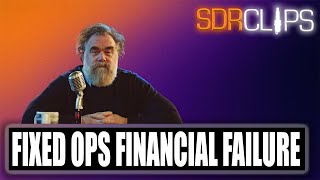
A short conversational clip from Chris Collins (YouTube) diagnosing problems inside auto dealerships—siloed departments, falling new/used sales, rising flooring costs and interest—and teaching a simple financial mindset: reverse-engineer desired owner income (example: partners aiming for $10,000/month) and set prices/expenses accordingly. The speakers use a sandwich-shop analogy to show how knowing costs, margins, and staffing enables predictable outcomes, and note that most service managers have limited financial-statement understanding (speaker estimates ~50% have seen statements, ~20% understand them). The clip ends with subscription and contact CTAs.
Chapters
Okay, so what is the state of affairs in the automotive industry right now as it pertains to departments inside of a dealership? Where are we at? So the break down the news for us.
Yeah. So the way that I would classify the average dealership is that there's a lot of silos, which means that you got the sales department, and even within the sales department, you have two silos because you, you've got new cars and used cars.
How are new and used cars doing?
Not as good as they were a couple of years ago.
So in every area, in volume and gross and all of it.
Right, all that stuff. Yes. It's had a. It's had a slide.
There's. Inventories are on the ground, their cars are readily available for purchase, which means flooring expenses going up, profits are going.
Down, interest rates are going up on those flooring expenses as well.
Oh, yeah. It's a perfect storm.
It's a mess.
It's. It's a perfect storm. Okay, so. So now if. If you and I decided we wanted to.
I don't know, what could we decide we want to do? What's something we want to do? Go to the moon?
Yeah.
Let's do something a little simpler.
Okay.
Do you want me to pertain this to service?
Let's say you and I want to open a sandwich shop.
Okay. I like sandwiches.
Yeah. I was, I immediately thought, eating all the profits.
Okay, so we, we would want to. We'd want to know how the, how the finances in a sandwich shop work. We'd want to know what our rent is. We would want to know what our margins are. We would set prices according to our margins.
That's right.
Would we not? Of course we would set prices, understanding what our expenses are in relation to our headcount, in relation to our cost of food. All of that.
Right. Spoilage, return, customers, all that stuff. Yes.
Yeah. And so we would have a pretty good idea of what we wanted to do. Now if we, if we started a sandwich shop and we said, hey, we want to make, you know, we want to run this sandwich up and we want to earn. Let's just say we want to earn $10,000 a month, and we're going to be 50, 50 partners, and we're going to. Going to split that. So you're going to make 5,000amonth in passive income, and I'm going to make $5,000 in passive income. Now then we would build the thing right over a. It'd probably take us six months to figure out how much we should be Charging what, what we should have on the menu and fine tune the menu to where we wanted to be. But if we wanted to own a f sandwich shop and make $10,000 a month.
We could probably do that in six months. Right.
Maybe a little less if we really pay close attention.
Yeah. But very obtainable for sure. And there, if you kind of pay attention to what I just did. Right. There is I reverse engineered an outcome.
Yeah.
Right. So I said we want, we want to make 10,000. And so we would reverse engineer what that outcome was. It would take some dialing in and, you know, a few months of history and building traffic and doing all that stuff. But we could reverse engineer that outcome.
Very much so, yeah. I wouldn't be leaving a lot to chance.
Okay, so now what if we wanted to start a sandwich shop but we didn't know anything about our expenses.
We'D be in trouble. And we would guess.
What would be our chances.
Of the $10,000 a month if we didn't understand our expenses, our cost, any of that?
Yeah, we would have literally less than 1% chance of success. I would say.
Yeah, we'd get lucky at best if we could. Right. We'd have to get lucky for it to work. Okay, now, in most service departments, how many service managers understand the financial statement as it pertains to their department?
Okay, so I'm going to guess 50% have seen a financial statement, 20% understand it.
Yeah. It's pretty common when people come into our coaching. Most of the time they have seen it, but they don't, they don't understand it. Right.
Thanks so much for watching this clip of service driver revolution uploading new stuff every day. So make sure you subscribe and click the bell icon so you don't miss out. If you have a question you'd like us to answer on the show, call 8333 ask SDR and we'll answer your.
Question on the show.
That's 8333, ask SDR. For special deals on our books and training, head over to offers.chriscollinsinc.com now that's offers.com chriscollinsinc.com I'm Chris Collins and I'll.