From Zero to 3 Million: Chris Donnelly's Guide to Growing a Community
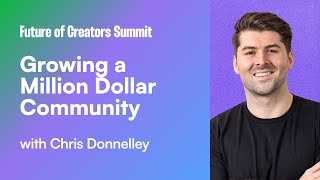
Chris Donnelly grew Verb Brands from a £400 agency to 3 million followers across platforms by shifting to personal branding. He posts daily on pre-validated topics like leadership and productivity, monetizes through £5k cohorts and memberships, and uses custom GPTs to automate content ideation.
Questions this video answers
Chris says his own imposter syndrome has faded after 16 years of intense work. He notes that almost everyone feels like an imposter, and recommends a 30‑day daily practice of spending an hour on the skill you feel insecure about; after the month the feeling diminishes.
He advises earning the right to talk about the new topic by consistently posting on it (e.g., AI) for a year, while still delivering the original content. Blend the old and new themes, gradually shift focus, and use a mix of 3 days of successful content and 4 days of the new focus.
Build custom GPTs in the paid ChatGPT ‘Explore GPT’ section: upload past posts or transcripts, set instruction templates (hook length, emojis, CTA), and let the model generate drafts. Use separate GPTs for LinkedIn, YouTube scripts, and even book writing to accelerate ideation and drafting.
Chapters
Yeah, good to see you. Thanks very much for having me.
Yes, of course. So I first got to meet Chris at an event in the UK about a month ago, put on by the folks at Creator Space, and he was the closing, you know, fireside chat at this event. And I was like, I want to interview him. He needs to be a part of our summit immediately. And so I quickly reached out to him after and I was like, can you be at the Future of Creators Summit? So thank you for being here, Chris. Really excited to have you.
Yeah, I'm very happy to be here. Super happy to share anything I've learned on this journey so far. So, um, yeah, let's do it.
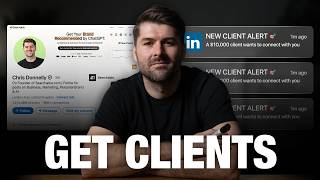
Amazing. For those of you that are not familiar with Chris, I actually just want to quickly share my screen and kind of walk you through a little bit of his CV, if you will, a little bit of what he's built, what he's done. And it'll give you a lot of context for our conversation. And let me know if you're familiar with Chris's work in the chat too, because I know that a few of you are based in the UK and might be familiar with him. Okay. So really quickly, Chris bootstrapped Verb Brands from £400, a £400 investment into the world's leading luxury digital marketing agency in the UK, which he sold to private equity in 2021. He then went on to co-found Lottie, which is the UK's best care homes and home care retirement properties, now valued at 9 figures in just 3 years. He's also a LinkedIn business expert, entrepreneur, and has amassed 3 million followers across LinkedIn, TikTok, Instagram, YouTube in under 2 years. And we've got some UK love in the chat. I love it. Kagan said she follows you on Instagram. So here's a quick like overview of the content that Chris builds on LinkedIn. Um, you're one of the, in the, in the top 10 LinkedIn business creators. And then also on TikTok and Instagram has gone viral multiple times for from your Bad Boss series. So with that, I just want to kind of kick us off with this shift from agency owner to creator. Like walk me through what first attracted you to becoming a creator. What were, why were, I mean, you were doing great in the agency space and you're like, I want to go be a creator. Walk us through the mindset shift there.
Yes, I suppose the journey is probably a little bit more complicated than it seems on the outside. So my career in the agency was, yeah, like I put £400 in, I bootstrapped that business for 10 years. We got to about 100 staff and we were working with the top brands in the world in the luxury space. But a lot of that job was actually helping. I would have called them influencers at the time, and CEOs build brands. And so I became very good at how to build a creator brand. I did a huge amount of e-commerce, loads and loads of social media. And so by the time I was done with the agency, which, yeah, I sold in a great deal, I felt like I was— I felt like I should build it myself. And then I had a few posts go completely viral in 2021. Um, and I also realized that my agency that did something like 15 million a year, half the new business was coming from my LinkedIn. And so I was suddenly like, okay, there's something really serious in here if I, if I scale this personal brand thing. Um, I then started Lottie, like you said. So Lottie is a marketplace for care. Um, and in, yeah, like 3 years I raised £35 million. It got valued at multiple hundreds of millions. And I suppose the thing that I enjoyed the most was all the public stuff, like talking about it publicly, building in public. And after 4 years, I decided to take a small step back and join the board instead of doing it. And I thought to myself, I want to work moving forwards. However, I want to work in a very deliberate way. Like, I want to be very intentional about the thing that I create next. So I sort of made myself some basic rules, which was like, I'm going to do lifestyle first and then business second. And it was like, I'm going to work 10 months a year, 4 days a week, and 7 hours a day. And so that— they were my basic rules. And I said to myself, if I will scale this personal brand for 6 months, and I can make it viable, why don't I travel the world with some of these businesses and just have fun? Um, and I'm like a year into that now, um, and the position I am now is that pretty much all channels have done incredibly well. I mean, from LinkedIn, I'm 6th in the world now, which is crazy. I get something like 40 million views a week on LinkedIn. Um, which is crazy. Like, opened a newsletter, I got 150,000 subs in 9 months or something. And I suppose what, what came next was obviously sponsorship opportunities. And then I thought to myself, well, if I can do this for myself, I should probably teach other people how to do it because I've been one of the fastest growing business creators in the world. And so I started a few what I would consider lightweight digital products on Circle. And yeah, in like 120 days or something, the business is— well, it's making millions. And obviously the cost base is incredibly low. It's like personal brand comboed with digital products executed through Circle. And it's been the most phenomenal business. Like I've ever seen. No funding, no support, 2 staff. And so that's where I am today. I run a few businesses which are based around my personal brand. I started an agency business about a year ago. And so now I keep to that mantra. I work 4 days a week, 7 hours a day, and yeah, it's going very well so far.
I love this story so much because whenever I first met you a month ago and you were kind of walking through this, it really is a unicorn experience. But at the same time, I think that your experience over the last 18, 20 months has proved that it's still possible. And I think I've been in this space for a decade. A lot of people have been creating content, building businesses, or have wanted to. And there can be this narrative or belief that it's hard to grow online. It's hard to grow on social platforms. It's too late. It's too saturated. It's too hard. And so I want to talk about the first 6 months where you really start to see traction on LinkedIn. You start seeing traction on Instagram and TikTok. And I do want to kind of set aside the fact that we're going to go into your different content strategies for those different platforms, because they are all quite different. But I want to talk about how you approached building content those first 6 months and like testing ideas, hooks, and knowing what kind of content to create.
Yeah, so I think one of the things that I think is very true is that you always think that you're late. Like, you always think that you're late to the party. And I've been in social media in this space for 10, 15 years as well, and I hear that all the time. I was just trying to leave my business. I hadn't built a following yet, and I went on holiday effectively with Sahil Bloom. And he was like, he said to me, the problem with my newsletter, Chris, is I feel like I came to it too late. And he's got a huge newsletter. And so I started my newsletter the next day telling everyone it was too late for me. And we are where we are. So I think in terms of how you write a good post, I think that I obviously teach people this. So a good way of thinking about it is You have to build, in my opinion, some form of following to speak to. And so a lot of people will say you've got to create the most authentic content possible, and that's fine. But I also think you have to jack some views a little bit. You have to get some momentum going on your accounts. And so a good example is the 100 people that went through my recent cohort. They are all business people who wanted to build personal brands. It's something like we have 30, uh, number one creators in 30 countries now, um, on LinkedIn. And so you can do it. You just have to look at pre-validated content. So content that you know will resonate with people. So for me, for example, I write about leadership, culture, business, startups. I write about the creator economy. I write about productivity. These are things that I know people love. To read about and love to, you know, engage with. And all I have to do is think, what's my take on productivity? What's my take on leadership? And try and bring my own nuance to already super popular topics. And I did this for 6 months. And in 6 months, I suddenly was like, oh wow, like I have, you know, 70,000 followers or something on LinkedIn. And I was like, this is insane. And then I doubled down on it. I posted every day, 7 days a week for a year. And in that period, there was so much testing and which hooks work the best, which body text work the best, which CTA work the best, how do you create good imagery? And very quickly got very systemized to the point where I hired someone, taught them my system, and I then went backpacking for 3 months and they ran the brand. So I didn't have my phone. And when I came back, it had 150,000 more followers. We've made a load of money in sponsorship. So I think what I'm saying is I think people kind of think that their personal brands are so special and so unique that they forget that, you know, if I was running an automotive brand, I could hire a team to run that brand. And there is much more nuance to the history of Bugatti, for example, than one of us. However, we all think that no one can speak like us. So my takeaway is learn the system, build the system yourself, and then train it to someone else so you can focus on building products. Because what you really want is you don't want to trade in a job to work on social media. You want to trade in a job for freedom. You don't want to just suddenly be a slave to your own business, which is what I did for 10 years, like absolute slave to my own business. So I hope that answers a little bit.
It does, Mike. You mentioned something really powerful and Shruti, I hope I'm pronouncing your name correctly, around getting momentum going. You mentioned go look at popular topics that are already being talked about that people are searching for and then you add your own nuanced personal experiences to that. And I think that kind of lessens the pressure that you have to come out here with new ideas. I mean, even the content that you were creating on LinkedIn at the time, would you say that it was all net new, never been thought of, heard of before?
I mean, definitely not. Absolutely not. I think I was better than most at putting my own spin on preexisting content. Um, but I don't think there's anything new under the sun, you know. Like, I did English literature at school and there's only 7 storylines ever. And so, so when you think about content, you start to think to yourself, well, if I can see— for example, if I'm really obsessed with productivity and habits, which a lot of people love that type of content, I can go to the top 20 creators on YouTube, TikTok, Instagram, and LinkedIn. Look at their posts, look at the most popular, and then go, there's 20 ideas for posts. I'll make a slightly nuanced change on the most viral content on the internet. And I'm not saying that's the whole strategy, but to get momentum going and to get followers, to get some recognition, to give yourself confidence, I think it's a great way to do that. And someone asked in the chat, what's— What's the way that you can find popular topics? And so I'll say this like super quickly, but obviously reach out on whatever channel. VidIQ for YouTube will tell you which videos outperform the individual's average. So if my videos normally get 1,000 and then I had one video that did 10,000, it would show you that. Sort for TikTok is another one. And then for LinkedIn, there's something called Cleo. Um, and I will remind you of Clio later because I think this creator game is very interesting because I'm now getting offered serious equity stakes in businesses to become like their, their face. Um, and I think that's very powerful for everyone on the call to think about that brands are willing to do that these days.
Yeah, there's a lot of different ways to monetize that are outside digital products too. There's, it kind of expands what's possible. I wanna zero in on LinkedIn actually. Let's start there. Can you walk us through your content strategy for LinkedIn and how you were able to grow so quickly there? Cuz you obviously have a lot of platform confidence and credibility on TikTok and Instagram, but you are kind of the LinkedIn guy. So let's talk through LinkedIn strategies.
Yeah.
I mean, and how you write them as well.
Yeah. So I mean, I've only had Instagram and TikTok for a year, so that's why they're probably smaller. But the LinkedIn we've been at for 2 years now. So the strategy boils down to some very basic principles, which is you post every single day at a time that straddles 2 very popular destinations. And so the UK and the US, for example, like we all post at 8 AM East because we get to target the US and the UK. We then think to ourselves, okay, half of the week the aim is to drive traffic and impressions to our profiles and the other half of the week is to create really educational content. And so we try and hijack viral posts, like super viral quotes, like Steve Bartlett does this every day. Like 99% of his quotes aren't his. He posts other people's quotes that are already famous. And so he drives thousands and thousands of views to his profile. And then occasionally he'll do his own, um, like bespoke piece of content. And so I would say the content that gets you most followed on a platform like LinkedIn is educational and value-add. So it's how do you take someone from A to B? And so a lot of my content is step by step how you as an individual take on a specific challenge or learn about a specific topic. And, you know, if you land a good post on LinkedIn, that's gonna educate people as to how to build a business better, how to be a leader better, how to be more productive. You can do thousands of followers in a day. And if you get that system right, like myself and a few others have, you can easily gain 1,000, 2,000 followers a day.
Was there a specific formula or format that you follow when it comes to writing? Let's say specifically you are more organic, so not that you're, you know, um, pulling on or tugging on something that's already viral or someone already famous, truly organic to you. Is there a way that you're laying out your posts or formatting them that makes it easier to replicate day over day?
So it depends on what's happening on the platform at the time. And so for the last year cheat sheets have kind of reigned supreme. They're the type of content that gets pushed the most by the algorithm. Um, and so what you have to do on the platform, it's the same on Instagram. Like, I grew 500,000 followers in 7 months on Instagram with no ads. It's the same thing. You have to identify which format the, the social media platform has chosen to push themselves. And so it's different between Instagram TikTok, LinkedIn, and so forth. But on LinkedIn for the last year, it's been a two-line hook where the first line is 65 characters, the second line is 45 characters. It's then an image. And in the image, I would say that cheat sheets have been the most successful thing. So it will be something that breaks down a complex topic into a simple graphic and then provides educational content around it. But then 2 weeks ago, that all changed. Like 2 weeks ago, the cheat sheets stopped working and only carousels and video are really working and driving followers. So you have to identify the trends. And if you think about when I joined LinkedIn, there were people who had, you know, 500, 600, 800,000 followers who now have less than me because they post the same content they used to. Whereas for me, whenever the format changes, not my content, not what I'm saying, but the style that the platform want. When that changes, I change the next day because I understand that I actually want to put in the least work for the biggest outcome. And so if I can move to posting in carousels, I just say to my team, make all of my posts in carousels moving forwards. And then they switch the next day. They get a bit annoyed that we waste whatever we had in the bank. And the next day we're off to the races again.
I love that. How do you balance the quantity of content that you're pushing out? Because obviously the platforms are, they are preferential to the fact that you are posting every single day on these platforms. How do you balance that with quality? Because the quality of what you're posting on Instagram and TikTok, the video quality, like the quality is there. And so you've built a machine. A lot of people joining right now don't have teams. So can you give them advice for managing quality as well as staying consistent at the same time?
Absolutely. So, so day one, you don't want to do all the channels. That's the biggest takeaway. You know, I did LinkedIn on its own for a year. I did it myself for 6 months. Um, and the second I was able to find a repeatable monetization strategy, I was like, okay, all I need to do is afford around £4,000 a month because that will hire me a junior marketer that I can train. And I was like, okay, so I have to get to £4,000 a month and it will pay for itself. So I started doing consultancy, which was teaching people about business. So not creative stuff yet, but how to build an agency, how to scale a brand, how to raise money, all the things I knew how to do. And people were booking me to do consultancy calls. And so, you know, I got to a point where I was probably making like, I was probably doing 20 calls a month. I started making 20 grand basically from consultancy calls. And then I suddenly thought, I don't want to do consultancy. I want to build lightweight digital products. And so I need my personal brand to grow rapidly. And if I want that to grow rapidly, I need a huge amount of content and I need to systemize it into a team. But on day one, I mean, the reality is I'm sitting there planning out these posts thinking, What are the most viral posts that I can post? And on all the platforms, there's a hack. You have to find it and it always changes. And so I can't tell you specifically what the hack is, but for example, on LinkedIn, one of the most obvious ways to gain traction is getting other people to comment on your profile. Now, if in the first 10 minutes of posting, you get a few other people who are growing their accounts commenting on your profile at the same time and you're releasing really good pre-validated content, you will start to grow. If you do it 7 days a week, every single day, and learn from yourself the day before, you will start to grow. And there's that crazy thing, isn't it, where like with podcasts, it's something stupid, like 99% of podcasts or 90% of podcasts don't make it past episode 30.
Mm-hmm.
Same thing with LinkedIn. Like, I know so many people who start and stop because they don't get an immediate result. But I can tell you now that if it was so easy that you could start every— and get it immediately, everyone would do it. Because once you get to it, when you, when you get to the point now where I can effectively throw millions of views at any product I launch, that I had to earn that, you know, that, that didn't just turn up. And so to everyone on the call, I would say, in my opinion, it is quite literally the way to give yourself an unfair advantage in life. Because once you have a loyal following, you can monetize in 100 different ways.
Yeah, and you can pivot too. Like, you, you can launch any sort of product, you can pivot, and that's the beauty of a personal brand. Which I want to zero in on the cohort that you've built. You've launched Cohort 2. The first one I think was 70 members, students, and the second cohort was 100 students. You sold both of them out, no ads, like very quickly. Can you talk us through why cohorts and why the shift to being a bit more hands-on and helping people get results in a 10-week period of time?
Absolutely. And to Is that how do I say it? Aline? Aline, that's the perfect, that's the perfect outcome right now that you've reached out to other people to form a group because that's what I did on day one as well. So congrats to you just for sending that message because that's legendary. Um, so, so I got to a point where I was like, I, I want to have a business that's very successful because I'm super ambitious. I have a book coming out which is all about building digital businesses, building personal brand, building unfair leverage in your life. And so I suddenly thought, well, I kind of want to practice what I preach and I want a business that takes me a couple of hours a week but generates me huge returns, which obviously sounds really obvious, but the cohort model is 5,000 per person. And in that 10 to 12 week period, I teach them all how to build a personal brand. And so at 5,000, they have to be of means, they have to have money. And I think that normally means they're business people. So I then pull them all together as a group, get them super motivated. I teach them a module every single week and I have 2 calls a week with them. There's lots of other stuff that we do, but over that 10 weeks, I teach them everything about scaling their personal brand and how it helps their business. And the results are normally crazy because you get shared momentum by everyone in the group. And obviously from a business perspective, you know, there's no cost to running the cohort. It's just, you know, I do 2 hours a week on the Zoom, I have an operations assistant, and that's it. It's very easy to run, but that only comes through the power of having an audience, right? And the truly unique thing I was told recently, because I thought this is how it happened, this is how it worked, but we don't have sales calls and we don't do marketing. And so we just post on LinkedIn and on my email newsletter and then they just sell out within like 10 days. Um, and that's obviously, that's obviously the, the equity that we've built up in this really engaged audience. And so to anyone building a digital product, the way that you sell those historically is like ads and traditional marketing. But if you can drive that yourself I mean, it brings your margin right up.
I love seeing everyone drop their LinkedIn in the chat. We've created a, we're creating a LinkedIn growth group, which I think is fantastic. There's also, you know, Nina are talking about this last month too, from the cohort into the membership model and you're, you know, you're all in on community in 2025. Walk me through your mindset of why that is. And why you are growing now, starting a membership, an ongoing membership alongside of a cohort program.
So the cohort is kind of inaccessible for a lot of people. And so, I mean, excitingly, we're launching Cohort 3 and 4 at the same time in January. So we'll be doing 200 people at the same time. which means that immediately, I mean, it's not a small business anymore. You know, immediately the business makes like $1.3 million every 10 weeks, basically. And the biggest takeaway from all of the members of the cohort is, I want to continue this experience. You know, that's the biggest takeaway. We had 73 people on Cohort 1, 71 people signed up to the ongoing community. Um, which again is like wild. Um, and so I had to design a community that was slightly more nuanced than normal. One is an entry-level community and one is an advanced community. So the entry level is for anyone that wants to join. Um, you get access to loads of tools, you get access to loads of basic courses, you get access to the community. Every 2 weeks you get a call from me or my business partner and it's like a really hands-on, super high-value community. And like, I've compared it to every community I could find and we've delivered, I think, way more value. And then you have an advanced section, which is you have to have either gone through a cohort or be admitted by me to the advanced. And that means that you can only be in there if you're an experienced creator. And so the reason for that is to keep the community alive. I've never experienced anything like it. We've already had like in Singapore. They had a meetup last night of the Creator Accelerator, um, which is so cool. So I just think it's the next stage in my entrepreneurial journey is I think I can make this creator business into a serious business. Um, and I'm just loving it. I love every part about it. It's just so much fun.
I love that you're having fun too. You can— when you talk about it, I can sense your energy and how much you're truly enjoying it and getting fulfillment from from it. Can you talk to me about different trends that you are seeing? You spend— you and your team spend a lot of time online, a lot of time building. You also do a lot of consulting and are in lots of masterminds and, you know, different groups with top entrepreneurs. Are there any big shifts that you think we should be paying attention to in the next 6 to 8 months that you're like, I'm gonna either test that, I'm gonna experiment with that, or I'm gonna keep my eye on that?
Yeah, I mean, the, the, the challenge for me at the moment, or the things that I'm going deep on, are things that I haven't systemized yet. So I think that LinkedIn is going to become a very heavy video platform, um, and so as a result, my team and I are thinking, how do we deliver video in the best way physically possible for LinkedIn? Because I think that's gonna be a huge, uh, value add. I've just launched two podcasts, so I now need to work out how to scale those through my own content. Um, I'm going all in on YouTube at the moment because I think that between newsletter and YouTube, that's kind of the middle of the funnel, you know, top of the funnel social, middle of the funnel is YouTube and newsletter, and the bottom of the funnel is the, is the communities. So I think that you will see a massive proliferation of creators in the next couple of years. Um, the thing that I would advise people, which isn't necessarily a trend, is I think that as, as the amount of people go up, um, you just have to be very good at spotting how the platforms change on a month-to-month basis. So at the moment, LinkedIn has changed to carousels and video. It happened a few days ago. We're testing at the moment, it's working. But something like Instagram, you're only going to grow really well on Instagram if people are story resharing your reels. That's pretty much the only way it's going to happen. So as a result, you need to make content that is so shareable that someone wants to share it with their audience, which is like quite challenging, right?
It's also not in your control. It's not as much in your control because the platform isn't like boosting it unless you end up on the Explore page on Instagram, which is hard.
Which is hard. I mean, Instagram is one of these ones, if you have a breakthrough video, it's crazy. Like, I did 80,000 followers in one day, um, and that's like insane. And then most of, most of the rest of the year I'll do like 1,000 followers a day, but if you get a video that breaks right through and everyone story reshares it. So that's when you start thinking, how do I force someone to story reshare? And there are things like, I produce a lot of high-quality educational content on LinkedIn. And I say, if you share it on Instagram, I will send you the high-res PDF and access to my resources. And so I kind of force people into sharing my content more and it just spikes followers.
I love that. There's also, I don't know if you're paying attention to the chat, but we have started a Google Doc. Pete has started a Google Doc for a LinkedIn growth group, and I just, I am loving this. This is what it's all about. This is, this is exactly why we do these summits is to stay connected with each other. I think it's beautiful. We have a couple more minutes left. And I want to get to some audience questions. So there was one from Hossien, and I hope I'm pronouncing your name correctly. The question is, has he ever had imposter syndrome and how would he recommend dealing with that as a beginner?
So I'll give you a really honest answer, which is these days it's less. Absolutely, it's less. And I think it's less because I'm a 16-year entrepreneur. Like, I've been doing this for 16 years. I've worked 60 to 80-hour weeks for 16 years. And so there's that, like, there's that thing where I almost think that I have beaten down my imposter syndrome by the work. Whereas at the start of my career, I had unbelievable imposter syndrome. But by doing the thing continuously, I got myself into a position where my confidence did grow. And obviously it's a different equation when you're where I am at the moment. However, on the imposter syndrome point, the thing that someone once said to me, which I thought was very powerful, was everyone in the room is feeling like an imposter. And if they're not, it's incredibly rare. They're either a psychopath or they're incredibly experienced. And so that's a nice takeaway for the confidence point. The second point is whatever it is that you feel like an imposter in, you can work on that every day. And if you did it for 30 days intentionally for 1 hour a day, by the end of those 30 days, you will feel less like an imposter.
Yeah, it's, it's about putting in the reps. And I don't know if anyone that's listening is a David Goggins fan, huge David Goggins fan, but it's about putting in the reps. It's about showing up, and that's how you build confidence. Like, Chris is a writer because he shows up every day and he writes and he shares it online. But he wasn't always a writer and that's not how you always connected with building an audience, but it's about showing up, putting in the effort. Next question is around, this is from Tina. Should, if you've built an audience but decided you want to pivot your target audience to something else that's tangential, how would you go about it?
That is such a good question because it's so poignant for so many people. So in some ways, my personal brand is that. So my content originally was like, was 100% business culture content. It was like how to have a better company, a better culture, better leadership. And I said to myself that to attract people who want to learn to be creators, which is effectively what I sell, I teach entrepreneurs and wantrepreneurs how to become great, like how to fulfill their potential. And so I wasn't going to get that through that content. And so I started a very intentional plan to post my successful content 3 days a week. And the other 4 days a week, I had to post another type of content. And my view is you have to earn the right to talk about something. So for me, a big point I talk about online is like AI, using AI, how to use AI. I posted about it every day for a year. And so on one of my channels somewhere, there was a piece of content on AI. And nowadays I can post about it whenever I want, do really well. And so I think that you kind of have to go deep on the new thing, but I wouldn't just stop the old thing because you want a nice blend of migrating your audience. And a good example is I post about toxic companies and toxic bosses. I then shifted to posting about the biggest lessons that companies can learn. So it was similar but not the same. And it was more like business lessons rather than culture lessons. And the transition went really nicely.
And if you have not had the privilege of experiencing Chris's horrible boss Please, Cass, Leah, if you're in the chat, can you drop Chris's Instagram or his TikTok and just experience some of the content of the crazy bosses that are out there? And it's true how you've blended both of the pieces of content. And I hope that you get lots of views from the summit just from that, because I really enjoy you reading like the WhatsApps and the emails. It's horrendous. Okay, so go ahead.
Do you mind if I say a really small point on that? I think, I think that everyone thinks it's somewhat accidental and not business related. However, the reason I do it the way I do is that speaking to entrepreneurs, I speak with business content, but to reach disaffected 9-to-5ers, I have this very sneaky content And so like I pull in 10 million views a video for disaffected 9-to-5ers. I then show them content about how to become an entrepreneur. And so for my business, it's like, woof.
It's a really nice arc that you're bringing them through. You're, you are bringing awareness to collective pain and the collective pain is a toxic boss, a toxic work environment, looking for freedom, looking for you know, other options. Okay. We have a few minutes left. You mentioned AI. We got to have a really great chat about this in the UK. Lots of different AI tools. How do you think creators should be leveraging AI to create better content, get content ideas, uh, leveraging it for their businesses? I know that's a really big question, but if you could distill it down into a few pieces of advice, what would those be?
Yes.
And this, this question actually came from RS.
So, so I have, um, painstakingly and personally built multiple custom GPTs based on my different channels. So I have uploaded thousands of my previous LinkedIn posts and other people's LinkedIn posts to a custom GPT that now I can quiz on LinkedIn posts. Um, and then I built one for long-form YouTube content. And the way I thought about that was I went and found an AI tool that pulled every transcript of every viral video I uploaded to it. I then uploaded all those transcripts to a custom GPT. I then set it parameter rules within the, um, instructions to say the length of it has to be X, it has to have a hook, has to re-hook in the post. And it basically writes me something that you can then work on for an hour and make perfect. And so don't do the hard work. Like, build— like, learn how to build these custom GPTs. They're so easy. It's just uploading content into the knowledge base on the paid version of GPT, and immediately I have like 4 assistants. I have— I made one for my book, right, where when writing my book, I pirated the PDF of my top 20 favorite books. I uploaded that into my book GPT. I then trained my book on how I write, and me and my GPT are writing this book at breakneck speed.
That's nuts. And so can you talk to how you're creating custom GPTs? So you're— can you share your screen?
Can I?
Oh, I thought you were like looking to the side. I was like, you can share your screen if you want to, but can you teach us how to like build the custom GPTs? Is it— are they just different folders? In ChatGPT?
I won't share my screen because my, my, um, internet's so bad. However, I will just talk you through it, um, and if you want, I will get— I will give you access to my AI module for the community.
Okay, sounds great. Thank you.
But the— but basically, the— if you have the paid version of, of, uh, ChatGPT You can go to, uh, the Explore GPT section, then you click Create, and it gives you this option to create. On the left-hand side, it's like name, description, instructions, upload knowledge, and on the right, it's preview. So on the left-hand side where it says knowledge, it says upload files. You upload everything that you want the GPT to know, and then you set it instructions like if you're going to write a LinkedIn post, the hook has to be exciting, intriguing. It has to have 65 characters in the first line, 45 characters in the second line. It has to use emojis. It has to have a CTA and it will just write most of the posts for you.
That's nuts. We've got a lot of love for you in the chat. Thank you for offering the ChatGPT module. I think there's a lot of untapped potential there and there's like some fear around how to use AI and it's a companion. It doesn't replace what you're doing. This has been Truly like such a great conversation. Have loved picking your brain and thank you for being a part of the summit. Thank you for building what you're building on Circle. Can you— a lot of people want to learn from you. Can you share where they can either sign up for your newsletter, sign up for a cohort? I know you're launching the Creator Academy membership here soon. Can you share where people can stay connected with you?
Yeah, so I think that the Academy and stuff's not live yet, but I will post my LinkedIn link and my my newsletter link, and that's basically where I will put out, um, everything that I'm doing. You know, like, if I launch the Creator Academy, which I will in the end of November, um, then people can join that. Obviously, no pressure. Like, I don't really believe in hard sells. I don't feel like we need to sell our products. Um, and then if you want to, um, connect on LinkedIn, that's my LinkedIn as well.
Amazing. Thank you so much. I will obviously have that linked in the replay as well for those of you that are watching this in the replay. Chris, you are a legend. I have loved getting to learn more about you and your business. Thank you so much for the transparency. And yeah, thank you so much. We're about to usher on Sophie Miller to the chat. So thank you, Chris.
Take it easy. Thanks so much.