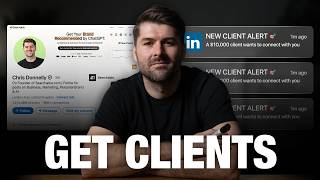
How to Scale to a $12M Cohort Business w/ Chris Donnelly
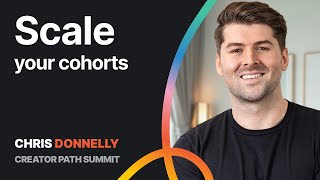
Chris Donnelly built the Creator Accelerator to $12 million annual revenue with seven staff and no sales team. The 10-week cohort costs $6,500 per seat, runs 300-person quarterly batches, and uses free webinars and wait-list discounts to fill seats. He runs it on Circle and Zoom with AI agents handling Q&A, keeping overhead minimal.
Questions this video answers
Chris says he would have added a wait‑space, created an offer that truly expires to avoid training the audience to expect perpetual availability, and brought in external coaches and ex‑students as coaches earlier.
He tried “Circles” – grouping participants based on submitted info – but found it too heavy for a cohort; it may work better in a community product.
Coaches are paid on a per‑hour basis with a capped weekly amount; they also gain access to a high‑value network and direct support from Chris, which is part of the value proposition.
Chris attributes his speed to a long track record of 15 years of intense entrepreneurship, a willingness to hire a smart chief‑of‑staff immediately, and setting realistic short‑term goals to build confidence. He advises newcomers to start with one‑on‑one training, then scale incrementally, and compare themselves only to their own potential.
Chapters
Uncharacteristically, I have actually prepared a presentation. And so we're excited to see it.
Yep. Beautiful. Take it away and then we'll have time for some questions at the end. Wait, should I do an intro of you?
I can, I can do intro. I mean, it's up to you.
I mean, all right, well, I'll do mine and then you can do your version. Chris Donnelly is one of the top 10 most followed, most thought leader individuals on LinkedIn, and he has created a massive audience in about 18 months of— I don't even know what you're at now, 4, 5, 6 million between all your different platforms. And I got the opportunity to meet him last fall, um, at an event, and he started on Circle, and now he's been launching a cohort-based business, and that's been blowing it up. He's a very fun, funny, straight-to-the-point individual. And we can't wait to learn from you today. Let's do this.
Let's do it. Thank you very much. Yeah, I certainly remember meeting. I think I was very drunk with my friend after that event. Very, very fun creator event, wasn't it? So no, everyone, thank you very much for tuning in. This topic for me is, I would say, something that I have been 100% immersed in since July last year. So to give a bit of background, I only launched my cohort business in July last year and the cohort business alongside the academy business that we have, which is a community not too dissimilar to what was being discussed before with some, with some slight differences in customer type. The business has got to a place now where it's doing about $12 million a year since July. And that's across like a variety of different digital products effectively. And so since July, I have pretty much been all in on how to make this work, but how to make it work at scale without building a big team. And so I only made this presentation this week. This isn't something that I talk about typically publicly that much, but I thought I would try and give as much value as physically possible. And then if you have any questions, I can try and answer all of them at the end. But very briefly, my background is a lot more on the sort of traditional— it's a bizarre way of describing it, but traditional business. On the left-hand side is a photo of a traditional business, which was Verb Brands, which is an agency, and we helped brands to, you know, develop their digital marketing and so forth. And I built that business from 21 years old to about 30 years old and managed to exit the business, which was a very challenging 10 years, but ended up being able to exit an 8-figure exit at 30 years old, which was pretty awesome. Business in the middle was a marketplace business I built with my brother. Which helps elderly people find care. So that was one hell of a journey, very challenging, very different, and got ourselves into a position where the business was valued at 125 million in 3 years of launching and now is a very big business, which I stepped back from in July last year. And then the photo on the right-hand side was just myself and my 2 colleagues, nowadays, and we work predominantly on personal brand and the Cohort business. And so my most well-known Cohort product is called the Creator Accelerator and quite literally launched on the 16th of July last year. The idea was I had been doing a lot of one-on-one coaching for entrepreneurs looking to scale their personal brands, and I would never have said like I was a LinkedIn trainer or a personal brand trainer or any of these things. Like, I didn't teach people social media. Like, it had— I had nothing to do with what I was doing. I was predominantly an investor and a non-executive for businesses. And then I thought to myself that the greatest challenge that entrepreneurs have and creators have is that they want to grow, they want to grow fast, they want to accomplish a lot of things. But it's very hard to find people who are on the exact same journey as them. And also the growth in life, but in business and on personal brand, you can't just be told it all in one go. You kind of have to be told it, you have to go and implement it, you have to then come back, you know, get feedback. And almost, I remember sitting there one afternoon thinking to myself, it would be amazing if instead of 10 one-on-ones, if I could do one coaching session for 10 people. And actually, truthfully, at the beginning, it wasn't because of the idea of one-to-many coaching and the idea of making more per hour or whatever. It was the idea that people would learn this and succeed in this by doing it together. And so I just thought that the actual product and the experience would be delivered better. I'd never heard of Circle. I didn't know what a cohort was. I didn't even know about the digital product world. In any way, shape, or form. I'd never even heard of it, for context. And so I had this thing that I was, you know, broadly teaching to entrepreneurs, which was build and monetize your personal brand. And that was basically it. It was, I will show you how to create captivating and exciting content that will build an audience that is your ICP, and it will allow you to monetize your personal brand through a variety of different methods. And because I'd obviously built my personal brand to— I got to the most viewed creator on LinkedIn in the world. So there was like these bizarre rankings, which I don't necessarily think are particularly important, by the way. And I don't think I'm the most influential person in the world. But month after month, a relatively ordinary businessperson, myself, was being ranked above Barack Obama, above Bill Gates as number 1 on LinkedIn in the world. And so I thought to myself, okay, I've probably got the creds to be able to launch something that's high level. And I don't want to launch something to thousands of people because I want to see if I can help, you know, experienced entrepreneurs build a personal brand. And so we launched in July. The intention was to have— well, the intention was to have 20 people on the cohort. And when we got to 20 people, we got there in like 2 afternoons, basically 2 days of the product being live. It went live for $5,000 for a seat originally and it sold nearly 25 seats in 2 days. And I remember like reloading Stripe and being like, what the hell is happening here? Like the demand for this is huge. And I suppose that evening was when I was like, wow, okay, maybe this is— maybe this just is a business. Maybe this is a business that can really run on its own. And I had no staff, so it was just me. And I had an external supporter helping me actually, helping me optimize things effectively. And so ICP, ideal client, like your perfect client. So I said to myself, maybe I can take up to 40 people. And then over the next 2 days, I didn't check, I didn't close off the payment gateway and 67 people signed up in under a week. And at the point, at this point in time, I had no conception whatsoever of like urgency or scarcity or any of these things that I've learned now that I run this as a proper business. But what I did understand at the time was that business owners, and this is an insight on my ICP, is that business owners of 7, 8, and 9-figure businesses truthfully really want to build personal brand to support their businesses, but they're not going to do it from someone that's not also been an entrepreneur. And that was the feedback. It was like, it's great to be able to learn from someone who has actually built big businesses previously. And I remember sort of reflecting on that initial launch and it was so badly done, like our circle was set up really badly. We had no support, no, no, nothing really. I mean, there were some prerecorded videos and the promise was that I would do a session on the Monday. I would then roast your posts on the, on the Tuesday and on the Thursday I would do a Q&A. And like I said, we got to 67 people before we sort of realized that I messaged a lot of people saying, would you be willing to do the next one? And everyone was like, no, no, no, I want to do this one, I want to do this one. So we did 67 people. So we started it. It was a 10-week cohort. The idea was essentially that in 10 weeks I wasn't going to be able to make people have massive followings in 10 weeks because that's just not how social media works, right? Social media is effectively a game of compound. So if you have a tiny following and you start, you're likely to leave with a smaller following than someone who joined who had a big one. But in 10 weeks I could facilitate, you know, a group of people forming an incredible community and learning everything they needed to know to go forward and become incredible creators and, you know, big personal brand entrepreneurs effectively. And so, yeah, we did 3 live calls a week. I was heavily involved in Circle myself every single day. I was doing nonstop one-on-ones with people. I was just trying to give as much value as possible, but also I think Jean said it on the call as I tuned in, like I was doing all the stuff that like wasn't scalable. You know, I was doing so many one-on-ones. I was asking for so much feedback. I was saying to people, how could I improve this? What would you want to see more of? Like a small insight. But people generally have— think that they want to learn the same way. But actual— in actual reality, people all learn very differently. And so some people learn through split up videos. Some people learn through much longer form videos, some people learn through audio, some people don't want to watch the video and just listen to audio. And so at the beginning we had none of that consideration, but it all came out in those following 6 or 7 weeks. And I had a Circle account, you know, the entry level Circle account. I can't remember what it cost, but it wasn't expensive. But that was my only cost, Circle and Zoom. And so the 10 weeks was exhausting. 99 a month. And it was exhausting. Absolutely exhausting. However, in the 10 weeks, I experienced something that I've never experienced in my life before, which is the energy within a high-ticket cohort. And I would never have described it like that at the time. I would have just said the energy within this cohort was honestly mind-blowing. Like I can't quite describe how motivated everyone was together behind the fact that we started on a date and we ended on a date. And so 3 live calls a week, nonstop in the community on my own, no staff, delivered the first cohort. It was quite a wild experience and I was making the majority of the content on the fly while delivering the cohort. And what happened next was that because a group of people had come together on social media and supported each other, those people got better at an unbelievably fast rate. And so it's the same thing. Like, I now run an entrepreneur cohort and those people progress in their business so fast because when one person solves the problem, they can then support someone else. I mean, it's a fair point from Mike there in the chat, by the way, and it's a good point to bring up at this point. I think that the digital space in general sounds super easy, like it sounds incredibly easy to launch and be successful. And so I've made the second part of this presentation actually about the launch strategy so I can tell you everything I've learned about launching, but also the fact that credibility matters so much in my opinion, especially if you're selling high ticket, especially if you're selling to entrepreneurs. And that does take time to build. But I would say to everyone in general, there is— there's no, like, time. There's no, you know, you don't time out on a personal brand. I only started posting on LinkedIn 2 years ago and 2 years and 4 months ago. And so 2 years ago, 4 months ago, I probably had less followers than most people on this call. And so if you put in a concerted plan as to how to do these things, then the dividends do pay back. It just takes time. These things don't happen overnight and it's not really easy. And I don't think that everyone can whip up a digital business that does what we did. But what we had uncovered is that there was this thing called a cohort and we could run it again. And so the 67 people left the cohort. I became really good friends with them. They're incredible people. One of them went on to be the most influential, like most viewed female creator in the world. And we got 40 of the top 100 spots in the world from that cohort. And I think there was something like quite magical about the first Cohort, which was that I was probably doing one-on-ones with everyone all the time to really understand the product. And so when it came to launching Cohort 2, I was like, okay, I actually feel like I understand this. I wonder if the pent-up demand results in another 50 people signing up to this and I'm just going to take 50. And so the long story short is since then I have run either a 100 200 or 300 person cohort on the Creator Accelerator every, every quarter. And it has become the most incredible part of my life. Like, I, you know, there's that like slightly cliché saying like the ikigai, which is like, you know, the meeting of all of your favorite things and the thing that gives you purpose. Like, I actually can't quite explain how excited I get when a cohort starts and one started on Monday. And I visibly on the calls, I'm like overjoyed and shaking about how excited everyone is and the next 10 weeks. And so I wanted to try and unpack a little bit about what I've learned about cohorts and how to make them work better. And so the first cohort we got away with because frankly, I was just online, you know, 12 hours a day type thing. But there was a million mistakes effectively. but we got away with it. However, when you want to make this into a process and a team— oh yes, Ian, what's up? You know, when you want to make this into a process and a repeatable business, then you have to really think about the scalability of the thing. And so nowadays we have a business that makes about $12 million a year, and I have 7 staff members that work with me in my office. We all go in 3 days a week. We contract lots of contractors around the world and an agency. Yeah, the cohort unfortunately did start on Monday, unfortunately. And it was full, unfortunately. So, yeah. So, I think that the problem often with products, and this is like a really strange insight to get your head around. The problem with selling a product, like a book, for example, I have a book coming out and we talk a lot about how to sell the book, is you can buy the book at any time. So why would I buy the book today? And if you really think about that, that's actually quite similar to the vast majority of products, including things like communities and including things like the vast majority of cohorts. So cohorts tend to be evergreen because people can't be bothered with the launch cycle, which is what we do, the launch cycle. So we have a launch, we close our doors, we have a launch, so we close our doors, we run the cohort and then we close. And so what we're creating is an unbelievable sense of like trapped energy, like boxed in energy. And so we don't have people continuously entering into our Evergreen Cohort and like everyone's energy dropping. We actually have a cohort where you join in week 1 and you can only see week 1. And even before week 1, I'll come on to it later. We have a wait space now, which is like an additional value-add piece. To again try and box in and facilitate and push momentum. Because if you can get a group of people to be, to have momentum and to be posting and to be interested and to be helping each other and supporting each other, then you get this like almost, you know, self-fulfilling buzz that happens. And the more that's happening, the more that everyone is getting involved and picked up by that. And so you're going to have your natural, you know, high performers mid-performers, and then people who don't have either the time or the energy to be in it. And so the cumulative pickup of the energy brings everyone with them. And that is so important. I can't, I can't stress like I have helped a lot of people launch digital businesses since July and I've invested in a lot of businesses as well. And most people can't crack the energy. And so I think we have had 3 refunds ever across 600 people. And I think that is because the energy is so, so high. And so people know, even if they don't know the content, that what they're learning is going to change their life. And so if you can drip— oh, there you go. The drip reveal is brilliant. If you can drip out the first piece of content in week 1, so like we do 10 modules across 10 weeks, each module has 2 or 3 hours of prerecorded material. Every Monday I go over what I think is important about the module. Every Tuesday we do the Roast My Post. So one of my coaches who is the head lead female lead, the leading female creator in the world, does the Roast My Post on Tuesday. Then we have one of the fastest growing creators in the world do another live call on the Wednesday, and then we have me on doing Q&A on Thursday. What you're able to do is provide an unbelievable amount of value and not everyone can come to everything. But I also would say to most people, what they get wrong is they try and take everyone into their cohorts. However, we, we work very, very hard on saying no to people coming into the cohorts now because we only want people who are going to work incredibly hard, who are up for the challenge of putting in 5 hours plus a week to this thing and making their content, who are likely to help other people. And so we have an application process where someone can pay and then we will reject on the back end if their answers don't fit our criteria. And so again, it's very important to make sure you get the right people because you don't want detractors. Detractors will bring down the energy. They will take away your energy. I don't— I haven't really experienced this myself, but refunds are the bane of people's lives on other cohorts that I have spoken to. Okay, so peer-to-peer accountability very early on in the cohorts. You get people who, who give, who naturally give and are leaders and supporters and guides and just huge givers, I would call them. And so what we do is we support those people immediately because those people give so much energy to the cohort and keep, keep us as the sort of coaching team, you know, knowing what's going on, not because they're going to tell us everything that's going on. But if they're like, oh, I feel like we should do accountability sessions or I feel like we should do X, Y, and Z, we'll then have a sense of the vibe because the group moves as a group. You know, it's like group mentality and groupthink. And so it's very, very important to think of it like that. And then, like I say, our price nowadays is $6,500 for 10 weeks. No one ever asks about the price. We give people the option to pay over 4 goes or upfront, but no one ever asks about the price. And that again is about qualification. We don't want people who are struggling to pay. We want people who it's a lot of money to pay, but are happy to pay because they understand the outcome on their business. And then I think with us, and it's hard, it's hard because I don't run other cohorts in other disciplines, but with us, the case studies and testimonials from our previous cohorts are so clear and so evident because we share them with links that people can go and check on them. We share even the people who don't grow much as well, that we're saying to people that our guarantee is if you do the work, it will have a significant impact on your business and you, you'll feel it in 10 weeks, but you'll definitely feel it in 6 months. And I have never once had someone say that they didn't have a positive experience in the Create Accelerator other than the 3 or 4 people who left in week 1. So these are, these are very important things to bear in mind. So the challenge. Okay, so running the cohort is probably the thing I've enjoyed most in my life. I don't even know how to explain it. I love it. However, marketing the cohort is frankly— that was actually a fidget I had. Marketing the cohort is actually very, very difficult. And so you have to make a group of people, say 100 to 200 people, depending on the time of year, you have to make those people sign up at the same time and move at the same exact time. Now that's quite challenging. And so what we do is we market for 8 weeks for each cohort and we start very, very light and we give out something called a super early bird ticket and that goes to only the people on the waitlist and that is a 20% discount which they get from being on the waitlist for being signed up. Then we release the early bird ticket to my personal network. So not my social media network, but my email network, which is a 15% discount. We then speak at 4 or 5 different conferences and those conferences we give a 15% discount to as well. And so even in the first week, unlike most cohorts, we do 25% to 50% of our sales in the first week or two of the 8-week sales cycle. You then enter what most people would consider to be this sort of, Valley of Death or Valley of Despair, as I call it, for people where no one buys anything until right at the end of the cohort launch. and that's actually when the majority of people buy in the last sort of 3 or 4 days. However, I don't want to run a business like that. I think that would be too nerve-wracking. And so what we do is every Thursday on the run-up to a cohort, I run free webinars which I use my social media to drive. Each one will have a very specific topic, which might be email segmentation or like how to deplatform organic traffic into subscribers or, you know, how to build your first digital product, whatever they are. And every Thursday for the last 8 weeks, I have had sort of 500 to 4,000 people on webinars every Thursday. And so by doing that, I then at the end of the call, I'm not a seller. I don't have it in my nature to be a hard seller. And so what I do instead is I say at the beginning of the call, I'm going to provide you as much value as I possibly can. At the end of the call, I'm going to tell you about my cohort and then I'm going to do Q&A. And so I put the cohort sell before the Q&A so that everyone doesn't just leave. Because I think a lot of the time people will come for free webinars and then just leave. And that's fine. I love giving away free value. And so you do that every single week. And by doing that every week, you can give away webinar-specific discount codes for people taking action and joining the webinar. Now they end up in a wait space pre the cohort launching. If they didn't end up in a wait space and they bought a month ago, and the cohort started in a month, by the time they got to it, they'd be like, oh, I don't know about my investment. Like, this doesn't feel right, etc., etc. And so that is about customer experience. It's about early accountability. It's about rewarding good activity with compound growth because they will meet loads of people in the wait space who will be already working because there's like materials in there, there's prerecorded stuff. And I do 2 live warm-up calls before the cohort. And so before we even get in, people are high energy. The other thing as well is a lot of cohorts, I think, rely on prerecorded material very heavily, whereas we have the prerecorded material, which is quite brutal to film. I think I filmed something like 35 hours of it. It's brutal to film, but I do think it is very important for people who like to learn in their own time. And it's also very important for us to see the people who are watching and learning from the modules. The other thing I would say is that we have, we have lots of different things timed always to push for activity within the cohort and activity results, you know, 1 or 2 people posting in the wins channel, 1 or 2 people doing an accountability session together. We have clinics now where you can have a 10-person meeting with a coach and ask dedicated questions. We're trying always to facilitate different spaces and activities that start conversations. And the more conversations you start, the more of a ripple effect that has, because most people in the cohort know one or two people before they sign up for the cohort. So there's a bit of a, a bit of a ripple effect. So public feedback is something that I encourage enormously. So we don't do nowadays in the cohorts, we don't do any one-on-one, and that's because it's a cohort business and so it's a cohort business model. And so I have external contracted coaches who are good friends of mine who work for the cohort business like I do. I then have the support staff in-house with me, and so we don't do one-on-ones. And so it's very important that everything that you ask, you ask it publicly. Unless someone really struggles, I will encourage them to ask publicly because then a thread will start where the coaches will be involved and people will be doing Looms and people will be saying, this is what I did and this is how I solved it and this is what I, you know, I'm going to do. And what happens is every question leads to networking, every question leads to some sort of community think. And I think that is a very powerful thing for a cohort. I think accountability is overall the main thing for a cohort, right? You're, you're joining with a group of people. You see other people growing, succeeding, sharing wins, and that drives a lot of people. You could make the argument that might put off some people. And I would say that maybe that has happened in the past where the people who did ask for the refund, two of them said that they felt there was too much competition within the accelerator. And I think that's totally fair to leave over that reason. But I would say it's not competition, it's people sharing their success and people helping each other. And it has been very powerful. The other thing is homework. So every single module comes with a dedicated piece of homework assignment that you have to do. I mean, people don't do them occasionally, but you should do them and then you give them to a coach and they'll give you distinct feedback on your homework, which means that someone is learning in prerecorded, they're joining live calls, they're seeing how it's done every week, and then they're doing an assignment, handing it in and getting feedback. The cycle of learning within the cohort is very, very powerful. And the last thing I have to say, like, thank you to my wonderful friends at Circle for adding this recently. But today we put our AI agents live in the, in the cohort. Which is very, very cool. So we've built some AI agents which are ask any and all general questions. I don't know if I'm in beta, if I shouldn't have said that. That's just quite funny if I shouldn't have. But, you know, general bot that can answer all and any questions, which means that we can communicate to our cohort and say, if you're going to talk to coaches, ask them detailed and specific questions. If you've got basic questions, just ask the bot and then The other one we're going to launch is an agent that can roast people's posts. And so again, you're just creating additional layers of value every single day that someone can be using the AI tools, watching the material, and then everything we create is always recorded and stored and organized so that people can come back and be using it. And so we've got loads of ideas for AI. I honestly think that, and I tried every tool before I got into Circle, by the way. I think it is, it makes my life easy. It makes our business run easily. And, you know, I have no affiliation other than being a customer. The speed at which we can implement with Circle and the speed at which we can now implement AI agents and the speed we can do onboarding is unbelievable. And so, yeah, I do have the Enterprise, but I'm sure they're bringing it to the— I don't know. So now the cohort itself, like I say, I don't find it hard to run. It's a lot of work and it's very fulfilling, but I don't find it hard to run. Now, the marketing for a cohort like ours is hard to run, truthfully. You've got to really, really understand organic traffic. You've got to really understand how to deplatform organic traffic into subscribers. And then you have to very much understand, like, how to create educational lead magnet type content that's going to drive people into a funnel and then convert them. And so what I do is I have effectively a waitlist, which is— why would you join the waitlist? Well, you get a 20% discount when it goes live. That's a big, big benefit. And the key is that most of the people who do the cohort next do it because they knew someone in the last cohort and they— or they saw someone in the last cohort be successful. And so join the waitlist, you get early access to the wait space, which has loads and loads of free value, live calls, and you get a discount. So that's like huge for the waitlist. You've got to create good content to get people to come. And so I'm an investor in this company called SayWhat, which you see this graphic here. The State of the Algorithm. We did this report and we do it every quarter now. I bought into this business as an investor and now we do this report together where we talk about how LinkedIn posts and growth is working, but from a data perspective. So we analyze hundreds of thousands of posts. Now you can come sign up to that and you come to a webinar and after the webinar you get sent the report. And so the webinar is basically the vehicle with which we sell the cohorts. And it makes total sense to me because if in the cohort you're going to be on calls with me all the time, you want to see how I teach. You want to see that if you're having a bad day, can this coach actually pick me up? Like, you want to see that I don't have to look at any notes to provide every answer to digital marketing, to digital product build, to cohorts, to whatever. Like, this is native for me. So you want to see that stuff up front. And so I would say if anyone wants to do cohorts that are similar to mine, you have to get good at conveying value both in lead magnets and content, but also in a webinar style, because that is where people build the trust with you to buy. So this stat here, 60% of all of our signups joined from webinars, which I personally think is a staggering statistic. So the next thing I would say, I have a pet peeve in general with digital marketing and content and so forth, which is I find case studies and testimonials don't come. No, webinars are not dead. I mean, I had 4,000 people on my webinar on Thursday. How mental is that? 4,000 people came to my Zoom on Wednesday, on Thursday last week. And I would say they are, they are totally slept on. I would say that email marketing and webinars completely slept on. And the idea, by the way, that you could sell a high-ticket cohort or product, high-ticket masterclass product, whatever, just direct through social media and do it continuously throughout the year, I think very unlikely. Maybe it's likely if you have a sales team, but for our business, we have zero sales team and we spend zero on marketing. Right? So we have organic traffic direct to landing pages and then people sign up if they want. There is no sales whatsoever. And so I think If you're not practicing those, then I would say that is what to look at next. Now, case studies. Okay, so case studies and testimonials. My pet peeve is that people do case studies without the ability to click through to them. Like, if I see a case study, I want to see the person who experienced the transformation. I want to check out the case study and ask them about it. It's the same as when I ran my agency business. Like, we had clients like Bugatti and Aston Martin, all the rest of it. And I would say to those clients, I need to be able to do a case study where they can check out the results and be able to see a part of your website that has a statement of our work. Because I would never want to have a situation where I say, this is my case study, it's John Smith, they grew from 10,000 to 100,000. Whereas instead I just say like, hey, Dr. Caroline or Dora, these people grew from 20,000 to 200,000. Go and check them out, ask them. And so case studies are normally in the funnel of marketing going to be the thing that fundamentally tips people over the edge of buying. So I feel like if you can learn how to do case studies. So how is it going to work long term for someone thinking about a business like this originally? And I still think around the time that I met you, Alex, it's like I thought this was quite a hobbyistic business for me. I thought it was something that sure could make a lot of money, but wouldn't be like a business business. However, you know, with 7 staff, we generate $12 million a year and we have zero spend on marketing and zero on sales. And the only way that that works is if we have an always-on marketing procedure. And so throughout the year, we release content 4 or 5 times a day on 5 channels, 4 or 5 channels. We've just started on YouTube recently. Tough platform, but starting to make some real gains. Obviously, I have a big LinkedIn following. I started Instagram last year and sort of blew up there. Started TikTok a year and a half ago and had a big blow-up moment there as well. And so every single day we push people to the newsletter and then within the newsletter everyone is segmented. And so I'm just going to get— this is— I'm not pushing you to my newsletter by doing this, but I want you all to see something. But you would probably have to sign up to my newsletter. So feel free to unsubscribe afterwards. But if you go to my newsletter now and you go to— I'll post in the chat— if you go there and you sign up and by the way, unsubscribe afterwards, genuinely, it's your call. Once you sub, the page will change and it will ask you why you're there. So you sub to my newsletter, the page changes, it says, can I help you with your audience or your business? It will then ask you 12 more questions And so my email newsletter isn't 250,000 strangers. My email newsletter is 50,000 8-figure business owners. Right? Because they have answered it. They have said, I have 50+ staff, 8-figure business. I want to learn online in a cohort style and lots of other answers. And so for those people, that is who I'm marketing the cohort to. I don't even post about the cohort that much on my socials. Maybe, maybe I post about it 8 times before the launch of a cohort, but actually the vast majority of it is happening in automated or manual sendouts to a dedicated segmented audience who have already shown a proclivity towards buying a product like this. And so the reason I love Circle and all the other tools I use is that you can put in place an incredible scalable system and you might have to use some zaps occasionally, but where the whole business runs perfectly without a huge amount of input. And now with the advent of AI, you get to a situation where most of your lead generation can be automated and can be on cycles and flows and so forth. And so most of your cohort can be automated on cycles and flows. And all you effectively are doing is focusing very, very heavily on the content creation on the front end, because once you've nailed the cohort experience, it's just marketing the cohort. And so I would say try and find a niche topic, right? Try and find a thing that you can help someone transform on. And if that feels natural to you, amazing. Follow your nose. Otherwise, you could think strategically about what is it that people struggle with. And so I can let you I can let you ask as many questions as you possibly want about marketing, and I'm very happy to answer anything on it. But it is a skill set that genuinely I am very thankful that I know. But I think that even most good marketers don't truly understand how scalable and automated you can make marketing these days. And so when people sign up to buy our cohort, they do an onboarding questionnaire immediately. They have to watch 2 or 3 videos before they can enter into the Wave space. And so by the time everyone arrives into the cohort, they are like fully onboarded because they had to. And so you can just set all that up in Circle. And so someone has to watch 2 videos of Josh and I, they have to answer lots of questions. And so we never then end up with all these really daft questions on day 1. People hit the ground running. So results, I mean, the results, I don't want to show off about our results, but the results, if you have good ones, you want to incentivize your cohort members to do referrals. There is a beautiful piece of technology within Circle that does, it does automated tracking and affiliates so previous members can do affiliate into the next one and give them a 10% kicker. And so the only spend we have is on the affiliates who are the previous cohort or the previous, previous cohort members who want their friends to do the same experience they did. And so at the end of the day, we are not selling information. And I think that's a really important thing for everyone to get their heads around, is we aren't selling information. And in the day and age of AI, where information has suddenly become almost zero value, we are selling accountability and community and outcomes. And so the results are very important. They are incredibly important to be able to share. And so we work hard so that our members not only love the cohort, but love it so much that they're happy for us to shout them out afterwards. And so honestly, it's maybe 5 people ever who haven't wanted to be shouted out afterwards. And it's mainly— it's not because they didn't love the cohort, but it's just they don't want to be associated with, you know, purposely growing their social. And so what my focus is now is how do I build a business that effectively serves exactly what I want in my life, basically, which is I'm trying to build products that teach people things that I think are incredibly high value at the same time as allowing me to focus on these key focuses of mine, I would say. So I said to myself, after years and years of burnout and building companies and being exhausted, that I would only work 10 months a year and I would only work 4 days a week. And so, in many ways, the cohort business, and I also run a community business, and it's similar but different, are truly the most freeing thing in the world. Because you are able to have a relatively high leverage product and people, the right customers, really respect the type of product it is, you do get your life. Outside of running a cohort, you do actually get your life. Not maybe for Cohort 1, and I would advise everyone go all in on the first one. Because you need to create community and you need to work out the levers for community. The module, the business gives you your life back. And so I would say to anyone out there who's an entrepreneur or a business owner, if you have social audience or whatever, I would say you can start so small. I just had an amazing bit of feedback from a friend of mine, Justin, that he's got 20 people signed up to his cohort and it's like that will change his life. You know, 20 people signed up. He's got a little bit more time before, before the launch. He will teach those people and give so much value and so much time and energy to those people that it will change his life and it will change theirs. And so it really is win-win. And again, just remember, you're not selling information, you're selling accountability, you're selling community, you're selling outcomes. You're selling emotions and networking, understand that the information is kind of a foregone conclusion now. And so what I want to talk about with all of you today, and as I say, I'm not someone that is particularly good at selling nor necessarily likes it, but the other cohort I do run is the Digital Business Accelerator. And the Digital Business Accelerator is built off the exact same foundational principles of the Creator Accelerator. but we teach individuals how to build digital businesses. And so the cohort is structured in a very, very similar way. The material is very different. Obviously, it's not specifically focused around personal brand. And effectively, I teach people how to build communities, cohorts, and digital products. And I also teach people about the key, about having laddered products. And so there's a variety of different products we have that people buy, get a huge amount of value from, and move through towards buying one of our higher-ticket products. And so in this cohort, we focused on teaching people about what digital business model is going to fit you, what model is going to suit you personally. And then I asked people at the beginning, what is it that you want from your life? Rather than should we build a digital product for your existing business, I try and ask people Why don't you challenge yourself in this moment? Like, why don't you challenge what you want from your life in this moment? Because if you are able to build— I'm just going to talk as if I was talking to my friend the other day. If you build a community of people who want to be a community of surfers, as in literal wave surfers around the world who will pay a small fee to be part of an amazing surf community, And that means that people from around the world can network, learn the best spots, get, you know, meet the right people, learn the best techniques, share information. If you manage to do that, you'll never have to work again. It's not too hard to run. You just have to understand how the digital marketing and sales process works, and you'll be able to build yourself a product that pays far more than any job or business you've had before, but also at a higher margin, also at higher leverage. And these things compound. And so I could talk forever about building a community because our community is, is, is fascinating because we have both an advanced community and an entry-level community. And so just, just to wrap up before any questions and like I say, very happy to take anything on the creator world, digital products, digital build and digital marketing. The Digital Business Accelerator is 10 weeks. There's 4 calls a week, Monday with me. On Tuesday, I have one of my old business partners who does— who's doing Test My Funnel. So he'll work with people on how their funnels are working and why they're not working, how to increase conversion, how to think about the organic flow differently. If you're running paid ads, how to think about the ads differently. If you're doing organic and you could supplement it with ads, how to look at that. And then we do Q&A with myself on the Thursday, which is effectively like live 50 experienced business people talking about how to build digital businesses for an hour. I normally stay on for longer. So absolutely awesome product. I'm just going to show you that anyone on this call— I put this together for Alexis, but anyone on this call gets a 10% discount. So if you do want to check it out, please do. If not, no hard feelings whatsoever. I think that at this point, I always just want to help people at the stage that they want to be helped and with what they want to be helped with. So I think that as time goes on, as time goes on, I think that all people should focus on that when it comes to marketing. I want to deliver people the content and the products that they want to be delivered, which means that, you know, in a year's time my book comes out which is called Work Less and Live More. And the whole point of the book is to effectively support people in living a freer life. But I don't want to send my courses and cohorts and products to everyone on my email list because loads of people will unsubscribe. However, I do want to send my book to all these people. And so it's very important to understand who you're sending your messages to and who you're sending your products to. Otherwise, ladies and gentlemen, thank you for listening. I have no idea how long I spoke for, but I hope it was useful.
It was fantastic. I, as you mentioned, I haven't seen you teach this content before, so I really felt like we were getting a peek behind the curtain of something that you've been building since July. So thank you for being so generous and thank you for hooking up some attendees with a discount code as well. We have time for a handful of questions before we bring Anne-Laure to stage, if you have time.
Yeah, sure. Yeah.
Amazing. Okay. So first question is around, this is from Elisa and I like this, it's a little bit more general, but what would you do differently as you were selling your first product?
Oh, I mean, I feel like, I feel like I've done all the things I would do differently now. So like everything from having, you know, having a wait space Having an offer that genuinely does expire. I think there's a temptation with entry offers just to keep them open forever, but that trains your audience badly. I would say getting help, you know, getting external coaches to support me was a huge move. Getting ex-students to become coaches was, I think, one of my better, better moves. So yeah, I mean, there's a million things I would change, but that's the point, is that every new cohort you get to try new— I've tried things that we've tried and now dropped. And so it's—
what can you share? Like, what's something that you tried that didn't work?
So we tried something called— well, we called it Circles, which was groups of people who were matched together based on their submitted information. But it was like it was too much for a cohort. However, we think that will work in the community product because the cohort's 5 hours of live learning a week. So it's like It's already a lot.
Okay. So it's almost too much then on the cohort side. Okay. Okay. Speaking of getting other creators involved, um, this was asked anonymously, but when you have other creators on your cohort, what sort of terms are you creating from a payment structure? So you have these like coach creators that come in and offer support and they're a part of the offering. How do you pay them and how does that work?
So it completely depends on the coach. Obviously for me it is, it is a sort of an art rather than a science because some of the people who teach on my cohort are the fastest growing creators in the world and so they could easily build their own stuff. And so for me it's about making sure that it's worth their while. Obviously the Creator Accelerator and the Digital Business Accelerator pull together the most high-value network you've ever seen. And so for the coaches, they get a massive network of people who have— who look at them like coaches, which is very valuable. Obviously there's payment. So you will pay someone— we pay on a per-hour basis with a capped amount per week. If I say to the coaches, if ever you feel common sense that you should go over, go over, go over the cap, like I completely trust you. And then the other thing is that the coaches, I help the coaches with their businesses and whatever they want, basically. And so they get direct access to me. And I think the thing is like what I— my skill set is I have built digital businesses and I build digital marketing products like rapidly. And so if you want to learn how to do it, one-on-ones with me is probably quite a fast way to do it. Basically.
I have a follow-up question about this and this will be our last question so we can jump in with Anne. You do have this ability to take very quick action. And even like from when we met last fall to the way that your business has iterated and different things you've launched since, what is it about you, your personality type that lends itself to quick action? And for people that are maybe in analysis paralysis, or maybe they're in like freeze mode and they're having a hard time taking action, how do you do that? And how have you kind of refined that in a way that serves your business?
Yeah, I mean, I've literally just finished today writing about that in my book.
Oh, perfect. Perfect timing.
So it would be a useless exercise to compare yourself to someone in a completely different situation. And so the key is to compare yourself to where you could be. And like you said, like July last year, I didn't even have a cohort and now we are where we are. But that's built on 15 years of being an entrepreneur before that and probably working 70 to 80 hour weeks for 15 years. And so I had an irrefutable stack of proof behind me that I could do these things. And so when I discovered— when I discover a business model, unlike most entrepreneurs, I will hire someone the next day pretty much, who is a really, really smart chief of staff type role. And I'll pay them really well because I'll take the bet on myself. Now, for most people, you won't do that because that's like really, really risky. And so I would say for most people, start incredibly small, like don't try and take on the, the, you know, the final boss, as it were, which would be the 100-person cohort. You should probably try and do one-on-one training and see if you can get one person to transform in the, in the thesis or the theory that you're trying to put together. And when you can do one person, See if you can take on 5. And like, I think that the, the thing is, people, people are very quick to think that they can achieve a huge amount in a short period of time, and then when they don't, they lose confidence. But what I would say is like, try and set really realistic goals over a month or 2 months or 3 months and keep beating the goals. That will build in you a level of self-confidence because I would always say the last person in the world you want to let down is yourself. Because if you can't believe the things that you say to yourself, then you are very unlikely to be able to continue to achieve things. And so I'd say start small and iterate.
I love that. Especially the piece around not disappointing yourself. I think that's a big piece of like building confidence and also looking for proof and building evidence. I'm like, I can do this and this is my track record. So Chris, as always, such a pleasure. Thank you so much for being here and sharing your wisdom. This was like a masterclass in cohorts, deep, deep, like the deepest one I've seen so far. So really appreciate you and just a big fan and excited to see you in London next month.
Yeah, absolutely. Well, look, everyone, thank you so much for tuning in and yeah, have an amazing day wherever you are in the world.
Amazing. Thanks, Chris Donnelly.
See ya.