#12 - The Viral Rage Machine
Chris Webb breaks down how viral posts exploit our hunger for certainty, turning complex issues like immigration into fear-mongering drama. He traces a Titanic metaphor post urging America to "wake up" and shows how it manipulates rather than informs. Instead of trying to convince others, Webb argues for curiosity, asking real questions, and checking sources.
Chapters
Welcome to another edition of More Curious Than George. We win with Webb here together. We're going to be talking about the rage machine that is politics, mass media that wants you angry. Blue and right, left and blue, right and blue, blue and red, left and right. It really doesn't matter, and we're talking about something much bigger than that today. We're going to be talking about how A lot of people, hopefully not you or I, remain curious and have a more wide viewing perspective, but a lot of people unfortunately think that they can sum up what's happening in this country and perhaps even the world in one long essay format viral post. To me, when I see those kinds of things, I think about how we are as humans and how our brains are wired. We naturally want to have answers to things. We like to put labels on things, have them fit into a box. Ambiguity, not knowing, the darkness of a black hole, it can be scary. And when we think about how important we all feel it is to have a society and a place, a community that we can believe in, Schools, the future of our world. I mean, all these big things. I mean, it's clearly very important. So is it maybe not a surprise that a lot of people pretend to know maybe more than they actually do? Are they consciously aware of that, or is there a subconscious trick happening there? I know in terms of how we're wired, we want to have an answer, and sometimes it's more scary to not realize we don't have all the answers, right? And I remember at a young age being told that politics, along with sex and religion, are those taboo subjects that nobody talks about. And you could tell the reason that it was said is because they're generally topics that get people very polarized and very separate from one side to the next. I think the inherent problem with that is we have this idea that it's our job or our duty to convince somebody else of our way of thinking. I think that's completely wrong. I think there are 2 things that we can do better if we want to be respectful humans. One is dig deeper into your own beliefs and try to understand more about them. Learn about why somebody else might believe something differently than you. I think about debate class, and I don't know if some that also attended forgot this or don't apply it to politics, but it's only going to make you potentially more convicted or stronger at your side, the more you know about how another side thinks and feels. However, when it comes to something as complex as politics, and let's say immigration policy, you might say, well, I've researched and I understand how the blues think about it. I've researched or I understand about how the reds think about it. And that makes you more convicted and feeling better about whichever side you vote for. But guess what? On this episode, we're getting rid of that. We're not talking about blue or red, left or right. We're talking about the bigger issue. So for example, how about just a broken system? I think if you ask the average person, we all want opportunities to succeed, to prosper, to have the privilege of more money, more access to education, resources. I don't think if I said a lot of these things, and I could keep going, that any decent person would disagree with me. So what are we all coming back to here? So this idea that plenty of people can think, I'm gonna sum up what's happening in one viral post, and I'm gonna dive into this. So, It really gets me fired up. It's a big reason that I came out with this podcast is I'm tired of mass media's rhetoric of pushing a manipulative and deceptive viewpoint of bully politics, bully news to try to get you angry, to try to get you fired up. And it's not to say that when you look at some of the things that are happening in the country or the world that you shouldn't feel emotion or fired up about it, but that doesn't solve anything. No different than if somebody's giving me a hard time across the street and tossing names my way, some verbal barbs. You know, I have every right and hopefully do defend myself to retort back and, you know, let them know that I'm not too keen on their viewpoint of me. But I would hope as I leveled out a little from that emotion, I'd realize this is silly. It's some stranger. I bet you they're projecting bad things from their day onto me. And as much as it might feel good in the short term to go sock them in the nose, we're not going to do that, right? We're going to allow our emotions to settle. We're going to return to the body, and we're going to start using the logical part of our brain. So once we let that emotion pass, we're back to thinking with the smart part of our brain. Science. It's true. So why don't we do this more when it comes to politics or other issues? I think that's a fair question. So here's how this viral post started. Food for thought. Food for thought. As I had my morning coffee, I realized that everything is about to change. No matter how I vote, no matter what I say, something evil has invaded our nation. And our lives are never going to be the same. The end of this post says, wake up, America! The great unsinkable ship Titanic America has hit an iceberg and we're taking on water. It's sinking fast. Leo can't make it, but Rose can. Funny little reference if you caught it. The choice is yours to make. What will it be? Time is short. Make your choice wisely. Feel free to copy and paste. I did. So yeah, I'm for now skipping over the issues and what was raised. Stay tuned. We'll have a miniseries about that upcoming. Each little issue as we unpack where the author was coming from in terms of their views, their feelings, what the statement is saying, and healthy questions that I would have, as well as just straight up facts. Showing why that person is wrong. Now, showing somebody why they're wrong— it gets back to what I was saying, right? I don't necessarily want us to feel that we're going to approach somebody that thinks and feels differently about something like politics and be able to just say that, and, you know, they'll understand. We all have egos, and when we attach those egos to these important issues, We are even more protective of them, and it creates this association where it's even harder, even when faced with knowing that it could be wrong with irrefutable facts, the psychology of that. It's incredibly difficult for the average person to sit there, have a conversation, not only be open-minded to maybe there is another way to look at this, but to be receptive to the idea that their views have been wrong because they immediately feel like an ignoramus, like an idiot. And that's not fair. I think about as a young kid, we kind of got it in our heads on like the school buses that, oh, if I didn't know what this phrase was, then I'm going to pretend like I know because I want to be cool and otherwise I get made fun of. Maybe there's some underlying, you know, ways that we were brought up to think in this world that it's not cool to say, you know, I'm not sure on Iran. I've read a few things about the missile and how it hit that hospital and that building, and that sounds really awful. I have questions as to how that happened, and I want to better appreciate the situation, so there's more that I would like to learn. Isn't that A respectful and educated way of saying, hey, I know some, but I— there's plenty I don't know. I could also say, you know what, I wasn't in that control room, and I wasn't that person whose job it was to do that thing. I also know how public relations work, and well, as the media, as we alluded to earlier, without getting down that rabbit hole. So I want to kind of come back to How this made me feel. I'm curious, when you see somebody with a viral post that they put out, you can tell maybe that they're looking for a reaction. They're looking for your emotion, whether hoorah, you're the best, you're exactly saying all the things that I want to say, I fully support this. And as the author said, I'm going to copy it and I'm going to paste it. Or it enrages you because you disagree with all of it. Well, I'm here to say that regardless if it's blue or red, left or right, that honestly doesn't make a difference to me because you could change the way it was written in terms of which side the person is taking. And that's ultimately the thing that bothers me, is that there are a lot of smart people that vote one way, a lot of smart people that vote the other. But they're not using their emotional intelligence. They're not seeking to understand. They're not asking enough questions. And if they're framing something this way, again, you spin the issues around. And if you put a post out there like this, I would ask you to look in the mirror and ask yourself, is this the right way to get my point across? Do people enjoy being bullied and manipulated and made to feel Lead. No, the salt was on the ground. You salted the path, you made the horse drink the water. That's not how we get things done. I've definitely heard it said before, somebody that's very good at problem solving, and you care about somebody and you're motivated to explain something to them, but you look at it like you would maybe fixing the engine of a car. And with people, you have to guide them. And even if you guide, it's not up to you. You have to remove your ego from the conversation entirely. It's simply about showing people a better way. It's not your job to convince them that if what you're voting is what they should be voting, but maybe instead to think about how are we having these discussions about school systems, the roads, foreign policy, whatever it may be. I challenge people to try to do so with more respect, with more courtesy, with more curiosity to learn and understand. I can think of countless people in my life that I imagine maybe you can too, that vote different ways, but you put them in a room together, even though they're very smart people, people that I love with big hearts that, you know, you'd be happy to be in a pontoon boat with in the summer. And they'd be tearing their heads off because this mass media structure, it's just revving us up to try to be something that we really shouldn't be, and I think it's time to return to that favorite classroom setting where maybe it's the teacher moderating the conversation, teaching us all how to look at current events, to talk about the facts, to politely state our opinions, to ask more questions, and have a conversation. Now, Debate occurs, sure, but shouldn't it happen with respect? And shouldn't it also be showing an appreciation as to understanding why somebody thinks the way that they do by asking them questions? And again, this isn't easy, and there are plenty of people that are going to be abrasive, overly emotional, and not able to have this kind of conversation. And I'm here to say it is not my job nor your job to try to have that conversation or convince them. But if you're capable of being more curious and seeking to understand and leading a certain way, I do challenge you to think about that when you interact with people about something like politics. Religion or sex could also be thrown in there too, because the power of your influence by doing something a certain way is bigger than you might think. So I get, as you can tell, philosophical, and in my own way, maybe ironically worked up when I see these posts. It feels like the easy way out, that somebody can just sum up everything that's going on in our country or world in one viral post, and they must have it all figured out, right? It frustrates me. It sets a precedent for others to make it easy Right, that we're just going to, as the author suggests, copy and paste. And then there's that little nuanced guilt of, well, I did, shouldn't you? Um, it's— that's how I feel. I'd be curious how you all feel about something like that. I'm sure you can think about it. So what do we think the danger is of this copy and paste idea. And, you know, there's plenty of that sort of mentality. You know, you could do it with Instagram or TikTok, just resharing a reel, just resharing a post, just forwarding something. I mean, it happens on all the platforms. Sometimes people will add their own 2 cents to it. And I'm not here to dig into any one specific post and say it's completely wrong. But checking the validity and the reputation of our sources is something a lot of us miss. We don't take the time to actually verify the data. And there's also the idea that maybe I could put out something with correct data, but the way it's presented is negatively aggressive and designed to make people that think differently feel Genuinely designed to make them feel like inferior, lesser-than humans. That's not the way either, right? So when I think about this, it's just— I understand that we're busy, we all have our lives, and there's a lot happening, but I don't think it's okay to just forward something and post something, copy paste, without first asking yourself, what is it that I'm sending out into the world? Is the intention of whoever wrote this good? Do they want to create maybe just open and honest conversation? Are they saying, you know, respectfully, everybody looks at things differently. Here are some of, some of my views, you know, bullets 1 through 10. Here's how I feel. And maybe here's a little snippet as to why I feel that way. To me, that'd be more acceptable because there's nothing wrong with speaking in your voice and what you're convicted and passionate about, and of course if you're backing it up with here's the reason, then you're giving people context and an understanding as to why you think that way. But when somebody tries to manipulate with a post, and they have undertones of saying It doesn't matter which way you vote, and they create this scary environment like we're being invaded, and then talks about how we're collectively sinking like the Titanic. They're overdramatizing things to their side of the story. They're turning what could be a documentary into some Hollywood feature film with, you know, too many special effects, and just— it's not Real, and it's not a representation of what's happening in our country. And if you look at this author, you can tell they're scared. And when you operate from a place of fear, it's a heightened emotion. You don't operate with the smarter part of your brain. You're not really thinking clearly and rationally. And when we dig into this in the 14-part series, you're going to see a lot of Bias, a lot of conjecture, a lot of, well, this thing is true, which this thing is true over here, so they must be related— causation— or one happened, so the other one happened because of it, you know, cause and effect. A lot of outlandish but also oversimplified connections, because again, if we take a step back, It feels good. Feels good to have answers, right? Huh. So what are we really getting in terms of, you know, the empathy gap here? And this author, you know, I'm not trying to attack anyone that has different opinions than me, but when they approach it trying to scare us and fearmongering. And, you know, as we'll see as we dive into this series, so many blind spots, so many examples of somebody that didn't research, that didn't check their facts, that didn't verify their sources. I remember being really, you know, I'm sure you all can maybe relate, in college, you know, hounded. You gotta cite your sources in the paper that you're writing and the APA formatting. And I remember just as somebody that's not as big on the fine minutiae details. That was a pain in my ass. I hated that part. But I recognized the importance as I got older of verifying data, doing proper research, and using that to support claims or arguments. Now, I like to use the term support claims and arguments when I can recognize that the complexity and the nuance of certain issues is Massive, and how lived experience, knowledge based on that experience we do or don't have, access to resources, where we've lived in this world, the type of people that we've interacted with, how that can all influence where somebody is or is not when it comes to. Issues. So I in no way want to attack this author. I merely want to help illustrate how we can do better, and maybe it's not you and I listening, but I challenge you to pause. You know, there's people in your life, I'm sure, that you would like to slow down and verify the data, do a little bit more digging— people that you love and care about. So I challenge you to think about it from that lens, and if you're modeling a better way of doing it and you're keeping your cool, asking questions, seeking to understand, and not trying to convince somebody else of coming to their side, maybe you get to a point in the conversation where you can just say calmly and politely, I feel like we're Not going to agree on this, and that's okay. Let's move on to a different conversation. And of course, if emotions escalate, we can just walk away. We have that power, but we can lead and walk on that higher path, I would say. So the mission, you know, why are we here? I think it's because we have to be more curious. I think there are too many people that don't want to vote because they don't see the point. They feel it doesn't matter. I tell plenty of people that there's a book I have called The Two-Party Doom Loop and How to Blow It Up. And that's not some subtle indication of, you know, whether I would vote one way or the other. It's more about how it's become so toxic and it's become so us against them. And collectively, we are a we, and I want to get back to that. And I think the only way that really happens is if you and I stop trying to convince other people to think like us and start seeking to understand why they think and feel how they do, validating and verifying your own beliefs, pausing to imagine What it might be like to grow up or to have their lived experience. And again, I'll take a step back. I'm in no way asking somebody to, or expecting somebody to take it on themselves to convince somebody to change their mind. Everybody has their own agency and they're going to either come to it You know, a point in their lives where they do change their lives, and that's an honest step for them, or they won't. We're just not in control over it, right? Whether they do or don't, that's really not the point. The point is creating more safe places to have these kinds of conversations, to create an atmosphere that genuinely feels welcoming, even if the views can be different. And how do we de-escalate when emotions rise? How do we still treat people with respect when there are disagreements? And how do we just learn to have nonviolent communication? How do we learn to approach others with that curiosity and to just create healthier communities and healthier relationships? So I would challenge you, if you think about one of these 800 commercials where it's like you're blindfolded and you test drink number 1 or drink number 2, and you're shocked to learn that it's like the small ma-and-pop brand that did better. Nowadays they probably tell you like, you know, it's the big pizza joint that does better than the other one. But, um, if there were 2 people that voted different ways and the questions were framed, let's say when we think about immigration, more like Do you think that everybody deserves a chance to live a healthy life? I would hope most people would say yes. Do you believe that we should all have an opportunity to elevate the quality of our lives? Okay, yes. Do you believe that if you work hard And you apply yourself, that regardless of where you came from, opportunity should be there for you to earn the merits of that hard work, that there should be resources, there should be things to grasp onto. Um, I think you get where I'm going. I think more people, if we blindfolded them and they had no idea which way they voted, and we instead just talked about people and society and communities and how we want to live, it'd be a bit different, and then maybe I wonder if we approached specific issues if there's a different feeling. I remember listening to a podcast about politics in the late '80s, early '90s, and how the Republican and Democratic conventions happened to be in the same city. And maybe even the same hotel. I can't exactly recall. I actually think it was, but different meeting rooms, right? You know, people that vote on different sides of the aisle, as they say. But what would often happen is they end up in the same hotel bar or hotel restaurants and nearby areas when they're not in session, and they got to know each other on a personal level. They got to understand more about Why that person got into politics, to share their passion, you know, as a young 18-year-old getting into college, to their kids playing softball or in chess. And what do you think happened over the course of these conversations? They realized they had more in common than the label of Democrat or Republican would allow them to believe. They've been taught we're at war, and we're in direct opposition of these things, and sure, we can't just swing the pendulum the other way and just say, okay, because we have all these things in common, we're going to vote the same. No, but what they found out with this common humanity is, you want to know what? I start to care about that person, and I see them as somebody that could be a neighbor. And I'm now more open-minded to their thought process, to understanding why they are passionate about what they are that could be in opposition to what I am. But you know what happened? Funnily enough, there was more compromise. There was more meeting in the middle, and there were more things accomplished in that time frame across the aisle than Gosh, it's just feeling like it's been all downhill here of late, but then there ever was. So maybe what I'm saying is we need to get back to seeing people as people, as fellow humans, that open our hearts, get to know them, see what they're interested in. What do they do for fun? You know, why are they uniquely good at whatever job they have? What's something they're reading that's really got them intrigued? You know, it doesn't matter, just Get to know them and ask more questions. And maybe if we did that, it'd be a little easier to talk about the issues and not get so revved up and not let the viral rage machine or somebody throwing a misguided copy and paste post, you know, would say. I think something that, you know, I've reflected a lot on is how do I separate my own ego from things in my life and doing inner work to know that it's okay to disagree with people, that it's okay to have a divergent thought. Me doing this podcast, episode 12, um, a lot of people might say it's crazy or silly or that it would fail or there's no way. And sure, you know, being my 12th episode, this might not be the sharpest episode. It may not be as crisp as I'd want it to be. I might still be a bit nervous about it. Um, definitely had a camera issue and I had to restart over again earlier. I still might be going off on tangents a little more than I might like, but that's okay. Anything worth doing in life That aligns to something that excites you and passion and purpose. It's not about summiting the mountain the first time you try it. You're probably going to fall down a lot and you're probably going to get scraped up. But you know what, if you're on that path that you know is aligned for you, just get some steps in, just start. And it's not all bad, you know, knowing that you're on the path, channeling something that's important to you. I don't, I don't know there's anything better than that. Why else, why else are we alive if not to try to channel our unique gifts into something that fills our own cup up and then therefore flows over into my family and my friends and my relationships? So man, how does that not fire anyone up to want to chase their dreams and just realize it's okay to fail? Fail forward means you learn something new. Try it a little differently the next time. No big deal. So I'm just gonna end for this podcast episode with this thought. How can we take the high road when we see these copy and pastes, when we see the Real that's trying to get us fired up, when we see somebody that's fear hate mongering, we see somebody just post something with ignorance without checking it. I don't think it's about calling them out. I think if we really think about it, a lot of folks that post the kind of stuff that I'm talking about, they're not in a headspace to To change their minds. And as I said earlier, everyone is their own agent. If anyone's going to grow, that's on them to look inward and do their own inner work. That's on them to be reflective of what they're sharing and putting out into the world. It's not your job. And it doesn't make them a bad person for doing it either. Uh, it's back to that silly example of somebody that might be trying to get in a fight with me across the street. Given this hasn't happened in a long time, but it's a funny story, so I'll tell you. So you guys know, if you're watching, got long hair and I rock it quite nicely. Well, I had long hair, kind of more like the Kelso Shaggy style, back in college, and was walking home with some friends on Thursday. Girl I was seeing and my best friend Bob, and some guy yells over, hey, Stacy! Stacy from second grade. I looked around. There's no one else. And then— correction, it was just Bob and I. It's just the two of us. There's just two guys. And I look around, I'm like, there's no one else nearby. And before I could even say anything, this other guy laughs. He's like, oh dude, that's not a girl, that's a guy. And of course, you know, I'm a young enough guy, I retort back. I, you know, said something smart, and they said something, and then I paused and was like You know what? This is ridiculous. I don't even know you. You don't know me. This is dumb. I'm going home. Like, and I just left it. And they tried riling me back up and I walked away and just ignored it, right? So I think it's when we see those things, smile and move on. You could comment on it, you can get into it, but you're just going to get that person angry, then you're going to get angry, and it's going to rise, it's going to rise. If somebody's not in the headspace to be reflective, to know how to regulate their emotions, it's not worth your energy or time. But what you can do, and what I would challenge you to do, is think about content that you share. Think about the voice that you have. And I encourage anyone that has passionate viewpoints to post verified reputable sources, and maybe instead of doing it in a way where somebody that votes differently, that doesn't understand fully, that their lived experience is different, that maybe like that person that was trying to pick on me, they're projecting something subconsciously, and it's not your job to try to get them to do that work. But what if instead of just a post and, you know, something in big caps and exclamation points, there's more question marks? What if there's more questions for the people that aren't seeing the issue that way to get them thinking? I challenge you that that's a more powerful way to spread a message than even looking and saying, you know what, this reel is authentic and verified. I fact-checked. I know it's a reputable source. I feel good about it. I'm going to share it. Do better. Ask a curious question, you know, challenge somebody to dig into something. I can tell you that I had somebody reach out to me from the first couple episodes I did on ICE and what happened here in the Twin Cities, and they sent an article and it looked legit, right? Read through it, had all the makings and lookings. Well, it didn't take long to do a little extra research and find out that that source has been known to falsify information and lie, and come to find out that was incorrect. Hmm. That was why when I think of big things that are happening, and again I use the Iran example when that was really taking off at the time. I didn't jump to conclusions. I stated what I saw that I had read and heard, and that I wanted to find out more information, that I wanted to learn more. And I also have a healthy reality of knowing that sometimes events happen someplace, and we're not there to see it with our own eyes. And unfortunately, we live in a world where the mass media—they'll change the video to their narrative. They'll change the idea of what people were doing in this scene to fit their own agenda and what they want to get across. Media gets more ratings when it's more dramatic, when it's more intense. So if you don't think that plays into it as well— anyway, I, I'm excited to get into this 14-part series and to go bullet by bullet into one of these copy-paste posts. And uncover the truth, ask healthy questions while we're doing it, and be curious like that dang George, that monkey. So until next time, challenge you to just ask more questions, be more curious. It's not your job to convince other people to think how you do. Take a higher road. Know better. Be better. Be good.
More from Chris

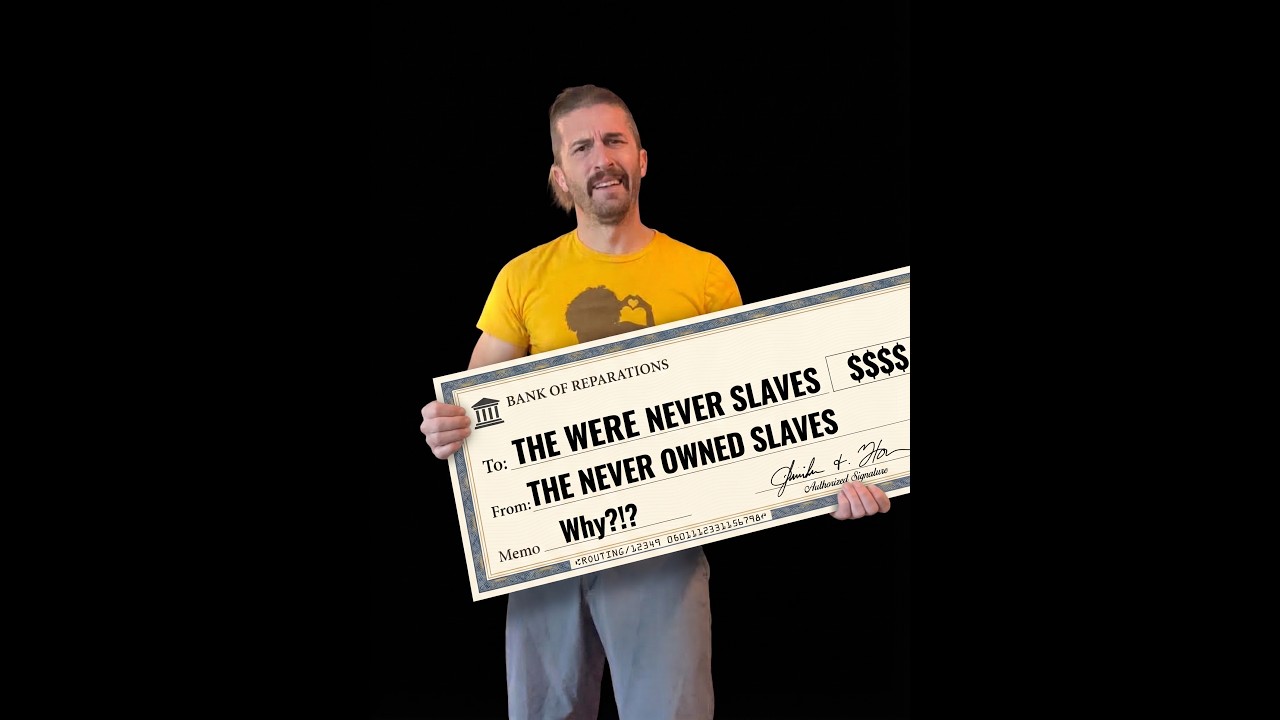
Copy Paste Post #5 - I never owned slaves why should I have to pay those that were never slaves?


Cool for Joe, a Crime for Don? Does he have any idea how Quid Pro Quo works?!


#2 Short: Only Americans Count? #personalgrowth #podcast #learntopodcast #politics #uspolitics