Coded Consequences: The AI Dilemma Part 1
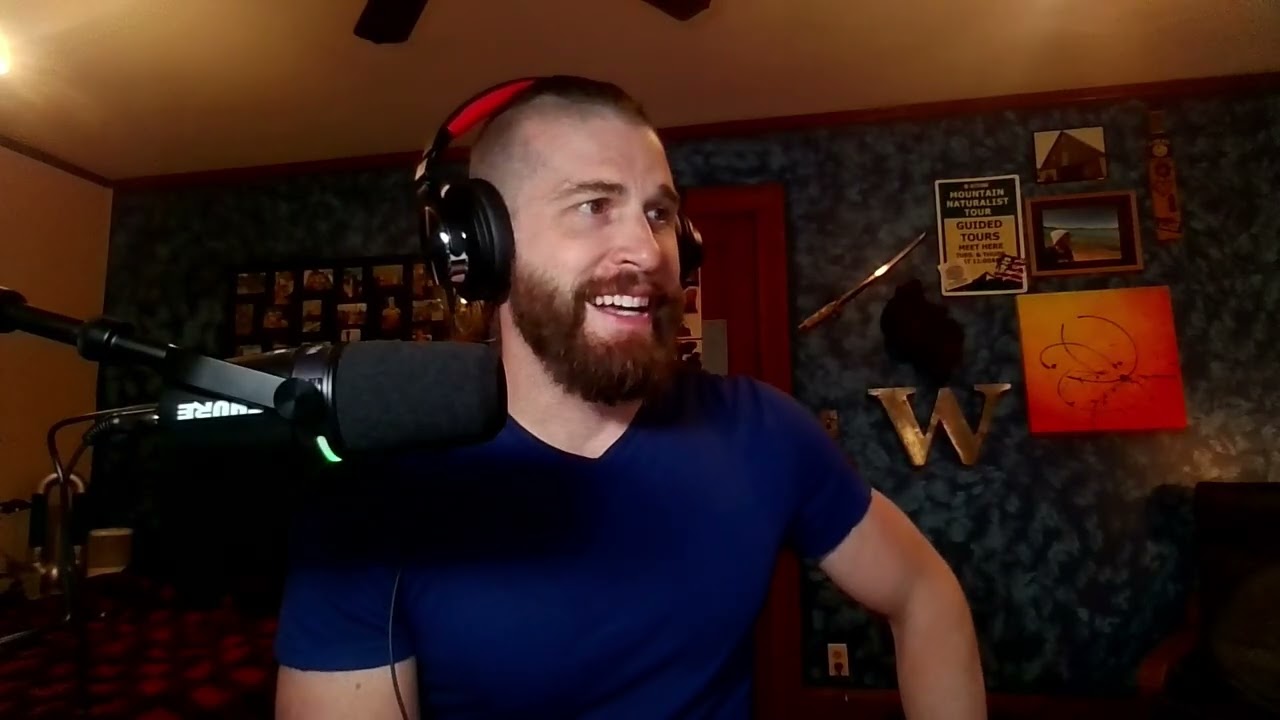
Angus Fletcher argues that human intuition, imagination, and emotion outperform AI in uncertain situations. The host uses examples from Special Ops forces and Neil Armstrong's improvised decision on Gemini 8 to show how story-based thinking lets humans navigate complexity where logic-driven AI fails. Treat AI as a tool for routine tasks while keeping human judgment.
You never do know what's around the bend. Big adventure or brand new friend when you're curious. I like curious, y'all. Swag! When everything, everything is so glorious, glorious. And everything, everything is so wondrous.
Welcome back. More Curious Than George, episode 4. Coded Consequences: The AI Dilemma, Part 1 of 2. We're going to be diving into Angus Fletcher's book, Primal Intelligence. A lot about what AI does and what this old noggin up here and yours does that it does not. As we go, we'll pause, ask some thoughtful questions, and I'll just say I listened to it and took quite a bit of notes on my phone, but you could get this book and read it, use highlighters. That's another method. And then I would challenge you to think about circling back when you're done reading or listening to that book, maybe a week, 2 weeks after, and look at, is there 1 to 2 things that I can integrate and use in my day-to-day, or think about my habits or routines, any of those kinds of things? Because I have, and I will share towards the end here. But without further ado, let's set the Set the stage, right? So Angus Fletcher, Ohio State, uh, real smart guy, him and his, uh, project narrative, uh, really diving into understanding primal intelligence and AI. And he did a lot of studying from the US Army Special Ops forces, so some of the folks that do the most dangerous, complex, uncertain in terms of what will actually happen, accounting for Plan A, B, C, D, E, F, G, all these possibilities in very high-stakes, life-threatening, most dangerous of the danger, more than Austin Danger Powers situations, right? So here's a wild thing. Did you know that these special ops folks outperformed AI in uncertain environments? Not just a little bit of the time, not just a slight margin, but by like destroying them, right? I don't have the exact figure, but it, it was ridiculous. Like AI basically never won. And you think, well, all right, why and how? I was curious too. So when Angus Fletcher talks about some of these things he's learned and studied and put a lot of time into, he talks about primal intelligence as something that enhances our cognitive skills. And he defines it as Intuition, imagination, emotion, and common sense, something that logic-built AI doesn't have. Hmm, interesting. So let's, uh, dive a little deeper into this, shall we? So intuition, how we perceive the world's hidden rules, what our gut is telling us to do, uh, imagination for the future and undefined unknown possibilities, common sense to make wise decisions when you're in uncertain situations, uh, emotion when we channel it and it's regulated, knowing the path for personal growth. Seems pretty straightforward. So he kind of says that really this all encompasses why we, you and I, can act smart in the unknown where AI fails. It is mechanically incapable of common sense or imagination and will always underperform human brains when information is thin or fragile, making computers, you know, they have limitations. So really, at a high level And hopefully most of you agree with this. AI is a tool, not an unquestioned source of truth. I don't know about y'all, I think it's a little scary out there 'cause I know there are plenty of people that are turning this off to just use AI to make things easier. We live in a world of convenience, technology aids these things, but how are we growing ourselves if we're turning this off? We're just not, right? So hopefully we can find that balance, like anything in life, to say how I use AI here, but then still use my own brain to verify the sources, to ask more questions, to consult other means and use my own brain for thinking as well. So, so if we were to rewire the brain to see the world from a child's eyes, We can see the exceptional, use imagination to create a story, use our intuition, see what's unique. That's something that we're gonna circle back to. It's a pretty powerful thing. So if we get into imagination and story, our brains don't think in stories as much as they used to. It's kind of sad to hear, but it's what the research says. And there's a reason behind it. While logic computes what is probable, Story creates what is possible. Tell me that's just not exciting, get you a little goosebumps going there. So possible, right? An event that's never happened, but it could. And it doesn't contradict the rules of the environment. Story can outperform logic for life problems. I have a good example of this. I was going to travel with my family for an all-inclusive in Mexico. And when we got to the front desk agent, they told me I couldn't travel. And I was like, "Haha, that's hilarious. It's really early in the morning. That's not very funny actually." And apparently the back pages of my passport used in my early 20s to go to Europe, Austria, great time, was frayed. And they said that Mexico wouldn't let me back in. It would be considered an invalid document or something along those lines. So froze for a minute, had to like really contemplate that situation. My dad, mom, and sister all kind of huddled around said their pieces. They felt so bad, terrible, etc. And I said, you guys go. Dad gave me a little advice where the safe was to get my birth certificate, some of the things that you need to get a new passport. And, you know, I sent them on their way and I get the call to the people at the car at the O'Hare Airport. Get back there. The guy's like, you're not supposed to be here. I was like, I know. And we go on the process of figuring it out. Get back to my buddy where I was living with him at the time, and he's sitting there eating, I think, Froot Loops or something, watching ESPN. He's like, you're not supposed to be here. I was like, I know. Not a happy day in that instance, but I reacted quickly to take action, to get the documents I need, go to get the safe, you know, figure out where to go to get a picture printed, to, you know, going where downtown Chicago to get an expedited, you know, passport done and take those steps to ensure it happens. And then while I was doing that, put a hold on a ticket with a travel agent. Thankfully, there was one. And go through all these hoops in order to make sure that I can still get out there. So I had to do this all very fast in a very finite period of time, to the point where it took me from being at the airport around 6:00 AM till not getting home till, oh, I don't know, 7:00 PM. I was exhausted. I remember falling asleep in a chair and lasagna almost burnt. It didn't, it was good. The point being, you can't ask an AI tool a question about something like that with a finite amount of time with a lot of nuanced parts and ways that you need to do. There's sometimes things that the human brain can do that AI cannot. Just one example for me. So getting a little further into it. The story's purpose is cerebral and practical. You get better at imagining in stories with planning or a long-term goal. So you can only target one mountaintop with many paths to the top. So that's acknowledging that you might learn something along the way that you didn't know that then causes you to go a different way. And maybe your big goal hasn't changed. Maybe the summit has changed. I don't know. There's a lot of possibilities as we learn and progress towards our goals in life. There's many what-ifs, but there's only one why. Why are we doing what we're doing? I felt this way personally on a lot of things I've been doing in life. It's not always a concrete next step., but I know the action that I'm doing. I know the habit is in alignment with where I want to go. So sometimes it's that leaning into a little fear, which we'll get to in a bit. So define strategy with, you know, unlimited tactics, one-to-many, many paths to get there. Uh, the kind of thinking that these special ops folks use to look at their missions and how are they going to be successful.
Emotion.
So fear, it's core to our brain's biology. It's smart. You have no plan is fear's message. Prompts our brain to come up with a plan to counter fear. It's why children are so bold and so scared at the same time. It can be a warning when you're past your capacity, capabilities, and abilities. I read in a book, and I kind of made the image of, uh, leaning on the railing over the Grand Canyon. You know, you lean a little into fear to see further than what you could and you learn, and that's a part of growth, but you don't lean too far, fall in the Grand Canyon, silly example, but there's multiple ways people can lean too far into fear and that leads to burnout, working, you know, overworking, things of that nature. And then there's plenty of people that just sit on the sideline. They don't put themselves in the game. They don't lean into the unknown. They don't start a podcast. I don't know. That's me leaning into a little bit of fear, but this is something I love. So here we are. So the mindset is, you know, pushing ahead to what could be, extending your future narrative to exit panic and push on. Well, that's the operator mindset. It's not about a perfect first step into the plan when you're anxious and stressed. It's about action and moving into your plan. I'm sure you can sit there now and I'll challenge you to think when you wanted to take a first step into maybe a new career or a a new hobby or, I don't know, asking somebody out and you thought it would go a certain way in your head and all of a sudden you're stumbling over your words or, you know, some task is a lot harder than you thought it would be. You know, what do you do? You start to get a little anxious. You start to get a little stressed, but you still gotta move forward, right? You gotta learn from it. I think that's key. I've always said, reframe failure. You're putting genuine effort into something and it's channeling your purpose. It cannot be and should never be a negative thing to learn and grow and then use that knowledge to try different, to try again, because that's really what it is. It's about the effort and what we can learn and gain from failure. So I would say, you know, take some time in a non-urgent moment. Maybe you're sitting on a park bench, maybe you've got a break after a meeting and you're on a good walk. Maybe a dog walk like me. Identify your long-term goals, make it specific and tangible. Shift your relationship with fear. Use it as an opportunity to push to your primary purpose. I'll share a little, mine's going to be remote working, traveling often, ski home, business owner. Just a few things, just a few things. So let's talk about the kid part again. I brought that up earlier. AI versus a 4-year-old. Da da da da, in this corner. So a 4-year-old has common sense. AI does not. 4-year-old knows when they don't know something and they will say it. AI will not. So ChatGPT, you know, they don't intend to, but when you ask a question about something they don't know, they don't know they don't know, and they try to extrapolate from past trends. Aka they give you a wrong answer. They feed you misinformation. Not great. Not great. We use intuition, imagination, and emotion using story, whys, and what-ifs. So really, an effective partnership should be AI as a tool for routine things. Seems to make sense to me. We're taught to think like computers in the classroom, and They lack common sense, storytelling, intuition, and adaptability to the unknown. So to back up, AI, it's essentially a lot of data being raked in, built on code. I'm gonna talk more about those coders and developers and inherent bias on my next episode. Stay tuned. But something to keep in mind here. So resilience and antifragility is something that we need to build. Well, what is antifragility? Is it like I'm not going to break? Maybe. So it's actually not quite that. It's getting stronger from negative experiences. So when we do break and embracing and learning from them, not easy, but something that can be quite teaching. You know, heartache, for example, uh, it makes the way that you love. If you choose to learn from a negative experience and dig into it, you, you change and rewire who you're becoming, means that your heart's going to love even harder and stronger the next time it has that opportunity. Wonder in the brain integrates fractures of the past. So that's a fascinating concept. I'm going to circle back to that. So emotions are stronger when they're negative. The brain values safety more than purpose. So when we think about the key theme here, you know, shifting from, you know, a negative experience to have genuine healing, leveraging our primal abilities, intuition, story thinking, there's this neuroplasticity to reframe the challenges, turning these negative experiences into powerful plot twists. So again, like stories, right? For personal growth, creating new neural pathways in the brain, fostering resilience rather than being overwhelmed by stress. So it starts by thinking in your past and recognizing personal past moments that led from bad to good, fostering a belief in future positive possibilities and strengthening your narrative brain. So in other words, when I think back to moving to Michigan, getting a job as a district manager, I was super psyched about 2 months in, I'm finally, you know, training wheels are feeling like they're coming off. I'm figuring it out. I'm living a great life. I feel called to a purpose for what that leadership job meant to me. And then we find out that T-Mobile's pulling the rug out from our company and going with a different vendor. And we have a month to figure it out. It's very stressful, very hard. It was a very low point in my young career. And lo and behold, in the 11th hour, I found an opportunity to move to Minneapolis-St. Paul, and I've been here ever since. This is 2013, and it was a much better opportunity. I was compensated better. It was a better program. I met a lot of amazing people, some that are some of my best friends still today. Uh, you know, no knock on Michigan, but where I'm living now, I love it a lot more, and It was a blessing in disguise. So that is a perfect example of a negative experience where things are really shitty, excuse my language, for a whole month and then turned around. And it's not just a silver lining, it got way better. So if we can think about that, and I'll challenge you to do the same right now, take a time, think of one or two times that something not good happened. You felt those feelings. You learn from them, but then something really good happened. There's magic happening in your brain right now. Neuroplasticity is doing its thing. Pew, pew, pew, pew, pew. So it's pretty incredible. And life surprises you in those instances. And that leads to more positive potential outcomes when we wire our brains like this. I had a friend that always used to say, what you think about, you bring about. And that's a very simplified way of saying, If you develop your brain to see positives coming from negative, then you are allowing yourself the possibility to truly have that more often than not. Our brains naturally amplify the negative out of a wired response to prioritize survival over purpose. It takes conscious effort to refocus on positive surprises. And when I think purpose, I think when I do work or I'm doing something like this here, I want to learn from it. I want to get better at it, but I just am fired up about it. None of the prep or other parts of it feel like work to me. It's purpose-driven, right? So if we can learn from the negative experiences and make a conscious choice, once we felt what we need to feel as humans, we should feel those feelings. We can refocus on those positive things. And identify that positive surprise and make it as vivid as possible in our mind. Because we tend to disassociate in response to negative events in our lives. I know I definitely have. Um, meditation, journaling, and mindfulness do not help us truly process these events as they create in their own form disassociation. That's kind of crazy. You, you think those things would be key in helping, and maybe they're like AI in a way. They can be tools to help, but they're really maybe not avoiding and getting into it. If instead we recount our life and recount a time in our past we had a surprise positive outcome or plot twist, we spark the mind to think about the future possibilities, and it gives us a concrete example of finding true peace with what was and opening our minds to what could be. So I think that's the magic right there. It's not just feeling a shitty feeling and sadness, despair, despondent It's knowing that there is light and that there is a positive outcome for us. And we feel that wonder and that true peace. There it is. You know, I— it's amazing. It feels akin to a religious awakening, and, uh, conversion is how they relate it. And I just got goosebumps thinking about it. I, I've had these moments of wonder, and I hope you can pause and reflect as well. Again, moving to the twin cities was a huge moment of wonder for me. Um, I've had a couple of these moments. I stopped skiing for a couple of years because I looked at the hills locally here as not being very good and not being very fun. And I was a bit down on it. I didn't even really quite realize it at the time, really what I was missing. And then one of my friends wanted to get into skiing and all of a sudden that sparked, you know, excitement for me, for him to share something that I love. So all of a sudden going to the local hill was more fun. And then I got out there and I was like, I was kidding to myself. Just because I lived out west doesn't mean I still can't have fun at the hills here. And I am and do now, and it's great. And now we go on trips and it's awesome. So again, that's maybe a slightly, um, not as negative as other experiences, but that's not the point. The point is it works. It's real. And I challenge you to think about it and find that wonder. So one of the big things he says is that You know, Angus Fletcher here. These experiences, getting stronger and wiser from negative experiences, regaining a sense of control over our narrative, not letting things that happen to us define where we go from there. Forget that. It's up to us to take a step back and to recount times that were bad, that got good, to give our brains that possibility to feel it, and then to seek that wonder and to get out there and make it happen. Control over our narrative. Shift that mindset, embrace the potential for change and choice stemming from negative experiences. And he says, people spend so much time on the sidelines listening and judging and not being part of the discussion. This is what I've been trying to do with some of this podcast, right? And even the past few episodes, which are very political, very polarizing topics, and got feedback from friends that, you know, maybe it made me look one way or the other, but I did my best to show a couple different ways to look at it and to try to, you know, really look at objective facts. And again, it's a working point of view. So I'm not sitting here on some pedestal telling you I have all the answers. I do not. But I'm excited to create an environment that I can learn and share that out. And hopefully it encourages you to do your own version of learning and discussion with friends, you know, whether at the basketball game or out to dinner or meeting out for a coffee, however you might do it. So I hope you're not spending time on the sidelines, because you shouldn't be. This is a core principle that I'm going to be embodying: healthy discussion and action, healthy discourse. So let's move on to another part of the book, decision-making. AI is logic. AI tumbles precariously off its throne like Humpty Dumpty on imagination and common sense. Adequate enough, like the hand is better than AI alone. Cutting edge, overloaded with data. Forgive me, I don't understand what note I wrote there, but basically common sense over programming. Common sense allows you to adapt, be intuitive and not predictable, prescriptive or procedural. George Washington said, be as bold as the situation is uncertain. That sounds nice, but here's a really great illustration of this in action. To be a master of common sense. Armstrong landing on the moon. I also had a really cool shirt that said, one small step for man, one big-ass error for mankind. So engineer in him respected standard operating procedures. A lot of smart people at NASA, they put a lot of time and effort into different scenarios, how things work, and there's a way to do things, right? Makes sense to me. So they want to make procedures flying predictable. But what we're going to learn is he was willing to scrap these SOPs for failed models and adapt. So what happened is he was in Gemini 8 and trying to dock the spacecraft to orbit, and when he started doing it by the book, something malfunctioned, and then there was rolling and spinning. And as you can imagine, I'd be super stressed and scared. Houston watching in horror as it spun faster and faster. Armstrong finally decided to exit the standard operating procedures and re-engage entry thrusters in space. Sounds cool. Radically unprecedented decision that stopped the roll and got Gemini home. Hmm. So not following the computer, not following all the smart people's what happened, instead relying on intuition and decision-making and common sense when something isn't working. I think we can all encounter this. How many times have you listened to your GPS and it led you down somewhere you shouldn't go? It took Michael Scott into a lake, for crying out loud. If you're into The Office, you know what I mean. So really what this all comes down to and what I'm going to lean on, and we're going to end with a quote from Rolf Walden.
The—
can't even talk. Ralph Waldo Emerson. Nothing is sacred except integrity of your own mind. Trust yourself over societal judgment. So I think that embodies a lot of what primal intelligence is trying to get at is don't lose your intuition, your imagination, your emotion, and your common sense. These are key parts of intelligence that allow us to adapt. To learn from experiences that are negative, to face uncertain situations and problem solve and triumph, to be like the special ops army folks and beat the computer 9 out of 10 times, pretty much all the time. And it's our secret sauce in why we will always be superior to AI. Not to mention in part 2, we talk about who wrote AI, us, and the inherent bias. I'll get into all that on part 2. But really what I'm saying is AI is still a tool. I know this sounds like I knock it all the time. I use ChatGPT. I ask questions. It's how I fixed my toilet. I found out that, you know, the wax ring had dissipated and asked a lot of other possible questions. So for prescriptive things, for routine things, I think it can be a great tool. But I also think there's a lot of limitations and we're going to get more into that in the next episode. But for now, I appreciate you allowing me to be more curious and hopefully you are too. Just like George the Monkey, I wish you well and a good evening, morning, wherever you may be. Until next time, sayonara.
More from Chris

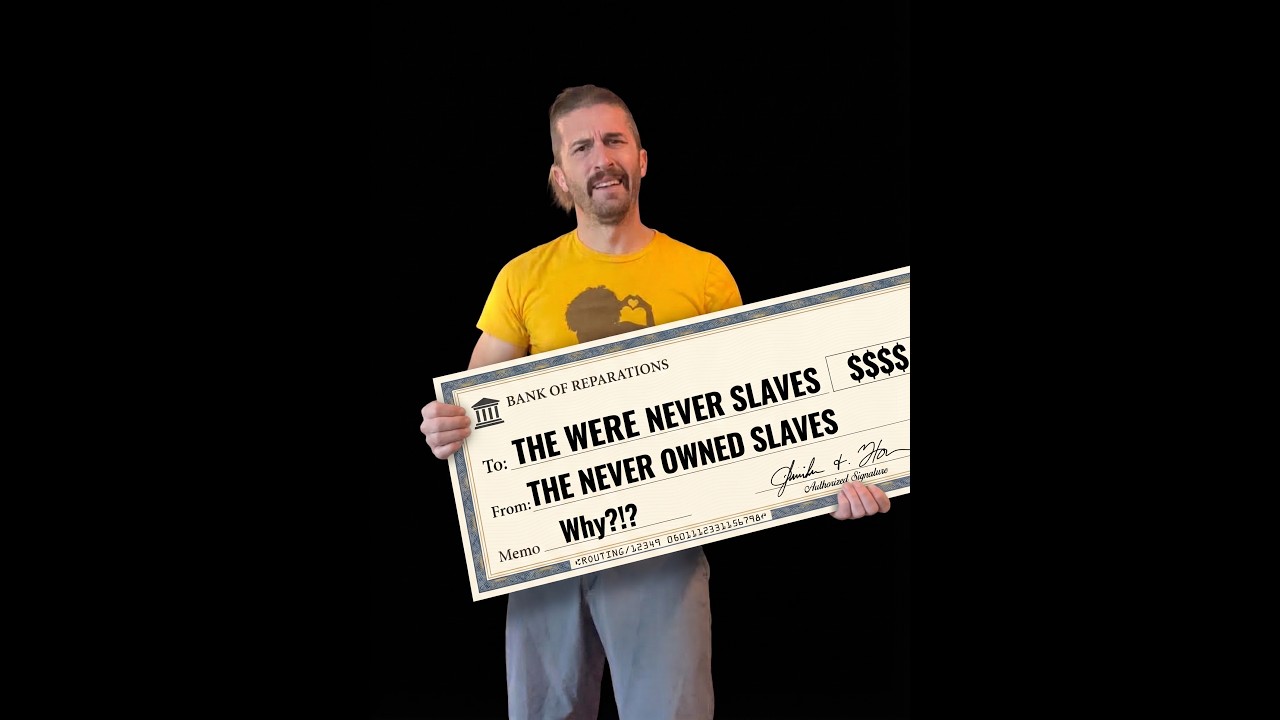
Copy Paste Post #5 - I never owned slaves why should I have to pay those that were never slaves?


Cool for Joe, a Crime for Don? Does he have any idea how Quid Pro Quo works?!


#2 Short: Only Americans Count? #personalgrowth #podcast #learntopodcast #politics #uspolitics