Episode 11 Drowning in Tech, Breathing in Nature

Chris Webb breaks down screen time across countries (South Africa averages 10 hours daily, the U.S. 6 hours 40 minutes) and the physical toll: eye strain, anxiety, reduced social skills. He proposes practical fixes like Focus Mode and 5-minute meeting buffers, then pivots to nature immersion—forest bathing and water time—backed by Stanford research showing cortisol reduction.
Chapters
Did you know across the globe that South Africans spend the most time on screens and on the internet at just under 10 hours a day? The lowest? Japan, just over 4 hours a day. And that's self-reported. Cue in on that. And this is from GWI research from 2025, people aged 16 to 64. You know what else is true is the happiness measurement in Japan is much higher than the one in South Africa. If we take those two pieces of data together, we might infer well, if I'm a South African and I put my phone away, that I'm going to be happier, right? No, that's not quite it. And that's something where our brains are wired to find a simple causation to one thing and another when there's a correlation, right? So it's this conflated idea of oversimplifying. Just because two things are tied together doesn't mean that one causes the other. So we're going to dive into that in episode 11. We win with web, more curious than George, drowning in tech, or breathing into nature. So let's get into it. Here are the real reasons that Japan is actually doing quite well when it comes to the happiness part. And when you also correlate why they're less on their screens, their unemployment rate is 2.5% in Japan. So they're very busy, their workplace culture demands a lot, they don't generally have the time to be on the internet doing these other things, they are at work doing those things. Unfortunately, the economic status in South Africa is around a 30% unemployment rate. So that leads to less structured time and perhaps more people obviously looking for jobs or being on the internet doing other things and having the time to do so. So the rapidly aging population in Japan also consumes a lot less digital media. So those are multiple factors that lead into better appreciating why the happiness score in South Africa is a bit lower and why also the amount of screen time is such a staggering difference. Now, in case you're curious, for the US, it's around 6 hours and 40 minutes or just under 7. It's slightly above average in the world. So one of the things that I was really wanting to be curious about, as we do here, and learn more about is really what are the value and benefits of stepping away from the screen You know, are there really hidden secret magical powers, energy vortexes, that kind of thing out in nature? And really, while we're doing this, keep in mind, as we just illustrated above, that oftentimes things are more complex and nuanced than they might seem at surface level. And when we're consciously aware that our brains are always trying to look at two things, and when there's a correlation, we want the simplest explanation. We want to believe one causes the other. But if we have some healthy skepticism, as we attempt to do in this show, to dig in and learn more, we come to a greater understanding of our world and the people around us. So always be curious. So here's a real question I'd love for you to just really sit with. Maybe you pause this podcast and really think about it. How much time in your waking hours plugged in are you? Whether that's on a computer, a smartphone, in front of the TV. Heck, you could say, well, I'm on a walk, Chris Webb, but are you listening to a podcast? Are you listening to a book to learn and grow? Are you actually appreciating the smell of the flowers, the beauty of the trees, and those simple things to be present and see what's around you and not through a screen? I challenge you to think about that. So this report for us here in the States, 6 hours and 40 minutes, it seems like a lot of time. And consider this, this doesn't include TV time or offline gaming. And if we were to add all that up, that's almost a third of our waking lives not seeing the real world out in front of us. This is crazy. This is crazy. Now, something else I want you to consider, this GWI data, you know, so this is looking at what I said about Japan and South Africa, the US, 6 hours 40 minutes of screen time. This is all self-reported. So I would argue most people underreport their actual utilization because if I'm filling that out, I'm like, I don't want to say I'm on there as much as I actually am. So there's, I think, a little bit of a skew there. And I look at it as you go to the doctor and one of the common questions, let's say you're a tobacco smoker or you consume alcohol, is maybe even a more common one. They ask you, how many drinks on average do you have each day during a week? And sometimes specifically to each day. And I would say more often than not, people underreport what they actually do. Why? Because we don't want our doctors to think that we're out partying and getting wild. And, you know, ideally we're not, we're living mostly healthy lives. But I would say more often than not, most people are underreporting. And I challenge you to pause and be honest with yourself. Doctor's visit, number of drinks, number of times you've smoked cigarettes. Have you ever underreported? Hmm, interesting. So interesting. Then there's kids, which we're not going to focus on as much, but you think about school nowadays, you know, back in my day, being born in '85, we had the chalkboards and maybe some projectors with the pens and things like that. But it was teacher to students all right then and there. Now, there's a lot more online learning, which there's immense benefits from, and there's a really unique platform and way to make it engaging. I listened to a podcast the other day about somebody that's really interwoven stories and talked about the magnetic field around Earth and being able to show it in a fun way for kids that's really engaging, sort of like a science experiment versus just talking about it in terms of the theory and what it means, right? One method really engages us more. So that's pretty cool. So I'm not saying it's all bad, but one of the things that I'm curious about is, you know, what is this going to look like for kids longer term? I feel if we think about it, there are some parents that are very aware of the potential negative side effects of too much screen time, and they put limits on the amount of TV, limits on the amount of tablet or game time, and really encourage their kids to not just, of course, getting their handwritten, hopefully homework done still, and handwritten notes, because there is science to back up the power of writing things in your own writing in terms of retention and understanding. But present with other kids. I mean, I remember back in my day playing cops and robbers, climbing trees, you know, coming up with our own games, heck, just jumping in a pile of leaves or doing things outside. And I am hopeful that these types of parents are influencing others in a positive way, that we're not losing that sense of being present in the moment and appreciating what we have. I think this is incredibly important for kids that can lead to more social isolation. More depression, a lack of development in cognitive skills, social skills, uh, the ability to be more anxious and have more of this "I need this now" mentality that are spending too much time with screens. I wonder what this could mean for policy. You know, should there be rules that teachers in schools can enforce on screens? You know, some schools require any kid at a certain age with a smartphone that they check it into a little cubby and they don't get it till the end of the day. There's also then looking at like the GizmoPal. That's a way where some parents say, you know what, that's a way that I can keep in touch with my child. I can send simple texts or calls and I know where they're at. And it's great for, you know, that safety feature, of course, as well, but it's not giving the child an unnecessary smartphone experience before they necessarily need one or are ready for one. But let's shift back to being an adult. So when we think about what being on the screen does to us, a lot of us maybe have to be behind a screen working on a computer. I know from my job I spend a good amount of time on a computer, but if I think about the physical strain of weary eyes, my neck, shoulder, back pain, mental strain, you know, there's increased correlation to levels of depression and anxiety. And I think about simple things. I was talking about this with some dear, uh, guy friends recently. And what if we use something like the Calm app to say, my meeting just ended and I'm going to spend 5 minutes with a curated video to roll my neck, my shoulders, loosen my shoulder blades, or maybe meditate. I think it's something I'm challenging myself to do more often in my day. I don't care if I'm in an office or I'm working from home. I think it's an important habit that can make our bodies feel like we're getting a little brief reset before we have to dive into that next meeting. Now, I know some people are sitting there and saying, Chris Webb, I have back to back to back to back to back to back to meetings. And frankly, my personal take is this life is precious and where we spend our time is important. And I believe in healthy boundaries. I wouldn't feel comfortable working for a boss or a company that didn't give me 5-minute breaks to run to the restroom, to get a bottle of water, or to be able to take literally 5 minutes to pause, reset with a meditation or some light stretching to move my body before then jumping into another meeting. I would block my calendar and say, guess what? We're not starting at noon. We're starting the meeting at 12:10, because that gives me 5 minutes to do the things I need to do and another 5 to get in the zone and be ready. I think that's reasonable. So other things I want you to think about. Do you ever come away from too much time in the computer or a TV show and feel like a zombie, like kind of blinking your eyes, maybe a little haze, you know, you're almost moving extra slow. The muscles and the joints are tight. I for sure have been there, right? It's not a fun feeling. It's like I'm remembering basic motor functions. I was almost becoming a part of the couch. So one of the things that scares me about that for folks that maybe don't realize how much screens and technology are starting to dictate their lives or be behind the steering wheel is what happens when somebody has a stronger relationship with a computer than an actual person. Does that make them more likely to be socially inept? Does it create isolation that leads to loneliness? You know, have you noticed missing moments with others right in front of them because they're on their phones? Think about how many people are at a music concert and they're recording it with their phones. They're not actually appreciating it. They're not in the moment. They're not dancing and singing along. People out in social gatherings on their phone instead of interacting with your colleagues and maybe forming relationships that could elevate your career, maybe making a new friend that all of a sudden you find out you have the same, you know, taste in books or the same taste in music. And, you know, you start— you miss out on those opportunities if you're not present, right? I mean, it's wild. And something that scares me a little— we'll touch a little on AI at this episode, but I've seen colleagues at my work overly rely on the power of AI to craft an email to send to a decision maker. And I don't like that. It removes our ability to develop our own cognitive thinking and problem solving. And our personal touch, right? I think most of us, if we just received a vanilla AI-generated email, and sure, we could argue we could give AI a few details to make it not as vanilla. Sure, toss some sprinkles on that ice cream, toss a little chocolate sauce, but it's still not uniquely you is what I would say. And I bet most of us in a lineup could pick out and see the difference of which one had more of a human thought process behind it and which one was more robotic. Another thing I think about is I get to support my colleagues from time to time door knocking in the field. And we have a little flyer that's all about how we're educational and we want to be consultative. And I truly believe that's the way that we should approach that type of endeavor. And that does the talking. That's the sales pitch. I shouldn't have to say anything. So my personal touch, if I walk in, is, hey, hey, hey, no sales pitch. That almost makes me want to gag. Not my deal at all. Would love to learn about what gets you excited working here. Like, what's awesome about it? Or, hey, what's most on your mind? Or what's the most challenging thing you deal with? And some people aren't in the mood to talk, and that's fine. And I'll just say, hey, just some information for you. Hope you have an awesome day, Marcy. Enjoy. And I'm out of there. Or we engage in conversation and it's all about what's important to them. If you haven't listened to Dale Carnegie's How to Win Friends and Influence People, you should. A lot of people have heard of it. A lot of people know the idea, but most people fall and miss that next step of integrating. Let me actually practice the idea of caring about what somebody else cares about and listen, actually show up. You earn their trust and credibility and they appreciate and will give you more of their time. You make a more real impression when you do it that way. So it's just another example of if I'm putting screens down, and I am socializing with my friends and having these discussions, if I'm networking with colleagues in this way, if I'm using my own natural creativity to think about how would I want to be approached by somebody door knocking, all of a sudden I'm developing my own skills and I can instead look at AI as a tool for suggestions and maybe fine-tuning formatting, grammar, and yeah, occasionally helping me with something I'm not as confident in as far as how to convey this point. But you should still put it in your words. Do not let AI be the rough draft from brainstorming all the way to final draft. You severely limit your natural talent and ability to put your own personal stamp on it. So I'm getting fired up about this. Oof. Last thing I'll say about the AI piece before we shift. How many people right now are going to AI and trusting but not verifying, not actually verifying the accuracy of the data, the source of the data. Is it credible? Is it reputable? And asking these healthy questions. It's not easy. It's more work. But if I want to talk about the conflict that happened in Iran, I would wager it's worth that extra time to dig in and make sure that what I am reading and seeing is credible. And I even said to people, just a brief deluge here, or tangent, if you will, that there were things I saw from two different angles and I needed to find more information. I needed to learn more before I came to a firm opinion. I think too many people out there need to feel like they know all the answers, need to feel like this is the way. And whether part of that is the solution, I would argue often when it comes to these complex and convoluted issues with a lot of nuance, You might have part of it, right? Like the tip of the iceberg. But what about all the other stuff that you don't know below the surface? Food for thought. So what I'm proposing, again, this submerged feeling in this modern world with all these screens and technology and how it can really start to run our lives if we let it, is how do we do a digital detox? How do we come up for air from this feeling of being submerged with all of this stuff happening? To me, it doesn't sound too different. If we think about December, we've got a lot of holidays happening, time with our loved ones, family and friends, regardless of religious or beliefs or etc. You ideally still get off of work. You ideally are spending some positive time with those that you love, a time to slow down, indulge a little. I myself probably eat more fried foods. I like popcorn. You know, I still get the ice cream and all the pie and all that kind of good stuff too. But there's this huge period and it also indulges with alcohol as well. And what do a lot of people do when they come to January? Dry January, 30 days, no alcohol. Some take it a step further with the food piece and say, I'm gonna only eat these type of things. And that's fantastic. It allows our system to get a reset from all the carnivorous eatery, not necessarily carnivorous if we're, you know, not into the meat, but all those pieces. And why can't we do the same with technology? I know a mentor I look up to has time that he books to be away from the phone completely for a full day at a time to not have any screen interaction, whether that means he's immersed in nature or maybe just in everyday life and interacting and being present with everyone that they're with. Leads me to kind of like a little side thing. Do you guys all remember not all of you will, AOL Instant Messenger. So this is a thing that if you're of a certain age, you maybe haven't used, but you could look it up. So pre-smartphones, this was a way that, you know, kids, myself, junior high, high school, even into college, stayed in touch more easily because we could sign online, have our friends be chatting. And then if I had class, I put up an away message and anyone that messages me gets an auto reply and knows I'm at class, I'll be back at 3:30. Well, why can't I have the power of AOL Instant Messenger away messages on my cell phone to say, "Hey friends, I'm immersed in nature for the next 3 hours. I have somebody safe that knows where I'm at. I'll return to you when I get the chance. Enjoy your day." Well, you can. There's a way on Apple, the Drive Mode through Focus that I could put on a message like this that will automatically send to anyone that messages me And there's some third-party apps that I can throw in the show link that work on Android as well. This is something I'm going to be trying for myself for a healthy digital detox when the weekend arrives and I want to spend some time away from the screens. So what about the breathing into nature part? What am I getting at here? So think about all the little simple things. When I try to go to sleep at night, I find all the LED lights on all my smart devices and cover them with a t-shirt and I should get some tape longer term and do those kinds of things because I know the benefit of a completely dark room, of a nice static noise for me personally. Some prefer silence and being able to maximize the quality of my sleep. We can also get into other things like dog walks for me, or just nature walks. If you're not a dog owner, I don't listen to a podcast, have music or anything in my ears. I want to appreciate the landscaping of the yards, the flowers, the trees, the nature. Random neighbor interactions that may happen and be present with my dog, seeing that that's like one of their happiest times of the day is to sniff all the things, leave their mark, you know, maybe bark at a few of the dogs, be a little friendly, see all the people. And that's one of the best times of their day. I want to be present for that. I want to feel that and be a part of it. I also think about finding time to immerse in nature. I can go just a short mile or so to the Mississippi River and find trees where I'm just surrounded by nature. Whether I'm going to take time to meditate, whether I'm taking time to journal, or maybe just sitting there and just observing what's going on. Ah, it's wild. So there are, I challenge you, simple ways that we could all be more immersed in nature. Back to Japan, we brought them up earlier. In the '80s, Japan coined the term "shirin-yoku," which translates to forest bathing. Kind of a fun way to look at it. And it basically just means intentional slow time around the trees. Trees are what ground us. I would challenge you— most of us have easy access to wooded areas, whether it's a nature trail, park, woods, wherever you live. Do we get our daily dose of vitamin leafy bark? I think we need to consciously consider how much time are we getting in nature and in the trees. What do you think happens if we're amongst the trees for just 20 to 30 minutes each day? Well, science shows that we have a lower cortisol level, which is our primary stress hormone, so lower blood pressure and heart rate. Stanford found that simply walking throughout the trees engaged in reduced subgenual prefrontal cortex, or more simply put, a part of the brain associated with negative self-thought and depressive rumination. We're more present in this, like, wild idea of trees and how they grow and nature finds a way and appreciating the beauty of it. And we're less in our own heads, allowing negative emotions or other things to try to take over. So it feels like we're relating into our bodies and getting back into that. And it's something I know I've read about is when We start having irrational thoughts or negative self-thinking. Getting into the body, getting on a walk, going on a run, working out. It's why it feels like we're channeling health back into the body and figuring out where that stress is living. And the trees can provide a similar cure when our minds tend to wander and want to get negative. So that's the green. What about the blue? What about The Blue Mind? Really cool book. But the blue mind is the water. It's the reset. I had the privilege of spending 10 years near Bde Maka Ska, which is White Sand Lake if I recall the translation accurately, in the Twin Cities. And it's one of the more popular lakes in the area. There are no motorboats allowed. It is 3 miles pretty much exactly all the way around the circumference. It's attached to Lake of the Isles and Cedar Lake.. And recently, as of I think maybe a couple years ago, has a really awesome area with Jamaican food. You can get adult beverages, coffee, teas. There's usually maybe dancing or music. And then there's the sailing club, inexpensive for those to join that want to learn how on smaller boats. And then there's the paddleboards, kayaks, canoes, no motorboats. None of that noise, all these other great for your exercise, great for the body ways to enjoy the water. And I can tell you, I feel a difference when I spent plenty of time getting my paddleboard out into the middle of that lake, just me listening to the sound of the water lapping, seeing a loon on occasion or two, noticing fish, the deep algae, seeing how much fun others were having on their own, Kayak, canoe, paddleboard, sailboat, all of that. There's something that's just so relaxing. And when we see a big body of water, and I had the privilege of taking my dogs on walks around it, going on runs, bike rides, walks with other people, it's this feeling of awe. And there's a whole book about this experience when we see something, this huge body of water, and it's so just mesmerizing in this beautiful way, it relaxes us. It reminds us of the simple beauty of this world. And that feeling leads to an increase in empathy and prosocial behavior, where it reminds us that we have the power with everyday interactions with those we come into our lives with. We can pick up trash on our walk back to throw it in the bins. We can choose how we treat others or our perspective. I mean, a simple example, I was in the post office the other day and somebody out loud was venting about this is the worst post office and all these experiences, et cetera, et cetera. And who knows, maybe the employee she interacted with didn't treat her very well. Maybe it was a poor experience in one way or the other. And I'm not begrudging anyone from feeling the emotion and getting that part out. But at a certain point, the more mature and healthy person reminds themselves we control our perspective, and we get to choose how to feel. Me and another lady both said, "We hope you have a better day as you leave the office," and just continued on our way. And I smiled to her, and it was raining, I had the umbrella, and I said, "We all have things that happen in life that are out of our control, but it's always up to us to choose how we get to feel about it, right?" And she's like, "I love that. I hope you have a great day." And I said, "I hope you do too. I choose to keep smiling." And that's where I went with my day. So, you know, when we also think about getting in nature, whether it's in the woods, by a creek, the river, a lake, you know, maybe something more intense. I had the privilege of going to Muir Woods out in the San Francisco area, some of the oldest, biggest trees. It was just mesmerizing. It was beautiful. Getting away from the city lights, cars honking, sirens blaring, There's science that shows that we're low-grade, turn the knob on the stove, simmer with our fight or flight, constantly hearing sirens, cars honking, those noises of city. It like ramps up to a certain level of stress. And it's crazy to think about it that way, 'cause I don't think any of us consciously are like, I'm worried about somebody running their car through my house or, you know, me being in immediate danger. But it's probably a recognition that Well, somebody out there is having a hard time. That's why there's an ambulance or a fire truck or the police. Somebody's in trouble or cars are honking. Somebody's having a really bad day or they're driving like an asshole, like road rage, whatever it might be. So if I really think about it, suppose that can make sense, but there's also something called noise pollution that if we're around too much of this, that's why a lot of people don't always think about what hotel am I staying at in the city to consider, is it one that is off a quieter street, or are the windows and everything well insulated in terms of the city noise, or why it might be a good idea to bring an eye mask and, you know, earplugs and whatnot to mitigate that if that's all we can do for it. But definitely something I think we need to think about. So I'll leave you with this. The tech tip of the day is I challenge you to go find the Drive Focus on your Apple phone and test it out so you can actually go into nature and have an away message up and leave your phone behind. And Android, choose the app. It's either AutoResponder.ai, SMS Auto Reply, or AutoMessage. I challenge you to try it just for an hour. Here's the big question I'll leave you with. Look yourself in the mirror. Just you to you. Do you spend enough time daily detoxing from screens and the internet? Do you really? Or do you need a new spin on the 30-day challenge? It's not just for push-ups, right? Uh, and I believe anything in life, start small and start with the identity. The identity is, I am somebody that appreciates the beauty of this world in nature, and can be present for the beautiful moments to appreciate the life around me. That identity is what leads me to say, when I wake up to start my day, I leave my phone at the nightstand. I get my morning cup of coffee. I go into my front or back porch or walk out of my apartment complex. I go find a bench and I just sit and admire a beautiful tree or a patch of flowers for 5, 10 minutes. Challenge you to do that. So let's see what that does for your day, spending 5 to 10 minutes waking up without technology and appreciating the beauty of the life that's around you. So with that said, this is Chris Webb, more curious than George. I hope that you find time to immerse yourself in nature and come out of the digital detox that we can all be submerged in appropriately. Until next time.
More from Chris


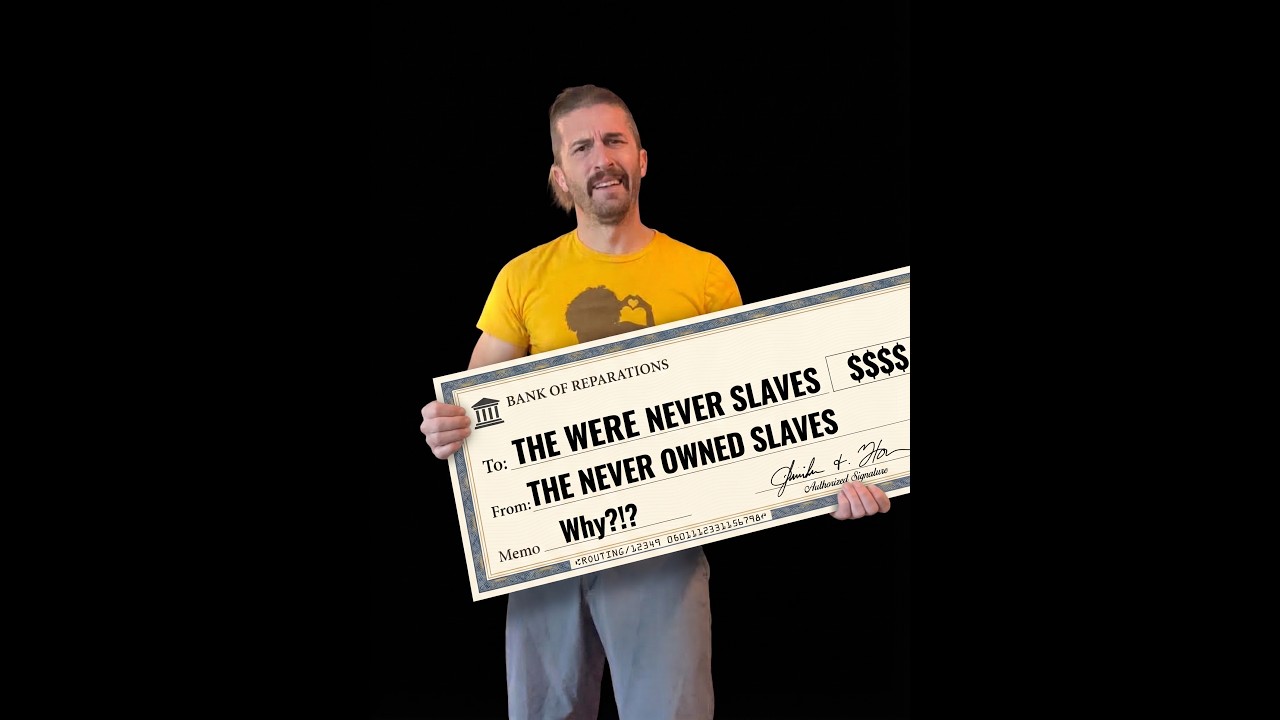
Copy Paste Post #5 - I never owned slaves why should I have to pay those that were never slaves?


Cool for Joe, a Crime for Don? Does he have any idea how Quid Pro Quo works?!


#2 Short: Only Americans Count? #personalgrowth #podcast #learntopodcast #politics #uspolitics