Episode 9 - Body over Brain?

Chris Webb argues mental health is treated as secondary to physical health in the US, despite evidence that psychological well-being directly impacts bodily health. More than one-quarter of American adults experience a diagnosable mental disorder yearly, yet only 28% of women and 17% of men seek therapy. Structural barriers like ghost insurance networks and low therapist reimbursement keep costs high ($100-$250 per session), while 75% of people who receive psychotherapy experience meaningful symptom relief and lasting changes in brain circuits that regulate fear and stress.
Chapters
You know what time it is. Welcome back to another edition of When Was Webb More Curious Than George. Body over brain? Well, in this country, the health of our bodies, of course very important, is drastically prioritized, and there's no parity between the health of our brain, mental health. Now, we've made strides. Mental Health Awareness Month should be all year, and wonderful Stats that will show more people are seeking out therapy and there's improvement. But me, as somebody that was a psychology undergrad and a huge advocate for mental health that sees a therapist himself, way too many people still are not taking advantage of mental health. And that makes me sad. So that is what we're going to talk about today. And to start us off, Ah, the National Institute of Mental Health, if we want to get formal here, says that more than 25% of American adults experience depression, anxiety, or another mental disorder in a given year. It's 1 in 4 people. That's a specific disorder. So my question is, do you and I need to be experiencing a mental disorder specific like that in order to see the benefits of a therapist? To me, it'd be kind of like saying, well, I only really need to go see the doctor if I've got cells that could be cancerous, or, you know, I've got a sprained ankle or, you know, broken arm or something like that. You know, I don't need to go get my blood pressure checked. I mean, I'm fine. I woke up eating normal, sleeping normal. Like, I don't need a checkup at the doctor, right? Like, how are they different? They shouldn't be, right? In my personal opinion, I would hope most would agree, we need a healthy ticking brain as much as we need a healthy ticking body. The two come together to create this really wonderful human experience that you and I all get to experience. Woohoo! So as we dive into this, some things that I want to start with. So when we talk about body and brain and the disparity, I thought it was kind of neat that I found this article on the National Library of Medicine, the National Center for Biotechnology Information, from PubMed Central by Vijender Singh, Akash Kumar, and Sunil Gupta. And really what I wanted to highlight is one part of this where they talk about Direct quote: Furthermore, given the evidence of substantial links between psychological and physical health, the non-incorporation of preventative mental health services is deplorable and has serious ramifications. So this is a very lengthy article. It's a narrative to policymakers and advocating for mental health to have a seat at the table equal to medical health for the body. So I thought that was pretty compelling stuff. The mind and the body are connected in crazy ways that maybe we don't think about at times, and we'll get into some of that. So psychotherapy, cognitive behavioral therapy, does it work? Well, research shows that most people who receive some form of psychotherapy are getting relief and better function in their lives. 75% of people show some benefit from it to improve their emotional and psychological well-being, to positive changes in both— uh-huh, stay with me— the brain and the body. This includes fewer sick days, less disability, fewer medical problems, and increased work satisfaction. I find this all very fascinating. So if we shift a little to understand the paradigm of perhaps why in 2026 is mental health still drastically underutilized and appreciated, we can look at some structural flaws. Now, you might be thinking a lot of employers don't offer mental health benefits. And there are for sure some antiquated ones out there that do not. But on the large, large companies, 200 people plus, all of them pretty much are required to offer some form of mental health coverage. So for example, my company, I get 8 free mental health sessions a year. Now, that sounds all good and fine until you realize the ghost network problem. So what does this mean? So even though nearly 100% of large employers have some sort of mental health coverage, only 44% of those employers actually think they have enough behavioral health providers in their network to offer timely care. So in other words, I could log on to the portal and it could say— I know this happened to my sister, I know this has happened to other people I've talked to with their companies— Oh, in order for me to get an in-network person, it's going to be a 3-month waiting period, or I need to go to this location, or, you know, no availability when I pull up the calendar in terms of times. So that's part of it. What about the other roughly half? Well, the other 56% of companies are offering coverage, but they suffer from what's called ghost networks. Spooky, scary. What does that mean? So an employee has the benefit, but when they try to book a therapist They have months-long waiting lists and find that therapists are no longer accepting the insurance. Hmm. No longer accepting the insurance. Wonder why that is. Let's dig into that for a minute. So if I'm a therapist, I make less on a visit in terms of what I'm earning than a medical doctor. And I have more administrative tasks in terms of tallying somebody to this, you know, I'm going to forget it, DSM-V. It's like basically a formal assessment that says, you sir have this specific type of depression or anxiety disorder. So you fit this very specific high-level idea of this is what qualifies you to see a therapist as being put in one of these categories. What about other things that we all deal with in everyday life from complex parental relationships, perhaps romantic relationships, you You know, things that we went through as kids, subconscious feelings that are showcasing themselves and manifesting in things that we're doing in our day-to-day lives. I mean, I could go on and on. There are so many examples of things that you, myself, and others deal with in our adult lives that wouldn't be covered under insurance. So it'd be the idea of, imagine it's the reverse. Imagine it's medical. I have a broken leg. I'm hobbling around. I go to the doctor and they're like, you know what? We're going to give you some Tylenol, but don't worry, it's extra strength and it's liquid gel, so it's faster acting. And if that doesn't work, you know, come see us in 6 weeks and, you know, maybe we can do an X-ray. Might be some more paperwork though, so want to make sure you're ready for that. Uh, and then probably another visit, uh, before, you know, if, if you even need it, maybe we'll put you in a cast, right? Pretty darn ridiculous. So Back to part of the insurance problem. If I'm a therapist, not only am I making less and having to increase my workload just to try to keep up with my costs of doing business— HIPAA compliance, patient records, caseloads, and a specific way of documenting those notes, having notes, otherwise I can get audited. I could have what's called a clawback, and I have to pay back money that I've already earned to that insurance company. There's all these things that are set to make it very difficult for me, the therapist, to earn a living while giving therapy from not getting payback. So it's better for me to say, you know what, I'm just gonna go private. And that's not maybe great for the average American citizen that's maybe already on a budget or on tight economic means. And man, that sucks. All of a sudden, I thought my company's including these free mental health resources in my plan, but there's either not enough therapists and no availability because they're leaving, because the insurance companies are making it incredibly difficult to do this. And to get on the political side very briefly, a lot of these laws have been tabled and are not being continued to be pushed. And that stems from some of the bigger companies, some of the insurance companies. Big surprise. People with all the money holding up the thing that most Americans and most people really need. Very frustrating. That's a whole nother ball of wax and type of conversation. But let's get into the reasons. If I'm a therapist, why am I leaving insurance and making it harder for you and me as the people wanting to take advantage of these benefits' ability to see said therapist? 34% cited financial motivations, low reimbursement, and ability to earn more independently. I'm going to earn more independently. I— yeah, and it's easier. Sign me up. 26% pointed to administrative burdens, slow payments, complex billing, and the risk of the clawbacks. I'm paying money back, being audited. 20% left to prioritize clinical autonomy, so more choice of how they get to go about their therapy. 13% reported burnout based on all the aforementioned things I mentioned. Checks out. I'm getting burnt out even talking about it. And then 8%, only 8%, I would have thought they'd be higher, cited negative experiences with insurance companies, including distrust and policies that interfere with treatment. So, hmm, interesting. So when we think about it, for the average American, the out-of-pocket cost is now $100 to $250, not covered through my employer plan because there aren't enough therapists available because of the insurance reasons that I mentioned and why they don't want to be there. And it's tough maybe to find a match. You know, there's the idea of the time that I'm taking out to do all these things. And then we think about why we're at this place where there are currently post-COVID, again, an increase in telehealth and maybe an understanding of folks, especially like me, feeling extroverted, cooped up, more depressed about that period of time, seeing value in therapy. And the idea that things that I feel related to how— or excuse me, let me back up— things that I think about myself and my life and my circumstances then trickle down to how I feel and then trickle down into my own actions. And if I see a therapist in this proven scientific method of somebody that's helping me to understand my circumstances and equipping me with tools for healthy habits and ways to improve my own circumstances. Hmm. I wonder if that'd lead to, I don't know, like less drinking in the country or less drug abuse or generally happier people, maybe seeking out livelihoods and a way of living their life that would make them feel more fulfilled and in line with their passion. I don't know. Crazy idea. Maybe. I don't know. I think not, obviously. Come on now. But unfortunately, we're in a state where it's around 28% of women, 18 to 44, as of 2022, most recent corroborated data I could find, are seeking or seeing some form of therapy. It's extremely low. That's just a little over 1 in 4. Well, it gets worse if you're the men. That number has only recently increased to 17%. So sure, part of it could be. What I just detailed to you in this ghost benefit that there's not enough therapists because of insurance and some of these other things, loopholes. There's also still that stigma, right? This, uh, I'm gonna pull myself up by the bootstraps and, you know, that's just a part of everyday life. We're all meant to suffer a little, you know, it just— it's rub some dirt on it, like that kind of thing. The I'm fine mentality, this false belief that therapy is only for people with acute trauma or severe psychiatric crises, they minimize their own struggles saying, well, it's not that bad. Others have it worse. It's like this false sense of justification, this irrational idea of this is okay, or this should be normal. Hoopa! Crazy. It shouldn't be. The stigma based on their background, where they live in their community, that it could be viewed as a suspicious thing. You're weak, you're broken, you're unstable. You know, usually that's just the opinion of people that are projecting their own insecurities and also need some mental health therapy. We all do. Let's be real. And then again, as I mentioned, whether it's turning to alcohol, prescription medication, I mean, that's the thing without me diving into that, which could be a whole nother episode in itself in terms of talking about, hey, I can see a therapist and have psychotherapy or cognitive behavioral therapy and working through my thoughts to the feelings to my actions. I could also be prescribed drugs, and I'm not here to say all drugs are bad, not, not at all. But I think in moderation and along with, I think with, right, the idea that I have a drug that's helping to regulate my nervous system or some of my hormones and moods or the way that I'm chemically wired, incredibly valuable when it's paired with great therapy to teach somebody skills, coping skills, tools that they can improve their day-to-day. And also, of course, by an accredited, reputable, registered psychiatrist that's going to be able to know the dosage, prescriptions, etc., and give you what you need without getting somebody— because unfortunately, a lot of people, no big surprise, Big Pharma, are addicted to things that they shouldn't be and abusing, abusing, having, having too much of something. And it's sort of the idea of I can, you know, sit on my couch and order food and have it delivered and waste away all my money. And it still fills my stomach for a period of time, but I'm not learning the skills of cooking for myself, the value of that, and saving the money. And that's like what therapy is, right? It's learning the skills and doing the things so I can provide for myself and elevate my own standard of living without relying on DoorDash or somebody else to just be taking care of it. It's not helping me learn or grow. I don't think so. There's all these internal fears with discomfort with the work and, you know, misunderstanding what it is. Fear of judgment if they're seeing a therapist, lack of trust in the profession. Uh, I'm reading a book called The Big Leap by, um, Gay Hendricks, and I may have a future episode about it, but he talks about how most of our fears, if we really think about it, They're irrational. They're this limiting, keep me safe, keep me where I'm comfortable defense mechanism. And it's fear. And if we get back into our bodies and breathe into that fear, we have the opportunity to then take a step forward and churn, literally turn within our body, that fear into excitement and step into something to learn and grow. So I digress. So here we are. And those are a lot of the reasons people are not seeing therapists. But if we look at the American Psychological Association, roughly 75% of people who enter psychotherapy show significant benefit and symptom relief. It's not a vague process. It systemically moves 3 to 4 people into a measurable state of improved functioning. That is through science and verified research. That's amazing. That's awesome. Long-term resilience. 77% of patients maintain or improve their psychological gains a year post therapy. So unlike medication, which again, only manages your symptoms while it's actively in your system, therapy gives you the structure, the cognitive skills, the coping mechanisms that the brain continues to use long after the final session. And that gets into our brain neuroplasticity. So really what this is, is looking at how cognitive behavioral therapy makes physical changes in our brain structure, new synapses firing and rewiring happening. That's strengthening these neural pathways between our prefrontal cortex, which is responsible for our reasoning and rational thinking, and the amigdala— I'm gonna mispronounce this— the amigdala, the brain's fear and threat center. Therapy literally rewires the brain to better regulate emotional distress and reduce physiological fight-or-flight response, from the Mental Health America verified source. Pretty wild. So we, we've got these things, and then we have also the idea that the gene expression and brain structure, it strengthens the connections and communication between neurons in the brain. People get better at controlling their emotions. Research on CBT, cognitive behavioral therapy, along people that they've strengthened their connections and the part of their brain responsible for fear and threat analysis, which basically suggests that people could better perceive social threats. And increased connectivity was associated with reduced psychotic symptoms 8 years later. Sounds to me like they're better at regulating their nervous system, having tools and coping mechanisms to deal with what was maybe previously felt like an unescapable stressful situation, whether it's socially induced through work, relationships. I mean, gosh, the human existence can be really challenging. We misunderstand each other all the time in communication. And I always use the phrase intent versus impact, but it doesn't change how it makes somebody feel and validating those feelings and what folks go through in terms of the stress that, you know, is a fallout from conflict. So Gosh, where do we go from here? Uh, what, what do we want to better understand? Well, you know, I, I think there's a number of folks out there that are discussing the idea of a proactive look at therapy. You and I, we go to the doctor for physical well-being, get a physical checkup. We get our blood pressure taken, you know, look at the eyes, look in the ears, how much earwax you got in there, that kind of fun stuff. Uh, but look at ticker, check your joints, your reflexes. Wouldn't it be good to have something like that with mental health? Just to check in. I mean, we generally go through some form of significant change. We're ever-evolving creatures, you know, every few months, maybe some of us more so than others, depending on switching careers, a new promotion, a new relationship, moving in with somebody, death in the family, um, pets. God, You know, and those are just some of the big ones, but there's other significant changes. Maybe you moved to a new city, maybe you're in a completely new role. Maybe you have a new creative outlet that you're trying to harness. And then, you know, that, that's a whole different part of you. And it could be exciting, good things that you want to try to navigate and get ideas on how you want to maybe share some of those things with others and, uh, find, uh, you know, more than just a one-on-one therapy session, but you could also find support groups or other forms and versions of therapy. It'd be no different than me. Going to a CrossFit or something. It's a proactive measure to take care of my body with a group setting where we're all there to support one another. And it, you know, breeds some accountability from you to me, to anyone else that's going, that we're in this together. It's a team, it's more fun and it's inclusive. It's great. Well, you could do that with your own kind of version of therapy. And I can tell you from my own personal experience, being a part of a couple of men's groups online for men that want to lead more embodied lives and want to work on themselves, It's been a great privilege and still is to partake in something like that. So your, your version of therapy, if you feel like, hey, I'm well adjusted, I'm not anxious, depressed, or stressed about any of these things, doesn't mean that there can't be some maybe subconscious coming to the surface benefits that you could have from this type of a more proactive approach. And something that I'll share more on a part 2 episode, because we, always love this idea. And I always find there's more I want to research and more I want to get into. So I feel we'll put a pin in it for now. In part 2, we're going to dive more into what could the future look like and where can we in our own way, in our own communities, put more of an emphasis on mental health and see that it gets the parity it deserves alongside the medical, the body and all the rest. So this is Chris Webb with When with Webb, More Curious Than George saying thank you for tuning in and would love any thoughts and feedback you have on this topic in general. And at the end of the day, I have these conversations because I myself am curious to learn. And if it promotes the idea of thoughtful discussion with family, friends, and otherwise, regardless of where you fall and what you think, that's what it's all about, learning and growing together. So remember to always be curious, ask more questions. Until then, see you later.
More from Chris


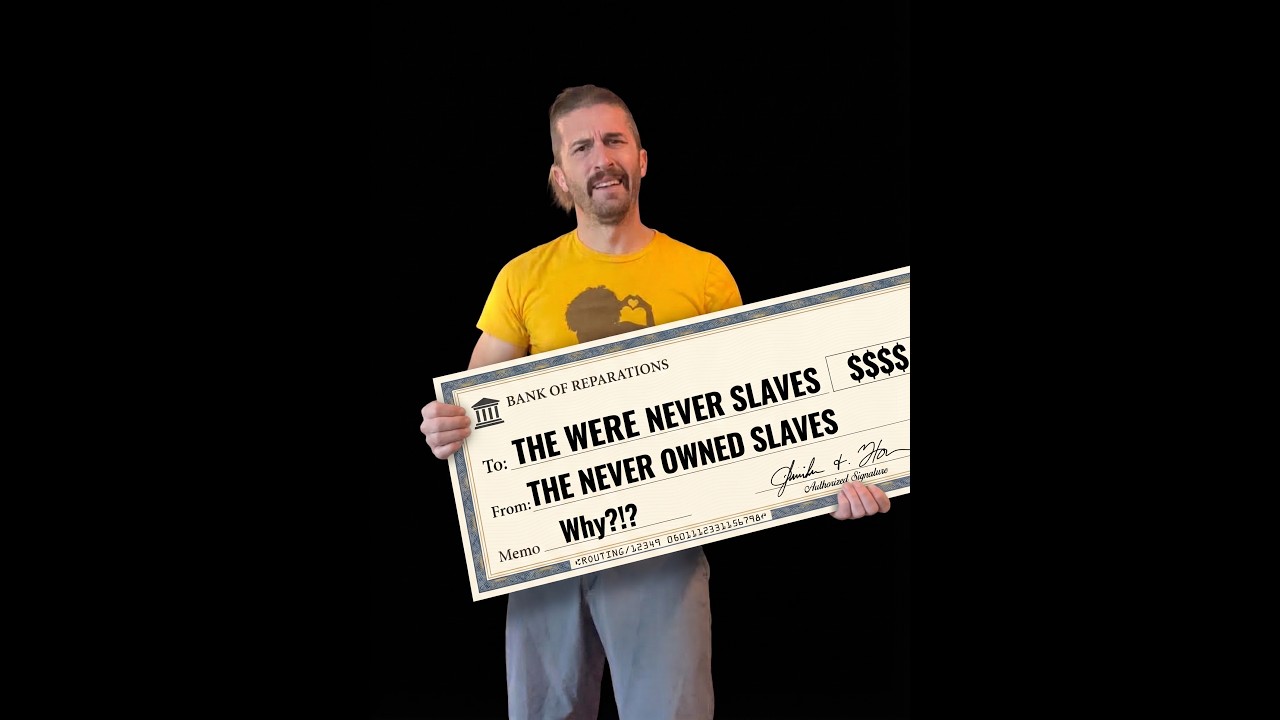
Copy Paste Post #5 - I never owned slaves why should I have to pay those that were never slaves?


Cool for Joe, a Crime for Don? Does he have any idea how Quid Pro Quo works?!


#2 Short: Only Americans Count? #personalgrowth #podcast #learntopodcast #politics #uspolitics