Building a 1,500-Unit Portfolio Across Two Continents with Mike Stohler
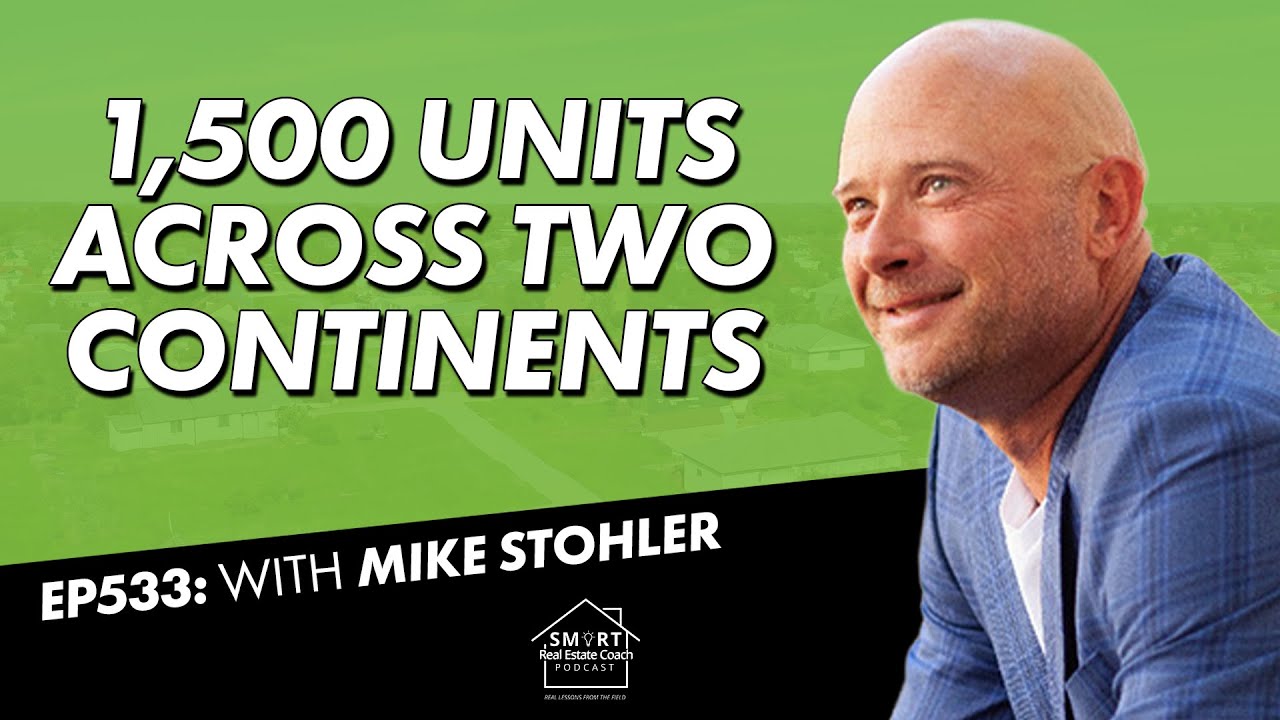
In this Smart Real Estate Coach podcast episode, host Chris Prefontaine interviews veteran investor Mike Stoler, a former Navy pilot and co‑founder of Gateway Private Equity. The conversation traces Stoler’s trajectory from a disastrous early foray into real‑estate—buying eight units on credit cards with no inspections—to rebuilding a 1,500‑unit portfolio that now spans multifamily, hotels, and boutique properties in Spain. Stoler shares concrete tactics for listeners who want to transition from a W‑2 job to real‑estate investing, including house‑hacking, leveraging a spouse’s W‑2 for financing, joint‑venture partnerships, and using other people’s money. He emphasizes the importance of mindset, confidence, and surrounding oneself with mentors, describing how he turned introversion into a habit of networking and learning from seasoned operators. The episode details his strategic shift from multifamily (10‑11% cap rates) to hotel assets (4‑4.5% caps) by partnering with an experienced hotel manager, and later expanding into high‑end 4‑star boutique hotels in Spain through a global network that includes a former Blackstone employee. Stoler explains how he now delegates day‑to‑day operations to seasoned property‑management firms while maintaining high‑level oversight. The interview also promotes the Smart Real Estate Coach Apprentice program and the In‑the‑Trenches boot‑camp, highlighting the community support, coaching hours, and deal‑making focus they provide. Throughout, Stoler offers actionable advice, personal anecdotes, and resources (LinkedIn, gatewaype.com, therichergeek.com) for listeners who want to emulate his path.
Chapters
Welcome to another episode of the Smart Real Estate Coach Podcast, your source for actionable real-life examples and advice to help you move to the next level of investing. Each week we help you make a quantum leap in your business, your finances, and/or your life. We want to help you take back control, help you thrive during chaos, and lead you through the current crisis to a better tomorrow. For more resources, check out smartrealestatecoach.com and be sure to give us a rating and review on your favorite platform.
Good morning and welcome, Wicked Smart listeners. It's Chris Pre with another amazing guest. I want to say a couple things here. We're talking about being mid-November already. Scary that the year of 2025 is almost over. Before I introduce Mike, my next guest, I want to chat to you a little bit about some things for 2026 because it is just So pertinent. We've got 45 days or so left that you get your feet in, get kind of refocused, and hit the reset button. And I don't mean that in a negative way, guys, in any shape, form, or fashion. If you nailed all your goals for '25, awesome. Time for a reset, right? Raise the bar. If you didn't nail all your goals in 2025, awesome. Okay, rather, let's go ahead and set the reset button. If you're listening to this, and you're fairly new to the Wicked Smart community, as far as a listener of the podcast, I would strongly suggest if you haven't done it yet, that you just jump over to my free master's class and take a peek at it. It's meant to, on purpose, to be free, to be 10,000-foot view level, give you some case studies, talk to you about how we get leads, et cetera. So then you can explore further if in fact you want to, and then you're not wasting a ton of time. And frankly, you're not getting sold 5,000 different programs from different people promising you the world. Just go to Smart Real Estate Coach. .com/masterspodcast, and we'll go ahead and, uh, we'll call you in there and what you could do next. All right, my next guest, Mr. Mike Stoler. He's a former commercial airline pilot. We got a ton of pilots. If you're a pilot out there listening to this, we do some really cool things with pilots. He's a Navy vet. Thank you for your service, Mike. He's a co-founder at Gateway Private Equity. It's a real estate investment firm, and their portfolio has included some cool asset classes like hotels, multifamilies, Residential properties like we do. And so between apartment complexes, houses, hotels, Mike's owned or operated or been involved in over 1,300 units, guys. And when Mike first started in real estate in '99, so predated the crash, as you guys know, I love getting people on here that predated the crash. He, like so many of you either now or in the past, lacked experience and he failed. Okay? Now I'm not saying you all failed. I'm I'm saying, like some of you, he lacked experience and he failed. Now, through sort of a committed, laser-focused plan of action to learn, to grow the skill set, which we're big on, and to help others, he's created just an immense change in his business and his life. And I want to tear into that a little bit here to help some of you because, again, I think the timing of having Mike on is absolutely perfect for the new year. Okay, Mike, with that as a little backdrop, welcome to the show, my friend, and thank you so much for your service, obviously.
Thank you.
Goes without saying.
Well, thank you, Chris. Appreciate it. Appreciate it.
So I wanted to start, as you and I were just chit-chatting sort of offline, I want to start with your journey because you have the Wicked Smart Listener sort of avatar. Could be someone in corporate America. We're big with that transitioning to real estate and also people that have been tinkering around with real estate and frankly haven't had a breakthrough. Right. So I'd love you to talk about sort of your journey, like how some of the things from your service with the discipline and the problem solving, like how did that all come into play and how did real estate come into play? And then we'll dive deeper.
Yeah, I'll try to keep it short even though I'm long-winded sometimes. You know, it's that Robert Kiyosaki book. You know, it's, you know, I've come from real, real small town Indiana, about 2,500 people. And I was like, who's owning all these big houses? Who's doing all this sort of stuff? And I got to know some of them and it was either sales tech or real estate. And I was like, oh no, you know, what's so hard about real estate? So I read Rich Dad Poor Dad, made the mistake of going to a seminar where they just said, buy, buy, buy, buy.
Yep.
You know, no matter what, put it on a credit card, do whatever it takes, buy houses. So I'm like, okay, opened up some credit cards. I'm early 20s and bought 8 units and actually went to a university and did seller financing on some of them. You know, a lot of your listeners may not know that universities are a really good way to get some seller financing properties, but this was back in the PG, the pre-Google days. I couldn't Google how to be a landlord, how to fix things. I didn't even know if there was what forms to use. And so bought these things and all of a sudden the roofs, I didn't do any inspections, I didn't know anything. And all of a sudden I'm putting repairs on credit cards. Long story short, failed absolutely miserably. Had to sell, give back all these homes, had to sell our house, had to move into our in-laws. I mean, it was just a lesson learned. And then part of that military back, they said, hey, don't give up. So I made the transition into corporate America. I was actually an airline pilot and I was thinking, it's like, you know what? Just that real estate is it. So now Google's— now transition to, we have Google. I can Google things. And then I read and read and learned and got mentors and business coaches and just did everything to surround myself With people that knew how to do it. Fast forward, I've owned and managed over 1,500 doors, and someone came in about 8 years ago, bought my multifamily portfolio.
Nice.
And then I was like, now what? I was buying at 10 caps. Now they're at 4, 4.5. So I made the transition again, networking into hotels. So now we own hotels.
I'm going to most definitely come back to hotels. I'm always, when I look at your bio, Mike, I go, okay, this is cool. I got a lot of things I want to know. And then, so I'll transition that from a couple of things I want them to know short-term. And that one would be, as I said to you before we started, a lot of people in our listener community are either like they want to leave the W-2. It baffles me to this day. We've been doing this for a long time. It baffles me why they don't make the move, right? I go, well, just make the move and we'll show you how to do that. We've helped so many people do it, but there's still a whole bunch of people we leave behind, right? That I don't know about. So, anything at all like a practical nugget or 2 or 3 that you could say to them? Well, yeah, in hindsight, here's what you might want to do because here we are, this episode's coming out roughly November. They're going to hear this before Thanksgiving. Well, pretty good time to figure out what you want to do next year, right? And for a game plan. So any thoughts on that transition?
Yeah, there's a lot of thoughts that I've had and looked back in my life. So number one, if you have a spouse or a partner that has a W-2, you only need one. It's good to have the W-2 just because banks like to have a W-2 if you buy a rental or if you buy a property or an asset, but not necessarily do both of you need to. If you want to do the real estate, do it. And then you could co-sign it with your spouse that has the W-2 and the banks kind of like that to start out with. And then you build up your reputation, your portfolio, and then you can go completely out of it. Then what I would say is you can accelerate getting rid of your W-2 by using other people's money, whether it's joint ventures. You're not going— you're going to have to do friends and family for now because investors around the world, around the country, you need that reputation and success for us to give you $100,000 or more. So do JVs, get with other people and start buying, combine your money. That's how you can accelerate getting assets that will more than, that'll replace your income a lot quicker. Those are kind of the two things. Or if you're young and you have a W-2, why not house hack? Buy duplex, rent out the other side.
Yeah.
Do something. And now you get that duplex, your mortgage is paid for, rent out the rooms. A lot of, I'm seeing a lot of younger people buy 4-bedroom houses and rent out the other 3 to friends. So there's a couple of things that you can accelerate that.
I love it. And how about the confidence piece? I guess I combine 2 words, confidence and belief. I just think it's a big showstopper for so many people. So any, any, I mean, I'm just loosely throwing those 2 words out there. Any comments to them about those 2 things? Because I think that stops them too.
It does. Number one, when I speak at seminars and conferences, I tend to see, because they're with the same people, I see some of the same people in the audience and I come up to them. It's like, man, you know, what are you doing? It's like, yeah, you know, one more seminar. You know what? Interest rates, all these different things, they're excuses on why they're not getting into it. And I keep telling them, this is one of my favorite quotes. All of the fears that are inside your head are real inside your head, but that's not the truth. Okay? What's holding you back is, look, all of us are making money. I don't care what the interest rates are. I don't care what the economy's doing. I don't care about a lot of those things, especially when people are like, oh no, I don't want to. That's when I'm buying. Okay?
I agree.
I buy when everybody's in it. So don't analyze your fears because they may seem true, but it's not what's really happening in the world as far as what we can do in the real estate world.
And okay, so let me parlay this or piggyback this with the— you made a comment, you surrounded yourself on purpose around mentors and coaches. And obviously I'm big on that. It's our business, one of them. So, what do you say to a room full of the same people we're talking to? They might have a little timidness and they might have a lack of belief, lack of confidence about the importance of proximity and association. Your thoughts on that.
The only way that I went from complete failure to where I am today is because— and I was an introvert at the beginning. But when you start, it becomes kind of addictive when you start listening to success stories and then listening to people. And this is how I do it. This is how I do it. I mean, I had notebooks and notebooks. You have to understand what's more important. You're not talking to people and failing or maybe failing or getting out there and just have a coffee with someone. And learn. You know, I am who I am today because I learned. That is the number one thing. The, the how in the world did I go from multifamily to hotels is because I went to a guy, and this is type of, of a hack. If you want to get into an asset class that you're not used to, partner with someone. If you know someone, say, hey, you know, I want to do this. You don't have to go out and buy the first one. You can partner with someone that has decades of knowledge and then learn from them, be their shadow, see how they do things and what they do right. Do that 2 or 3 times, combine all that knowledge into what makes you, you, and go out and do it. And it's, you know, that I can't say it enough. It's like, get out there. It's all about networking. It's all about Doing things and learning, reading. Every billionaire in the world sits there and says, hey, look, I read 10 books a week, or I do this. They're always— Warren Buffett is still learning at 90-some years old. So the notes about surrounding yourself, don't be intimidated because a lot of successful people, once they get to that, have success, they want to teach. They want to educate people. So don't be intimidated by people that's like, oh my gosh, this person has 100 homes, or this person does this or that. We look at it, it's like, oh, look, we've been successful now. We want to give back. I want you to be successful. So don't be intimidated by reaching out and networking with people. And you will see that 90-some percent of them are extremely friendly and they want to give back and educate.
Okay. Who wants to be the next apprentice? Pretty interesting, guys. We started this apprentice program back as a July 4th, 2024 promo. That's where it started. And it was so incredibly effective. We were just going to run it for the summer. It was so effective immediately, we kept it. It's in place now. And what is it? It allows you to get into the community, the Wicked Smart community, for less dollars than the QLS home study course sells for right now on our site. In fact, When you go to smartrealestatecoach.com/apprentice-pod, apprentice-pod, when you go there, you're going to see that as an apprentice, you're going to get over $13,000 worth of coaching, the possibility for you to touch base with us if you want to, 4 or 5 times a week. And it doesn't exist anywhere out there, frankly. That's why we did it. We did it for 2 reasons. One, no one is giving you the support out there. We keep hearing feedback, which is how this was born, that other educators are not giving support. They're just selling stuff. So it doesn't exist anywhere and nowhere in the real estate education or coaching space. And we want to help you do one thing— deals. So we've wrapped the support mechanism around this. We've allowed you to get into a Slack community with the other associates who previously were protected in Slack. And now you get to jump in there and experience that for 12 weeks. You also get to come to the In the Trenches boot camp, which is private. It's a chance to hang out with the family team and one of the coaches for 2 and a quarter days in our conference room, roll up their sleeves, get calls done, get deals done. If you come with leads, you leave with deals. Absolutely incredible. I could go on and on. Go to the website right now, check out more information about the Apprentice, and I'm going to give you the In the Trenches boot camp site because you don't have to become an apprentice. It just happens to be free with apprentice and associate. So 2 links I'm going to give you, super important. smartrealestatecoach.com/ittb-pod. That's going to give you some information about the boot camp. If you want to buy a ticket to the boot camp, it's more expensive, but you can just come check us out. About 1 or 2 people every time we run it do just that or become an apprentice and it's for free. smartrealestatecoach.com/apprentice-pod. Yeah. I'll give the audience a couple nuggets on that because I couldn't agree more. We've had, I think, 3 to date in the last 7 years or so reach out to us and say they wanted to shadow us or be an apprentice of some sort. And we said, sure. And these guys were young guys, like I'm talking between 18 and 23. They're all having huge success right now. They didn't even— 1 out of 3 stayed in our community. The other 2 went off and did their thing. So, that's awesome. And I can tell you how few calls I get with the amount of books I have out. So, I couldn't agree with you more. I just read a good book and I go, oh, I got to talk to that guy, and then pick up the phone and call or email. Why not, right? So, I couldn't agree more. Mike, before we talk about what you're doing now with some really cool stuff with hotels and out of the country, talk about— because we talked about leaving the J-O-B, right? Any thoughts at all around sort of the dynamic of family and business, especially if you burn the candle at both ends while you have a J-O-B and then you're entering real estate? Because I get that pushback, right? Like, well, gosh, I don't know if I could do that. And my answer is usually just, well, it's predictable. Here's the timeframe. But I want to hear your thoughts on that because you did it.
Yeah, it is quite stressful at the beginning if And that's why the education part, you have to go in with confidence. So when I was an airline pilot, so what kind of happened, it was a little bit easier for me. I got injured flying into Houston and I was on disability and I had some apartments. I think I had, I can't remember how many units I had, but then I was like diving into the property management. I was like, man, they are, no wonder these things aren't making any money. They're nickel and diming me to death. So while I was on disability, I fired everybody.
Wow.
Dove in. And I then realized it's like, you know what? I did some calculations. I did the T-sheet. You know, I did the whole pros and cons. And I was like, okay, if I do this, this, this, and this and made goals, I can replace my income in X amount of months or X amount of, you know, 1.5 years. So I put that up to my— with my spouse and I said, look, I think we can make this work and I'll be home. I don't know if that's a good thing, you know, for her, you know, I'll be home and not traveling 4 or 5 days a week. But don't, don't just jump and do it, especially if you have a job and you have bills, you have spouse, you have, you have obligations. Analyze it and see if it makes sense in the timeframe. Maybe you need to save up enough money to pay the bills. You need the rainy day funds and the X amount of whatever it takes to pay your bills. And then make that a calculated decision, not just a knee-jerk decision on whether or not you leave the W-2. And that's what I did. I said, you know what? I can do this in this many months. And I actually exceeded that by evicting a lot of people, raising rents, making sure that the units were updated so that I could raise the rents. And then it worked out.
I love it. And obviously we keep saying, we keep alluding to something like this, but reach out to someone that did it. Reach out to a Mike, reach out to me, reach out to someone who did it. It's not hard to find. If someone comes up to me in our community and asks me, I go, well, go call so-and-so. They're right next to you in the community. You see them every day on Zoom and you're not asking them. Thank you for that, Mike. So, I wanted to cap the conversation off with what we talked about at the beginning. Like, bring us up to date now, what you're doing. You alluded to hotels. Why and how the transition and what does it look like today? Like, fast forward us.
Yeah, I'll do it real quick. When someone came in, took them 4 times to try to buy my multifamily portfolio. And I'm like going, I'm not selling. I'm not selling. I am golfing every day. I only have to show up once for meetings. I'm living large. But then they finally gave me that. This is a hilarious story. It was at IHOP over pancakes and coffee. They wrote on a napkin. This is the truth. Passed the napkin over to me and I'm like going, oh, God, okay, I can't not accept this. Small town Indiana kids never even seen a number that big. So I was like, now what? So when I went in, I did the hotels because the cap rate compression on the apartments, I was like, I was buying at 10, 11 cap with apartments and multifamilies. Now I was selling them at 4, 4.5. And I was like, okay, am I going to take all this money and now just make 4, 4.5 when I'm used to something a lot bigger? And I was talking to a guy, I'd known him for a little bit. I was in the hotel space. I called him up or texted him, talk to me about hotels. And the transition, I could never have done it on my own because multifamily and hotels are 180-degree difference.
Yeah.
Hotels are not real estate. It is a business that sits on real estate. You have employees, vendors, franchises. And here's the thing is the franchises aren't even going to give you a hotel because you don't have experience in hotels. They're not going to risk their reputation on someone that has no experience. So I talked to this guy and I said, and this is another thing that, ladies and gentlemen, that you can do, When getting into a new asset. I said, you're going to run the hotels. You're going to teach me everything you know. I'm not going to pay— I'll pay you like a property management fee, but what I'm going to do is I'm going to make you an offer and a partner on the back end. So now they have— now I was remembering the multifamily property management group. I want this guy to have skin in the game. If you do this and this, Right. You get paid on the back end. So that's how I got into hotels. I'm getting ready to buy one in Ohio. I love that little Midwest feel. And because of what's going on, it's really, really hard in today's economy for me to find hotels in the United States that have the DSCR that is necessary. And that's the debt-to-service coverage ratio. It means it needs to make 1.5 times in order to cover the debt and have a little rainy day fund. NOI is because the sellers want 2019 rates that the buyers say, hey, it's upside down because of the interest rates and expenses are up 40% in some markets. So I've made the transition into Spain. I have a team in Spain. guy that worked for BlackRock, or I'm sorry, Blackstone. And Vic, he's over in Barcelona. So we have a team in Barcelona. We're buying these 1,000-year-old estates and castles.
Wow.
They're high-end 4-star boutiques and they actually make more percentage-wise than $10, $15 million hotels here in America. And these are only 10 to 15 room boutiques.
Wow.
Just expenses are so low over there.
2 things come to mind right away with that. One is, how did you find your way to that person and, you know, and open up Spain? And 2, how involved are you in the day-to-day in any one of your hotel properties?
Yeah, great questions. So remember back to my very first hotel deal? I contacted the one guy that became my partner. He's the guy that lives in Barcelona half the year. Ah, and Vic, Vic knew Jordy, the guy who worked for Blackstone, because he networks like crazy. You know, I figured there's not like a single person in the United States or the world where this guy hasn't even, hasn't touched in some way.
So association kind of matters a lot.
Association, people. It matters. Just never stop. If you're golfing, hey, what do you do? Just keep talking. And so he said, Mike, you got to look over. And I was like, I'm not going to Spain. What in the world? I went over there and I was like, you know what? These numbers are just ridiculous. And it was fantastic. What was the second part of your question?
How involved are you day to day? Because when people hear, and me, I hear the word hotel and all those things you said at the beginning, I want wanted to know what, how, how much are you involved?
A couple of the hotels here in Arizona I'm really involved with because I'm, I'm here. Um, I have found a property management group that has 35 years experience in hotels, great people. Um, they know the franchise model back and, back and through. So on like the one in Ohio, George, you know, all the ones that are out there and even the ones here, I don't have to do much. I get weekly reports, monthly reports. If there's something that is above a certain amount, they have to get my permission to purchase it. So I'm involved, but I don't do any of the day-to-day anymore, which is finally, you're just like, ah.
Yeah.
So it's not Spain. In Spain, I have an apartment in Spain, so I'm, I'm in Spain once a quarter.
Nice, nice little, uh, nice little vacay too, and not a bad deal.
And you know what, ladies and gentlemen, it's— the apartment's now deductible because it's a business expense. My flights to Spain are deductible because I'm going over to see a business asset. So that's what I explained to like some of the, the investors, just like You know, if you'd like something, it's like, you know, I always want, I love vacationing in Florida, go buy something in Florida. Now it's deductible.
Or if you have family, yeah, whatever. There's a reason, they're all saying, go find it. Yep. Mike, I love it. How can these guys reach you if they want to? Feel free to share any email, phone, social media, anything you want.
Yeah, I am very active on LinkedIn. It's Michael Stoler, M-I-C-H-A-E-L, not just Mike. And website's www.gatewaype.com. And you'll see Chris on my podcast. You can check out, we have our podcast correlate. It's therichergeek.com.
Love it. I love the name. I can't wait to be chatting with you on that show. Mike, is there anything I didn't ask you, like for a last-minute nugget or anything before we wrap? Anything at all? Because obviously I can't think of everything. I'm just Yeah.
You know, it's— if hotels interest you, give me a shout out. You know, we always have some type of a syndication fund open. I love giving back. And if you say, hey, Mike, text me on LinkedIn, IM me and say, hey, I was listening to you on Chris's podcast, I'd love to teach, reach out and connect.
Love it, Mike. Thanks for sharing that, and thanks for being so candid. I loved our chat. I could we could do a couple encore, which I'm going to encourage the team to have you back, and can't wait to chat again on your show. Appreciate it very very much. That the Richard Geek is a writer Darren guy, so you can go ahead and subscribe to that, and go ahead and share that with your center of influence so you can get more and more people to follow what Mike's doing. Mike, appreciate you, my friend, and again, thank you for your service. Thanks for all you do in the real estate community. And look forward to seeing you again.
Take care, Chris. Appreciate it.
Okay, Wicked Smart listeners, that wraps up our Wicked Smart Masters Class and our time together with Mr. Mike. Please go ahead and share this episode with your friends, family, coworkers. Go ahead and give us a nice review on your favorite podcast platform. And we look forward to seeing you next week for another Wicked Smart Masters Class. If you'd like to go ahead and get on a private session with us where we walk through your 2026 plans, Your personal plans, go to smartrealestatecoach.com/actionpodcast. We'll give you a free session there, get you tuned in for 2026. Make it a great week. Hey guys, are you simply sick of juggling a dozen different software tools for your real estate business? I know I was, and I know I'm not a tech person, so it was frustrating. A subscription for this, you got a subscription for that, and they don't even work together out of the box. That's very frustrating, especially in the real estate world where your best time spent is going to be out in the field or on the phone with sellers. And now you're stuck hiring a tech guru just to make all that sync up. So let's ditch the chaos and let REI BlackBook handle everything. Automate your lead follow-up, track every deal, analyze things quickly for you, make offers all in one platform. In fact, with the Wicked Smart platform, we now have access, if you're in the Wicked Smart community, to all the other associates' properties. Can you imagine that? So you're brand new in the business perhaps, and your seller looks on your website and sees 20, 30, 40 properties, instant credibility. So you're going to get everything on REI Black Book from our custom workflows for lead generation all the way to closing. It has it covered. Try it today for just a buck. $1, guys. Visit smartrealestatecoach.com/reibb-dd. smartrealestatecoach.com/reibb-dd. D as in dog. D as in dog. All right. Thanks for tuning in to the Smart Real Estate Coach Podcast. If you got value from today's episode, guys, be sure to subscribe so you never miss a future episode. It literally takes one nugget to access some of the things we're doing. And when you're talking the amount of the size rather of the paydays, it's an opportunity cost that you can't let go. So don't miss an episode. And for goodness sake, share it with someone who needs to hear it. If you're ready to find your best path for getting started on your real estate investing journey in general, head over to smartrealestatecoach.com/getstarted. We're going to help you take the guesswork out of your next steps. See you in the next episode.
More from Chris









Episode 575: Redefining Retirement as the Day All Your Choices Open Up with Doug Bennett

