How to Attract Motivated Seller Leads Without Chasing Them with Alan Weiss
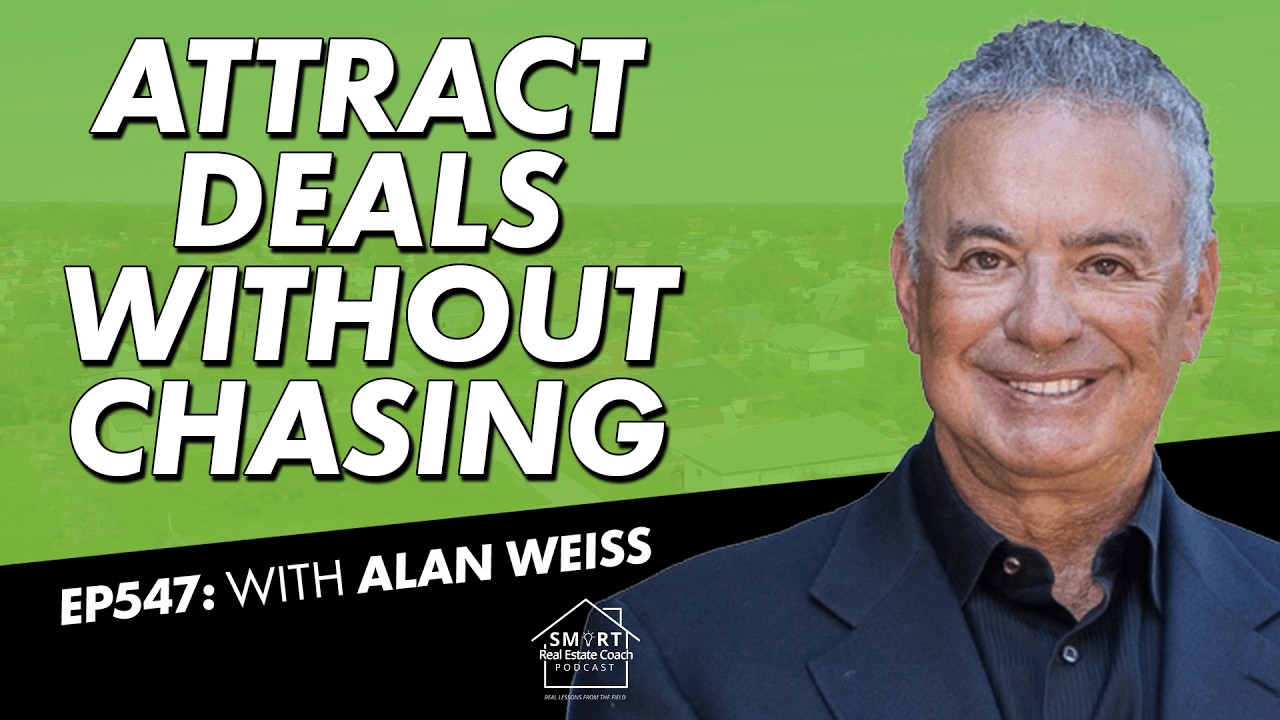
This content was created by Chris Prefontaine. This content was uploaded by Chris Prefontaine. This is a YouTube podcast episode titled "How to Attract Motivated Seller Leads Without Chasing Them with Alan Weiss" (created 2026-02-18). It’s an interview-style episode of the Smart Real Estate Coach Podcast hosted by Chris Prefontaine with guest Alan Weiss. The conversation focuses on positioning and authority for real estate professionals, brand and evangelism/word-of-mouth marketing, attracting rather than chasing clients, differentiating and scaling a business, responsiveness, coaching, and practical tactics for new and scaling investors. The episode also includes promotional/CTA segments for the host’s 3 Paydays system, free discovery sessions, REI BlackBook, and other Smart Real Estate Coach resources.
Chapters
Welcome to the Smart Real Estate Coach Podcast, your source for actionable, real-life, practical investing advice. Each week we help you make a quantum leap somewhere in your business, your finances, and/or your life. Subscribe, leave a rating and review, and learn more at smartrealestatecoachpodcast.com. Okay guys, it's Chris Prefontaine, your host again, bringing you another awesome Smart Masterclass here with the Smart Real Estate Coach Podcast. We're going to hang out today with Mr. Alan Weiss. I love— and I think each week I either tell you that I'm bringing someone on that has 20, 30 years experience or that it's a twist up. This is sort of a twist up. Alan's got a PhD. He's globally recognized as a consultant, a keynote speaker. He's an author, and he's known for his expertise primarily in helping organizations improve performance and profitability. And when I started studying Alan, I thought, okay, he's the founder of Summit Consulting Group, and that's kind of broad. So I dug in deeper. He's advised like over 500 organizations, let's say it's probably approaching 1,000. And that's included major companies that you know of, like Hewlett-Packard, GE, Merck, Mercedes-Benz, like really cool names. So I thought, wait a minute, he's also authored sort of like my friend, Dr. Joe Vitale, over 60 books. So then when I got to that part of his bio, I'm like, almost doesn't matter. And I don't want to say that lightly. I mean it in a big, big positive credibility way. It almost doesn't matter what I bring him on to talk about with 60 books under his belt and 500 organizations he's helped. There are people within that and events within that and nuances within that and things within that that caused him to grow and to help people simultaneously. So, I'm going to tear apart some things that I think are very applicable to us as investors. Things like attracting business without chasing clients. I'm thinking of things we just talked about, things about positioning you as the authority. I wrote a book on this and I want to get his opinion on this. How do we position ourselves as the authority so we are attracting that business? Buyer or that seller, right? To do a deal. And then last but not least, how do we scale? I came into this world, this business world as a solopreneur, and not until my son-in-law and son and daughter came in did I go, oh, we can scale this, right? So I was stuck in a box. And so I want to have you peek in as I talk to Alan about how you can scale a business that so many people don't. Like so many people stuck at that million mark, and I don't want to water that down, but I hope this episode. I think it will. It's why we're doing it. We'll move you from that solopreneur, if that's you, to the next level, or if you're scaling and kind of grinding it out for business now, kind of the next level, raising the bar. So with that as a backdrop. Okay, Alan, with that as a backdrop, welcome to the show and great to see you.
Good to see you, Chris. Thanks for having me here.
You bet. You bet. As I just said in the intro, we could go a million different directions. But I think what I'd like to start with, just because you're talking to a lot of real estate people, right? Is the whole— your whole topic of sort of premium positioning and authority. You know, I wrote a book on authority for real estate people. I thought, this is cool. Alan can, on a much broader scale, probably nail this down. You want to talk about that a little bit?
Well, you know, I think you have to understand that we're supposed to be experts, right? Entrepreneurs, real estate professionals, we're supposed to be experts. And part of the unique value is combining the the real needs of the prospect with your expertise in helping shape that. I mean, it's a nice position to be in. And I think what you have to remember first of all is, ironically and counterintuitively, trying your best to meet people's wants is not a good idea because it just makes you a commodity and they're usually thinking too small. So what you should try to determine and discern is, okay, here's what they want, but what do they really need? And the want might reflect that or it might not. You know, my classic example is when we moved to California and I said to the realtors, look, I must have air conditioning. And they said, well, not all houses. I said, right, but a lot of houses have it and I have allergies. And so the first house, I'm looking around, there's no air conditioning. I said, what did I tell you? She said, yeah, but look at the view. And, you know, that happens in all kinds of professions, right?
Yeah.
So I said, we're out of here. But I think if you said, look, the house is air-conditioned, no problem. But also, your kids could walk to school from here. Now you're starting to add value, you know, or your trailing spouse can do this. Now you're starting to add value. So I think that the best entrepreneurs who are dealing with the public, who are dealing with what I call retail, are able to put together their expertise with a sensitivity to what people actually need and will thrill them. Because while people don't like to pay more money, what they hate more than that is to surrender value.
Yeah, no, I love it only because I tell people like, stop trying to think about all these fancy things you want to do and just find out what they need and solve for it. Like, it's not brain science, right?
Crazy.
Right. How about on this kind of the same line then? Let's kind of continue with this in my brain anyway. And that is, not chasing them, right? So, how do we do more on the attraction front? Any thoughts for them on that?
I don't think that especially smaller realty firms and especially entrepreneurs who are beginning their businesses spend enough time— excuse me— spend enough time thinking about brand. You know, a brand is how people think about you when you're not around. And so, it's important To develop your brand, no matter what stage of the profession you're at, no matter what stage of your career you're at. And a brand, I trademarked a phrase called the chain reaction of attraction. And the chain reaction of attraction is that you attract people who would turn attract other people to you. So a brand creates that gravity. I think that you have to take part in community activities.
Yeah.
I think you have to take part in civic activities. You have to take part in nonprofit activities. You have to become known as a professional. And then evangelism starts to kick in. You know, I have forecasted, I think one of the biggest sales aids in the near future is going to be evangelism. It's going to be bringing your customers and your prospects together. It's going to be making your customers so happy they can't not tell other people about you. And I had a guy named Jonah Berger speak at one of my conventions. He's a distinguished professor with the Wharton School, and his books, uh, are on Contagion and Invisible Influence. And his research is that in executive ranks, over 80% of decisions are made based on peer referral, based on peer reference. They don't go to the internet, they don't do advertising, They don't respond to advertising. They ask people they trust, who do you use for a doctor? What's your favorite vacation place? Who should I hire as a consultant? So to create that kind of evangelism, people talking about you, is an inexpensive, high-margin way to market and to get business.
Yeah, because when I started, I came in after the crash. I'm not started. I started 18 years before the crash, but after the crash, I re-engineered and I had no money. And that's What you just described is a way to do that. So, if listeners hearing this going, well, I can't go out there and spend all kinds of money, well, do that. Do what you just said as part of the process. Because I set you off air, we're talking to a lot of solopreneurs or want to be entrepreneurs, right? Want to be solopreneurs. How can they— give them some of your thoughts because you had so much experience and so much exposure to the concept of Carefully scaling, like coming in, sure, but giving them a vision of carefully scaling and the ability to do that. Any thoughts on that in general?
Well, people tend to look for magic bullets when they want to scale or leverage, you know? And so they get in bed with people they shouldn't be dealing with. They look for the magic bullet. And there are no shortcuts. You know, the harder I work, the luckier I get, right? So if you want to scale your business, fine, but use evangelism to scale your business. Use happy customers to scale your business. Use the work that you've done publicly. I call it blowing your own horn. If you don't blow your own horn, there is no music. But people often do it in the wrong way. They give their credentials. They talk about things about their accomplishments. What they should be talking about is what they've done for others. A classic example of this, a dentist who advertises in a glossy high-end magazine with the latest equipment and the latest X-ray devices and the latest this and that.
Yeah.
And another dentist who advertises with his patients with beautiful smiles.
Yeah. So it's not today, right? With the social media.
Exactly. So it's not what we do, it's what we create. And if you want to scale, don't talk to people about what you do. Talk to them about how you help, what you create.
So for the, for the smart listeners to know, you know, if you are brand, brand new, because I know what goes in their brain. Well, what if I don't have anyone I helped yet? And they're getting started. Well, my— and I want your thoughts on this. My thought goes to, because I did it too when I started, and that is get involved in a community of other investors. In our case, we have the SMART community, but we're not the only ones out there. Get involved in a community you can leverage and lean on, right? So you can provide more stories. Your thoughts on that?
Well, I think that's very true. I think that— you hear my dogs in the background?
That's all right. I got that going on.
Our security team is at work. I think what's important is that you have to understand that even when you start out, you have great value. So I advise everybody who's just starting out, when they put up a website, for example, that they put typical client results. These aren't results you have to have actually done with someone. They're typical client results that you get if you work with me. They have to be in the best interest of the client. Again, not things you do. And they attract people. And they shouldn't be the menu du jour, you know? Stop talking about AI.
Yeah.
Talk about humanity. Talk about how people are actually improved the next day. And that will leverage your business as well. So it's important to get your name known. It's important to blow your own horn, and it's important to be almost shameless in promotion in that understand that just jumping on somebody else's bandwagon doesn't differentiate you. But I made my career when I started by being a contrarian, and whatever people mostly believed in, I just debunked. Quality control, it's stupid, doesn't work. And a lot, you know, I remember I published an article in the magazine And people went, God, you know, if you think of Frankenstein, people marched up the hill with pitchforks and torches against this publisher. And I called him to apologize for getting his readers so upset. He said, kid, they read it. I want you to do an article every month. I'll pay you $50. And my career was born.
Awesome. You know, it doesn't matter if you're brand new to real estate or if you've been doing this for several years or a whole bunch of years. I learned the hard way back during the crash that doing creative deals is much better. It's a much better path in real estate in general than let's call it the old way. Getting paid once using banks, signing personally, 3 paydays, getting paid 3 times on a deal. It's better 3 ways, not one. Money now, money over time, and money long-term. And I don't care if you're in an up-down sideways market, it doesn't matter. You can and should operate with the utmost confidence. There's literally nothing I love more than helping people create systems and simple systems and processes to become massively successful. With our 3 Payday System, and doing so in literally any market, and doing it geographically literally anywhere. So if you've been learning and learning and listening and studying and not taking action, I'm telling you after going through it myself, it's costing you tens of thousands if not hundreds of thousands of dollars by not taking action on the 3 paydays the way you should be getting paid. Many of the people that were brand new just like you that joined our community have fast-tracked their startup. No. I mean, wouldn't that be ideal? If you said, okay, should I go fast or slow? Should I take action now or later? It's costing you too much money to wait. Each one of you are at a point in your life, I'm sure, where you want things to be easier. You want things to be better for you and your family. You probably realize that you not only want more, but you deserve more in this life. So, to be able to give your family everything they want, build a legacy for you personally too, and to have time freedom to start enjoying life.
For sure.
And frankly, whatever else you're seeking. And for some of you, now's the time, for example, to just focus on security. Maybe it's building a big solid bank account for retirement. We take these things super, super seriously, and it's my life's biggest reward to help you achieve them. I want to give you a free discovery session with our team. It's free. It's 15 or 20 minutes. You have zero to lose and everything to gain and to understand how you might fit into the 3 Paydays system. That we've done now in over 80 markets as of this filming. Go to smartrealestatecoachpodcast.com/discovery for a free call with our team. smartrealestatecoachpodcast.com/discovery. Because it's not whether or not you can do it or whether or not you fit. You can do it. It's whether or not you'll take action and do what it takes. And we can guide you through that process. smartrealestatecoachpodcast.com/discovery. We'll see you soon. Well, in a sense, Alan, from a contrarian standpoint, now that you say that, and I hadn't pre-thought this, but in a sense, if they're in creative real estate with us, because there's all these other niches, there's the conventional real estate and the commercial. If they're in creative, they are sort of contrarian. And so you just gave them a thought, like speak about it, right? And put it out there.
Listen, You know these details better than I, but a year ago or so, the National Realtors Association lost a lawsuit. They could no longer guarantee a 6% commission.
Right.
And a lot of realtors lowered their commissions, negotiated their commissions, and so forth. And some tried stubbornly to hold onto the 6%, but some raised it.
Yeah.
And I think the point is it's a realization that, wait a minute, this isn't about an arbitrary number. It's about the value we provide. So let's differentiate ourselves on the value we provide. If we can do this and we can do that, or we move your house inside of 3 weeks or something, here's our commission rate. And the same applies to all professions. So you have to stand out in the crowd. You can't be the 410,000th person talking about leaders as exemplars. You got to be talking about leaders using tough love and firing people. who are most effective.
And not be afraid to— that goes for any niche, right? In any industry.
It does. It does. I'm a process consultant and these processes apply across industries. I work with banking. I work with manufacturing. I work with transportation. It doesn't matter.
So, because you've had exposure to so many people, let me ask you this, general entrepreneurship. What are some top of head, what are maybe 2 or 3 top mistakes you've seen people make In any avenue of entrepreneurship? Because it's going to apply to these guys listening because we've got all kinds of backgrounds here. People are in W-2s, people are starting their own business. What are some common mistakes that you'd want to shake them and go, hey, avoid this?
The first mistake is not understanding this is the marketing business. I don't care what your content is. It's the marketing business. And if you don't market, you're never going to have business. So, you know, Drucker said the first first order of business for a company is to have a customer. You got to get customers, you know, by marketing. So get used to asking for referrals, get used to speaking, get used to writing, get used to hosting events and so forth. The second issue is that if you're coming from a corporate environment, you have to understand that you don't have the resources you used to have. You're going to have to do the work. Now, I'm a solo practitioner forever. I don't believe in employees. I believe that you keep as much as you can of what you make. And now, you know, some people have boutique firms and so forth, but the fact is you're going to be on your own. You don't have secretaries or assistants or all this kind of stuff. You know, you have to get used to picking up the phone to make reservations and so on. The third thing is that you have to be able to take rejection. So nobody's shooting at you. My father was a paratrooper in World War II. He'd jump into the jungle. People shot at him. You know, thank God he lived to just about 100 years old.
Wow.
Nobody— I've never walked into a buyer's office and lost money. They never took money from me. But you can learn something even if you don't get the deal.
Yeah, I love it. I love it. Alan, in your— as your world relates to this, to this smart listeners, what am I not touching upon or asking you that you'd like to share nugget-wise, aha-wise? You know, picture I just brought you into a 300-person event. These guys are all a little trepid about doing real estate, or they're in real estate but haven't had breakthroughs yet. And I go, okay, Alan, you get the stage. What haven't I asked you? And you could kind of impart upon them.
Well, yeah, people are always asking, what should I have asked you? I think of several questions. One question you could ask is this. What's the best differentiator when there's a whole bunch of people like me out there? Because when I was fired in '85, there were 250,000 independent consultants in the United States. Today, I have the strongest independent consulting brand in the world. So what's the difference? I think that these people in the room you're talking about have to understand that responsiveness is as important as content. Nobody expects today that they're going to immediately get you on the phone, but when you get back to them quickly and promptly, they're flabbergasted. They're used to waiting 24 hours or 48 hours or somebody taking a message. I've never liked to be treated that way, and I don't treat people that way. So if you can simply be responsive, which doesn't take fancy technology and doesn't take 14 degrees or initials after your name, if you can just be responsive, you're gonna have people's attention because they figure that's how hard they'll work for you.
I love it. There was just a guy on my podcast last week, Ryan, who developed an app for landlords. And it was mind-boggling because to your point, he said, yeah, all we did is create some responses Right away because people aren't used to getting that. And it improved a number of things, including people paying their rent on time just by getting a response.
Crazy.
It's crazy simple, but it's exactly what you just said.
Yeah, it is simple. You're right.
Alan, I think from an entrepreneurial journey standpoint, give these guys one, say, nugget. I like to leave them with a nugget as far as the ones that's stuck in a W-2. I, without using names, I had someone in my office not too long ago in a bootcamp making over half a million a year, but miserable and just afraid. He's, he said, I hope they lay me off. Like, I, I have enough buffer financially. I just want to leave. So talk to them, give them a nugget. Like, because I can't, I shake my head going, why won't, like, why do you stay stuck in a J-O-B when you have this opportunity? So I don't know. Do you have any words of wisdom besides how frustrated I get with them?
Yeah, I do. You know, if you think of Scottie Scheffler, who's, I think, the best golfer in the world, if you think of Sinatra, who's probably the best singer in history of the Great American Songbook, if you think of Oprah Winfrey, who's, you know, been so successful as a journalist and a talk show host and a philanthropist, if you think of people like that, every single one of them had or has coaches. We all have to invest in ourselves, and we need a good coach to give us honest feedback so that we don't breathe our own exhaust. So, A, don't be afraid. It's not a sign of weakness to have someone coach you. It's a sign of strength. But B, get somebody who's been there and done that. You know, the Olympics are on right now, the Winter Olympics. You don't want a ski instructor who sits in the chalet drinking brandy telling you when you go up the mountain the next morning, here's what you should do.
Yeah.
You want somebody who skis 6 yards in front of you and shows how to bend your legs and Use the uphill side of the edge. So, that's what I'd advise. Don't be afraid of coaching. Find somebody who's extremely good. Invest in that because you're investing in yourself.
I love it. I couldn't agree more because especially in our space, it's crowded with a lot of noise of people that haven't been there and done that and they're out there.
That's right.
It's craziness. And it would be just like the skier who would never ski. As crazy as that sounds, that goes on in real estate, which is nuts. Alan, how can these guys reach you? Share anything you want. Email, sites, anything, social, whatever you want.
Best thing is my site, alanweiss.com, A-L-A-N-W-E-I-S-S.com. There's free text, free articles, free video, free audio. You can sign up for my newsletters, the whole business. I have A Minute with Alan every weekday on social media.
Love it.
I have a cartoon on my site every Friday. I have everything. So I have about 1,800 contacts per year, multimedia. So, don't just look at the content of what I do but look at the process because you can do this too. And this is what scales your business.
I love it. alanweiss.com, guys. Go ahead and visit that. So, write it down. Alan, I really appreciate hanging out today, especially with all the stuff that you're involved in. So, thank you so much for being on.
Again, thanks for asking me.
You bet. Okay, smart listeners. That does wrap up our time together with Alan. I hope it caused your, I'll say, your box to expand as they say in the book. Happy pocketful of money. That's a writer down, by the way, if you haven't read that one. As I always say to you guys, if you haven't got a hold of our books, I want you to have them for free. I'm big on free. Go to three paydays. That's three number three. Three paydays books dot com forward slash podcast. You'll get those for free. They'll come out of my office here. What else can you do for free? You can subscribe to the YouTube channel. Make sure you're catching every Sunday Deal Structure Sunday, every Monday Motivational Monday, and every Thursday Q&A Thursday. This is free stuff, guys. And then if you say, all right, this is something that I really want to dive into, then and only then you'd go to smartrealestatecoach.com/qls and you can use the coupon code POD for the podcast, POD, and you'll get a discount because then that's kind of like the next part of your journey. And if you're not sure what the next part of your journey is, okay, go to smartrealestatecoach.com/action. podcast. Make it a great week. Make sure you rate and review the podcast, guys. It really helps us. Share it with someone that you think it can affect today and make it an outstanding week. It's your choice. Hey guys, are you simply sick of juggling a dozen different software tools for your real estate business? I know I was, and I know I'm not a tech person, so it was frustrating. A subscription for this, you got a subscription for that, and they don't even work together out of the box. That's very frustrating, especially in the real estate world where your best time spent is going to be out in the field or on the phone with sellers. And now you're stuck hiring a tech guru just to make all that sync up. So let's ditch the chaos and let REI BlackBook handle everything. Automate your lead follow-up, track every deal, analyze things quickly for you, make offers all in one platform. In fact, with the Wicked Smart platform, we now have access, if you're in the Wicked Smart community, to all the other associates' properties. Can you imagine that? So you're brand new in the business perhaps, and your seller looks on your website and sees 20, 30, 40 properties, instant credibility. So you're going to get everything on REI Black Book from our custom workflows for lead generation all the way to closing. It has it covered. Try it today for just a buck. $1, guys. Visit smartrealestatecoach.com/reibb-dd. smartrealestatecoach.com/reibb-dd. D as in dog. D as in dog. All right. Thanks for tuning in to the Smart Real Estate Coach Podcast. If you got value from today's episode, guys, be sure to subscribe so you never miss a future episode. It literally takes one nugget to access some of the things we're doing. And when you're talking the amount of the size, rather, of the paydays, it's an opportunity cost that you can't let go. So don't miss an episode. And for goodness' sake, share it with someone who needs to hear it. If you're ready to find your your best path for getting started on your real estate investing journey in general, head over to smartrealestatecoach.com/getstarted. We're going to help you take the guesswork out of your next steps. See you in the next episode.
More from Chris









Episode 575: Redefining Retirement as the Day All Your Choices Open Up with Doug Bennett

