Types of Creative Finance Deals You Can Create with Kevin & Sarah Gannon
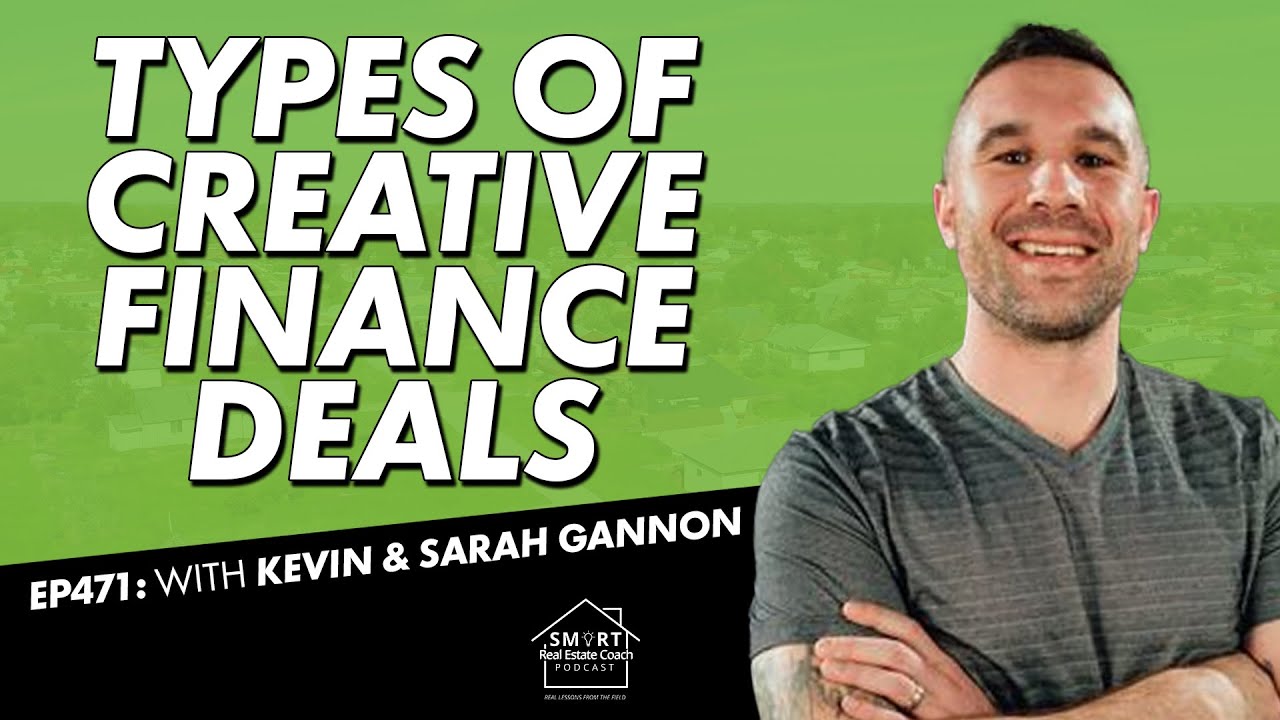
In this Smart Real Estate Coach podcast episode, host Zach Beach interviews husband‑wife team Kevin and Sarah Gannon about their journey from corporate careers to real‑estate entrepreneurship, focusing on creative financing strategies. The conversation begins with a promotion for the upcoming QLS Live event in Boston, then delves into the Gannons’ backgrounds—Sarah’s teaching and IBM program‑management experience and Kevin’s finance and publishing roles—followed by their transition into real‑estate through franchises, day‑trading, and landlord attempts. They discuss why they settled on real‑estate, emphasizing the stability of property assets versus market trading. A detailed rent‑to‑own case study is presented: a Danbury homeowner wanted to move to Florida, and a Bronx family sought a home; the Gannons structured a win‑win deal that was cashed out after two years with significant appreciation. The interview explores the dynamics of running a business as a married couple, highlighting positives, ego checks, communication, and the need for humility. Kevin reflects on coaching resources he used and missed, mentioning QLS, buyer‑side mentorship, and the value of community support. The episode concludes with practical advice for couples starting a family real‑estate business—honesty, realistic expectations, spiritual growth, and patience—while reinforcing the philosophy that entrepreneurship is as much a spiritual journey as a financial one. Throughout, the hosts repeatedly promote the QLS Live event, providing dates, location, and a discount code.
Chapters
Hey there, Wicked Smart listeners. This is Zach Beach, CEO of Smart Real Estate Coach, and I'm going to go ahead and take over today's podcast. We have an amazing event coming up, QLS Live. For the first time ever, we're going to be hosting it in Boston on September 23rd and 24th, where we're going to bring in our community members and people outside the Wicked Smart community for 2 days of intensive training in creative financing, along with some amazing speakers. Which if you go to our website, qlslive.com, and also in the show notes, we'll have a promo code for you to get a 50% off ticket. But if you go look at the speakers, it is absolutely packed. We're going to be showing you everything from lead generation and doing real estate deals on creative financing all the way to even an attorney panel to ensure that you have the exact legalities and structure in order to go out there and constantly put these deals together. But in addition to that, I have an amazing couple out of Connecticut, Kevin and Sarah, who's been with our community for quite some time. And I wanted to bring them on today's podcast so you can see what an associate journey may look like for you. Now, an associate is somebody that we buy and sell real estate with. Now, they've been with our community for quite some time and certainly have a diverse background. And this is going to be— it's going to be a lot of fun because as you get to know them personally, you're going to see that it is absolutely possible to go out there and make things happen. So Kevin and Sarah, welcome to the Smart Real Estate Coach Podcast.
Good morning. Good morning.
Love it. Love it. So for those out there that do not know you guys, they're probably not inside our community, but even those that do know you inside our community, maybe just give some background on You know, what your guys' background is and before you found Smart Real Estate Coach, and then we'll dive into your journey. Okay.
Well, I'll jump in real quick. We are a wife and husband team. Both Sarah and I had a rich corporate W-2 background where we spent many, many moons doing this and that. Sarah was very proud of starting teaching mathematics and then going on to programming. Eventually becoming an international program manager with IBM. I fell into a finance career with my history degree, basically collecting money and dealing with people on the phone saying, please pay me. So again, but for an international publisher, then being involved in some other securitization and financial stuff.
Why?
Both of us being middle managers in corporate America doesn't mean that eventually you're not gonna hear, here's the door. So, you know, again, eventually you're, You're shown the door one way or the other. And fortunately for us, we were able to play entrepreneur and we experimented a bit here and there doing, you know, some of those things that you're supposed to do, exploring franchises, day trading, et cetera, and eventually exploring real estate. So we went in at Real Estate 101, going to local REIAs and yes, flip, yes, buy and hold. And so we were landlords with some C-minus properties and basically, okay, is this all there is? And then eventually Sarah, continuing in spirit of curiosity, discovered our friends at Smart Real Estate and some other fellows who were also recommending, you know, Smart Real Estate very highly. So I'll let you go from there.
Oh, and so it's right. So it's really Practical. I'm fairly practical, even in the teaching of mathematics, how it can be used. It's one of my pet peeves about education sometimes is not showing how it can be used, or in the rules of money. I knew nothing as a teacher when I first left, you know, my career. I had not even thought of buying a house. I mean, just wasn't my background then. It's just, oh, you work hard and teach and become professional, and so eventually you get a house. So that appealed to me quite a bit. And in this business, truly making actual— I mean, it's a wonderful thing to bring people to a high level or to organize a project and get it running and out there and all that. But it is a wonderful thing when a kid understands geometry. It's a great satisfaction. But the satisfaction of actually making a difference in people's lives. If it wasn't for us, that first couple that came up from the Bronx and were able to have a house, if it wasn't for us, and if it wasn't for us, that seller couldn't, would not have been able to get down there. That was very appealing to me. And that whole thing that we made a difference in people's lives. And so we continued making differences.
Yeah.
in the work that we do and keeping ourselves in a high level and that and some for, you know, some people running around with the— no, keeping ourselves trying to keep at a higher vibration in all you do. That's been—
I love it. Oh, this is good stuff. So, so clearly you guys didn't come from a long line of real estate investing, right?
Beyond paying my mortgage every month on time.
No.
So having a middle management-like background, which is, you know, I would say it is a pretty big-sized portion of our community, you know, people that are working hard and interested in finding a new way of creating income or to retire. So you mentioned a couple of different routes, right? Franchises, day trading. So what made you end up sticking to real estate investing?
A couple of different things. One, part of the idea that the— apparently it doesn't matter what you do from an entrepreneurial standpoint. There are people who, your friends who care for you and family, you're going to, oh, don't do that. Oh, that's risk. Oh no, no, no, no, no. So fine, you get past that part of it and, oh, you know, your husband, your pennies, and they'll take care of themselves. And so, okay, well, that's one of the advantages of having had to play with people and other people's money is that you learn, nah, it comes and it goes. The other advantage is that, again, we did go for some training and a lot of it has been, get in the rowboat, we're gonna take you out in the middle of the lake and here you, here's your opportunity to learn how to swim. And we did that with trading, currency trading, those sort of things where, yeah, you're paying some significant coin to go and sit in a conference room for X period of time. You were given the background and a hearty handshake and a slap on the back and good luck to you. The real estate thing, basically we had had an early coaching association, which was, I thought, positive, but again, a little more rowboat-like. And then we were kind of introduced to the fact that there's kind of an ongoing relationship that can be developed as compared to just getting in the rowboat.
And convinced of the idea that it is an asset. We're talking about where people live. This is something that's not going to go up and down as we did in the trading, but trading the pound against the US dollar. That was very interesting. And in both areas where we rented to own, we didn't do it. Where we bought multifamilies, we bought, you know, we were, we wanted to be landlords and so forth. You run outta money here. The risk is we don't have the same risk at all. And we're selling an idea. That's what you're talking about. And, you know, it just, just made sense. And as I said, actually making a difference in people's lives and trying to make something work for them, that's where we're coming from. This is an idea. Does it work for you? We can facilitate it. We can get you to the finish line, uh, basically.
Yeah, Sarah, I love how you, uh, you brought that up because I always like to tell people, especially on podcasts, that This is— we're just as part of the education business as we are in the real estate investment business because we're educating people on other ways in order to find a solution. Right. Because at the end of the day, when we buy and sell real estate, when you're doing creative financing or you're doing traditional, either way, you're looking to solve a problem. We just happen to solve different problems. And most people have not been taught that this is even a solution to solve that problem. So, Sarah, you brought up earlier, you said that you're helping people, right? Or I forget exactly how you phrased it, but you said that you're helping people and you brought up a couple that came up from the Bronx. Maybe walk us through that deal and talk about how you solved the seller's problem and the buyer's problem and were able to create that win-win.
This was the first seller that we— this was after a series of calls, calls, calls, calls. I got And are you willing to do this? There's someone that recognized who helped people move. She was a moving coordinator, finding new houses, knew the value of houses. But they wanted to get out of here. They wanted to leave Danbury area and go to Florida. And they've been trying to sell their house for a long time. So here the motivation was the house was a little bit of an— it was on a busy street at certain hours of the day during the rush hours. It was just on a busy street and it didn't fit into most of the people's HGTV views, you know, how the house should be. Even though the home was renovated, it was very nice inside. It was that closest, the old farmhouse was close to the road. Anyway, Yeah.
So, yeah, I think what was interesting is that they had already had it as expired listings twice. So they've been pretty well, you know, tired of the entire realtor business because basically what they were being told was do this, do this, do this. They did it all, still didn't sell. And there were elements of the house— it was a bit of a white elephant, but it was also immediately next to a park and across the street from a nature preserve. So, you know, it was just pretty, but it was also less than 100 feet from one of the busiest roads in the area. So it's kind of a tale of two cities. And she had one of the sellers that had some health concerns and wanted out. They wanted Florida now.
Yes.
So they were motivated.
My intent at the time is that, you know, we were just like very high on, on, you know, what we were doing and the whole idea. I was very, you know, just making calls and taking it as professional. I got to make these calls during these hours and, you know, just do your best you can and keep yourself happy. So when they, when all of this, we worked it out and we were able to, the synergy of this was amazing. The couple were come from another country where pileated woodpeckers were, I'm sorry, I'm getting off track, but the pileated woodpeckers flew around us as we signed the contract. I mean, the synergy of having met with the right people and how everything just fell into place and met their needs. The generosity of the couple that were leaving, they were able to sell their furniture. They were able to give, they gave them things, you know, everything. Everyone was happy.
Yeah, it was the human element was very nice. And the fact that, again, you know, experienced both sides of it, you know, the idea that Sarah was in a position to say that if you don't feel comfortable with this, maybe this isn't for you. So the seller kind of went, no, no, I am interested because Most importantly, Sarah's willingness to listen. What are the needs of the seller? What do they need to do? How do they want to go about this? As the, you know, on the opposite side of it, I took primary responsibility for interacting with the buyers. Way overinvolved because everyone's got their own hearts, their own stories as to how they're coming after a house. And, you know, it was an education for both of us on both sides because it is really quite remarkable how little people understand the concept of getting a mortgage. You know, they see the rent-to-own phenomenon or the lease-to-own. No, we need someone who is capable and ready to move in. So, you know, bringing to bear some of the materials and such that we've been, you know, exposed to in QLS and such and just kind of sitting down and bringing people through Mortgage 101. So there is an education process involved. There is an ego process involved because, again, one, you are reinforced that you don't know everything. And you've got to learn before you can tell.
Mm-hmm.
So we were fortunate enough inasmuch that we met a couple who, whose Florida experience didn't work. They came back to the city. Both were working in Manhattan. This was at the onset of COVID So there was the migration out of Midtown. They both commuted in, but they wanted someplace away where they and their 3 kids could be in the glories of Connecticut. So it worked out very nicely. They had the means to be able to do so. They had a plan to get to where they wanted to be. And so since we're looking at being able to bring someone in slowly, spoonfeeding them homeownership inasmuch that, well, yeah, can you get a mortgage 2 years from now, a year and a half, 2 years from now, and kind of that mutual experience to get there. So it was interesting. Nice people.
Right. And we got nice reviews from our seller as well. Still very content for that beginning example. They got the lower interest rate thing and Kevin helped them with that.
Nice.
And their value of the house, as we know, is now, you know, maybe it's gone up 1/3 or 20%.
Yeah, I was just going to say, we brought them in at X point. The seller was happy. The buyers came in at a premium. So that's how everyone made money. And it appraised out above the premium they had paid. So again, in less than 2 years, they were positive. So which is a win-win-win.
And this property ended up cashing out already?
Oh yeah. No, this was cashed out a while ago. Yeah. Well, awesome. So that's 2 years on the dot. And again, they were able to finance and get an appraisal above the— well above the sale price. They are also, again, the ongoing education. This is what closing costs are. So that was a bit of an education too, right?
I mean, they never— a log splitter.
It was like, yeah, it's welcome to Connecticut.
You know, again, dream come true.
Why you need a generator?
Oh, We live here.
We don't have one yet. We get it.
All right, guys, I want to make sure you remind you about our QLS Live event. We've been hosting this thing since 2016 in a basement, and now we have a brand new facility in Boston, Massachusetts. This year, 2024, it's going to be September 23rd and 24th. That's a Monday and a Tuesday. Makes it easy for travel. It is literally right next to the airport. Go to smartrealestatecoach.com/qslive. and use the coupon code PODCAST50. That's going to give you 50% off. I'll see you there. I love it. So that's amazing. And I love that you guys have been in this business long enough to see the end result too, via rent-to-own, right? And getting somebody all the way to the finish line. So that's amazing. I do have some questions in regards to— because a lot of people listen to this, they want to— they want to either have a family business or they want to work with their spouse or, you know, a family partner. I'm curious, like, what are the positives and/or the challenges of working with your spouse? Maybe you can tell us.
Only positives. Only positives.
Yeah. It was interesting. Both of us had to prove each— prove ourselves to each other, number one.
How so, if you don't mind me asking? Like, what does that look like?
Oh, look at what I'm doing. So I work very hard to show him I'm making the calls. Look, I'm making the calls.
Vehicle.
That's, yeah, make the home to sell. I'm getting, I'm talking to the sellers and until I found one, then he continued showing that house through the summer. It was just a tough street and continued to sell that house. I was very proud of him because it fit in with my ideals and goals in life, explaining to young couples, what they need to buy a house, all that education that he gave out, explaining and taking his time with people. And, you know, for many of them, so here we are giving education, this all fits in with the way, you know, that kind of thing. And then eventually we found someone that just was right on, it was perfect, but it took a long time. Yeah.
And I think one of the other things worth mentioning is that again, there's a bit of a It's an ego check because no, that's why there's more than one person. And one of the advantages of having a coaching scenario in your back pocket is because there's someone to talk you off the ledge when someone's making you crazy. In addition, when, you know, because Sarah and I communicated very well, didn't mean the fact that we understood everything. So we were able to get on the phone and, you know, have various people talk us off the ledge. Because again, people are human beings, human beings, including ourselves. And so, some of the resources I didn't take advantage of, I wish I had. And some of the resources I did take advantage of, I'm very glad I did. And so, eventually, you learn one way or the other. There's the easy way when you ask a question, the hard way when you convince you're right to begin with.
Yeah. Yeah. Well, I think personally, the growth, the growth was very important. Personal growth. I'm that nosy kind of— I'm usually nosy. And here I have to, and what was that? And what would that add? I could, and how much is that? And how usually I don't do that.
Yeah. And what you're referring to is when you're speaking with sellers on the phone, um, and asking them those questions. I had 2 follow-up questions based on that. And I love that you guys are smiling. So if you're watching this on YouTube, you get to see this. Uh, if you're listening on the podcast, I mean, it's the beautiful thing. Like when a, uh, couple business works out. It's amazing, right? Because you guys get to build your goals together and then you get to go after them together. And as we all know, there's lots and lots of challenges. I've worked with my wife in many different businesses. I'm curious, and I'll start with you, Kevin, then I'll jump to you, Sarah, and then I want to jump back to the resources that you said you wish you took advantage of, which is versus the ones you did. Kevin, did you learn anything new about Sarah while building this business? I know how long you guys have been married.
A mere minute or two. 26 years.
Okay, so 26 years. And then you guys started a business how many years ago together?
Like this?
Well, we started— we started in real estate in '17. We started this in '20. In real estate and what we were doing before, it was transactional based on initial research as compared to being interactive with people who were in a You know, again, it's the advantage when you're the one who has to be sold. Well, then you can wave your hand and say yes or no. When you're the one in a position where you've got to communicate, and that's one of the things Sarah really demonstrated so well, was the ability to project and listen. One of my problems is frankly, I already have an opinion, so why should I listen? As I'm reminded.
Not you.
So the idea being that again, realistically, It is an interactive process. And so what we're learning from each other is both, you know, the methodologies, the mechanics, and also what are our attributes. And I think Sarah's willingness to stay on the phone. Now, as I'd mentioned, my background was in collecting money. One of the things I noticed with Sarah, I was quite willing to conclude a call because you've already gotten the value message from them. The answer is no. Next. Well, Sarah stays on the phone and occasionally that no becomes a maybe, and that maybe becomes, okay, well, come on by. So again, that persistence and willingness to listen does mean that you're interacting with more people and getting more opportunities. So that, you know, again, what do you mean I have to listen? Well, okay, I'm reminded of that often.
Love it. So then, Sarah, same question. Like, is there anything that you learned about Kevin through this process, you know, that you may not have known with, you know, your 26 years of being married?
Well, first of all, he took the leap because he wasn't going to, you know, join SREC, that he actually took the leap and, and, and humored me to, for us to start this business. So that he did that, I was extremely grateful. That lasts for a while.
Yeah.
Uh-oh. Love it. And then to really see, you know, who we really were, uh, often, um, defensiveness because You're so concerned you gotta prove something and then realizing that we're just here for the ride. You got nothing to prove. He works this very hard, super Virgo, really works hard on the detail. I'm spacey. I'm a little more spacey than that. And anyway, to appreciate each other and our differences. Yeah, that was the big thing to come to actually have that kind of contact with someone that you really love. So, give them the benefit of the doubt. And definitely, it's a way for the relationship to grow, for you to understand each other more. It's interesting because we're very independent, both of us. So, you know, now we're sharing a little bit more on a daily basis as well, the work as well.
That's amazing. I love to hear that. What I've, what I've been told and what I've kind of come to the conclusion is that business is more a spiritual journey than it is a physical journey, right? The evolution of, of you personally and spiritually, physically evolving in order to accomplish your goals is, is something that, you know, that we all have to pursue if we really want to be entrepreneurs in this space. Kevin, you mentioned that there were some resources that you took advantage of and ones that you did not take advantage of. Could you Could you create some more clarity on that in regards to what you're working on?
Part of it was the idea that I had— well, humility is something that's either existed or it's imposed upon you. So humility is something I got to learn a little bit about here and there. So some of the aspects of the buyer side, had I been in a better position to actually listen, I would not have invested so much time in a number people whose interests were somewhat waning and chasing everybody as compared to allowing qualified people to chase me. You know, to the extent that, again, if someone's motivated, if you explain it well, they'll understand how it works to their benefit. So listening a little bit more on the buyer side to the resources, whether it be the coaching at the time, you know, Nick, who's associated a lot with the buyer side, I wish I had taken advantage of more so from you know, a tactical number standpoint, because I think that's when we could have made more money. And frankly, from a pricing scenario standpoint, he's been exposed to what he knows. In addition, we've been very fortunate as much that we've had a number of different coaching experiences since we've kind of gone through the various gradations and levels of exposure. And you do get to hear people asking the same questions you were asking 2 or 3 years ago. And then next you're getting a question. Oh, that's from the left field. I'm glad I know that one now, because again, it is a learning experience. And if you're associating with people who are, who are experiencing the same entrepreneurial bent in the same industry, you will learn whether you want to or not.
But no, great points. So last question, then we'll roll towards the end here. If somebody is interested and they want to start building a family business, right, or want to do as a couple, And they're interested in getting in real estate. Any words of advice for them before they go ahead and dive in?
Sure. You know, again, for never having a lack of an opinion, honesty is a really good start point. The idea being that, again, you've got to clear the decks with the understanding that there is a learning curve involved. You know, the one of the things that frankly most impressed me from the very beginning was the clearly communicated thing that this is not an instant answer to anything. This is a career. This is an investment. This is a business. So again, you know, the magic wand of real estate that you'll be flipping houses in an hour and a half after you pay me X amount of money. But you've heard that speech a million times. Like, well, that's not what this is about. You know, if you're going to engage in the business, you're going to be engaged with your family and making a go for an investment of time, energy, and effort. You know, and again, the emotional investment as well. Well, yeah. Be pros, act with pros. It makes a difference because one, if you're approaching this, especially without a lot of background in real estate, you will learn, but no one's going to give you patience. You've got to start with it.
Great point. What about you, Sarah?
Right. So as you're saying, a spiritual journey to self-development. I mean, I was so stuck on myself. Hey, I'm a teacher, I've got a master's, I know. Lots of things, and then the humility just to it's all well. You better go back and read everything.
Let's start again. Yeah, I love it.
Yeah, a good friend of mine always said you can't look good and learn at the same time. It's part of the process, and we we so much appreciate you guys inside our community. As you guys as as each and every one of you can hear them, I mean certainly it's. It's been an amazing journey, but I'm sure challenging at times as well. As we conclude this, again, I want to point everyone that's listening to this back to qslive.com. Come and meet Kevin and Sarah, ask them a bunch of questions that will be at the upcoming event in Boston. Make sure you go ahead and book your room, book your flights, and let's see you up in Boston at qslive.com.
All right.
Kevin, Sarah, thank you so much for coming by the Smart Real Estate Coach Podcast. And I'm sure people have lots of questions when they come see you here in September.
Real pleasure. Thank you so much.
Thanks for listening to the Smart Real Estate Coach Podcast. If you're ready to invest in yourself and take your investing to the next level, check out our 90-Day Jumpstart Program by going to smartrealestatecoach.com/jump. That's smartrealestatecoach.com/jump. Because now is the time to act boldly in this unprecedented market shift.
More from Chris









Episode 575: Redefining Retirement as the Day All Your Choices Open Up with Doug Bennett

