"activity maxxing" doubled my sales (but it sucks)
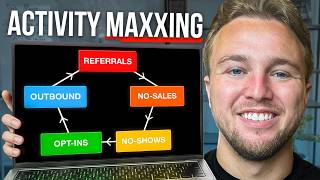
In this 30‑minute YouTube video Christian Polk argues that improving sales skill alone is the slowest way for a closer to increase earnings. He introduces “activity maxing,” a systematic approach that focuses on dramatically increasing the number of revenue‑generating conversations a closer has each week. Polk explains the mindset shift required, outlines how to identify where the money is (referrals, upsells, no‑sales, no‑shows, opt‑ins), and provides a step‑by‑step weekly plan to add 5‑15 extra talks, which he claims can generate $2,000‑$10,000 extra per month. He details a hierarchy of lead intent (highest to lowest), scripts for outbound calls and text‑blast campaigns for each intent tier, and tactics for leveraging other closers’ leads, bribing setters, and automating follow‑ups in a CRM. Polk acknowledges the grind—long hours of dialing, discipline, and potential friction with teammates—but stresses that the increased volume accelerates skill development and can push close rates above 100 % when combined with smart leverage. The video ends with a call‑to‑action for viewers to comment their biggest takeaway and suggest future topics.
Chapters
Getting better at sales is actually the slowest way to make more money as a closer, because here's what happens with most closers. Marketing slows down for a week and they're completely fucked. They have no calls, no backup plan, no pipeline or systems. And the worst part is, is the money is just laying right there. It's in their pipeline in terms of their no-shows, their no-sales, their upsells and referrals. They just don't know how to go out and actually get it. And I've trained hundreds of closers at this point, and I've reliably created a system which I call activity maxing to where if you use it, you can make an additional $2,000 to $10,000 each and every month just by being smarter with your activity. So in this video, I'm going to be going over exactly what activity maxing is, how you can actually have an additional 5 to 15 conversations each and every week and how to go about it, and the quickest way to start making more commissions right now, even though it fucking sucks. All right. So let me show you the first thing that we need to tackle, because this is where most closers go wrong. It's the actual mentality when it comes to activity. Okay. Because there are two ways to make more sales as a closer. We can focus on our skill set, okay? Get better at sales. We increase the amount of people, the percentage that we actually close, which just takes more time. Or we can increase our activity. We just talk to more people. That is going to be much quicker. Talking to more people naturally. Let's say you close at 20% right now. If you talk to twice as many people, you'll make twice as many sales. So what most people want to focus on is they just want to focus on the actual skill set. They just want to focus on like, hey, how do I get better at sales? Because it's sexy. And you've been sold a marketing lie by either trainers that are like selling you on a biz op, just like lay back, just take inbound leads, or trainers that are saying, hey, if you're good enough at sales, you don't have to do activity, just take inbound leads. Both of them are fucking lying to you. And it's a marketing ploy that is basically trying to sell you what your worst interests are, right? Like they're selling you on the fact that you're lazy. Like, hey, if you follow my system or you do what I tell you to do, you can be lazy. Right. If you want to get to be the absolute best, we cannot be lazy. So yes, sales is a skill game, but it is also an activity game as well. For example, Steph Curry is the best 3-point shooter ever, but he doesn't just take 1 3 a game and then trying to shoot 90% of his 3s. No, he jacks up 5 to 10 a game and he shoots 50%. And that's how he beats everyone. He's very skilled at what he does, but he also throws up a lot of shots. So what we need to do is we need to do both because we need to be making the most amount of money on the team. We're looking to become the person who can make $40,000 to $60,000 per month. If you're okay just making $10,000 per month, this is probably not the video for you. If you're lazy, again, probably not the video for you. So the core question we need to ask ourselves is who has my money? Marketing is always going to ebb and flow. You can't rely solely on inbound. If marketing tanks for a week, you are not screwed. If you actually have a system in place. So you need to ask this question every single week. Who has my money? Depending on what you sell, what your offer is, it's going to give you insight on exactly where your money is when it comes to upsells, referrals, no sales. We'll dive into all of that. But we just need to start thinking about this. And why do most closers fail? Because we've all been sold this dream. Well, I wasn't sold the dream because like I got into this space before it was a thing, but a lot of people were sold into it in terms of like a biz op of like, oh, just take inbound leads and all this bullshit. It's— and it's just caused a lot of people to be lazy. So if you're not lazy, then you will win by default. If you just do more activity, if you just sit and you actually work, like actually do moneymaking activities for 6 to 8 hours each and every day. I'm not even asking for a lot. Like, dude, it's just you work a full-time job. Like, that's what it is. You're in sales, bro. Like, you work a job. You only make money if you talk to people. So if you have empty space in your calendar, if you have white space in your calendar, you should hate it with a fiery passion. Also, as a business owner, if you just do money-making activities for 8 hours each day, you will outwork everyone else. Because if you have an 80% show rate, let's just say you take 10 calls per day. That's generally speaking what I would say if we really want to make as much money as possible. We're taking like 8 to 10 calls per day. You have 2 hours each and every day. You know, you're going to get no-shows. So we need to have a system in place. If we don't have a system in place or we watch YouTube, we go do fucking errands, grocery shopping, go to the gym. Those are 2 hours wasted without a system. And if we're correct with our system, we do what we know we need to do. We can have an extra 5 to 15 conversations per week. That's an extra $2,000 to $8,000, maybe even more, depending on what you are selling. Understand, when we're talking about activity maxing, it is very, very closely related to retard maxing. We just need to do things. We just need to do things and ask questions later. Now, we don't want to go full retard because we want to be systematic about this. But we do want to just do things. If we just do things, we will make more money. Okay? That's what we're going to do. This is what we're going to focus on. Okay? And also keep in mind what I'm going to show you. Yes, it sucks. It requires discipline and you're probably going to piss off if you have a team of other closers, probably going to piss off the other closers because if they're lazy, you're going to sell their leads. Okay, let's talk about it. So what is the concept? Every no-show equals money, right? It's just money left on the table if we do not do something about it. So before each week, we need to map out our unscheduled scheduled activities. So they're unscheduled being we don't know when this no-show is going to happen, but they are scheduled because we know it is going to happen at some point. We need to have a system in place to do something as soon as we get a no-show. Take a breath, go out in the sun, right? I want to recommend it for me, at least right now. Sun's in my eyes. Arizona fucking desert over there. I still get tons of sun. Don't worry. And then you get back, sit in your fucking chair, get to work. This is not time to watch YouTube. Dude, this is not time to go to the gym. This is not time to go grocery shopping. Actually time block 6 to 8 hours. Do all the other stuff outside of that time. Actually just work, work, work, work. Right. That's what we're going to focus on. So what are the weekly goals? You need to set this at the start of each week. We want to be shooting for 5 to 15 extra conversations each and every, each and every week at least. I would say this is low, but I'm setting the bar low for you guys. Don't hate me. So we want to work from highest intent first. So the people are most likely going to buy first and we're going to work our way down once that's exhausted. Also sending out text blasts as well when we have an hour free and we want an extra 2 to 3 sales per week depending on what you sell. Again, an extra like $2,000 to $8,000 per week that we can get from that just by doing the work. Okay. Now what is the actual system we want to employ? We want to work from highest intent. People are most likely that are going to buy down to lowest intent. People are least likely that is going to buy. So generally speaking, this is what it's going to be. Now, it's got— it can change from your offer, but if we're starting off, this is what we need to do. Number 1 is going to be referrals and upsells. Referrals. If you sell something that is good, they probably know other people who are your demographic that you could sell. Ask them if they're happy with the product. They'll be happy to give you a referral. Upsell. If they're happy with the product, oftentimes an upsell, you just need to let them know there is something else that can be bought, right? If you tell them like, hey, did you know we have this thing? Do you want to buy that? Right? Like, dude, like upsell conversations are super straightforward, super easy. It's just money left on the table. Okay. No sales. Your no sales and other people's no sales. So we'll go after your, your non-closes and other people's non-closes. We have our no-shows, our no-shows, other closers' no-shows. And then last, we have like opt-ins, outbound. It really depends on what offer you're on, but we're going to leave these for last. So what we want to go ahead and do is let's just say, for example, we have like 2 to 3 hours, like free. We want to like work through what we're doing and what we're going after. So it's like, let's just say, for example, like our one, we're going after like referrals. Okay. And we can either do outbound or text blast. If I can fucking spell. So we can do outbound or text blast. Now you want to change it up. Like, here's the thing. You want to change it up because maybe for your offer and the people you're selling to, they respond really well to you calling them up. Maybe they respond really well to text blast, or maybe it's a good mixture between both. So it's like we want to alternate. We don't want to just use one or just use the other. We want to alternate. Same thing with like, you know, no shows, no sales. Okay, so it's like we want to do outbounds and text blasts. So again, we want to segment it out each hour. So for example, maybe we are going after referrals and text blasts right now. So the first block we're doing like referrals, text blast, and maybe like the second block we're doing like upsells outbound. And then you'll get a feel for what works best, what, what is giving you the highest ROI on your time. The biggest thing we need to focus on is leverage, leverage, leverage, leverage. We want to make the most amount of money for the least amount of effort. Like, yes, don't be lazy, but also let's be smart about it. Okay. So we want to focus on leverage and it's just about, again, we want to— especially when you're first starting off, you need to test out what's going to be your highest leverage activity. Generally speaking, I'll alternate between like what you're doing in terms of outbound and text blast. Okay. So some key rules to understand. Always start from highest intent down to the lowest intent and work your way down. Now depending on your offer, this not might, might not be the highest intent down the lowest intent. Maybe because your offer is shit, you can't get upsells or referrals for your life. So you have to focus a lot more on no sales. This is just going to be generally true. Okay, so keep that in mind. If you sell a shitty offer, probably should get on a better one. Okay. Only move on to the next category once you've exhausted the higher one. So if you have a lot of people that could be upsold, why are you spending your time on no sales and no shows? Makes no fucking sense. So go— when you are going after like the no-shows and the no-sales, you go after the worst closers' leads first. Again, why? Because if you're closing at 20 or if they're closing at 20% and you close at 40%, more likely that there's a lot of meat left on the table. There's 20% just sitting right there just by math. Okay. You should ask your sales manager or your offer owner if the rule is not already in place of how long after there's been no contact. They've had the sales call, not had the sales call, sold them, didn't sell them, whatever it is. If there's no contact in the CRM, how long after that is this lead free? Get them to give you an answer. And if they don't give you an answer, default to 14 days. So they had the call, they haven't followed up with them. Day 15, you're reaching out to them, you're going to start selling these people and then force them to make a fucking rule. Again, we're not going to make friends doing this. Or you're going to make money. Okay. Generally speaking, the rules that I see is more between like 14, 30 days. If it's a longer time frame, I'm always going to push. Let's get it shorter. Let's get it shorter. Why are we leaving money on the table? What's going on here? Push, push, push, push, push. Okay. And also, we can talk about this a little bit later. If we can talk to the offer owner or the sales manager and we can get special promotions for each of these as well, this also helps the entire process. Okay, again, we're always thinking, who the fuck has my money? And I don't need to just be set with the rules that have been given me. Let me ask about the rules. Let me see if I can push the rules. Can we do a promotion? Like, again, I'm pushing, I'm pushing. I'm just making shit happen, right? Just trying things. Let's just try things. So how do we do it? So step one, system one is going to be referral. This is going to be like the highest leverage. If you are— if you're selling something that's good, ideally they know other people who would need the product. Just call them up and actually see if they know anyone else. Ideally, ideally, ideally, you need to start doing this. Start asking referrals right after you sell every single person. Why do we want to do that? You want to ask referrals when there is an emotional high point. Depending on what you sell, those emotional high points are going to be at different spots. But the one first emotional high point is always going to be the same. It's going to be after they buy. Okay. After they buy, like, hey, how does it feel? Right? Why do you feel like right now is the best time to actually make this decision? And like what we have noticed is when we have, you know, you know, if you know someone else who's actually in the program, there's a bit of friendly competition. You tend to get better results. So with that in mind, who else do you know that would be looking for XYZ outcome or be looking for help? You just ask for a referral. Again, just ask. Just ask. Friendly. This is a friendly competition angle that I'll go ahead and use. Okay. Now, in terms of the second time you ask is when there is a second emotional peak, just generally speaking, when they first start seeing results. Now, with whatever it is you sell, you want to systematize this. You want to understand when do they first start seeing results? For example, when I bought my first sports car, the happiest I was is when I first drove it off the lot, right? I drove this car off the lot. This is the happiest I was with the car. The next— but like the second emotional high point is when I gave the car to my dad as a gift. Okay. Because like for me, the sports car, like I grew up pretty poor, like my dad really liked cars and he would talk to me about cars, but like we could never get anything, right? So it's like for me it was being able to get it. That was one emotional high point. But then number two, really being able to gift it to my dad, that was another emotional high point. So if they would have called me at that point, it's like, hey, how are you liking the car? It's like, oh, just give it to my dad. Oh, cool, man. Do you know anyone else who might need a sports car? It's like, dude, I'll fucking send them over. So it's like we got to be searching for high points. And ideally you have a system in place where you already have a book call where you're going to talk to them after. Ideally, they're having that high point. But if right now we haven't been doing anything, we're just going to call them up again. Retard Maxim, we're just doing— okay, just call them up. Do not be overthinking this right now. If there's just a lot of people who have been sold either by you, another closer, offer owner, whatever, whatever type of situation, just start conversations and see what happens. So what you're going to do is you're going to call them up. You're going Get them to share wins. How have you actually been helped so far with whatever it is that you're doing? And then ask, that's awesome. With that in mind, do you know anyone else who might be struggling with pain point? And then you ask for the referral. If you have a referral bonus, mention it here. Talk to the offer owner about a referral bonus. Free money. Okay. That's if it's your sale. Now, if they're like, dude, this program's terrible, or you guys are garbage, like, dude, just hang up and move on. Okay? Don't get— don't get caught in your feels. So if it's not your sale, if it's another closer's or whoever's lead, what you want to go ahead and do because you don't have the rapport, generally speaking, we got to lube it up a little bit. You don't want to just go straight in. So you're going to say like, hey, hey, John. Hey, John, this is just Christian with XYZ Company. I'm reaching out to current clients because I'm new to the team and I just want to see if I can provide any, any value. So how has the program been going so far? And is there any way we can potentially help you, like, get them talking and you can understand from there, like, hey, how things are going? If they're super open, just ask them for a referral, just like we asked here. If they're not super open, just book them in a follow-up. Okay. Book in like a check-in meeting. Let's just say, for example, and in the check-in meeting we want to be doing upsells and referrals. But let's say, for example, that they're having a specific issue. It's like, oh yeah, like I think I could potentially help you out with that. Do you feel like if we like booked in some time to like I can share my screen, I can run you through that stuff like it would help you. And I'm like, oh yeah, sure. Like book them in and then you get in there, you hop in, you help them a little bit, ask for a referral, go for the upsell. That's what you're just going to go ahead and do. Again, just do things. Just do things. All right. That's, that's the goal here. So you can either call them and say like, hey, I'm new to the team or I'm the customer service team. Like, hey, hey, John. Hey, John, this is just Christian with XYZ customer service team. They just had me call just current clients just to see how the program's been going. Like, how's the program going so far? Like, and how do you feel like we've been able to help you the most? So with that in mind, do you know anyone else? Like, boom, you would also do that for the upsell conversation. So that brings me to the next point. Upsells and renewals, depending on what you sell, might be an upsell, might be renewal. Okay. So very, very, very, very similar types of conversations. Now with upsells and referrals, I've been talking about outbound so far. I'll talk about text blasts a little bit later. But if they respond to a text blast, you just call them up right away. Okay. It's like, hey, name, I see you responded to a text about Outcome. How have your results been so far? Or you call them from the customer service frame, or if they're your lead, You basically call them the exact same way. It's like, hey, how's everything going? Get them to share wins. And then you ask like, hey, how's everything been going? And then you want to understand like, hey, what's the next step? Now you're only going to do this if you have an upsell to sell them. You're going to ask like, hey, how have things been going so far? What are the results that we've been getting? And for you, what's the next step? What's the next goal? Why that goal? Why grow? Why not just stay where you're at? What do you feel like you would need? To actually get that outcome? Future pace. What would the outcome do for you? Consequence. What if we never get that outcome? Pitch. It should be a 5 to 10 minute conversation. So if we're thinking about this in our head, ideally, ideally, ideally, we're asking for an upsell and a referral on the same conversations. We're doing both. So if you have a point to where it's like we're going for the upsell, we're always going to go for the upsell first. And then once we upsell them, then ask for a referral. Right? It's just going to be easier. We don't want to make the— like, we want cash in the door right away. Okay. So the upsell is going to be priority in terms of what we're focusing on. And then after you go ahead and sell them again, another emotional high point, that's when you're going to go ahead and ask for the referral. So understand what's the con— like, what's the structure of that upsell conversation? Where are you at now? Share wins. How have we been able to help you start to get them to talk good about the company? What's like, we're here, what's the next step? Get them to admit that there's a next step. There is a gap. Okay. Why grow? Get them to defend that gap. What do you, what do you feel like you would need from us to get there? Future pace. What would that get you tangibly, emotionally? Consequence. Go ahead and pitch again. 5 to 10 minute conversation. These conversations are super, super, super straightforward. Oftentimes they just need to know that there is something else to buy. Now, if it's not your client, we'll reach out to them like we did before. We're either new to the team or we're customer service team. Okay. Like, hey, hey, John, like, I'm new to the team and they just wanted me to call to introduce myself to see if I can provide value. How's the program been going so far? And again, you have the exact same conversation or, hey, John, this is just Christian from XYZ customer or customer service team. What they have me do is just call on current clients and just see how the program has been going so far. How's the program been? How do you feel like we've been able to help you the most? What are the type of results you've gotten? And for you, just so we're on the— just to see if I can help, man. Like, what's the next goal for you? Why that? Like, why grow? And then it's like, boom, you're right into the upsell conversation. Now, depending, depending if they seem very open, just go for it. If they seem a little bit more reserved or not so bought in, just book in a call, right? Like if they have— if they're having problems, literally just book in a call, help them solve some of their problems, upsell them, ask for referral. Again, just do it. All right. Next is going to be no sales. So we'll talk about how you go after your no sales and you go after other closers' no sales. So if they're your no sales, again, just go ahead. You can call them up. Hey, name, this is just Christian from XYZ Company. We chatted a while back about possibly getting outcome. Have you found what you're looking for? Are you still looking? Now, the reason I ask that question is if they already found something and they're happy, dude, just move on. Once we start going lower on the intent, then we're just searching more for gold. We're just seeing if there is a sale to be made. And if there's not a sale to be made, do just move on. We're not going to waste our time. Again, high leverage with our time. Why would I spend 30 minutes, 45 minutes trying to like talk somebody out of like they already bought something else to buy my— like, no, just dude, fucking move on, right? There's tons of leads to get after. Generally speaking, hopefully if you're on a decent offer, there's tons of leads to go after. Once I ask that question, I understand, okay, they're still looking. I'm going to ask, What have you done about solving XYZ problem? The reason being I'm going to ask that question is I want to put the focus on them. They have this problem. What have they done about solving the problem? I want to put the responsibility back on them. Okay, real easy. Then you want to understand, it's like, okay, what have you done? How have things changed? And then what's prevented us from going ahead and getting the help? And then just handle the concern. They already know exactly what you're selling. They already know all the details. You don't need to go into all of that now. You might be reaching out to older leads and you need to, like, re-pitch them. That's fine. But generally speaking, you just need to understand what's been holding them back, handle the objection, and just get them across the line. How do we do it for other closers? No sales, just like we're doing before. We're either going to be new to the team or we're customer service team. Hey, John, this is just Christian with XYZ Company's customer service team. It looks like a few weeks ago you had chatted with Josh about possibly getting help with problem. They just had me to reach out to see how that conversation went. Like, how did that conversation go? And it looks like for whatever reason we weren't able to get you on board. Was there anything that was actually holding you back? Boom. Get the objection. Just fucking handle it, right? Like, go for it. Okay. Like, it's literally that simple. Just call them up. Customer service frame. Get the objection. Handle it. And what are you going to do? And again, we're going to piss off the worst closers on your team and We're not going to make friends doing this. But if you are on a team with a lot of high achievers, the best closers will actually appreciate what you're doing because they know you're getting after it. The worst closers on the other end, you're probably going to make them want to quit sales. And if you can do that, fucking do it. They probably shouldn't be in sales to begin with. Hold no prisoners. For example, if you close 40%, the worst guy closes 20%, there's 20% of deals on the table. If the best closer closes 70%, it doesn't mean there isn't any sales to be made. But generally speaking, there's less meat on the bone. So you always start with the worst closers first and you can automate this too. You can go into your CRM, whatever it is, and let's just say you can set an automation to where either you get a task, it sends out a text for you. Let's just say it's 14 days. It's like within 14 days, it's still that guy's lead. On day 15, you can automate it, right? You can set a smart view. And when somebody gets into the smart view, 15 days, no contact, they get sent a text and you get sent a task to go ahead and reach out to these people. Okay. Right now, if we haven't been doing that, let's just reach out to all of them. Right. Let's just spend our time doing it. But once we are like we're doing the activity, we can set some of these systems in place to go ahead and reach out to them. Ideally, newest to oldest first. More recent leads are warmer, just generally speaking. Okay. Next is going to be no-shows. So no-shows, you're going to reach out to them basically the same. They haven't talked to anybody, so you don't need to do anything different. So they haven't talked to anybody, so it doesn't matter who the lead is. I'm going to want to text blast and calls, reach out, get them rescheduled on the phone right away. Okay. In terms of like a text blast, real easy one, you can send like, hey, name, looks like you missed our call. No worries at all. Do you still want to chat about outcome? Okay. If they respond, just call them up. Another easy text blast you could do, it's like, hey, name, it's just name from company. Are you still interested in getting help with outcome or have you given up on getting outcome? Simple, simple, simple. Okay. Do not overthink this. Or you can just straight dial no-shows. It's like, hey, hey, John, this is just Christian with XYZ Company. I was just seeing here, it looks like a week back you had booked in about possibly getting help with this. Does that ring a bell? And for whatever reason, we weren't really able to connect. That might have been our bad, I guess. Help me understand, like, what even has you booking in the first place? Again, you blame yourself. Hey, it's our bad. You want to take the pressure off of them. And then you just get right into the conversation. What even had you book in the first place? What's their situation? What's the problem? Book them in. Okay, simple. Just have the conversation. Just dial. And again, notice, is it going to be more advantageous, better leverage in your time to do outbound, to do text blasts? Test it out. See which one works the best. Last is we have opt-ins and outbound. This is the last resort. It is just going to depend on what type of offer you have. If it's like, hey, they're downloading something, they just opt in for like a newsletter, low ticket, free group, whatever it is, is like, hey, what had you go ahead and opt in for whatever it is they opted in or bought? What's your current situation? What's your problem? Book them in. Okay, keep it simple, simple, straightforward. Generally speaking, like these are like 5, maybe 10-minute conversations. Do not overcomplicate this. This is what I see people do a lot. They overcomplicate it. Now, what we really need to be thinking, the only thing we really need to be smart about, or not the only thing, but what we really need to be smart about is the, like, the lower intent. Generally speaking, they have less knowledge. They have like less knowledge on you guys, generally speaking. So the lower intent, we need to just make sure that we are like our post-call, like post-booking call process is really dialed. Okay. We want to make sure that we're indoctrinating them as much as possible. Did I spell that right? My Cook Chat dialed. I don't got spellcheck. We got to make sure it's dialed in. And it's just we want to go ahead and send them something that's specific to their situation that will give them more information that makes them more likely to buy. That's what we really need to focus on. Depending on what you sell, that's what it's going to look like. But generally speaking, the less intent they are, the more information they need. The more information they have, the less— or the more information they have, they generally speaking are going to be higher intent. Okay. So just understand this common rule. So if you're dialing in on outbound and it's like a 6-month-old lead, You really need to make sure you are really dialing in the post-call process. Make sure they go through it. So when they show up to the closing call, they're warm. That's what we need to focus on. Next is going to be text blast. So there's tons of different text blasts we can send. Generally speaking, what we would go ahead and do is when we have an hour free, like we get a no-show, we're going to send out like 50 to 100 text blasts. Okay? And then we're going to sit by our CRM and call as soon as somebody responds. You do not want to try to sell a bunch of people over text or anything like that. If they respond, just call them up. You know, they're right by their phone and you only want to be sending out like 50 to 100 because again, we want to be calling every single person. We don't want to send it out to too many people and have people fall through the cracks. They're right by their phone. Give them a call. So real easy one you could do is like an upsell text blast. And if you can talk to the offer owner to get a special promotion, this is going to be even better. But this is just going to be a real basic one. It's like, hey, name, it's just your name from company. We're running a special this week and we're letting a few clients get more personalized help with area. Send. Message 2: Would you like more details? Send. So what you can do is in your CRM, you should be able to put them in a workflow right, a workflow that it sends one message and then 1 minute later it sends another message and then 24 hours later it sends another message. And that 24 hours later, again, always simple. Don't overcomplicate it. Did you get my last message? Question mark. Send. You'd be surprised. This one gets a lot of responses because it kind of breaks out of that. This is the auto— this is automated, right? He's actually checking in on me. And the reason why you want to break up your text like this too is, again, We never want to fall into us being automated. If it comes across like it's automated, like a long block text, that's not how people text. Generally speaking, we text in like more shorter, to-the-point stuff. That's how you want your text blast to be sent out. And if you have like SendBlue or BlueBubbles or something along those lines, it's going to work even better. Okay. You select 50 people, you enter them in a CRM workflow, start by— or you just stay by the CRM. You call as soon as they respond. Another one you can go ahead and do is a funding no-sell text blast. So those ones you'll send to upsells. This one you'll send to people who are no sales. So it's like, hey, name, it's just your name from company. We recently got new ways to break up the investment into smaller chunks so you can get outcome. Send. Want me to send over the details? Send. Boom. It's super simple. Do not overcomplicate this. Message 3: Did you get my last message? Send to 5,200 people. Sit by the CRM. Call the second somebody responds. Now, a question that I got asked by one of the closers that I'm training one-on-one with this is he's like, hey, what if on the call I already went over all the funding options with them? It doesn't fucking matter, right? Oftentimes, especially if it's been like a month, 2 months, 3 months, they've already forgotten about the, like, the funding options and stuff you've gone over on the call anyways. Number 1. Number 2, now if you like, now that you're learning better ways to handle objections, just get them on a call, start the conversation. Okay, do not overthink this. Just do it. Okay. So what do we actually do? For example, if you go ahead and they respond to your no-sale call process. So with the upsell, you just had the upsell conversation we were talking about earlier. For the no— like the funny no-sale script, this is generally speaking, like how you're going to go about having that conversation depending on if it's your sale or another person's sale. If it's your sale, it's going to be something like this. Hey, name, it's just your name from company. I got your text about possibly getting help, you know, breaking in the program into smaller chunks so you can get outcome right. Just so I can understand, I have some notes from our last chat, but my mom says I write like a doctor. Last time we spoke about problem to get outcome right, but we couldn't make the investment work. All I'm doing is I'm recapping. I always say like, hey, like I have some notes here, but, you know, things get lost in translation or I write like a doctor. I'm getting them to restate what their pain is and I can get to talk about the pain because the biggest thing, again, I need leverage in this conversation. If you just call them up cold and you don't talk about their problems or anything at all, and we just go right into the funding, we don't have leverage. If they get cold feet, we just need a bit of leverage. Okay, so then I'm going to ask, since we last chatted, like, what have you done about solving the problem? Again, putting the focus on them, put the responsibility on them, getting leverage. Has anything changed? Sometimes people get money, right? And if they got the money or things have changed, just take the money, do a PIF or payment plan, just take the money. If not, you run through the funding option. The only difference between if it's your sale versus somebody else's sale is you're going to say, hey, name, this is just Christian from XYZ Company. I got your text about getting more info about breaking up the program in smaller chunks. Is that right? And just so I understand now, I know you had talked to Josh a couple of weeks back and he left some notes. It doesn't matter if he left notes or not left notes. It doesn't matter. You always say you left notes because you don't want to come across unprofessional. Professional, and they left some notes about like, you know, uh, like what you're looking for. But you know how things get lost in translation. So help me understand, like, what even had you looking to potentially get help with this in the first place, and what really held us back? And, and since you last chatted, what have you done about solving the problem? Has anything changed with your situation? Again, same type of conversation that you go right into. If they have money, take it. If not, then you go into the funding options. This is how you're going to go into the funding options. Okay, you're going to say, I say, okay, like, we can definitely go over the funding options. Would it help if I walk you through what our other clients will do if they just don't have the funds up front? Yes. Why do it like that way is number one, would it help? I'm coming from a helping frame. I'm not doing anything to them. I'm doing something for them. Number one. Number two, this is what our other clients will do. This is what other people do. Bandwagon effect. More likely that they're going to comply. Okay, so what they use is our third-party funding partner to get the investment. And once they get into the program, they take the excess money that they're going to be making and pay down the financing right away. So what am I doing there? I'm already planting in their mind that they're going to be making more money and I'm getting in front of the objection of like, I don't want to pay interest. Yeah, most people don't pay the interest. They come in, make money, and they pay it off earlier. If you sell a non-ROI, you just can't say like, hey, you'll be making more money. But you can say like, hey, most people just pay it off early. Doesn't really matter. You just— you're just getting in front of the like, hey, I don't want to pay interest. So then you get buy-in on that. It's like, okay, so if you, a family member or a cosigner has a 680 or above, like they can get approved. Now why do I say that? Because if they don't have the credit, I'm going to ask who else do they know who has the credit? I've sold countless deals getting people across the line using somebody else's credit, their mom's credit, their friend's credit, whatever it is. If they know somebody who has the credit, get them on board. Okay. Now, depending on what you have, maybe it's 680, maybe it's not. Who knows? So you just need to customize this to whatever it is you are doing. So then you're going to ask, hey, what's your, what's your credit score? Just ballpark. And then if they have a good score, you send over the link and see if it would work. Okay. If not, then you're going to see if they can use someone else's credit. Now, if you send over the link and they don't get approved, then you're going to see if they use somebody else's credit as well. Okay. So on both of these, if they don't get approved or they don't have good credit, you're just going to see who else do they know? Now, if they don't know anybody, you need to get them to get resourceful and create a game plan. This is something that will take you maybe an extra 2 to 5 minutes of a conversation and like maybe 5 to 10 minutes per week to like, you know, follow up with people who don't have the money, who are getting the money. But 20% or so, like depending on what you sell, maybe even higher, they will find the money. Like it's a very high ROI task. And if you just keep your pipeline like thick and juicy, like you'll have people every single week finding the money and coming back to you and like, hey, dude, take my money, right? If you're just actually in their corner, you get them to create a game plan and then you're, you know, you're following up with them. Generally speaking, this is how I'm going to do it. Like, hey, do you know the difference between being broke, being poor, the willingness to be resourceful? Being poor is mentality. Poor people stay poor because they don't do anything about it. Do you feel like there's ever been at least one person in a worse financial spot than you are right now that has figured it out? And what characteristics do you feel like allowed them to break out? Okay. Get them to actually start talking about the characteristic that, that allows somebody to not be poor. Right. Okay. So are you willing to get resourceful to get the outcome? Why? And then you get them to have a game plan, like hold their feet to the fire, help them cut down the time, get them to come up with something, and then you help them. Like you ask them how often you want them to follow up with you. Okay. About 20% will find the money. And then last, and this is something I don't see a lot of people talking about, any offer that you're on, generally speaking, there are ways to game the system. Now, what do I mean by game the system? How do I turn the table into my favor as much as possible? If you're not cheating, you're not fucking trying. So one thing I will do if I can on any offer I'm on, I will bribe setters. Okay, so I will talk to the setters. I'll get a good relationship with the setters and I'll also like help train them up as well like this. Like, setters are directly impacting your ability to make money. So giving them extra training and giving them extra commissions if they send over hot leads— I have told countless closers to do this and it works like fucking clockwork. I've done this on so many offers and only one time, one time was I ever found out for bribing setters to give me laydown deals, right? Like I'd give them extra commissions. And it was Matt Ryder and he said, hey, I don't know how you're getting all these leads that are laydowns, but it's going to stop right now. Kudos for you, but it stops right now. Okay. That is the only time anybody has ever actually found out I was doing this. And I've done this on countless offers. Bribe the setters, get more of the laydown deals yourself. Like, yes, you'll be making like 8% or 7%, whatever it is. But these are deals that you wouldn't have closed regardless. So go ahead and do it. Or it's like you can have a flat rate, $50, $100, whatever it is. Okay. See if you can set up promotions. Ask the offer owner if you could do promotions or referrals, upsells, no sales. Like, ideally you're doing like a promotion like every, every month or every 2 months of like a particular thing. Like, let's say, for example, like a no sale, you're doing some type of promotion like every, like every few months. And then upsells, you're doing a promotion every few months. Referrals, you're doing a promotion every few months. So it's like you should have like 1 to 2 like per month that you're doing because like you're rotating through them. So you need to get these things in place. And if they don't have them in place, talk to the offer owner. Like, hey, how can we make more money? Help me help you. Help me help you. Right? You're like, what, Jerry Maguire? Help me help you. How do we make more money? Like, that's basically what we need to be thinking about. And we need to be thinking also as well, how can I turn the tables in my favor? For example, this closer that I like just joined my program. How is offer set up? Is it set up through like meritocracy? So the top closer gets the most leads. and they do it based off of like just close rate. Okay. So if we know that, hey, the highest close rate is going to get the most inbound appointments, which is going to just generally speaking, going to make the most amount of money. Right. So right now, I forget exactly where he's at the leaderboard, but he's not number 1. So I'm like, okay, so we're not getting as many leads as we should. So what we're really going to focus on is taking other people's deals, right? No sales. Everything we talked about here. Really focus on referrals and upsells so that way we can get deals that technically do not come from inbound and that is going to skyrocket our close rate. There should be weeks that you have above 100% close rate. Like let's just say you get 20 appointments booked, 15 of them show, right? And like, let's just say like you're closing 60%. So you have like 5 of them, 6 of them that haven't closed. But through your pipeline, you close like an extra 7 deals. Now you're above 100% close rate right now. You're top of the leaderboard. Now you're going to get more deals, right? You're going to get more inbound. So again, we need to be thinking, how can we game the system? How can we put things in our benefit? That's what we really need to be doing. Again, if you're not cheating, you're not trying. And this is not going to make you friends and this is going to suck, but it will make you more money. And that's what we're here for. We're here to make some money. Okay, so why does this suck? Because it's not sexy. It's not a bunch of reframes on Instagram. It is work. It's grinding dials, text blasts. Nobody wants to be the person who's sending out all these texts or dialing. You feel like you're being annoying. It requires discipline, not talent, and you could piss other closers off. I will say you'll piss off the terrible closers, but the best closers, they'll want to be your friend because they're probably doing the same exact thing. Okay, now why do it anyway? Because you'll make more money. And you will increase your skill set much quicker if you just talk to more people. Something I can never teach anybody is just having more conversations. So if you double the amount of conversations you are having, you are going to double the rate at which you are getting better at sales. You're just like, that's just what's going to happen. The more conversations you have, naturally you're going to have more conversations to connect dots and recognize patterns. Okay, so you want to make money while other people are on YouTube or just fucking around. Understand, 20% of broke prospects will find the money. And this is going to be the fastest path to making bigger months. Yes, you do need to get better at the actual skill of sales and closing higher percent, but you can start doing what I just laid out tomorrow and make extra sales tomorrow in terms of like overcoming this objection and really dialing in your pre-handling. This can take, you know, weeks, weeks to really get these, get these in your head and get these drilled. This stuff takes hours. You just have to fucking do it. So hopefully this has been helpful. Leave your biggest takeaway in the comments and leave in the comments the next thing that you want me to go ahead and cover. Make sure you like the video and I'll see you guys on the next one.
More from Christian





Comment “LAZY” and I’ll send you how I’m making $100k/mo in sales working less than 4 hrs a day





