He Increased His Sales Closing Rate by 25% in 1 Month
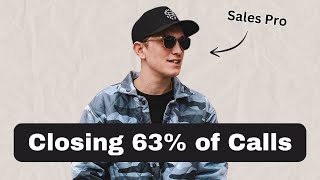
Jared raised his sales closing rate from 38% to 63% in one month under coach Christian Polk's training. He took fewer calls but nearly doubled commissions by pulling out root problems, pre-handling objections, and reframing how clients saw themselves. The shift treated sales calls as leadership conversations, not checkbox scripts.
Questions this video answers
Before: 38%. After: 63%.
He took 11 fewer sales calls.
He nearly doubled his commissions that month by collecting more paid-in-full sales.
NEPQ portal, Seventh Level (Christian Polk videos), Bill Walsh free school community, and paid scripts from Seventh Level; he said he paid "a hundred bucks" for training that produced large ROI.
You've. You've changed sales for me. My wife is so happy because I've talked with her for the last four years of.
Yeah.
Putting us in this position where we can actually make it, like six figures. And I told her so much, like, I will make 20 grand a month. I'll make 10k a month. Then I told her I want to make 50k a month. And.
Yeah.
Tried. So many different sales opportunities, and they've always fallen apart. And finding your training literally, like, shifted everything to where. Now when I tell her these things, she looks at me with, like, a glimmer. Glimmer in her eye.
Yeah.
He actually believes me.
Jared went from closing 38% of his sales calls to 63% of his sales calls in just under a month. And even though this past month he took 11 less sales calls, he. He made just under double by collecting more paid in fulls and just converting a higher percentage of people. So in this interview, we have a sit and we chat about exactly how he was able to make that shift as quick as he did. So pay attention, take notes, and please drop your biggest takeaway in the comments. Okay, let's go ahead and dive in. So I wanted to have this conversation because over the past month, you increased your closing percentage by 25%. So in, like, one month's time, like, going from the point where you just about doubled the commissions you're making, Right?
Yeah. Yeah. I was off by, like, 500 bucks.
As far as, like, doubling.
Yep.
And when we digged into the numbers, you had actually taken 11 less sales calls.
Yeah. Yeah. Which is crazy.
Yeah. So on the. On the. On the sales that you did make, were you selling just higher? Like the higher ticket one? Just more often?
It was a lot more paid in fulls.
Okay.
I sell the 2.0 more frequently, just naturally, because it's what I pitch.
Yep.
How our sales process is set up, but I noticed that I was just getting more paid in fulls because I was creating less friction on the sales call.
Yeah.
Well, what do you feel like for you. Because, like, let's just take it back before. Okay. So before you're closing at the right 38%. So it's not a bad close ratio. Like, just about 40% is. It's fairly good. So how are you closing, like, before, like, you started, you know, jumping in and doing the training.
Yeah. So I was just. I was following the, like, NEPQ framework in the structure.
Yeah.
But I didn't understand what I was trying to get from each phase in the script. And even now, if you asked me, I'd probably get like a B plus. I just know I need, like a problem. I need to have skills. I need to know what stopped them from moving forward.
Yeah.
And I need to be able to understand what they want personally and how it would feel if they didn't get it. I didn't really grasp that concept before, so I was just really asking questions just to, like, check them off the list. Compared to, like, really being in the conversation and trying to uncover a person's problem.
Yeah.
And what difference do you notice versus we're just checking off a list and actually having real conversations with people?
Yeah, they're more real. Like, I'm really, like, connecting with people. And it. It's crazy too, because I've had people like, thank me for a conversation, which is so weird. I never thought I'd get that from a sales call.
Yeah.
Thank you for allowing me to give you lots of money.
Yeah.
Literally. And then like, you know, just having people even compliment my sales process, just like how they're like, you're not like other people. I don't know. It was cool, man. It shifted a lot.
Yeah.
100. Is there like, as far as, like, because you had taken less sales calls, so you got more paid in fulls. Do you feel like the lead quality was just higher this time around or what do you feel like, shifted or is it about the same?
The lead quality? I think that's, to be honest.
Yeah.
It really was just like simplifying the entire process and just the understanding of what I needed.
Yeah.
That was really it. Because beforehand I was self jenning my own deals. This was actually my second month as like a closer.
Yes.
Last month. Not last month. In July. I was setting and closing my own deals. We just got a setter this month. Well, the previous month I didn't realize it, but I was creating like a lot of objections for myself.
Yeah.
Just not knowing how to ask the right question. Like, knowing how to go deeper to like, pull the pain out.
Typically, what objections do you feel like you're creating?
It was a lot of think about it and a lot of money.
Okay.
Yeah.
And what shifts did you make that just got those out of the way? Like, what do you feel like either, like the questions or what. What big shifts do you feel like you made?
Pulling out their problem was a big one. Just knowing exactly, like, what the actual root issue is when it comes to what they're doing. Being able to pre handle objections. So if someone has been putting it off for x Amount of time just being able to shift their belief around that.
Right.
So, like, coach them and pull out the greatness from them. And really, my presentation as well got a lot better.
Yeah.
I would get a lot of people who would be like, this is exactly what I'm, like, looking for. And, like, as a sales guy, like, that feels really good.
Yeah, no, it definitely does.
Feels way better.
So.
So then for you, like, what was, like, that moment? And I know we talked a little bit before we pressed record, but what was that moment for you that, like, clicked in your mind? It's like, okay, maybe I'm not doing this the best I could, and I need to take this more seriously.
Yeah. There was three big shifts. The first shift was when I came across you on YouTube. We paid a thousand bucks for a script from seventh level. And I saw one of your videos. It was. Remember which one it was? But it was a thumbnail with you and Jeremy Minor. And I was like, who is this guy? Why is he a Jeremy Minor thumbnail? Like, what is this? And when I saw you were a coach at seventh level and you were breaking down everything, I was like, holy. Like, this isn't. Like, I don't. What I'm doing is not right. I need to pivot here. And then that really big shift was just understanding the main principles underneath everything. What am I trying to get from my questions and why do I need it? Because you need to. Sometimes people don't follow your script, believe it or not.
Yeah.
So you gotta be able to, like, pivot around with them. And that really helped me feel a lot more confident too, because a lot of things with this sales process is mindset. The big shift, the third shift was when I heard you talk about sales being leadership.
Right.
Because I recognize that. I don't know if other people feel this way or have felt this way, but I was nervous to ask the consequence question.
Right.
I don't know why. I was, like, uncomfortable.
Yeah.
When you said that sales is leadership, I was like, okay, well, what does leadership actually mean? Well, if you want to be a good leader, you have to be able to lead yourself. And like Cole Gordon says, you want to have a high, say, do ratio. But outside of that, I think the main thing that is being willing to get uncomfortable when I'm asking my prospects to change by being comfortable myself, by asking the tough questions, reframing, free handling. And that was really, like, what created so many objectionless closes. It was insane.
Yeah.
The pre handling is a big one. And before, like, honestly, before I started Coaching so many people. I didn't realize that people would just let some of these belief systems that people had, like on calls just go on by.
Right.
Like they want to address them. And like reviewing a lot of calls, like, I would just notice this like over and over and over again. So what, what have you found? Like, the difference of one, now actually being able to identify these limiting beliefs and then two, like, how right now do you actually go about addressing them in your, in your conversations?
Yeah. So there's really a couple things I look for and it's all based off of what you taught. It's just like when you ask the solution awareness question of like, what prevented you in the past from actually getting like outside help? So when I ask that question, if someone tells me, like, time, money, fear, they've been comfortable, they're lazy, they're procrastinating, it's just like clarifying like where they're coming from, trying to understand a little bit more about like what they mean by that. Because like you say, you know, when someone says money, it could be they literally have zero dollars or they could have the money. They're just fearful to part ways with it.
Right.
You kind of need to know exactly how to handle that. And then it's just like calling them out on it, like asking where the belief came from.
Yeah.
Why, why are they allowing that belief to hold them back? I really, I really love using analogies because we're, we think visually. So when you can use quotes from different people or paint a picture, it really resonates deeper. And when it comes from someone that's not you. So like if I'm using a Tony Robbins quote.
Right.
Or I'm using Michael Jordan, like it's more powerful because it's not me.
Yeah.
Someone they put on this like, pedestal. And so through that process, they really start to look at their challenge a little bit deeper and just differently. And then when you ask them if it's worth keeping and then consequence, it just right there automatically. There's just so much buy in that's bought.
Right.
And what's crazy too. I don't know if it's what's crazy. What I recognize on the calls, especially for what I'm selling. It's a coaching call or just product.
Yeah.
It's like the coaching starts now.
Right.
A lot of times people are looking for that. So 100% to get in there and do that. People love it. They're so grateful for it. Which breaks every preconceived notion you have when it Comes to like talking to somebody like that because you would think they're gonna be pissed off or they're not gonna like it or.
Yeah.
Whatever the case may be.
Yeah, that, that's the big thing that like I try to get across is people are looking for coaching. So the very first coaching call is going to be the sales convers. If you're not leading that person, then when we allow them to think the same way that's just caused them to need coaching, we let them off the call with that same belief. Like on some level, like I've let this person down. Because before you started like actually identifying these, like what were some of the beliefs, like you just let on by. And then how did that show up like later on in your sales conversations?
Yeah, I mean all of them. It was every. Someone told me they're comfortable and I'm like, in my head I'm like, oh, they're on the call for a reason. They're ready to go.
Yeah.
We get to the end of the call and I ask for the deal and they tell me no. And I, I don't know why, where it comes from.
Right.
And I really like, dude. I genuinely believe people don't even know why they're saying no. They say it's money, but I don't think they recognize that it's not money.
Yeah.
They're fearful or they're comfortable or they have these thoughts and these patterns of behavior that hold them back.
Yeah.
And so when you can show that to them, they can recognize it in themselves. When it comes time to make a decision and it completely shifts the way or where the conversation goes.
Yeah, absolutely. The biggest thing I always try to get across, people think by talking oftentimes like they're not sitting here thinking about they're limiting beliefs, like what's really holding them back, like why they feel the way that they feel. Oftentimes they don't or it doesn't really come across very often. So as a salesperson, if I'm able to direct what they talk about, I direct what they think about. So then I direct their decision making process for the best thing for them. Because it's always in their best interest. Because if there's like a limiting belief like holding them back from getting their goals, then it's like it's our job to find it and just show it to them. And if we show it to them and we can challenge that. Like oftentimes like once you shine light on it, it goes away and then they're able to then Move forward. And typically, what I found for me and other people I've seen is for the person who can actually challenge their limiting beliefs, first we can identify it, but then we can challenge it. You said bring the greatness out of people. How they view us completely changes.
100.
So can you walk me through, like, what do you feel like the difference is of how people actually view you now on your sales conversations, being able to find the right problems, being able to actually challenge them on the limiting beliefs, how people view you now versus how they did, like, previously?
Yeah. There's a lot more trust as, like, the trusted advisor and being the guidance counselor and, like, being the coach. Because, like, we were talking about, like, they're on the call because they want to coach. And I think really the main thing of what that stems from, though, is. Is. And it's kind of off topic, but not. It's like how I viewed myself first.
Right.
Because then how I viewed myself transferred into how they view me.
Yeah.
And if I didn't view myself as a coach first, how can I push that off to other people?
Yeah.
In order to get them to buy into being the coach, though, I've noticed that at the beginning of the call, when I use, like, hooks, like, the taking orders of taking action, it really just shifts of, like, okay, this guy isn't gonna get away with some crap. Because at the end of that, like, whose job is it to take responsibility and take action?
Right.
And then you just pause, and they're, like, supposed to answer this like, yes, they tell you, like, me, and you're like, cool. So you go into everything else, but those moments where you ask those questions, there's almost like a shift in the energy.
They.
They really, like, I don't know, they just buy into what you're doing a whole lot more.
Yeah.
And when you. When you say hooks. Right. Because some people might not know, and it's something that I dive into. But, like, what are hooks? And typically, what are the hooks that you use on a sales call?
Yeah. So a hook. So, like, the taking order to take an action, one that's a big one. I use. I sell a biz op. So a lot of times I'm talking with someone who's going from employee to wanting to be a business owner. So the way that works, you know, when they say, like, I'll ask, like, what's coming up for you that makes you want to look more into, like, owning your own online fitness business, they'll say, oh, xyz. Tired of how much time I Don't have. And I'm like, you know, that's why I love working with Reuben because, like, I get to talk with people like you who are going from, like, taking orders to more taking action, from more like employee to business owner. Because then at the end of the day, like, it's a different mentality. And if you don't like where you're at and you want change, like, whose job is it to. To take action and then they'll answer. So the hook, the purpose of it, it allows them to be more suggestible, but also puts you in that authority position. The standard of the conversation of, like, this is the kind of conversation we're going to have.
Yeah.
You don't have this kind of conversation. Let me know now.
Yeah.
That way we can just get out of the way. And it just makes it more smooth.
Yeah.
And it comes down to, you're there to help them shift who they actually are. You're not there to sell them a program. You're there to shift their identity from being that guy who is a, you know, nine to five person who is in a job to being an actual business owner. Because have you noticed a difference between, like, you actually selling to somebody's identity versus, like, how you're selling before?
Yeah. Yeah, actually 100%. Especially in objection handling too.
They're.
There's so much more motivation and pull from them. There's more excitement from them, and it just. You can feel like a shift. And there's been a couple people where, like, I could literally see them visualizing themselves as that person. Like, just like this glimmer in their eyes. Cheesy as it sounds.
Yeah.
But it's just the truth, you know, because at the end of the day, I think as humans, we want people to speak to our greatness. We want someone to see our potential. And sometimes we need someone to pull it out and recognize it. And that's just kind of what it comes down to when I'm on a call with them or what you've taught is, like, it's okay to pull that from people, even though it's a sales call.
Yeah, absolutely. Like, you're excited for them and you're. You're that person who's in their corner. And the way I always think about it is you're like an older brother.
Yeah, right.
Like, you're. You want what's best for them, but you're not going to accept their right of. I know you can do better. We both know you can do better. And if I tell you, if I let you off this call with the same belief that you have that's been holding you back. Like, I'm letting you down. So it's like more of that way of like, I want what's best for you, but sometimes it's a little bit of tough love if they need it.
Yeah, well, because I've heard you talk about it too. Like, how would you talk to a friend in like, I don't let my friends get away with that shit. Like, if my something, I'm like, bro, what are you doing? Like, why are you this way? You told me you want X, but now you're doing why? Like, what the heck are you doing?
Yeah.
Why would it be any different if it comes to me, like on a sales call. It doesn't, it doesn't.
People respect you. They respect you for it. Because if you hop on a sales call and you allow somebody to lie to you, like, what are they going to do when they, when you get.
To the objections, keep lying, but they're not lying to me, they're lying to themselves.
Yeah.
And so, and then from the way that you shifted in the discovery, like how you're asking questions, how you're connecting now, I know you said you're getting more objection as closes, which is great, but we're never going to get 100% objection as closes. So how has objection handling been different as far as, like, how you're able to connect, but then also like the different ways that you, you, you know, you go about it as far as, like, you know, handling it to their identity or just different ways you've been going about handling the objections.
Yeah. So beforehand I really didn't have a framework to handle it. It was always, let me get confirmation this works and then I'll just handle it logistically.
Yeah.
Rather than shift a belief, get on.
And why is just trying to handle it logistically a trap?
Because it's not always the logistics. But also at the same time, there's really a belief behind why they're saying no.
Yeah.
Don't get them to change the way they view the belief. Then if you handle it logistically, like it's not going to work as much as it would otherwise.
Right.
And there, and there are some people you can just get over the edge logistically. But if there's a lot of people who have a belief underneath that, oh, well, I don't have the money, like, they're throwing their hands up like, oh, I give up. And if they hold onto that belief, it doesn't matter what you put in front of them, like, is that person ever going to move forward?
Right. So what.
What have you. What have you been doing differently that's helped you shift people's beliefs behind their objections?
Yeah. Well, it's just the framework that you've been teaching with the going through, clarifying and then asking, like, a kind of a confusing question. Right. Like, what's the problem, the symptom? And just kind of calling it out, you know, of, like, if. If you knew how to do X, Y and Z, would money be the challenge for you? So, like, really, what's the problem? Or what's the symptom here?
Yeah.
And then from that point, like, asking them, like, are you committed to solving the problem and then consequently seeing if they don't. Because most people focus so much on what they can't do, they forget how powerful they are when they focus on what they can do.
Yeah.
Which it's funny because when you start going through, like, all the material that you teach, I started using a lot of this stuff on myself.
Yeah.
Like, oh, I used. I used to think this way. I would think this way. Like, so breaking those beliefs really started from breaking my own limiting beliefs, too.
Yeah.
Yeah.
That.
I would say that's a big thing because if you, if you accept it for yourself, you can accept it from other people. But then once you start to realize, okay, these stories that I'm telling myself are complete and I can walk myself through that. That story they're telling themselves also bullshit, too. And I can walk them through that process. And if you have that connection with them and they can feel that you want what's best for them. Right. Like, typically, how is that experience, like, you really helping, like, shift somebody's beliefs, especially when you're having hard conversations.
Yeah. Surprisingly smooth. Like, I used to be really fearful of those conversations because you'd feel like they might get combative, like someone get irritated. But the worst that's going to happen is someone's going to hang up.
Yeah.
Or if you're coming from a really good place, people are willing to sit there with you for 30 to 45 minutes and go through, like, objections with you.
Yeah.
And like, two days ago, I spent a good 40 minutes with this guy just going back and forth and objection. Handling, like, talking about identity, what he's been doing for the last five years, how he's holding himself back. And I, like, I just couldn't get him to shift. And he made a commitment to change, like, later next month. But at the end of that conversation, like, we came together as friends.
Yeah.
Right. And now I'm like, sharing with him different books and stuff like this to, like, really, like, encourage him. But it's just created less friction in the conversation and it really allows you to connect deeper because of the trust you're building.
Right. Yeah.
And I would say the biggest thing is in your objection handling. It's productive. I, like, there's been so many times I've been. Objection. An hour, two hours, like three hours plus with some people, like, I'm not going to give up on you. And if they feel that, like you're not giving up on them for them, it's not for us.
Yeah.
Then they're more willing to stay on the conversation. And their willingness to stay in the conversation, they're also subconsciously telling themselves that they know they need to change that.
Right. And.
But for whatever reason, there's something holding them back. And if you're not the person who has that conversation with them, the tough conversation, is that person ever going to change?
I don't think so.
No, probably not.
Right.
So then it's our job to just make sure, like, we can get that person to change. And there's been so many times, like, it be like three months, six months, a year, two years later, and people like, you know, reach out to me and it's something I told them in objection handling. Like, they'll be like. Like, that really. That really hit me and that. That made like, the biggest difference. Like, because at some point. Right. You've run out of, like, the certain talk tracks to say, and you're just speaking to somebody's soul. Especially if you're on the call for a couple hours.
Yeah.
And just builds a type of connection that's like, people don't have conversations like that.
No, not at all. Not at all. And I don't care who you are. Like, those are the conversations you want to have, like, deep connection conversations about. That matters.
Yeah.
Because a lot of the stuff we talk about on a daily basis really doesn't matter.
Right. At all.
And when someone's getting on a sales call, they're really, like, telling you their hopes and dreams, man.
Yeah.
They're like, sharing with you the personal aspects of their life that they want from the goal that they have. And so when you are in objection handling what you're pointing out is the thing that's always held them back their whole life.
Yeah, yeah, yeah.
That's good, man. And have you done, like, any training? I know you we talked a little bit, but, like, what type of training did you do before? Like our training?
Yeah, a lot of like YouTube stuff. I've been through the NEP Q portal.
Yeah.
I got that from a friend. I never finished it though. Then I went into like some of Bill Walsh's stuff in his free school community.
Yeah.
But outside of that, I've never actually done something as in depth of what you're doing because I've never actually like paid the money for it, to be fair.
Yeah.
So then for you, like, what was it finally that. Just that switch in your mind of like, okay, now it's time to invest myself and actually like do the thing.
Well, I mean, I've always wanted to, but there was, there was nothing really that like I connected with on a deep enough level where I'm like, this makes a lot of sense to me because there's. I don't know, does that make sense? Because I think there's like, there's different ways to sell. But also I'm at the point where like, I know exactly what I want to do and what do I. What I want to accomplish. And I was so focused on making like 10k a month.
Yeah.
Constantly where I was like, I just want to make 10k a month. And then, I kid you not, bro, I shifted my mentality. I remember looking at my wife and I was like, hey, I think I'm thinking too small. Like, I need to be thinking about making 50k a month. Because if you shoot for the, for the moon, you fall on the stars, right?
Yeah.
In the second I did that. A couple days later, I found you. You launched a school community. And what does it say in the school community? Teach you how to be a 50k per month sales guy.
Yeah.
And I was like, it's just like the moment I started thinking big picture, actually shooting for something that felt unattainable. In the moment, everything really like fell into place.
Yeah, absolutely, man. So is there any type of advice you would give to people who are like, really wanting to get to that spot?
Yeah, man, just go all in. Just go all in. Like, there's literally nothing better you could do with your life than develop a skill set that's going to serve you, your family and the people that you work with. Like, I have a. I have a two year old daughter, she's going to be three soon, recently married. And I know the type of life that I want to live and it's never going to happen unless I actually take the action to do it.
Yeah.
And literally for a hundred bucks, I doubled my commissions almost doubled my close rate. And I know it's just going to be consistent and it's going to grow from there.
Yeah.
100, man.
There's nothing that's going to hold you back by yourself.
Yeah, cool, man.
Well, it was a good chat. I think we could probably, like, end it here. All right, cool, man.
Literally, man, like, you've. You've changed sales for me. My wife is so happy because I've talked with her for the last four years of, yeah, putting us in this position where we can actually make it like six figures. And I told her so much, like, I will make 20 grand a month. I'll make 10k a month. Then I told her I want to make 50k a month. And, yeah, tried so many different sales opportunities and they've always fallen apart. And finding your training literally, like, shifted everything to where. Now when I tell her these things, she looks at me with, like a glimmer, glimmer in her eye. Yeah, she actually believes me 100%.
Yeah.
If I go any deeper, I probably will cry, to be honest. I don't want to cry on that, but, yeah, you've changed the fucking game, bro. It's crazy, dude.
Yeah.
I really appreciate it, man.
Yeah. Okay.
More from Christian





Comment “LAZY” and I’ll send you how I’m making $100k/mo in sales working less than 4 hrs a day





