How "Story Selling" Is the Fastest Way to $88k/Month in Commissions (Cheat Code)
A YouTube talk by Christian Polk explaining how storytelling on one-on-one sales calls can pre-handle objections, shape prospects’ focus and emotions, and dramatically raise close rates (he reports 70–80%+). Polk gives practical guidance: when to use personal stories, an actionable story flow (situation → friction → aspiration → approach → realization → transformation → consequence), timing within a call, embedded commands, price-anchoring, and how to tailor stories to prospects’ pain and desires.
Chapters
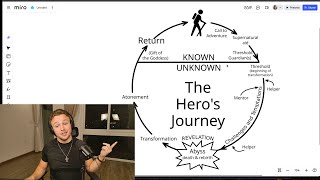
Using storytelling on your sales calls is an absolute cheat code to pre handle objections and close over 80% of the people that you're talking to. Personally, I've closed over $8 million in sales on other people's offers, maintaining a 70 and 80 plus percent close rate. And one of the big secrets that I always use was being able to effectively storytell, to pre handle objections and to get people to open up to me more emotionally. And not only have I used this, I've taught this to dozens of other students in my mastermind like Nitesh here, who went from basically making Nothing to over 57,000 per month, closing 80%. And one of the big things he uses is storytelling to be able to pre handle and overcome any objections. And this is something that I don't see any sales guru out there talking about. And if you learn this, it is an absolute cheat code. So what I'll be showing you today is exactly what storytelling is, how to use it, and how you can actually start applying this to your next sales calls so you can start closing more deals. Okay, so, so pay attention. I'm going to drop some hot fire. Let's dive in. So I first actually was exposed to this by Matt Rider. He is one of my former mentors. And really when I did a deep dive into understanding storytelling better, really learning from people like Tony Robbins, Eli Wilde, Myron Golden, Dan Henry, people that are really good one to many sellers. And then also deep diving into like script writing, the hero's journey to really map out what a good story is. And how do we actually get people to buy into our stories and, and feel the emotions that we want them to feel. So when we dive into storytelling first, why should we be using storytelling on our calls? Okay, so what is the point of the story? The point of the story is to get people to be able to relate to you. They can trust you, especially morally, and tell them that they can do it too. You open them up to you more emotionally and you shape the answers that they will give to the questions that you're about to ask them. So really, anytime that you're telling a story, naturally somebody puts themselves in the position of the protagonist. Okay? We all do this just instinctually as humans. Okay? So if I want them to feel a certain emotion, I'm going to take them through a journey through my story that gets them to feel that emotion by me or somebody I know or somebody who went through the program, them feeling that emotion. Okay, so when you should have a personal story and when not to when you should have a personal story. If you have a story that specifically is tied into what you're selling, if you're an owner, you're a product of what you're selling, use a personal story. For example, when I was selling for a sales training company, right, where I had went through the program, like many years prior, I talked about my own personal experience going through the program and how it got me to where I was now. Okay? Also, if you're an owner of what you're doing, you can talk about your personal story to really convey who you are, what the whole program's about, what the whole business is about. Okay? You can do it if you're not a personal product, but you have to make it clear that the sales is your dream, right? So for example, if you are selling a biz op offer and you are a salesperson, right, like you don't care about dropshipping, you have to make it clear that you're in the online space, but not this part of the online space. You can either make it about yourself in that instance and just make it clear that you're not really into dropshipping, you're more into sales, but you talk about how you invested and everything you had to go through, or you talk about somebody else that would that did go through the program and got the results, either the founder or somebody who bought the program. Okay, when should you not do this if you don't have the process down? Okay? So if you are just using this to just basically, you know, not have to be good at asking questions or understanding where people's pain points are, or just understanding people in general, like, don't use this, okay? This is not just a, I say a story and then people buy, but it does help you really shortcut the process. Okay? Also, do not use this if you do not have a well thought out story. When we're talking about stories, okay? Just in general, human beings are geared towards really loving stories, but human beings also understand what a good story is and what a bad story is. Okay? People spend millions of dollars each year on different types of movies and script writing, all this shit. It's like we're inundated with this stuff. So if it's a bad story and it can't keep people's attention, right? It's not relevant to them, don't use it. You actually have to think this thing through. Okay, when to put it in? Typically I'm going to put in a personal story after future pace after I understand where they're going towards, okay? And before consequence. And if you've seen some of my sales calls, you've seen me do this. Exactly. And I'll use my personal story as an example, like, running through, like, what it actually looks like. Okay? So understand a few things. When it comes to your personal story, it is not about you. It is about the listener. Okay? People do not care about you. They care about what you can do for them. Okay? So when you are crafting your personal story, you never want to get into a point of, hey, who cares? You want them to be thinking, me too. For example, if you have something that is a unique life experience, like, let's just say, for example, I don't know, you moved to Vietnam, right? Like I did. I need to relate that feeling to what this person would be feeling or what they could relate to. If nobody's ever, like, moved to Vietnam before, they're not really going to relate to that part of my story, but they can relate to me doing things that are outside of my comfort zone. I always have to make sure I tie it in because it's not about me. People don't care about you. They don't care about me. They care about themselves and they are the listener in this instance. So I would say general guidelines. Keep your personal story to, like, five minutes max. I have seen people use personal story in sales and they'd be longer, but those people tend to be very skilled and they know exactly how to weave it in and keep attention. The length of time does not make a story better. Okay? This is what a lot of people think, okay, if I just have a really long story, then it'll be better. It's like, no, because what will happen is if you don't have a very well thought out story and it's very long, people just tune you out because you're not good at what you do. You can have an effective one minute personal story and an effective five minute personal story. Start off short. Expand as you practice more. When you get used to storytelling, just like me getting used to screaming into my computer, you get better at doing it. Okay? So typically, starting off with a smaller personal story, a shorter one allows you to get the reps in, and it also makes it to where it's like. It doesn't have to be as well thought out as a longer story, because the longer story, the more thought out it has to be. And the skill set needs to be higher. Okay, why? Because you need to have somebody's attention for one minute versus five minutes. Okay? Five times as long as we need More skillset in order to do that. Okay. And here is an example of the hero's journey that I was talking about. When we're talking about the script writing, I'll go a little bit more in, you know, in depth on the actual like building blocks of a good story. There are four building blocks. Recognize what is this person feeling? Relate. Have I experienced these emotions? Resolve. What do they desire to feel? Shape. What do I want them to focus on, especially for consequence. Optionally, you can pre handle common objections or use embedded commands. I'll cover those later. But the very first thing that you need to understand, the people that I've seen give the best stories are people who are selling one to many, right? Tony Robbins, he's really, really good at giving personal stories that uses embedded commands and gets you to believe certain things because you put yourself in their position. But the beauty, and this is why I really like using it in one on one sales situations is your personal story molds and it shapes and it really expands to whatever the person who you're talking to or whatever is going on in their life. So you can relate parts of your personal story to whatever is going on with them. Okay. Because again, as human beings we don't just have like one emotion to one certain event. Okay. For example, like my personal story, like again like I wanted to go out and get in sales, I did that, I moved to Miami, all this shit. And I'll, I'll dive more into it. But if you are somebody who's like very ambitious, if you're on my, if you're on a call with me, I'm selling you. I'm going to highlight that part, right, of me being really ambitious, but me coming up short. If you're somebody who wants certainty, I'm going to talk about that part of me having high months, low months, and I had no certainty. I didn't really know how to go ahead and make rent. I'm going to highlight certain parts. So this stuff right here, being able to recognize and relate to the person is super, super key. And you can really only do this in one to one sales. That's why I love it. Also a big component that we have to be thinking about when we are crafting a personal story is what do I want them to focus on. One big component of persuasion is focus. If I control what somebody focuses on, I control what they think. That's all persuasion is. So when I'm thinking about my personal story, I'm really thinking about what do I want them to focus on. Especially for consequences. Because that's typically how I'm going to use a personal story. I want to shape how they view. There are consequences if they don't do anything about this. So I'm going to sit and I'm going to think, if everyone I talk to had this exact consequence, what that. What would that consequence need to be for me to be closing 90% of the people I talk to? And if you get that answer down, then that's how you then craft your personal story. You have the end in mind and the beginning of how you relate and how you recognize that is going to shift. I'll go through, like, what a good story flow is. You don't need everything in this. You just need most of these components. Okay. You can skip certain parts if you have a shorter story, but this is what a good story flow is going to be. Okay. Situation is a start. We have friction, aspiration, evaluation, realization, evolution, and shape. So things that we need in our personal story, like number one is we need clarity. It needs to be easy to understand. When it is overly complex, it's not thought out. If you've ever heard somebody talk about a story and they're like, there's all these confusing people, and it's not in chronological order. Like, dude, you just tune out. Same thing with you, man. Right? Like, it needs to be clear. Engagement. Does it fall under who cares? Or me too? Again, if your story is, like, unique and not a lot of people relate to that specific experience, it needs to always relate to the feelings that makes it relatable. Or you just don't talk about the very things that are unique. That's not going to relate to a large swath of people. Again, the story is not about you. It's about the listener and the journey. Does it show that you can be trusted with a personal story? You're really opening yourself up emotionally. You're opening yourself up and you're letting them see beneath the hood. Now they have to like what they see beneath the hood. If, like, you show and you really express yourself in a personal story and it shows you're untrustworthy, like, bro, they're not going to buy from you. So that's going to be pretty basic. So I'll run you through a personal story that I use on my sales calls. Each stage so very first is like the start of the personal story. So you open with really quick. Hey, can I share a quick story? Simple, easy, to the point. They're gonna say yes, right? I've never had anybody say no. You can't share a quick story, right? It's never fucking happened. Okay? Then you hop into it quickly, you make it relatable and then you wanna paint a scene. Now you don't wanna have this long prelude to, well, back when I was born, like, no, you just hop right into the fucking good stuff, right? Like you, like nobody again, nobody cares. So for example, like my personal story, like hey, can I share a quick story? This is for example, if you hop on a call with me, I'm selling you sales training. This is a type of personal story like I would use. Now you can go back and you can listen to my sales calls and see the personal stories that I use. And again, it's going to mold to the person that I'm talking to. This is just something more general so you can see how this actually works. Can I share a quick story? I can understand where you're coming from, you know, being up and down with your sales. When I first hopped into sales like five years ago, I had no clue what I was doing. There wasn't this whole online space and the whole world is just shutting down. So I just got into a remote sales shop and decided like any impulsive 22 year old, I would pack up my bags and then move from Kansas to Miami. Again, this is all true to me. I will say in general, I wouldn't lie in your personal story. Most people can feel that. Now if you're a sociopath, then like go for it. Me personally, like I'm not, right? So it's like I'm going to be truthful in my personal stories and I'm just going to choose to highlight the things that are important to them, right? So in this example, the start is, hey, I can appreciate where you're coming from. Being up and down with your sales. This is for example, a lot of the people that I'm going to talk to, their sales are up and down, right? So I'm going to relate to my story when I was feeling up and down, which was five years ago when I was 22 and I just moved to Miami, just got into online space. Friction, conflict. Explain the conflict and why it's a tough situation. Explain the thought process. Help the listener understand your conflicted feelings and why this is so important. Because like most of the time they're going to be feeling something pretty similar to you are. And you can actually walk through your thought process on what you're feeling and how you can actually overcome these emotions. Again, that's how we can start to pre handle because they'll put themselves in your shoes of your conflict. That's going to be pretty similar to theirs. And they can see how, you know, you overcame it and got everything they wanted. But let's start with friction first. Conflict. So after I explain how it started, then I'm going to go into the conflict of it. As you might imagine, Miami is pretty expensive city. Now, I had some natural talent, but my sales were up and down. Some months I would hit 10k per month of commissions. Other months I would hit 3k per month. This created so much uncertainty for me. And the problem was I was living my life like I was making 8,000 per month consistently, which was not the case and had gotten me into some debt and stress that comes with it. Again, showing the conflict. Why is the conflict. Why was what I was running into a problem? And is it relatable to probably what they're facing? They're up and down with their sales. I'm assuming they're going to be able to relate to like, hey, high month, low month, but like, I'm living like I'm a middle month, but like, some months is just not there, which is exactly what I found myself in. Aspiration, desire. Further, explain the dilemma by describing your desired outcome. Help the listener understand frustration where you're coming from. Explain the importance of the goal. The listener should want the goal with you. Again. And I'm also going to relate my goal to what I'm going to assume what their goal is. And again, if I'm a salesperson looking to get better in sales, I'm talking to a salesperson looking to get better in sales. I'm going to relate that. So let's dive into it. And back then, my biggest goal and what I was really running towards was 20,000 per month consistently. And to me, it seems so far away. And coming from where I did, where nobody around me achieved anything great, 20,000 per month meant success to me. And I just know someone had to have figured it out. Again, I'm repeating back some of the desires and maybe some of the thoughts that they've had when it comes to, like, dude, somebody's had to figure this out. And again, especially if they come from a background where it's like they're the first to, like, try to make some money, like in their family. Again, I'm relating it back from my situation to theirs. Approach, evaluation. Explain the decisions you made. Explain why you made them. Discuss a plan. Discuss the feelings that you had at that moment. This is when you actually walk them through the process of you making a decision. And this is a really really easy way to actually pre handle objections when you do so for example, and back then online programs weren't really a thing like they are now. And the things just weren't really structured. But I found someone like I felt like had the knowledge I wanted and he was asking for $30,000. Now I've never spent that type of money before and it scared me shitless. But I had the thought if you want results you've never gotten before, you need to do things you have never done before. And I didn't have the money, but I knew I could find the money. So let me just break this down a little bit more. Few things that I'm using here is embedded commands. So what embedded commands are basically through your story or through like what you're saying? You're basically talking to the listener directly. But I used it in the guise of I'm talking to myself. It's a self quote so I can be a little bit more direct. But this really passes the conscious mind and talks more to the unconscious mind telling them like hey, if you want results you never got before, you have to do things you have never done before. Talking directly at them. I'm being very direct. I'm also price anchoring because I'm going to ask for less than 30,000 price anchoring using embedded commands saying that they need to take action. And then I'm also saying I didn't have the money but I knew I could find the money. Again, these are three things that I'm starting to use now to pre handle the money. Objection. Because for what I sell, that is the biggest objection. I'm going to run into people who are fearful about spending the money. Now depending on what you sell, that might not be the biggest objection. Maybe it's a partner objection and you might want to really craft that into your story about how you know you didn't have to talk to your partner about investing in yourself, whatever it is. But you can start to see how you can start to pre handle these objections. Realization transition. What did your story teach you? It should create a future mindset that you want the listener to adopt. Problem. We saw a way out. What's the actual end result? Example. So I dove all in and I made sales my whole world for months. I hit my first 20k per month after three months and it taught me two things. Number one, 20,000 per month isn't that much money. And number two, the only difference of people making more than me was the right knowledge and Skillset to make it happen. What am I doing there? I'm inserting a few things. Number one, I'm telling them I went and I took relentless action. I want them to adopt that mentality again. They're going to see themselves in my shoes once I hit my first 20k per month after 3 months, again, short timeframe, which is also true for me. Right? Like, don't just be lying your ass off. Okay. Taught me two things. Number one, 20,000 per month isn't that much money. Is it beneficial for me to have them believe 20,000 per month isn't that much money? Number one, if I'm going to ask them for less than 20k, then yes. Number two, it also can make it to where they raise their aspirations, right? So the outcome and the the benefit can become so much more. Right. And number two, the only difference between people making more than me was the right knowledge and the skillset to make it happen again. This is something that's super, super beneficial. If somebody believes that, they truly believe it. The only difference is the knowledge. I'm selling knowledge, right? So they're gonna fucking buy. Okay? So again, it's more into shaping the beliefs, pre handling all the objections. You could be running into transformation. This is where you show the listener who you've become. Use this to describe the benefits of your transformation. Get to the emotion they want to feel. Again. When you are selling somebody, ultimately, yes, you're selling them a program, whatever it is, you're selling them something, a service, a program, but really you're selling them a feeling. When somebody wants to make more money, it's not because it's like, okay, me seeing like, like just the fact that I have more numbers on my screen in my bank account, like, that is what's going to solve all my problems. No, it's everything money can buy. But then what money can buy also gives me a feeling. It's really the feeling at the end of the day, the feeling of freedom. Whatever it is for them, ultimately they are searching for a feeling. That's why they're on the call. So I'm going to mirror back the feeling that they're really wanting to feel. And if you've done a good job in discovery, you should know exactly what this is and show them how I've gotten this feeling through, you know, my transformation. Now, since then, I've invested over $50,000 in sales development and I've done deep dives into psychology, identity, and how real people, you know, change. And that has helped me blow past 20,000 per month and reach upward of 60k per month. And that's why I'm obsessed with sales, because it changed my life. Now I'll never have to stress or worry about where money is coming from, no matter what, right? So for it, for that instance, let's just say for example, they had uncertainty, they're uncertain about where money is coming from. Good months, bad months. Then the feeling I'm really expressing back to them is they don't have that stress anymore. They are always secure because for me, I'm always secure in the money I have. Now, if they're more of like a freedom based person, maybe I can talk about me moving to Vietnam or me being able to travel wherever. Like it just depends on who they are and what they want. What part of my story I'm going to highlight. Shape, consequence. This one is, I would say the most important part because at the end of the day, now that I'm opening myself up emotionally, I need to shift it back to them to get them to open up emotionally about their consequence and get real, real deep emotion around consequence. Consequence is what pushes urgency. So if I can get deep, deep emotion around consequence, I can get this person to take action. So you open up about your consequences, you flip the story on the listener and get their deep seated wine consequence. And if you're able to get this on every single call, even if your personal story isn't all well thought out, but you get a deep seated whine, consequence, people will buy. That's what happens. Okay, let me run you through mine. And through it all, I've always knew what I was running towards, but I was really knowing what I was running away from. That really kicked it into gear for me. When I'm helping people craft their personal story, this is always a transition I'll use from like, hey, they talked about like what they're running into. They talked about everything they got. And then this is the easiest way that I've seen just to shift into talking about consequences. So then you start to actually talk about your real life consequences. And it should be tied to what they feel would be a big consequence for them. That would create a lot of urgency in them. So I need to think what would cause the person I'm talking, talking to to have great urgency and move forward. I typically talk to younger men. Generally speaking, I'm a younger guy. I attract younger guys into my program. Okay. I also have women and stuff in there too. And I have so many people who are older, but generally speaking. So I'm going To talk in generalities. My biggest thing when I was a younger guy that really pushed me forward that a lot of people can relate to is just being average. I grew up in Kansas around a bunch of average. I hated it, and that's what really drove me forward. And a lot of people can relate to that because, like, every single person I talk to, if they tell me, it's like, oh, yeah, I don't want to live with regret. Like, that person buys. So that's what I'm feeding to them every single time. And this will shape the type of consequences that they give me. So I'm going to go into it because I'm deathly scared of being average. So I had to have the conversation with myself saying, like, you need to go all in and take action. You will regret it for the rest of your life if you don't. And you will have the same pain your dad had in his voice every time he told you that you can have something or the same pain he has in his voice today of all the risks he should have took. But he didn't. So I have to ask you, like, what happens if nothing changes? Okay, again, right back on them. And there should be a shift in your tone, like, even talking about this right now, even though I'm reading through it, like, there's emotion behind it, because, like, this is real to me. I've had these talks with my dad, right? And I love my dad to death, but he's told me about all the risks he should have took him, but he didn't. And it's like, when it came to, like now, me needing to take risks, I did think about those moments of, like, me sitting and talking to my dad and him actually having the pain in his voice, or me growing up going to fucking flea markets and never being able to buy anything, right? We'd always window shop. My entire childhood, we bought one thing from the flea market, and it was for a dollar. It was a thing of cards, right? My entire childhood. And again, this is something like people can relate to, right? Like not wanting to live with regret or like seeing the mistakes that maybe their parents made or something along those lines or. Or somebody close to them and not wanting to make the same mistakes, not wanting to live with regret. And especially when you're living with. Or you're talking to a younger demographic, right? You really need to push urgency or they're not going to move forward. So that's going to be the story as a whole. Now, again, you can have something that's much More abbreviated, a one minute story that just talks about again, the conflict, the resolution, consequence easy. Or you can have more of a long drawn out like five minute like the one that I showed you. Again, start with the smaller first and then move your way up and you can add things like embedded commands and pre handling objections. If you're just going to start, really just use it to open yourself up emotionally to get them to open up emotionally. Then once you get more comfortable in it, that's when you can start to use a lot more pre handling. When we're talking about the embedded commands, this is a command inside a longer sentence marked out by voice, tone or gesture. So don't make it too obvious, make it smooth in your story if it makes it sound like super obvious, like people just think you're weird. So a couple ways that you can do it is this method, you can do it if you put if or it's hypothetical. So for example in your story or you're talking to somebody like if you really commit, if you were to take action, these are really easy ways that you can do it. Or this is what I'll do a lot is I will tell a story where I'm talking to myself, okay? And I'll put what I'm talking to myself basically in quotation marks. And I'm telling myself, you need to. And when I'm doing that, I'm talking directly to them. So I had to have the conversation with myself. You need to go all in and take action. You will regret it for the rest of your life if you don't. Again, I'm emphasizing the take action and I'm emphasizing the you and I'm speaking directly to you. So I'm putting commands into longer sentences that are more to bypass the conscious. Another way you can do it is third party. So if you're tell you're talking to some like you're using a story and you're saying this person said to this person. There's a really, really good example of Tony Robbins that he uses a story all the time, right? He says he looked my father directly in the eyes and he said, don't let your family suffer because of your ego. And again, what is this really trying to get across? Tony Robbins is talking to people about letting down their ego, asking for help, doing all this stuff. Don't let your family suffer because of that. So that's how he uses that embedded command, pre handling objections. Again, like the biggest objections that I run into is basically money, fear. So if you notice, I don't really talk too much about making decisions without my partner. Right. Which I did have a partner at the time, which I did invest in myself. I was the sole breadwinner at the time. But if I was talking to somebody who they had mentioned their wife or something along those lines, I'm going to add that part in right. Of like me talking to my partner and I made the decision without her, but like ultimately she trusted and it paid off. So it just depends on who you're talking to. So for example, when we're talking about pre handling objections, talk about making decisions without your partner. Fear. Talk about you overcoming fear. Money talk like use a price anchor. If I'm going to ask you for 10,000, 15,000, I'm going to use a price anchor that oh, this thing that I did was 30,000, for example. Or talk about you finding money. Okay. These are easy ways that you can start to weave in your personal story and really use it to pre handle objections. All right, now that was the quick and dirty on how to use storytelling on your sales calls. If you found that helpful, go ahead and like and leave a comment down below. And if you want to see me actually use that on a sales call that did close, by the way. Right. You can check that out here and I'll see you on the next video.
More from Christian





Comment “LAZY” and I’ll send you how I’m making $100k/mo in sales working less than 4 hrs a day





