The REAL reason you can't overcome objections
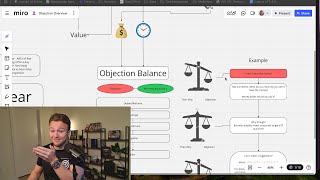
Christian Polk (speaker) presents a solo sales-training video explaining why most salespeople fail at overcoming objections and giving a systematic alternative. He asserts there are only three "real" objections—time, money, and value—and everything else is a smokescreen that should be funneled into one of those three. Key tactics: tie off value before revealing price, diffuse and clarify smokescreens, elicit the prospect's deeper "why," reframe (e.g., "what's riskier?"), use consequence questions to create leverage, secure a commitment to change, then negotiate payment plans. Polk recommends looping 2–3 times with increasing intensity, and uses a "nice vs kind" frame as a final push. The video is procedural, example-driven, and aimed at improving closers' mental model for handling objections rather than memorizing scripts.
Most salespeople think that mastering objections means memorizing scripts or word tracks. But they are wrong. After training hundreds of closers to not only double, but triple their sales and commissions, I've identified what separates top closers and their ability to actually overcome objections versus average closers. So in today's video, I'm going to show you the proven strategy that will help you identify what a real objection is, how to overcome it, but most importantly, why we overcome it in a certain type of way. And this is not just going to be focusing on word to word scripts. It's going to be teaching you how to actually think when you are in objection handling so you can become an elite closer. Let's dive in. So most people are focused on the word tracks of what you say when you get an objection. The prospect said this, what do I say to magically overcome that concern in their mind? Again, word tracks can be helpful, but if you don't understand exactly what objection you're handling, is it real, is it a smokescreen and why we actually handle it in a certain way, you're only going to be able to get so far in your objection handling and being able to close deals. The best closers out there, they're not good at handling a hundred different objections. What they're good at is identifying what the real objection is and funneling people to talk about something that's real to that you can handle and overcome. Because when we're talking about objections, the first thing you need to understand what an objection is. It's a limitation. And as a closer, you can't buy into people's limitations. Now, these limitations could be mental, right? Like fear of moving forward, or it could be logistical, like they have $200 in their bank account. But if it is something that is logistical, you still can't bind to their limitation of, oh, I only have $200 in my bank account, therefore I can't invest in myself. What you need to do is because you don't buy into the limitation because you want what's best for them. You need to get them to see, I have $200 in my bank account, therefore I need to go ahead and get resourceful so I can invest myself and change the situation. When somebody tells me their limitations, really it's not my problem. What I am going to do is get them to focus on, okay, you have these limitations, but, but do you want to change your limitations? And the only way for them to change their limitations is for them to change their circumstances. Okay, now when we mentioned what is a real objection. And what is not a real objection? There are only three objections that are real. It is going to be time, money, and value. Everything else is going to be a smokescreen. Now, I know what you're thinking, but Christian, what about partner? Well, what does somebody need to talk to either their business partner about? Or what does somebody need to talk to their wives or spouse? What do they need to talk to them about? They need to talk to them about the value, the money, or the time. Okay, but Christian, what about. I need to talk to some references. Okay, what do they need to talk to the references about? Value, money, time. It all boils down to these. Because everything else, as far as the objections, you really can't handle because they're not real. You need to get people to tell you what the real objection is and boil it down to value, money, or time. Of these three, the one that's hardest to overcome is value. Because if you've gotten to the end of the sales conversation, you've done your discovery and you've done your presentation and we get a value objection, they don't see the value. You're not going to be able to overcome that objection without going back into the discovery, uncovering exactly what's going on and going back into the presentation. So really, when we're taking a look at objections, it really starts at the presentation. You need to make sure your presentation is customized to them so they see the actual value. And before I drop price, I'm going to tie off the value. Why tie off value before we drop the price? Well, if you can eliminate one of these objections, either time, money, or value before we drop the price, it's going to make objection handling so much simpler. Because what will happen is when we do drop the price, then fear and uncertainty is going to creep into the prospect's mind.
Okay?
They're going to speed up their way of thinking and they're not going to be as clear when somebody is a bit fearful, especially if it dropped the price. And again, it's not something that they expected. I can't expect them to be talking and thinking rationally, okay? So I want to make it as easy as possible to understand exactly what their real objection is. Because again, it's either time, money, or value. So if I can go ahead and eliminate value before I even get there by tying it off before I drop the price, then that means that it makes it so much simpler because now it's just either money or time. And if you do something that is done for you like a Couple of the students that I teach and, and they don't actually have to do any time, then guess what? The only objection it could really be is logistical or fear money.
Okay.
But some people that are going to be doing coaching or things like that, they have to put the time in. Then time is always going to be a factor. But what you want to do is make sure you tie off value before you get to the price. Now, I know there are some people out there that say you can drop the price at the very top of your presentation, which again, you can do that if you feel like you're very good at actually identifying what the objections are. But most people who I've come across and who I've taught, they get lost in objection handling. So if you want to make it as simple as possible, tie out value before you actually get to the price rather than dropping price at the top.
Okay.
And it's really easy. How you can go ahead and tie off the value before you get to the price is, hey, before we dive into the investment, do you feel like with what we cover the structure of everything, we can get you from current state to desired state? You should get an emphatic yes. If you don't, if they seem uncertain, you can, you need to ask, hey, you seem a little bit unsure what's behind that. Make sure value is off the table before you go ahead and drop the price. And once you get a yes, oh, yes, I feel like it would get me to the desired state. You're going to ask them why. The reason you want to do that is you want a double bind. You want them to start explaining to themselves why the solution will actually get them to their outcome.
Okay.
Then from there you're going to have and drop the price.
Okay.
Do it in a way that ties in their desired outcome. And then you're going to ask for the sale. So they can only do three things. They are going to give you a smokescreen, tell you that they don't have the time, or tell you that they don't have the money or it's too expensive. It'll either be logistical or fear, money or time or a smokescreen, okay. Because you've already tied off the value. Now, once we get this, we just have to understand if we do get a smokescreen, let's say it's partner, for example, let's say it's, think about it. Let's say I need to talk to a reference. All you need to do is diffuse and get them to admit that it's either money or time, for example, if they need to think about it, you're going to say something like, okay, and that's not an issue. Just so I can send over the most relevant information to you. What. What's the biggest thing you need to go over in your mind just to see if I can help? Oh, well, it's just a lot of money or time.
Okay.
Or they'll say like, hey, I need to talk to a part, I need to talk to my wife about this.
Okay?
Not an issue. Just so I can send over the most relevant information. What's the biggest thing that conversation is mostly going to be about just to see how I can help. Oh, we just need to make sure, like the money works.
Okay?
So we're going to push them to, to a real objection and just understand people sometimes will not come out and just say like, hey, it's the money. What they'll do is you have to understand they will say certain things, but you have to understand what they mean. If they tell you that they need to go over the numbers, what numbers do they need to go over? They need to go over the numbers of the investment. It's a money objection. If they tell you they need to take a look at the finances, again, money objection.
The.
Okay, so we. If they mention anything about money, then you go down the money objection route, okay? If they mention anything about time, you go down the time route. And once you get the real objection, what you need to do then is go to what I like to call the objection balance.
Okay?
Because when you are in objection handling, you really have two things that you're dealing with. You have the objection and then you have why they would do it. Because what happens is when they first object to something, okay, their objection is so much greater in their mind to their why.
Okay?
The why they would do it. The why they would get the outcome. And your job as a salesperson is to level the playing field. But then we need to also get leverage on creating the why to make it bigger than what their objection is. That's the only way that we overcome it. If I don't have somebody's why, then then I'm going through objections blind.
Okay?
So I need to make sure I have their why. I don't put their why on them. I need to understand their why. And once I get them to actually start to focus on their why, that's when I can reframe or create a debate, like make a point. And then from there get leverage, get commitment, and then I need to create a negotiation so typically, how we're going to reframe, depending on what objection it is and is going to depend on what reframe that we use. But when we're talking about our reframe, we're offering a different belief or a different system, or we're challenging the limitation of what they have. Once we get them to buy into a different frame, a different way of viewing things, then we need to get leverage. And how you get leverage oftentimes is by asking consequences of if they stay the same, what's going to happen. Consequence is a great way to tie off loops, tie off reframes, but also create urgency in the prospect. Then from there, we need to go ahead and get commitment. And then if it's about the money, we are negotiating, like, what do they have available? So that way we can go into the conversation and create a payment plan for them if we need to. Okay, the problem is if we go and we get this objection, let's say it's a money objection, for example, and we go straight into negotiation, and we don't have their why. Okay, so their objection is so much greater than their why. So they're not going to be as resourceful as they would need to be. And if they're not as resourceful as they need to be, they'll either one, not come up with the numbers, or two, give you smaller numbers than what you need. And if you get smaller numbers, you're not going to get as much cash up front. And if you don't get as much cash up front, they're not going to be as committed on the back end. And. And if they're not as committed, they're not going to get the results. Okay, so let's take a look at an example of the classic, like, hey, I don't have the money. Okay? So first and foremost, what we need to do is we need to diffuse. Okay, not a problem. What do you mean by you don't have the money? You defuse and then you clarify, okay, money aside, would you do it? Now, the reason I asked that is because, again, I'm getting the why would they do it? I need them to contradict themselves on if you took away this objection, would you do this? So I'm getting them to start to focus on what their why is. Okay, why would you do it, though? See, we're asking one why question, like, why would they do it? But why actually invest in yourself to get XYZ outcome. The why that they would do the program honestly is not that important. What's the important why is why they would change. That's the why that we need. That's going to create the leverage so they can start to focus more on their why rather than their objection.
Okay.
Then from there, after we get them to focus on why they would do it, we go into a reframe. Simple, simple reframe that you can always use is what's riskier? So you're going to open up something like this. Can I make suggestion? So what's riskier at the end of the day? You keep doing what you're doing now and God forbid the situation gets worse. Or, or is it riskier? Is it riskier to remove that limitation? We find the money so we actually get the outcome. So they're going to say, well, it's riskier to stay the same. Okay, 95% of the time if they don't, there's some ninja tricks you can do to get them to fall into the frame. But again, for another video, okay, why is it riskier to stay the same? Again, I'm getting them to focus more on their why, their why they don't want to stay the same. And then from there, okay, now that we got them to bind to the frame, what we need is leverage, consequence. So when we go into the consequence, okay, what happens if you do stay the same? Typically, I'm going to ask two different consequence questions here because I really want them to dig deep and understand what's going to happen if things stay the same. Because somebody would say like, okay, what happens if things stay the same? I mean, I just won't get to where I want to be. I mean, some people are fine just not getting to where they want to be. So for you, what would be the day to day ramifications if that happens a year from now? Get a real deep consequence. Okay, Once we get a real deep consequence, and you'll know you've gotten a real deep consequence from the emotion. There should be an audible when they give you a real deep consequence. Once we have a real deep consequence, again, go over here. What do we need to do next? We need to get commitment.
Okay?
So it's not their commitment to, hey, do the program, it's a commitment to change. Because that's the important commitment. And you can do something like this again. You want to put money aside. Money is the easy part. Okay, I'm changing the meaning of what's hard because when they tell me they don't have the money, what they're saying is finding the money or, you know, spending the money. Is hard, but I need to change the meaning of. It's not the money that's hard money. Money's easy. The hard part is just committing to change.
Okay.
And you do it something like this. First and foremost, I always want to reward them if they're open with me. So it's like, I appreciate you being open with me. Money, that's the easy part. We can figure that part out. Again, I'm putting it to the side. The hard part is the commitment to change. So are you committed to do what it takes to change? Yes. Why, though? Well, I'm committed because of this, this, and this. Okay, cool. Now that we got that they're committed, that's when we can go into negotiation. Then and only then, because now they're in the right state of mind again, they're focused on their why they're going to be in a more resourceful state, and they just told you that they're committed. And now when it comes to getting to negotiation, I'm not going to sit here and say like, hey, we have these different payment plans. What works best for you? Now what you want to do is you need. Especially when you're in negotiation, the best place to be in negotiation is you understand what the other person has. And once you understand what they have, you're going to ask like, hey, if we can do this, does that work for you? Okay, so it goes a little something like this. So if you're committed, I want to see you win. Let's focus on what we can do, not on what you can't do. Bills, expenses aside, what can you do? Get a number out of them.
Okay.
Once you get a number, it's like, I typically will bump it up. They're like, oh, I have like, 2,000. Can you do three? I can do 25. Okay, well, if you can do 25 and you're really committed to change and you want to see this change, here's what I can do for you. So again, they have this, and they're committed to change. If you have that and you're committed to change, here's what I can do for you.
Okay?
So you're doing something for them. You're helping them. You're. That's the way that it should come across. Now, if we get to this point and you find out a payment plan that works for them, you understand exactly what they have, and then for whatever reason, they're not moving forward, you go right into fear, Fear, objections, and then you just basically go for it. Now there's tons of Things or tons of ways that you can go about handling fear, but a real easy way, okay, I have a couple different ones that you know, I've gone over here and they're different videos like on my YouTube. But when we're talking about fear, like it's basically identifying what the actual belief is. Listen to their language, understand the belief and customize your frames. So what you're doing is you're understanding exactly what belief it is. Are they just fearful of taking a leap? Do they think it's okay to wait a day to take action? Are they just unsure if, you know, have they never made an investment like this before? Do they always make decisions this way? Again, what is the actual belief that I am handling? And I'm going to customize my reframe to whatever belief that I am attacking, whatever limitation I'm attacking. Again, I'm going to get leverage, I'm going to be asking consequence and then I'm going to ask for the sale again. And then this is basically all you do is you just loop over and over again. Typically I'll do two to three times and I'll add intensity. Okay, I'll add intensity each time I go about it. Right. More intensity just means stronger in terms of my tonality and more daddy's home energy like as I go forward. Okay, again, don't go 0 to 100. Real quick, get add intensity as you're going through it. My very first fear reframe, it's pretty easy breezy.
Okay?
Most people, that's all they need. But some people need a little bit more daddy's home energy. So you increase it, you increase the intensity as you go through. Now depending on what you sell, you can either stop right there, let's say you did three loops your ejection handling for 3045 an hour and you're not making any progress.
Okay.
The conversations not being productive at this point. If you're selling something that's B2B and there is a higher likelihood that people are going to show up to a follow up call and actually close then I would say right then depending on your confidence for me I'll always just go for it. But depending on your confidence, book up a follow book in a follow up call and then try to get them across the line then for me or what I will do or if you're selling something that's more B2C and the likelihood of of people actually showing up to a second call, especially if it's a fear objection, is very low. What I'll do is what I call a nice versus kind frame. And then I will go for the jugular.
Okay?
So I'll be a lot more straightforward, a lot more hands on. Again, raising up the daddy's home energy. And now the nice versus kind frame. It's super simple. Now, again, depending on what you're selling, you might need to use a different analogy, but this is the one that I've always used because you again, mostly selling to dudes in sales. Okay? So you go through a couple different loops and then like, they're not moving forward. I'd be like, okay, do you know the difference between being nice versus being kind? And they'll say, yes, no, it doesn't matter. Okay, so picture this. Like we're out at a bar talking to some ladies and like, my breath stinks. Like, if you're nice, you wouldn't say anything because you'd be worried about what I might think or say. On the other hand, if you are kind, you'll pull me aside and you say, hey, dude, your breath is kicking right now. It's killing your game. Here's some gum and let's get back in there. Because you want what's best for me and you want what's going to get me the best outcome. Do you mind if I'm a bit kind right now? So then you're asking for permission to maybe say something that could offend them, but it's for their good, it's for their best outcome. Okay, Then you just bridge into again, depending on what you're selling, depending on the discovery, depending on the objection, handling like, you start being a lot more straightforward and going for the jugular. All right, hopefully you found that training helpful. And if you do want more word for word tracks on how to overcome objections, check out this video right up here and I'll walk you through my. My exact process, word for word on how I overcome any objection you're going to run into. See you guys in the next video.
More from Christian





Comment “LAZY” and I’ll send you how I’m making $100k/mo in sales working less than 4 hrs a day





