628 Growing an audience of buyers with Kristina Gandre - Instagram Growth & Marketing Coach
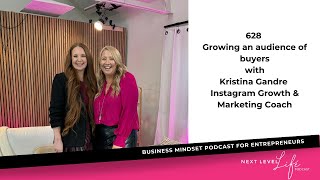
In this interview, host Christine Corcoran talks with Instagram growth coach Kristina Gandre about her personal journey from a wellness entrepreneur and former lawyer to a full‑time Instagram growth specialist. Kristina shares how a personal crisis motivated her to set an ambitious follower goal, leading her to grow an account from 2,000 to 90,000 followers in nine months and later launch a new account that hit 200,000 followers in 65 days with only 73 posts. The conversation pivots to the core philosophy of building an audience of buyers rather than vanity followers. Kristina introduces the “Idea‑Buyer Blueprint,” a framework that starts with identifying the specific problem a target buyer faces, then aligning content to that problem. She categorises content into three pillars – growth/viral content, nurture content, and sales content – and explains how each serves a distinct stage of the buyer journey. Practical tactics are covered, including: using AI (ChatGPT) for problem research, creating a spreadsheet of viral ideas, avoiding endless scrolling for inspiration, testing content with a short feedback loop, and tracking key performance indicators that Instagram doesn’t surface directly (watch‑time/completion %, skip rate, engagement rate, follow‑rate). Kristina stresses the importance of short, attention‑grabbing reels (5‑11 seconds) paired with valuable captions, and argues that likes are overrated while saves and shares are stronger signals of value. She also discusses mindset shifts – treating failure as data, persisting through non‑viral attempts, and recognizing that virality is a skill, not luck. Finally, she outlines her business model (the Instagram Growth Accelerator program) and how she supports students with live feedback, personalized engagement, and community building.
Chapters
I recently had the pleasure of learning from this incredible woman as part of a mastermind call that we had recently, and I reached out to her to ask her if she'd come and join me on the podcast today here in Newport Beach. So, Christina, thank you so much for joining me today.
Thank you so much for having me. I'm so excited to be here.
Me too. I'm so excited to be here, and I'm sure the event that we're attending is going to be so good, and I'm excited to hear a lot more about everything that you are creating on Instagram. So, to begin with, would you mind just telling us a little bit about your journey in your business and what you do now?
Yeah. So I did not start out to be a Instagram growth expert and educator. Far from it. I actually don't love even being on camera, so it's definitely something I never would have imagined. I started out with a wellness business, and in a prior life, I was a lawyer. And so when I left that law career to be home with some little children, I kind of started this business on the side. And it was designed to help people with their wellness journeys, and I was passionate about it, but it was very much a side business while I was raising my children. And then in 2022, end of 2022 being in 2023, my daughter was born with heart condition. And when she was born with a heart condition, I remember sitting there in the hospital Googling out of pocket heart procedures and how much they cost. And I remember thinking, how are we ever going to afford this? There's no way we could afford to get her the best quality care. And so I left that hospital, and I was like, I'm gonna grow my business, and I'm gonna be able to pay for the surgery that she needs. And at the time, I didn't have any money for ads. And I knew that in order to grow my business, I needed more people, I needed more eyeballs on my offer. And so I decided I'm gonna go all in on Instagram. And I told my husband, I'm gonna get a hundred thousand followers in 2023. And he looked at me and he laughed. And he was like, that's a really big goal. And I think he meant it in, like, don't get your hopes shattered. But I definitely took that to heart and was like, you are not gonna tell me that I'm not gonna do something.
Yeah, yeah.
That was the reaction I had. And so I hatched this plan. I was gonna get 100,000 followers. So I knew 100,000 would change my business. Having that many eyeballs constantly on my offers, I would never worry about where is my next client or customer coming from again. And so I started down this path and I grew that Instagram from 2,000 followers to 90,000 followers in nine months.
Wow.
And around this time, my business changed overnight. First off, right, the amount of leads coming in, I had wait lists to work with me. It was phenomenal. But what happened was my friends who had businesses, they came to me and they said, hey, I just saw you grow this Instagram. Can you help me? And I was like, absolutely. It's so, so easy. You just do these things. And they started seeing results. And then I got this idea, wait, maybe I'm doing the wrong business. Maybe my business should be Instagram growth. And I loved working with these other business owners and seeing how having all these new leads coming in their business was drastically growing their revenue. So at the end of 2023, it was like September 25th. I remember the day I started a brand new Instagram, Christina Social from zero. So no email list, absolutely nothing, and no followers. And in 65 days, I went from zero to 200,000 followers using the formula that I created with just 73 posts. Right. I wasn't posting 10 times a day or anything crazy like that. Very strategic. And that's the moment that my Instagram growth business was really born. And so for me, I kind of fell into it out of wanting to grow one business, and then it took me to this other really beautiful business, which is definitely where I'm meant to be. Not in a completely linear way, but that is how I came to have the Instagram growth business that I have today.
Oh, my gosh, I love this so much. Just this determination. You're like, I'm going to do this. I'm going to make this happen. And then also, like, proving your offer, right? Like, there was this element of like, actually, I've done this over here, but can I prove to myself that I can do this over here? And then you did, and you're like, oh, oh my gosh. Like, this is a whole new business.
Yeah. And I think that so many people think that, like, I had self doubt, you know, I think people think, like, I go into this new business and it was like, yes, I know this is going to work. And it was kind of like, I hope this is going to work. Right? And I think in the beginning, we all have that self doubt. And just recognizing that and knowing that there are so many times, yes, 65 days is very quick, but on day 30, I had a thousand followers and my husband looked at me and he said, maybe it's not going to be as easy for you to build this Instagram as your other one.
Can you please shut up?
And I'm like, I am like. But like anything, right? Compounding takes time. And I was, I had a really strong foundation. I knew it would explode at some point. I didn't know when. And so, but from day, you know, 30, today 65, I get 199,000 followers. Right. And had I let that doubt creep in at that moment and say, maybe I'm not cut out for this, I would not have the business that I have today. And so to your point, right, it's just about continuing and having that belief and that's.
I just love that you shared that because you're so right. Like, you can have the self doubt and still take the action and still believe with blind faith. Like Chris was saying, like that blind faith of like, you know, I can still take the action. It doesn't mean that people out there that are taking the action don't have self doubt. We absolutely do. We're absolutely stuck in self doubt in so many times, but we just don't let it stop us. Right. And it sounds like you did this, did the same. You just didn't let it stop you.
Yeah, I didn't let it stop me and I didn't let the pieces of Instagram that I don't necessarily love stop me. So I actually, I don't love being on camera, I don't love being the center of attention. And also I have seen how it has changed so many businesses. And I think that a lot of people think if you're going to do this Instagram thing, you have to be this person that wants to be an influencer.
Wants to dance.
Yeah. And wants, wants to be the center of attention. Right. But I'm really strategic about teaching business owners how to use it for what they need to grow their audience for their business and then get off of it and be where you. That brings you joy. Right. Whether that's off the app with your family, you do not have to love every piece of it and the journey in order to be really good and successful at it.
Love it. And you are absolutely so correct. Like, more eyes on your business is always going to be beneficial for the results you want to create. Like, it just is one of those biggest challenges that I think that so many businesses have is like, how do we gain more Leads. One of the things that I love hearing you talk about is that we want to actually build our audience full of buyers, not just followers. Like, it can be all those vanity metrics, so we can be like, I need a hundred thousand followers. But if those. That audience isn't actually filled with people that are ready to buy, then it's not really going to benefit your business. So can you give us a little bit of a breakdown of your. The point of difference between what's a follower compared to a buyer?
Yeah, this is really important. So keep in mind, when I wanted to grow my Instagram, it wasn't for, like, I didn't want likes or comments or anything like that. I wanted to grow my business. I was a small business owner. I was doing it all myself, solopreneur. And so what I ended up doing is figuring out, okay, who is it that I need in my audience? And I very quickly realized that as a business owner, everybody solves a problem. Every single business. Even the kitchen towels that are a product, like, they solve the problem of my very messy toddlers at home, right? And so I was going to, instead of targeting a person you hear about, like, mom's over 40, right? Or a Persona, I was going to target a problem. Why? Because people pay to solve their problems. And the more imminent or the more deep the problem is, the faster they're going to give you money and the more that they're willing to pay. And so in my strategy, I created what I call now an idea buyer blueprint, which is everything about an idea buyer that we would possibly need, but really focused on their problems. And in building out my strategy, before I ever got to what am I posting? What does the content look like? I was crystal clear on the problem that I was solving for people and how I was going to communicate to them, and then how that translated into the content that I was posting. And so I think a big misconception is, okay, I'll just gain all these followers and then I'll sell something to them. And what I see so often with that is if you have a big audience and let's say you're on the. You're on the wellness side like I was. And you talk about a million different things, right? You're not catered to one problem. You just talk about, like, having this wellness life, maybe you share your kids and your meals and. But everything a little bit. You're going to go partner with a meal delivery service, you're going to sell meals, and you're not going to do that. Well, but let's say you talk about nutrition every single day and how it is the key to solving problems. You're going to have an audience who thinks nutrition is the key. You're going to partner with a meal delivery service or launch your own thing and you're going to crush it. Right. So it's so important on the front end to know, okay, what do I want the result to be on the back end, who is that person? How does my business problem relate to that? And it's by getting crystal clear on that that you do that. And one mistake I see all the time is people, Instagram experts, they use the language, turn your followers into buyers. And I think it's very hard to give somebody a problem that they don't actually have.
Yes. Oh my God, this happens so much. I'm so glad that you're talking about this because there's two elements that I would love to dive into a little bit further with you. So one, do you find that a lot of business owners find it really hard to know exactly what problem they're actually solving?
Yeah, I think a lot of people, they think of the problem as the root cause. Like, because they're, they're business owners, they're solving the problem for somebody. I work with a lot of people who are like therapists or coaches. Right. It's a lot of like deep internal work. And while they're exactly right in that root cause, they don't think about how is the problem appearing in their idea buyer's life on a day to day. And so they're literally speaking a different language to their idea buyer. And their idea buyer is watching their content and they're like, I don't need this. Yeah, exactly. And so it is this deep work of people coming in and actually looking at their idea buyer, but from the standpoint of the buyer, not the business owner.
Yeah, that's it. I love talking about this too. It's like this. We've got to meet people where they're at. You can't just like, if you're taking people down this avenue and they're using all this language that doesn't make sense to them and you're not just actually describing the symptom of the problem showing up in their life. They have no clue and they can't relate to that. And then I think the second thing I would love to hear from you is like, there's this element of like going viral and creating content of like, with the intention of developing followers. Whereas what I'm hearing from you is like, no, I'm actually really considering like what content am I creating for the problem. So then I can attract the people who already recognize that they have the problem, so then they're ready to buy it. Because like, and I see this with coaches a lot as well. Like they're, you know, talking about this element around. They don't really highlight. The problem is what the client, sorry, the client doesn't really know that they've got the problem. But the coach is like, oh, but you really need to work on your self worth. And the client's like, no, I don't know that that's even a problem for me. But it's like, but you're actually not charging what you're worth. You're not. You feel like you're actually undercharging. And that's where it becomes a self worth problem. But you need to be talking first about how you're charging, how you're pricing. Right. So there's this whole other element there. So can you talk a little bit about your take on this with regards to followers and content to go viral just to build yourself with followers rather than buyers?
Yeah. So there's a couple different sections to this. First off, it's really important to recognize that there's different types of content for different purposes. So there's our growth content, which is our viral content. There's our nurture content, which is the content that breaks down our beliefs. And then there's our sales content, which you're very good at. Right. And so you kind of have those three different things now we want to be growing with people that have the problem we solve. And so the important part here is that we have a link between our content and what we're doing. And, and the problem that we solve now, it doesn't have to be a perfect or direct link, but it should be applicable. And I'll give you a couple examples because I think examples are really helpful here. So I went very viral with these Instagram tutorials. People loved them. I gained hundreds of thousands of followers from single reels, had 6 million views now in them. I targeted them though, towards business owners. Right. The tutorial was about how are you creating a creative confetti for like you launched something so really specific person. I'm targeting a business owner that has the problem of I don't know how to create a story that's aesthetically pleasing, that launches my product. Okay. Then there's a link. I know this person has this problem. They probably also have the problem of, hey, I want to grow my Instagram to grow my business. I worked with recently. She's a dating coach. When we started working together, she had 7,007. Seven followers. Seven, seven, seven followers.
Okay. Yeah.
And I just looked Yesterday. She had 278,000 followers.
Holy moly.
Yeah. She's done it in, like, the last five to six months. And she uses quotes primarily and things like that. Now you might be saying, okay, so how can someone who's. How can that lead to a problem? But if the quotes and the language speak to the problem that these women who have had bad relationships are now going back out there and dating. Right. If these quotes speak to that problem just so deeply, people are following that. Yes. And they have the absolute problem that she wants to solve, which is addressing things like self worth. Right. The root cause. But when she came to me, she said, I want to talk all about self worth. And I was like, no, no. I was like, because your buyer doesn't even know that that's what they need yet. They just know I have this problem. And I. I need a man, and I need someone to help me get there.
Yeah. Oh, so good. This is. I'm sure this is making so much sense for my listeners, so thank you so much. So how do we. Is there anything else you would suggest with regards to building an audience full of buyers? Anything else that you haven't touched on just yet?
So it's being really clear on the problem that you solve, which we have talked about. And I think a big mistake people make is they don't focus enough on the external. So people are very focused on the internal transformations, the root causes, and they don't take the time to sit down and say, okay, what does a day in the life of this person look like? And almost create vignettes of, okay, in the morning. This is what their morning looks like. This is the problem they have. This is what they're facing at dinner time and really have these concrete scenarios that they can start sharing both in their reels and. And in their stories to start building that connection and that bridge. And if you skip that step, you start to focus on things that, again, don't move the needle as much or bring in the right person.
Yeah. So it sounds like what I'm hearing from you is like, this relatable piece. So. Because if people don't relate to it, then they're not feeling connected to you. So I love that. Like, I just love the element of, like. Yeah, really nuttle it down to that specific scenario that's happening. In their day and speak to that and explore enough that you know it so well. Like, for instance, I had a client come to me the other day and she shared with me an Instagram post that she had created. And we were talking about, like, creating conversion content, right? And so one of the things that we identified is that she actually really wasn't getting to the core of the problem or even describing the problem in a way that her audience is experiencing it. And I'm like, so you need to go to that next level. So for people who are like, I'm hearing you, but I also don't know how to do that. What would be your suggestion on how to even find out more information about the problem or what's happening for their ideal clients?
Yeah, that's a really good question. So one, get on AI and start asking AI chatgpt all sorts of questions about your client. What problem do they have? Give me a list of problems. Can you tell me more about that? See what that brings up. The other is if you are. You have a business, you have clients, go ask them. And I used to record what they were saying and use their words back to them. In my marketing, people follow people on Instagram. They click the follow button because they feel understood. And if you can make somebody feel understood in your content, you're going to have a large following of people. The key there, though, as we've talked about, is to be using the right words that connect with them and so doing research. If you don't have clients and you're just at home by yourself, start with chat GPT. If you do, go talk to your clients, record it, look at their language, and listen to what they're telling you.
Mm, so, so necessary. And I feel like sometimes people just skip that step or they do like an avatar element right at the beginning in their business and they don't revisit it, and it causes them to then either get off message or they get stuck not knowing what to actually post. So, okay, there's a couple of different places that I want to go through with this. So we're where it comes to, you know, developing content specific for your client that automatically puts so many people into overwhelm. Right? So, but it sounds like to me, you actually are really strategic with how not necessarily how often you post, but what you're actually posting. So can you talk us through what your planning strategy is? Like, how do you. Do you sit down every week? Like, do you plan it out over the month? Like, what's your way of being really Strategic with your content.
Yeah, so my content is tied to whatever my goals are. So how much growth content, viral content, how much nurture content, and how much sales content. It ties to where I'm at in my business. And I tell my students the exact same thing. Now, when we think about viral content, I think a lot of people get overwhelmed and they start to say, I just don't know what to post viral, or I see all the time, you can't possibly teach someone to go viral, which is just, I've gone viral at least 10 different times, and I have tens and twenties and fifties of students who have gone viral. Right. So there's a formula to it. And so I think it is about if you've done the work, you have your idea buyer nailed out and that foundation, then we move into what I like to call the testing phase. So we do a little bit of research in our niche.
Okay.
And again, we're not scrolling. Scrolling is like the doom of Instagram growth. Right? Scrolling for inspiration, it will just kill your progress. And it's one of the number one mistakes that I see get so stuck.
In overwhelm and comparison. It's the worst.
Yeah, it's the worst. And oftentimes when I have a client who says, hey, it's taking me a really long time to post, I say, okay, I want you to time yourself and write down every activity you're doing. And nine times out of 10, they're spending a lot of time scrolling for inspiration than actually creating the content, which I think contributes to overwhelm. So what I'll tell them to do is, okay, we're going to research viral content in our niche. Okay. And then from there, we're going to look at our idea buyer blueprint, and we're going to follow a formula in order to test some different types of content and to see what our audience likes most from us, because we cannot pretend to know. And yes, you can pull your audience, but what I have found is that what your audience tells you and what your audience shows you are often two very different things. So from there, I tell my students, let's move into the testing phase and we start putting out content. Now, we have no expectations about the content. We just. We're following a formula. But if it gets one view or if it gets 100 views, it is just data at this point. And I think this takes some of the overwhelm out of it. Right. Of. Okay, we have a formula. We're following the formula. We're now testing the formula, and we're going to look at the data and analytics and from there we're going to tweak. It's not we're going to constantly look for the next viral thing. It's not we have to hop on every trend. It's not we have to use every single trending audio. That is not what we're focused on for long term sustainable growth of buyers. It's we're creating quality content that follows a viral format that resonates with our buyer, that's going to grow our Instagram.
Yeah. So are you saying then we stick with the same concept or content idea and then take what you learn from that piece of content? Because that's always the worst, right? You're like, I think this reel is going to go really well. I love it. It's so fun. And then you put it out there and it tanks and you're like, so instead of like just tanking, letting it tank and then just giving up on it, are you saying, like, still stick with the same idea but then just tweak it in order and then post again and try again? Like it's. Is that what you're saying?
So there's two components to that and there's two components of what you said. So there's the actual content itself, the viral content, and then there's the viral formula. And a good viral reel is a combination of a viral format with viral content. Right. The quality of what we're saying, the topic, things like that. And so what we do is we test different topics in different formats. And you have to test something over and over again before you can deem that it doesn't work. And it's one of the number one mistakes I see is people giving up too soon. And so when I had a wellness business and I was growing that Instagram, I decided that I tried a what I eat in a day video because they go very viral, like they're on the feeds. And it tanked early on. Tanked. And actually I didn't, I didn't go back to it. I was just like, oh, well, my audience doesn't like that, so I'm not going to post it. So I was traveling, I had little kids. It was like a really long day, but I had taken shots of my food that day and I'm like, you know what? I'm just going to put up a what I eat in a day video. Like, I know these are viral. I know they don't work for me, but probably what I was going to post today wasn't very Good. So I'm just going to, like, throw these clips together and put them up. I had over a million views on that.
Wow.
Because I tested it again.
Yeah.
And so I think that's where it's helpful. Again, if you do the work on the front end to do some research to create. I just use an Excel spreadsheet, Right. That has a list of things that are viral that I could be testing. I pulled up that spreadsheet, I saw something on it. I popped something up there that was better than having nothing. And I got over a million views on it. Love it.
Oh, my gosh, it's so funny. You're so right. Like, it's one of those things that people just kind of go, oh. But that didn't work. So I have to pivot, have to try something different. Whereas actually, like, just stick with it and find another unique way to share it. And I love that. Like, sometimes I'll do a similar idea from a carousel across to a reel and the reel will hit, but the carousel kind of tanks. But in saying that, I find, and I'm not sure whether this is similar to American audiences in Australia, we find that people fight. I like, just stalk and they will watch and look at your content, but they won't like and they won't engage. So I'd love to hear whether that's similar to American audiences or what would your advice be in order to increase the engagement there?
So I think likes are the most overrated like button on Instagram. Like, they should just remove it.
Yeah.
Because so many people I can see the back end of my content. I have a one on one practice where I get to see their whole backend. And I can tell you there is content that has thousands of shares and thousands of saves that has like a hundred likes, because people are like, oh, I'm not going to like that for whatever reason.
It's funny, isn't it? People are so bizarre.
They are, they are. And so I think, one, we can't be creating for likes because it's just not a button that people use in the same way that they did before. I know Instagram's trying to create like a super like in order to get people back to liking. But at the end of the day, Right. If people just aren't gravitating towards it. So one, I tell people to focus on the metrics that matter, which are, I think saves are incredibly valuable. And carousels get really high saves because there's a lot of times value in them that people scroll through and Then shares, right? Because shares are getting you more reach and that they're going to friends. And Instagram is really designed to be a conversational app. That's how it's different from TikTok. And so one of the big visions that Adam Mosseri, the head of Instagram, has for the app is that people are sending things to each other and they're having conversations about it. And so the way in which they weigh saves, shares, excuse me, is a little bit higher than some of the other metrics. So I say, okay, let's focus on creating content with more saves and more shares. And the way in which I teach this to my students is, okay, saves is value. You're like, I need to come back to this for some reason. Shares is I need to send this to my friends and. Or this pokes fun at something, right? That I'm like my husband, okay? He sends me these Disney reels because that are like, my wife has a budget until she goes to Disney, right? And again, he feels really seen in these reels. So he's like sending them to me to start a conversation. So ask yourself as you're creating this, okay, would someone send this to someone? Who would it be? Why would they be sending it? And if you ask yourself that in the creation, a lot of times there's. You can add a different hook or you can add different text on screen, small changes that then take your content from something someone's just going to consume to something that someone's going to send to a friend, which in turn is going to help the content perform so much better.
And I feel that there's a huge learning curve with that as well. Like I found in the past, like, I don't know what we did before AI. Like, honestly, it has made such a benefit to the way that I create content. And not from the perspective of necessarily creating the content. It's more like either brainstorming. This is the way I use it, like brainstorming coming or improving the hooks and the calls to action. Whereas I feel like sometimes if you don't have that brain, like, it can feel really hard to even come up with the right hooks or the right way to attract the rest. The best call to action and type of thing. So obviously you help your clients with this. Is there any unique formula that you have when it comes to creating a hook?
So creating a hook, again, I believe going back to data and research to do that. So it can be your best friend looking at other hooks that have gone viral. I love this. When you look at hooks in other niches or maybe niches adjacent to yours. And then you take them and kind of apply them to your niche. And you will see that it works really well because again, it's vetted by the audience. When ChatGPT spits out some hooks, it's just what it thinks. When I see one that's done a million views, I'm like, okay, people liked that for a reason. How can I take that and apply that to my own content? In a way. And I love, again, going to a niche adjacent and because it kind of prevents the whole copycat culture. Because, again, if you're just copying someone's Instagram strategy, you're not going to have a unique value proposition. You're not going to stand out, you're not going to build a culture of people who want to buy uniquely from you. And so I love looking at, okay, what's going viral in other areas, what's the hook on it? How can I make this a hook that applies to me and then going from there. And then the other thing with you mentioned CTAs. I think so often with CTAs, we're trying to put a square peg in a round hole. Is that the analogy? Yeah. And so we're asking for some engagement or something back, but we're doing it in a way that it's fishing for engagement, not natural to the post. So I think asking yourself, okay, what did I do in this post? Is it something that legitimately the right call to action is. I'm going to save it for later to come back to, like, if it were me. When you create content. Right. Save this for later. Again, that feels of service. So ask yourself, does this cta, is it about me or it is about my audience? Yeah. And if it's. If it's about your audience, people can feel that.
Yeah.
And they're going to then engage in the way that you want them to, which is going to drive up your engagement.
Oh, so glad that you shared that. That is so good. So good. Because it can be that. It does feel like it's fishing. It does feel like, oh, what call to action. I know I'm going to pull. Put a call to action. And it feels salesy. Right. And it's like, oh, but if you're coming back to like, okay, what would my audience respond to? That's. That's much more effective. Yeah, I love that. Amazing. So I would love to talk to you about growing on Instagram because obviously you've proved that in the last couple of Years. And yet we do hear a lot of the narrative around like, it's too late to grow on Instagram. What's your take on this?
So to put things in perspective, right about a year ago is when I had my big growth. So that's fairly recent. In the past year, the growth my students have had has been incredible. I actually think it's the best time ever to be at Instagram Growth coach. Because right now Instagram is favoring smaller accounts. And how they are doing that is that they are recommending more content from smaller accounts than from larger accounts. So if me at 2,000 followers and me at 200,000 followers, if I post the exact same piece of content, the me with 2000 followers is going to get more views from recommendations than the me at 200,000 followers. And they've said that this is their effort to spread the reach around on Instagram. It's a huge initiative of them. And so what it means is if you have a smaller account, if you're starting out, now is the best time to grow because they may not favor that forever. And you can actually see in your analytics what where your views are coming from, if they're coming from feed, if they're coming from profile, if they're coming from recommendations. And you will notice when that recommendation number gets really big, you're probably in for some growth. It means the algorithm's pretty happy with you and they're showing you to people that are going to allow you to grow.
Love it. So we have to focus on that within the data. What else do you look at? What's your go to regular check in with what? With what data aspects?
So I think that there's two or three data aspects that are really important to look at and unfortunately they're not things that Instagram easily tells you. Okay, so, so one would be watch time. And I'm concerned with the completion. So did somebody watch this to completion? So when you go to a reel, you'll have the duration, right, how long you made it and then you're also going to have the average watch time. What you want to think about is, okay, can I get this to 80, 90, 100%. It's essentially a retention graph, which this is what YouTube bases their algorithm on. Right. They're looking at how much of the video did you watch and did you complete it? And so I have my students track that because we want to know, one, that people are watching their content and interested and two, that they're watching it all the way through. The idea being that Instagram likes it because it keeps people on the platform and more people in more hours on the platform is how they have more money for ad space. Right. Which is how they make their revenue. And so I have my students track watch time. They don't calculate the completion percentage for you, so I have a spreadsheet where they track that. I also have a engagement rate. So we will look at the total engagement and then we will divide that by the accounts reached. And we want to know, okay, what percentage of your audience is engaged? And this is really important for overall account health. So I love an engagement rate of 6% or more on a post. A lot of viral content has an engagement rate of upwards of that. But more than that, let's say my content isn't getting pushed out and I'm getting 10,000 views when I used to get a hundred thousand. But I'm looking at my engagement and my engagement rate is like 8 or 10%, meaning 8 or 10% of people in my audience are interacting. That is a really good audience that is primed to buy from you, that cares about you, cares about what you have to offer. So while we want to maximize the engagement rate and watch time for going viral, we also really want to maximize those things to make sure that we're getting buyers right, and we're getting people that trust us. Again, if we have 200,000 followers and no one ever engages with anything, what's the point? We're not going to make money from that. So that's the other one, the last one that I think is important if you're trying to grow your following is what I call follow rate. So we will look at from every reel, how many followers do we get from the reel and how many non followers did we reach? The reason that's our follow rate is because people who already follow us can't follow us again. Right? And so we will look at that. And we look at that because let's say 1% of people from a post followed us, which is a really good follow rate, by the way. I think that's a big misnomer. People think like if I reach so small, but yeah, it's about reaching so many people.
Wow.
Right? When I reached 6 million people in a month, I gained 200,000 followers. My client, she just reached 3,35 million people in a month. She gained a hundred thousand. Right. The reach is big compared to the amount of people that follow us. But I want to know internally which posts get me the most followers if I'm trying to grow on Instagram. And so we calculate that and then we look at that and we say, okay, a lot of times the posts that have the most views and the posts that have the highest follow rate are not the highest post. So my question is then how do we combine these two to get a post that has a high follow rate and gets a lot of reach? So that we have what I had happen, which is getting a hundred thousand followers from a single post.
My goodness. Oh my God. So many places I want to take this. So I feel like sometimes people get a little bit too obsessed with like the watch time element. And then they go and create like 5 second reels and they're getting shorter and shorter. Like, I don't know if you noticed this, but they feel like there's like one second reels. And do you really feel like that's really attracting the right buyer, like, or is that just like more growth content? So we're having a different intention with the content. So it's okay to go and create shorter reels to improve the watch time, knowing that if you, when you post the other type of content, that's going to support the buying.
I think that, yeah, I agree with you, right. That some of these reels that are so short, where there's no value anywhere. I almost think you're doing yourself a disservice now. I think there is a little bit of playing the game on Instagram.
Yeah.
And for a while, watch time was very much the fear favored metric. Now I think they're trying to change that. The reason I say that is literally in the last week in my dashboard, a new metric showed up. It's called skip rate, and it shows you the rate at which someone swipes past your post.
Right.
And so I think what Instagram is trying to do is see, watch time was designed to see what content is people interested in watching. And I think Instagram is saying, well, people are hacking that and that might not be the best metric. So they're introduced the skip rate, which, by the way, my reels with the highest view in the past week have the lowest skip rate. Right. The least amount of people swiping past them as a new metric to show us what our audience is interested in. So I think Instagram ultimately is going to fix the issue of watch time. But I also think there's a level of us as business owners who shouldn't be putting out content that there's no clear value in. And it's fine if the reel is short. I encourage my students 5 to 11 seconds in reels in the beginning, to get good at it, to get good at holding attention.
Yeah.
People's attention span is like 2, 3 second increments.
So short, right?
So short.
Like, I just find, like, even with mine, I feel like it's getting shorter and shorter. If that engagement. I actually put up a reel about this literally last month, and I was like saying to millennials, like, can we stop with the. Before you start talking, because I'm already bored. You know, it sounds really judgmental, but it's one of those things that if you don't grab people's attention right from the beginning, people are so primed to.
Just skip and you have to keep it right. And so the shorter reels with my students in the beginning, it allows them to get good at creating content and holding attention. And at the same point in time, they need to have value somewhere, whether it's a super juicy caption. I'm a fan of long captions. Now, 50% of people don't read captions. They're like, I'm just not a person who reads captions, and that's fine. But the 50% that do, or the person that's considering working with me, they're probably going through and reading my caption. And so even if, let's say you're real, maybe you're trying to play the algorithm game, it's a little light on value. Put some value in the reel, maybe one small tidbit, and then go expand in your caption and make that something really meaty that people can really learn from, they can implement, they can get a quick win. You will build so much trust with your audience. And not only will your Instagram grow fast, but your business will grow fast, which I think is the missing piece of for most people when they look at growth versus what revenue does that create.
Yeah, for sure. And I totally agree with you on the captions because I feel like I teach this as well, where if people are really intentionally thinking about working with you, they're doing a little bit more of a deep dive in your content. And same thing like, why I tell people to do long sales pages for programs above a thousand dollars is because people are really considering and you need to consider answering all their questions that they're going to have. Otherwise, they just don't buy. And I think people go through this phase of like, oh, but I don't want to create a long sales page. And like, cool, don't make money. Like, that's fine. Like you. It's like, same thing with Instagram we can get to the point where we're like, oh, it's too hard to go and track all this stuff. But, like, are you in business or not? Because if you get the eyes, I think that this is where I want to, like, ask you this difference between where you started compared to where you are now. Like, people can get so caught up in the hard work that it takes to actually develop this following and then consistently keep that following. I'd love to know, like, where do you spend your time when it comes to the actions that you're taking on the app compared to where you started to now where you spend your time? Can you give us a breakdown of where you spend your time now?
So when I started and I wasn't growing, okay, because when I. I was stuck at 2,000 followers for a long time, keep in mind, I had taken every Instagram growth course out there. I had done every program, every membership. Like, I had bought it. And a lot of it was about, like, how to grow for an influencer, not how to grow as a business owner. And I was very caught up in trying to recreate that influencer type content, not viral content designed to grow a business. And so a lot of my time was spent scrolling. It was spent in comparison, and it was spent also, my content's not good enough. Excuse me? My content's not good enough. So I would put a post together and look at it and be like, I can't post this. And it would just a drafts folder of a hundred versus now. Okay, I do the research. Amazing. I create a piece of content. Amazing. I track it in data and analytics, and I create a short feedback loop. So my students that grow the fastest, they are looking at their data, like every three to five days. And then they're saying, okay, then what's my next set of content? Right? And they're planning that content. And then you know what? They're just, just going to create the content. They're not spinning their wheels. And if you have a niche that's not overly complicated with the content, so a business niche, something you can use, B roll, things like that, you should not be spending more than 15 minutes on your post. That's what I teach my students to get to. Now, there are exceptions, right? I did some recipes, and those reels take a while to put together. But if you are doing something informational, where you're giving someone information and you know what's viral and you have a format, 15 minutes. I post and then I do engage, I spend a lot of time answering Stories, messages I get in my DMs, replying to comments and things like that. Instagram was designed to be a community app, and if you are only there to take from the app, the app is going to know that and it is not going to push you out.
I'm so glad that you shared that because we've been talking so much about content and creating content and posting it, and I love the 15 minute element. I was actually an event recently and someone stood up and said, how do I create content fast? Because it took me 15 hours to create this reel. And I was like, what?
Why? Why? Like what?
What? What was going on? Like, yes, there's always a learning curve when you're learning a new thing, but it should not be taking you 15 hours to create one reel. Like, that is crazy. And done is always better than perf. I mean, perf done is better than perfect. Right? So I just love that you shared that. There's the element of the engagement, because I feel like people get so caught up in, like, the content, but the engagement parts of part of you actually engaging with other people's content and other people's pages and is so just as important. Would you agree?
If you're building a business, yes. If you just want followers, sure. Don't engage. But if you're building a space where people come to you, where they ask you questions, I can't tell you how many times I get a new student and I look back in my DMs and we had a conversation. It wasn't just they came to a sales page and they said, yep, I'm going to sign up and I'm going to do this program. There was something that occurred for them to feel like I saw them, like I understood them. And at the end of the day, and this is what AI will never replace. That human element.
Yes.
And that's what makes Instagram so great and why it's my favorite app. I think they fight to keep that human element, which is why they track how many things you respond to. They track how many comments, they track how much you're engaging. And who do you think they're gonna favor? The people creating real community or the people just taking from the platform?
So, so true. Oh, my goodness. I actually heard a really successful entrepreneur speaking about this level of personalization recently. And she is multimillionaire. She's been in the game for like, you know, 20 years. She's been on Instagram right from the beginning. So there was always these barriers of like, yeah, but you built Your business way back before, you know, Instagram was flooded. And she actually said in one of her most recent launches, she. She ran a webinar. And after the webinar, she sent every single person who was registered for that webinar a DM with a personalized video. I was like, wow. Like, that is next level. To take the time to actually go and record. And she was like, I said their name in the video so they knew it was personalized. She's like, yeah, it took me a few hours. Like, absolutely. But it was worth it to me because I was like, if someone is going to trust me, someone's going to invest in a program. I want to show them that I care. And she took it to that next level, and I was like, wow. Like, that's crazy good. And she's like. And we could look at that and go, well, she doesn't really need to do that because she's got the following. She's, you know, she's got the money to do the ads, like, all the things. But even then at that level, she's still personalizing it to that extent. And I was just like, so good.
It's so good. Because I think as business owners, showing people that we care, it's one of the ways to build trust so fast. So my business, my social media business, it's a year old. My very first launch was in January of this year, and my revenue has skyrocketed month over month. And people always say, well, how do you think that happened so quickly? How do you think you got so lucky? That's my favorite. How do you think you got so lucky? And I just smile because I care. I deeply care, and I care about the people in my inbox, and I care about my students getting results, and I take the time to let them know I care. Does that mean I get less time to watch the Real Housewives on Bravo? Yes, it does. It does.
Priorities.
But it goes a long way to your point of building that. That trust quicker. You want to build that trust quicker, Spend more time with your people and show them that you're as invested and interested in them as they are in you.
Oh, so good. Thank you so much for sharing that, Christina. Honestly, I feel like it's one of those things that just gets so skipped over when we're so focused on growing. Like, build, build, build and growing, but actually show that you care. Just show that you care. It's not that hard.
It's not.
So what's one thing just to, like, wrap things up? Is there Anything that we haven't spoken about just yet when it comes to Instagram that you wish people knew or that you wish people shifted a mindset.
Around, I think people think it is extremely hard to go viral and that it's just a matter of luck. And I would like to dispel that. I have. I have a free viral reels cheat sheet, and it literally talks about all of the elements and the formulas that I give to people. And I'm telling you, I have people that have used it, that they've never been my student, and they have gone viral from it. And I share this to say that if you are coming into it with the mindset of it's so hard to go viral, I can't control it, the algorithm is against me. Guess what? That's what you're going to find on Instagram. And so reframing that and saying, hey, you know what? I have the ability to create a piece of content that reaches millions of people for free, which. Let's just take a second to realize how mind blowing that is, right? That we're not paying to reach all of these potential customers. And let's pull that curtain back and actually learn the skill of creating viral content, which. Let's pull back the curtain, right? The skill of creating viral content is the skill of grabbing attention, which we all need to be doing better of in sales and marketing anyway. And let's take the time to learn that skill and create content that has the ability to absolutely transform our business. And I think where people go wrong is they create a viral piece of content and it doesn't go viral. But the key in that is to continue creating pieces of content that you think are viral, that the data shows you are viral. And then, guess what? You get lucky and you get rewarded, and the algorithm changes everything for you. But way too many people, they give up because they're like, I did it twice and it didn't work. Go do it a hundred times and come back to me. I guarantee you will be telling me a different story a hundred percent.
Oh, my God, if we could just, like, snapshot that exact saying. Because I think that's one of the things people just give up way too easy and they think it should be easier. And I think that sometimes Instagram sometimes perpetuates that, which sucks. That comparison piece where you see other people, like, have these massive launches so quickly or have these things go viral so quickly, but they don't show the backstory or the length of time or how many times they've been Posting and for how long, like it actually does take the work. And I think that what you're sharing there, what I took from that is like coming back to that true entrepreneurial spirit of like test to measure, test to measure. It's all trial and error. You know, I think that if you just keep sticking with it, it will actually work.
Yeah. And it says nothing about you. Right. The failure says nothing about you. Failure is data. And I actually, the more I fail, the more data I have, the quicker I'm going to get to my end result.
Oh. Oh my goodness. Yes. So good. Oh my God. So good. I also listening to this about this the other day, it was like if you just so were willing to go out and fail more often, you'd be more successful.
1,000%.
Yeah, 1,000.
Completely agree.
Thank you so much. Christina. It's been such a joy chatting with you today. Can you share with us how we can work with you, how we can find you, how we can check out your viral content?
Yeah. So I am on Instagram, Christina Social. A couple times a year I open up a Instagram growth accelerator. And so it's a nine week live program that I personally guide people through through. I limit enrollment and I am the one teaching, giving feedback on content, being involved. Again, I really care about my students results and so that is the primary way in that I work with my students and help them. Because here's the deal. So many people have been told so many things to do.
Yeah.
But when it comes to implementing them, you may be making one or two small mistakes that really hamper your progress when otherwise you're doing 10 things. Amazing. And that's why I'm such a fan of programs. People who provide live support, people who provide feedback, people who take the time to be invested and know that not everything is one size fits all. Right. I work with all types of different businesses, service based, brick and mortar product, the whole entire thing. But that also requires having someone on the other side for that support.
So yeah. Ah, amazing. I'll make sure that I share your links to your socials and your website on the show Notes. Thank you so much for joining me today. I really appreciate it.
Thank you so much.
More from Christine


763 - Why you pull back every time you get close to your next level - 5 Minutes of Momentum





758 How to Stop Over-Delivering Without Feeling Like You’re Letting Clients Down



