12 Things to NOT Say in a Job Interview
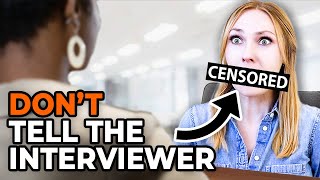
Madeline Mann, an HR leader, walks through 12 things to avoid in job interviews: don't mention personal future plans, trash your old workplace, bring up politics or religion, reference your social media, admit uncertainty about the role, or recite scripted answers.
Chapters
I'm getting all these comments on my videos about how interviewing for a job essentially boils down to being a good liar. No, no, no. I don't think you should lie. But if I'm being real with you, you should certainly omit some things. This is lying. This is hiding. Do this one in the end, I'm just trying to get you paid. If you're new here, I'm Madeline Mann. I am a human resources leader and job search strategist who turns job seekers into job shoppers. You may have seen me in New York Times, Bloomberg, abc. Subscribe as a reminder to level up your career. I have been named as the top YouTube channel for job interviews based on the sheer number of success stories that pop up in my comments and my goal is for you to be the next success story after this video worthy goal you in. Well, it's worth a shot. The first thing to hide are your future plans. You should not be sharing your plans of the future to start a family retire move that really isn't their business except for some special scenarios. I worry if you mention these things it could lead them to not hiring you because they think you may not be as long term of an employee as another candidate. Let's have them focus on your skills and abilities, shall we? Thank you. The second thing to hide in a job interview is your toxic work situation. Having had a bad boss or coworker is like an athlete having had an injury. It just seems like it's part of the game. So while it's nothing you should be ashamed of, coming into an interview with negative perspectives distracts from your amazingness and often brings up that little voice in the interviewer's mind. Was that boss actually toxic? Or is this candidate difficult to work with, argumentative or too sensitive? So instead, just like my blood type, be positive. The third thing to hide in a job interview is politics and religion. Some of us have worked for religious organizations and political campaigns, which makes this a bit tricky. If that experience isn't directly in line with the job you're interviewing for, I would recommend potentially taking it off of your resume because I have seen some snap judgments made on both accounts. Also, depending on where you live, certain political leaders may be widely beloved or disdained. So you may think it's a really safe and easy way to build rapport by talking about them, but this is a terrible idea. Mayday. Mayday. Abort. Abort. The fourth thing to hide is your social media. It is very likely that your interviewers will google you. I would see it happen all the time. When I worked in HR that employees and hiring managers would be googling the people who they were about to interview with. Even when I would interview for jobs as the candidate I knew, my interviewers googled me because they would start talking to me about a band I had in my early 20s. I don't have information anywhere on my resume or LinkedIn LinkedIn that I was in a band. How would you know that I was in a band? The only way you would know that is if you googled me and found my catalog of music. So one thing you can do is simply review your socials from the perspective of an employer and if you feel comfortable about what you're posting, then pull a Paul McCartney and let it be. But if you'd like to keep your socials personal, you can either set your profiles to private, which honestly doesn't always work. You could also pull a Taylor Swift reputation era and delete everything. Or you can change your last name on socials. You can make your middle name your last name. Or I've seen people creatively misspell their last name to be difficult to find. Let's say your last name was Williams. Instead of putting a W, you could put two capital V's. The fifth thing that you should hide in the job interview is that you don't know what you want. A lot of job seekers think that being open and flexible to whichever possibilities come their way will make them more attractive to employers. That is actually a very quick way to be rejected. What companies want to hear is what you bring to the table. You've got to bring more than just your appetite and how you're going to address their challenges and that you want this particular job. A lot of this will come through in your interview answer. Tell me about yourself. So I will link a free guide of how to ace that question. The sixth thing that you should hide in your job interview is why you're looking for a job. Okay, we can be honest here, but I've seen seen far too many people ramble and be a bit too honest. If you are laid off, fine. Say that it happens. But we don't need a whole play by play. Likely the reason you're leaving is a ornate web of professional and personal nuances. But repeat after me, they don't need to know why you're leaving. Your job can often be boiled down to just one sentence and I did a full video on how to boil that answer down, so I will link that below. The seventh thing to hide in the job interview is where you see yourself in five years. I did a whole video on this question because in my human resources career I saw so many people rejected because of their answer to this question. So for sure watch that video to craft your perfect answer. But in short, your answer should only be connected to the development and potential you see at that company, not anything else. Not your ambition to start a business or pivot industries or move roles in. None of that. The eighth thing to hide in the job interview is your current salary. In some states in the US it's even illegal for a company to ask about your salary history. In general, I recommend not bringing up salary until they do, or waiting to discuss it at the offer stage. I know I will get some pushback on this because yes, you don't want to waste your time in the interview process. I've totally got that. But I do explain my full rationale in a video of how to negotiate salary and I will link that below. In the end, we want them to focus on getting to know the value you bring to the table and then agreeing on a salary versus basing it off of your previous income. The ninth thing to hide in your job interview is your side hustle. Now, in some cases, your side hustle is helping you to build great skills for this job or even transition into this profession. Wonderful. Be sure to talk about it then. But if you're going for an accounting role and you have a personal trainer business on the side, I would either downplay or completely omit that side business in the interview conversation. It's distracting from what will get the company to hire you, and they may even worry that that work will be a competing priority with this job. Oftentimes, people will share their side hustles because they are so proud of that work and they think it makes them look dynamic and ambitious. But I see sincerely caution you the tenth thing to hide in your job interviews are your job duties. This one sounds really weird. Why would you hide your work responsibilities? Have I completely lost my mind? What I mean is, don't mention the duties you've done at previous jobs if they aren't relevant to the role you're interviewing for. I have a free resume class where I go over what points to share and what to omit on your resume and in your interviews, so I will link that below. The 11th thing to hide in your job interview is your medical history and disability. An employer is not entitled to know your medical history or disabilities unless they will impact your ability to carry out the duties of the role, such as if you're pregnant going for a marketing role and you can fully do that job pregnant, then you don't have to mention it. But if the role requires that you have to travel to conferences and you are unable to travel in your current state, then you would have to disclose that. I also have a video on what to do if you're interviewing pregnant, so I will link that below. And finally, the 12th thing that you should hide in the job interview is your script. Yes, I see so many job seekers scripting out their interview answers and then reading from it during the interview. Even if they can't see that word document on your screen during the interview, the interviewer can tell that you're reading. This will cause them to tune out and get the impression that you are inauthentic. Interviews are a game of building relationships and connecting with your interviewers on top of showing your qualifications. And reliance on a script dramatically hampers that. Now a script, script and notes are two different things. I am fully in favor of you taking notes and having notes out during an interview, just as you would in any business meeting. Do you bring notes into a job interview? Right? I use notes or I don't use notes in the comments because I'm surprised. I think most people don't bring notes into job interviews. Did you get value from this video? I am here to please be sure to like this video and subscribe to this channel. You've got this wi fi high five.
More from Clegg





AI Won't Tell You the Full Truth | Arthur Brooks + Simon Sinek | A Bit of Optimism Podcast



How To Make the Best Decision | Arthur Brooks and Simon Sinek | A Bit of Optimism


