12 Ways That Speed Learning Can 12X Your Income
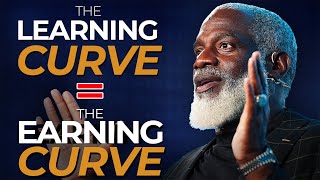
Myron Golden argues that how fast you learn directly determines how much you earn. He breaks down 12 speed-learning techniques across four categories: people, purpose, process, and power. The faster your learning curve, the faster your earning curve grows.
Chapters
Are you one of those people who learned when you were learning, going to this, what I call the government indoctrination camps, the schools. Are you one of those people who learned that you're not good at learning? Did they tell you you weren't smart because you weren't good at passing their test? In this video today, I'm going to show you how to increase your earning by increasing the speed of your learning. This video is the learning curve equals the earning curve. 12 things you can do to 12x your income. Now, in my book, Boss Moves, in this book, I teach four moves for people to.
12.8X their revenue. I do a challenge where I teach people 4 moves to 12.8x their revenue. If I have time. At the end of the video today, I'll give you the illustration and show you how we put this on, rinse and repeat for our clients. But I want you to understand something. The faster you learn, the more you earn. I suspect you've probably heard me say this before. I'll say it again. Everybody listening to me right now. If you earn any money at all, you earn enough money already to be rich. People think, well, the way to get rich is to earn more money. I submit to you that the way to get rich is not to earn more money, but the way to get rich is to earn money faster. And you're probably thinking, myron, are you talking about a get rich quick scheme? The word scheme means plan. So my answer to Myron, are you talking about a get rich quick scheme? Is this. You better hope so, because you ain't going to be here long enough to get rich slow. And so what do I mean by that? I'm going to show you on the board. I'm going to ask you a question. First and foremost, if you make a million dollars, are you rich? And the answer is, some people say yes, some people say no. But the answer is, it depends. What does it depend on? It depends on one thing. How long did it take you to make it? If you make $25,000 a year.
And you work for 40 years.
You'Ve made $1 million. Are you rich? No, you're not. But why? You made a million dollars? You made a million dollars. Why are you not rich? You're not rich because it took you too long. Let's say you make the same million dollars in one year. Are you rich now? You are rich now you ain't Bill Gates rich. Let's don't go crazy with it, right? Like, get the Lamborghini later, okay? But the reality is you are about 40 times richer than this person.
What if you start making a million dollars a month, then you're 480 times richer than this person. Now the person who makes a million dollars a year and the person who made a million dollars over 40 years, they both made a million dollars. They both made the same amount of money. One of them just made it faster. What did we learn from that? Well, what I've learned from that is wealth is determined more by time than it is by money. It's measured more in time than it is in money. Why is wealth measured more in time than it is in money? Because.
Life is not made of money.
Time is the stuff that life is made of. And see, what most people do is they make a little bit of money over a long period of time. They say, well, I've got 40 years of experience, I got 30 years of experience driving a forklift. That's all I know how to do. But you don't have 30 years of experience driving a forklift. You have two weeks of experience repeated over a 40 year time period. And the reason is because nobody ever told you that there is no there, there. And you have to always be learning new skills. I'm going to teach you 12 things you can do to learn faster. Because if you learn faster, if you learn to learn faster, you can learn to earn more faster. If everybody in this room, if everybody on YouTube right now, if you took your annual income right now, turned it into your monthly income, you'd be in a much better place. If you took your annual income and turned it into your weekly income, you'd be in a much, much, much better place. If you turn took your annual income and turned it into your daily income right now you'd be in a much, much, much, much, much, much better place, Right? And by the way, I know some of you are thinking, well, that's not possible, right for you. Because that's the boundary you've set for yourself. It's not true. But let me ask you a question. What if it were true for you? What if it could be true for you? So why is it so essential for us to learn to make money, to learn faster? Because the world is changing so fast. And I've gone into the history and mystery of wealth, you know, from the beginning of time. I'll just write it up here really quickly. From the beginning of time to the mid-1700s, the economic infrastructure of the world was based on agriculture. We were in the agricultural age. And in that agricultural age, land equaled Wealth. And the more land you own, the wealthier you were. If you were born into a family that owned land, you were born wealthy. If you were born into a family that didn't own land, you were born poor, right? And so, and the only way for you to get wealth, become wealthy is if you develop some new technology where you had more power than the people who owned the land. And then you went and conquered them and took their land. Right? And so that's mid-1700s. But from the mid-1700s to the mid-1900s.
We went from the economic, the people who started making machines to farm the land faster and better. And so what happened, we went into the Industrial age. And in the Industrial age.
Machines equaled wealth. Really interesting thing, the Industrial age still kind of has a really like a death grip on modern society. Why? Because the Industrial Age machines equaled wealth. The person who owned the farm, they worked on the farm, and then somebody started a factory so they could build tractors and they could build machines that made farming easier. And then the person who owned the machines, they created wealth in a fraction of the time, these people. Because these people basically had it their whole life unless they took it from somebody else. These people created wealth in their lifetime. Changing your station in life in your lifetime was not something that happened until the Industrial Age. You realize people did not go from being poor to being rich like Henry Ford, like John D. Rockefeller, like Andrew Carnegie. That didn't happen in the world for the most part before the Industrial Age. Machines equal wealth. But here's the tragedy about industrial. So let me share a couple of things with you. First of all, the miseducational, misdirectional system was reimagined in the Industrial Age by the Industrial age business barons like Rockefeller, like Carnegie. What they did was they created a system to manufacture workers for their factories and consumers of their products. And it was very, very hyper intentional. We think that the educational system exists to teach you how to think. But if you think about it, the educational system doesn't teach you how to think, it just tells you what to think. And telling you what to think and teaching you how to think. Not only are they not the same, they are diametrically opposed to each other. Because when somebody tells you what to think, they're also tell you not to think.
Right? One of my mentors, Jerry Clark, he told the story about how when he was in elementary school, he asked his teacher, teacher, teacher, you said, Columbus discovered America, but when he came here, people were already here. So if people were already here, how did he discover it? She sent him to the principal's office. Why? Because you don't question the answers, you just answer the questions. How many are tracking? How many are tracking? And so what happens is in the industrial age, it was not only was the miseducational, misdirectional system invented to keep you stuck, to produce workers for the factories and consumers of the products, but also it was a very permission based society. So if you owned a machine, you had the power. And what does that even mean? So let's say during the industrial age, you owned a printing press and I wanted to write a book. You had to believe that my book was worth printing in order for me to be able to write a book. So I had to get permission from the people who owned the machines. So the people who owned the machines controlled who could and who couldn't. Right. If you owned recording equipment, that was called a what record label? Right. And if I could sing, it didn't matter if I could sing. It mattered more whether you thought I could sing. Because if you thought I could sing, then you would charge me money or you would make money off of my voice and pay me some of it, but you had to give me permission to be a singer. And so the industrial age was very permission based. And because now most young people today weren't, none of us grew up really in the industrial age. Like I was born after the industrial age. Some of us may have been born, some of the people watching this were born in the industrial age, but my parents were born in the industrial age. And in the industrial age, they told you, like, if you'll go to school and study hard, you don't have to work in the factory. You can manage the people that work in the factory. And so my parents knew that the key to doing better in life was getting more education, or what I like to call miseducation. It was more education back then, but get more education, then you can be a manager. Right? And so what happened in the mid-1990s, because of machinery, we started manufacturing way more goods and services than we ever did in the agricultural age. So from mid-1950s to 1978 to be exact, we went from the industrial age, we went into the distribution age.
And in the distribution age.
Outlets equal wealth. So hopefully you're seeing a pattern here. And this is like what I'm showing you right now is imperative for you to understand the importance of why it's so important to learn faster. And when I get all the way down to where we are right now, you'll see clearly. Oh, this is why it's so imperative to use every amount of leverage available to me to learn as much as I can as fast as I can, to become as good as I can, because life is not waiting for me. So the outlets equaled wealth. And when outlets equal wealth, then we had malls, department stores.
Infomercials, direct sales, multi level marketing, all of the mail order sales, all of that was created during the distribution age. Why? Because we manufactured so many goods and services that we had to figure out a way to distribute these products all around the world. But then now we're distributing stuff and we have to keep track of what they have and what they don't have. So there was a guy named Sam Walton. Well, the personal computer was invented in 1978, but there was a guy during this time period named Sam Walton. He went to IBM and would recruit like software engineers to manufacture inventory software for Walmart. And that brought in from 1978 to 1994. We went into the technology age. And in the technology age, in the technology age, tech know how.
Equaled wealth. And people who knew how to create new technologies, those were the people who owned the wealth. And I remember, I remember in 1980, everybody wanted to go to college to learn how to program computers. Why? Because we saw Bill Gates and Steve Jobs and Steve Wozniak on the front of Time magazine, Man of the year. And they were billionaires in their 20s. And these are billionaire babies. Like billionaire babies didn't exist before the 1980s. I'm like, oh, yeah, I know what I want to do. I want to be a computer programmer, right? And so I wanted to be a computer programmer until I started studying it. Like, no, I don't want to be a computer programmer. I'm just saying I understand that changed fast. And so what happened was we went from 1994, from then 1994 to 2003, we went into what I call the techno info. I'm going to do it like this. The techno info edutainment age. And that's people who knew how to use technology to create information that educated people in an entertaining way. What does that mean? Y' all remember Spike Lee? Spike Lee was a dude who had like this little advertising agency, but he knew how to edit videos. And he created the. Don't you want to be like Mike? Right? He was the right person at the right time, at the right place, with the right knowledge on how to use technology. And he became a superstar. You have people like Jeff Foxworthy, who was a Comedian, you might be a redneck. If he knew exactly where to find his target audience. And he recorded cassette tapes, cassette tapes with redneck jokes on them, and sold them at truck stops where his ideal avatar would find them. He became so rich that he was, for a season, a shark on Shark Tank because of the Techno Info Edutainment age. Russell Simmons, same thing. Created a whole new genre of music during the Techno Info Edutainment age. You say, Myron, what are you saying? Okay, there's a verse in Luke that says this. The children of this world are wiser when in their own generation than the children of light. And so what it's saying is the people of this world know how to capitalize on the opportunities that exist while they exist.
Better than the children of light do. So mind blowing. Like, if there's one thing, like.
You'Re already at the right place at the right time in history. There's never been a time in human history where it's been easier for average people like us to create, like, legendary transformations in our family for, like, generations. There's never been the kind of opportunities available today. But most people don't take advantage of it. Well, what happened? So you got Tyler Perry, also another one. Techno Info Edutainment. This dude, he did plays. He filmed plays and recorded them and then sold videotapes out of the trunk of his car. He went from homeless to billionaire. Why? Because he was in the right place at the right time, took the right action. And by the way, all of us could do that. By the way, it's easier now than it was for Ford and Rockefeller. It's easier now than it was for Sam Walton. It's easier now than it was for all the distribution age Barons, than it was for Sears, than it was for Roebuck, than it was for JC Penny. It's easier now than. Than it was for all those other people I just named Jeff Foxworthy and Russell. It's easier now for you to go from where you are to where you'd like to go than it was for them to go from where they were to where they. Why? Because there's more opportunity for more people. Because. Well, I'm not going to tell you why yet, but I'm going to tell you why. So then, 2003 to 2008. I think that's the one I just did. 2003 to 2008.
Oh, you know what? I forgot. That's not the Techno Info Edutainment age. That was the information age. Sorry, gave you the wrong one. That was the information age. This was that. Okay, now fixed it.
This was the techno info edutainment age. And then 2008, this was techno info edutainment age. In 2008, something else happened. What happened? What was invented? What was created in 2008 that changed. The world changed, like, in a major way. Does anybody remember? No, it wasn't YouTube. Social media. Wasn't social media. Okay, there was a new invention in 2007. That's a clue. That was 2007. IPhone. 2007. Nope, that was Wade. That was like, okay, so here's the invention. The iPhone was created in 2007. In 2008, the App Store came on the scene. And the App Store, a lot of people don't know this, but in three years, the Apple App Store paid out $2.5 billion in commissions for people who put apps in the App Store and books in the ibookstore. So Apple, this major conglomerate, said, if you will create content for our customer base, we will give you most of the money. What.
Are y' all tracking? This is insanical. Like, what an opportunity. And then Amazon says the same thing. Amazon says, hey, you'll write books, but put them on our bookshelf. We will sell the books to our clients that we've already acquired, and we will give you most of the money. And all of this opportunity exists. And so now, that was during the. That happened in 2008. So what was 2008? 2008 to 2020. We were in the partnership age.
The partnership age. That is people who knew how to create and develop strategic partnerships. Those were people who own the wealth. Now, you see, what did you all notice about this? What did you all notice about each one of these economic eras? The time span gets shorter and shorter. Every economic era lasts for a shorter period of time than the previous. This one lasted for thousands of years. This one lasted for hundreds of years. This one lasted for a couple of decades. This one lasted for less than a decade. This one lasted for five years. But this one, all of a sudden lasted longer. Why? I think it took people forever to figure out we were in the partnership age. What happened in 2021? I mean, in 2020. In 2020, we went into the what.
AI age, when somebody said Covid. Okay, recovery. Yeah, to the AI age. Now we have artificial intelligence. We have artificial intelligence that can collapse the time frame of our research, our projects, and we can literally take long, complex processes and create, like, AI agents and prompts that say that we, instead of doing the work every time we have to do the work. We can do the work once and then just feed the data into the AI and it spits out the answers. It saves us so much time.
But then again, it takes time to learn how to use it, doesn't it? Just like everything else. Now you say, Myron, why did you go into all of that? Because the reason I went into all of that is to show you why it's so important to speed up your learning. The reason it's important to speed up your learning is because the rate at which the world is changing is speeding up exponentially. And you have to get to the place in your life where you stop being stuck in the past and you start preparing yourself for the future because the future just happened.
Are y' all tracking? And so we cannot afford to say, I don't know how to use a computer. You can't afford to say that. That's costing you. I don't know how to use AI. Okay, you didn't know how to use it yesterday. AI can teach you how to use AI today.
You have real intelligence. Like, all you have to do is look in the rearview mirror, the experience of your life to know.
That when you landed on this planet, you knew nothing. You didn't know your foot from your hand, hot from cold, up from down, like wet from dry. You didn't know anything. You couldn't even feed your. Ride a bike, forget about it. Drive a car. Nope, not on the list. Use a cell phone or a computer. No, you didn't know how to do any of that stuff. So all you have to do is take inventory of all the stuff you learn how to do that should let you know there's nothing you can't learn. So let's start there. Let's start that you have no learning limitations except the limiting beliefs that you have about your learning. I'm here to let you know, whichever teacher first grade, second grade, third grade, fourth grade, fifth grade, sixth grade, whichever teacher told you you were dumb, they were too dumb to see how smart you were.
I know I said that a little bit too fast for some of that. So. So what are the 12? So. And I said, I said we're going to talk about. I said we're going to talk about 12.
Speed learning secrets that you can apply that will 12x your income. Okay, so let's get into the 12 secrets, but before I do, I want to tell you what is learning. So in order for us to talk about this, we have to have a. We have to have a foundation and the foundation is going to be. We have to know the definitions of these words. Okay.
I'm going to give you the Myron golden definition of learning. Increasing the increasing of one's cognitive awareness of how something or someone functions within the confines of reality for the purpose of improving one or more aspects.
Of competent achievement and confident action. What does that mean? That means I am assessing the people and the situations and the stuff around me so that as I go through life, I can do it with more competence. Like, I know what's going to happen because I understand the pattern and therefore I have more confidence to take action. Like, there are very few things more apprehensive in our lives than feeling like we don't know. Like, if I like a lack of knowledge. Ignorance is like a darkness. What do you do when you walk into a room and you can't see? You slow down, right? You start feeling your way around. Well, the same thing is true when you walk into an arena that's like, that's not illuminated by your knowledge. You slow down and start feeling your way around. Okay, so that's. Then what's the definition of earning? So I'm going to give you the Meyer and Golden definition of earnings for the purpose of this video. When I say earning, this is what I'm talking about. I'm talking about the value exchange that one creates when they create or develop something for someone else in exchange for financial compensation. That's what I mean by earning the value exchange one creates when they create or develop something for someone else other than.
For someone else other than themselves in exchange for financial compensation. That's my definition of value for the purpose of this video. Now, we're going to talk about four things. And each one of these four things you're going to have three steps. And those three steps are the secrets to learning faster. Because it's not about learning more. If you learn faster, you automatically learn more. Like, train your brain to think faster. Are you all tracking? Okay? So the first thing we have to discuss is the people who speed learn. Who are the people who speed learn? What happens for the people who speed learn? Why is it important to speed? Like, what are the qualities of a person who speed learns? Well, number one, they are Dauntless when it comes to learning. What does that mean? They don't ever look at something and say, I don't think I can learn that.
It doesn't matter how big it is. It doesn't matter how incredibly intimidating it might seem. They're Dauntless when it comes to learning why they're like, okay, well, I learned other stuff. When I learned how to tie my shoe, it felt impossible for the first couple of days. Then all of a sudden I did it, and then I tied it, and then it probably came loose in five seconds, but I just kept doing it. I'd say, well, this shoe tie thing doesn't work. I'll just go get me some Velcro. I couldn't do that. They didn't have Velcro in the 60s. Okay, they didn't have Velcro in the 60s. So you have to become Dauntless. You want to be a speed learner. Stop looking at things and assigning a level of difficulty before you even put your foot in the arena. Stop looking at things. Oh, that's so hard. Like, how do you know you don't even know how to do it. How do you know it's hard? I remember when I first started learning Hebrew. Oh, my goodness. Hebrew's such a hard language. How do you know that?
Not harder than you are smart. You can't learn how to play a musical instrument too hard. It's not harder than you are smart. You have the ability to learn anything. Stop limiting yourself by buying into Satan's lie that you are not good enough and you're not smart enough and you can't learn it. That's how he keeps you from fulfilling the purpose for your life that was meant to impact the lives of other people so their person won't show up. Because you refuse to learn the things that God puts you here to learn because you think you can't. Because some person who didn't have your best interest in mind told you you weren't smart because you didn't validate their degree by getting good grades, by passing tests and answering questions they told you were important that you came to find out later weren't that important anyway.
You say, myron, that sounds like a rant. Pretty much.
So speed learners are Dauntless. Stop. Like, just decide, today I'm going to be Dauntless when it comes to learning. I'm never gonna look at something again ever again and say, oh, that's too hard for me. Okay, cool.
They're also decisive when it comes to learning. So when it comes to learning something new, they just say, I'm gonna learn this. They don't say, I'm gonna try. I'm gonna try to learn. I'm gonna try trying to learn it. Stop trying. Stop using try. You know what try is? It's an escape hatch. You know what try is? It's a backdoor for people who are unwilling to go all in.
Stop. Try. There's no try. There's do and there's don't do. Try to breathe. You don't have to try to breathe. It just happens.
And by the way, if you're wondering who I'm fussing at, all the people who mess you up, I'm fussing at them because they were wrong. They were wrong about you. Okay, cool. So speed learners are dauntless when it comes to learning. Speed learners are decisive. You have to become decisive. Pick one thing, maybe two things this year that for your whole life you desired to learn, but you never decided to learn. And just say, I'm going to learn this. It's mind blowing to me. I remember when I used to live in Harrisburg, Pennsylvania, and I remember this little restaurant opened up at the uptown plaza called the Great Wall. And like three or four families lived in one house and they all worked in that restaurant. And it was open all day, like from, I don't know, 9 o' clock in the morning or 11 o' clock or whatever. And they stayed open till 11 o' clock at night. And they just worked around the clock. And number 70, chicken and broccoli. Let's go. Right, 70, right. I knew I wanted a number 70, chicken and broccoli. Okay. And so, and then all of a sudden, one of the families moves out and gets. They get to buy their own house, and then they open another restaurant.
And then another family gets wealthy and they move out and they open another restaurant and they just keep on doing that. And when they came here, they didn't even speak English. Like, I think about people, like people who are immigrants who come to America, don't even speak English, or you go to another country, you don't even speak the language, but you just say, okay, I'm here. Here we go. Like, stop limiting yourself by limiting your beliefs in what you can do. Just become decisive, decide. Become dauntless. And then people who are speed learners are dedicated when it comes to learning. They work on it every day. There's not. There's no letting yourself off the hook. You know, I've got this guitar up here and like, when I was a kid, for me it was the Jackson 5, right? And for me in the Jackson 5 was Tito, because Tito had an electric guitar and cool hat. You can't beat an electric guitar unless you have an electric guitar and a cool hat. And I remember getting a guitar and I remember learning how to play riffs. I didn't Learn how to play the guitar as a child, but I learned to play riffs, like.
Right? I learned how to do that, but I didn't learn how to play any songs. And then I would watch people change chords and I'd watch them go. I'd watch them change chords. This guitar is not tuned. Why are people.
It is tuned, okay? So I'd watch people change chords and they go.
And I'm like, how do they move their fingers that fast?
I'm like, how do they do that? That seems impossible, but it's not impossible. You just do it now. There was a time I thought it was impossible. And I. So recently I decided. Well, I say recently. About a year and a half ago now, almost two years ago now, I decided I'm gonna, like, go all in on the guitar.
Why? I don't know. Because you can, right? And then so I started taking these guitar lessons. And my guitar teacher, like, he gives me, like, new stuff every week. Like, new. Like, it's not like. He's like, okay, you gotta learn cycle three and cycle, you know, you go.
You gotta.
I'm like, bro, what are you talking about? And so he gives me all this stuff. But you know what I do? I say, okay, got it. He's like, some people think this is hard. Nothing's hard. Nothing's hard. Everything's hard. Everything feels hard when you don't know how to do it. Nothing feels hard once you learn how to do it. I got it. There's nothing you can't learn. He's always like, I wish everybody had. Well, it is what it is. You have to become dedicated. You have to do the work. You have to practice.
What did Bruce Lee say? He said, I'm not afraid of the guy who knows 10,000 kicks. I'm afraid of the guy who knows one kick. But he's practiced it 10,000 times. Become dedicated when it comes to learning. So that's the people who speed learn. How many of you have decided, I'm going to become one of the people who speed learns? Let me hear you say me. Okay, perfect. So the next. The purpose of speed learning. The purpose of speed learning is to maximize your awareness of life.
The less we know how life works, the more subject we are to the dangers in life. The less access we have to the pleasures and the blessings of life. Like, life works like it works. It's not going to stop working like it works just because I don't understand it, right? So it maximizes our awareness of life. When you become like. When you become a Speed learner, you learn how life works in more ways and you start seeing how things are related and how patterns repeat. And if you can start like getting really good at pattern recognition, man, you'll learn stuff that you didn't even know you could learn. And it's like for the most part, there's so many repeating patterns in life. The better you get at learning, the better you get at learning. So it maximizes. The purpose of speed learning is to maximize your awareness of life, to optimize your activities in life. When you know more, you can do more, you can be involved in more conversations. When people are having conversations about high level things, whatever those high level things are in the arena that you want to like dance in a high level thing arena, you don't have to like bow out of the conversation because you don't know anything. I don't have anything to add to this conversation. Well, if you don't have anything to add to it, stay in the conversation long enough to gain something from it. So next time you'll have something to add to it, right? It increases like it maximizes our awareness of how life works and then it optimizes our activities of life. Because now I can do more because I know more. And then it monetizes, it gives us the ability to monetize our assets in life. It's so crazy. Like when I think about, like right now, when I think about back to when I was broke, right when I was broke the first time and all the stuff that I know because yeah, I was broke a second time too, but when I was broke the first time, there were so many things, skills that I had, I had the skill sets that could have made me millions of dollars when I was broke. But guess what I didn't have, I didn't have the mindset. And because I didn't have the mindset, I didn't utilize the skill set and I didn't acquire the tool set. So therefore I was broke.
And I could have done so many of the like. When my new mentor Frank showed me these tax strategies and this real estate acquisition strategies, I'm like, oh, I'm going to utilize the same skills I already have. I just didn't know how to apply them to that. It gives you the ability to monetize at a higher level. So, okay, so the purpose of speed learning is to maximize your awareness of life, to optimize your activities in life, and to monetize your assets in life. What is the process? How do I speed learn? I get it. I'm supposed to speed learn. I get it. I've got a speed learn. How do I do it? I know that's what you're thinking, right? Is anybody thinking that or is it just me? Okay, here we go. Number one.
I'm sorry. The process of speed learning. The process of speed learning is to approach life with a level of curiosity. Like, stop going through life looking at every situation with a period or an exclamation point at the end. And start going through life looking at every situation with a question mark at the end. Stop saying, I can't afford it and start saying, how can I afford it? Stop saying, I don't know how to do that and start saying, how could I learn how to do that? Or start saying, how awesome is life going to be when I learn how to do that? Like, if you ask better questions, you will get better answers. Better answers than what? Than the ones that you have now that are giving you what you have now, which you'd rather not have now, and you'd rather have something else. Can I get a witness?
So you approach life with a sense of curiosity. And when you do that, what will happen is you will acquire a level of competence. Curiosity will lead you to competence. So.
Okay, think about something you're really, really good at. Everybody got something. You got something you're really, really good at. Think of something you're really, really good at. Okay, you ready? You know how you got good at that? By being bad at it and continuing to learn how to do it while you were bad. You didn't get good at stuff. You didn't just start now. There are some people. There's some people who I can't stand. Like my nephew Daniel. I hope you watch this, Daniel, because I can't stand you, bro. Like, I'm just kidding. I'm just kidding. So, like, he sits down at the piano and you just play it.
Isn't that disgusting?
Okay. Okay. I love Daniel. I hope he watches that. He'll get a kick out of it anyway. So, yeah, I'm like.
But for the most part, most of the skills that we develop in our lives, we don't just have them. And if we do. If we do have the ability to sit down at a piano and just play it, if we do have the ability to just run really fast, if we do have the ability just to be good at basketball or good at golf, then maybe that's a sign from God. I gave you this talent so you could multiply it by a skill and become better. Because talent is something that God gives you skill is something anyone can acquire. If you will add skill to your talent, you can become one of the best in the world. And so many people go through life instead of strengthening their strengths by adding skill to talent. What they do is they attempt just to strengthen their weakness.
And the reason they even want to strengthen their weakness is so that other people won't see their weakness. Like, stop measuring your life through another man's yardstick. Doesn't matter. Like, what you think of me is not my business, and I don't have time to care. I mean, if I've done something wrong to you, then I want to know. But, like, if you just think, oh, he thinks he's all that in the bag of chips, like, I don't have time to care about that, like, at all. Like, I'm losing zero sleep over that, okay? And I would recommend you do the same thing. So.
Approach life with curiosity. Then. When you do that, it'll give you the ability to acquire competence at a higher level. And when you acquire competence at a higher level, it will help you to activate confidence the likes of which you've never had before. Like.
I really believe the stuff I know. Like, I believe it with every fiber of my being. But on the same token, while I believe what I know, I realize there's a possibility some of the stuff I know just ain't so right. And so even though I believe it with every fiber of my being, I'm open to a conversation that I might be wrong. Why? Because if I'm not open to that conversation, I might be wrong. Being wrong in that thing that I know to be true could be like the devastation that I've not been looking for. So I'm open to the conversation that I might be wrong. If I am wrong, I want to know it so I can change. And if I'm not wrong, I want to know so I can stand. It's all good. Like, I have nothing to lose by having a conversation with somebody who disagrees with me. I have nothing to lose unless it's time. Because, like, you can tell sometimes by the energy of somebody's disagreement whether they're just being obtuse, right? I don't. I don't have time for that conversation. Okay, but if somebody wants, like, hey, Myron, you said this, but I believe this. Oh, well, you know what? Maybe you're right and I'm wrong. Let me check this out. Right? And so. But, like, I think you would all benefit from developing a level of confidence in the things that you believe that you're not afraid that you might be wrong. And you're so open to the conversation because, hey, what's like, is my number one objective to be right, or is my number one objective to improve? I'd rather improve than prove that I'm right. Okay, so we talked about nine. Nine of the secrets to speed learning. There are three more. We looked at the people who speed learned. We looked at the purpose of speed learning. We looked at the process of speed learning. Now let's look at the power. Speed learning. When you become a speed learner, it will measurably increase your bandwidth. What does that mean? You will be able to handle.
Dealing with so much more of life and so much more of what life has to throw at you. You'll have more bandwidth because you'll have more tools with which to deal with the things life throws at you.
I don't get. I don't get thrown off balance very often. Like, I don't get. Oh, that blew me away. Oh, man, it just ruined my day. Like, I don't even remember the last time something ruined my day. Why? Because my bandwidth has been so measurably increased by my perspective, and my perspective has been increased by the things I've learned and I've learned. And I was talking last week to somebody, and I was saying, we were interviewing somebody. I said, do you like to read? Because, like, I read probably 24 books a year. My daughter looked at me and said, you read way more than 24 books a year. Okay.
She'S probably right. But I just didn't. I was just guesstimating, right? Why? Like, because I know that the difference between where I am and where I'd like to be, the difference between what I can do and what I'd like to be able to do, the difference between what I know and what I'd like to know is found in the arena of the things I've not yet explored. Like, I am so curious, what does this mean? How does this work? What's that? And then every time you add to your knowledge, it makes the knowledge that you've already had that much more valuable. There's a book I'd recommend you read. You really like. This is not going to help you speed learn, but this is going to help you really wrap your mind around the benefits of speed learning. It's a book by Carmine Gallo called Innovation Secrets of Steve Jobs. One of the best books I've ever read. Innovation Secrets of Steve Jobs. Because the more you learn, the more you'll have the ability to see how seemingly unrelated things are actually correlated together.
It's a game changer, okay? So it'll measurably increase your bandwidth. It will magnify the impact of your brand. So.
We'Re gonna hit a million subscribers this week. By the grace of God, it looks like probably Wednesday, maybe Thursday. Million subscribers. We're gonna have a million subscriber party on Friday. It's gonna be great. I'm gonna go live on YouTube for hours. I'm gonna have a party here a lot for the people at the studio. Y' all get your invites, don't worry. And I'm gonna give some stuff away. Say, what are you giving away? I don't know. I haven't thought about it yet. But we're gonna give some stuff away. It's gonna be great.
But.
One of the things that I teach is, like, how to grow your audience. Like. Like audience attraction. That you don't really grow an audience. You attract an audience. The audience is already there. They're just not paying attention to you yet. Right? So you want to attract an audience, build a brand by creating content, and then you offer offers. That's. That's the. That's the.
That's the territory. Okay? So when I talk about attracting an audience, you say, how do you attract an audience? Well, you create this content, and you make sure that as you're creating content, you're creating content is more interesting. Now, I'm gonna tell you the biggest mistake that I see when it comes to becoming more interesting and creating content. And that is most people, in an attempt to be more interesting, they try to be more interesting.
Like, the biggest mistake you can make. People who try to be interesting are boring. They're like, if I can just get away from this person, right? They want to tell you all the stuff they are doing and all the stuff they've done. If you want to know how to be more interesting, I can tell you how to be way more interesting. Become more interested. If you will become more interested what? In the things that you don't know that will help you and other people. If you'll become more interested in that, and you'll become more interested in other people and knowing their story than you are interested in other people knowing your story, you will be more interesting because you're more interested. Only interested people are interesting. Interesting people. People who seek to be interesting are boring. People who seek to be interested are intriguing, interesting. So why? Because if I am interested in you and I really desire to serve you, then I'm Going to be interested in your problem and figuring out a solution. So when I show up in front of you, I've got a solution for your problem. Why? Because then you're going to want to pay attention to me. So.
Some people wonder, well, Myron, why don't you spend more money on ads? Well, because.
That'S not the vibe I desire to create in the audience that I've attracted. What do you mean? So I was talking to a very successful marketing business genius last night. We had dinner last night, and I told him, I said, one of the reasons I limit the amount of money I spend on ads is because if the majority of the time when people see you can measurably. You can measurably calculate, like how to scale your business with ads, right? As long as you can buy ads profitably. But I said, if the majority of time when people see you and you're showing up in their feed, you're showing up in an ad, whether it's conscious or unconscious or subconscious, I'm not sure. But the prevailing questions in the minds of the people who see you is, what does this person want from me?
But if the majority of the time, because he was asking me, he said, do you do CTAs? CTA is a call to action. Do you CTAs in your videos? Do you tell people to go buy your book? Do you tell people to go, go buy. Go register for your challenge? I don't even ask people to subscribe anymore. I don't ask people to like the video. I don't ask people to comment. I don't ask them to buy anything. Why? Because if somebody believes it's for them, they're smart enough to know that's what they want to do. That's number one. Number two, if the majority of time when you show up in somebody's feed, all you're doing is give, give, give, give, give. When they see you, there's no putting their foot on the break. The first thought is, what does this person have for me? And I would rather be thought of by the people who are attracted to me. What does he have for me than what does he want from me? Because the reality is.
I like making sales and I like making money, but that's gonna happen anyway. So I don't want anything. Nothing's missing. And if you can learn how to live like that and you can learn to show up to the people for the people, it'll change the game for you. And it will magnify the impact of your brand and Then it will multiply the income of your business if you will become a speed learner. So the faster you learn, the more you earn. The learning curve is the earning curve. And these are 12 secrets you can use to 12 extra income.
Yeah, I said I was going to show you that 12x. I don't have time. I'll do it Friday. I'll do it Friday when we have our million, our million subscriber party. I'm going to show you all that how we help our clients 12x their businesses. I'm going to show you exactly the formula we use. I'm not going to hold any of it back. I'm just going to show you what we do and we'll do that on Friday. Appreciate you all watching today. We'll look forward to seeing you on the next video and who knows, next time you see me, well, I'll be on the Bible study channel on Wednesday. So for those of you who don't know this, we have a bible study channel called Bible study with Myron Golden. So Wednesday we're on, Thursday we're on the bible study channel. Mondays we're here on the business channel or my main Myron golden channel. So I will look forward to seeing you on Thursday. And if not on Thursday, I look forward to seeing you on Friday. We have our million subscriber party. Let's go. All right, we'll see you in the next video. Peace out, cub scouts.
More from Clegg





AI Won't Tell You the Full Truth | Arthur Brooks + Simon Sinek | A Bit of Optimism Podcast



How To Make the Best Decision | Arthur Brooks and Simon Sinek | A Bit of Optimism


