20 Wealth Secrets That Can Make You Rich In Your 20’s
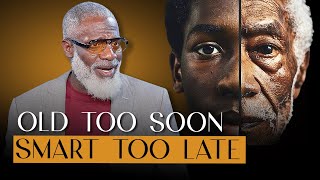
Myron Golden breaks down the first four of twenty wealth principles, starting with imagination. He argues that awareness drives abundance, better beliefs build better businesses, competence creates confidence, decisions determine destiny, and expectation exceeds experience. He uses personal sales stories and examples to show how these principles work.
Chapters
3, 2, 1. Often people ask me, usually at the end of a podcast interview, hey, Myron, if you could go back and give some advice to your 20 year old self, what would you say? And my answer is always the same. And I'm in the context of that question, it's going to usually be in the arena of business or finance, right? And so my answer is always the same. My answer is that, Myron, I would say to myself, this is 63 year old Myron talking to 20 year old Myron. You are going to get rich.
Do it sooner. Don't let grass grow under your feet. The sooner you get it done, the longer you'll get to enjoy it with the people you love the most. That is the advice I would give my 20 year old self. And so today on this video, I want to talk to you about this subject. Old too soon, smart too late. 20 secrets that can make you rich in your 20s. 20 wealth secrets that can make you rich in YOUR 20s. Now, before I go into all this detail, I'm going to say this. I'm probably not going to get done with this today, but I'm going to go as far as I can on the right road. So the whole premise of like, what would you say to your 20 year old self? You're going to get rich, so do it faster, okay? But now the question becomes, what? How do I do it faster? How do I get rich faster? How do I get rich in my 20s? Okay? And some of you, that ship has already sailed. You're not going to get rich in your 20s because you're already in your 30s. So then the question is, how do I get rich in my 30s? But for some of you, that ship has already sailed. You're already in your 40s. You're like, how do I get rich in my 40s or 50s or 60s or whatever it is.
Whatever your age is when it comes to creating wealth, sooner is better than later. And wealth is measured more in time than it is in money. And so, so with that being said, the principle that this whole concept is going to be based on something you've heard me talk about before, the four levels of value, right? And the four levels of value are.
One is the highest level of value is imagination. When we think of imagination, what do we think of? Okay, that's supposed to be a light bulb. So maybe the second worst light bulb in the history of light bulbs. Okay? So.
Okay, that's a better light bulb. And then I'm gonna come over here and get some light. Okay? So in the form of an idea. So the highest level of value is imagination.
And imagination. On this level, where you're creating wealth, by the way, I'm gonna give you all the levels of value and then I'm gonna go back to imagination. I'm gonna break down the components of imagination. Imagination. On this level, the resource you use to create wealth is you use your mind and you use your money to create money. And I'll go into why you have why mind and money. Okay, on the second level of value, the second level of value.
Is.
Communication. Right? This, on this level, it's communication.
And on this level, the resource that you use, use your mouth to create money or to create wealth. And you learn how to have conversations to create cash flow. You create messages that move the masses. And when you speak, people listen. And when they listen, they get a feeling about what they've heard. And then what happens from there? Well, what happens from there is they either buy from you or they don't buy from you. The next level of value, I'm going to call it. Well, I'm not going to call it. This is what it is.
The next level of value is unification.
And on this level of value, you use your management skills.
To make money. Okay, so now why do I have two heads? One's frowning, one's smiling. Because unification starts in here. Like, if I am incongruent. In other words, if I'm behaving in a bipolar manner, I'm going to drive people away from me. If I'm telling people that I believe, I'm going to do X, Y and Z. But inside I feel like I'll never be able to accomplish that. One of the things I have to become hyper aware of is the fact that you can lie with your words, but your energy always tells the truth. So if you attempt to make people believe you are going to do something that you have no intention of doing or you don't believe you can do, your words are telling them one thing, but your energy is telling them the opposite. And when your energy is telling people something opposite of what your words are telling them, they're going to always believe. Your energy instead of your words are y' all tracking. And then lastly is unification. And so on this level.
On this level.
I'm sorry, the unification. Did I draw too many levels? Communication. Oh, I put communication in the wrong place. So the lowest level of value is implementations.
And in an implementation level, we use our muscles.
Over time.
Okay, so we're going to be doing things with our hands. We're going to be carrying things, we're going to be fixing things, we're going to be cleaning things. And if we only operate down here, we're gonna make somewhere between minimum wage and maybe 80,000 a year. If we learn to operate up here, we might make somewhere between 40 grand a year to maybe 250,000 a year.
Okay.
250,000 a year. And then we start operating up here, it could be anywhere from 100 grand a year to millions.
And up here it could be a million dollars a year to billions. Million to anywhere to billions. It just depends on what we're doing up here. So.
I'm going to have to do this as a series because the first, like, all I can cover today is imagination. These other ones, I'm gonna. All of these are important. You have to have, like, you can't just come up with an idea and get rich because you had an idea. Ideas are a dime a dozen if you don't act on them. If you don't create some kind of messaging that causes people to rally around the thing that you've imagined. Right? You have to. Cause you need to rally a team around how to make this thing happen. You need to unify that team with your management skills. And then somebody's got to go put it together. Right. Okay. So we're going to look at the imagination level, and on each one of these four levels of value, there are going to be five secrets, five wealth secrets on each one of these levels of value that when I apply these wealth secrets, if I would have known this when I was in my 20s, the game would have been changed forever. So we're talking about the level of imagination. Right.
So on the imagination level.
We have one. The greater the awareness.
The greater the awareness, the greater the abundance.
I cannot emphasize this enough for you. Like, you think. You think that there's something missing out there in the world, and you're waiting for some lying politician to come fix it for you. They can't. They're just using their words to manipulate you to make you believe that they're going to fix something for you. The reality is.
Greater awareness always leads to greater abundance. Now, the problem, like, if I would have known this in my 20s, that I did not lack. I didn't lack access to abundance in my 20s. You don't lack access to abundance. No, I get it. There are places in the world where people lack access to the abundance that other people have.
But there's always something somewhere. There have been people in the world who've won with less resources than you have right now and won in a big way. So it's the awareness. Like, you don't lack access to abundance. You lack awareness of the access you have to the abundance. Because the reality is, if you think about, like, how does somebody. How does somebody make money anyway? How does somebody make money? They make an offer. It doesn't matter. No, Myron, I don't make offers. That's not how I make money. I have a job. Right, but the reason you have a job is because the people at your job made an offer for a job, and you made them an offer for your time to use your muscles to go do that thing at their place. So you made them an offer and they accepted it. They made you an offer and you accepted it. So you mutually accepted an offer. So that's how you get paid. Well, guess what? If you can make an offer to one business, which, by the way, when you make the offer to the business, are you making the offer to a business? Have you ever been interviewed by a business? Or did you get interviewed by a person at a business? Right, you got interviewed by a person at a business. And so what you're really doing is you're making an offer to the person who's interviewing you, and that person is accepting. So you made an offer, and that person accepted it. And they said, okay, we're going to give you this job. We're going to pay you $50,000 a year. We're going to give you this job. We're going to pay you 40,000 or 60,000, whatever the amount, we're going to give you this job. And we're expecting you to provide these results for our company. Okay, you made them an offer. So if you can make an offer to one person for 40, 50, $60,000, why can't you make an offer to more than one person for that same amount? Here's why. Because most of the offers you've learned to make in the cultural, hypnotic, societal mechanism, you learn to make offers based on time.
And as long as your revenue generation is anchored to time, the amount of revenue you generate will always be limited. Why? Because you have a limited amount of time. I have a limited amount of time. Like, I am way more liberal with money than I am with time. Now, a lot of people are way more liberal with money time than they are with money. Like, I don't. I don't want to waste money, but I would rather waste money than time. And so what do I. What did I mean? So I was not aware. I was not aware in my 20s that I could go into the field of sales and make more money than I made working on a sorghum farm, pulling sorghum. I wasn't aware in my 20s that I could go into sales and make more money selling, communicating a message about a great idea. I was unaware in my 20s that if I got really good at crafting messages that create conversion, I was UNAWARE in my 20s that that could make me more money in a month than I ever made in a year using my muscles over time, I was unaware of that. But once I become aware of it now, now I've got more to work with. See, my awareness told me in my 20s that there's lack present. I was aware of lack and unaware of abundance. It wasn't that there was no abundance. There were people around who were rich. There were other people who were in their twenties that had more money than me. There were people in their 30s and 40s who had more money than me. So they were aware of something that I was unaware of. Here I am in my 60s. Like making money does not feel even remotely hard to me.
But it's not because I'm so good at making money. It's because my awareness of what's possible is elevated way above where it was when I was in my 20s. What if you really believed it were possible? Maybe there's something, one thing you know how to do. For instance, I met this guy. I met a guy when I first started selling stuff on the Internet. And when I met him, he told me his story about how he made $80,000 the year before. Now $80,000 a year, it's not Bill Gates money, but it's better than a sharp stick in the eye. The most I've ever made at a job is like 30,000 a year having a job. That's the most I've ever made. And so this guy said, Yeah, I made $80,000 last year. He said, I made $13,000 my first year, 80,000 my second year. We're on track to do like 320,000 this year. Okay, what does this guy sell? He sold playbooks for PlayStation, Madden Football.
Playbooks for a video game console. And he was making 200 plus thousand dollars a year or $320,000 a year. PlayStation, Madden football playbook, ebooks. Really? Okay. Met another guy, a million dollars a year. Guess what he does. He teaches people how to increase their vertical jump.
See, the difference between him and you is he was aware that there are enough people in the world who would buy that for him to make money. And you think your unique gift, you're the thing that you are capable of, is not valuable enough that anybody would want to buy it. And see, I had skills in my 20s. I was a really good communicator in my 20s. I wasn't. I mean, I wasn't the teacher I am now, but I was pretty good at making a point even in my 20s. I just didn't know that making a point could make me profit. And so I used my gift in arenas where it was not as profitable. Are y' all tracking what I'm saying? And so, like, you have something. Don't tell me you can't make money because all you know how to do is cook. Because Rachael Ray is a millionaire and she cooks with a camera on.
Martha Stewart is a billionaire who does homemaking in front of a camera. Don't tell me that the thing that you have is not valuable. Your real problem is you are unaware of all of the potential possibilities there are for you to create wealth in the world today. And the reality is, it's easier to create wealth now than it's ever been in the history of the world, but it doesn't feel like it. And the reason it doesn't feel like it is because the world is changing so fast that by the time you graduate from college, everything you learned, including the stuff you learned in your senior year, most of it is going to be obsolete.
The world's changing too fast for you to take four years to tool up. How many are picking up what I'm putting down? Now, if you're going to be a doctor, I mean, you know, how the brain works is going to be what it is, and how the body works is going to be what it is. That's different. If you're going to be an attorney, that's different. But, like, for most people to tell all children you got to go to college, it's insane. It's good for the colleges, not good for the kids. Okay, so.
The greater the abundance, the greater. I'm sorry. The greater the awareness, the greater the abundance now. Oh, not that one. This one.
Better beliefs.
Build.
Better businesses.
Man, I wish somebody would have told me this in my twenties. What do I mean? Better beliefs build better businesses. Businesses.
Okay, all right. Better beliefs build better businesses. What does that mean? That means.
That.
People who succeed have radically different beliefs than people who fail. Radically different.
So, for one, like, when I was in my 20s and I was broke and I started selling when I was in my 20s, I started selling when I was 25. I just wasn't good at it. And I wasn't good at it because my objective in selling. Okay, I'm gonna be honest with y'. All. My objective in selling when I was in my twenties was to get paid. That was my objective. And that's one of the reasons I didn't get paid, because people could smell my commission breath. They could tell that I wanted to make some money until I stopped obsessing about my needs and started obsessing about other people's needs. It was going to be very, very challenging and very, very difficult for me to make sales.
So I used to go looking for people to sell stuff to because surely. And that's what they taught us in the sales books, you know, if you talk to 65 people, one person is going to say, yes. Well, that is a lot.
Right? 65. I mean, I can do 65, but, you know, it may take me a day to get to the 65th person. So now I can only make one sale a day unless I want to talk to 130 people in a day, right? So now my belief is different. My belief is totally different. I don't look for people to sell stuff to, ever. Why? Because I believe there are already thousands, tens of thousands, hundreds of thousands, even millions of people in the world who would love to buy what I'd love to sell if they only knew I existed. So instead of looking for people to sell stuff to, I make myself findable for people who already want to buy what I already want to sell, and it changes the game.
I'd make myself. What does it mean, What I mean, make myself findable? I mean, this. You're watching me right now. Why? Because I'm doing what I was doing anyway. I used to do what I'm doing now in front of however many thousands of people watching. I'm not sure how many people are watching, but I'm sure there are at least 4, 5, 600 people watching right now, live. Okay? Thousands of people will see this. 10,000 people will see this before tomorrow at this time. Maybe 20,000. Who knows? Well, I used to do the same kind of teaching in a little corner with a handful of people, right, Once a month. And now I just turn on a camera and I put it out there. And the people who my message resonates with, they find me, and they're like, that was so good. If he taught me this much for free, I can't imagine how much he'll teach me if I pay him. I wonder what he has for Sale, and then they go buy my book, and then they buy my chalice, and they buy. Why? Because I've elevated my beliefs. And I've elevated my beliefs to the point where now I don't need to do prospecting anymore. I've elevated my beliefs to the point where I just, like, hyper obsess over people's problems and then put the solutions out there on the interwebs. And then people find it like, I like listening to this dude. But guess what? You could do the same thing. If someone would have told me when I was a little kid that they're going to have television shows where people are going to go in, they're going to open up old storage units and sell people's stuff, and people are going to watch people buy other people's junk on television. I'm like, why did somebody watch that? Right? Somebody said, okay, we're going to do. There's going to be a television show about people getting on a yacht, and we're just going to make a television show about all the stuff the crew has to go through while they're serving these people. Like, why would somebody watch that? We're gonna have a TV show about building motorcycles, like you say. Myron, what are you saying? I'm saying there's an audience out there that wants to learn about the thing that you know about. They just can't find you. So they have to give their money to somebody else. They have to give their attention to somebody else. Better beliefs create better businesses. So, because, like, I don't. Like, one of my beliefs is I don't want people to buy. I want people to make good decisions for themselves and for their families. So if you buy, congratulations. If you don't buy, congratulations. I don't ever have to talk anybody into buying something. It's so freeing. So now when I'm talking to you, I don't have an agenda except your best interest. And if I can make your best interest my objective, you'll be able to tell that. And if you believe that I can help you, then you'll let me. And if you don't, you won't. And either way, we all win. Everybody gets what they desire. So better beliefs create better businesses. I think this makes sense to you all. So the next one is competence.
Creates confidence.
Myron, I just don't have any confidence. What do I do? Go get really good at something.
Go develop a proficiency of a skill that's desirable in the marketplace. And if you will do that, then you can have confidence. You can't just have confidence about confidence. I'm just confident in my confidence. Well, I'm not.
I'm confident in my competence. I know, like, you might argue with me and you might, you might actually be right.
But the likelihood, the likelihood of you proving me wrong on something I've studied is slim to none. And slim has just left the building.
And so I have. Myron, where's all this? Where does all this, like ironclad confidence come from? It comes from knowing my stuff. Like I am competent in the arenas in which I'm competent, the arenas in which I'm not competent. Eh, not so much. But when I know that, I know it's so interesting. I play golf every now and then and I'm blown away by how many golfers talk themselves into missing shots.
Before they ever even do take the shot. They're like, they have a four foot putt and they say right before they roll the putt, I always miss these. Well, that is a very strange thing to say. I always miss these before I get ready to roll a putt. I don't care how long it is, how short it is. The last thought I make sure I intentionally run through my mind is, it's a good thing I'm one of the best putters in the world.
Now am I one of the best putters in the world? In that moment I am, at least in my mind. Why? Because that serves me better than saying I always miss these. How many of y' all tracking is what I'm saying making sense? And so confidence. And by the way, my putting confidence is much higher when I get to the golf course before my round early enough to roll 100 putts. And so one of the things I'll do, like if I go to the get to the golf course early, they have this big old thing called a practice green, right? So you got a big old practice green. It's got holes here, it's got holes all over the place, right? So what I'll do is I'll get, I'll take on, I'll get on the practice green, I'll pick a hole and then I'll pick a spot here, a spot here, a spot here, a spot here, 5ft away from the hole, and I'll roll 25 putts from here, I'll roll 25 putts from Here, I'll roll 25 putts from here, I'll roll 25 putt from here. And by the time I get done rolling 25 putts, my putting stroke will be so grooved that I just feel like I can make anything. It's like imagine practicing 100 free throws before a game. You might get into the game and worry about something, but if you go to the line, you ain't worried about missing a free throw. And so competence creates confidence. And so many people lack confidence because they lack competence. They're not good at anything. And so you don't deserve to have any confidence. Okay?
In the imagination arena, decisions.
Determine destiny.
Decisions determine destiny.
So here's what I find at least relatively fascinating. Most people are terrible at making decisions.
They're okay at making choices, but they're terrible at making decisions. You say, myron, what's the difference between a decision and a choice? The word decide comes from the Latin root de.
Which means of or from.
And side, the prefix side, which means to cut. So to decide something means to cut yourself off from or to cut yourself off of an outcome. So when I decide something, I cut myself off from any other possibility. Choose just means pick one. Just pick some. And so you pick one today, you pick a different tomorrow, and you pick a different the next day, you pick a different. But when you decide something, there is no going back from a decision, because a decision is like a covenant that you make with yourself. I am going. It's like decisions look like this. This is my obstacle. This is the thing that I have to overcome. This is me. You are going to find me at the top or you're gonna find me dead alongside. But I'm not going back down. That's a decision.
And most people don't make those.
Most people only make choices. They pick one. So I picked a niche, I picked my niche, I picked my business, but they don't make a decision.
Decisions like decisions. When you make a decision.
And you're unwavering, it gives people confidence in your competence so they feel like they can follow you. Well.
If you will do that.
And then lastly, talk about my favorite superpower. Which is your greatest superpower? And that is.
Oh, no.
So expectation.
Exceeds.
Experience.
What does that mean, expectation exceeds experience? It means.
If you teach somebody how to do a thing and they believe they cannot do it, they will not get it done.
If you teach somebody how to do a thing and they do not believe they can do it, they will not get it done.
But if you can persuade somebody that it can be done, and they are the perfect one to do it.
Even if you don't teach them how to get it done, they will figure out how to get it done. Expectation is your greatest superpower. Jesus said he said, if thou canst believe, all things are possible to him that believes.
Do you. If I could give you a gift. I was just talking to the folks in studio about this this morning. If I could give you a gift, I would give you the gift.
Of empowered expectation. I would give you the gift if I could give this to you as a gift. Like, if somebody would have told me, myron.
One of the most important disciplines you can develop in your life is the discipline of only allowing yourself to expect outcomes you desire and totally disregarding outcomes that you don't desire. If someone would have told me that in my 20s, it would have changed my life. But fortunately, I had a mentor when I was in my 30s.
And I thought I was a positive person. And he showed me how negative I was. Like, it's amazing how people think they're positive. They're actually negative. So his name is Jerry, and some of you may know him because he's a. He's a network marketing trainer, Jerry D. Rhino Clark. And so.
Like, Jerry was rich when I was broke.
And so Jerry would say to me. And I didn't even realize that I was doing this. Jerry would say to me, what's up, big money? I'd say, no, I'm not the big money. You're the big money, right? So anytime he said something to me about me being big money or being successful, I'd always deflect it, right? Because, oh, no, that's not me. That's you, right?
And so I'm at one of his seminars one day, and he didn't say anything to me personally. He said, some of y' all gonna be broke forever because you're so negative. And you're like, you can't even take a compliment. That's you, right?
And so I'm at one of his seminars one day, and he didn't say anything to me personally. He said, some of y' all gonna be broke forever. Cause you're so negative, you can't even take a compliment. Like, I'll tell some of y'. All. I'll say, what's up, big money? You'll say, no, I'm not the big money. You're the big money. He said, if you can't receive a compliment, how you gonna receive somebody's cash?
Like, he's talking to me.
I don't know if anybody else is here or not. I don't even care. That's me, right? And so.
Becoming like. And then paying attention to how many times I used my words to throw stones in the. That Was already smooth.
And I realized, wow, I thought I was negative. I mean, I thought I was positive, and I was so negative, I didn't realize I grew up in negative environments and a whole bunch of negative stuff going on. And I just adopted a negative mentality, and I always expected the worst. And I didn't even realize I was doing it until somebody outside of me said, hey, some of y' all ain't never gonna get rich because blah, blah, blah, blah, blah, blah, blah. Well, guess what? You don't have to tell me 16 times.
Right? He started calling me Mega Money Myron. I'm like, you call me Mega Money Myron. Mega Money Myron. Millions. I don't care what you call me, right? I'm no longer deflecting. Now, my significance does not come from my wealth.
But my wealth does come from my significance. I don't feel like I'm all that in a bag of chips because I have money. I feel like I'm all that in a bag of chips because I'm made in the image of God. But I feel like you're all that in a bag of chips because you're made in the image of God also. In fact, I probably believe in your ability more than you believe in your ability. That's probably real.
Because I know that the only thing that's stopping you is your misperceptions about who you are based on whose you are.
And what if. What if you were able to do more than you've been doing when you start expecting more than you've been expecting? What if that were actually the case and all you had to do was stop believing that everything is hard? Oh, it's so hard oh, it's so hard oh, it's so hard and so I have a guitar lesson tomorrow, and my guitar teacher is intense. And when I say he's intense, he's a very nice guy, but, man, he. Like, when he comes to a guitar lesson, it's like 17 new things. Like, okay, now you're gonna work on this for the next two weeks.
He's like, oh, don't worry. It's not hard. My answer's always the same. I don't ever worry. And nothing's hard. Everything just is what it is. Even though, like, at first glance, some of it looks a little daunting. Oh, well, it ain't bigger than me. Because when I landed on this planet, I couldn't do anything. I couldn't walk, I couldn't talk. I couldn't hold a phone. I couldn't hold my Head up. My mom had to hold my head to keep me from breaking my own neck. I had a big old head. My head was this size when I was born. Right. It was bad. My nickname, my whole life was Big Head. Right. My still is my brother still like Big Head. I'm not going to tell you anymore. Okay, cool. So.
One of the things my brothers used to say to me when I was little, me and Head Melody got more head than body. That was.
Real talk. And then it was true. Head Melody got more head than body. But. But. But my ability to expect outcomes.
That I desire is so. It's so hard for me. I know it gets on other people's nerves. I know it gets on other people's nerves that my expectation won't allow me to excuse myself or anybody else out of an opportunity. It won't. Because I know what's possible. And so. And I know it's annoying, but, like, what will happen is I'll have a conversation with somebody and they'll say something that they believe that I can't allow myself to accept as a possibility for me. And I have to declare with my words, that's not me. Like, somebody will say to me, don't worry. I'll say, I'll never worry. I'm not going to let somebody say to me, don't worry without me saying, I never worry. Because if I don't say I never worry, now I'm implying that I do worry, and I can't. That's not an implication that I want to accept for me. You say, myron, oh, man. That's just semantics. Okay? Believe what you believe. Believe what you want to believe. This serves me, and it gives me the ability to serve people at a very high level not to expect as a possibility that anything's impossible for me. So I don't think there's anything I can't do. I'm sure there are things I can't do. I just don't know what they are. And I'm. I'm very, very. I'm fairly confident I'm not going to discover what they are in my lifetime. Now, I know that's. To some of you, that sounds really, really arrogant, but it's not my intent. It's just. I'm not going to wallow in the possibilities of failure, because if I do, then I'm the one who's making that happen. And I know. But, Myron, that sounds so Pollyanna. I don't care who you name it on. It could be Pollyanna. It could be Poly Marie, whoever, right? But the reality is you don't have to expect negative outcomes. You don't have to. You can decide. We talked about decisions earlier, right? You can decide. I'm only going to allow myself to expect outcomes that are favorable.
So when I was going to close some of the biggest sales of my life.
What I would do, because this was before I developed this.
The discipline of only allowing myself to expect outcomes I desire.
I had this song that I would play really, really loud in my car over and over again on my way to an appointment to close. By Donnie McClurkin yes, you can.
And I just sing it over and over and over and over again. So I'd go into that sales presentation knowing that, yes, I can right now. It's just I've developed the habit like I've developed the habit of only allowing myself to expect outcomes I desire over a long enough time period that now it's just, it's natural, but it wasn't always natural. And what's natural to you now? It wasn't natural when you were born. So you can make it. You can go create a new natural. If somebody would have taught me these five principles, plus the other 15 principles that I'm going to show you as we go through this series. Because the next video is probably just going to be on the communication part. And then the last video will probably include unification and. Or I shouldn't say probably, I'll say possibly include unification and implementation. If you will learn to use your mind better to become more aware of the possibilities around you. If you will use your mind to develop better beliefs that serve you and give you the ability to serve other people. If you will develop confidence from competence, working on adding proficiencies and skills. And you will work on in your 20s, I'm talking about, you can be in your 20s, 30s, 40, 50s, 60s, 70s, it doesn't matter. But sooner is better than later.
If you'll develop disciplines, the discipline of decision, like you will step into your destiny, like so much sooner. And then you just empower your expectations and only allow yourself to believe.
That the best outcomes are possible for you and never even entertain the possibility of an unfavorable outcome. You say, myron, what about when bad stuff happens? We don't have the ability to determine that in looking through the windshield. Now, if you mean what if difficult stuff happens? Then you start looking for the diamond in the difficulty. Because difficulty is coming.
If you will do this, these are wealth secrets. And generally, like, I'm probably going to go live again on Wednesday just because with part two, with the communication, probably going to go live again on Wednesday at 10:00am so, just so you know, probably going to go live again on Wednesday at 10 o'. Clock. In fact, I'm just going to say it. I'm going to go live again on Wednesday at 10 o' clock because I really believe if you get these 20 wealth secrets down, you can get rich in your 20s or 30s or 40s or 50s or 60s or 70s or wherever you happen to be right now. But you have to become the person who can do the thing. Hope this video blesses you. In the meantime, in between time, we'll see you on the next video on this channel. I'll be live on Wednesday on our Bible study channel, we'll be live on Thursday. So I look forward to seeing you all then. In the meantime, in between time, bye for now.
More from Clegg





AI Won't Tell You the Full Truth | Arthur Brooks + Simon Sinek | A Bit of Optimism Podcast



How To Make the Best Decision | Arthur Brooks and Simon Sinek | A Bit of Optimism


