8 Secrets To An 8 Figure Business Without Spending Money On Ads
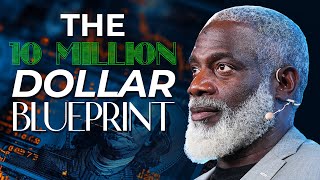
Myron Golden walks through eight steps to build a six, seven, or eight-figure business without paid ads: understand customer pain, design high-value offers with clear pricing, create abundant content, attract an affluent audience, build a premium brand with a strong story, and meticulously track and multiply money through income streams and tax strategies.
Chapters
In this video you are going to discover exactly how to get on the profit train to six, seven or even eight figures without having to sell your soul. Become a money grabbing, money hungry like greedy pig who sees people with dollar signs on their forehead even if.
You hate selling and don't know anything about business. And I'm going to give you eight secrets to eight figures in this video entitled the Eight Figure Blueprint. I'm not going to be teaching you something I read in a book. I'm going to be teaching you from my own experience. But I really had to go back and take inventory of the steps that I took.
The secrets that I uncovered and.
All of the nuances that I had to learn in order to build an eight figure business, by the way, without spending any money on ads. So where does it begin? What are these eight steps? Step number one is perception of the pain of the people.
I've said many times in the past that all of the money that you desire to have and you don't have right now, it's in someone else's pocket.
Like all the money you want to make, it's in somebody else's pocket. Somebody else's bank account, somebody else's crypto wallet, somebody else's purse. Somebody has the money that you desire to make and you don't have to hit them in the head and take it from them. They will happily hand it over if you can demonstrate that you can solve their problem and alleviate their pain. But the problem with most of us, the reason we can't make any money is because we're so busy trying to make money and we're so hungry to get paid and we have so much desire. I want to make that sale. I want to make that sale so I can report it on my Instagram or do a TikTok video on it that we don't sit down and figure out and discover. Like we have no perception of the pain of the people that we are sent to serve. And you were sent to serve somebody and I was sent to serve somebody. And people who have high levels of empathy and you can feel like the pain and agony that other people are in and you can put yourself in their shoes and walk a mile in their moccasins. Then you have the ability to speak to them in ways that people who are only looking to get paid cannot talk to them. And I'm telling you, it'll change everything. Jesus was not wrong when he said he will be greatest among you. Let him be servant of all. The person who serves the Most people, the best will make the most money.
Period. By the way, the word great. One of the translations of the word great in scripture is rich.
Abraham was very great.
So.
We have to have a perception of people's pain.
And in order to have a perception of people's pain, you have to take your mind off of your own pain.
You have to stop feeling so plugged into your own needs that you can look at somebody else and what they need and feel their pain long enough.
And care about it strong enough to say, you know what? I'm gonna go work on solving their problem. I remember one time.
I was going on vacation. Has anybody ever gone on vacation and you had enough money to get there, but you didn't quite have enough money to get back? Okay. Or was that just me? And I remember I was going on vacation. And I was also an evangelist at the time. I would travel around and speak in churches. And so I stopped at this church. We were driving from Pennsylvania to Texas, as we often did, to go visit my in laws. And we stopped at this. We stopped in Knoxville, Tennessee, and this pastor wanted me to speak at his church. And then two friends of mine that I went to college with, two ladies that were friends of ours that were friends of mine and my wife when we went to college, they were there. And we were going out to do visitation on Saturday to knock on doors and invite people to come on the bus and invite people to come to church the next day. And they asked for prayer and said they were roommates. And they asked for prayer and said, hey, we don't have any money for food. Like, well, I mean, I don't have enough money to get back home, but I got enough money for food. Right? Right. So home will be there. Right. And what I did was I just kind of discreetly slip them $100.
And I spoke at that church. And I didn't tell anybody that I did it.
And then they took up an offering for me. And then when I got to Texas, I spoke at another church. They took up an offering for me, and I came back home with more money than I left with because I was more concerned about solving somebody else's problem than I was solving my own. And I could tell you story after story after story about one of these days, I have to tell you about one of these days, I have to tell you about one day they were taking up an offering for a widow, and I only had $100. And we, like, we were down to nothing, right? Nothing in the refrigerator, hardly. With a wife and Three kids at home. Like I'm at this camp meeting. I have to tell you about the $4,000 in the pickup truck. I'll have to tell you that story one of the these days. But my point is you have to care about other people.
Not say you care, not pretend to care, not try to care, but really care. There's a difference. And so seek to serve the people. So you perceive the people's pain. Because the people's pain points are the businesses profit points.
Why? Because here's what I know. You think about it. Which one are you more likely to spend money on? Teeth whitening gel.
Or a dentist appointment when you have a toothache? When you have a dentist appointment when you have a toothache. Why? Because you're in pain. And when you're in pain, the only thing you can think about is the pain and how to get out of it. Do you understand that it is real that most people live lives of quiet desperation and they are walking around in mental anguish and emotional pain most of the time.
But you're so wrapped up in your pain you can't perceive theirs. And so therefore you can't solve their. You can't provide a prescription for their pain because you're looking for somebody to provide a prescription for yours. And if you see their pain.
As a solution to your pain, you miss the point. It is the solution, but that's not the reason to do it. Here's the reason to do it. I may not get through this because everything I'm thinking about is making me want to rant in a good way.
Do you understand the reason? Like.
In order to feel, feel F E E L fulfilled as a human being.
Three things are required. If you lack any one of these three things, you are not going to be fulfilled as a human being. You may be half filled, you may be quarter filled, you may be third filled, but you ain't going to be fulfilled unless you have all three of these. Why? Because God made you in his image and God has all these and you're not going to be fulfilled. I don't believe in God. It doesn't matter. You don't have to believe in God. You're still not going to feel fulfilled until you have all these.
So what's the first one? Well, the first thing God tells us about God is that he's creative. In the beginning, God created the heaven and the earth. The first thing God tells about us is that he created us in his image, which means he created us to create stuff. And he made us to make Stuff. So I am not going to feel fulfilled until I start creating something. If I'm not creative and I'm not exercising my creative ability, I. I am feeling unfulfilled. I'm almost feeling worthless because I'm not using my godlikeness as an expression of that godlikeness by creating something with the creativity that God put inside of me. See, when you understand that God put in all of us an aspect of his creativity, but he didn't put in any of us all the aspects of his creativity.
And so therefore, I need you to create something for me, and you need me to create something for you. Ta da.
Now.
That'S phase one.
But that's not enough. Because.
God made man to create. And God, when he created everything, including man, he said, and God said. God said, and it was so. And God saw that it was good. And God said he made the sun. God said it was good. God saw that it was good. God made the water. God said it was good. God saw that was good. You go read Genesis chapter one, you'll see it says over and over, God said it was so. God saw that it was good. God said it was so. God saw that was good. You'll see that as a pattern, right? And then he came to one thing. He said, oh, it's not good.
What's the first thing God said wasn't good? It's not good for man to be alone. Why? Now, before I tell you why, like, how did God know it wasn't good for man to be alone? Well, because he's God and he knows everything. But why else? Because God knew it wasn't good for God to be alone. That's why he made man.
It is absolutely impossible for human beings to feel fulfilled on an island. God made you for creation, and he made you for connection. And if you don't have creation and connection, you are unfulfilled. If you have creation but don't have connection, you're unfulfilled. If you have connection and don't have creation, you're unfulfilled.
Hmm. God made you.
To create stuff so you can be profitable.
He made you to connect with people so you could feel passion.
But guess what man did messed up the whole thing. What did man do? Severed the connection. When Adam and Eve sinned in Genesis chapter three, they severed the connection. And when they severed the connection, they tried to hide. They didn't try to restore it, they tried to hide. And guess what God did. It says that Adam and Eve covered themselves with fig leaves. They attempted to Cover themselves with fig leaves. But then it says, but God made them coats of skin. Coats of skin. What does that mean? That means something had to die.
In order for them to be covered. There had to be a sacrifice. What's a sacrifice? When you let go of something of a lower nature so you can take a hold of something of a higher nature, there had to be a sacrifice. What's the sacrifice? A picture of the sacrifice was a picture, long before it ever happened, of the fact that God himself would come to earth to die on a cross and sacrifice himself for us. It's a foreshadowing.
And which tells us what? That God contributed to restore that connection.
So if you don't create and you don't connect, you're unfulfilled. But if you create and connect but you don't contribute, you're unfulfilled.
Wow. God made man for creation, connection and contribution. If any one of those is lacking in any relationship that you have, that relationship is unfulfilled. Oh, snap.
Are y' all tracking? Yes. And so if you go out into the marketplace and you're creative and you invent something just so you can get paid.
Like, you think about it. What's the solution of a really successful business? You have to create something that a bunch of people want, but that's not enough. There are a whole lot of inventions that die in the invention. Go to the invention graveyard. Why? Because the people who invented them were good at creating, but they were not good at connecting. And they couldn't connect with people and let the people know I've created something that solves your problem. And they couldn't let them know. And because they couldn't let them know, their invention died.
And then once we start experiencing the benefits of creating and connecting.
Then we're supposed to contribute, because that's what brings that creation and connection brings new life into the world. So what happens with men and women? They connect. When men and women connect and a man brings his creativity to a relationship, a woman brings her creativity and they get married. In the Bible, that's how they're supposed to do it. I mean, that's how we're supposed to do it. In the Bible, that's how they did it. They get married, and then they start having intimacy. That connection of that intimacy is what brings new life into the world. But guess what? When that new life comes into the world, it can't do anything for itself. And so now the parents who created this new life are totally consumed with contributing to this new life until it can become self sustaining. This is so beautiful. You say, myron, it sounds like this is everywhere. Now you get it. It's everywhere. It's in families, it's in businesses, in churches.
It's everywhere. It's in neighborhoods, it's everywhere.
Okay? You are tracking. So you have to have the perception of people's pain. Why? Because people's pain points are business profit points. Here's what's amazing.
You want to have a better perception of people's pain points? Ask your audience. Ask them what pains them.
They will tell you. No. They will. No, they'll tell you.
All of it. But you have to learn how to ask them. You can't say, what's your problem?
Probably not going to, you know, it's not going to generate a good response. What's the matter with you? It's probably not going to do it either. What's wrong with you? No, that's not it either. But what if you could learn to ask this question? What's the single biggest challenge you're having right now in fill in the blank? Do you know you could do that with your spouse? What's the single biggest challenge you're having with relating to me right now?
And then.
Oh, snap. We'll get to that next part later. What's the single biggest challenge? You know, I mean, when, like, you could say that to your siblings, you could say that to your next door neighbor. You could say that to people who you've presented your offer to and they said, no, but why don't we do it? Because we don't want to know the truth. It might hurt too bad, too badly.
Can I get a witness? Amen.
And then once you ask your audience.
Lfa. Lfa. Lfa. You speak French? C' est la vie, mon ami. Lfa. No, lfa. Listen for an answer.
And then listen to the answer and then do something about the answer you listen to. People would love to tell you how to fix their problem if you only cared enough to ask. Like, you really care, not like you're going through the motions.
Okay, y' all are tracking. So that's number one. I had to be in enough tune with the marketplace to know what their pain points were. Do you know how I got in tune with the marketplace? Like, how did I perceive people's pain? I just remembered my pain. I remembered the pain I had when I was them or when I was where they are. I remembered the pain I can remember like it was yesterday. The pain of having a pregnant wife and she's eight months pregnant, and Our water and lights are both disconnected at the same time. I know what that feels like. I felt it. I know what it's like to only drive raggedy, like duct taped together cars. I was just telling my sister in law last night how many of my. My brother Derek, we almost died in a snowstorm, literally, because I had to go see my girlfriend in an old Volkswagen Beetle that don't have good. They don't have good heat anyway. And it broke down in a snowstorm in Indiana and we're standing out there on the side of the road trying to get a ride. And it was, and I'm not just saying this, it was literally one of the most prejudiced places I've ever lived. I literally thought my brother and I were going to die today.
But guess what? One of my friends from college, his sister saw us and recognized me and pulled over and gave us a ride and we lived. Well, I guess you knew we lived because we're here.
Okay?
But I remembered the pain that I had. I remembered the pain that I had when the only answer I could give my children when they asked me for something was no.
That was painful.
Well.
Anyway, perception of the pain of the people, then. Aspiration to alleviate the ailment. You have to have an aspiration to alleviate. Like, you have to really care enough to alleviate that ailment, that pain. Like, how can I make this pain go away? Seek to serve because service is the most fulfilling and profitable seed that you can sow. What do I mean by that? Service is the most fulfilling and profitable seed that you can sow. Well, we are talking about contribution, but did you realize, and I just shared this with people here live before we started recording. So I'll tell y'. All. Did you know that every solution that's ever been created creates a new problem? So I have right here my iPhone. Now I have an iPhone, right? I bought my first iPhone in July of.
2007. 2007. That's when they came out. And I was so frustrated because I was on vacation when they came out. I was like. And I was in Hawaii. And I decided, I'm gonna take my family to Hawaii. When I take my family to Hawaii, we're there for a month. So I'm in Hawaii for the whole month of July. And of course they came out with the iPhone in July. I was like. And they didn't have any Apple stores on Maui, right? And so they only had an AT and T store. So I said, I'm gonna go to the AT&T store. I'm gonna get there early. I got there early. When I got in the line, there were 112 people in front of me. I counted them. 112 people.
And they only had eight iPhones. Needless to say, I didn't get one. But before.
Before, in fact. So I'm looking right now. So we have apps on our phone. How many of you all have apps on your phone? You have apps on your phone? Anybody have apps on your phone? So we have apps on our phone. I have apps. I've got.
A case. I've got a popsocket wallet. So I've got a popsocket and it has a wallet where you can put credit cards. But I don't put credit cards. I put my Plaud note, which is like a, a mechanical AI device that I can use to record like outlines and conversations and stuff, right? And so I've got all of this stuff because they created the solution of the iPhone, which created a problem because people started dropping their iPhones. And when they dropped their iPhones, what happened? The phone screen cracked. And then they said, oh, I'll create a case. And now hundreds of millions of dollars have been generated by people who manufacture smartphone cases.
Do you see what I'm saying? Every solution creates new problems. Well, the iPhone was a computer, but it didn't have much software. So what did they do? They created the app store and now billions of dollars.
Well, tens of billions of dollars by now, maybe even hundreds of billions. But tens of billions of dollars have been created because they created the app store. Every solution you create creates new problems. So what that does is that gives me the ability to know that if I seek to serve, if I serve somebody and I serve them a solution, when I serve them that solution, that's not the end of the line. That's the beginning of the line. I asked the question this morning, how many of you have ever bought tires? How many of you ever bought tires? Right. Why? Well, because what did you have to buy before you bought the tires? You had to buy a car, right? So the car is a solution that solves the problem. Problem getting from point A to point B. But guess what? The tires, they don't last forever. And the windshield wipers don't last forever and the paint doesn't last forever. And, and, and, and, and, and the engine doesn't last forever. And so it's a solution that's expiring. But all solutions expire. And some solutions come with built in problems. If you can figure out what the problems are going to be before the person experiences it. After you solve their first problem, you can set yourself up to be already there with a solution in hand. When they experience the problem, that.
This is real life. That's how it works. Okay? Y' all get it. Okay, now, so next, don't use the people and love the money. This is such a hard habit to break because.
We'Ve been programmed to go to school, study hard, work really hard, get a good job with a good company so they will take care of us. So when we go get a job, what are we looking for? We're looking for what we can get out of the situation. Am I telling the truth? Okay, what can I get? How much does this job pay? Right. We're not looking for how we can serve. Don't. What if we. What if, what if? When you went to get a job, you asked the question, okay, how can I serve the owner of this business at the highest possible level so that even if they have to downsize, I'm the last person they want to get rid of? How can I provide so much value to them that I become irreplaceable?
That's a really good question.
Well.
Lastly.
Don'T use the people and love the money, but to alleviate their pain. Love the people and use the money. And if you want to take it to its ultimate extreme, use the money to love the people. So I'm going to go on to the next one. Number three. So the first one was perception of the pain of people, of the people. The second one was aspiration to alleviate that ailment. And then the third one is strategization. That's a hard word to say, of a solution that you can sell. So sit down and strategize over a solution that's sellable.
It's so beautiful. King Solomon said, if I have something good, something what? Talk to me, everybody. Something what? Something good. If I have something good, I have a moral obligation. What kind of obligation? A moral obligation to do everything in my power to sell it to as many people as possible. Wow. If I have something good, I have a moral obligation. So what I have to do is I have to learn how to strategize over how do I sell this thing to people. Now, when most people think about how to sell something to people, they're thinking, how can I get them to pay me? That's not selling. How can I get them to pay me? Is not a sales question.
That's a commission question. That's a get paid question. But it's not a sales question. Okay? What's a good sales question? Well, how does this benefit them?
So you want to figure out a strategy for selling things. Here's what you do. Discover their payoff. What's the payoff they get? What do they get when they say yes? If what they get when they say yes is not worth more than they paid you when they say yes, then it was not a good deal for them.
Are you all tracking.
Like somebody said, okay, what pain? What pain am I eliminating? I'm eliminating the pain of whatever's missing in their life.
Right? If you're. If. Okay. Like Erica talked about helping women with their relationships. And it could be work relationships, like intimate relationships, whatever. Helping women with their relationships, it's the pain.
Of not feeling like they're seen and valued that's painful. When we feel like something's missing in our life, it's painful, whatever it is.
So.
Discover their payoff. Once you discover their payoff, you backwards, extrapolate. What is the solution to their problem? Like what? How is their life going to be better? And how much better is their life going to be when they say yes to this offer? Well, I know the answer to that now. That answer, the answer to what is their payoff? What do they get? The answer to that tells me all the things I need to put in the offer. So once I discover their payoff, now.
I can design the pieces of the offer. So I discover the payoff of the offer, then I design the pieces. I'll give you an example. So I have.
A.
VIP day plus. So VIP day. It's $375,000 for the VIP day.
Here's what most people think when you say that. Well, that's dumb. Well, I guess it depends on who you ask, right? Some people say, well, that's too much. Well, too much for what? Right? So if I'm going to tell somebody they need to pay me $375,000, I better figure out something to put in it, right? Can I get a witness? Right. Okay. So I said, okay. How can I make this so valuable that it becomes like an easy yes for people?
By the way.
We just recently raised the price. We haven't sold any. At the new price, it used to be 350. We sold a bunch of them at 350,000, maybe 20. We sold a bunch of them At 200,000. Right? So it's not like. It's not like I'm just, like, throwing stuff out there. So I had to figure out, once I figured out what the payoff was for them, what's the payoff for them? Okay, here's what the payoff is going to be for them.
Well, I have to help them make 2, 3, 4, 5, 6, 7, 8, 9. Better yet, 10 times as much as they paid me. Okay, that's doable.
Help them make 10 times as much as they paid me. So if I said, if you give me $10, I'll give you a hundred, who wants that deal? Say, me. Okay, cool. So everybody said me, right? So if I said, well, you give me a hundred, I'll give you a thousand, who wants that deal? Me. Okay, we got a bunch of people who want the deal. Okay, why? Because it's 10 times. Like, you tell me. If you give me 100, I give you 200. I can't get my $100 out fast enough, right? I ain't the sharpest knife in a drawer, but I ain't no wooden spoon. I know 200 is better than 100, right? So how can I help them make more than they paid me? So, okay, how can I help them make more than they pay me? Well, I don't want to sell this to people who don't have an offer.
I only want to sell this to people who already have an offer. I want to sell this to people who are already making enough money so that when, like, maybe their offer is only $35,000, maybe they have a $35,000 offer. In order for them to recoup their investment, they only have to make 10 sales. In order for them to double their investment, they only have to make 20. Okay, well, that's doable. I can help somebody make 20 sales.
In order for them to 10x, they only have to make 100 sales of a $35,000 offer. I can help people make 100 sales of a $35000 offer. Okay, how can I make them help? How can I help them make 100 sales? Oh, I know what I can do. One, I can teach them my frameworks that I use to make hundreds and thousands of sales, because those principals don't just love me. So I'll teach them what I know, right? And I know what I'll do. Like, I'll teach them how to do a challenge. Like, I do a challenge, right? And I do a challenge where I teach people these principles, and instead of them having to pay me 350, $75,000, they can join my challenge for $299 or $297. I'm changing it to $299, though. But $297. So you better buy it before the price goes up. $2. I'm just kidding. So sell it for $299. $297. So people buy it, and they get to come and they get to listen to me teach for an hour a day for five days on how. Actually, they get to listen to me teach for two hours a day for five days on how to solve all their business problems. Okay, that's valuable. What else do I give them? Well, if they pay me $375,000 when I go somewhere to do business and I know I'm going to make millions of dollars, I'll let them fly with me on the jet, on the private jet. And they get to watch me make millions of dollars. And they get to ask me questions about it on the way there. And they get me to ask me questions about what I did on the way back. Okay, that's valuable.
Oh, I know what I can do. I can interview them in front of my audience.
And so they get exposure.
Oh, it's a wrap.
And they get eight hours of coaching with me. Just me and them looking at their numbers and their business and telling them exactly what to do next. Boom. Here. Here's three. Here's 350. Here's three. And we had a whole bunch of people say, here. Here's 350. We haven't had anybody say, here's 375 yet. I am not the least bit concerned, because here's the cool part. Either they'll pay me 375 and I'll fulfill, or they won't, and I get to go play golf. I win. Either way, I'm happy, and they're happy. Okay. So.
I discover their payoff. Then I design the pieces of the offer, and then I develop the process for the offer. What's the process? Well, they're going to get access to Offer Mastery Bootcamp, which is my $27,000 offer. They're going to get access to King Solomon's Court, which is my $55,000 offer. Plus, I charge $40,000 an hour for coaching. So eight hours of coaching would be worth $320,000. You see, I just keep making it more valuable and helping them get a result. I remember I had two girls, 31 years old. They were on my challenge, and I had never said this to anybody before. I said, y' all would benefit greatly from my VIP day. It's $350,000. I'm not trying to sell it to you. Like, if it doesn't make sense to you. Don't do it. But the reality is you would benefit greatly. Here's what I can tell you. If you say yes to this offer, you will do somewhere between 4 million and 9 million dollars in the next 12 months. Now, they had been stuck at 1.2 million for three years.
So that's a bold promise to tell them you're going to go to 4 to 9 million. Guess what? They did $5 million in the next 12 months. They said yes to that offer and did $5 million in the next twelve months. All I'm saying is they didn't do $5 million because I wanted them to. They did $5 million because I designed the pieces of the offer and I developed the process for the offer to make sure they. I didn't develop the offer so I could get their money. I developed the offer so they could get their payoff. Are y' all tracking?
Offers should be transformational, not just transactional. Okay. Y' all are picking up what I'm putting down. Okay, so then number four is preparation for persuasion of prospects. You have to prepare yourself to persuade the prospects. How do you do that? You have to clearly envision your clients experiencing the payoff. If you can't see them getting the payoff clearly, they can't see them getting the payoff at all.
Now guess what happens the first time you help a client get the payoff. Now you can see it clearly. Oh, they got it. Maybe when you got it, like when I first started getting the payoff, I'm like, oh, yeah, this worked for me. And so what you have to do is you have to preparation for the persuasion of prospects. You're not just going to persuade prospects just because you know your deals. That's what most people do, right? They don't prepare. They don't have any preparation for the persuasions of prospects. What do they do? Well, this is the best offer in the world. We got the best product in the world. We have the best this in the world. We have the best that in the world. That's not a measurement. That's just a statement. And every time somebody makes it, it's pretty much an empty statement. The best I wrote the best book in the world. Compared to what? Like, what books have you compared it next to? Right. So instead of saying that, instead of saying that, what if you said something that makes way more sense in preparing the persuasion for your prospects? Well, what do you do? How do you do that? You clearly envision your clients experiencing the payoff. So I clearly envision my clients experiencing the payoff. So I see them having the result in my mind. And if I see them having the result in my mind, then and only then can I say, them having the result in my mind. I can't tell them what they're experienced. If I can't see it, I don't have anything to talk about. Does that make sense? Is what I'm saying making sense? And so what most clients, our salespeople communicate to their clients is, oh, it has this and it has that and it has this and it has that. And we teach you how to do this and do the idea. And we got spreadsheets and we got trello boards and we got slack channels. Nobody cares. They don't care what they. They don't care what it has. They don't care what your offer has. They only care what they get.
And so when I'm talking to them, I gotta talk to them about what they get. You get to fly on the plane with me.
You get to watch me make millions of dollars. You get to ask me questions about what I did. You get to ask me questions about your business.
You get advice that has been given to other entrepreneurs that have helped them scale to 7 and 8 figures. Talk to them about what they get. Is this making sense? Yes.
And so.
You clearly express to your clients the payoff. You don't just envision the payoff for your clients, but you clearly express it. By the way, most people are terrible at this part.
Because you think you're talking about the payoff when you're talking about the pieces. Do you know why? Do you know why most people have a hard time with this? Because we got educated.
What does that mean? If you have. I want you to think about. And I'm not saying anything's wrong with college. I'm literally looking at an executive program at Harvard Business School and probably going to take it. Probably.
So I'm not saying there's anything wrong with getting an education. I'm saying when you get an education, just know why you're getting it. Here's what happens. When you get an education, the institution that you get the education from tells you that once you get the degree, then that degree is what validates you and makes you viable in the marketplace. So what you do is you talk about your qualifications as opposed to talking about their payoff. And guess what? They don't care about your qualifications. By the way, you don't care about other people's qualifications either. I'll prove it to you. You ready how many of you have ever been to the doctor? Raise your hand. Keep your hands raised. You've ever been to the doctor? Raise your hands. Okay. How many of you? Keep your hands raised. Keep your hands raised. Keep your hands raised. If you've asked the doctor to see their degree.
One. One person.
Right.
Why? Because the validation is not what mattered to you. You know what mattered to you? Solving the problem that you went in there with. Can I get a witness? And so you're talking to people about your. About your certification. I'm. And there's nothing against John Maxwell. I'm just saying I'm a John Maxwell certified coach. That means something to you and John Maxwell. And if you were a Myron golden certified coach, that would mean something to you and Myron Golden. It doesn't matter. You know, what matters. What matters is, can you help me fix my problem? Because if you can't, nothing else you say matters to me.
Is that too straightforward?
So you strategize. I'm sorry. Preparation for persuasion of prospects means I clearly envision my clients experience a payoff. I clearly express to my clients the payoff. I make them feel what it's going to feel like.
When they get the result by doing a thing that's called future pacing. In communication, it's called future pacing. What does future pacing mean? It means you describe what their life is going to look like and feel like and the emotions they're going to have and how they're going to be looked at and how they're going to be, how they're going to be, how they're going. Going to be admired by their friends and family and hated by and envied by their competition and enemies. You make them feel what that's going to feel like. Before they ever get to feel like that. You show them what it's going to feel like. You describe the smells. You describe what they're going to see. You describe when they sit in their car. You don't say, when you're selling a car, you say, well, this car has blue paint and it has leather seats. No, you say, this car is so. The paint job is so magnificent that for the first three years, when you look at it, you're gonna have to look at it with sunglasses on. So beautiful, you can't even take in the beauty. When you sit in the seats, they hug you and say, where do you want to go today, baby? I'm exaggerating. What are you all tracking?
You make people feel what it's going to feel like.
You have to Use adjectives and adverbs rather than expletives. People think they're being more descriptive when they start cussing.
It's a blanket of this and it's a blank of a dot. Blanket. Hey, do you know that's less descriptive? That's not more descriptive. What if you actually learn some words that mean the thing you're endeavoring to say?
I got interviewed recently and some of y' all may have seen the interview, and the kid says to me, he said, that's blank. Blank. He said, yeah. He said bs. But he said the words. He said, are you saying that's bs? I'm saying no. I don't say stuff like that. I don't use profanity. I actually would say what I mean. Why? Because I don't use words like that. And I'm not gonna let you use words like that and tell other people that that's what I would say. Because that's not only not what I would say, that's not even what I would think.
Are you trying, like, learn to use some adjectives and adverbs, like, get a grasp of the English language. If you sell in English, if you sell in Spanish, get a grasp on the Spanish, like, get a grasp on the Spanish, like, whatever language you speak in. Like, become a master of that language.
Mind blowing. What can happen for you anyway? Okay. And then compare effectively, the price of no as much as you do the price of yes. Here's the problem. Most people, when they contemplate selling and they think about how to persuade their prospects.
They tell their clients, their prospects how much it's going to cost them if they say yes. But they never tell them how much it's going to cost them if they say no. And both have a cost.
So you say, well, yeah, if you buy my coaching program, it cost xyz.
Is that the end of the story? Well, if you don't buy it, it costs this. I joined a coaching program in 2015 that was $30,000 a year before I had $30,000, it cost me $30,000. You know what it would have cost me if I would have said no.
Since then? About 50 million.
I want to sacrifice 50 million on the altar of I don't want to pay 30,000. Or they didn't do a good job explaining to me that it was going to cost me 50 million if I said no.
How many are tracking? Okay, cool. So which brings me to point number five. There's only eight. We're going to make it. We're going to be okay, okay. What's point number five? Creating the creation of compelling content.
Okay, I'm going to say something to you now. I want you all to get this. We're made in the image of who. Okay, Good. Did you ever think about this?
God? I didn't hear you. Max.
Max said. I'm sure we didn't. That's funny.
Did you ever think about the fact that. That God created the contents.
Of the existential world that we live in with his content, His Word? He created the contents of the existential nature. Existential nature of the world we live in with his content, His Word. We're made in the image of God. What does that tell us about us? We create the contents. Cars, houses, clothes, relationships. We create the contents of our experiential world with our content.
So if you don't like your contents, change your content.
Oh snap.
That's what I said. Because in the beginning was the Word and the Word was with God. And the Word was God. And the same was in the beginning with God. And all things were made by him. And without him was not anything made that was made. Him who? Him. The Word. Your words create your experience in the world.
So if you want to improve the quality of your life, improve the quality of your content.
You say, myron, I'm not that good at content. I know, because you're not. You ain't focused on it.
If you're going to become really good at content, it's going to require a level of hyper intentionality that you've not heretofore possessed.
I just wanted to say heretofore that was so much fun.
So how do you create compelling content? That's a good question, isn't it? By the way.
I don't have this in here, but I'm gonna say it.
Create lots of content. You want to be good at taking pictures, Take lots of pictures.
You want to get good at creating content, Create lots of content. I'm going to tell you something about the content you created in the beginning. It's not going to be good. It's going to be terrible.
If you can keep creating content when it's not good.
If you can continue to create content when it's not that good, but keep creating it anyway, you've increased your chances drastically of your content becoming good.
See, here's the mistake you make. You want to wait until you have good content to start creating it. Good luck with that. Let me know how it turns out for you. Or if you want to, I can give you a spoiler alert it won't.
I remember the first time I ever spoke in public. It was on a Sunday school bus. I was 17 years old. My hands were in my pocket. I was looking down at the floor. I'm talking to elementary school children and I'm saying more than I'm saying any other word. Talking to them about David and Goliath.
Guess what I did? I kept talking to them. Eventually I said something that made sense, and eventually I said something else that made sense. So just create lots of content, and then this is the actual outline. Have something good to say. How can I have something good to say? Turn your television off, turn the music off and pick up a book. Do not let another day of your life go by. If you live to be 6, 60, or 600 without reading something and learning something you didn't know the day before.
Can't have. I'm going to quote my brother Jeff, and he's here. You can finally get to hear me quote you. You ready? You cannot draw water from an empty well.
You can't draw water from an empty well. What does that mean? You cannot, in the words of J.R. reitinger, you cannot teach what you do not know and you cannot lead where you will not go.
Here's the problem. You know why most people's content's absolute rubbish? Because they don't know anything. They haven't read a book since they graduated from high school or graduated from college. Don't know a thing I about a thing. And you want to stand up and teach somebody something because you heard somebody else say it on Instagram. Child, please, go sit yourself. Go sit yourself down somewhere and be still.
Sorry. I channeled my mom and my dad on that one.
Have something good to say and then say it. Well, learn communication skills by watching good communicators. Take classes on communicating. Now, you might find this surprising. I read books on how to be a better communicator. How many of you have read the book Super Communicators? That was a great book. None of y'. All. Jaron, you've read it? Just Jaron and I. I'm gonna tell you something. One of the best books on communication I've ever read. Super Communicators. It was amazing. Amazing book. I'm a fairly decent communicator. Most of the time, I think. Most of the time, I'm fairly good.
I bought a $2,200 coaching program, or course, whatever you want to call it. Course. It's more of a course because I don't get to talk to the Guy on how to communicate better. Bought another $2,500 course by another guy on how to communicate better.
Like, becoming a good communicator is kind of like having style in your outfits. You have to work at.
Doesn't come naturally. I work at it. I work hard at it. I'm not saying that I'm the example, but I'm the example that I know of somebody who's a decent communicator, who doesn't think they're so good that they don't need to learn anything.
That's my point. Have something good to say. Say it well. How do you say it well? By studying how to say it well. And then commit to the process of improvement. And don't wait until you improve to communicate. Communicate to improve.
I want y' all to think about something. Think about this. Here we are on a Monday morning. We got people in this room. We got. I don't know, I'm going to call it 30 people in this room. And we have thousands of people watching right now on YouTube. Why? Because I decided I'm gonna have something to say that people want to hear. And I'm only gonna talk about stuff people wanna hear. I'm not gonna talk about stuff I wanna talk about.
And I'm telling you.
The fact that I've created content consistently over the last almost three years has garnered me the attention. I'm gonna look it up. Cause I don't know what the number is. How many hours are there in a day? Shout it out loud. How many hours? 24. That's one answer. Here's the other answer. It depends on whose day. What does that mean? Well, there are different kinds of days. There are how many hours in a day? Well, there's 24, but by the way, there are 8,760 hours in a year. But in the last 28 days. Okay, I'm going to break it down for you. In the last 28 days, people have spent 462,900 hours watching me. 462,900. Okay. Y' all didn't get it yet, so. Okay. That's okay. That's okay. That's okay. I'm gonna pump the brakes. Yeah. Okay, watch this. I'm gonna take 460. 2,000. Is that what I said? 900. And I'm gonna divide that by 8,760. And that tells me that in the last 28 days, people spent 52.8 years watching me.
52.8 years. In the last 28 days, how many hours Are in my day. Well, my attention day. Oh. I talked about how many in the last 28 days. I didn't talk about it in a day. So it's kind of low. It was kind of low yesterday. Okay. Or whatever day I can get to. So on the 30th, which was yesterday, people spent 12,476 hours watching me. How much is that? About a year and a half. People spend a year and a half of lives collectively around the world listening to me yesterday. Why? Because I created content.
I can't buy that level of attention.
But I can pay for it by becoming a better communicator. Taking the time and the energy to become a better communicator. Okay. Commit to the process of improvement. When I decided to go that I was gonna create a new YouTube video every week. By the way, for those of you who watch this channel, oh, don't miss out on Bible Study with Myron Golden Channel. I got a whole channel. We started in July of last year. It's got 80 something thousand subscribers. I think 82 or 81 thousand subscribers where I just teach the Bible. For those of you who like that, like, go check out Bible Study with Myron Golden. Anyway, but when I decided and I said it with my mouth, I made a commitment. I said, I am going to do at least one video a week for the next 10 years to see if I can get good at it. And when I say get good at it, I mean get good at this whole YouTube thing.
I had no earthly idea that we'd get over a million subs. I mean, 100,000 subscribers in the first year. Over a million subscribers in less than three years. I had no idea. That was not my thought. How fast can I get to a million? Because I don't, I don't believe in setting goals. I don't set goals at all. You say, what's Your goal for YouTube? My, my goal. My, my, my activity objective for YouTube is to do a video a week and get better every time I do a video. That's my objective. And let that produce what only that can produce.
Instead of, I want to have a million subscribers. I want to have 10 million subscribers in the next three years. That's not my concern. God said, you plant the tree, I'll grow the apples. And as Jim Rohn said, aren't you glad he didn't say it the other way around?
You plant a seed, I'll grow the tree. Aren't you glad God didn't say, I'll plant the seed? You Grow the tree. Like, how do you grow a tree? Right? That's what Jim Rohn said. Okay, so.
So I just committed to the process. And then this is. We're talking about eight figure blueprint. This is an eight figure blueprint right here. This is one of the key components of an eight figure blueprint. You ready? Attract an affluent audience.
One of the biggest reasons you're having a hard time in business is because you want to be Jesus of the business world.
And you want to save people from themselves. And Jesus is the only savior. Stop trying to save people. See, what you're doing is you're. But they need it, right? And you're going to be their savior to your demise and theirs. Is that too tough? Is that too straightforward? You're going to. Huh? That's like. Stop trying to save people.
Affluent audience attracting a fluent audience. But you cannot afflect. You cannot attract an affluent audience with poverty messaging.
Wait a minute.
Affluent people don't buy what they need. They buy what they desire. Period.
You know what I need? Pretty much? I don't need anything. I still buy stuff. Why do I buy stuff? Because I desire it.
Period.
It'll change your life. See, you're so in tune.
With the needs of the common man.
That you can't help the common man because you won't serve the uncommon man.
The uncommon man can pay me enough money so I can go serve the common man for free. One of the reasons I can provide this level of community service content on the Internet is because I don't need your money. He's just trying to sell me something. I ain't trying to sell anybody anything. I don't have to try to sell anybody anything. Like, people want to buy stuff from me so bad, I don't have to find them. They find me. And I'm not being pompous when I say that. I just understand there's these laws. Just like the law of energy conservation. Everything is energy. Energy you need to create and destroy. It just changes form. The law of entropy. Anything left to itself tends to move more and more towards disorder. The law of.
Inertia. An object at rest will remain at rest until, unless it's acted upon by an outside force, the object. The law of momentum. An object in motion will continue in motion until. Unless it's active. You say, myron, what are you saying? There's laws. Here's the law. You ready? The law of averages. Out of every so many presentations you do, your average number of people who will buy is a number.
The average number of offers you put out there, there's an average number of people who see that offer who are going to say yes. So I don't have to concern myself with getting you to say yes. I'm going to let the yeses say yes. I'm going to let the nos be nos. And I'm not going to spend 16, 1/16 of a second attempting to turn a no into a yes. It's a waste of time and energy. And all you're going to do is frustrate yourself and irritate the no. Okay?
So you have to learn the language of fluent people. The language of affluent people is not. They're not. They're not buying what they need and they're not most interested in saving money. I'm interested in saving money. It's not my primary objective. When I'm buying something, my primary objective is not to get the least expensive one I can buy. My primary objective is to get the best one I can buy.
And it costs what it costs.
So if you're talking to me, see, when people make me all, yeah, but Myron, it's only when somebody says to me, but it's only X amount of dollars. I understand. They don't understand who they're talking.
Because I'm gonna buy because I desire the thing. I'm gonna buy to save time.
Not money. I will pay twice as much for somebody who can deliver it twice as fast.
And it's worth the same amount.
Why? Because time is the stuff that life is made of. And I can't get anymore, but I can get more money. Money is self replenishing. Time is not. Time is ever evaporating. And so if you want to attract affluent clients, you have to learn how to talk to them in language they understand. Okay? Wealthy people buy to obliterate hassle. We're out. We're at dinner last night, me and my wife and Jeff and his wife. And we have Lucy, greatest server, One of the greatest servers of all time. And she used to work at Eddie V's, but she doesn't work at Eddie V's anymore. She works at Ponte. And so I said, well, let's go try this new restaurant. Well, Jeff said, let's go try this. I said, okay, let's go try this new restaurant. So I booked us a reservation. And.
I'm special.
A little. I have my eccentricities. But one of the things I can't stand in a restaurant is unwrapped silverware on a table.
Like, it's like, what in the world is Nastier than a restaurant table.
People go to the bathroom, they don't wash their hands, they come out and they touch the table.
That's real facts. But guess what? I can't stand somewhere on the table. So I asked for a cup of hot water. They brought me a cup of hot water. And then I went to the restroom. And I noticed the other tables had tablecloths on them.
I'm confused, but I'm not gonna assume. I know. So when Lucy comes back, I'm like, lucy, I noticed that those tables have tablecloths. This table doesn't have a tablecloth. Is there a particular reason? Well, the shape of the table is different. Cause we were in a booth by the window. The shape of the table is different, so they don't put tablecloths on it. Oh, okay, cool. I didn't say anything else about it. But you know what? She did. Lucy comes back with this beautiful white towel, new silverware, and puts the silverware on the towel. I didn't ask her for it. Why? Because she's astute to the desires of affluent people. We're not astute. And we wonder why when we make an offer to somebody who's wealthy, we told them not to buy from us and we don't even know it.
You justify your price. All you're doing is letting people know you're out of your depth.
Don't justify my price.
Somebody who you would know if I told you they are. I'm almost done.
You know who they are. If I told you, I only have two more points, but I gotta tell you this.
They called me. They wanted me to speak at an event in Vegas. What are your requirements? Well, my requirements are my jet fee, $55,000 an hour there, $55,000 an hour back, and $250,000 to speak. So it'd be $110,000 a day and accommodation for me and my team, my media team, and blah, blah, blah, blah, blah. So, okay, I don't think they're going to go for that, but I'll tell them y' all called me. I didn't. I didn't say that. But I'm thinking, I don't care if they go for it or not. You asked me what my requirements are. Those are my requirements. So they came back and said no. He said, no, they thought you'd want to do it for the Expos.
No. What you mean is they had me confused with somebody else. Maybe his name is Byron Silver.
But you asked me to go to Las Vegas. I didn't Ask you if I could come to Las Vegas.
Okay, we understand each other now. So attract the affluent audience. How? Learn the motivations of affluent audiences. Learn the motivations. They're not the same as yours. If you're not affluent, their motivations are not the same. Learn the motivations of affluent audiences. Leverage the money mentality of affluent audiences. How do you leverage the money mentality of affluent audiences?
You know how poor people sometimes buy things because they're cheap? Rich people sometimes buy things because they're expensive.
What?
So I was thinking about. I've had people offer to make for me custom suits for less than the suits that I buy, because the suits that I buy are.
I buy suits from the most premium priced custom clothier probably in the world.
But that's where I learned how to. And that's where I learned about custom clothing. They came and I like the way they feel like, this is my first. This is my first really. I bought three custom suits. They have, like totally hand sewn, and then they have half hand sewn, half machine sewn, then all machine sewn, and they range from.
4,000 to.
Upwards of $15,000 for the suits. This is somewhere in the middle. This is the hand sewn, though. But it's somewhere in the middle. It's at the base of the hand sewn. And so when I bought them and I put this suit on, it felt different. I was like, this suit feels like pajamas. Like, I'm serious, it feels like pajamas. And when I got ready to put it on this morning, I said, I'm gonna wear my pajama suit today. That's what I thought. I'm gonna wear my pajama suit, right? And I've had other people offer to make me suits, other custom clothiers offer to make me suits that are. Oh, our suits are way less than theirs.
That's nice, but it's not a motivating factor for me. Now, if a custom clothier said to me, you know what? I want to be a custom clothier, this would. This would. This. Like, this was. This is what would get me to change from Tom James. Are you ready? If they came to me and said, I am a tailor.
I make custom suits, but we don't sell enough suits. But if we can brand them with your name and I can share the profits with you, will you let me become your custom clothier? My answer would be, absolutely, because then they'd be Myron golden suits, and I'd show them how to compete with Tom James.
You see what I'm saying? It's a totally different way of looking at life.
Okay, so leverage the money mentality. So, Phyllis, I think you and Cease would agree. Like, there's something different about flying on a private jet other than the fact it's private. Right. It's a level of service and concierge service that makes you feel a way that first class doesn't make you feel. Do you agree with that? And so. So, like, tap into that money mentality. Learned. Like, I don't perceive things as expensive. Everything costs the same amount to me. Cup of tea.
A trip to Boise, Idaho on a private jet. It's all the same thing. Cause I paid for it with offers that I created according to my creativity. It's all the same thing. Okay? Like, tap into that mentality and then launch into the audience of affluent. I mean, launch into affluent audiences with your offers.
Most of you watching on YouTube and most of you in this room, the biggest challenge you have in building a business.
You feel like you have a perception of what it means to be affluent or wealthy.
And that perception that you have in your mind of wealthy people rejects you. It's not the wealthy people that reject you. It's your perception, or I should call it your misperception of wealthy people that rejects you. And so therefore, you don't make the offers to the affluent people because you've already decided for them that they're going to say no. Am I telling the truth? A little bit too much truth, huh?
Okay, so then number seven. Is this build building of a baroque brand? What's baroque? It's like luxury baroque. Like, it's just luxurious plushness. How do you build a baroque brand? Well, you have to know what a brand is. A brand is a name that reminds you of a story. Build a baroque brand, a premium brand. How do you build a baroque or premium brand? You build a brand that people are willing to pay a lot of money to attach themselves to. Why do people wear. Carry coach purses and wear David Yurman jewelry and Louis Vuitton and.
All these other brands drive Mercedes and Bentley and Rolls Royce? Why do people do that?
They do it to attach that brand's brand equity to their brand equity, to elevate their brand equity.
So the question that maybe you never thought to ask this, but the question I would ask is this, like, how can I make my name so valuable.
That people want to attach their name to my name to make their name more valuable? Because a brand, in my opinion, this is Myron golden definition of a brand. If you go look up brand in the dictionary. You're not gonna find this unless it's the Myron Golden Dictionary, which has not been written, so you're not gonna find it. A brand is a name that reminds you of a story. By the way, you already have a brand. Your name already reminds people a story. Now, if you didn't design the story.
That your name reminds people of, then your brand is not a brand by design. Your brand is a brand by default. You have a default brand, not a designer brand.
Are y' all with me?
I'm not gonna. I have so many stories I want to tell y' all that'll help you understand this, but I think you get it already. And some of the stories I've already told, so I'm not gonna tell them again. I'm not gonna belabor the fact. So determine your brand story. What's the story? What's the story you want people to be reminded of when they hear your name? Figure that out and then make everything you do support that story.
You know what they said about Jesus? You know what it says about Jesus in John 1? It says, and the Word became flesh and dwelt among us. And we beheld his glory as the glory of the only begotten of the Father. What that means is Jesus, who is the living word. The word of God became flesh. He became the word of God, actually became flesh and dwelt among human beings. That's the interpretation, but here's an application. The Word became flesh and dwelt among us. When your word. Whose word? Everybody, tap yourself in the chest. Say, my word. When your word becomes your flesh. In other words, you do the thing you said you were going to do. When your word becomes your flesh.
Then you can dwell among the people you gave your word to. If your word doesn't become your flesh, you have to hide from those same people.
I hope they didn't see me.
But guess what? When your word becomes your flesh, you can dwell among the people.
Then they can behold your glory because the Word became flesh and dwelt among us, and we beheld his glory as the glory of the only begotten of the Father. When your word becomes your flesh, you can dwell among the people, and then they can behold your glory. Then and only then can they believe your story.
So good. Build a baroque brand. Demonstrate. Determine your brand story. Then develop your brand story. Like, figure out what that's gonna be and develop it and then practice it. And then demonstrate your brand story. Because a brand is not the story you tell yourself about your name. The brand Is the story other people tell other people about your name.
What I have to design, what other people are gonna say about me? Yes, you're already designing it by the words that you speak and the actions that you take.
And then lastly, if you want to build an eight figure business, you must meticulously manage and multiply your money. Meticulously. Meticulously. Guess what's really Guess what's harder than making eight figures or $10 million? Guess what's harder than making $10 million? Accounting for $10 million.
Keeping $10 million, growing $10 million, all of that's harder than making it. So here's what you do you know where all of your money comes from? Why? Because it tells you what levers to push. How many leads am I generating? How much money is this book making? How much money is this book making? How much money is this offer making? How much money is that offer making?
Know where it all comes from. Know where it all goes.
When you know where it all comes from and you know where it all goes, do everything in your power to know how to keep more of your business's money. And I'm not going to go into great detail, but I discovered, and I'm not going to go into great detail, but I discovered last year in real life and in real time, how to use real estate to eliminate my tax liability. You don't understand how that tax liability weighed on me. It weighed on me, number one, because I got audited in 2010 and they came to and said you owed the IRS a million $65,000 after I'd already lost everything. And I didn't have a million dollars worth 65,000. So I certainly didn't have 1 million 65.
Then.
Once I got back on top of my game.
My four least favorite dates of the year.
January 15th, April 15th, June 15th, September 15th. Why? Because I would stroke a check for hundreds of thousands of dollars every quarter for years.
Yep. Like, you'd spend all. You'd spend all of your, I mean, a large part of your business bandwidth.
January, February and March, making sure you know what the number is so you're ready for it. April 15th. And then you spend the other half of April and then all of May and half of June making sure you got enough money to send another ridiculous check. More than I ever made in 10 years at any job I ever had. Every quarter.
I finally figured out I don't have to do that anymore. By investing in real estate.
Figure out how to keep more of the money you make. These are the eight steps the eight secrets to eight figures. Even without spending money on ads, we now spend money on ads. But we only spend a little. We could spend a lot more. My business coach.
One of my business coaches in the past, he says.
The business that can afford to spend the most money on ads wins. And I used to believe that. I don't believe that anymore. The business that can afford to spend the most money on ads wins. You know what I believe? I believe the business that can afford not to spend the most money on ads wins.
Which means if I can drive as much traffic without spending money on ads as you do by spending money on ads, then if I add spending money on ads, I've outpaced you.
Oh, snap.
More on that later. I hope this video blesses you. I hope it transforms your businesses in ways you can't currently imagine. Use these nuggets to take your life and your business to the next level. In the meantime, in between time, stay blessed by the best. I'll see you on the next video. Bye for now.
More from Clegg





AI Won't Tell You the Full Truth | Arthur Brooks + Simon Sinek | A Bit of Optimism Podcast



How To Make the Best Decision | Arthur Brooks and Simon Sinek | A Bit of Optimism


