Addressing Gaps & Terminations in the Job Interview
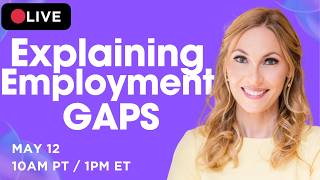
HR coach Madeleine Mann explains how to discuss employment gaps and job terminations in interviews. She recommends honest, concise language on resumes, avoiding "fired" and instead noting layoffs or mutual separations. Show skill maintenance during gaps through education or volunteer work.
Chapters
Hello. Welcome. We are live. I am Madeleine Mann. Go ahead and say hi. Say where you're joining us from. Today we are talking about how to address gaps and terminations in the job interview. It is really common, especially these days, to not have a steady stream of, oh, I've been working every single moment since I graduated college or since I started working. And so, and a lot of us also have a gap right now, right? Maybe we were laid off, maybe we were terminated, maybe we took some time off to do something in our lives that is not necessarily tied to corporate work. Whatever it is, we then think, okay, how do I get back in the game? How do I explain this in a way that wouldn't make them hesitant about Hiring me. So go ahead and also let me know in the chat if you have any gaps. What is that gap? That your answer could be something like, oh, you know, I've, I, I left my job 12 months ago, or, you know, I've been out of work, you know, since January, or, you know, I was, I've been a stay-at-home parent, whatever that is. Or my gap was several years ago. I have a, I have a 6-year gap that happened. 10 years ago, whatever it is, right? Let me know. As well as we're going to talk about terminations. Terminations are a little bit of a tricky thing to talk about when you're in the job search process, the hiring process. I want you to know where I come from when it comes to terminations. So as a human resources leader, I myself has conducted a lot of terminations simply because that is the nature of the role. I am the one who has to, you know, make sure that everything for the termination goes correctly to plan. Not necessarily I'm choosing who's terminated, but I'm helping to make sure that the termination is done correctly. And so I have seen so many people get terminated, and I will tell you one thing is that just because someone is terminated does not mean that they are a bad employee. Or that they are not going to succeed significantly there. A lot of times it's the wrong person in the wrong role. I talk about it how it's a flower planted in the wrong garden. If a flower is not growing in the garden, do you yell at the flower and say, this is a terrible flower, or do you replant it somewhere with a little bit more light? Maybe you give it a bit more water, and in that new garden it flourishes. So I also personally have been terminated before. I have been fired, And I then, my next job I landed, I was a objectively a top performer. I got one of the 6 top performance awards in that company within the first year of being there. And so I do know personally what it feels like to feel horrible about being terminated and then rise above it because it really is a tough thing to go through. So I want to see who is in the chat. Okay, cool. So we have lots of folks here. I see Phil. I see Randy's here. Cool. We have someone here from Memphis. That's great. Strat was on a gap now, laid off in September. Okay. I'm so sorry to hear that. I have also been laid off before, so I know that, that feeling. You've says, I left my job last November. Hi from Chicago, says John. Wendy got laid off since April of 2025 and has been unable to get a contract role. Okay. And Phil Jr. says, yes, company sold and I want to take care of my dad with cancer. Yes, exactly. There's a lot of personal reasons that we take a gap, and that's a really common one. Okay, so thank you so much for sharing. Um, and I want you to know— oh, and then I'm seeing this really nice comment from Strat saying, thank you, Madeline, you've been a big help through this process. That is so great to hear. That's why I'm here. So we're going to talk through this, this topic today. And if you've been to these live sessions before, I'm here most Tuesdays. Um, and what we're going to do is we're going to talk through some of these— this topic as well. As I am very active in looking at your questions and answering them in real time. That's the really special part about these lives is that you can come and we can talk about what is on your mind. Now, if you really like these live sessions and you want to see me go deep, I'm actually putting together 5 live sessions next week. I know it is absolutely nuts. So I'll go ahead and put it in the chat. Hopefully it pops up for you, but at www.southmayway.com/masterclass, I am doing— you can register for my 5-day masterclass. It's happening all of next week, every day at 3:00 PM Pacific, 6:00 PM Eastern. I'm going live and this is new content I've never released. I created these 5 classes. Based on the really deep understanding, both from the company side, me helping companies to hire during this time, plus the side of working really closely with, with job seekers. And the 5 days are actually tuned to the 5 biggest challenges that high-income earners are experiencing in this job search. So if you're going for those high-income roles, because those roles are the hardest to get because they are so competitive. There's not that many. You know, if you're going for a VP-level role, you don't— a company doesn't have as many, you know, as many VPs as they do associates or managers. Right. It gets more narrow as you go up. And so I'm really talking to the most difficult roles to get, especially also a lot of them are not getting posted online. So how do you find them? How do you than Ace the Interview. So this is a more advanced 5-day seminar and really speaking to the job searches that are especially challenging to make sure that you get what you need over those 5 days. And as a part of this celebration of me doing this, and when I announced this, that I was doing this masterclass just a couple of days ago, I ended up opening up my coaching program. So now through May 25th, I've opened up my coaching program and I'm doing it for $1,500 off. Okay? So if you ever wanted to join, get a discount, $1,500 off of my coaching program, do it now. It ends by the end of like this whole masterclass cycle. So that's May 25th. So go ahead and get in. I'll also put that link in the chat in case you want to sign up today. And get in. And, you know, we have the coaching side. We have 3 levels. It's, it's purely if you want all of the advanced tools. So I have a very specific bespoke, just like proprietary AI platform that has all of my tools and helps you to build out your entire job search in an extremely elevated way. And it has like an AI coaching there and all that kind of stuff. If you want that where it's, it's self-led and all that, you could do that. If you want the mid-stage level where you're getting feedback from me and other coaches asynchronously and also on group coaching calls and getting a lot of that really in-depth help. You hear me talk about— I like review a lot of coaching calls. No, not coaching calls, interviews of my clients and I give them feedback. A lot of that feedback is for the these clients at this level. So that's the mid-level. And then the senior level is like done with you, done for you coaching, right? So that one-on-one, you get a handful of sessions, you get edits on your resume, like all this kind of stuff, like very hands-on. And that's more of at the executive level. So if you really want things kind of like hand done for you, that would be that one. Okay, so anyways, all of that, definitely check that out. Make sure you take advantage of that if now's the right time for you. Okay, so let's get into it. So I want you to know, when it comes to gaps, gaps are normal. Okay. I have talked to so many different hiring managers and they're usually not thrown off by the fact that you have a gap on your resume. That doesn't concern them too much. I would say what does concern them more is short stints. Okay, write that down. That is the part that they're worried about. Now, unfortunately, gaps and short stints sometimes coincide, right? So maybe you got laid off after 9 months of working somewhere. Okay, now it appears like a short stint and it has now created a gap. So what can you do in that case? Well, I would say, and I think I saw someone earlier in these messages. I think they said that, can you just write on your resume? Let me see if I can find where the message was. Where can you just write on your resume, that I was, I was laid off and that's perfectly fine. So what you typically want to do to eliminate the idea of, oh, this person is just a job hopper, they just leave a role as soon as it gets hard or they just get fired or whatnot. No, if you were laid off after 9 months, you can just say laid off, you know, just like laid off due to company, like, you know, left due to company-wide layoffs or whatever it is, right? Just a very short— I usually put in like little small font italicized, and it's not like this big thing, it's not this big explanation, or laid off along with 30% of the workforce or whatever it is, right? Like if it is a big chunk like that, you can say that. If it was at a really large company, maybe a small percent, but, but, but numbers-wise, a large number of employees, like laid off with 1,200 other employees, right? So you can say things like that. If you can quantify it in a way that's like, wow, this was not performance-based. This was truly, I just got caught up in a bad situation. And, and that is really normal. So I think putting that can help because we don't want to spend to spend interview time explaining why did you leave your jobs, even though they will ask, because it's not going to be what gets you the job. It's not going to be what impresses them. So we want to spend the least amount of time talking about things that can only hurt you versus propel you forward. So, so Michael says, what if we have gotten laid off 4 out of the last 6 jobs. So I would say, you know, continue to put those layoffs on there. And, and like, yeah, say that they're laid off. I mean, this is— I have a client and I— his, his testimonials up on the YouTube. His, his name is John, and I think he was, he was laid off 4, 4 to 5 times in a row. And it really made him look like a job hopper. It was really serious. And then In this job market, he ended up applying all of these job shopping strategies and he ended up getting at least 7 job offers. Maybe it was 9. I can't remember exactly the number, but I think he got at least 7 job offers. So I just want you to know it's all about positioning, right? That this is not a, a death sentence for you at all. Oh, I'm so glad you asked this question, John. John says, what's a short stint? It means essentially short stint means you have been at a company for a short amount of time. What is a short amount of time? Generally under 2 years. Of course, in different industries, that is still too short. 2 years is too short. So in some other industries, that's quite long. So it depends on your industry. But if I was to give you a quick and dirty example or kind of metric to go by, it would be 2 years. Now let's say you did contract roles and you say, well, the contract was only for 6 months. Is that a short stint? No, it's not. Because that's a contract role. And you would write on your resume, contract, right? 6-month contract. You just make that clear, right? So it's not— it's pertaining to full-time roles, not to contract roles. So, great. So Phil is asking some more detailed questions here. Do you put laid off to the right of of the working dates or at the bottom of the description? So neither. So where I would put it is I would put it probably like right next to the company title. So like, let's say you say like Director of Operations, then over all the way to the right it says the dates, and then under the Director of Operations it says, you know, company name. And then I would say right next to that, in a font that's slightly smaller than the company name and probably like not bolded and a bit of tile size, I would say, you know, laid off with 30% of workforce. Okay. Right there. Good question. So, so, and, and yes. So Sammy is asking, you know, would you be able to look at my resume and give feedback? Yes. So I put here, I went ahead and put that in the chat. Let me repost the, let's see, hopefully depending on what platform you're on, I will repost it. You can sign up for my coaching program where I do at any level where it has coaching, which is like the middle and the top levels. Yes, I am. I'm actively, I'm the active person who is reviewing resumes and giving feedback. So yes, I'm not someone who's like sitting above everyone being like, all right, I'm just going to have other coaches do all the coaching for me. I mean, I do have other coaches too, because that makes it so that you can get dynamic feedback from different perspectives. But yes, I will. I can be the one who is actually giving you feedback on your resume. So I'm happy to do that. So, okay, so this is an interesting question. So Wendy asks, if you have been in contract roles for 6 years, do you group them or list them separately? I would say it depends. So it depends on you. So typically the way I would do with, with clients is I would look at what is the role they're going for next, and then I would look at their contract roles in the past and I would say, okay, which of these are the most relevant to what you're going for next? And if there's certain ones who have like big names that we should highlight more, Or there's certain ones that are really important that are much more relevant to what you're going for next. We might kind of break that one out and make it its own thing. Now, if they're kind of all similar and, you know, we want to also— maybe there's also like a, a career move you made right before this that is actually super relevant to what you're going for next. I wouldn't want to break them out individually because then we'd be pushing down that experience below that too much. So, yes, I would put it all together. So, Wendy, that's kind of a long round roundabout way of saying it really depends on your personal situation, but both can work and it really depends on your targeting. And that's why, like, I talk about my job shopping methods so much in my coaching in that it's always built from the employer perspective backwards. I'm never just like, here is the best way to write a resume because that's what I prefer. That's usually how a lot of my clients have come to me and they've gotten resume writers and they're like, oh, that's how they wrote it for me is they asked me about all my best accomplishments and then put it on there. I don't do that. I say, okay, let's focus on what's the end goal and we're going to position everything towards that. And that might mean throwing out some of your best accomplishments. That might mean doing something a little different on your resume that feels like, why are, why are all my contracting roles here? But then one of them is broken out. Doesn't that seem a little bit funky? It's like, well, if we're being helpful to the person reading your resume, that's actually super helpful to them. Like, okay, this is what I need to pay attention to the most. They're going to say, Thank you. Okay, so good stuff. Okay, okay, sorry. Okay, Samir, I called you Sam. It's just because all these screen names, these usernames kind of like all run together. So I just saw the first name, like the first 3 letters. But Samir, thank you for helping me make sure I get that right. So Um, okay, so what if your pers— if I took personal leave that unfortunately led me to leave the company and now it's been a year out of work, but what I addressed took me 3 to 4 months before I re-entered the job market? Okay, so you took personal leave. Okay, y'all, I want you to lock in at this very moment. Okay. If you are multitasking, this is like the golden nugget for anyone who's having gaps. And I'm going to deliver it right here for Megan's question. Now, when you were trying to think, because I know each of you has a very unique situation, like Megan's situation is very unique, but here is a piece of advice that can work for all of you and you can adapt it to your own situation. When you have a gap, You need to frame it as you being fortunate. Write that down, underline it 3 times. How could Meghan having taken personal leave, that was probably something that was, you know, possibly tough for her or, you know, painful or whatever it is, I don't know what it was, how'd that mean that she's fortunate? Well, she's fortunate because You— she can frame it as, you know, I, you know, I had to take leave, um, and I was at a really fortunate time in my career, both in my career and financially, that I was able to step away and focus on my family in that time, or focus on whatever, right? You could, you could keep it— you, you want to be a little bit careful if you're talking about your own health because you don't want to create this idea that you are unhealthy and that's going to hurt damage your work. If it was something that truly was a snapshot in time, like I broke my leg and now it's all better, right? That's fine. But basically, you can say something, but hopefully it's something that was finite to an amount of time. And then you say, I'm really fortunate that I had the resources and the support of my family to take a step back from work for a bit and focus on myself, my family, my blah blah blah. And then reevaluate what I really want next. And that's why I'm so excited about this opportunity, because it is— I have had the time to think and like, this is exactly what I want to do. And you give them specific reasons why. Completely changes the tone of the conversation and is so magical is that a lot of people start getting envious of you when you talk about that. It's like, wow, that actually is super fortunate. That she was able to take that time. I wish I had time to step away and focus on my family or be there for my parents or travel or whatever it is, right? So really focusing on that is, is fabulous. Um, and Wendy says, this is super helpful. I've played around with the order and tried to work it backwards, so that confirmation was helpful. Okay, cool. Um, So, uh, Steel City says, was, um, was at a job for a short amount of time, about 4 months, and in the interview, do I say I got let go or that the company went in a different strategic direction? Um, okay, so does this mean that you, uh, does that mean that you were terminated Or you was at a job for a short amount of time. In the interview, do I say I got let go? Okay, so this is a good question because that's one thing I want to talk about today is actually getting terminated, like actually getting fired. As I mentioned at the top, it's happened to me as well as I have terminated so many people in my career just from the nature of working in the human resources function and being the one responsible for carrying that out. Um, so what I will say here is unfortunately we have to avoid saying that we were fired. It's just a really tricky thing to— like, I'm just, I'm just gonna be really blunt with you, saying that you're fired is going to just raise too many questions. So you do, you do want to say it in a way that feel is where you're not necessarily lying. But frankly, and I'm just trying to protect you as the job seeker, saying that you were fired is probably going to lose you the job straight up. Like, and I just, I want you to get employed, right? And, and like I said, like, I, when I was fired, I didn't straight up say that I was fired. Like, it took me years afterwards to admit it and to tell everyone that, yeah, that's what happened. So anyways, yes, I would say a good way to position maybe a termination is First of all, like trying to find things that are secondary reasons for the termination and also positioning it as a mutual situation. So I ended up taking the job and it was, it was a 2-hour commute both ways and I was really excited about it, but it ended up really dragging on me and impacting my work. And it was just, it was just best if I left. Right? That could be one, very understandable. 2-hour commute each way. That's intense. It was in the opposite direction of my son's school, whatever it is, right? Another way you could say it, you know, it was at a startup where things move fast and they hired me for one thing. And then once I got in the role, the priorities changed a lot. The skills they needed changed a lot. And so ultimately it just made most sense for us to part ways. And I think the company is amazing. I wish them the best. The coworkers I met there were phenomenal. But now I'm freed up to find something that's a better fit. Okay, so stuff like that, right? With my clients, I work very specifically. I'm like, okay, here's what you say in this situation. Like, this is a question that comes up all the time of like, how do I position it this way? And I kind of help them to specifically reword what they're going to say because even saying it slightly wrong in a certain way can, can give the wrong impression if you were fired. So Um, definitely, uh, it is, it is a sensitive, sensitive topic. Um, so let's see. Um, all right. Okay, so I see Samir says, I'm trying to land a permanent job but always end up with contract positions. Where should I be applying now that I'm not able to find contract roles? But is it good but it's a good opportunity for me to apply. Now that I'm not able to find contract roles, I mean, contract positions are great right now. That's usually where you see a lot of the internal hires that are happening are usually happening from contractor roles. I guess I'm not totally sure what the question is like, where should I be applying? Like, are you talking about like to which companies? Because that is a super, super precise question based on your your job title, your industry, your country, your city. So yeah, typically with, with clients, I would actually narrow down. And this is actually a really important question that a lot of clients will ask is, is their targeting is off. And I think I'm actually going to do a live about this in a few weeks. Is, is your targeting correct? Like, are you actually targeting the right roles? I have tools in that, you know, I built out these like very in-depth suite of AI tools. And one of the tools is like talking all about market demand and is, is the role you're targeting actually have enough openings to where it's worth your time to go down that road? And I recently had a client, she was like, Madeline, I'm not getting enough interviews. Like, I'm feeling pretty frustrated. Like, is your coaching even working? Hello? And I said, hold up, give me your data. I had her give me the data of like what she's applying to, all that kind of stuff. And I said, okay, Frankly, what you're targeting, too small, too small market demand. That's the thing. She goes, oh my gosh, are you serious? So I was like, okay, can we pivot to a different role? And it wasn't like a giant— it's not like she changed careers. It was just like a slightly, like a slight pivot in the titles. The next day after we made that change, she started getting sourced on LinkedIn, right? She started getting more interviews and now I think she has at least, She had 2 interviews today, and I think she has more interviews this week. So sometimes our targeting is completely off. Okay, so, okay, so people are liking this. All right, we're going to— we'll definitely do a targeting video. We— great. Yes, that is coming up. That is one of the future live sessions I'm going to do. So, yes. So people are asking about, will your staff review resumes for a fee? So Yes. So I have— right now it's $1,500 off. So all of my coaching services are $1,500 off. That is because, just so if anyone showed up late, I am doing a 5-day completely free masterclass next week. And that is— and I just put the link in the chat in case it works on your platform of where if you wanted to sign up for coaching from Phil Phil Jr. Um, so next, next week I'm doing a live 5-day masterclass of the 5 core struggles I'm seeing people who are high-income earners having in the job search. As part of this, uh, masterclass series, I opened up my coaching program for $1,500 off until that masterclass series ends. So until May 25th, I'm doing $1,500 off. You can do like the course version where it's more self-guided, or you can get the coaching or the really like done with you, like really hands-on coaching if you really want to have your hand held through everything. So anyways, yes, you can check that out. Now, if you want to go to the free masterclass, a 5-day thing, I will also put that in the chat. Oops. I— it's www.selfmadeway.com/free. Masterclass. Definitely register for that. I'm really excited. This is a new masterclass for me. I haven't released this content before. There's going to be a workbook involved. There's going to be— I'm going to do live Q&A every single day, which I've never done in any of the masterclasses. I usually present the content and I'll do like a Q&A on day 5. I'm doing a Q&A every single day. So keep coming back, ask your questions. I'll be doing it just like this. I'll have the content, I'll have a live case study. What the feedback I've gotten from my clients is they love it when I bring in real people and they say, here's what I did in the job search. 1, 2, 3, 4, 5. Because people like this. I understand you like to listen to me, but then you also are like, okay, but does this actually work? Can someone actually tell me specifically what they did, who they sent the email to, what they said in the interview? And so I'm going to include that. So this masterclass is going to be longer, bigger, better, juicier, crunchier, crispier than ever. All right. So let's dive into more of your questions. Okay. How do I explain a 4 to 5 year gap that takes me off the hot seat. How do I get back in the interviewing groove? Okay, so I'm guessing when you're saying getting in the interviewing groove, does that mean that your gap was now? Like, you're— it was the last 4 to 5 years you weren't necessarily in the corporate game. So here's the thing. This is so important for anyone who this is their situation, where your gap is more current. I know we get upset and we get annoyed that companies are judging us so hard for having a gap. You're like, hey, you know, I was a stay-at-home parent. Hey, I was building my coffee shop business, or whatever it is, right? And but we have to be real with ourselves. They are scared to hire you because they're afraid that your skills have atrophied, which, if we're being honest, they probably probably have. They probably have. I mean, my skills atrophy after a few months if I haven't been keeping up with them in, in the business sense, right? So how are you going to prove to these companies that your skills— not that they haven't atrophied, but that you have reinvigorated them? Now, of course, the first step you take is probably some sort of education, right? But education is not what they're looking for. The education is for you. So many of us do education for— to seem more attractive to companies, which that isn't usually the case. It usually doesn't make us more attractive to companies. But education can help us to elevate our understanding of a topic so that we can then take what we've learned and build skills and build like real life projects or shadow or contribute to companies, right? So, uh, so that's what you— that's actually the goal is to actually exercise these skills. And it's— you have to get a bit creative depending on what your profession is. So for example, uh, in my coaching program I have tons of people who they kind of— they have skill gaps, right? Or they have— it's a skill gap or it's an actual employment gap, right? And so, for example, my client Maria, she has a PhD from Harvard, okay? Pretty impressive. But she's actually having trouble getting jobs, which is, you know, for all my PhDs out there, shout out to my doctors. It's like such a bait and switch when you realize that having a PhD doesn't necessarily guarantee you a job, which is crazy after all that hard work. So anyways, she wanted to land a market research role in a corporate company, but because all of her research was more academic, she was struggling. So what I did is I said, okay, like, let me put you in touch with some business owners where you can do a couple of pro bono projects, get some real-world results, and then speak to that in the interview. Boom. That made a huge difference, not only in her resume, in her proof of work, But her confidence. Same with my client who he now landed a VP of Product role. He was, and you might, if you came to one of my recent masterclasses, you saw he came on and talked about this, that he was missing AI experience. Okay, so are you just going to sit there and hope companies will overlook that or are you going to get it done? And so him and I actually worked on a project together. He helped me, you know, I told you about all this amazing stuff, all this, this amazing AI platform that I've built out. He was the one who started that for me. And now there, now there's hundreds of people using it, something that he helped build. He can speak that in the interviews. And of course, he landed an amazing job. So, that's just a couple of examples of how we really need to show employers that we are doing great work and it doesn't mean we need to get a job to do that. You don't need to get paid to do these things or get like a full-time job. Like he did, he did like a handful of hours like working with me and then, and then we took it from there. But he advised on it. He gave amazing feedback, like advice and feedback, and he did some hands-on work as well. And that was enough to really show his expertise. Okay. So, um, perfect, perfect. Let's see, lots of cool, cool, cool. Okay, so, um, so, um, LinkedIn, do you discuss in, in any of your classes what works and what doesn't? Having a resume there, I got emails from insurance companies. Financial companies. Yes. So I would say LinkedIn is huge, right? LinkedIn is, for a lot of my clients, about like a normal amount is like for a lot of them, about 50% of their interviews come inbound from people just finding them on LinkedIn. Right. So really having that as part of your strategy is, is absolutely phenomenal. So perfect. All right. So what about a career gap, meaning I stepped away from my career job, worked for a family company for a few years in an unrelated role by title, and not have a company judge that negatively? Yeah. So I have a ton of clients who've gone through this. It's also the entrepreneur back to corporate pipeline is one that I specialize in, but a lot of people struggle in. They're like, how do I move in this way? The number one thing you guys have to realize is your previous job titles are some of the things that can be the most distracting. So first of all, when it comes to, especially for those of you who are entrepreneurs, like calling yourself, like having your most recent title be founder is like the worst thing you can do. You're the founder, you're the owner, you can give yourself any title you want. And a recruiter online is never going to source someone who says that they are the founder for their company to be their director of marketing. Okay. Because they're like, no, this person is doing their own thing and they're not going to want to report in to, you know, a manager and then the manager's manager and all that because they're so used to being the head honcho. So that's the first thing. And there's a lot of layers there. But I know that this question is not necessarily about being the CEO, the founder. It's saying that you worked for a family business with an unrelated role and title. So I would say, you know, you really want to focus on what about that role is relevant to what you're going for next. If only one bullet point that you can muster is related to what you're going towards next, and it was only like a very small percentage of the job, still put it there and only put one bullet point. Only put the relevant information. And then we go to the next role down. And maybe that one's a lot more relevant. So now our focus on the resume is not to like really focus. And also, especially in this situation, you should have a highlight section. In my— so as part of my AI site, there's a section for building out your resume and you can choose to have a highlight section or not, but it helps you kind of like piece together the highlight section. I would say in your situation you would want a highlight section because what a highlight section does is it quickly tells the reader what they need to know about you versus focusing on, okay, but why, why did they work at this, this company that seems unrelated to what they're doing next? All that kind of stuff. The highlight section controls the, the where the eyes go. So that's super important. And I— you can call it a summary section. I call it highlights because I'm not focused on a summary of everything you've done. I'm focused on only the things that the reader needs to know about you, the highlights. All right. So let's see. Adriana says, I— the last two have been short stints, one mutual due to misalignment, and the last one laid off in 8 months for a reorg, and the last one in, first one out. About to meet with a company I previously interviewed with. How to. So how to, how to kind of talk about this, how to meet with a company. Yeah. So, so yeah, I would say the laid off one is really easy. Right. And one of the things that a lot of people get wrong when talking about, you know, leaving opportunities and all that is they talk too much. All of us, every single person on this call right now, we are probably going to get asked in a job interview, why did you leave your last job or your job before that job and all of that? The— you want those answers to be as short as possible and lead to as few follow-up questions as possible. So I'm curious, those of you here, You know, how long is your answer? Like, are you answering in 1 to 2 sentences? Are you answering in like 1 to 2 minutes? If it's 1 to 2 minutes, we're talking too long. Okay. It should really be something quite concise, but also not, not curiosity driving. So, okay. So I'll give you 2 examples and you'll see kind of like the kind of the good example and maybe the bad example. So, you know, the good example is Yeah, I, um, and then yeah, I had to leave after 9 months for that role because they had like company-wide layoffs. First one in, last one out. I know it was a great company, but oh well. Okay, right, that one's fine. The second one is, oh, you know, we had certain misalignments that led to, in the end, a mutual agreement that it wasn't the right fit. Okay. Immediately the company alarm bells. What is that? What do you mean? Like mutual alignment? Like what kind of code are you speaking in? Right. So you can't be so vague that they are now thinking you're hiding something. You don't want to sound like you're hiding something, right? It could— it's, you know, instead you want to be like, yeah. So 3 months into the role, they changed their product line. Completely different. It was B2C, then it went B2B. It didn't really fit my skill set as much. And so I ultimately— we ultimately parted ways amicably. Okay, that has more detail and it still is quite short, but it is— that's a lot better. So, okay, so I'm seeing we have here Strat says 1 or 2 sentences laid off "Due to restructure, no performance issues, strictly restructure." Yeah, so exactly. Yeah, keep it to 1 or 2 sentences. I love that. That's great. That's perfect. Yay. And Lady Sarah says, "I read her book, has tons of stuff that helps with all of this." I'm so glad to hear that you love the book. It's always fun to come on these lives and hear the latest success story from, from the book. I think someone's— can someone write the title and details of her book, please? Yes. So it's called Reverse the Search. You can very easily find it because I got the sweet URL of reversethesearch.com. Literally, if you just type in www.reversethesearch.com, I'll even put it in the chat. Reversethesearch.com. Hopefully it shows up for you. I'm like, I'm, I'm currently, um, I am on live across 3 different platforms right now, so sometimes it doesn't show up very well. Um, but yes, uh, definitely go check it out there. Thank you so much for reading the book. I'm so glad to hear it, that it helped a lot. All right, so let's see, let's see what, what Elisa says. I've been doing intermediate accounting responsibilities as part of my jobs, and these are the responsibilities which I want to pivot to. Can I change my job title? So this is a super interesting question and one that is something a lot of people don't think about. So I'm glad you're, you're thinking about this. So one of the best things you can do is to build skills at your current role that will set you up for the next role you want to go to. That is like the best possible scenario. So what you can do is you can put your accurate job title on your resume or LinkedIn. And then put like one of those bars in between and then like kind of translate the title. Or you can even put in parentheses, or you can put your current job title. Like, let's say your, your current job title is like payroll manager, but maybe it's like, you know, maybe it's like you put like accounting lead, parentheses, payroll manager. right? So it's like, okay, yeah, you're doing payroll, but you're also doing some accounting. And it's, it's actually deceptive if you only say payroll. So you're translating it to the people externally of like, hey, like, I'm like, I'm a pay— I'm an accounting specialist who's doing accounting work, parentheses, my internal title is, you know, payroll manager. So you can do things like that, that can, that can help translate your jobs to you. And then and put their attention in the right ways. So I like, I really like that idea. That's, that's a great one. Um, good stuff, good stuff. Who, who here is coming to the 5-day masterclass next week? Let me know. I'll make sure to put it in the chat here. I'll put the link, um, at the, uh, selfmadeway.com/masterclass. I'm so excited to see you guys here. I just— okay, so then we say, shush, says, I took one year off to learn the language of the place I live at and just enjoy that. How do I phrase that? So I would say that this is exactly what I mentioned earlier when I said You know, oh my gosh, I'm seeing lots of people saying me, me, me. They're all coming to the masterclass. I love to see this. Oh my gosh. Shout out to Francis and Stefani and Lady Sarah and David. David says me, but I'm not in the C-suite. No, no, this isn't for— I mean, when I say, when I say high earners, you know, C-suite is not the only, the only people who are high earners. But it's— I'm definitely, I'm more leaning it towards the more competitive jobs, because I feel like those, those people need it the most. As far as, as it gets more competitive, the, the margin for error gets tiny. And so that's really, we're kind of talking at that high, high level, um, area. Oh my gosh, we see Upper Room is coming. We're seeing Gabby, Gina, um, Costello, uh, Live in my life will be there. Amazing. So, okay. And then Sean says, where can we get access to the AI systems you mentioned? So currently those are $1,500 off until May 25th. If you go, I can go here. It's been the promotion I'm doing through next week's masterclass. I'm doing like a 5-day masterclass next week. The lowest tier, if you want to get the lowest tier where it's just access to those systems and all of that, which is still So much stuff. You can absolutely access that or you can get it with the coaching or you can get it with the in-depth, done with you coaching, the one-on-one sessions, all that kind of stuff. So yeah, you can grab that and I'll throw that in the chat, selfmadeway.com/learn. Cool. Which date do I select? So it's all 5 days. All 5 days are different. Okay. And folks are just registering. Perfect. Perfect. I'm seeing. And I'll also put that in the chat. Selfmade.com/masterclass so that you guys can get that. Also, if you guys want to talk to our coaching team, some of you may not be ready to get coaching right off the bat and you might be like, would that make sense for my situation? We also, you can book a free consultation with our team. We just ask that you're actually serious and you're actually considering coaching before you book. But we open it up to our coaches if you want to talk to one of them and see coaching would be right. So I actually just put that in the chat, madelinemann.com/coaching. If you're like, hey, let me talk to someone and see if coaching would be right. Cool. All right. So great. So I want to get back to this question I have on the screen. So, I— how do I phrase that I took time to learn a language at the place I live at? So earlier in this call, and I know people are coming in and out, so this is really important for any of you who maybe weren't here early in the call, but we use the word fortunate. Okay, I told people to write down the word fortunate and underline it 3 times. That is what you're going to use. You're going to say, I'm really fortunate to be at this point in my life where I had the financial resources, I had the space, I had the time to take some time off and learn a new language and enjoy life. And just really framing it as something that is just such a fortunate treat to have in your life is really going to shift the vibe of the conversation because they're going to go like, wow, You're right, like that is really fortunate. They're gonna start getting envious of you and they're going to be like, "Yeah, that's amazing." And it's such a cool thing to talk about, right? Like, "Which language?" and all that kind of stuff. So I love that. That's really great. So, all right, cool. I'm seeing more people saying that they're coming to the masterclass next week. Ashara, Leon, perfect. So let's see. Anush says, I was terminated due to a performance issue in November 2024. I'm trying to switch from customer service into digital marketing, but how should I explain the 1.5-year gap to the recruiter? Okay, so I would say we definitely don't want to have a year and a half where we have nothing to show for it. And again, I could see you guys maybe getting angry at me of like, "Oh, Madeline, don't tell me to do this. Getting a job is a full-time job." I know, I know, I know. But really, we need to say that you've been filling your time with something. And especially if you're a career changer, filling your time with upleveling your skills is the best answer. And I recommend, like I said, it's not just education, but it's actual real life projects. Now, the best thing about you, um, Anoush, is you are going into digital marketing, which is literally probably the easiest one to build your own personal project or help a small business or whatnot, right? So great thing about digital marketing is that you can even just build your own funnel tomorrow and like You know, you don't necessarily launch it and get a bunch of sales or anything like that, but you can experiment with things like, oh, I built a Substack to see if this, or I reached out to this, this small business in my neighborhood and I noticed that their website was not good and I helped them with it. And like, you know, just stuff like that where it doesn't have to be the quantity of time. Like it doesn't have to be that you are working 40 hours a week for the past year and that's That's what you're going to say in the interview. It's more of you just doing things that are getting real-world results that you can speak to in this time. Great, great. So, uh-huh. Perfect, perfect. So I have— okay, so I have a 1-year gap from gambling addiction and lost focus, but I'm now a year in recovery. Should I reframe this as a private health matter or be fully transparent in interviews? Says Kesha. Yeah, so this is definitely one. And y'all, I'm— I'll be real with you, right? This is too much. We can't say this. And I, you know, and, and I'm, and I'm, I'm— same as when I said like, we can't say that we've been terminated. Like, I'm just trying to get you hired, and I love the transparency here, and that's the way you should be with your coach, right? Like, with my clients, they will, they will tell me anything, and I have heard like so much stuff Lots of people, lots of my clients have been in lawsuits or things like that, like way, way more intense than this, right? Like just really, really like, you know, big stuff that they're like, oh my gosh, my career is ruined, right? So just know like everyone's going through something, but we still kind of need to not share as many details. So I would say Yeah, I think leaning more towards a private health matter is perfect, Kesha. And really what we do, what you want to encourage them to believe and understand is that it's resolved. Is that, yeah, I had a bit of a private health matter, I was a little bit scared, but it's completely resolved now. And now I'm fully 100% back to what I need to be. And so it's everything's good, right? Like, that's the thing. We don't want it to seem like it's something that's chronic, something that's ongoing, that is something that you, you know, so like if you have to like continue to go into some sort of treatment or something like that, like maybe we have to disclose that if it's like, hey, I'm gonna have to be during work hours or not. But if it's not, then we want to make it really something that's in the past. Thank you so much for bringing this up because I know so many people on this call have something that is sensitive, that is tough to talk about. So thank you for bringing that up. Yes, Priya's in for the masterclass. And yes, and Marty says, "Thank you for your candor, Kesha." Exactly. I love it. I love the candor. It's so great. Perfect. All right. And let's see. Oh my Gosh, Stefan, broke both your legs in 2025. My heart goes out to you. My goodness, my goodness, that was a rough year for you. I'm guessing maybe you were kind of doing something maybe adventurous, or I don't know. I don't, I don't want, I don't want to pry. Um, so, um, let's see. I walked from a toxic toxic environment, literally walked out. Any thought on how I can reframe my 6-year employment with the company? So, you know, put toxic in the chat if you've ever had a toxic situation. You are definitely, Francis, in very good company when it comes to— so many people have experienced toxic work environments. Now, um, I would say that, you know, Should you bring it up? We want to avoid bringing up anything negative, right? So, and especially because the fact that you were there for 6 years, it's different if you joined a company and within 3 months you're like, this place sucks, and you walk out, right? That's a little bit harder to talk about. But after 6 years, it's so easy to just be like, I was just in a really fortunate spot where I'd done everything I needed to do with the company. And I could just take some time and like, you know, go, you know, spend some time with my family and take some time to just like recharge. I'd probably say something like that because that is— after 6 years, no one's questioning, well, why did you leave? Right? It's like, yeah, I wouldn't bring up the toxic stuff because it just brings up too many things. It's like, oh my gosh, are you a victim? Like, are you going to act like a victim when you come here? Are you going to talk bad about our company? Um, uh, so yes, a lot of people are saying toxic in the chat. Stefani says, says, uh, no, it's the silliest fall possible. Oh, I'm so sorry. Um, so Marcus, Laura, um, Cabrera says toxic. Uh, Stefani says toxic. Yeah, Nix Ray says toxic. Stefani says nope, never. Okay, cool, that's good. And Kasia says, thank you so much. I'm so happy to help. Yes. And A Smith says, toxic, don't mention it. Exactly. Yeah. So it's a lot, right? A lot of us have experienced this, and so it's super relatable, but we also just need to avoid talking about it. Y'all, you have given me so many good scenarios on this call, and this has been so, so great and helpful. And remember, like, this format has been so fun for me coming back every Tuesday that I set aside my 5-day workshops where I've completely redone them. And I'm actually— they used to be 30 minutes a day, now they're an hour. Okay, so it all includes content. Okay, hold on, wait. It includes new content, plus it also has a— I'm doing a— what's it called? A case study each day with a person who has landed a job offer, several job offers in this job market, and then a live Q&A. So this is next week. Okay. So y'all make sure you have that masterclass and also make sure it's on your calendar. Okay. That's the thing that you have to double check. Because if it's not on your calendar, let's face it, you're not, you're not going to show up. And I think when we send you the, your, when you're confirmed for it, it'll give you an option to like put it on your calendar and stuff like that. So I'll go ahead and pop that in the chat so I can see you next week. It's 100% free. And remember, from this time, if you are thinking about getting job search coaching or you want access to all of these like extremely in-depth tools for each part of the job search. If you want kind of more of that self-guided but extremely in-depth and like helpful tools, all of those are $1,500 off through May 25th. It's this whole big like celebration promotion I am doing this for the next week. So just want to get you tipped off. Well, I guess it's for the next 2 weeks. So make sure if that's something you want to take advantage of, that you are. But yes, the, the masterclass I have in the chat and on the screen is 100% free. Come like listen to content, engage, ask your questions live. I will be answering questions every single day. Come see these case studies of folks who have or going through the job search, have gone through the job search, are dropping gems about what actually worked for them and all that kind of stuff. So Well, if I could get a Wi-Fi high five in the chat. Thank you so much for the constant engagement on these live sessions. It really is fun. I'm seeing a lot of familiar faces coming back week after week as well. But yeah, make sure whatever your time zone is for the masterclass next week, make sure it's on your calendar. So if you're Pacific, that is 3:00 PM every day, Monday through Friday. If you're Mountain, that means it's 4 PM. If you're Central, that means it's 5 PM. And if you're Eastern, that means it's 6 PM. And if you are not in the United States or North America, I am sorry. I can, you know, I can help you do that conversion if necessary, but I'm sure there's plenty of tools that can help you there. I just, when I look at my percentages of who attends my stuff, it's like a very large majority United States. So that's why I do kind of some larger nods there. But I know that you all are completely international and my programs and all of that have been proven in over 40 different countries. So that's been really cool to see. All right. I'm seeing lots of Wi-Fi high fives in the chat. Yes, I'm seeing it from all these folks. Cool. Yes, calendar link came via confirmation. Perfect. Um, Wi-Fi high five to Eduardo. Um, Steel City, love it. All right, Wi-Fi
More from Clegg





AI Won't Tell You the Full Truth | Arthur Brooks + Simon Sinek | A Bit of Optimism Podcast



How To Make the Best Decision | Arthur Brooks and Simon Sinek | A Bit of Optimism


