Answering Behavioral Based Interview Questions with the Story Toolbox
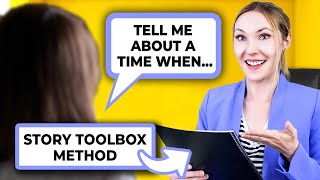
Madeline Mann teaches the CAR format for behavioral interview questions: Challenge, Action, Results. Prepare concrete stories about wins, problems solved, and mistakes recovered from. Skip generic answers and focus on what you actually did and what happened.
Chapters
Tell me about a time when you've been asked a bunch of Tell me about a time when behavioral interview questions in a job interview. That's probably happened a lot, but if it hasn't yet, buckle up because behavioral interviews are super common and they're only becoming more popular. In this video, you'll learn how to answer any behavioral interview question using the Story Toolbox method that has yielded hundreds of thousands of success stories since I first released it and years ago. The feedback I hear over and over is that this will change your job interview approach forever. And I have to give you a warning because this could lead to job offers. Be careful what you wish for and stay to the end because I will throw in a real life example of all of these tips in action and cap it off with a super impactful tactic that will allow you to take some of these strategies and even apply them to really hard questions that aren't behavioral. If you're new here, so good to make your acquaintance. I'm Madeline Mann, a human resources leader and job search strategist who turns job seekers into job shoppers. You may have seen me on Bloomberg, New York Times, Wall Street Journal, and more. Subscribe to do something good for your career okay, let's get back on the same page here. Tolstoy When I use the term behavioral interview question, I mean you are asked to give an example that shows how you behave in different situations. It's where behavioral comes in. So this often sounds like Tell me about a time you closed a tough sale. How did you do it? Or give me an example of how you have de escalated a customer issue in the past. These questions come in all different forms, but the bottom line is you need to dig into your horror house of a brain and miraculously pull out the perfect example based on their question. Seem impossible? It kind of is if you don't use the Story toolbox like I'm going to show you right.
Now. Get out a Word document and write down at least two situations where you accomplish something big and where you were possibly a problem solving hero. Write down at least one story about interpersonal situations such as learning to work on a team, improving communication, or especially working with a difficult boss or coworker. Then write at least one situation where you messed up, how you learned from that mistake, and how you fixed it. Now I'll list out some prompts in the supplemental PDF for this video, so go ahead and download that and get your examples in order. So what you're doing here is taking the prompt and brainstorming sometimes that this has happened to you in your career. The worst thing you can do here, which I have seen a lot of later career folks do this is instead of coming up with one example, they'll say when did I have to handle an interpersonal conflict? It has happened so many times. The way I typically they handle it is and they give a generic high level overview of their philosophy of how it usually transpires. This goes against the exact reason the interviewer is asking the question. And if my example sounded like you, you need to go and watch the video. The number one reason why candidates get rejected in the interview where I walk through the top reasons you'll be rejected in the interview depending on your stage in your career and I tell you it's illuminating. So keep that mind your interviewer is asking these questions because they're trying to picture you in the role. It's much easier to start to understand how a person thinks and acts when they explain a real world scenario versus them talking in hypotheticals. So these questions are wildly popular to ask. Let's walk through an example. Let's say you were asked the question. Tell me about a time you disagreed with your boss. You may look at me and say, psst, Madeline, that question wasn't on the supplemental PDF. Help. You're just going to have to feel it. You got to improvise. I know you can do it. Don't worry. When I said you needed two stories for each of those different categories and the other things on the supplemental PDF, I'm sure that one of those involves some sort of interaction with either your boss or possibly other executives and how you manage that disagreement or tension. This is where you get a little creative and you can mold a story that you've already identified to fit the current question. Now, when you answer the question, I want you to answer it using the car format, which stands for C. Challenge. What challenge were you facing? This gives us background of what you had to do and anything that was standing in your way. A is for action. What action did you take? And then R is for results. What were the results of those actions? I know what you may be thinking, miss. Isn't this commonly known as the Star formula? And you would be correct. But when I was a job seeker, I hated the Star formula because it didn't make sense to me. It says that you need to talk about the situation and then talk about the task and then you get to the actions and the results. I have coached thousands of job seekers at this point to ace their interviews and if you need more help on that? I will link below a free job shopping webinar that shows some of these approaches I've used to help clients go from facing major obstacles in the job interview, like being pregnant with no offers to 9 job offers Shout out to Alana. That will be linked in the comments and in the description. But the most common mistake job seekers make with behavioral interview questions is exactly what Star sets you up for, and that is spending way too much time giving context. And that's Star's all about situation and task. That's half of it. So you want to set the minimum amount of context for the interviewer to make sure that their simply in the same galaxy as you and then jump into more interesting parts which is the action and the results. And you all agree with me. I've gotten lots of comments about how car rules and STAR rules, so that's all I'll say on that. Okay, let's dive into an example. Here's an example for Tell me about a time when you disagreed with your boss in a previous role. I faced challenge when my boss implemented a new communication protocol that, in my opinion, hindered effective collaboration within the team. The problem was that the new protocol required multiple layers of approvals for routine tasks, causing delays in project timelines and impacting overall team efficiency. Recognizing the need for clear communication channels, but also the potential negative impact on productivity, I decided to address the issue proactively. I scheduled a meeting to discuss it with my boss. I started by acknowledging my agreement that a new communication protocol was needed and that I had a few ideas to iterate to make it even better, given that we had tested it for four weeks. During the conversation, I proposed a streamlined approach that retains the necessary approvals but reduce some of the unnecessary bureaucratic steps. I also suggested periodic reviews of the communication protocol to identify further areas of improvement and ensure ongoing efficiency. My boss appreciated appreciated my proactive discussion and willingness to suggest solutions. We implemented the proposed changes to the communication protocol, which resulted in faster decision making and improved collaboration within the team. The periodic review of the protocol became a regular practice, fostering a culture of continuous improvement and adaptability. Question for you do you typically get specific or broad behavioral interview questions such as Is it as specific as Tell me about a time you launched a marketing campaign for a mobile app? And broad would be Tell me about a time you had an urgent deadline. Write your answer in the comments as specific, broad, or mixed. Now here is a huge tip that you can bring into your interviews. Instead of waiting for someone to ask you a behavioral interview question answer with a story anyways, such as if you're asked how do you handle stress? You could briefly answer the question in a sentence and then give an example of a stressful work situation you experienced and how you responded to it. Your answer is going to be head and shoulders above the other candidates. If you got value from this video, go ahead and hit a like and subscribe to this channel. I do love seeing you here at the end my friend. You've got this wi fi high five.
More from Clegg





AI Won't Tell You the Full Truth | Arthur Brooks + Simon Sinek | A Bit of Optimism Podcast



How To Make the Best Decision | Arthur Brooks and Simon Sinek | A Bit of Optimism


